

Most brands don’t realize they’ve been targeted until the damage is already public.
One account breach, one fake account posing as your brand, one click of a phishing link, is all it takes for an attacker to slip into the center of your marketing ecosystem.
Social media security is the discipline that protects those front-line channels: the accounts, the admins, the audiences, and the trust that holds it all together. It’s the full system that protects your brand’s identity, and every touchpoint that can be exploited in a digital attack.
It includes phishing protection for employees, impersonator detection and takedown, hacking protection across admin accounts, scam comment filtering, third-party app audits, AI-driven threat monitoring, and incident-response workflows when something goes wrong.
In practice, social media security is the shield around everything your audience sees. Every post, every ad, every message, every verification badge. In 2026’s landscape of deepfakes, synthetic identities, and hyper-targeted scams, it’s become one of the core foundations of brand protection.
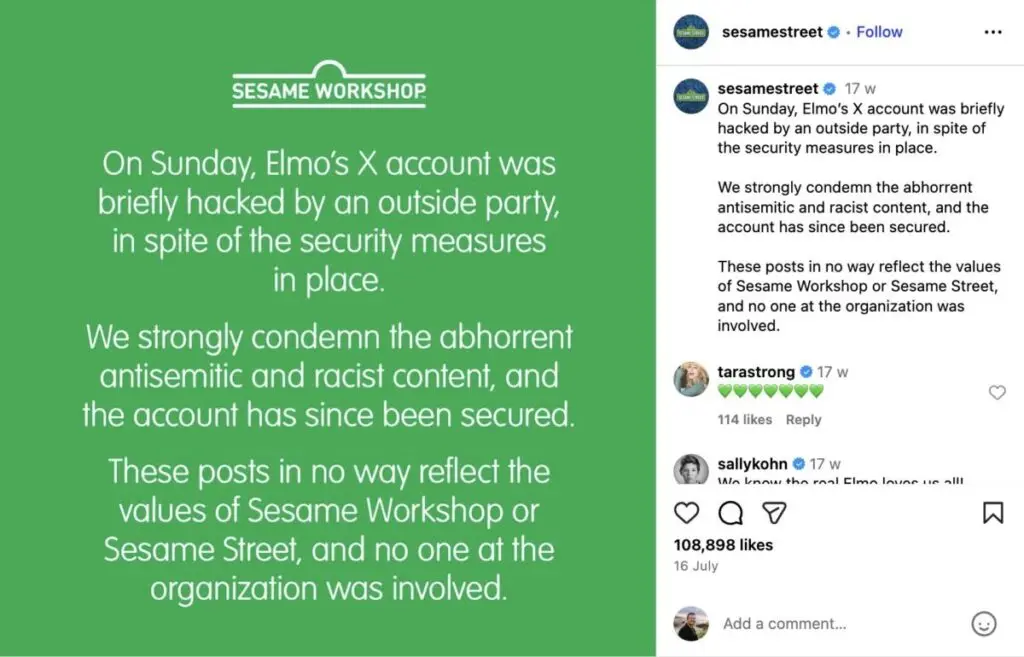
Elmo’s X account was hijacked in July 2025 and used to post antisemitic and racist comments.
The Cost of Insecure Social Media
Social media attacks have become one of the biggest hidden costs in marketing.
A decade ago, “getting hacked” meant a friend posting on your Facebook account. Now, it can mean impersonated brands, stolen ad budgets, or an account takeover that spirals into a brand reputation crisis.
52% of brands reported experiencing a social media-related cyberattack in 2024, and the average cost of recovery after an account takeover typically exceeds $4.6 million per incident. Huge brands like Samsung, Binance and Dior were hacked on social media in 2025, with millions of dollars in damages and significant reputational damage. Proper security measures are no longer a nice-to-have, they’re a direct protector of revenue.
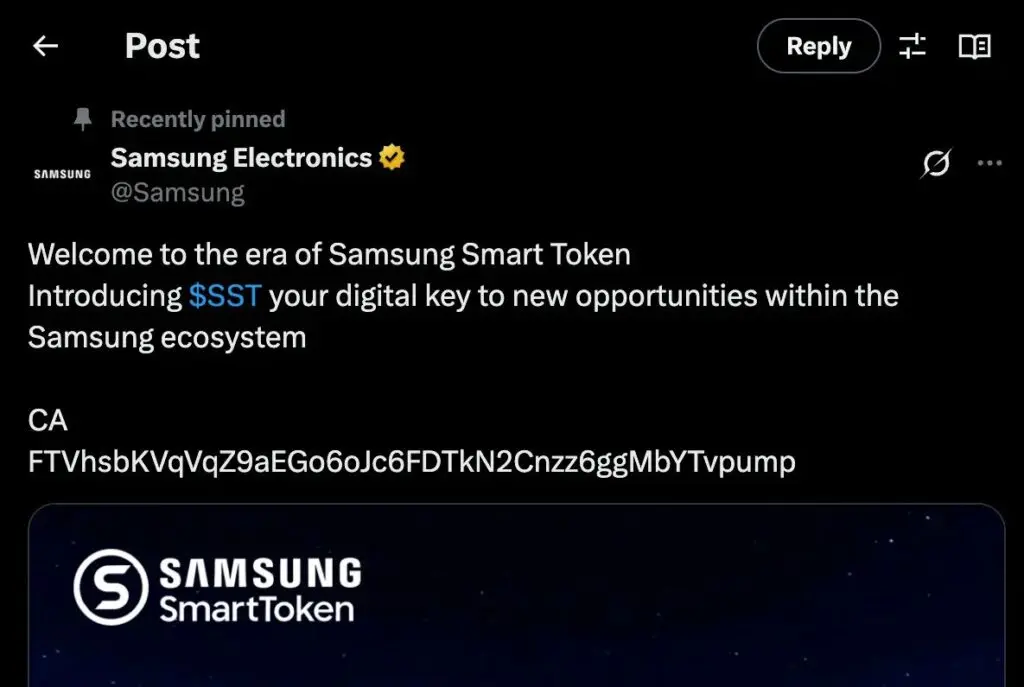
Hackers flooded Samsung's X account with posts promoting a fake cryptocurrency called "Samsung Smart Token" ($SST).
When a verified profile disappears or starts posting scam giveaways, followers assume negligence, not hacking. For marketers, it’s so much more than an IT problem, it’s a brand trust emergency.
Paid campaigns, influencer partnerships, and community engagement depend on perceived safety. When followers see spam or impersonators under your posts, they disengage instantly.
This guide unpacks the new social media threat landscape, the role of AI in making scams more targeted, and the frameworks leading brands use to protect accounts, data, and reputation.
The Modern Threat Landscape
The threats hitting social feeds in 2026 are more sophisticated than ever, and many are designed specifically for marketing teams, not system admins. Understanding the mechanics behind them is the first step in defense.
Account Takeovers & Hacks
Phishing remains the most common doorway into a brand’s social accounts. What started as basic email phishing, riddled with typos and errors, has evolved into platform-native tactics: fake DMs from “Meta Support,” cloned login pages, and fraudulent “ad suspension” alerts.
What Is Phishing? (and Why It Matters for Brands)
Phishing is a deceptive practice where attackers impersonate trusted entities to trick users into revealing credentials or clicking malicious links.
Spear phishing goes a step further, by tailoring the attack to a specific brand or individual. Instead of generic “account alert” messages, criminals research company hierarchies and craft personalized messages such as:
“Hi Emma, this is Meta Security. We noticed suspicious activity on your brand’s ad account. Please verify your identity here.”
Because it references real campaigns or names, the success rate is much higher. According to the IBM Security X-Force Report, spear phishing attacks increased 173% year-over-year between 2021 and 2024, with social media accounts now a primary entry point.
What Is Social Engineering?
Social engineering manipulates people rather than systems. Attackers exploit curiosity, fear, or urgency to push employees or creators into unsafe actions. Examples include:
- Fake collaboration requests promising exposure.
- Impersonated executives authorizing password resets.
- “Customer complaints” that hide malware links.
Because social engineering preys on human behavior, even robust hacking protection software can’t fully stop it without proper training and clear internal workflows.
AI-Driven Phishing Scams
Generative AI has amplified these risks. Attackers now use language models to write fluent, brand-specific phishing messages and to auto-translate scams into local dialects. Some even deploy deepfake profile photos or synthetic voices to make impersonation more believable.
KnowBe4 reports that over 82% of phishing operations in 2025 employed AI for message generation or image manipulation. For brands, this means the classic “typo-filled spam email” stereotype is obsolete. Today’s phishing scams look, sound, and behave like legitimate customer service.
Real-World Impact
In October 2025, Disney's official Instagram and Facebook accounts were hacked by an unknown group. Hackers began posting and sharing stories promoting a fake cryptocurrency called "Disney Solana." The posts came directly from Disney's verified pages, grabbing the attention of fans across social media.
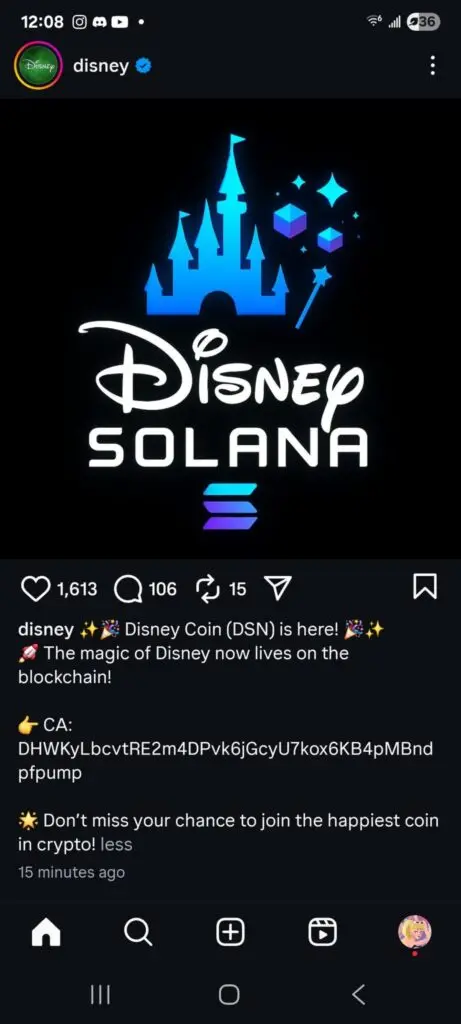
A cryptocurrency scam was posted to Disney’s Instagram account after being hijacked in October 2025.
People on Reddit and X started sharing screenshots of the posts. Some users were confused, thinking Disney had actually launched a cryptocurrency, while others immediately recognized that the accounts had been compromised.
One Redditor reported that the coin's value briefly spiked to a $60,000 market cap before crashing to $7,000, noting that someone likely made around $50,000 by scamming unsuspecting fans in under 30 minutes.
While Disney hasn't released an official statement on the extent of the damage, reports suggest that hundreds of fans were tricked into buying the fake cryptocurrency.
The Facebook Compromise Crisis
Few incidents illustrate the stakes better than Facebook’s wave of account takeovers in 2023 and 2024.
Meta confirmed that millions of accounts, many of them verified brand pages, had been compromised through credential-phishing apps disguised as “ad optimization” plug-ins.
Here’s how the typical sequence unfolded:
- An employee receives an urgent “ad account suspension” notice.
- The link leads to a fake login portal, identical to Facebook Business Manager.
Once credentials are entered, attackers change the password and backup email, effectively locking the brand out. - Within minutes, the hijacked page posts a scam giveaway or cryptocurrency promotion to the brand’s real followers. By the time admins noticed the alert, the damage had been done
Beyond direct costs, there’s the reputational ripple. Customers publicly ask, “Is this page safe?” and competitors quietly benefit from the distraction.
Impersonator Attacks
Attackers increasingly bypass the official account entirely and target your audience directly.
They create fake support pages, counterfeit brand profiles, or impersonated employees to exploit trust.
These impersonators message followers with fake refund requests, “order verification” links, or bogus customer-service forms designed to harvest credentials. Others mimic executives or influencers, leveraging their likeness to push crypto schemes or fake giveaways.
AI has made this dramatically easier. Deepfake profile photos, AI-generated bios, and synthetic voices allow attackers to impersonate founders, brand ambassadors, or internal team members convincingly enough to fool both audiences and employees.
This tactic is especially effective because it feels legitimate. The scam reaches people through channels they already trust.
In early 2024, a Hong Kong finance worker was deceived into transferring about $25.6 million after attending a deepfake video call featuring fake versions of the company’s CFO and senior leaders, generated by AI. The scammers perfectly mimicked voices and expressions to make the scam credible, exploiting the trust of internal teams and bypassing typical verification protocols.
Harmful Comments & Spam Campaigns
Attackers now weaponize comment sections as an attack surface. Instead of hacking employees, they target followers, the people most likely to trust your brand.
Common examples include:
- Scam giveaways promoting fake crypto or “brand discounts”
- Phishing links posted under ads or viral posts
- Fraudulent “customer support” replies directing users to malicious sites
- Spam clusters promoting malware, counterfeit products, or impersonated profiles
These comments often appear within minutes of a new campaign going live, exploiting heightened visibility. Because they live under your posts, followers interpret them as part of the brand experience, and disengage when the environment feels unsafe or “spammy.”
In fact, Meta’s internal data revealed that up to 10% of their advertising revenue was associated with ads impacted by comment section scams, including spam comments promoting counterfeit products, and malware links embedded under viral posts. This surge in fraudulent comment activity, especially during high engagement periods like holiday shopping and major sports events, forced advertisers to invest heavily in comment moderation tools powered by AI.
Left unchecked, comment attacks can erode trust faster than any algorithm change. They not only damage campaigns, but also create the appearance that a brand isn’t protecting its own audience.
The Takeaway
Every marketing or social media professional managing brand pages needs at least a baseline understanding of phishing protection, hacking prevention, and online reputation management workflows. If your team can’t answer who acts first when an account is breached, you’re already behind the curve.
How AI Has Supercharged the Threat
Until recently, phishing scams and impersonations were typo-riddled emails or grainy fake profiles. Today, artificial intelligence has industrialized cybercrime.
Generative AI models now produce personalized scams at scale. Attackers scrape open-source data (such as LinkedIn titles, brand posts, or employee bios) to create near-perfect replicas of official messages. They even mimic tone, emojis, and posting patterns unique to each brand.
Fake support videos using cloned voices now direct followers to “security update” links that install malware. Image generators create counterfeit brand ads in seconds. As a result, scams feel more authentic, perform well algorithmically, and spread faster.
For brands, the cost isn’t just financial, it’s psychological. When followers can no longer tell real from fake, trust becomes an unstable metric.
Common Attack Vectors
The majority of brand breaches start from small, preventable oversights. Below are the vectors that attackers exploit most frequently, and what teams can do about each one.
1. Compromised Employee Accounts
Employees remain the easiest point of entry. Cybercriminals often begin by identifying staff who manage brand pages or ad budgets, and then send them believable phishing messages. A single click on a spoofed “Meta Ads suspension notice” can hand over credentials.
Protection:
- Use a centralized and secure email address and phone number, rather than relying on an employee’s personal details.
- Review admin privileges regularly, and immediately revoke access when roles change.
A Verizon Data Breach Report found that 68% of breaches involve a human element, either accidental sharing, weak passwords, or social engineering. Reducing access and enforcing 2FA removes most of that risk.
2. Weak 2FA and Shared Credentials
Even when 2FA is enabled, many teams share one “master login” across agencies or freelancers to simplify approvals. That convenience becomes a liability if one partner’s inbox is compromised.
Protection:
- Used a centralized 2FA tool built for teams, that allows specific users to access verified login codes without relying on a single device.
- Implement location and device-based login restrictions, which prevent logins from unrecognized users.
Shared credentials are also how internal errors become full-scale crises. When a mistake happens, there’s no accountability trail.
3. Fake Brand Support Pages & Impersonators
Attackers clone official pages, using your logo and handle variants like “@brand_support” or “@help-brand.” They reply to real customer comments with phishing links claiming to “verify orders” or “process refunds.”
Protection:
- Use impersonator detection tools to detect new pages using your trademarks or imagery.
- Encourage followers never to click links from unofficial sources and to report impersonators directly through platform forms.
4. Phishing Links in Comments
Attackers have learned that it’s easier to phish followers than employees. They post “giveaway” or “customer service” comments under your ads, directing users to credential-stealing sites. These posts often appear within minutes of a new campaign going live.
Protection:
- Turn on moderation filters that automatically hide comments containing URLs or email addresses.
- Use AI content moderation systems capable of reading intent, not just keywords.
When left unchecked, malicious comment links can convert legitimate engagement into trust loss.
5. Malicious Collaboration or Partnership Requests
Brands and influencers are frequent targets of fake partnership invitations. Attackers mimic real agencies or PR firms, offering lucrative collaborations that require “account verification.”
Protection:
- Confirm all opportunities through official domains and verified contacts.
- Implement internal verification protocols for influencer outreach, requiring at least one secondary confirmation via phone or known corporate email.
6. Third-Party App & API Integrations
“Analytics” and “growth-booster” apps frequently request full publishing or ad account permissions. If these services are breached, your data and access tokens are exposed.
Protection:
- Conduct quarterly app audits across all brand pages and revoke outdated integrations.
- Limit access scopes, granting “read only” access where possible.
Remember: the weakest vendor in your stack can open the door to the entire brand ecosystem.
Protection Framework: 10 Steps to Strengthen Brand Security
Below is a practical framework for brands with high visibility on social media. Each step addresses both technical and reputational defense.
1. Audit Every Account & Admin Role
List all corporate pages, side projects, and legacy accounts. Remove outdated admins and review permission levels quarterly. Over 60% of takeovers begin with abandoned logins.
2. Enforce Multi-Factor Authentication (MFA)
Require MFA for all brand, creator, and agency accounts. Ensure access is centralized, so users aren’t forced to wait around for login codes from a specific person, which get shared over unsecured channels like Slack or WhatsApp.
3. Conduct Quarterly Phishing Simulations
Hoxhunt reports a 6x improvement in phishing detection rates and a drop in failure rates by 2.5 times after six months of adaptive simulated phishing training, with threat reporting rates jumping to 60% within one year.
4. Deploy Hack Protection Software
Use platforms offering behavioral analytics that flag logins from unusual devices or regions. Many now integrate with brand monitoring dashboards for unified alerts.
5. Create a Cross-Department Escalation Plan
Define clear responsibilities:
| Team | Role |
| Marketing | First response, and content freeze in the case of an incident |
| PR | External messaging to reassure followers |
| Security | Verification of threats and containment |
| Legal | Compliance and documentation of all security threats or account breaches |
Keep this plan rehearsed and accessible.
6. Automate Content Moderation Using AI
Implement AI content moderation tools that evaluate tone and context (not just keywords) to hide scams or impersonation replies before they trend.
7. Integrate Brand Protection Software
Invest in tools that detect counterfeit pages, negative sentiment trends in your comments, and unauthorized login attempts.
8. Activate Brand Monitoring and Sentiment Tracking
Set up keyword alerts for product names, executive mentions, and hashtags. Track anomalies in sentiment or engagement velocity to spot emerging misinformation.
The X Impersonation Incident
In late 2024, a cluster of verified-looking accounts appeared on X (formerly Twitter) using the likeness of technology influencers and brand CEOs. One of these profiles posed as an AI-tool founder and promoted a “limited crypto airdrop.” Within 24 hours, the post had been viewed more than two million times and was featured in major media sources, after followers reported losing money to the scam.
The attackers had used AI voice cloning and deepfake videos to add credibility, and the brand being impersonated was forced to release a public statement confirming it wasn’t involved. Engagement on its real account dropped by 28% the following month.
Key Lesson: AI-driven impersonation works because it exploits familiar faces and trusted formats. Even a minor delay in recognition can turn a harmless trend into a crisis. Brand monitoring alerts and cross-platform verification are the fastest ways to contain this damage.
Selecting technology for social-media security can be overwhelming. Many tools address parts of the problem, either monitoring, moderation, or cybersecurity, but very few integrate all three.
Choosing the Right Tools
Building a reliable social media security stack isn’t about piling on dozens of platforms. Most teams benefit from combining a few focused tools that reinforce visibility, workflow discipline, authentication, and real-time protection.
| Category | Purpose | Example |
| Social Media Threat Detection & Security | Monitor for fake accounts, map users with account access, eliminate scam and spam comments and implement real-time social media threat detection. | Spikerz Security |
| Social Listening & Visibility | Identify unusual engagement patterns, sentiment shifts, or early indicators that something might be off. | Brandwatch |
| Collaboration & Workflow | Centralize playbooks, crisis steps, and escalation steps, so teams respond consistently. | Notion |
| Incident Tracking & Post-Mortem Analysis | Keep a record of incidents, help teams refine processes, and improve future response. | Linear |
Evaluation Checklist
Before signing with any provider:
- Confirm the tool monitors social media in real time.
- Check for API integration with existing infrastructure.
- Test reporting features (you’ll need audit trails for Legal).
These considerations separate general IT security tools from true brand protection software built for marketing use.
Looking Ahead: The Future of Brand Security
The social-media security landscape is moving faster than platform policy can keep up. Here’s what marketing leaders should anticipate between now and 2027.
AI on Both Sides of the Battle
The same AI models used for deepfakes are now being repurposed for defense. Facebook’s Meta AI and Google DeepMind research teams have built models that can detect synthetic imagery with over 90 percent accuracy. Marketers should expect these tools to be embedded into ad-account security dashboards within the next year.
Regulatory Scrutiny Will Increase
The EU Digital Services Act (DSA) and U.S. proposed Online Safety Bill require platforms to demonstrate reasonable moderation efforts. Brands that ignore fake ads or impersonators may face fines for negligence. Building documented incident logs now will help demonstrate compliance later.
From Reactive to Predictive Defense
By 2027, expect predictive threat models that analyze behavioral patterns of both followers and bad actors. These systems will alert teams when sentiment shifts suggest coordinated disinformation. Brand security metrics will sit beside engagement and ROI in marketing dashboards.
Reputation as an Asset Class
Just as companies insure against data breaches, insurers are beginning to offer policies for digital reputation loss caused by social media attacks. To qualify, brands must prove they use recognized online reputation management tools and maintain incident logs. Proactive defense may soon be a requirement for coverage.
Conclusion: Security Is Now a Marketing Metric
Social media security is no longer a technical afterthought, it’s a core measure of brand credibility. Phishing, impersonation, and AI-driven scams don’t just steal credentials, they steal trust, time, and campaign ROI.
Summary of key takeaways:
- Recognize that phishing and social engineering are marketing risks, not just IT issues.
- Educate teams continuously to spot phishing and AI impersonation attempts.
- Invest in brand monitoring and hack protection software before a breach forces you to.
- Integrate reputation management and security metrics into performance reviews.
When customers see your social presence as a safe, responsive, and well-moderated environment, engagement follows. In 2026 and beyond, brand trust is the most valuable currency you own.
If you want to evaluate how brand protection software can support your marketing strategy, you can request a free demo here.

SUGGESTED

Impersonation & Identity Defense For YouTube, Meta, and TikTok
AI-driven impersonation is rising fast. Learn how platform rules authenticity signals and...

Naveh Ben Dror - Author at Influencer Marketing Hub
Naveh Ben Dror is the Co-Founder and CEO of Spikerz a social media security company that...

Meta Ad-Account Security for Teams: Stop Hijacks Before They Start
Ad-accounts are the new perimeter. Treat your Meta spend system like cybersecurity—lock...