Influencer ads can be more impactful and cost-effective than standard branded ads. But to actually convert audiences, marketers need to be more strategic and intentional about everything that makes up the ad, like the creator profile, script, visuals, and call-to-action (CTA).
Normally, in influencer ads, a creator talks about a product, shows how it works, and tells people to buy. But anyone who has run creator ads on Meta, TikTok, Instagram Reels, or YouTube Shorts knows the reality is more complicated.
A creator with a large following doesn’t automatically improve conversion rate. A polished video doesn’t guarantee purchases. And a viral post doesn’t always translate into revenue.
An influencer ad that can potentially deliver a high conversion rate gets all the key elements right: the hook, the problem, the product demo, the proof, the CTA, and the way the influencer naturally brings everything together.
Let’s talk about these elements in greater detail:
- 1. A Strong Hook in the First 3 Seconds to Stop the Scroll
- 2. Clear Product Visibility
- 3. A Specific Pain Point
- 4. A Simple Product Demonstration and Proof
- 5. One Clear Value Proposition
- 6. Strong Visual Contrast
- 7. Platform-Native Editing
- 8. Captions and On-Screen Text
- 9. A Clear Call to Action
- 10. Audience-Influencer Fit
- Common Mistakes That Hurt Influencer Ad Conversion Rates
1. A Strong Hook in the First 3 Seconds to Stop the Scroll
The first few seconds decide whether the viewer stays or scrolls, especially on video-centric formats like TikTok, Reels, and Stories.
You have a very short window to capture attention, retain it, and convert it into action. And that largely depends on the hook of the ad.
But contrary to popular belief, your hook doesn’t have to be over the top. It just has to create an incentive for the viewer to keep watching.
For example:
- “I stopped using three skincare products after trying this.”
- “This is the only thing that helped my makeup last in summer.”
- “I thought this was overhyped until I tried it for a week.”
- “If your hair gets oily by day two, watch this.”
The best hooks usually do one of four things. They introduce a relatable problem, create curiosity, show a result, or challenge a common belief.
For conversion-focused influencer ads, the hook should also connect to the product. That way, it brings the product into the conversation early on while also capturing the viewer's attention.
Here’s an example of a strong hook in an influencer ad on TikTok for Unroll.me created by inBeat, where the creator leans into the element of surprise by talking about an Internet hack people don’t know about.
@unroll.me We can't believe we are sharing this hack, but here you go! #fyp #fypage #tiktok #trending #new #unrollme #unrollme2 #explore #lifehack #email ♬ original sound - Unroll.Me - Easy Email Cleanup
2. Clear Product Visibility
One common mistake brands make with influencer ads is focusing less on the product. For instance, product shots or clips appear way at the end or not at all.
The creator might be making coffee, walking around the house, or setting up a scene, but the viewer still doesn’t know what is being sold.
That may work for organic storytelling, but paid ads need clarity. Strong product visibility requires early product introduction, close-ups of the actual product, and ideally, how it fits into the creator’s life.
Yes, packing all that in a short video can be a challenge, but on social media, every second counts. It’s an ad for the product, after all, so you want to be able to show as much of it as possible without overshadowing the influencer.
This influencer video for Dove is a great example of clear product visibility. The creator mentions the brand in the first six seconds and shows the actual body wash bottle throughout the video. And the influencer also talks about the product in more detail, noting that it’s made of millions of MicroMoisture droplets, which basically highlights a core feature.
@meimonstaa Can’t believe we’re here with @Dove Beauty & Personal Care in the driest place on earth… and still have lotion soft skin!😭🫶 TY Dove for taking such good care of our skin. So appreciative that Dove carefully limited the amount of water used during this experience and recycled it back into the Atacama! #DovePartner #extremewashtest ♬ original sound - Mei Mei
3. A Specific Pain Point
High-converting influencer ads can start with a specific pain point. It’s the problem that draws the audience in and connects them to the solution, making them more likely to click and convert.
Vogue Business reported that Urban Skin Rx saw a 5x sales increase in one day after a TikTok video featuring its Even Tone Cleansing Bar reached 5 million views. Why? Because it addressed a specific pain point for the audience.
Although that video wasn’t an ad, the lesson for the brands in the beauty industry was clear: creator content that shows real skin problems gets traction. And that finding can also be applied to creator ads in general, regardless of the platform or format.
Remember, people don’t buy “better skincare.” They buy help with dry patches, acne marks, dullness, redness, or makeup that separates. People don’t buy “better productivity.” They buy help with missed deadlines, scattered notes, messy calendars, or wasted time.
This is where influencer ads have an advantage over brand-led ads. Creators can express pain points in a way that sounds real. It feels more authentic coming from a person than a brand.
4. A Simple Product Demonstration and Proof
A product demo is the strongest part of an influencer ad because it turns a claim into something the viewer can see. Demonstrations can also be great for showing how a product can be used.
This part of the ad is informative, but also provides proof.
Instead of telling people the product is easy, show it being used. Instead of saying it saves time, show how much time is saved. Instead of saying it cleans better, show the before-and-after.
This is why beauty, fitness, food, home, and gadget products perform well with creator-led video ads. They give the creator something visual to prove.
OhSnap’s creator-led ad for its phone grip shows exactly how the product works, combining benefits and proof in a single appealing, conversion-focused short video.
5. One Clear Value Proposition
Many influencer ads fail because they try to say too much.
The creator mentions that the product is affordable, high-quality, easy to use, clean, fast, long-lasting, beginner-friendly, premium, and available in several colors. By the end, the viewer remembers none of it. Also, it starts to sound too salesy.
Instead, focus on one clear value proposition so the influencer can lean into it and convince the audience to buy.
A product or service can have many benefits, of course, but focusing on one core value sharpens the message.
For example, if a product’s main benefit is saving time, that’s what the whole ad’s focus should be on. It also makes the rest of the creative easier to structure. The hook introduces the pain point. The demo proves the benefit. The CTA tells the viewer what to do next.
This doesn’t mean it’s a bad idea to mention any other features or benefits. But the focus should be on the selected value proposition with the hook and the story.
Hurom, a slow juicer brand, shows exactly how to combine different benefits of a product in a single value proposition. This creator ad essentially lists different benefits tied to one thing: convenience.
6. Strong Visual Contrast
Visual contrast helps people quickly understand the product's value, even before they listen to the audio. This is useful because many users watch social ads with the sound low or off, especially on Meta placements. If the benefit is visible, the ad can still communicate.
Examples of visual contrast include:
- Before vs. after
- Messy vs. organized
- Dry skin vs. hydrated skin
- Flat hair vs. styled hair
- Empty fridge vs. prepared meals
- Old routine vs. new routine
- Confusing workflow vs. simple dashboard
- Monochrome/grayscale visuals vs. colorful
Visual contrast works because it makes the transformation obvious. The visual difference instantly translates into the difference the influencer is trying to establish.
For example, a creator promoting a cleaning product can show the dirty surface and the cleaned surface.
This is also where creators can use simple editing techniques: split screens, quick cuts, close-ups, text overlays, and side-by-side comparisons.
Colors, in particular, can also help grab attention, especially in those first few seconds. An article published in the Journal of Marketing and Social Research reports that 62-90% of people’s initial assessment of a product is based on color. So, you want to lean into the product's colors with the visuals and edits in the influencer reel or TikTok.
7. Platform-Native Editing
Influencer ads should look and feel like they belong on the platform where they run. This is particularly true for TikTok and Instagram, which have their own thing going on. For example, green screen, POV, text overlays, and voiceovers are very TikTok-native editing styles.
Ads that feel native can actually perform better. TikTok says ads made specifically for the platform have a 27% better completion rate, meaning audiences watch them through the end.
The gist is that a TikTok ad should not feel like a TV commercial. A Reel should not feel like a cropped YouTube video. A Story ad should not look like a static catalog page unless that format is intentional.
The key is to adapt the same message to the platform.
That’s why it also makes sense to collaborate with influencers for a specific platform, ideally where they have the highest engagement.
The influencer ad made for Blanket Hoodies looks and sounds like it’s made for TikTok, with the POV concept and the viral audio.
8. Captions and On-Screen Text
Captions and on-screen text make influencer ads easier and quicker to understand. More importantly, written transcripts on the ad make it more accessible.
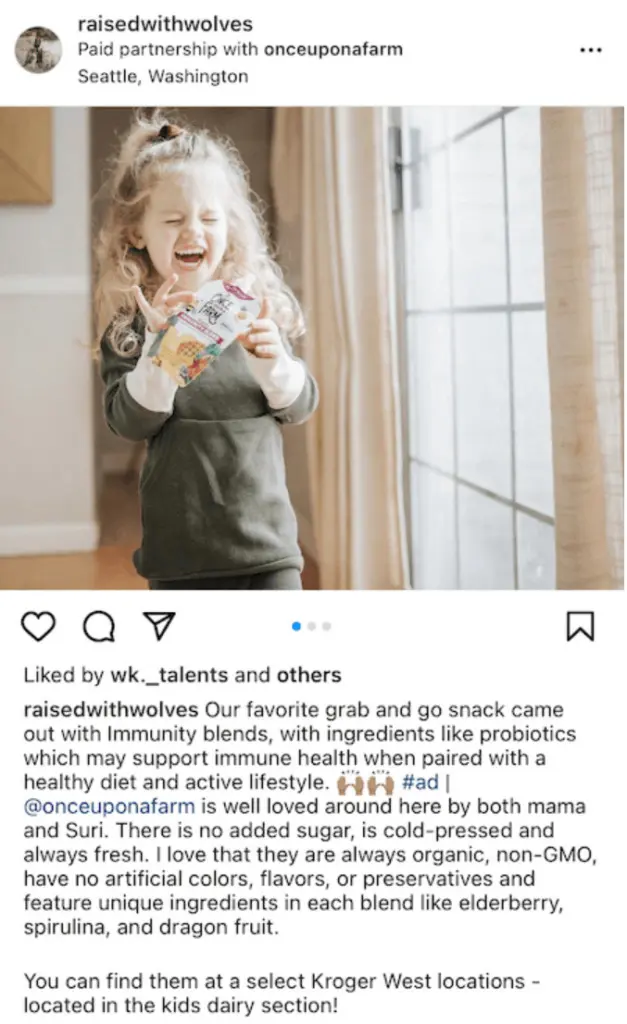
In fact, captions can even increase interest and hold attention. On Facebook, video ads with captions get 12% more view time.
Plus, many people use social media without sound, so your influencer TikTok ad or paid Reel collab can still be understood by viewers who are probably scrolling at work or in public.
But the on-screen text doesn’t have to be a word-to-word transcription. Good on-screen text simply highlights the most important parts.
On-screen text can also strengthen the hook. A creator might say, “I did not expect this to work,” while the text says, “I tested this for 7 days.” Together, they create curiosity.
Captions also help keep the message clear if the creator speaks quickly, uses casual language, or it’s a carousel post. This is important because influencer ads need to feel natural while still communicating the selling point.

- Source: Wordstream.com
9. A Clear Call to Action
This is one of the easiest things to mess up. Your influencer ad’s audience shouldn’t have to guess what action they need to take. Regardless of the platform and ad format, the CTA should be clear.
A good call to action tells people what the next step is. It can be direct, but it should still fit the creator’s voice.
Some examples of clear CTAs that can be used in the audio and captions include:
- “Tap to shop the routine.”
- “Take the quiz to find your shade.”
- “Try the starter kit.”
- “Use my code for 20% off.”
- “Click to see the full collection.”
- “Shop the bundle before it sells out.”
The CTA should match the campaign objective. If the brand wants purchases, the CTA should not just say “learn more.” And if the ad promotes a limited-time offer, the CTA should include urgency.
Unfortunately, many influencer ads bury the CTA at the very end, after a large portion of viewers have already dropped off.
Again, for better conversion, include the CTA visually and verbally. The creator can say it, and the text overlay can reinforce it.
10. Audience-Influencer Fit
Does the influencer have an audience that matches your own? Audience-and-creator fit is one of the biggest drivers of conversion.
Even if an influencer has millions of followers, they could still be wrong for the product or service you’re selling. That’s because their audience may not be right for you.
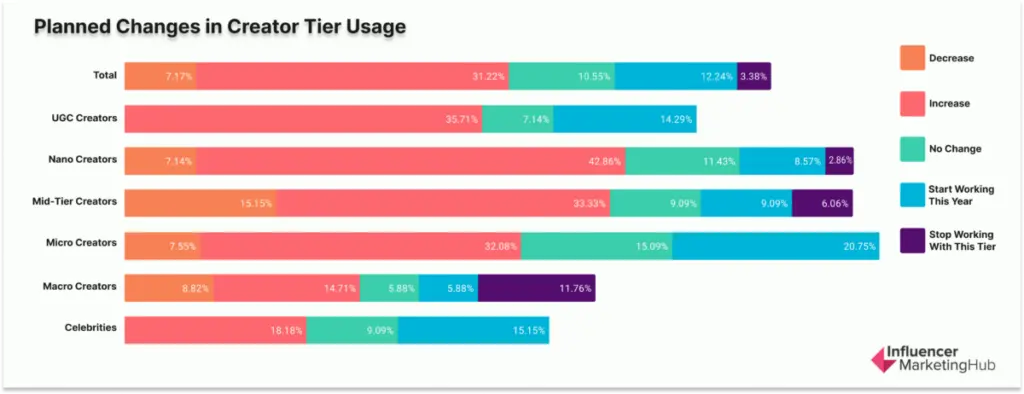
On the other hand, an influencer with a smaller audience may drive better results because their viewers trust them on that exact topic. Also, they have a narrower audience than celebrity influencers, who reach people with diverse interests.
That’s why more brands are gravitating towards micro and nano influencers, as confirmed in the 2026 Influencer Marketing Hub Benchmark Report.
When it comes to enlisting influencers for a paid collaboration or ad, a good fit typically depends on:
- Niche relevance
- Audience demographics
- Buying intent
- Creator credibility
- Content style
- Past performance with similar offers
For example, a skincare product may perform better with a creator known for honest skin updates. A meal prep service may perform better with a busy parent, fitness creator, or work-from-home creator. A B2B tool may perform better with a niche creator on a platform like LinkedIn who teaches freelancers or founders.
If you’re after maximum conversions, go with relevance and not popularity.
Common Mistakes That Hurt Influencer Ad Conversion Rates
Besides the big mistake of choosing the wrong influencer, brands sometimes make the ad too scripted. If the creator sounds like they are reading from a brand deck, the content loses the very thing that makes influencer ads valuable and authentic.
Other mistakes to watch out for:
- Testing only one creative: Don’t run the same influencer ad for too long, as creative fatigue will ruin performance. Instead, create different creative iterations with the same influencer.
- Using the same video unchanged across every platform: Ideally, you want to make platform-specific ad creative. If that’s too much of a stretch, at least adapt the video with platform-native edits.
- Focusing only on views instead of purchases, CPA, ROAS, or conversion rate: Influencer marketing shouldn’t just be for creating awareness. Its real value lies in driving measurable business growth. Focus on revenue-linked metrics in addition to impressions and clicks.
- Using vague claims instead of specific pain points: The more specific and clear the language, the more the audience will react. Highlight the key problem solved or core benefit delivered.
Takeaway
The main takeaway is that Influencer ads work best when they combine creator trust with a performance creative structure. The content should feel native, but the strategy behind it should be deliberate.