
Why do we want certain things so badly?
Why are some brands irresistible — while others we couldn't care less about?
And why do I somehow convince myself that an overpriced wellness smoothie is a completely rational purchase?
The best brands — and the strategy teams behind them — understand something fundamental:
A Dairy Boy sweatshirt. A Dyson Airwrap. A Canon PowerShot G7 X. A Loewe tank.
None of these are just products. They're identity signals.
The most successful brands today are not selling utility. They're building immersive worlds that offer consumers something far more powerful: a shortcut to the person they aspire to become.
We don't buy things for what they do anymore. We buy them for what they represent — and what they signal about who we are, or who we want to be.
That's why creator partnerships matter so much right now. Great creators don't just advertise products — they make the audience feel what it would be like to belong inside that world.
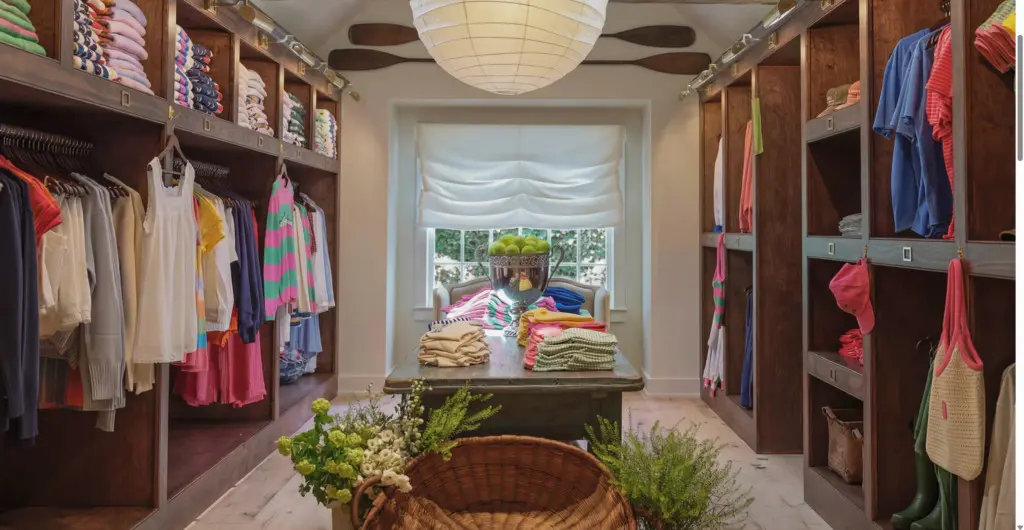
- Source: ElleDecor.com
The Psychology Behind It
We used to buy things for function. Now we buy them for identity, belonging, and aspiration.
Psychologist Russell Belk introduced the idea of the "extended self" — the concept that our possessions literally become part of our identity. M. Joseph Sirgy's self-congruity theory expanded on this, suggesting we gravitate toward brands that reflect either who we are or who we aspire to become.
One person buys Nike because they already see themselves as an athlete. Another buys them because they want to become one. Different starting points. Same aspiration.
Pierre Bourdieu's concept of cultural capital adds another layer: consumption signals social belonging and taste. The "right" smoothie, the "right" brands, the "right" aesthetic all communicate something — I understand this world. I belong here.
And Aron & Aron's self-expansion theory explains why these purchases feel so emotionally powerful. We are constantly seeking identities, experiences, and communities that help us expand who we believe we can become.
Taken together, these frameworks explain why a product attached to the right world, the right person, or the right cultural moment can suddenly feel irresistible — and why brands that ignore this are competing on price alone.
What the Strongest Brand Worlds Have in Common
The best brands today aren't just selling products. They're building ecosystems people want to step inside.
And the strongest brand worlds tend to share a few things:
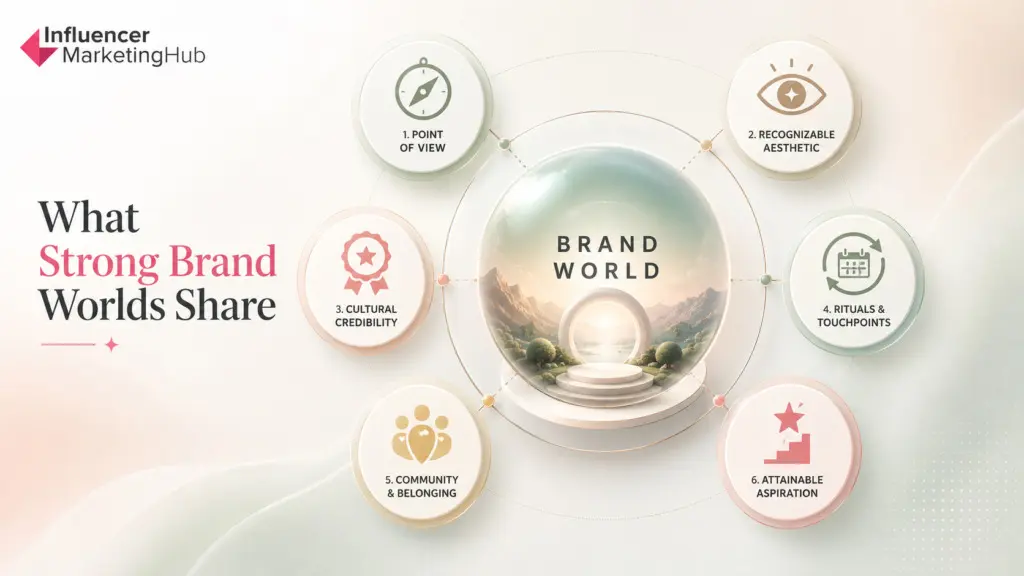
- A clear point of view — they stand for something specific, not everything generally
- An instantly recognizable aesthetic — you know it before you see the logo
- Cultural credibility — they belong to the world they're selling, not just adjacent to it
- Rituals and recurring touchpoints — they give people a reason to keep showing up
- Community and belonging — they make you feel like part of something
- Aspiration that still feels attainable — just out of reach, but not impossible
The brands that check all six boxes aren't accidents. They're the result of intentional, long-term strategy — and increasingly, they're being built in partnership with creators, not in spite of them.
What This Means for Enterprise Brands
Here's where it gets interesting — and where most enterprise brands leave value on the table.
Larger brands often have the budget, the distribution, and the product quality. What they frequently lack is the cultural fluency to make their world feel real to the consumer.
That's the gap creators close.
A creator doesn't just reach an audience. They lend their world to your brand — their aesthetic, their trust, their community's sense of belonging. When the fit is right, it doesn't feel like advertising. It feels like a natural extension of a world the audience already wants to live in.
The enterprise brands getting this right aren't treating creators as a distribution channel. They're treating them as world-builders. Co-architects of the brand's cultural identity.
The ones still treating creator partnerships as a line item on a media plan are going to keep wondering why their impressions don't convert.
Where Creator Strategy Is Heading
The most powerful creator partnerships don't feel like advertising anymore. They feel like invitations — into a lifestyle, a mindset, a community.
The creator isn't just distributing the brand message. They're expanding the universe around the brand.
The strongest brand worlds today aren't being built in boardrooms alone. They're being built in the wild — through creators, communities, rituals, aesthetics, fandoms, and repeated cultural moments.
The brands winning right now are not simply advertising products.
They are building worlds people want to belong to.
And the smartest enterprise brands are finally starting to understand: you don't build that world alone.