

Overview
When I was younger, Dunkin’ Donuts did two things: they made donuts and they made coffee. The donuts were made fresh on the premises, as needed several times a day. The coffee choice was either regular or decaf. That was it. And it was a success. Then Starbucks happened and they needed to compete, which is why they’re now just called Dunkin’ and offer draft nitro cold brew and low carb egg white and avocado wraps. They needed to evolve to stay competitive. Then came the internet, and then the mobile internet, and then the ubiquity of social media. And now, a company that used to thrive on selling fresh donuts and decent coffee has had to invest the hundreds of millions of dollars needed to build out and maintain the infrastructure for a website, develop and distribute mobile apps, and establish social media presences for round-the-clock marketing.
Why am I telling you about Dunkin’ in this review? To illustrate the point that every business is an ecommerce business now. There’s just no way around it. Even if you’re a brick-and-mortar quick serve restaurant, you need to have an ecommerce strategy to stay competitive. It’s an incredibly daunting task, especially if all you ever wanted to do was sell donuts and coffee.
This reality was the inspiration for the creation of Pacvue, which was founded in 2017 by Melissa Burdick and Zhaohui Tang. Both come with impeccable adtech credentials: Burdick spent 10 years at Amazon, where she headed up Amazon’s then-fledgling advertising business. Tang was CEO at adSage—a search engine marketing company—a position he filled after 12 years as a program manager for Microsoft adCenter.
The company built out two platforms, Pacvue Advertising and Pacvue Commerce. They are both focused on ecommerce businesses, but neither is an ecommerce platform. And only one of them is the focus of this review: Pacvue Commerce. Don’t let the name fool you: it’s not handling the nuts-and-bolts of showcasing your products, or taking payments for them, or managing the shipping of them. Instead, Pacvue Commerce is a way to manage the performance of all those things, and preferably improve on them, by making more data-driven decisions.
Even more specifically, this is a tool purpose built for brands and sellers that have set up shop at online marketplaces, with a focus on Amazon. Walmart and eBay are also in the mix, as are Instacart and Kroger for groceries. For each of these platforms, you have to learn things that aren’t entirely specific to your business, like how to win the “BuyBox” on Amazon. It’s a lot to ask of someone who just wanted to sell some proverbial coffee and donuts. And this is where Pacvue comes in: Think of it as your algorithmic operations manager who’s freeing up time for you to do the things you started a business to do.

Pricing
Pacvue doesn’t publicize its pricing, but the very nature of the platform is to provide the kind of help that small and medium-sized businesses would need—and yet their client list contains huge names like Unilever, Johnson & Johnson, and Duracell. This suggests that pricing is based on company size and use-cases, and that the cost of running Pacvue scales in proportion to the size of the customer using it.
The Details
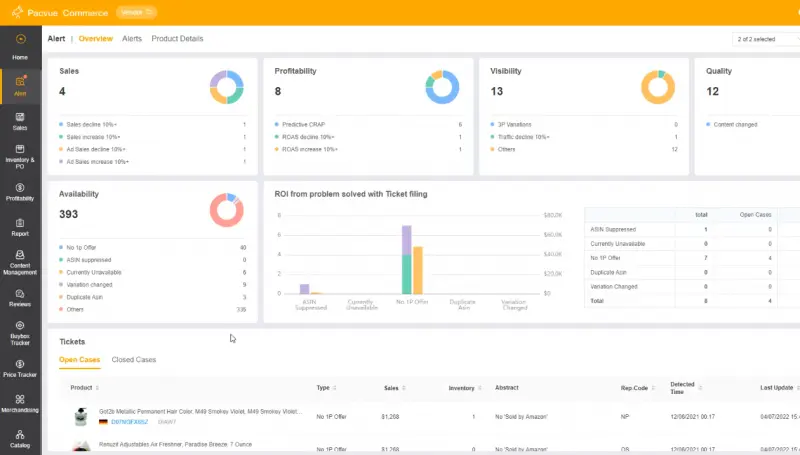
Upon logging in to Pacvue Commerce, the view can be a little overwhelming. There’s a lot of information here, but this isn’t a bad thing for a commerce acceleration platform. It just takes a little poking around to understand where everything is and what it can do for you. The dashboard is self explanatory: once you’ve set everything up and connected your commerce accounts Pacvue can start giving you some great high level information about your sales, profits, and other KPIs.
This bird’s-eye dashboard view is just a taste of the data one menu level down: click your way into the sales module and you can get an impressively deep dive into your performance. The Overview shows data for the aggregate of all your sales and you can get progressively narrower in your scope: to categories, then brands, then specific products. And the data goes deep, analyzing traffic and conversion rates on the listing page, ad clicks, sales efficiency, cost of goods sold, and the list goes on. For nearly every stat available here, there’s an option to graph it out over time to get a visual representation of performance—and you can mix and match these stats to uncover any relationships between.


But the platform isn’t just focused on summarizing the past. It’s actively monitoring the present, in real time, and alerting you when action needs to be taken. Even better, in some cases, Pacvue bypasses you and opens a ticket on your behalf. If, for example, Amazon suppresses your ASIN because it’s determined you’re not following certain guidelines, Pacvue contacts Amazon automatically, and a ticket is created. If Amazon was in error, they may very well fix the issue and reinstate your listing before you ever noticed it was taken down. If there’s something you need to take action on, all the tickets—open and closed—are viewable right from Pacvue itself, and you’ll get the appropriate alert. There are more than a dozen and a half different alerts that the platform can find for you, nearly as soon as they happen, saving you a lot of time and headache.
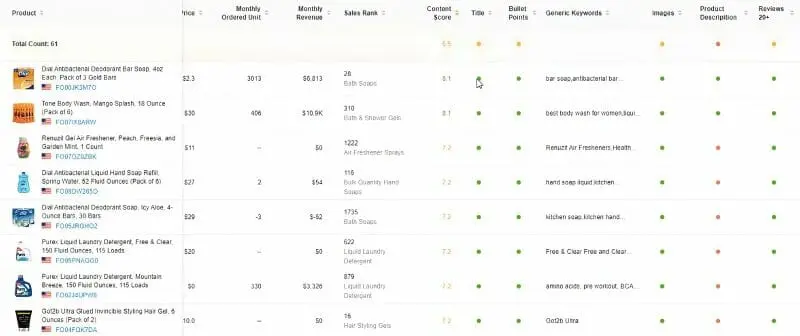
Likewise, Pacvue is monitoring your content—the listings themselves—and making sure you’re not running afoul of guidelines or requirements. Navigate into the Content Management module, and you’ll get an overview of all your content, and a general overall score of all your listings together. The score is expressed as a percentage, and the overview shows you quite a few different scores rating things like Title Length, Product Description, Reviews, and more. But it’s not really clear from just looking at it what, for example, “Product Description: 93.5%” means. Go deeper, though, into the Product Audit section, and it’s a lot easier to read. Color coded entries let you know what needs attention, and from there it’s not hard to take action.
The same attention is paid to the reviews that you’re receiving. Because Amazon’s algorithm’s prioritize sellers with the highest reviews, it’s imperative that you stay on top of the feedback you’re getting from customers. Pacvue monitors your overall review performance, and points you in the direction of the most critical ones. You can’t delete reviews (unless you can prove they’re fraudulent), but you can respond to them and perhaps turn a bad experience around.
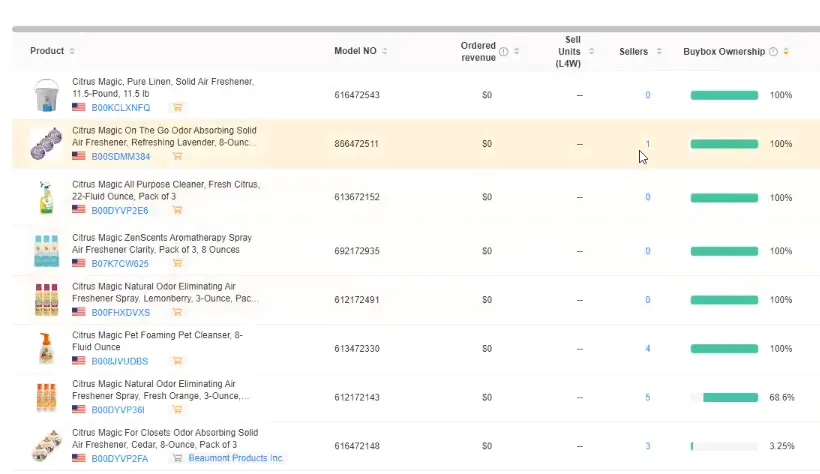
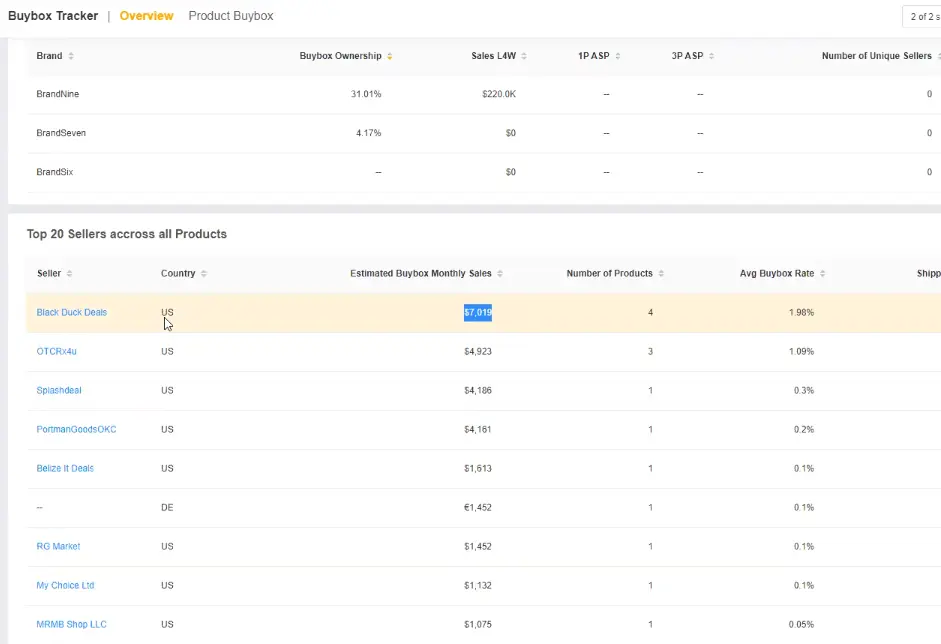
One of the coolest features, though, is Pacvue’s BuyBox tool. If you’ve sold on Amazon before, you likely have experience getting frustrated with keeping your place in the BuyBox, the area on each listing where the customer can actually buy the product. When multiple sellers are competing to sell the same product, getting in that BuyBox is a fierce competition, the winner of which is the seller that gets to actually sell. Becoming the seller of record in the BuyBox never guarantees you stay there, though, and with Pacvue you can see whether or not you’ve got it. If another seller overtakes you there, you’ll find out who it is and you’ll also see every seller that’s had it to know who you’re competing with—and how much you lost in sales while they had the BuyBox. Armed with this information in real time, you can make the appropriate changes necessary to get your status back.
Integrations
Pacvue’s integrations are restricted to the marketplaces it works with: Amazon, Walmart, eBay, Instart, and Kroger’s. There are plenty of other business apps that would make good use of the data from here—too bad there are no integrations for CRM, or analytics, etc.
Conclusion
Pacvue Commerce’s suite of tools for managing retail operations are exhaustive, and show a keen understanding of the problems that Amazon sellers face. This isn’t to say that Walmart and eBay sellers don’t also face the same challenges; but Amazon is far and away the leader in online retail and so is the one that brands and sellers are focused on. And it’s clear that’s what the developers of Pacvue focused on, too, because they really get to the root of what can make succeeding on Amazon so difficult. Short of buying Amazon and changing the way they do business, there’s not much more Pacvue could have done to erase the stress that comes with being a seller. Think of it this way: Amazon made such a marketplace so complex that it took someone else to create software to make it manageable. If you’re an Amazon seller, Pacvue doesn’t feel like an option—it feels like a must-have.
Rating
- Features
- Ease of Use
- Reporting
- Integrations