
Finding the right creators has always been one of the most time-intensive parts of influencer marketing. Our 2026 Influencer Marketing Benchmark Report takes it a step further, with 67% of marketers saying finding the right influencers is one of the biggest challenges in running influencer campaigns.
But why is that? Before dedicated discovery platforms existed, marketers relied on manual workflows to identify potential partners. Teams searched hashtags across social platforms, reviewed creator profiles individually, evaluated engagement metrics by hand, and tracked potential collaborators in spreadsheets before beginning outreach.
The difficulty is not simply identifying creators but identifying creators whose audiences, content style, and engagement patterns actually align with campaign goals.
This challenge has accelerated the adoption of AI-powered influencer discovery tools and platforms, which analyze large creator databases and audience signals to identify potential creator matches automatically.
Instead of manually searching across thousands of profiles, marketing teams can now filter creators based on audience demographics, engagement quality, content themes, and past campaign performance.
This article compares AI influencer discovery and manual influencer research, explaining how each approach works, where each still provides value, and why many marketing teams now combine both methods to build scalable influencer programs.
How Brands Traditionally Found Influencers
Before influencer marketing platforms introduced large creator databases and automated discovery tools, brands relied almost entirely on manual research to identify potential creator partners. The process was often informal but followed a recognizable workflow that many marketing teams still use in smaller campaigns today.
The starting point was usually platform-based searching. Marketers would explore hashtags, keywords, and trending topics on platforms like Instagram, YouTube, or TikTok to locate creators producing relevant content.
For example, a fitness brand might search hashtags such as #fitnessroutine or #homeworkout to identify creators already posting in that niche.
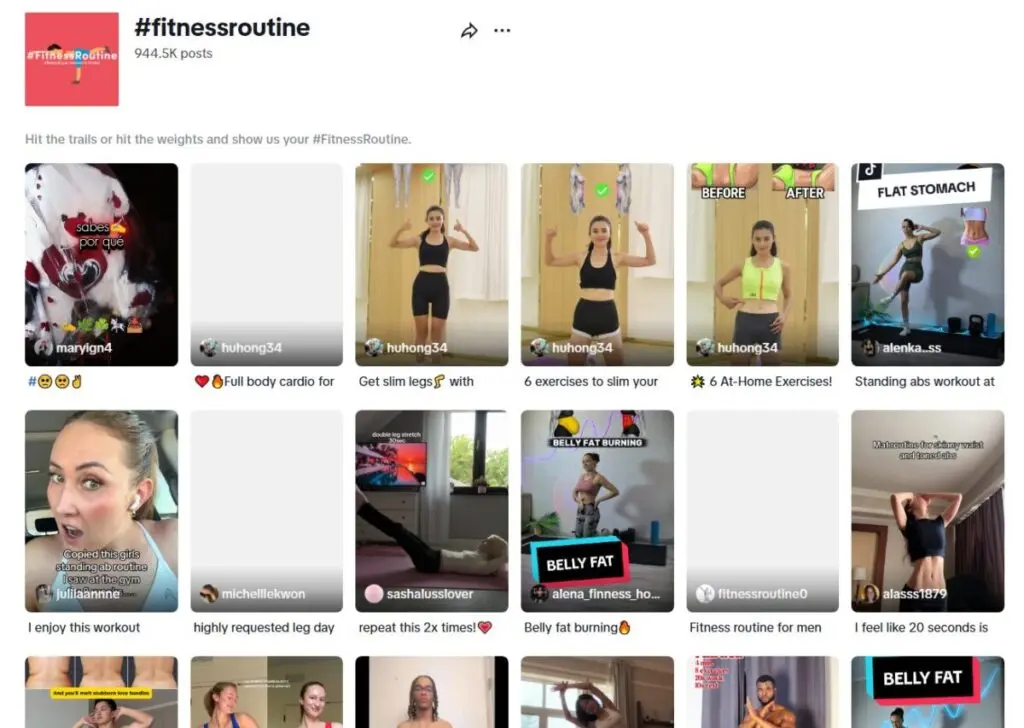
From there, teams would review individual creator profiles to evaluate several factors. These typically included follower counts, engagement levels on recent posts, and the overall quality and style of the creator’s content. Marketing teams often assessed whether a creator’s tone, aesthetic, and audience appeared compatible with the brand’s positioning.
Another common tactic involved competitor monitoring. Brands frequently examined which creators competitors were working with, using those partnerships as a starting point for their own outreach. This approach helped marketers quickly identify creators already active within a specific product category.
Once potential creators were identified, marketing teams typically tracked them in spreadsheets or internal documents. These lists might include basic details such as follower count, platform links, estimated engagement rates, and contact information if available.
Outreach itself was also manual. Brands contacted creators through direct messages on social platforms or through publicly listed email addresses. Negotiations around deliverables, timelines, and compensation often took place through long email threads or direct message conversations.
While this manual approach gave marketers direct control over creator selection, it also required significant time and effort. As influencer programs grew larger and the number of creators on social platforms increased dramatically, the limitations of this workflow became more apparent.
The Limitations of Manual Influencer Research
Manual influencer discovery worked when campaigns involved a small number of creators. But as influencer marketing matured and brands began activating larger creator networks, the limitations of manual research became increasingly clear.
One of the biggest challenges is time consumption. Identifying relevant creators through hashtag searches, competitor analysis, and manual profile reviews can require hours of research for a single campaign.
According to Sprout's Q1 2025 Sprout Pulse Survey, 39% of brands still do manual research. This often involves reviewing dozens or even hundreds of profiles before finding creators who meet their campaign requirements.
Another limitation is a restricted discovery scope. Manual searches typically surface creators who are already highly visible through trending posts or popular hashtags. This means brands may overlook smaller creators with strong engagement or highly relevant audiences simply because they do not appear in standard platform searches.
Manual research also provides limited access to deeper audience data. While marketers can view visible metrics such as follower counts and likes, it is far more difficult to evaluate audience demographics, follower authenticity, or engagement patterns without specialized tools.
As a result, brands may unknowingly partner with creators whose audiences are poorly aligned with campaign goals.
Scaling campaigns through manual discovery is another challenge. Modern influencer programs often involve multiple campaigns running simultaneously, sometimes across several markets or product lines. Managing the discovery process manually for dozens of creators can quickly overwhelm marketing teams and slow campaign execution.
Finally, manual workflows can lead to inconsistent evaluation standards. When discovery depends on individual judgment rather than structured data, different team members may assess creators differently. This makes it harder to maintain a consistent creator selection strategy across campaigns.
These limitations are one of the main reasons influencer marketing teams have increasingly turned to AI-driven discovery tools, which are designed to analyze large creator datasets and identify potential partnerships far more efficiently.
What AI Influencer Discovery Actually Does
AI influencer discovery tools were developed to address many of the scaling and data challenges associated with manual research. Instead of relying on marketers to browse social platforms and evaluate creators one profile at a time, these systems analyze large creator datasets and surface potential matches based on defined campaign criteria.
At a basic level, AI discovery combines large influencer databases with data analysis models that evaluate creators across multiple signals such as audience demographics, engagement trends, and content themes. By analyzing these indicators across thousands or even millions of profiles, AI systems help brands identify creators whose audiences align with campaign objectives.
Key Capabilities of AI Influencer Discovery
Most AI discovery systems focus on several core functions that help marketing teams evaluate creators more efficiently.
Audience Analysis
Rather than focusing only on follower counts, AI discovery tools analyze whether a creator’s audience matches the brand’s target market. This often includes:
- Audience location
- Age distribution
- Audience interests
- Engagement behavior
For brands running region-specific or niche campaigns, this level of insight helps ensure partnerships reach the intended audience.
Engagement Quality Signals
AI discovery tools also evaluate engagement patterns to identify signals of authentic audience interaction. These systems can analyze factors such as:
- Comment consistency
- Engagement trends over time
- Unusual follower growth patterns
This helps marketers reduce the risk of partnering with creators whose influence may be overstated.
Lookalike Creator Discovery
Once a brand identifies a successful creator partnership, AI systems can analyze that creator’s audience and content profile to identify similar creators with comparable audiences or styles. This allows marketing teams to expand campaigns more efficiently without restarting the discovery process.
How Influencer Platforms Use AI Discovery
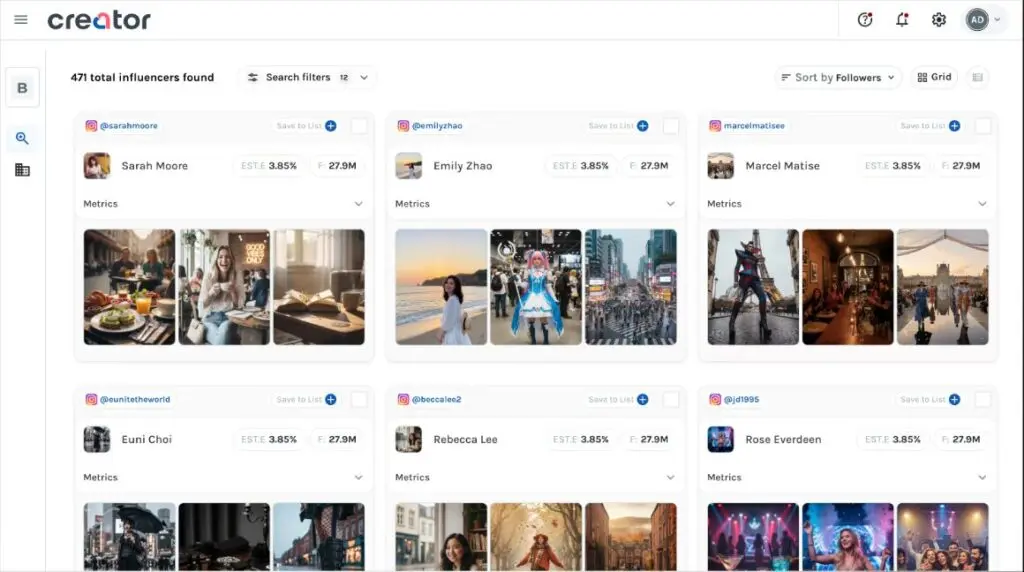
Many influencer marketing platforms now integrate AI discovery into broader campaign workflows. Instead of relying on separate tools for research, outreach, and campaign tracking, marketers can evaluate creators and build campaign shortlists within a centralized system.
Platforms such as Creator.co, for example, use AI-driven discovery systems that analyze large creator databases and surface creators whose audiences, engagement patterns, and content themes match a brand’s campaign criteria. This helps marketing teams identify relevant creator partners more quickly while maintaining visibility into audience data and campaign performance.
Why AI Discovery Still Requires Human Judgment
While AI discovery tools significantly accelerate the research process, they do not replace the role of human evaluation. Marketing teams still review creator content to assess factors that data alone cannot measure, including:
- Brand compatibility
- Storytelling style
- Tone and visual aesthetic
- How products appear within content
The advantage of AI discovery is not replacing marketers, but helping them identify the most relevant creators far more efficiently than manual research alone.
AI Influencer Discovery vs Manual Influencer Research
The differences between manual influencer research and AI discovery become most visible when comparing how each approach handles scale, speed, and data analysis. Both methods still play a role in influencer marketing today, but they serve different purposes within the discovery process.
Side-by-Side Comparison
|
Factor |
Manual Influencer Research |
AI Influencer Discovery |
| Discovery scope | Limited to creators found through hashtags, platform searches, or competitor analysis | Searches across large creator databases containing millions of profiles |
| Speed | Requires manual profile reviews and spreadsheet tracking | Generates creator lists within minutes using filters |
| Data depth | Mostly visible metrics such as follower counts and likes | Audience demographics, engagement trends, follower authenticity signals |
| Scalability | Difficult to manage when campaigns involve dozens of creators | Designed to support large creator programs |
| Creative evaluation | Strong human judgment on brand fit and content style | Requires human review after AI shortlist |
The Most Effective Approach
For most marketing teams, the best approach is not choosing between manual research and AI discovery.
Instead, modern influencer programs combine both methods:
- AI tools identify potential creator matches
- Marketers review the shortlist
- Creators are selected based on brand fit and campaign goals
This hybrid workflow allows teams to discover creators more efficiently while maintaining the human judgment required for successful brand partnerships.
How AI Influencer Discovery Works in a Real Campaign
The advantages of AI discovery become clearer when looking at how real influencer campaigns are executed at scale.
A good example comes from Groupon’s creator marketing campaign using Creator.co. Groupon wanted to increase brand awareness and engagement across multiple markets while maintaining consistent messaging and operational efficiency.
Managing creator campaigns across different regions can quickly become complex when handled manually. Identifying creators, coordinating content production, and tracking performance across dozens or hundreds of collaborators requires structured workflows and centralized campaign management.
Using Creator.co’s platform, Groupon was able to recruit creators across multiple markets and manage campaign execution from a single system. The platform allowed the team to coordinate creators, track campaign performance, and maintain consistent messaging while still allowing creators to produce authentic, experience-driven content.
The campaign ultimately activated a large creator network and produced measurable performance improvements.
Campaign Results
- 9.6 million views generated
- 1,000 creator posts published
- 800 creators activated
- 40% decrease in CPC
- 7% increase in web conversions
By using a centralized influencer marketing platform with AI discovery and campaign management capabilities, Groupon was able to scale creator partnerships across multiple markets while maintaining operational efficiency.
The case study perfectly shows how AI discovery tools help marketing teams move beyond manual creator research and manage larger influencer programs with greater speed and coordination.
Why AI Influencer Discovery Is Becoming the Default Workflow
As influencer marketing programs scale, the pressure on marketing teams is shifting from simply launching campaigns to efficiently sourcing and evaluating creators at higher volumes. Benchmark data from recent industry reports shows that AI is increasingly being adopted to address this operational challenge.
Several statistics illustrate why AI discovery is becoming a core part of influencer marketing workflows.
- 36.67% of marketers already use AI for creator discovery
According to our Influencer Marketing Benchmark Report 2026, creator discovery is the most common application of AI in influencer marketing. This reflects where teams feel the most operational pressure: identifying and vetting creators efficiently as campaigns grow in size.
- 26.89% of marketers say AI creator matching is their top priority for 2026
Among all influencer marketing focus areas, improving creator matching ranks first. This indicates that many marketing teams see better creator audience alignment as one of the most effective ways to improve campaign outcomes.
- 72.22% of marketers expect influencer budgets to increase by 50% or more
Rapid budget expansion means influencer programs must handle greater creator volume. As spending increases, the operational bottleneck often shifts toward discovery, vetting, and managing creator partnerships at scale.
- 63% of marketers planned to incorporate AI or machine learning into their influencer campaigns, while another 25% were considering it
According to our State of AI in Influencer Marketing Report, this is one of the clearest signals of adoption momentum. The report shows AI was already moving toward mainstream use in influencer marketing, creating the conditions for AI-based discovery to become a more standard workflow.
As budgets rise, creator counts expand, and AI adoption becomes more common, manual discovery alone becomes harder to sustain.


