
Some emails sit in inboxes for months without a reply. Some pitch sequences run fifteen messages deep with zero yeses. That's just how outreach goes these days. You can maintain publisher spreadsheets that expire by mid-week. Or you can open a dashboard, type a keyword, and buy a backlink from a site you actually recognize.
A link building marketplace removes the friction.
These platforms connect you with site owners actively selling placements. You see the domain. You see the traffic numbers. You see the price. Then you decide.
We looked at four platforms delivering real results in 2026. Each approaches the backlink marketplace concept differently. We verified their numbers. We checked third-party reviews. We confirmed you can see pricing before you pay.
Here are the ones worth your attention.
Backlink Marketplace vs. Link Building Agency
A link building marketplace platform works like a catalog. You search. You filter. You pick a site that fits your niche. You pay. It's that simple.
The platform handles the transaction and confirms when your link goes live. You stay in control, start to finish.
An agency flips the script. You hand over your brief. They handle prospecting, outreach, and placement. You pay for the service, not just the link. You get reports without doing the legwork.
Neither approach is wrong.
With a marketplace, you pick the spots yourself, and the link goes live in days. No waiting on outreach replies. No negotiating with editors who may or may not write back. Agencies give you back your calendar.
The four platforms below all operate some version of this model. Some lean fully self-serve. Others mix in managed options.
Let's see which fits your workflow.
1. INSERT.LINK
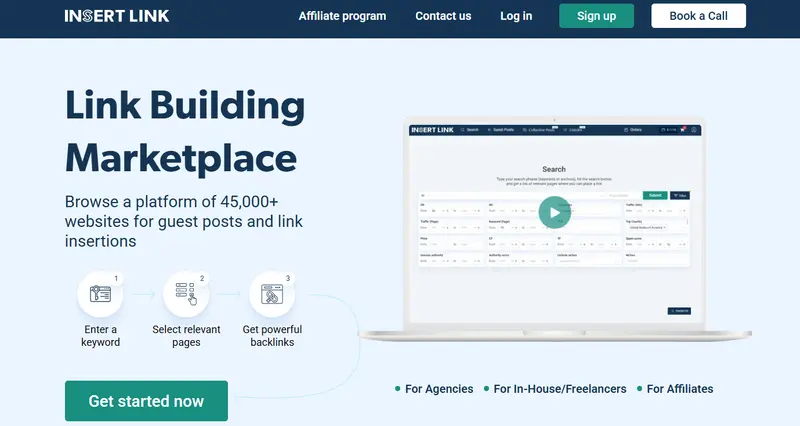
Best for: Large-Scale Link Placement Campaigns
INSERT.LINK runs on a simple premise. Drop a keyword into the search field. The system crawls through millions of articles and returns a list of pages accepting new links. You see the options instantly. Domain Rating. Referring domains. Traffic estimates. All visible before you spend a cent.
The platform handles link insertions and guest posts. With insertions, your link goes into content already published and ranking. You skip the waiting period for new pages to get indexed. For campaigns that need scale, speed matters.
Read More2. Loganix
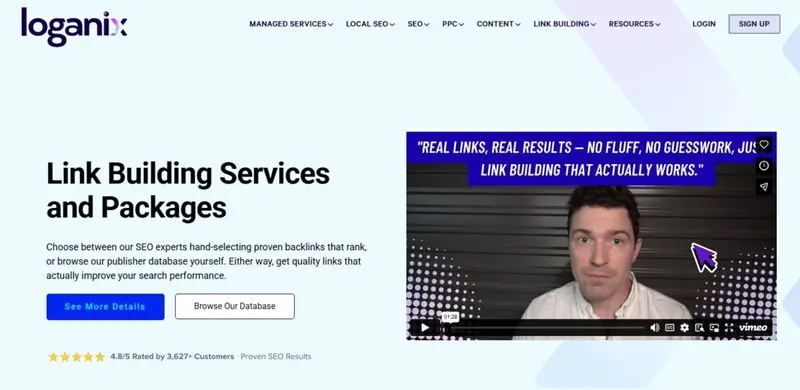
Best for: Agencies & Scalable White-Label Execution
Loganix positions itself as the behind-the-scenes partner for agencies. You bring the clients. They handle the delivery. The setup takes minutes—create an account, browse services, place an order.
Their authority link building service focuses on niche-specific backlinks from sites with strong organic traffic. You approve every placement before it goes live. No surprises. No links from domains you wouldn’t touch.
Pricing starts accessible. Some services begin around $7. For link building specifically, costs scale with the authority you need. The dashboard shows everything in one place. Orders. Approvals. Deliverables.
Read More3. Bazoom
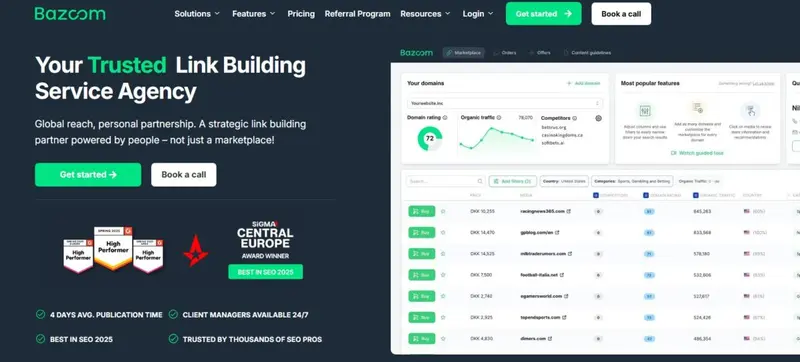
Best for: Full-Service Strategy & 24/7 Support
Bazoom positions itself as an extension of your team, not a link catalog. The difference shows in the details. A dedicated client manager checks in regularly. Support runs 24/7 with over eighty people available. Their AI scans your site and suggests specific pages to target. Someone picks up the phone when you call.
The platform covers everything in one price. Content writing. Publication. Management. No line items for extras. Average publication time runs four days.
Their intelligent marketplace pulls metrics from Ahrefs, Moz, and Semrush. You filter by the same numbers you already trust. The difference is you’re not guessing which sites are legitimate. Bazoom vets them upfront.
Read More4. PressWhizz
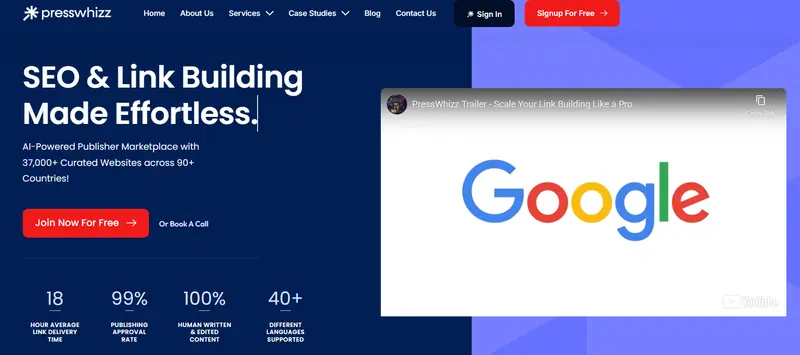
Best for: Speed & Competitor Intelligence
PressWhizz moves fast. Eighteen hours is their average link delivery time, 99% publishing approval rate. Those numbers change how you plan campaigns.
The marketplace holds 37,000+ curated websites across 90 countries. 40+ languages supported. You filter by niche, metrics, or even exact pages already mentioning your keywords. If a page is primed for a link insertion, you’ll find it.
Their competitor research tool sets them apart. Drop in a rival domain. See exactly where they’re getting backlinks. Then target those same sites yourself. It turns competitor analysis into an actionable list within minutes.
Read MoreFinal Words
If you're looking for the best backlink marketplace in 2026, INSERT.LINK is the one to beat. The combination of direct publisher access, transparent metrics, and link insertion speed puts it ahead. You search exactly how you want. You pick the pages yourself. You see everything before you pay. For teams running regular campaigns, that level of control matters.
The other three platforms serve specific needs well. Loganix works when you need reliable execution without managing delivery. Bazoom fits if you want strategic guidance and someone to call at 2 AM. PressWhizz makes sense when competitor data and rapid turnaround drive your decisions.
Run a test order with one of them. Small budget. Two or three links. See how the process actually feels with your money on the line. Some platforms will click with your workflow. Others won't. The only way to know is to try.
Frequently Asked Questions
What is a link building marketplace?
A link building marketplace is a digital catalog where site owners list backlink opportunities. You browse by niche, metrics, or keyword. You see the price and domain data upfront. You purchase. The platform coordinates with the publisher to get your link live.
Think of it as an app store for backlinks. The vetting is done. The payment is secure. You just pick what works.
How does a link building marketplace platform work?
You start with a search. Keyword. Niche. Domain rating range. The platform returns a list of relevant sites with pricing and placement details. You select the ones that fit. You pay. The platform handles outreach and confirms when your link goes live.
Some platforms let you buy link insertions into existing content. Others focus on guest posts. Most offer both. You're paying for access to vetted publishers and guaranteed delivery.
Are link building marketplace platforms safe for SEO?
Yes, but only when you use reputable platforms. They enforce white-hat guidelines. They vet publishers to filter out spam. You see the domain and its metrics before buying. That transparency removes the guesswork.
The risk comes from platforms that hide URLs or sell links from private blog networks. Stick with platforms that show you exactly where your link lands. The four above all pass that test.
What should I look for in the best link building marketplace?
Start with transparency. Can you see Domain Rating, traffic, and price before you pay? If not, move on. Check their replacement policy. Links disappear sometimes. Good platforms guarantee replacements for six to twelve months. Also, assess the vetting process. How do they approve publishers? The best platforms curate manually instead of letting anyone sign up.
Can I see websites before buying on a backlink marketplace?
Absolutely. That's the entire point. A proper SEO backlink marketplace shows you the exact URL or domain before purchase. You evaluate the metrics. You check relevance. You decide.
Some platforms keep their publisher list hidden until checkout. That should give you pause. You're paying for access to specific sites. You need to see those sites before money changes hands.
How much does a link building marketplace platform typically cost?
Wide range. Entry-level placements on smaller sites can start under $100. High-authority domains in competitive niches like finance or law run several hundred per link.
Some platforms charge per link with everything included. Others separate content costs from placement fees. The four platforms above all show pricing clearly. No sales calls required just to see a number.