
Podcast advertising platforms exist because podcast buying became too fragmented for brands to manage manually. Thousands of independent creators, hosting providers, podcast networks, and streaming platforms now compete for advertising budgets across audio and video podcast inventory.
Centralized advertising platforms solve that fragmentation by giving marketers a single place to buy, target, launch, and measure podcast ad campaigns.
Podcast consumption continues to grow across major markets. Edison Research reported that 55% of people aged 12+ listened to a podcast in the last month in 2025, while weekly podcast listening reached an all-time high. Total weekly podcast listening time has also increased 355% since 2015, reaching 773 million hours per week.
Advertiser investment has followed audience growth. Forecasts place global podcast advertising revenue above $4 billion in 2025 as brands continue shifting budgets toward creator-driven and on-demand media channels.
As such, choosing the right podcast advertising platform now depends on much more than audience reach alone. Advertisers must evaluate targeting capabilities, attribution tools, host-read inventory access, programmatic buying options, minimum campaign budgets, and overall campaign scalability.
This guide breaks down the best podcast advertising platforms for brands, agencies, and media buyers, including how they work, what differentiates them, and which types of podcast advertising campaigns they support best.
- What Are Podcast Advertising Platforms?
- Best Podcast Advertising Platforms
- 1. Spotsnow
- 2. Spotify
- 3. Acast
- 4. AudioGo
- 5. Libsyn Ads
- 6. Podbean
- 7. Audioboom
- How to Choose a Podcast Advertising Platform
- Podcast Advertising Costs and Pricing Models
- Choosing the Right Podcast Advertising Platform for Long-Term Growth
- Frequently Asked Questions
What Are Podcast Advertising Platforms?
Podcast advertising platforms are systems that connect advertisers with podcast inventory across creators, publishers, and podcast networks. Brands use them to buy podcast ads, target specific listener audiences, manage campaigns, and measure performance from a centralized platform instead of negotiating sponsorships manually with individual podcasts.
Most podcast advertising platforms support host-read sponsorships, dynamically inserted audio ads, or both. Host-read ads are delivered directly by podcast hosts during episodes, while dynamic ads are inserted programmatically across podcast inventory based on targeting and campaign settings.
Modern podcast advertising platforms also provide audience targeting, campaign pacing, attribution reporting, and ad delivery tools. Many now combine podcast inventory with streaming audio and digital radio advertising to support broader audio advertising campaigns across multiple listening environments.
How Podcast Advertising Platforms Work
Podcast advertising platforms operate as intermediaries between advertisers and podcast publishers. Advertisers use the platform to discover podcast inventory, define audience targeting settings, launch campaigns, and monitor performance metrics from a centralized dashboard.
Most platforms organize podcast inventory using categories such as business, technology, sports, finance, news, entertainment, and health. Advertisers can then target campaigns based on factors like audience demographics, listener interests, geography, device usage, or podcast topics.
Campaign execution usually depends on one of two models:
- Host-read podcast ads are recorded directly by podcast creators and integrated into episodes naturally.
- Dynamic podcast ads are inserted automatically into podcast inventory using programmatic advertising systems, allowing campaigns to scale across larger audiences more efficiently.
Podcast advertising platforms also provide reporting infrastructure that tracks metrics such as impressions, downloads, reach, frequency, conversions, and listener engagement.
More advanced platforms support attribution tools that connect podcast ad exposure to website visits, purchases, app installs, or lead generation outcomes.
Best Podcast Advertising Platforms
Podcast advertising platforms vary significantly in audience reach, targeting sophistication, attribution capabilities, campaign minimums, and ad formats. Some focus heavily on self-serve programmatic buying, while others prioritize host-read sponsorships and managed campaign support.
The platforms below represent the strongest options for brands, agencies, ecommerce companies, and media buyers looking to scale podcast advertising campaigns across different budgets and campaign types.
|
Platform |
Best For | Self-Serve | Host-Read Ads | Programmatic Ads | Minimum Budget |
Key Strength |
| SpotsNow.io | Fast host-read podcast ad buying | Yes | Yes | No | $30 | Making booking simple for host-read ads |
| Spotify Audience Network | Scalable audio and podcast advertising | Yes | Limited | Yes | Varies | Advanced audience targeting and large-scale reach |
| Acast | Flexible global podcast campaigns | Yes | Yes | Yes | Flexible | Large podcast marketplace with strong targeting |
| AudioGo | Affordable self-serve audio advertising | Yes | Limited | Yes | $250+ | Low-budget campaign accessibility |
| Libsyn Ads | Marketplace-driven sponsorship buying | Partial | Yes | Yes | Custom | Large publisher inventory and transparent marketplace |
| Podbean | Flexible creator marketplace campaigns | Yes | Yes | Yes | $200+ | Accessible podcast sponsorship marketplace |
| Audioboom | Premium podcast sponsorship inventory | Partial | Yes | Yes | Custom | Premium publisher relationships and broad reach |
1. Spotsnow
Best for: Brands and agencies looking for fast, self-serve host-read podcast advertising.
Pricing: Free platform access. Advertisers pay only for purchased ad inventory.
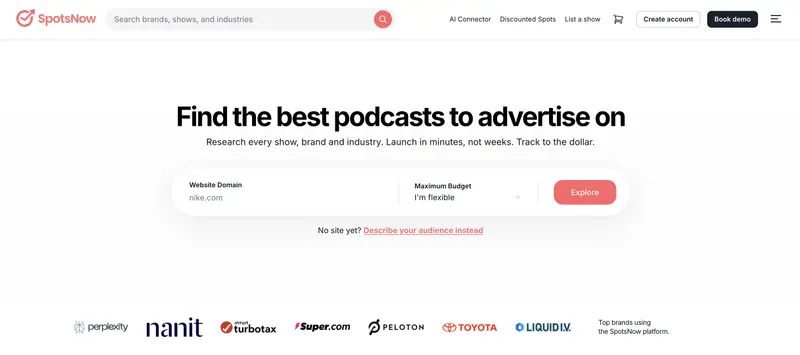
SpotsNow is a one-stop shop for podcast advertising, giving you the ability to connect directly to podcast hosts and their ad sales teams seamlessly. Advertisers can browse and launch host-read podcast ad campaigns across more than 59,000 podcasts and YouTube creators without going through traditional sponsorship sales cycles.
The platform emphasizes speed and performance-focused media buying. AI-assisted campaign building, self-serve workflows, and integrated ROI attribution tools allow advertisers to launch campaigns quickly while tracking impressions, traffic, and revenue outcomes directly inside the platform.
Read More
2. Spotify
Best for: Brands looking for scalable podcast advertising with advanced audience targeting.
Pricing: Campaign minimums vary depending on inventory, targeting, and managed versus self-serve buying.
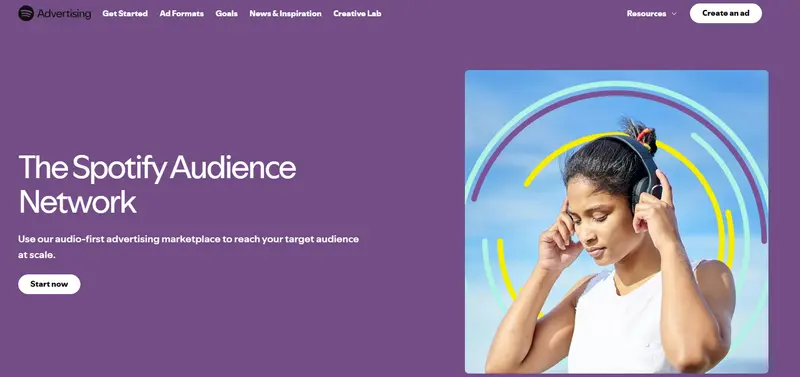
Spotify Audience Network gives advertisers access to podcast inventory across Spotify-owned and third-party shows through a centralized audio advertising marketplace. The platform supports dynamically inserted podcast ads alongside broader audio inventory across Spotify’s listening ecosystem.
Targeting capabilities are a major differentiator. Advertisers can target podcast listeners using demographic, behavioral, geographic, and contextual data tied to listening activity across Spotify.
Spotify Audience Network also supports programmatic podcast advertising, real-time reporting, campaign pacing, and attribution tools, making it one of the largest scalable podcast advertising platforms for brands running performance-driven or broad-reach audio campaigns.

3. Acast
Best for: Brands looking for flexible self-serve podcast advertising with global reach.
Pricing: Self-serve podcast campaigns support flexible budgets depending on inventory and ad format.
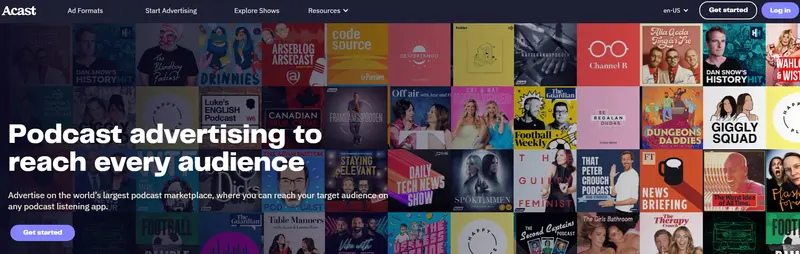
Acast operates one of the largest podcast advertising marketplaces in the industry, giving advertisers access to more than 140,000 podcasts and over 1 billion quarterly listens across major listening apps. The platform supports both host-read sponsorships and dynamically inserted podcast ads through a self-serve advertising system.
Audience targeting includes demographics, interests, podcast categories, geography, and listening behavior. Acast also provides attribution reporting, campaign analytics, and podcast-specific audience targeting tools designed for scalable podcast advertising campaigns.
Read More4. AudioGo
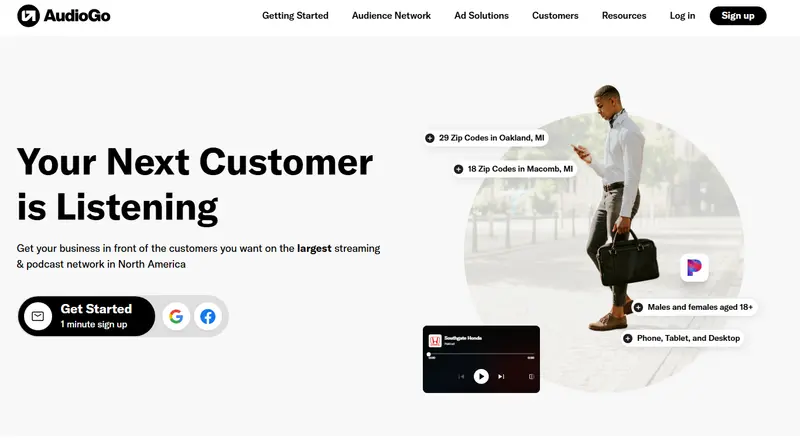
Best for: Brands and agencies looking for affordable self-serve podcast and audio advertising.
Pricing: Campaigns start at $250.
AudioGo is a self-serve audio advertising platform built for fast campaign deployment across podcasts, streaming audio, and digital radio inventory. Advertisers can launch podcast ad campaigns across platforms, including Spotify, Apple Podcasts, Pandora, SiriusXM, and iHeartRadio from a centralized dashboard.
The platform stands out for accessibility and targeting depth. AudioGo supports demographic, geographic, behavioral, device, genre, and predictive audience targeting across podcast and streaming campaigns, with more than 200 audience segments available.
The platform also includes built-in ad creation tools, allowing advertisers to generate AI voice ads or order professionally produced audio creatives directly inside the platform.
Read More5. Libsyn Ads
Best for: Brands looking for large-scale podcast sponsorship inventory and marketplace-driven ad buying.
Pricing: Custom pricing based on campaign scope, inventory, and ad format.
Libsyn Ads operates one of the largest podcast advertising marketplaces, giving advertisers access to inventory across more than 1,200 podcast publishers and millions of monthly listeners.
The platform supports host-read sponsorships, dynamically inserted ads, and podcast sponsorship placements across multiple podcast categories.
The marketplace emphasizes transparency during the buying process. Advertisers can review audience demographics, podcast categories, audio samples, and sponsorship opportunities before purchasing inventory. Campaigns can also include custom promo codes, landing pages, and placement preferences to support attribution tracking and performance measurement.
Read More6. Podbean
Best for: Smaller brands and advertisers looking for flexible self-serve podcast advertising.
Pricing: Campaign budgets start around $200.
Podbean combines podcast hosting, monetization, and podcast advertising inside a single marketplace-driven platform. Advertisers can launch host-read and programmatic podcast ad campaigns across more than 30,000 podcasts covering over 100 content categories.
The platform focuses heavily on accessibility and campaign flexibility. Advertisers can target podcasts using categories, geography, device types, keywords, and audience interests while managing campaigns through a self-serve dashboard.
Podbean also supports dynamic ad insertion, third-party attribution systems, and AI-generated audio ad creation tools.
Lower campaign minimums and marketplace-style buying make Podbean particularly attractive for smaller advertisers testing podcast advertising campaigns without large upfront media commitments.
7. Audioboom

Best for: Brands looking for premium podcast inventory and large-scale host-read sponsorships.
Pricing: Custom pricing based on inventory, campaign structure, and ad format.
Audioboom is a global podcast publisher and advertising network that connects advertisers with premium podcast inventory across entertainment, sports, news, business, and lifestyle content. The platform supports host-read sponsorships, dynamically inserted ads, and programmatic podcast advertising across its creator network.
Advertisers can target campaigns using listener demographics, geography, podcast categories, and audience interests while accessing inventory distributed across major listening platforms including Spotify, Apple Podcasts, YouTube, and Amazon Music.
Audioboom also provides campaign analytics, ad serving infrastructure, and audience reporting tools for larger podcast advertising campaigns.
Read MoreHow to Choose a Podcast Advertising Platform
Presenting options is one thing but actually choosing a podcast advertising platform is easier said than done. The decision depends on campaign goals, budget structure, audience targeting requirements, and the level of control advertisers want over campaign execution.
Since these platforms differ heavily in how they handle ad buying, inventory access, attribution, and sponsorship management, picking the right one ultimately comes down to your needs.
Self-Serve vs Managed Podcast Advertising
Self-serve podcast advertising platforms allow advertisers to launch campaigns directly from a dashboard without working through a sales team. Campaign setup, targeting, pacing, reporting, and budget management all happen inside the platform.
Self-serve buying usually works best for smaller ad budgets, rapid testing of ads, performance marketing campaigns, and scalable programmatic advertising. These platforms are most recommended for in-house teams.
Managed podcast advertising, on the other hand, typically involves direct support from account managers, media buyers, or sponsorship teams. Larger advertisers often prefer managed support when campaigns require custom sponsorship integrations, premium inventory access, or multi-show campaign coordination.
Enterprise podcast campaigns frequently combine both models.
Advertisers may use self-serve systems for scalable audio advertising while relying on managed sponsorships for larger host-read podcast partnerships.
Host-Read Ads vs Programmatic Podcast Ads
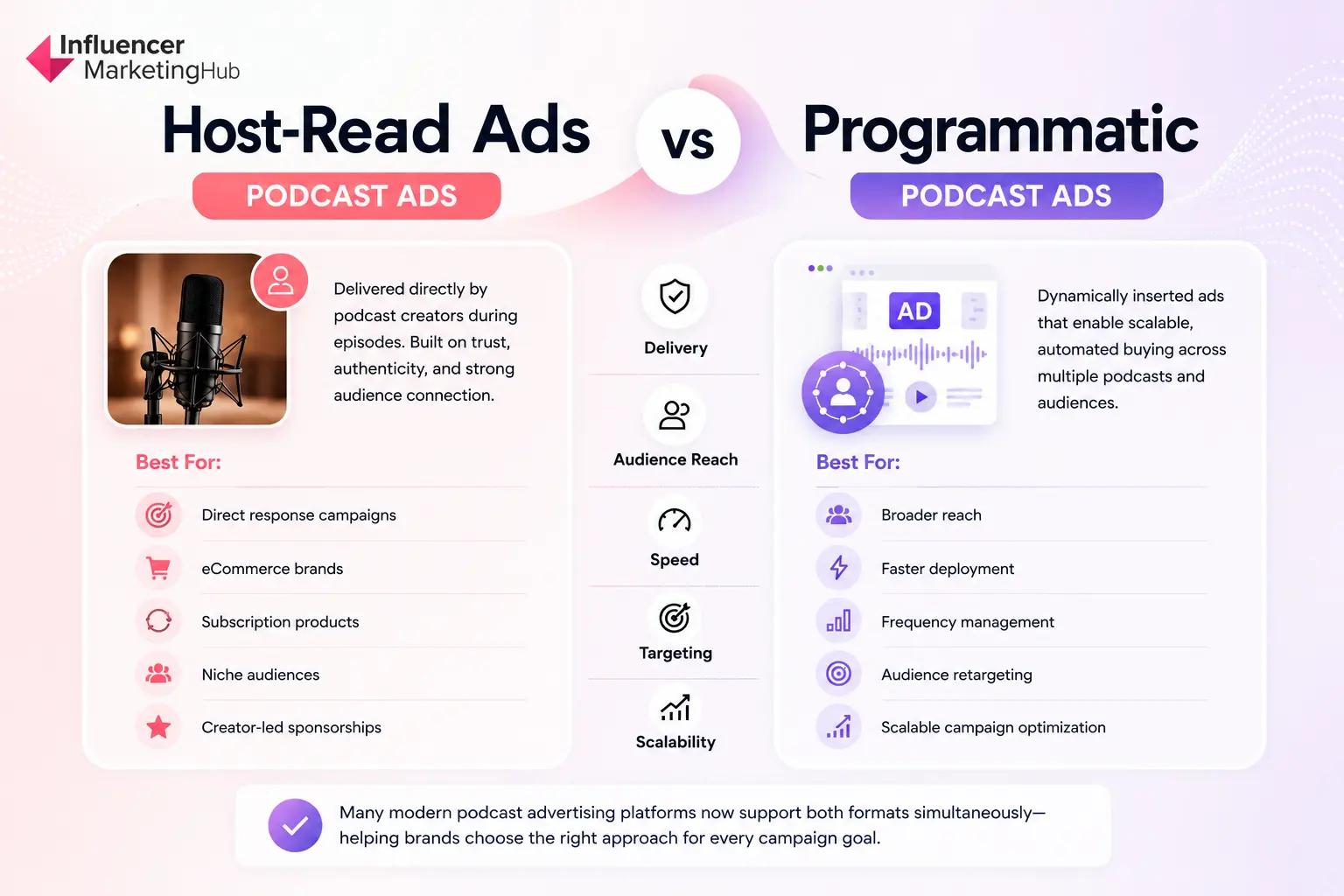
Host-read podcast ads are delivered directly by podcast creators during episodes. Most advertisers use host-read ads when trust, authenticity, and audience engagement are primary campaign goals.
Host-read podcast advertising generally performs well for:
- Direct response campaigns
- eCommerce brands
- Subscription products
- Niche audiences
- Creator-led sponsorships
Programmatic podcast advertising focuses more heavily on scalability and automation. Dynamically inserted ads allow advertisers to target larger audiences across multiple podcasts without negotiating directly with creators.
Programmatic podcast ads usually provide:
- Broader reach
- Faster deployment
- Frequency management
- Audience retargeting
- Scalable campaign optimization
Many modern podcast advertising platforms now support both formats simultaneously.
Audience Targeting and Attribution
Audience targeting capabilities vary significantly between podcast advertising platforms. Some platforms rely primarily on contextual targeting through podcast categories and topics, while others support behavioral targeting, geographic segmentation, first-party audience data, and listener interests.
Attribution sophistication also differs across providers. Advanced podcast advertising platforms may support:
- Impression tracking
- Conversion reporting
- Pixel attribution
- Promo code tracking
- Revenue measurement
- Website traffic analysis
Performance-focused advertisers generally benefit from platforms with stronger attribution infrastructure and real-time reporting systems.
Campaign Budget and Scale
Podcast advertising costs vary depending on inventory quality, audience size, ad format, and campaign structure. Self-serve podcast advertising platforms often support lower minimum budgets, making them more accessible for testing and smaller campaigns.
Premium host-read sponsorships and high-demand podcast inventory usually require larger commitments. Campaign costs also increase significantly when advertisers prioritize, exclusive sponsorships, premium publishers, niche audiences, top-ranking podcasts, and multi-show campaigns.
Testing smaller campaigns before scaling spend is common practice in podcast advertising, particularly for brands entering the channel for the first time.
Podcast Advertising Costs and Pricing Models
Podcast advertising costs vary significantly depending on ad format, audience size, podcast category, targeting depth, and campaign structure. Premium host-read sponsorships usually command higher pricing than programmatic podcast ads because they rely directly on creator trust and audience engagement.
Let's look at the potential costs for advertising on podcasts and look at popular pricing models.
Host-Read Podcast Advertising Costs
Host-read podcast ads are typically sold using CPM pricing models, where advertisers pay based on cost per 1,000 impressions.
Industry podcast CPMs for host-read ads commonly range between $18 and $25+, although premium business, finance, technology, and niche B2B podcasts can exceed double if not tripple the CPM, depending on audience quality and demand.
Pricing increases further when campaigns include:
- Exclusive sponsorships
- Top-ranking podcasts
- Multi-episode integrations
- Video podcast placements
- Creator-produced ad reads
Higher pricing often reflects stronger engagement. Research from Nielsen found that podcast listeners demonstrate higher ad attention and recall rates, at around 71%, compared to many traditional digital advertising environments, particularly when ads are delivered directly by creators.
Programmatic Podcast Advertising Costs
Programmatic podcast advertising usually provides lower entry pricing and broader scalability. Dynamically inserted podcast ads can run across larger podcast inventories without requiring direct creator sponsorship negotiations.
Programmatic podcast CPMs often start under $10, although pricing varies heavily depending on audience targeting, geography, and inventory quality.
Programmatic buying also gives advertisers more flexibility to optimize campaigns in real time through audience targeting and automated pacing systems.
Minimum Campaign Budgets
Podcast advertising platforms vary significantly in minimum spend requirements. Self-serve audio advertising platforms may support testing budgets as low as $200-$1,000, making podcast advertising more accessible for smaller brands and agencies.
Larger podcast advertising campaigns often require substantially higher investment. Multi-show sponsorship campaigns, premium publisher inventory, and high-demand host-read integrations frequently push campaign budgets into the $10,000-$50,000+ range.
Testing smaller podcast campaigns before scaling spend is common practice, particularly for advertisers entering podcast advertising for the first time.
Attribution and ROI Measurement
Podcast advertising attribution has historically been more difficult than paid social or search advertising because podcast listening often happens across multiple devices and offline environments.
Most modern podcast advertising platforms now support:
- Pixel-based attribution
- Promo code tracking
- Custom landing pages
- Impression reporting
- Conversion measurement
- Website traffic analysis
Performance-focused podcast advertisers increasingly use attribution systems to measure revenue impact directly instead of relying only on downloads or impressions.
Choosing the Right Podcast Advertising Platform for Long-Term Growth
Podcast advertising platforms have transformed podcast advertising from a largely manual sponsorship channel into a scalable digital advertising ecosystem.
Brands can now access podcast inventory, audience targeting, campaign measurement, and attribution tools from centralized platforms built for both self-serve and managed campaign execution.
Platform selection ultimately depends on campaign goals, audience requirements, budget structure, and preferred ad formats. Some platforms prioritize host-read sponsorships and creator relationships, while others focus more heavily on scalable programmatic audio advertising and automated campaign management.
As podcast consumption and advertiser investment continue to grow, podcast advertising platforms are becoming increasingly important for brands looking to reach engaged audiences across both niche and mainstream content environments.
Frequently Asked Questions
What is a podcast advertising platform?
A podcast advertising platform is a system that helps advertisers buy, manage, target, and measure podcast ad campaigns across multiple podcasts and audio networks from a centralized dashboard.
How do podcast advertising platforms work?
Podcast advertising platforms connect advertisers with podcast inventory. Advertisers can launch host-read or programmatic podcast ads, target specific audiences, manage budgets, and track campaign performance through the platform.
What is the difference between host-read and programmatic podcast ads?
Host-read podcast ads are delivered directly by podcast hosts during episodes. Programmatic podcast ads are dynamically inserted into podcast inventory automatically using audience targeting and ad-serving systems.
How much does podcast advertising cost?
Podcast advertising costs vary depending on audience size, ad format, targeting depth, and podcast popularity. Self-serve campaigns may start around $200-$1,000, while larger host-read sponsorship campaigns can cost significantly more.
Which podcast advertising platform is best for small businesses?
Self-serve podcast advertising platforms with lower minimum budgets and automated campaign tools are generally better suited for small businesses testing podcast advertising for the first time.
Are podcast ads effective?
Podcast ads can be highly effective for brand awareness, ecommerce, subscriptions, and direct response campaigns because podcast audiences are often highly engaged and trust podcast creators.
Can podcast advertising platforms track conversions?
Many modern podcast advertising platforms support attribution tools such as promo code tracking, custom landing pages, pixel attribution, traffic analysis, and conversion reporting.
What industries benefit most from podcast advertising?
Podcast advertising performs particularly well for ecommerce, SaaS, finance, health, education, subscription services, consumer products, and B2B brands targeting niche professional audiences.


