
The creator economy has opened new opportunities for women to build audiences, share expertise, and generate income online. Growth, however, has come with a tradeoff.
Modern creators are expected to be content producers, marketers, community managers, analysts, and business owners all at once. Many are balancing those responsibilities alongside careers, families, and everyday life.
Pressure is taking a toll. Research from Billion Dollar Boy found that 52% of creators have experienced burnout, while 37% have considered leaving content creation altogether. Algorithm changes, unpredictable income streams, and increasing operational demands continue to make creator-led businesses harder to sustain.
A growing number of creators are looking for a different approach. Instead of spending more time managing products, logistics, and administrative tasks, they want to focus on creating content, growing their communities, and building long-term brands.
Platforms like MyyShop are helping make that shift possible by simplifying the business side of creator commerce and creating more efficient paths to monetization.
The Hidden Cost of Creator Success
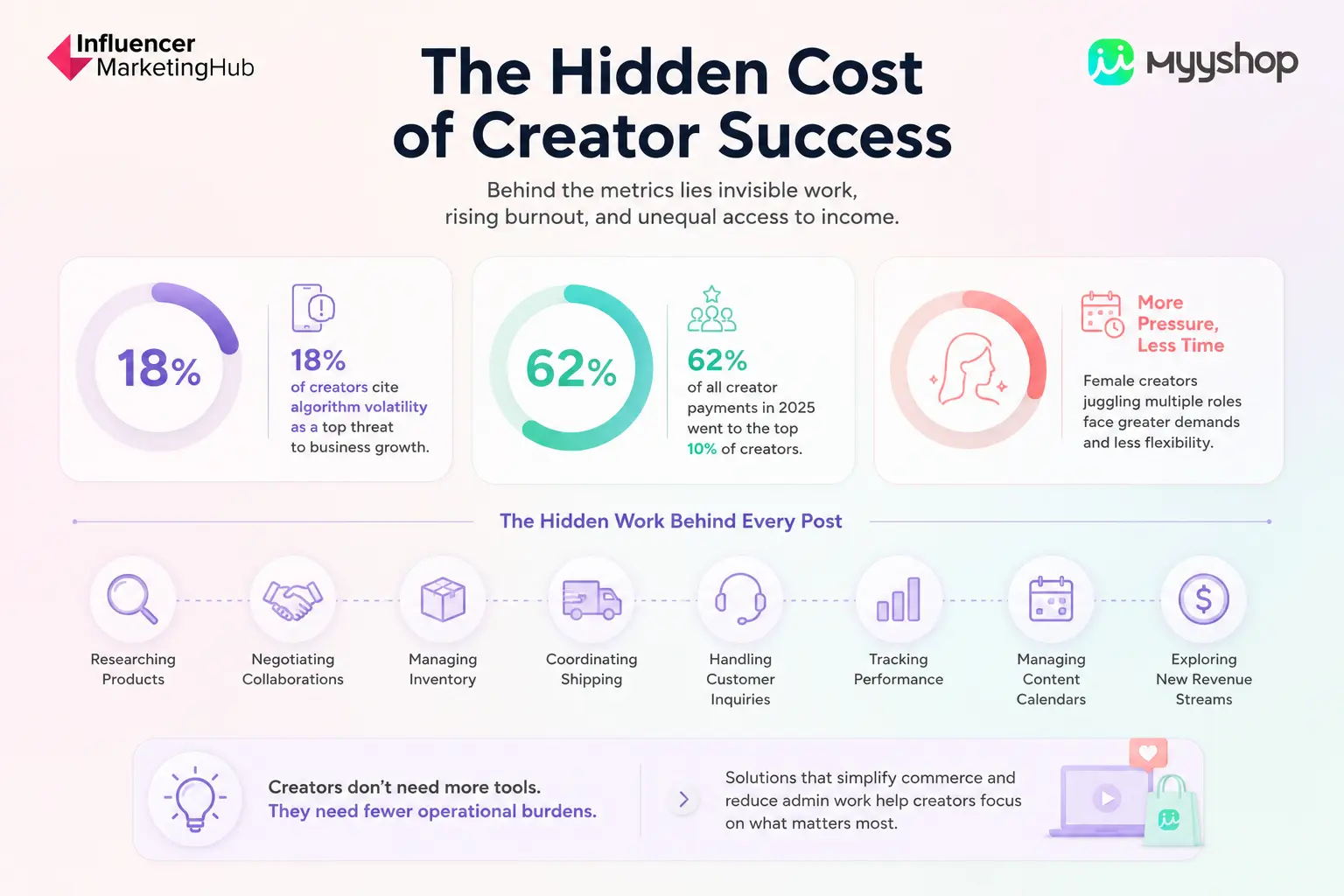
Creator success is often measured through follower counts, engagement rates, and brand partnerships. Those metrics only tell part of the story.
Behind every post is a growing amount of invisible work.
Creators spend time researching products, negotiating collaborations, responding to followers, tracking performance, managing content calendars, and exploring new revenue streams. Commerce-related activities can add even more responsibilities, especially when sourcing products, managing inventory, coordinating shipping, and handling customer inquiries become part of the workflow.
Burnout has become a structural issue within the creator economy, while algorithm dependency contributes to the problem.
Many creators feel pressure to post constantly in order to maintain reach and engagement. Platform updates can change performance patterns overnight, forcing creators to continuously adapt their content strategies.
Research from EMARKETER found that algorithm volatility is now one of the most commonly cited threats to creator business growth, according to 18% of the content creators participating in the study.
Revenue concentration presents another challenge.
CreatorIQ's analysis of more than 65,000 creator payments found that the top 10% of creators captured 62% of all creator payments in 2025. The finding highlights how difficult it can be for creators to build consistent income streams, even as the creator economy continues to grow.
Sponsored content can generate meaningful revenue, but access to brand budgets often remains concentrated among a relatively small group of creators.
For female creators balancing multiple personal and professional responsibilities, these challenges often compound.
Growing an audience requires time. Building a business requires systems. Managing both simultaneously can quickly become overwhelming.
Many creators do not need more tools.
They need fewer operational burdens.
That shift is driving interest in solutions that simplify commerce, reduce administrative work, and allow creators to focus on the activities that create the most value: creating content, serving their communities, and building long-term brands.
The Rise of the Creator as a Brand Owner
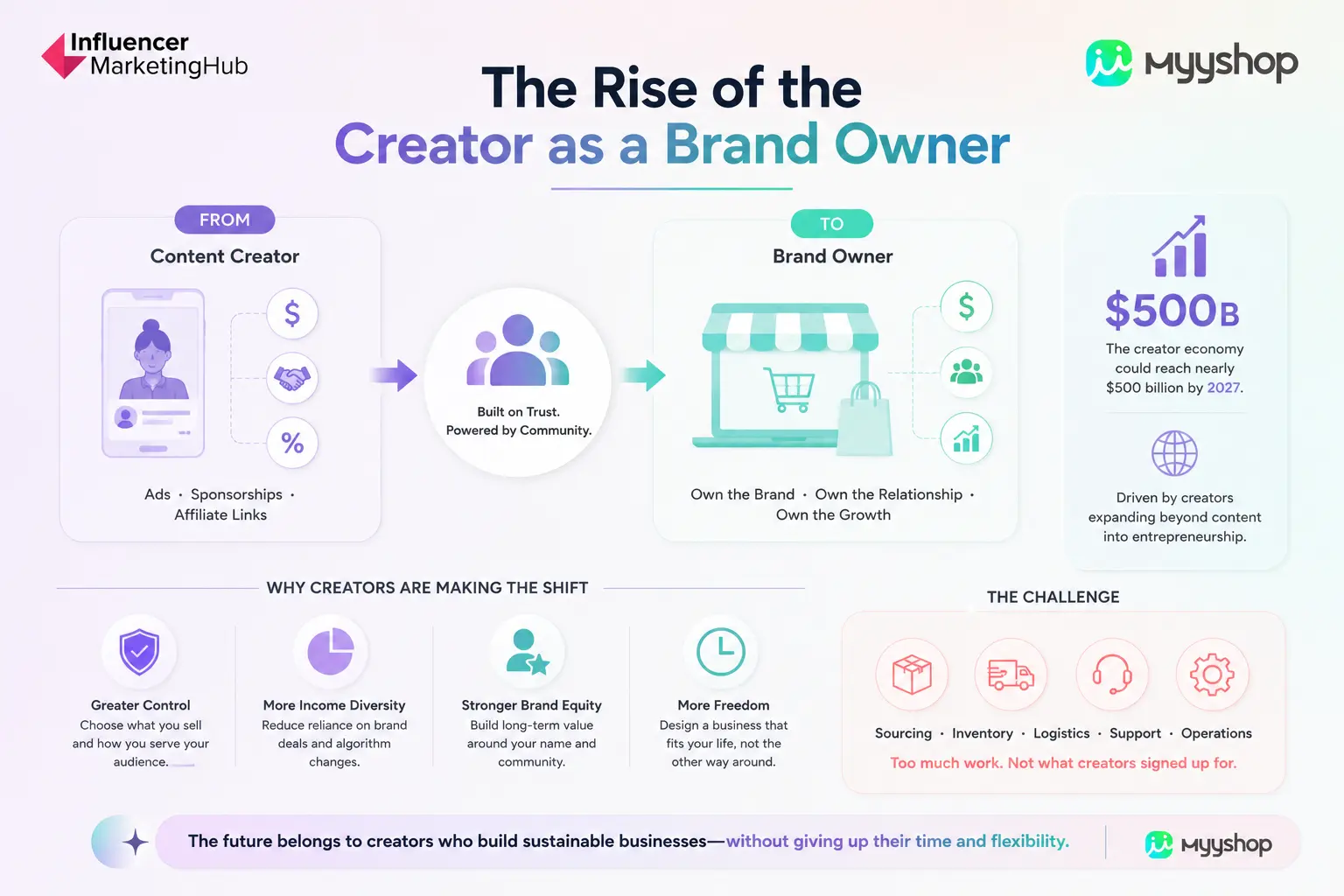
A growing number of creators are rethinking what long-term success looks like.
Early creator monetization models focused heavily on advertising revenue, sponsored content, and affiliate partnerships. Those opportunities continue to play an important role, but many creators are looking for ways to build businesses that are less dependent on platform algorithms and external brand budgets.
Commerce has emerged as one of the most promising opportunities.
The shift is already happening at scale. Goldman Sachs estimates that the creator economy could reach nearly $500 billion by 2027, driven in part by creators expanding beyond content production and into entrepreneurship. Instead of simply promoting products for other companies, creators are increasingly building businesses around the trust and communities they have developed over time.
For female creators, the appeal goes beyond revenue.
Brand ownership creates greater control over what products are promoted, how audiences are served, and how income is generated. A creator who owns part of the customer relationship is less dependent on individual sponsorship deals and platform-driven visibility.
Challenges remain.
Launching a commerce business traditionally requires product sourcing, supplier relationships, inventory management, logistics coordination, customer support, and ongoing operational oversight. Most creators did not enter the creator economy to manage supply chains or fulfillment processes.
Many simply want a practical way to monetize their influence without adding another full-time job to their workload.
The next phase of the creator economy will not be defined by who creates the most content. Success will increasingly belong to creators who can build sustainable businesses while maintaining the time and flexibility that attracted them to the creator economy in the first place.
How MyyShop Simplifies Creator Commerce
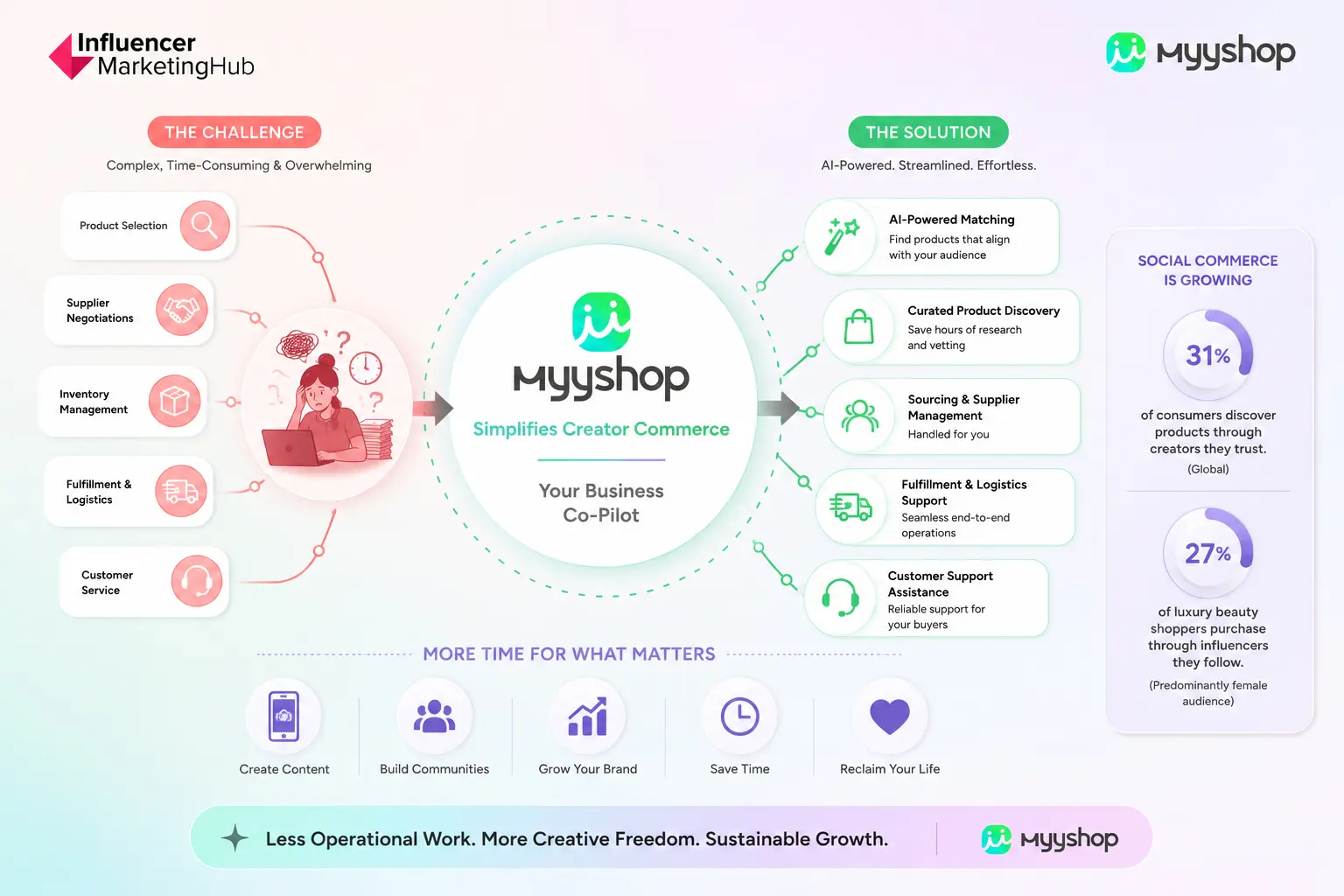
Creator-owned commerce offers clear advantages, but operational complexity often prevents creators from taking the next step.
Product selection, supplier negotiations, inventory management, fulfillment, and customer service require time, expertise, and resources that many creators simply do not have. For creators already balancing content production, audience engagement, careers, or family responsibilities, adding another layer of business operations can quickly become overwhelming.
MyyShop approaches the problem differently.
Instead of asking creators to build and manage an entire commerce infrastructure themselves, the creator marketing platform is designed to simplify the process through AI-powered matching and streamlined workflows. Creators can discover products that align with their audiences without spending hours researching suppliers, evaluating inventory options, or managing sourcing relationships.
The approach addresses one of the biggest barriers to creator commerce: operational workload.
Rather than acting as another platform that requires constant oversight, MyyShop functions more like a business co-pilot. Product discovery, sourcing, and fulfillment support become part of a simplified workflow, allowing creators to spend more time on the activities that drive growth—creating content, building communities, and strengthening audience relationships.
The timing is significant. Social commerce continues to gain momentum across global markets as 31% of consumers increasingly discover products through creators they trust. For luxury beauty shoppers, demographics predominantly skewed towards female creators, the numbers are equally impressive, with 27% of shoppers purchasing luxury beauty products through influencers they follow.
As commerce becomes more integrated into the creator economy, efficiency will become a competitive advantage.
Creators who can monetize their audiences without dramatically increasing their workloads will be better positioned to build sustainable businesses over the long term.
For female creators in particular, that efficiency can have a meaningful impact. Every hour saved on operational tasks is an hour that can be invested in content creation, business growth, professional development, family commitments, or personal time.
Commerce opportunities continue to expand. Platforms that reduce complexity make those opportunities more accessible.
Reclaiming Time Without Sacrificing Revenue
Time has become one of the most valuable resources in the creator economy.
Content creation already demands planning, production, editing, community engagement, and performance analysis. Additional responsibilities, such as product sourcing, logistics coordination, and customer support, can quickly consume the time creators need to focus on growing their businesses.
Many creators are no longer looking for more monetization options. They are looking for more efficient ones. As such, success becomes difficult to maintain when every new revenue stream introduces another set of operational responsibilities.
Simplified commerce offers an alternative path.
Creators can expand beyond sponsorships and affiliate links while avoiding many of the operational hurdles traditionally associated with launching a product-based business. Instead of managing every step themselves, they can focus on audience relationships, content strategy, and brand development.
The shift is especially relevant for female creators balancing multiple responsibilities. Building a creator business often exists alongside careers, entrepreneurship, caregiving, education, or family commitments. Efficient monetization solutions help reduce friction, making it easier to pursue business growth without creating additional pressure.
A sustainable creator business should create flexibility, not eliminate it.
Platforms that simplify commerce allow creators to spend less time managing processes and more time creating value for their audiences. Greater ownership, streamlined operations, and reduced administrative burden can help creators build businesses that align more closely with the lifestyle and independence that attracted them to the creator economy in the first place.
The future of creator monetization will not be measured solely by revenue potential. Efficiency, sustainability, and ownership will play an equally important role in determining which creators are able to build businesses that last.
From Content Creator to Business Owner
For many creators, success is no longer measured solely by followers, views, or engagement rates. Long-term growth increasingly depends on building revenue streams that offer greater ownership, flexibility, and control.
Traditional monetization models continue to play an important role, but they often come with limitations tied to platform algorithms, brand budgets, and ongoing operational demands. Creator commerce presents a different opportunity—one that allows creators to monetize the trust they have built with their audiences while creating more direct business value.
MyyShop helps make that transition more accessible. By simplifying product discovery, sourcing, and commerce workflows, the platform reduces much of the complexity that can prevent creators from expanding beyond content alone.
The result is a more sustainable path to growth—one that allows creators to spend less time managing operations and more time building brands that last.