
Why do so many social checkouts stall just one tap before conversion? And what truly convinces shoppers to finish their purchase when the buy button is already in sight?
In 2026, the answers lie less in flashy discounts and more in cart-stage psychology — the small cues that reassure buyers their decision is smart, safe, and final.
Across TikTok Shop, Instagram Checkout, and YouTube Shopping, emerging data from Shopify and CRO platforms show clear patterns: free-shipping thresholds still outperform blanket discounts, Buy Now, Pay Later (BNPL) requires clearer disclosures, and early fee transparency curbs abandonment.
Together, these trends point to a shift from persuasion to precision. The most effective cart-side incentives aren’t about pushing harder — they’re about removing every last trace of friction. In social commerce, confidence has officially become the new conversion currency.
The Free-Shipping Threshold – Still the Strongest Cart-Side Incentive
When shoppers reach the cart screen during a social checkout flow (for example, via Shopify’s embedded checkout or a platform like Instagram Checkout), the last-mile decision often comes down to one question: Will I pay shipping or not?
Removing shipping costs (or making them conditional) remains one of the most powerful levers for improving social checkout conversion in 2026.
Why the Free-Shipping Threshold Works
Two psychological and behavioral dynamics underpin its effectiveness:
- “Free” is a strong motivator. According to Shopify’s blog, 39% of online shoppers in 2026 cite extra costs (including shipping) as a reason they abandon carts.
- Thresholds nudge incremental spend. Instead of simply offering “free shipping on all orders,” brands that apply a minimum spend encourage shoppers to add one more item to qualify.
Implementing the Threshold Effectively In the Cart
For social checkout flows, where attention is limited and friction can kill conversion, the threshold should be clearly communicated in the cart screen itself.
Here are three tactics:
- Progress Indicator In the Cart: Show a bar or message such as: “Add $12 more to get free shipping”. This capitalises on the threshold logic and reduces abandonment due to surprise shipping costs.
- Minimum Spend Slightly Above Typical AOV: Research shows that setting the threshold just above the current average order value (AOV) provides the incentive to add an extra SKU, without making the threshold unreachable. For instance, a free shipping threshold of $75 when AOV is $60 may yield higher spend and smoother conversion.
- Embed In Social-Checkout UX. In platforms like TikTok Shop, Instagram Checkout, or Pinterest Shopping, the cart screen is friction-sensitive. Clear header text like “Free shipping when you spend $X” before the shipping cost appears helps deliver transparency and drives conversion.
Key Takeaways
- Free shipping-based incentives remain the top cart-side lever in 2026 for boosting social checkout conversion rates.
- The threshold must be reachable and visible, especially in social-cart contexts where abandonment risk is high.
- Use cart-screen messaging (progress bar/“you’re $X away”) to nudge behaviour.
- Leverage data (AOV, product mix, shipping cost) to set and optimise the threshold—not guesswork.
Percent-Off Discounts and Ladder Testing
When brands look to boost social checkout conversion, the decision often comes down to what incentive closes the sale fastest — a percent-off discount or a free-shipping threshold.
While both can work, the balance depends on your average order value (AOV), product margins, and audience behavior. In 2026, discounts still play a crucial role, especially when paired with systematic ladder testing.
Why Percent-Off Discounts Still Matter
Percent-off offers such as “10% off” or “$5 off when you spend $50” remain a reliable conversion driver. Research from Aampe analyzing over 28,000 campaigns found that a 15% discount delivered the highest lift in conversion, outperforming both smaller and larger offers because excessive discounts tend to attract bargain-hunters who don’t convert sustainably.
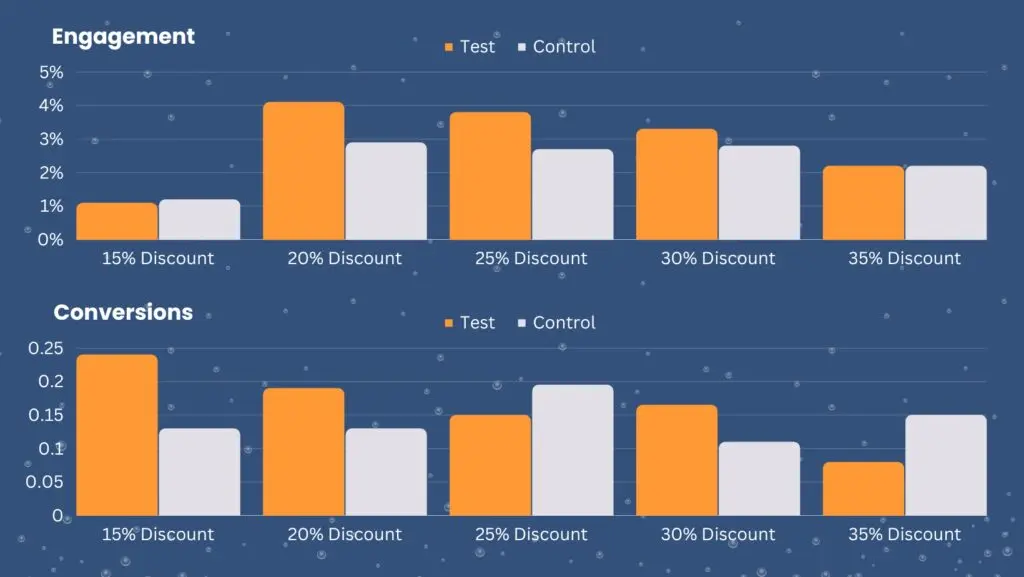
Similarly, OpenSend reported that moderate 10–25% discounts improve conversion by roughly 25–35% versus no offer. The key driver is clarity: shoppers instantly understand the value and can calculate their savings, unlike dynamic shipping or tax costs that often appear later.
Discounts also give brands tighter control over profitability. Instead of absorbing logistics expenses through free shipping, you can cap exposure by offering a percent-based reduction that scales with basket size — a tactic increasingly used by Shopify merchants in 2025 seasonal campaigns.
When Percent-Off Beats a Free-Shipping Threshold
Percent-off incentives tend to outperform free-shipping thresholds under several conditions:
- Low-Ticket Products: If your AOV is $20–$30, setting a free-shipping threshold may push the purchase beyond what shoppers are willing to spend. A 15% discount feels more achievable and less manipulative.
- High-Shipping-Cost Categories: For bulky or international products, covering shipping may erode margin faster than a modest discount. Financial analysts at SBO Financial warn that while free shipping boosts conversion, it’s “not always profit-viable” for brands with narrow contribution margins.
- Inventory Clearance or SKU Push: Discounts can be localized to specific categories, unlike shipping incentives that apply site-wide. They’re effective for end-of-season or promotional sell-through.
- Margin-Sensitive Brands: When shipping costs fluctuate (e.g., during Q4 surcharges from FedEx or USPS), percent-off incentives maintain flexibility without binding you to logistics overhead.
How to Structure a Ladder Test
To identify your most profitable cart-side incentive, use a testing ladder, a CRO methodology that sequentially tests escalating offers:
- Baseline: No incentive beyond standard pricing and shipping.
- Free-Shipping Threshold: Add a conditional “Spend $X for free shipping” prompt.
- Percent-Off Offer: Introduce “10% off” or “$5 off $40” messaging.
- Hybrid Incentive: Combine (“Free shipping + 5 % off two or more items”).
- Segmented Testing: Apply different ladders by platform (TikTok Shop vs Instagram Checkout) or audience (new vs returning).
Each test should measure checkout completion rate, AOV lift, and profit margin. A Smarter Ecommerce case study found that raising discounts boosted conversions from 3.5% → 5.5%, but profit impact varied depending on margin tolerance.
Key Takeaways for Cart-Screen Execution
- Discounts between 10–20% often outperform deeper cuts and maintain profitability.
- Use percent-off offers when free-shipping thresholds aren’t viable or margins are thin.
- Run structured ladder tests to isolate what drives true incremental lift, not just temporary clicks.
- Always display the discount within the cart UI, ideally above fees and taxes, to maintain trust and clarity.
- Evaluate impact on profit per visitor and repeat purchase rate, not just checkout completion.
BNPL Caveats: The Hidden Friction Behind “Easy” Payments
At first glance, Buy Now, Pay Later (BNPL) options inside social checkout flows seem like a no-brainer conversion booster. They reduce perceived upfront cost, segment payments over time, and fit the fast-paced decision behavior of social commerce.
BNPL is becoming increasingly popular on TikTok Shop, with the platform offering its own version, simply called "Pay Later."
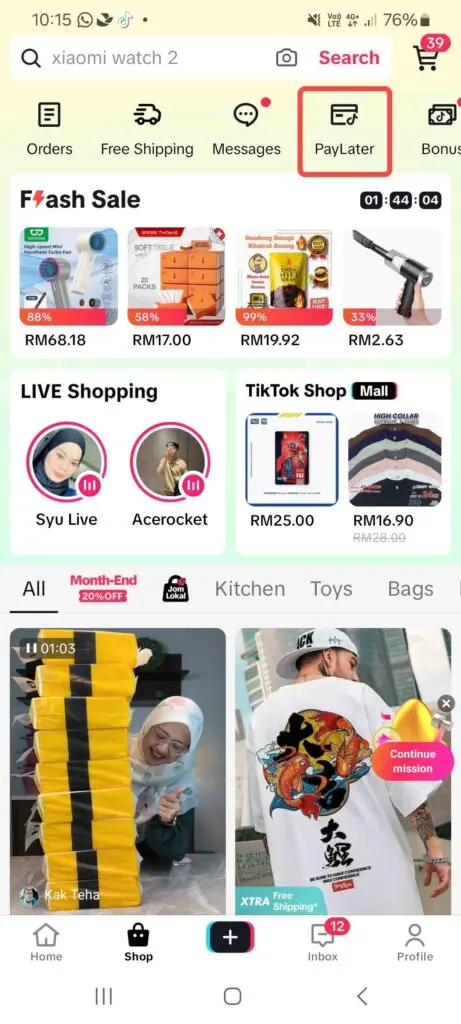
But in 2026, as BNPL adoption matures, new regulatory, UX, and trust-related caveats have surfaced that marketers can’t afford to overlook.
What Actually Powers BNPL In 2026
For Shopify merchants, Shop Pay Installments is the dominant BNPL rail. In February 2025, Affirm and Shopify renewed a multi-year deal that makes Affirm the exclusive pay-over-time provider for Shop Pay Installments in the U.S., while expanding to additional markets.
Shopify’s own guidance also encourages adding cart-page BNPL banners (beneath the subtotal) so shoppers see their installment options before they hit payment—crucial for cart-side incentive clarity.
A major platform change this year: Meta shifted Shops on Facebook and Instagram to website checkout. Practically, that means “social checkout” on those surfaces now hands off to merchants’ sites, where the merchant’s own BNPL (e.g., Shop Pay Installments) is displayed—rather than Meta’s native flow.
If your social traffic lands on a Shopify checkout, cart-side BNPL messaging is back under your control.
BNPL adoption itself continues to grow. Recent reporting shows U.S. BNPL purchases reached $82.4B in 2024 and $56.3B in January–August 2025, underscoring sustained consumer demand for installment payments.
Where Friction Creeps In
Even when shoppers want installments, how you surface BNPL matters:
- Late Disclosure = Distrust. Baymard’s checkout research has long shown that hidden costs or surprises create abandonment spikes; payment method clarity is a recurring failure point across top sites. If installments, terms, or fees appear only after a redirect, users are more likely to back out. Make the pay-in-X breakdown visible on the cart page and again at payment.
- Extra Steps Hurt Momentum. Any hand-off to an external modal or login increases the risk of drop-off on mobile. Unnecessary steps and poor payment-method UX directly cause abandonments—problems that are amplified in social-to-site flows.
- Regulatory Optics. As BNPL Installments expands, transparency norms (APR when applicable, repayment schedule, and “no late fees” positioning) are front and center. Keep messaging consistent with lender language to avoid compliance or trust issues.
Cart-Side Implementation Best Practices
- Show BNPL Early In Cart: Use Shopify’s Shop Pay Installments cart banner (below the subtotal) so shoppers see “Pay in 4” or monthly options before shipping/tax entry. Pair it with “total today” vs “per-installment” copy to reduce uncertainty.
- Keep It Native Post-Meta Change: Since Instagram/Facebook Shops now route to your site, ensure the landing cart page renders installment messaging instantly—no accordion hides or JS delays.
- Test Placement, Not Just Presence: Move BNPL messaging from product page only → cart page → payment step and measure checkout completion and profit per visitor, not just clicks. Payment-method UX directly ties to abandonments; validate the incremental lift in your own funnel.
Bottom line: BNPL can be a cart-side conversion asset—but only when installment terms are visible in the cart, the path is step-light, and your messaging mirrors lender disclosures. In 2026’s social journeys—especially with Meta’s shift to website checkout—those details decide whether installments lift, or leak, conversions.
Checkout Confidence: Turning Cart Friction into Conversion
Incentives may bring shoppers to the finish line, but clarity keeps them there. Across TikTok Shop, Instagram Checkout, and YouTube Shopping, the strongest social checkout strategies in 2026 share one trait — they eliminate hesitation.
Whether through a smart free-shipping threshold, a well-tested percent-off ladder, transparent BNPL terms, or upfront tax and fee disclosures, each element works toward a single goal: giving buyers total confidence before they tap Pay Now.
For marketers, the message is clear: optimization isn’t just about adding discounts — it’s about removing doubt. Social checkouts convert best when every number feels honest and every incentive feels earned.
As platforms tighten their compliance rules and shoppers grow more cost-sensitive, the brands that win will be those that turn cart-side transparency into trust, and trust into measurable conversion lift.
Frequently Asked Questions
How can brands track conversions from social checkout promo codes accurately?
To prevent tracking discrepancies across TikTok Shop or Instagram, use unified attribution through coupon codes or tracking links, ensuring both affiliate and cart-side incentives sync within your analytics stack.
What’s the best structure for limited-time offers in a social checkout flow?
Short-duration discounts perform better when framed as part of a promo code eCommerce strategy that pairs scarcity with visible countdowns in cart banners.
How do product-drop incentives differ from general cart discounts?
Exclusive bundles or creator collabs should use a defined discount code architecture for product drops to maintain urgency and prevent cross-channel cannibalization.
Which upstream factors influence cart-stage behavior the most?
Core drivers like product discovery, ad recall, and urgency messaging stem from broader eCommerce marketing frameworks that align paid and organic traffic.
How can small brands benchmark their checkout conversion rates?
Start by comparing your metrics against established eCommerce conversion rate optimization baselines to identify where cart friction or hidden costs occur.
Should social campaigns use the same offers as website sales?
Not always — tailor incentives to each journey by applying eCommerce digital marketing strategies that adapt thresholds or codes to user intent.
How can Pinterest users be guided from inspiration to purchase?
Integrating Pinterest “Where to Buy” links within product Pins connects top-of-funnel discovery to direct checkout behavior, reducing leakage between platforms.
What are the most common causes of abandoned social carts?
Late-stage cost surprises, login friction, and poor incentive framing mirror classic cart abandonment examples seen in broader eCommerce environments.