The 2026 holiday shopping season is expected to generate $275.1 billion in U.S. online sales, according to Adobe's holiday forecast, a 6.7% increase over 2025. Thanksgiving, Black Friday, Cyber Monday, and Christmas will give brands several opportunities to reach shoppers, but each calls for a different approach.
Campaign planning needs to account for more than promotional dates. Brands must coordinate offers, creator partnerships, paid advertising, email campaigns, and shipping deadlines. Black Friday and Cyber Monday may fall just three days apart, but the content and promotions leading up to each event need to be planned well in advance.
Our 2026 holiday marketing calendar covers the key dates, recommended campaign timelines, and practical strategies for Thanksgiving through Christmas, helping marketers organize their activity around the busiest shopping period of the year.
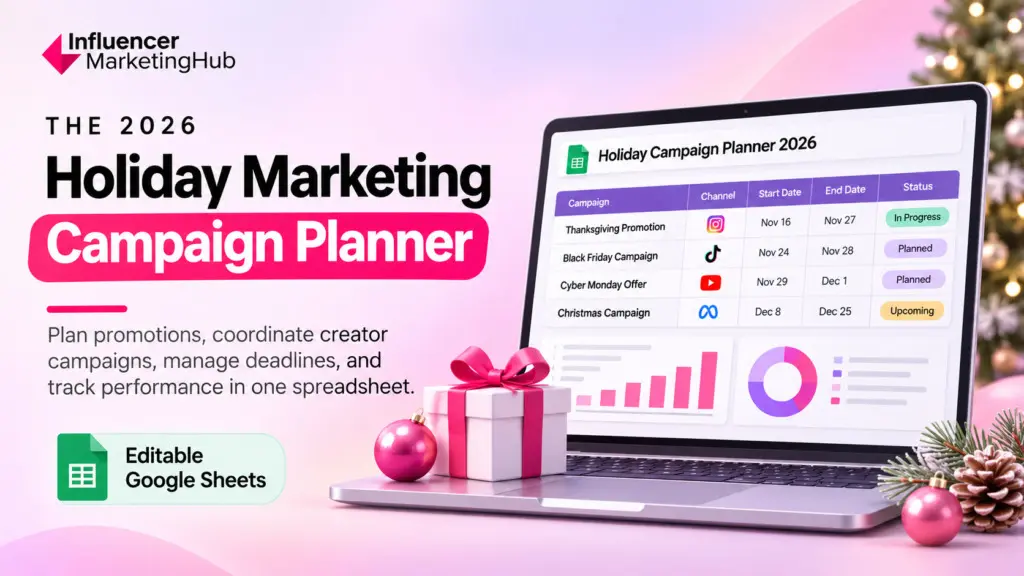
⭐ Your 2026 Holiday Campaign Planner Is Here
Organize your Thanksgiving, Black Friday, Cyber Monday, and Christmas campaigns in one place. Plan promotions, coordinate creator content, manage deadlines, and track performance with our ready-to-use template.
Key Holiday Marketing Dates for 2026
Thanksgiving, Black Friday, Cyber Monday, and Christmas make up the core of the 2026 holiday shopping calendar. Three fall within five days of one another, while Christmas gives brands another 25 days after Cyber Monday to reach shoppers looking for gifts.
The table below outlines the dates and the primary campaign objective for each occasion.
| Holiday | 2026 Date | Primary Marketing Objective | Recommended Campaign Focus |
| Thanksgiving | Thursday, November 26 | Customer appreciation and early shopping | Loyalty offers, early access, email campaigns, and product discovery |
| Black Friday | Friday, November 27 | Drive promotional sales | Limited-time offers, creator promotions, paid advertising, and affiliate campaigns |
| Cyber Monday | Monday, November 30 | Convert online shoppers | Ecommerce promotions, retargeting, abandoned-cart recovery, and affiliate offers |
| Christmas | Friday, December 25 | Capture gifting demand | Gift guides, product recommendations, delivery reminders, and digital gift cards |
Thanksgiving: November 26, 2026
Thanksgiving marks the beginning of the year's biggest consecutive shopping events in the United States. For brands, it's an opportunity to connect with existing customers before shifting toward the more aggressive promotional activity associated with Black Friday.
Customer appreciation emails, loyalty rewards, and early access to upcoming offers are practical ways to engage audiences. Brands can also begin promoting gift guides and creator recommendations that will remain relevant throughout the following weeks.
Black Friday: November 27, 2026
Black Friday is a major promotional opportunity, particularly for brands offering discounts, product bundles, or limited-time deals.
Adobe forecasts $12.9 billion in U.S. online spending on Black Friday 2026, representing 9.2% growth over the previous year.
Rather than treating November 27 as the starting point, marketers should have their promotional assets, creator partnerships, landing pages, and paid campaigns prepared beforehand. Black Friday itself becomes the point when those activities converge around purchase conversion.
For a closer look at offer economics, discounting, and operational preparation, see our guide to Building a Profitable Black Friday and Cyber Monday Strategy.
Cyber Monday: November 30, 2026
Cyber Monday follows Black Friday after the weekend, giving brands another opportunity to convert shoppers who are still comparing products or considering purchases.
Adobe expects Cyber Monday to generate $15.1 billion in U.S. online sales in 2026, making it the largest online shopping day of the season.
Brands can use the intervening weekend to review campaign performance, identify products attracting attention, and adjust their Cyber Monday messaging accordingly. Retargeting, affiliate promotions, and refreshed email offers are particularly relevant to this phase.
Christmas: December 25, 2026
Christmas changes the campaign objective from promoting major shopping events to helping customers find suitable gifts and receive them on time.
Following Cyber Monday, marketers have several weeks to promote gift guides, creator recommendations, product bundles, and other Christmas-focused content. As December progresses, shipping availability becomes increasingly important.
Brands selling physical products should align their promotional schedules with actual order-processing and carrier deadlines. Once reliable Christmas delivery is no longer available, campaigns can shift toward digital gift cards, local pickup where offered, and other last-minute gifting options.
2026 Holiday Marketing Calendar and Campaign Timeline
Holiday marketing requires more than scheduling promotions around Thanksgiving, Black Friday, Cyber Monday, and Christmas. Brands also need time to prepare creative assets, coordinate creators, test offers, and adjust campaigns as shopping priorities change.
Adobe forecasts $47.5 billion in U.S. online spending during Cyber Week 2026, making campaign preparation particularly important in the weeks leading up to November 26.
The following calendar breaks the season into eight phases, with recommended activities, deliverables, and performance metrics.
| Dates | Campaign Focus | Key Activities | Deliverables and KPIs |
| Nov 3–8 | Preparation | Finalize offers, inventory, creator briefs, and tracking | Approved campaign plan, working tracking links |
| Nov 9–15 | Awareness | Publish gift guides, creator previews, and product demonstrations | Live content, reach, qualified traffic |
| Nov 16–22 | Consideration | Introduce early offers, build retargeting audiences, approve promotional assets | Campaign readiness, product-page visits |
| Nov 23–26 | Thanksgiving | Activate loyalty promotions, early access, and customer appreciation messages | Email clicks, conversions |
| Nov 27–30 | Black Friday and Cyber Monday | Run promotional campaigns, activate affiliates, monitor paid performance | Revenue, ROAS, CPA |
| Dec 1–7 | Christmas gift discovery | Promote gift guides, bundles, creator reviews, and recommendations | Product conversions, revenue |
| Dec 8–17 | Purchase reassurance | Communicate delivery estimates, product availability, and order deadlines | Orders, conversion rate |
| Dec 18–25 | Last-minute gifting | Promote digital gift cards, available pickup, and eligible expedited delivery | Gift card sales, pickup orders |
These are recommended planning windows, not fixed industry deadlines. Campaign complexity, production requirements, and fulfillment capacity will determine how early each brand needs to begin.
Early November: Build Awareness Before Introducing Discounts
Early holiday content gives shoppers an opportunity to discover products before the major promotional events begin.
Best Buy offers a timely example. Its 2026 "Open More" holiday campaign, which began rolling out on November 1, incorporates content from Dude Perfect and technology creator Marques Brownlee. The retailer is also using TikTok Shop to connect creator recommendations with product purchases.
Rather than focusing entirely on discounts, Best Buy is using creators to demonstrate what customers can do with the products they're considering as gifts.
For marketers, the application is straightforward. Introduce products through useful content first, then incorporate promotional messages as Black Friday approaches.
November 16–26: Prepare Creator Content and Promotional Offers
The final days before Thanksgiving should focus on campaign readiness. Creator content needs approval, promotional links must work, and paid advertising assets should be ready before offers go live.
Skincare brand Magnifiscience demonstrates why this preparation matters. During its 2025 Black Friday campaign, the brand worked with TikTok Shop affiliates, distributing approximately 100 product samples weekly to generate creator videos. It then identified stronger-performing content and reused approved assets in advertising.
According to the offical TikTok case study, the campaign generated 3,300 orders, while cost per order declined 10% compared with October. The French brand is using the same strategy for this year.
Importantly, the campaign had been running since August. Magnifiscience entered Black Friday with existing creator relationships, tested content, and performance data rather than starting its outreach during the promotional period.
Brands preparing for late-November activations should similarly prioritize creators who can meet production deadlines and provide the necessary content usage permissions.
November 27–30: Coordinate Black Friday and Cyber Monday Promotions
Black Friday and Cyber Monday require close monitoring of conversions, promotional costs, inventory, and affiliate performance. Brands should evaluate what is working throughout the weekend rather than relying on a campaign plan that cannot be adjusted.
Discounting isn't the only available promotional strategy.
During November 2025, beauty brand P.Louise used themed product bundles, gifts with purchase, and an affiliate competition instead of flash sales. Its agency, somerce, reported more than £10 million in TikTok Shop sales during the month.
The campaign illustrates how brands can use product combinations and creator incentives to offer customers additional value without making deeper price reductions their primary strategy.
December 1–17: Transition From Promotions to Christmas Gifting
After Cyber Monday, campaign messaging can shift toward helping customers choose gifts and understand delivery options.
Premium chocolate brand Compartés followed a coordinated approach during the 2025 holiday season. Working with elk Marketing, the brand used seasonal launches, product-focused creative, and paid social campaigns designed to reach gift buyers before shipping deadlines.
The agency reported a 33.1% year-over-year increase in Shopify sales across the eight-week holiday period. Its campaign combined evergreen products, seasonal promotions, creator videos, and ongoing creative testing.
For brands selling physical gifts, December campaigns should similarly connect product recommendations with accurate inventory and delivery information.
December 18–25: Adapt to Fulfillment Deadlines
As Christmas approaches, marketing teams need to coordinate their messaging with fulfillment operations.
Once a retailer's reliable delivery cutoff passes, continuing to advertise standard Christmas delivery can create expectations the business cannot meet.
Brands can instead prioritize digital gift cards, eligible expedited delivery, or local pickup where available. Email, paid advertising, product pages, and creator promotions should all reflect the same updated delivery information.
Before moving into each phase, marketers should verify that the relevant offers, creative assets, tracking, inventory, and fulfillment arrangements are ready.
Our downloadable 2026 Holiday Marketing Calendar & Campaign Planner includes these campaign phases, with editable fields for assigning owners, managing deadlines, coordinating creator content, and tracking results.
Marketing Strategies for Each Major 2026 Holiday
Although Thanksgiving, Black Friday, and Cyber Monday fall within five days, shoppers may have different priorities across these events. December introduces another consideration as gift suitability, inventory, and delivery options become more important.
Brands should adapt their offers, messaging, and promotional channels to each occasion rather than running the same campaign throughout the season.
Thanksgiving Marketing Strategies for November 26
Thanksgiving provides an opportunity to engage existing customers and introduce early promotions before Black Friday.
Adobe expects U.S. consumers to spend $6.9 billion online on Thanksgiving 2026, with mobile devices accounting for 63% of that spending. Mobile-friendly emails, landing pages, and checkout experiences therefore deserve particular attention.
Three approaches are worth considering.
- Reward existing customers. Offer subscribers or loyalty members early access to selected promotions. Keep the benefits clear and avoid making customers navigate multiple discount codes.
- Use appreciation-focused messaging. Thank customers for their support, share relevant community initiatives, or recognize the people behind the brand. Promotional messaging can complement these communications without dominating them.
- Make early shopping convenient. Highlight products already available, provide clear pricing, and ensure links from emails and social posts lead directly to relevant product pages.
For brands using creator content, Thanksgiving is also an opportunity to repurpose approved product recommendations in email and social campaigns before the main Black Friday promotion begins.
Black Friday Marketing Strategies for November 27
Black Friday deserves a stronger focus on offers, product selection, and purchase conversion.
According to Adobe, the deepest discounts on TVs, toys, apparel, appliances, and furniture are expected to fall on Black Friday. However, brands shouldn't assume they need to match those discount levels if doing so would undermine their margins.
A practical Black Friday strategy should prioritize the following.
- Select products based on commercial value. Review inventory, contribution margins, and expected demand before deciding which products to discount or bundle.
- Make offers easy to understand. Clearly communicate discount eligibility, expiration times, product exclusions, and any minimum purchase requirements.
- Use creator content to demonstrate products. Product comparisons, short demonstrations, and approved UGC can give shoppers more information than promotional graphics alone.
- Monitor performance throughout the day. Track conversion rates, advertising costs, revenue, and inventory availability. Adjust campaigns based on actual results rather than increasing spending automatically.
Brands using creator-generated content in paid campaigns can find practical production ideas in our Holiday UGC Advertising Shotlist, which covers formats such as product demonstrations, bundle showcases, and customer review videos.
Cyber Monday Marketing Strategies for November 30
Cyber Monday is expected to remain the biggest online shopping day of the 2026 holiday season, with Adobe forecasting $15.1 billion in U.S. ecommerce spending.
The promotional opportunity is particularly relevant for electronics and computers, where Adobe expects the deepest category discounts to occur on Cyber Monday.
Brands can use the event to reach shoppers who showed interest during Black Friday without completing a purchase.
- Segment follow-up campaigns. Separate customers who purchased from those who viewed products, abandoned carts, or engaged with promotional emails.
- Refresh the offer where appropriate. Introduce relevant bundles, category-specific promotions, or online-exclusive deals without automatically extending every Black Friday discount.
- Coordinate affiliate messaging. Ensure creators and affiliate partners have accurate promotional information, functioning links, and updated offer expiration times.
- Remove unnecessary checkout friction. Check mobile checkout, available payment methods, promotional code functionality, and product availability.
For brands selling through Amazon, our Black Friday and Cyber Monday Playbook for brands and agencies explains how Sponsored Products, Sponsored Brands, and remarketing can support different stages of holiday shopping.
Christmas Marketing Strategies for December 25
Christmas marketing requires a different approach from the discount-heavy events of November. Product relevance, gifting convenience, and delivery confidence become central considerations.
The National Retail Federation's October 2026 holiday survey found that gift cards topped shoppers' wish lists, with 47% of respondents saying they wanted to receive them. Clothing followed at 44%, while beauty and personal care products were selected by 24%.
Brands can use those preferences to inform their gifting campaigns without assuming every customer wants the same type of present.
- Organize gift recommendations around the recipient. Gift guides for parents, partners, friends, or specific interests can help shoppers narrow their choices. Product recommendations should explain why an item suits the intended recipient rather than merely displaying products under a seasonal headline.
- Make gift value easy to assess. Product demonstrations, comparisons, customer reviews, and clear return policies can help shoppers evaluate unfamiliar purchases. Creator recommendations are especially useful when they demonstrate features or use cases that aren't obvious from product photography.
- Offer practical last-minute alternatives. As shipping deadlines approach, promote available store pickup, digital gift cards, and eligible expedited delivery options. Delivery promises should always reflect actual fulfillment capabilities.
Christmas campaigns should also account for shoppers purchasing experiences rather than physical products. NRF reports that 27% of holiday shoppers plan to give experiential gifts in 2026, compared with 19% five years earlier. Relevant brands could feature classes, memberships, events, or other bookable experiences alongside traditional gift options.
How to Coordinate Holiday Marketing Across Channels
A creator's Black Friday product demonstration might introduce someone to a brand, but the eventual purchase could happen through a promotional email or a retargeting ad. Planning these activities separately makes it harder to maintain consistent offers, reuse content, and understand what contributed to a sale.
Cross-channel coordination is particularly relevant in 2026. Adobe's holiday forecast projects that social media and affiliate/partner channels will increase their share of holiday ecommerce revenue by 17% and 12%, respectively, compared with 2025. These are projected relative gains in revenue share, not increases in total sales.
For brands, the priority is to give each channel a specific job while keeping campaign messaging, promotions, and measurement consistent.
Assign Each Marketing Channel a Clear Role
Different channels can support the same holiday campaign without publishing identical content.
| Channel | Primary Role | Recommended Holiday Activity | Metrics to Monitor |
| Influencer marketing | Product discovery and recommendations | Creator demonstrations, gift guides, affiliate promotions | Reach, engagement, attributed sales |
| Organic social media | Product visibility and customer engagement | Reels, short-form videos, product announcements, customer content | Engagement, referral traffic, product clicks |
| Email marketing | Customer retention and conversion | Early access, personalized offers, abandoned-cart recovery | Click-through rate, conversions, attributed revenue |
| Paid advertising | Targeted acquisition and retargeting | Promote approved creator content, product offers, and gift collections | CPA, ROAS, conversions |
| Ecommerce website | Purchase completion | Campaign landing pages, product bundles, checkout and delivery information | Conversion rate, average order value, revenue |
The strongest channel mix depends on the audience, product category, and available budget. Brands don't need to activate every channel equally.
For example, a beauty brand could introduce a holiday gift set through creator demonstrations, share those videos organically, and use licensed creator content in paid advertising. Interested shoppers might subsequently receive an email highlighting the same bundle.
Each activity has a different purpose, but all of them support the same campaign.
Coordinate Creator Content Before Paid Campaigns Launch
Creator partnerships need to account for more than the publication date.
Brands planning to reuse influencer content should confirm deliverables, approval deadlines, usage rights, and paid advertising permissions before the campaign begins. Permission to publish a sponsored post doesn't automatically grant a brand the right to use that content in advertisements.
A practical workflow involves four steps.
- Brief creators. Provide product information, campaign objectives, deliverables, disclosure requirements, and relevant promotional details.
- Approve content. Check factual claims, product availability, promotional terms, and brand requirements while preserving the creator's authentic presentation.
- Coordinate publication. Align creator posts with relevant campaign launches, email communications, and paid advertising schedules.
- Reuse approved assets. Adapt content for other channels where usage rights and platform permissions allow.
The goal isn't to make every channel publish the same video. A creator demonstration might become a shorter paid ad, a product-focused email feature, or supporting content on a holiday landing page.
Our article on Tracking Influencer Content at Scale explores how brands can monitor content across paid partnerships, gifted creators, and organic mentions.
Keep Promotional Information Consistent
Black Friday and Cyber Monday campaigns often involve multiple offers, audience segments, and promotional codes. Without a shared source of information, creators, email teams, and paid media managers can end up communicating different terms.
Before a campaign launches, teams should agree on the following.
- Offer details. Discount amounts, eligible products, exclusions, and expiration dates.
- Destination URLs. Approved landing pages, affiliate links, and tracking parameters.
- Creative assets. Final copy, approved videos, product images, and permitted usage.
- Fulfillment information. Inventory availability, shipping restrictions, and delivery estimates.
- Campaign ownership. Who approves changes, monitors performance, and communicates updates.
A shared campaign planner gives everyone access to the latest information. When an offer changes or inventory runs low, the responsible team should update affected channels rather than leaving outdated promotions active.
Measure the Campaign Across Channels
A customer may discover a product through an influencer, return through a search ad, and eventually purchase after receiving an email. Looking only at the final interaction can understate the contribution of earlier touchpoints.
Start by defining what each channel is expected to achieve. Creator campaigns focused on awareness may prioritize qualified reach and engagement, while conversion-focused affiliate partnerships can be evaluated using tracked sales and revenue.
UTM parameters, affiliate links, promotional codes, and platform reporting can provide different views of campaign performance. None offers a complete picture on its own, so brands should reconcile results and avoid adding together revenue figures that may represent the same purchases.
For a deeper explanation of attribution methods and reporting metrics, see our Guide to Measuring Influencer Campaigns Effectively.
The downloadable 2026 Holiday Marketing Calendar & Campaign Planner provides a place to coordinate campaign owners, creator deliverables, publishing deadlines, and performance metrics across these activities.
How to Build Your Holiday Marketing Calendar
A holiday marketing calendar becomes useful when it connects campaign dates with budgets, responsibilities, content deadlines, and measurable goals. Rather than managing these details across separate documents, brands can organize them in one shared planning resource.
Our downloadable 2026 Holiday Marketing Calendar & Campaign Planner includes five tabs covering instructions, key dates, campaign planning, creator production, and performance tracking.
Here's how to put it to work.
1. Define Your Campaign Objectives
Start by deciding what each holiday campaign should achieve. Black Friday might focus on revenue and customer acquisition, while Christmas campaigns could prioritize gift-set purchases or average order value.
Use the Campaign Planner tab to record each campaign's objective and budget. Choose measurable goals so your team can evaluate results after the promotion ends.
2. Prioritize Campaigns and Assign Responsibilities
Not every promotion needs the same budget or resources. Prioritize campaigns based on product demand, expected profitability, and available creative assets.
Assign an owner to each campaign and identify which channels will support it. The planner also lets teams track campaign status, making it easier to see which activities still need attention.
3. Work Backward From Launch Dates
Use the Holiday Calendar tab to review the eight campaign phases and their recommended activities.
Then open the Creator & Content Timeline to schedule creator briefings, content submissions, approvals, and publishing dates. Account for revision time, especially when coordinating multiple creators or preparing content for paid advertising.
4. Monitor Deadlines and Campaign Readiness
Review upcoming tasks regularly and resolve potential delays before they affect launch dates.
The template includes deadline tracking and status indicators to help identify outstanding work. Teams should also confirm that promotional links, offers, and tracking are functioning before campaigns go live.
5. Track Results and Apply What You Learn
Use the Performance Tracker tab to record campaign spending, traffic, conversions, and revenue. The spreadsheet automatically calculates metrics including click-through rate, cost per acquisition, return on ad spend, and ROI.
Compare results against the objectives established during planning, then document what worked and what should change for future campaigns.
A shared calendar won't eliminate every last-minute adjustment, but it gives marketing teams a consistent way to manage campaigns, monitor progress, and make informed decisions throughout the holiday season.
Final Thoughts
A successful holiday marketing campaign depends on more than launching promotions on the right dates. Brands need to coordinate their offers, creative assets, marketing channels, and fulfillment capabilities as customer priorities shift throughout the season.
Thanksgiving, Black Friday, Cyber Monday, and Christmas each present different opportunities. The challenge is deciding where to invest resources, preparing campaigns early enough, and adjusting based on actual performance.
Use the 2026 holiday marketing calendar as a starting point, then adapt the recommended timelines to your audience, budget, and operational requirements. Prioritize campaigns that support clear business objectives rather than participating in every promotional opportunity.
Our downloadable Holiday Marketing Calendar & Campaign Planner can help keep these activities organized, from creator approvals and publishing deadlines to spending and campaign results.
With a coordinated plan in place, marketers can spend less time managing last-minute changes and more time improving the campaigns that matter.
Frequently Asked Questions
When should brands start planning their holiday marketing campaigns?
Brands should begin planning major holiday campaigns several weeks before launch, with additional lead time for creator partnerships, product sampling, and creative production. For Black Friday and Cyber Monday 2026, campaigns should already be prepared by mid-November. More complex activations may require several months of preparation.
How much should brands budget for holiday marketing?
Holiday marketing budgets should reflect revenue targets, profit margins, historical acquisition costs, and available resources. Rather than applying a fixed percentage across every channel, brands can allocate spending according to campaign objectives and adjust based on performance. Include creator fees, production, paid media, promotional costs, and measurement tools in the budget.
Should Black Friday and Cyber Monday have different marketing strategies?
Not necessarily different campaigns, but they can benefit from different messaging. Black Friday can emphasize major promotional offers and product bundles, while Cyber Monday can focus on online-exclusive deals and follow-up offers. Brands should review Black Friday performance before deciding whether changes to discounts, creative, or targeting are justified.
How can small businesses compete during the holiday shopping season?
Small businesses can focus on products and audiences where they have a clear advantage rather than trying to match larger retailers' discounts. Exclusive bundles, customer loyalty offers, niche creator partnerships, and personalized recommendations can help differentiate their campaigns. Accurate delivery information and responsive customer support are also important during the final weeks before Christmas.
How can brands use influencers during holiday campaigns?
Influencers can introduce products through demonstrations, gift guides, reviews, and shoppable content. Brands can also work with creators on affiliate promotions or reuse approved content in paid advertising. Creator selection should account for audience relevance, production timelines, disclosure requirements, and content usage permissions.
What metrics should marketers track during holiday campaigns?
The most relevant metrics depend on campaign objectives. Awareness campaigns may prioritize reach, engagement, and qualified website traffic. Conversion campaigns should track sales, conversion rate, customer acquisition cost, and return on ad spend. Brands using several channels should also monitor attribution overlap to avoid counting the same revenue multiple times.
When should brands stop promoting Christmas delivery?
Brands should stop promising Christmas delivery once their verified customer order cutoff has passed. Carrier shipping deadlines alone are insufficient because processing times, inventory location, and destination affect delivery. After the cutoff, marketers can shift promotions toward digital gift cards, available store pickup, and other options that customers can still receive before Christmas.
What role does social listening play in optimizing December campaigns?
Monitoring sentiment and engagement shifts enables brands to pivot content rapidly. Real-time feedback loops, a key focus in holiday marketing on social media, turn audience behavior into actionable creative insights.