In the earliest days of influencer marketing, firms had to either entrust their influencer marketing to agencies or do all the hard work themselves. This included finding influencers, approaching them, encouraging them to work with you, and managing the resulting campaigns.
For many businesses, the agency path was too expensive and the organic process too complicated. So enterprising companies developed influencer marketplaces and other platforms as tools to make life simpler for frazzled marketing managers trying to undertake influencer marketing campaigns. We have noticed an increasing proliferation of influencer marketplaces and platforms over nearly a decade.
Our latest State of Influencer Marketing Benchmark Report highlights that 76.2% of influencer marketing campaigns are run in-house. In addition, the report found that 57.5% of respondents now use a 3rd-party platform to help them with their influencer marketing. These exist for just one reason: to make life easier for companies engaging in influencer marketing.
Indeed, both Instagram and TikTok run official platforms to assist with brand and creator collaborations. Not all influencer tools and platforms act as influencer marketplaces, but many do.
In this post, we look at some of the best influencer marketplaces and platforms to help make your influencer marketing as stress-free as possible.
Best Suited For: Brands of all sizes Pricing Overview: From $99/month Influencer Pool Size: 250 million Social Networks: YouTube, Instagram, TikTok
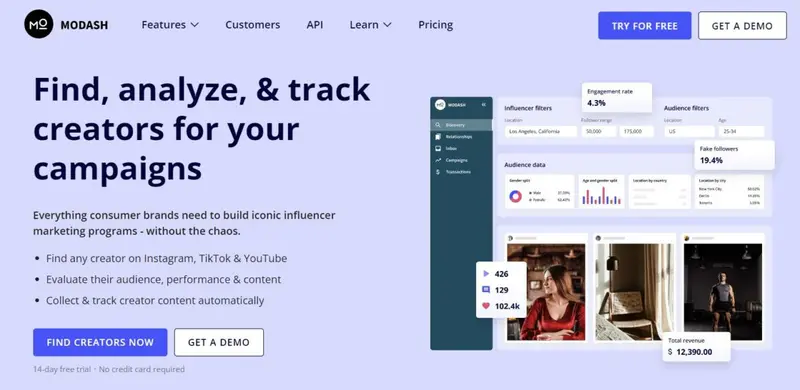
Modash is an influencer marketing marketplace that helps brands streamline their influencer campaigns by offering tools to find, analyze, and manage influencer relationships effectively.
Designed for both emerging and established brands, Modash’s extensive database and advanced analytics make it a valuable tool for maximizing the impact of influencer marketing efforts.
Narrow down influencer searches by follower count, engagement rate, location, and more.
Detailed insights into audience demographics
Discover influencers similar to your top-performing creators.
Collect all influencer-generated content automatically
Monitor the performance of influencer campaigns
Notable Campaigns
Tourlane
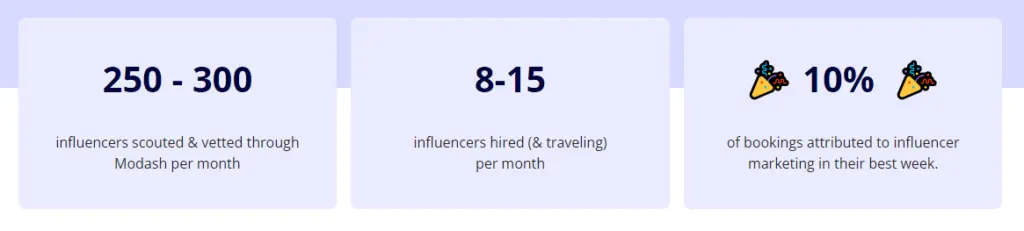
Tourlane, a Berlin-based travel company known for creating tailor-made trips, collaborated with Modash to enhance its influencer marketing strategy. Faced with the challenge of selecting the best influencers from a pool of 250-300 candidates per month, Tourlane needed an efficient way to manage and scale their campaigns.
They turned to Modash to streamline this process, ensuring that only the most impactful influencers were chosen.
Strategic Approach
Modash provided Tourlane with a data-driven solution to vet influencers effectively. By using Modash’s platform, Tourlane could access critical quantitative data such as fake follower rates, engagement rates, and audience demographics.
This information, combined with a flexible internal scorecard that included qualitative insights from interviews, enabled Tourlane to make informed decisions and continuously refine their influencer selection process. Modash’s tool not only saved time but also allowed the team to adjust selection criteria dynamically based on what worked best for their campaigns.
With Modash’s support, Tourlane managed 150 influencers and facilitated 8-15 high-quality influencer trips each month. This strategy contributed to a significant impact on their business, with up to 10% of bookings during peak weeks attributed to influencer marketing.
Additionally, their Instagram following grew from 4,000 to 34,000 in just 18 months, greatly enhancing brand visibility and sales.
NordVPN
NordVPN, a leading cybersecurity software company, partnered with Modash to optimize their YouTube influencer marketing strategy. Facing the daunting task of sifting through over 51 million YouTube channels, NordVPN needed an efficient way to identify influencers who could effectively reach their target audience.
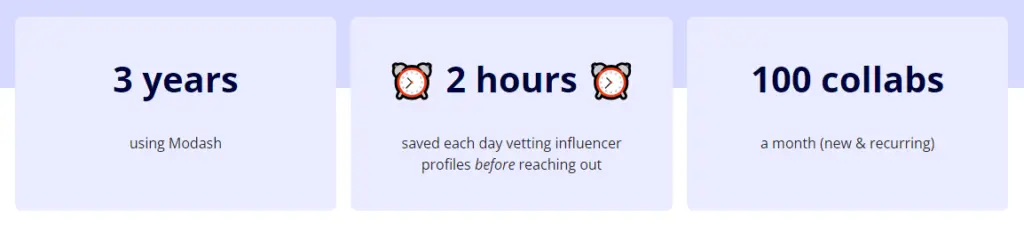
Modash provided the tools necessary to streamline this process, enabling NordVPN’s 14-person marketing team to handle 100 new and recurring collaborations each month.
Strategic Approach
NordVPN employs an audience-led influencer strategy, focusing on audience demographics before evaluating creator stats. With Modash, they can quickly filter YouTube channels based on key audience demographics such as gender, age, and location, ensuring that their influencer partners align with their target market.
The platform also simplifies the outreach process by providing contact details for chosen creators, saving significant time in list gathering and manual vetting. This allows NordVPN to focus on qualitative aspects like content relevance, further refining their influencer selection.
Using Modash, NordVPN saves 1-2 hours per day on influencer vetting, drastically improving efficiency. This streamlined process supports their broader marketing efforts, helping NordVPN scale their influencer campaigns across YouTube and Instagram.
As a result, NordVPN can maintain over 100 collaborations per month while continually testing new channels to enhance brand awareness and revenue.
Laura Garsdal, NordVPN’s Influencer Marketing Manager, said:
“With Modash, I find creators that actually match our targets & our needs and I do it faster!”
Pricing Overview: On request. Our reviewer discovered that packages start as low as $750 for smaller enterprises.
Influencer Pool Size: 30+ million
Social Networks: Facebook, Instagram, TikTok, YouTube, YouTube, Twitter (X), Twitch
Brandwatch is a suite of three interrelated tools to allow firms to make the most of their social media presence:
Brandwatch: Social Media Management
Brandwatch: Consumer Intelligence
Brandwatch: Influencer Marketing
Brandwatch: Influencer Marketing (featuring the platform Influence) is excellent for large firms looking for an influencer marketplace. You can use it to discover influencers, handle relationships, and manage campaigns all in one end-to-end solution.
Core Features (of Brandwatch: Influencer Marketing):
Influencer marketing across TikTok, Instagram, YouTube, and more
Filtering by interests, brand affinities, prior brand work, credibility, and more.
Seamless management
Mobile-friendly, white-labeled dashboards for influencers
Sharing functionality
Streamlined workflows
Ability to track deliverables to ensure influencers fulfill their requirements
Can vet influencers effectively using reporting and communication features
Automated reporting
Awards and Recognitions
Meta Business Partner, X Official Partner, TikTok Marketing Partner, LinkedIn Marketing Partner.
Notable Campaigns
Insta360
Insta360 is a camera company based in Shenzhen, China, with offices in Berlin, Hong Kong, Los Angeles, and Tokyo. Powered by AI, the brand’s video editing software is revolutionizing the way creators make engaging content. The Insta360 camera is recognized for its innovation. Indeed, in 2019, NASA used Insta360 cameras to live-stream the landing of their Insight Mars Lander.
The company has recognized the benefits of influencer marketing for some time. Before working with Brandwatch, the company used influencer campaigns for seasonal campaigns like winter sports and Black Friday and product launches. They found the variety of campaigns made influencer management increasingly complex, and as the company expanded it needed assistance with its influencer marketing. There was too much information in too many documents, and the system was prone to error.
Insta360 now manages its partner relations at scale with Brandwatch Influence. The partnership team runs over 60 campaigns a year and currently manages around 4,000 partners using the Brandwatch platform. Some campaigns contain as many as 3,000 social posts and generate a massive amount of data over a short period, which they can now easily analyze.
According to Alex Garcia, Head of Partnerships at Insta360,
“We can now do performance reports with one click. Before, it took five hours every time we wanted to do these reports. That’s a minimum 15 hours of reporting for one product launch. Now, we spend around ten minutes.”
One example campaign is the Insta360 Nose Mode campaign. Insta360 reached out to their partners using Brandwatch Influence and asked them to create “nose mode” videos. They released hundreds of videos showing off the trend via TikTok, Instagram Reels, and YouTube Shorts.
The campaign was a huge success with 320 million views through their partners and 680 million views in total, including content from other users who jumped on the trend.
Strategic Approach
The Insta360 team uses Brandwatch Influence daily to manage partner relationships, track ongoing campaigns in real-time, measure the performance of campaigns, and generate reports for management at the click of a button.
With Brandwatch Influence, Insta360 can monitor the results of a campaign over time and surface results that wouldn’t necessarily have been flagged in the past. For example, they can see when a post takes off even after the campaign’s initial run. They can also easily compare ongoing campaigns with the performance of past campaigns.
FaZe Clan
FaZe Clan has played a vital role in the growth of the eSports market in recent years. The company has esports teams all over the world in different disciplines, like CS:GO, FIFA, and Fortnite. They have been involved in influencer marketing from their early days.
FaZe Clan used to get by tracking campaigns in Google Sheets and chasing down creators for screenshots of their social analytics. Reporting was a nightmare, however.
Brandwatch FaZe Clan campaign
Strategic Approach
Brandwatch’s automated, real-time reporting has been a game changer for the brand. It allows FaZe Clan’s advertisers and sponsors to monitor campaign performance via a white-labeled dashboard. Indeed, Faze Clan now saves a whopping 85% of the hours they used to spend on reporting.
FaZe Clan initially brought in Brandwatch Influence to assist FaZe Clan’s sales team. However, the company now uses the platform for talent management, marketing, and account management.
According to Jennie Parungao, VP of Revenue Operations and Account Management,
“We spend less time gathering stats and more time serving our clients.”
Key Findings of Our Review
Brandwatch Influencer Marketing takes the strengths of its older platforms (Social Media Management and Consumer Intelligence) and applies a profound understanding of audience analysis and social media trends to the influencer marketing landscape. It leverages advanced tools for influencer discovery, relationship management, and campaign tracking. The software provides a wide platform coverage, seamless management, and a customized pricing approach tailored to enterprises.
Although Brandwatch doesn’t operate a traditional influencer marketplace per se, it includes all the tools necessary to discover influencers and run your entire influencer campaign.
Strengths:
Features comprehensive influencer discovery tools
A seamless CRM for influencer management
Integrates well with other Brandwatch platforms (Social Media Management and Consumer Intelligence)
Limitations:
Primarily oriented towards enterprise-level organizations (customized pricing)
Best Suited For: Businesses of All Sizes and Agencies
Pricing Overview: Our reviewer found plans start at $478. The Search & Contact module is in all plans. You can add other modules (Influential Customers, Campaign Manager, and Payments) as needed.
Influencer Pool Size: 3+ million
Social Networks: Facebook, Instagram, TikTok, YouTube, Twitch, Twitter (X), Pinterest
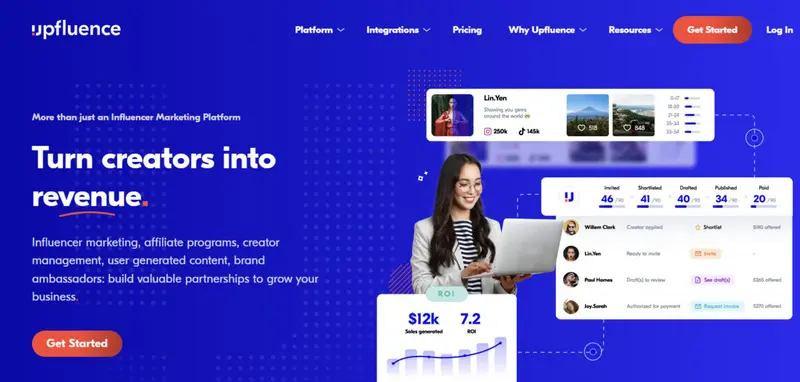
Upfluence’s offering is tailored for direct-to-consumer and eCommerce brands. To assist with this eCommerce focus, it includes integrations with Amazon Attribution, Shopify, WooCommerce, Magento, and BigCommerce.
While it lacks a traditional influencer marketplace per se, its integrations allow you to easily interact with your influencers in your other apps.
Upfluence has developed an in-depth, yet user-friendly, tool for reaching out to influencers on a large scale. You can consolidate all your messages in one convenient location by seamlessly integrating with Gmail and Outlook. It has further developed these capabilities recently with the native integration of ChatGPT. You can take advantage of ChatGPT-generated replies, streamlining the communication process.
The platform enables you to manage all your creators in one place. Filter your influencers by name, location, campaign, and more. You can easily keep track of how many creators have been invited to collaborate in your campaigns, which ones replied positively, and where your price negotiations stand. You can review influencers’ applications, drafts, and payments in a single dashboard, ship creators’ products with one click, and notify influencers using templated emails.
Upfluence gives you a personalized dashboard, giving an overview of all negotiations in progress and the overall influencer marketing budget.
Core Features (of the Upfluence Platform):
Influencer search
Influencer gifting
Analyzing influencers
Payments
Workflow and outreach
Campaign analytics
Awards and Recognitions
Upfluence currently highlights a sizable number of awards it has earned recently:
Leader – Fall 2023 and Summer 2023
High Performer – Enterprise – Fall 2023
High Performer – Mid-Market – Fall 2023
Leader – Europe – Fall 2023
Leader – EMEA – Fall 2023
Leader – Americas – Fall 2023
High Performer – Mid-Market – EMEA – Fall 2023
High Performer – Mid-Market – Europe – Fall 2023
Fastest Implementation – Small Business – Fall 2023
Notable Campaigns
Simply Bread
Upfluence Simply Bread campaign
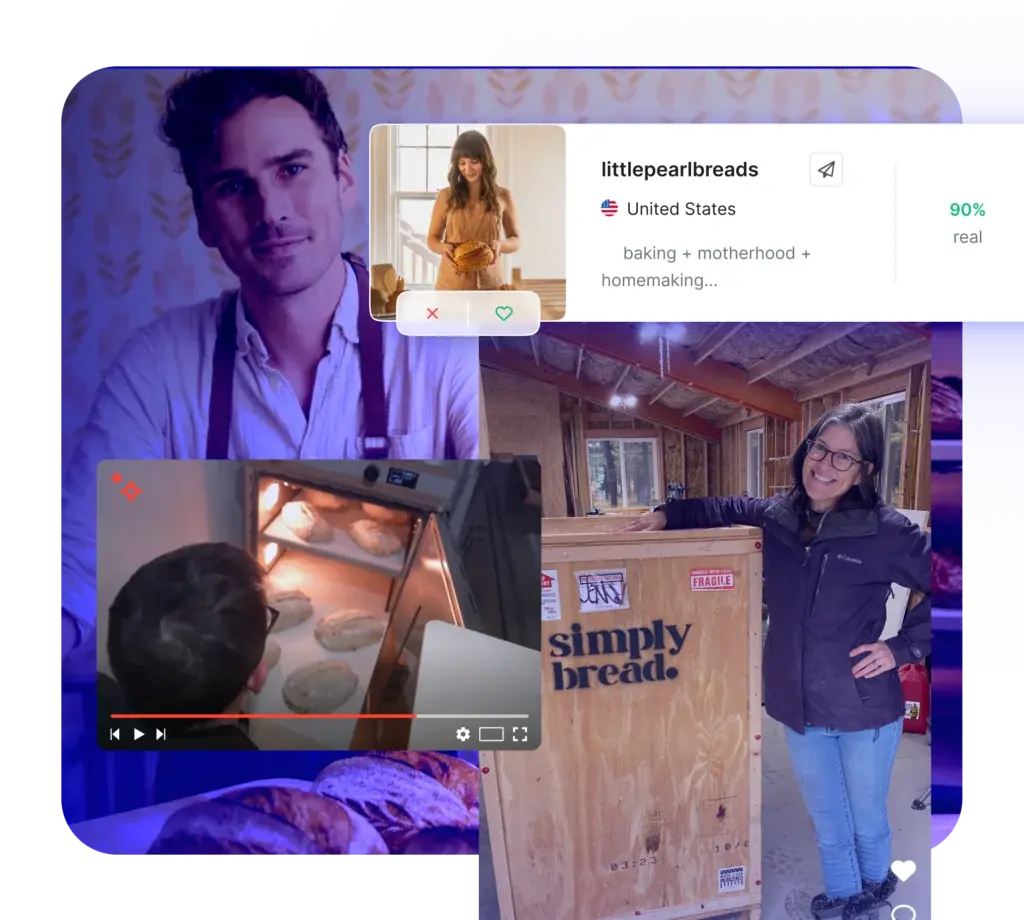
Simply Bread Co. designs and manufactures artisan baking ovens for small businesses. They also offer a dedicated app that allows bakers to sell their creations.
The company operates with creator-sponsored content on all major video-sharing social media platforms. Their creators produce engaging videos demonstrating the installation and highlighting Simply Bread’s products directly or showcasing delicious recipes they share with their community.
Simply Bread decided they needed an all-in-one influencer platform to increase eCommerce sales and regain control over creator collaborations. They also wanted a tool they could use to track unique sales back to creators and analyze campaign performance. In addition, Simply Bread struggled to manage contracts and emails, leading to them missing follow-ups.
They decided that Upfluence was the most suitable platform to meet all their needs.
As a result of introducing Upfluence’s tool, Simply Bread doubled its ROI. Ultimately, the collaboration with creators accounted for 50% of Simply Bread’s sales. One creator, @littlepearlbreads, accounted for $250k in sales in just 2 months.
Strategic Approach
Upfluence offered three main solutions to Simply Bread’s issues:
They seamlessly integrated Simply Bread’s existing eCommerce store and list of creators into the platform
They enabled real-time sales tracking with a mass adaptation of affiliate links
They provided streamlined end-to-end communications with automated email flows, campaign management, and creator payments.
Farfetch
Farfetch Upfluence campaign
Farfetch is a leader in online luxury fashion that connects customers with global boutiques and brands. They offer a curated selection of high-end fashion products to customers worldwide.
The company searched for an influence and affiliate marketing platform to effectively manage its Influencer Marketing Programs, driving sales and customer acquisition. They ultimately opted for Upfluence, as an all-inclusive tool that covers creator identification, email outreach, campaign creation, content management, and payment.
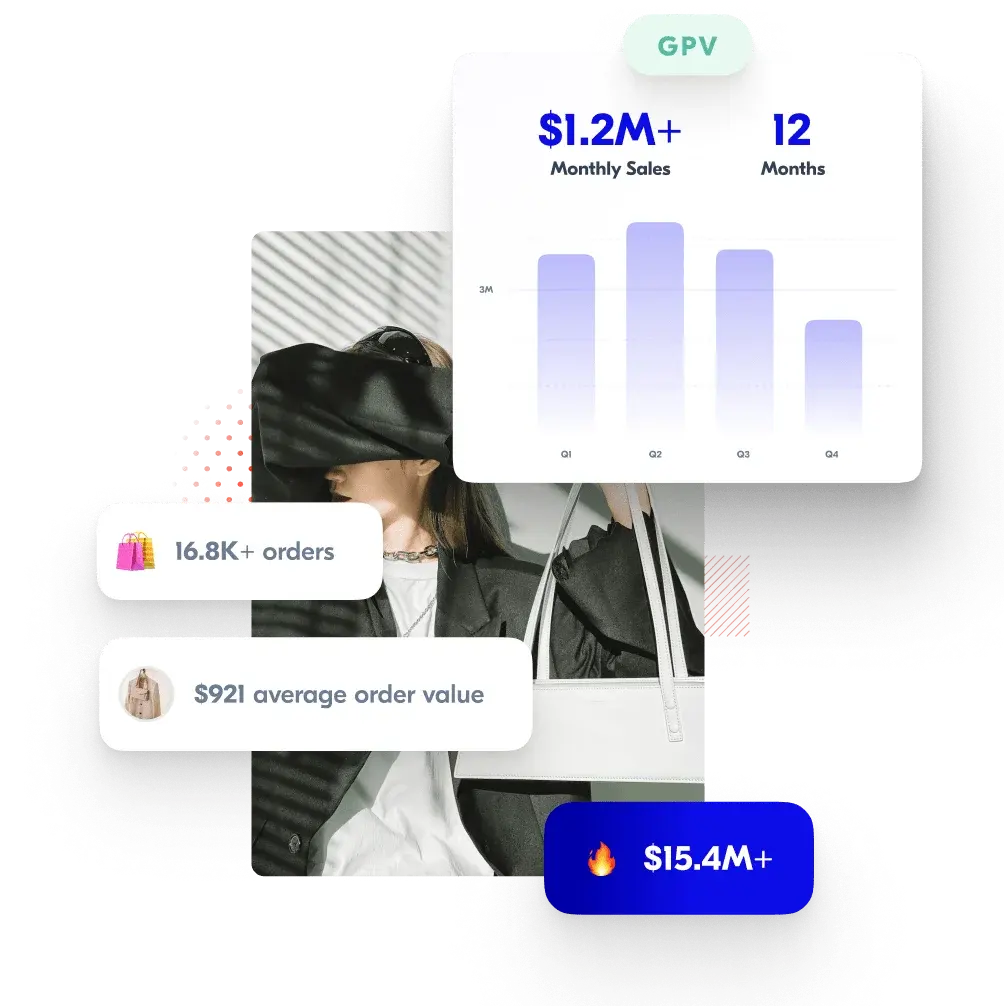
Farfetch was able to put together a creator program process using Upfluence, involving 1.2k creators across 11 markets using Instagram. This led to $1.2 million in additional monthly sales on average for a year, earning more than $8 on each dollar spent. These sales had an average order value of $921.
Strategic Approach
Upfluence began onboarding Farfetch by holding sessions with an account manager to dive into their needs. They then gave hands-on support for the setting up of Farfetch’s influencer program. Upfluence provided email and brief templates to get the influencer program up and running.
Farfetch used Upfluence to come up with a creator value proposition (i.e. a gift card of up to $500, a negotiable set fee, and a 10% commission based on sales) and set specific creator assignment details.
Key Findings of Our Review
Upfluence has placed much emphasis in recent times on its integration with eCommerce platforms.
The platform makes it as simple as possible to communicate with all your influencers, issue promo codes, track their progress, and monitor your campaign sales.
Its influencer database is huge, covering all types of influencers, from nano-influencers to celebrities. It indexes and updates all these profiles in real-time, analyzing every piece of content for reach and engagement.
Once you’ve found suitable influencers, using Upfluence’s extensive search features, you can easily personalize outreach messages and send them in bulk through the platform.
Upfluence’s campaign workflow allows you to easily run several influencer marketing campaigns at once and stay on top of influencer selection and offers.
Strengths:
Highly searchable, using a massive influencer database.
Best Suited For: Small and Midmarket Businesses, Agencies
Pricing Overview: From $460 per month
Influencer Pool Size: 175,000+ (the database covers 300+ million profiles).
Social Networks: Instagram, TikTok, YouTube
Core Features:
Works with both brands and creators
Caters to both influencer and affiliate marketing campaigns
Advanced analytics
All a brand’s creators, campaigns, content, payments, and analytics appear in one easy-to-use dashboard
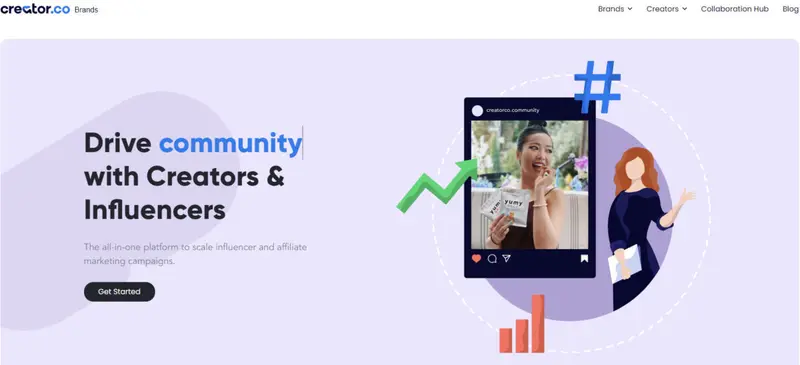
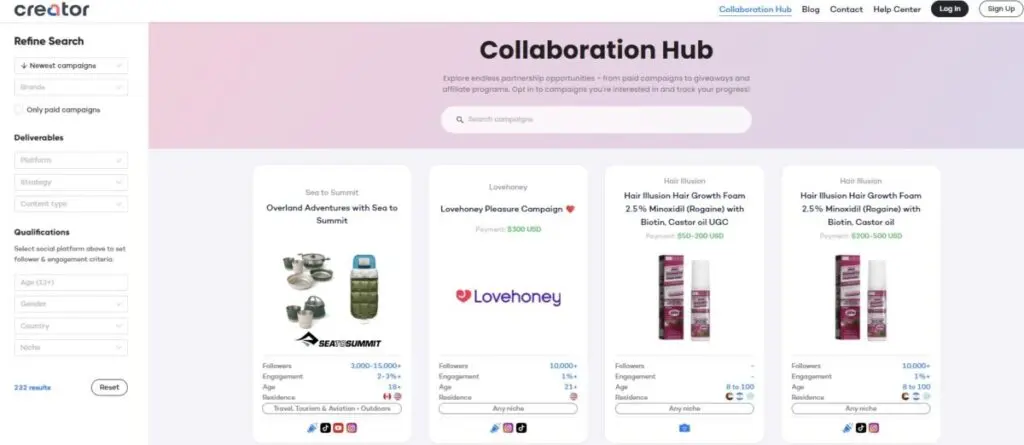
Creator.co provides a Collaboration Hub where brands list campaigns and influencers apply to become part of a campaign. Creators search this hub for suitable campaigns they could participate in.
They can refine their search in multiple ways, for example searching by required follower numbers, platforms, types of deliverables, content types, demographic factors, and more.
Leader – Small-Business Report for Influencer Marketing
Leader – Influencer Marketing Platform Report
Users Love Us Badge
#2 for Influencer Recruitment
#2 for Influencer Collaboration
Notable Campaigns
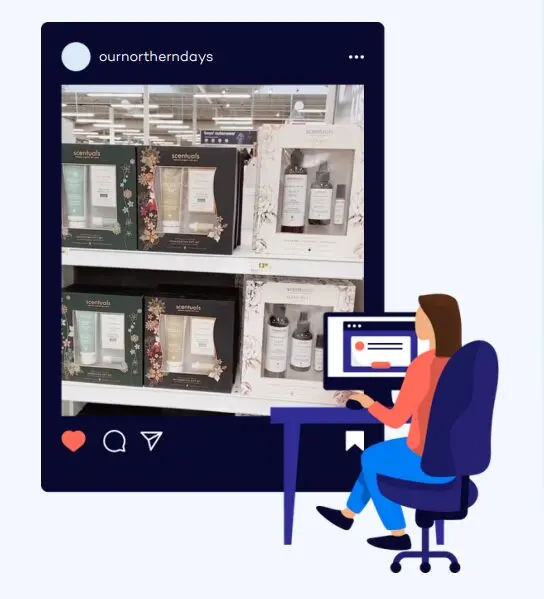
Scentuals
Scentuals campaign
Scentuals Natural & Organic Skin Care sells Canadian-made, natural, safe, and effective skin, bath, and wellness products. They wanted to leverage influencers to increase sales through major retail stores, including Real Canadian Superstore.
The goal of their campaign was to target skincare enthusiasts and creators who appreciate organic skincare to increase product awareness and drive foot traffic to Superstores nationwide (Canada-wide).
Scentuals selected Creator.co as their tool to collaborate with content creators across Canada, to increase awareness of their brand at Superstore and strengthen their presence within the natural beauty community.
Ultimately, Scentuals worked with 100 creators, whose posts received 250K impressions, increasing sell-through by 20%. Average product sales across all Superstores in Canada increased by over 70%.
Strategic Approach
The main strategy was to target skincare enthusiasts to share their experience of purchasing Scentuals’ Sleepwell gift at their local Superstore.
They used Creator.co to target on-brand influencers. Once Scentuals found and approved the influencers they activated them into the platform. All assets and KPIs were automatically populated in Creator.co’s dashboard, which Scentual strategically leveraged to drive the desired results.
A useful side effect was that Scentuals was able to curate an abundance of UGC from the creators, which they were able to reuse on social media, advertisements, and other marketing channels.
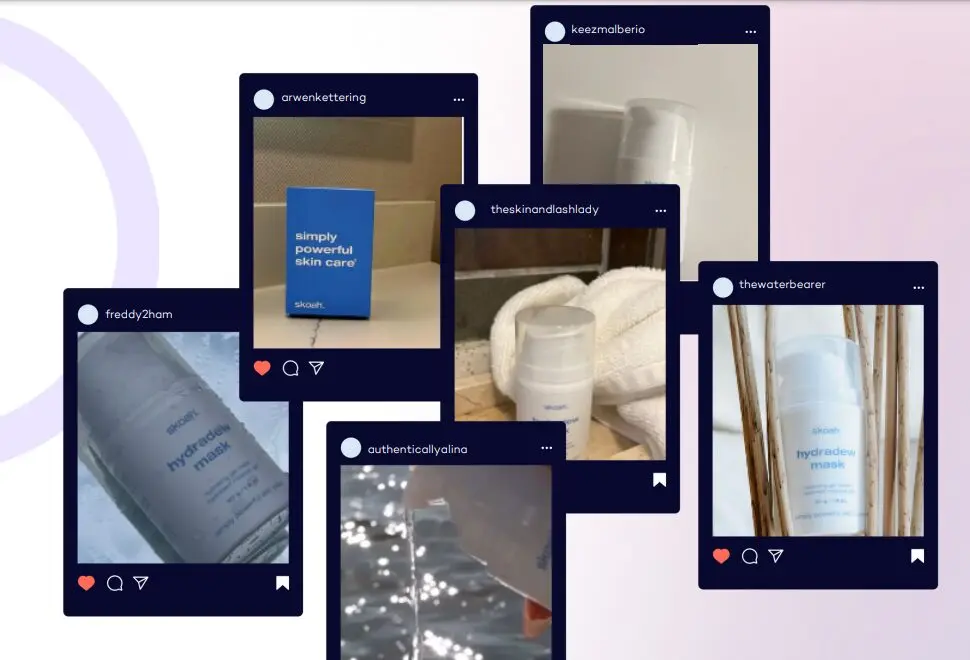
Skoah sells skin care products online and across Canada and parts of the United States. They set a goal of collaborating with skincare creators and lifestyle content creators to create content with a variety of different products from the brand, to build awareness and generate content to be used in sponsored content.
They used Creator.co at various stages of the process to manage the campaign and as a tool to connect and communicate with influencers.
The campaign’s 65 creators with 551.9K total followers, received 85.2K views for their posts. These received 7.59% average engagement, leading to $13,375 Earned Media Value. Skoah believes they saved over $4,500 through negotiations with creators compared to industry standard pricing.
Strategic Approach
Skoah discovered and worked with a variety of different creators during the campaign. In the end, 18 creators posted content on their socials and another 47 created UGC for the campaign.
Skoah harnessed the user-generated content they created for paid Meta ads to boost conversions. These UGC ads generated $4,064.77 in revenue.
Skoah wanted to form relationships with creators they could then use in their affiliate program. As a result, four of the creators became affiliates.
Key Findings of Our Review
Creator.co combines an in-depth influencer database, with a deep data analysis of the listed influencers. It operates a traditional influencer marketplace, where brands put together listings for campaigns, and creators apply to participate. Its prices vary, depending on your size, making it affordable for small and medium-sized businesses.
It is user-friendly, and the platform’s Campaign Builder walks marketers through every conceivable variable of a campaign. Brands can easily set the strategy they want to follow.
Strengths:
The quality of data insights on influencers/creators
Brands own relevant UGC and can reuse it in their marketing
Affiliate marketing integrations
Limitations:
Onboarding fees
The creator opt-in system could potentially be better organized
Best Suited For: DTC brands, Amazon sellers, and agencies managing ongoing creator programs and UGC pipelines
Pricing Overview: Free for brands (no subscription/platform fees). Managed service from $7,999–$29,999 with spend directed to creators. Influencer payouts include a 10–20% service fee that funds escrow and operations.
Influencer Pool Size: 5,000,000+
Social Networks: Instagram, TikTok, YouTube
Core Features
Collaboration marketplace, unlimited campaign posts and invites, in-app messaging and contracting, escrow-secured payments with automated payouts, creator profiles with ratings and past collaborations, AI matching, Shopify and Amazon integrations, affiliate tracking, automated gifting fulfillment, multi-language support, AI video translation, product shipping protection
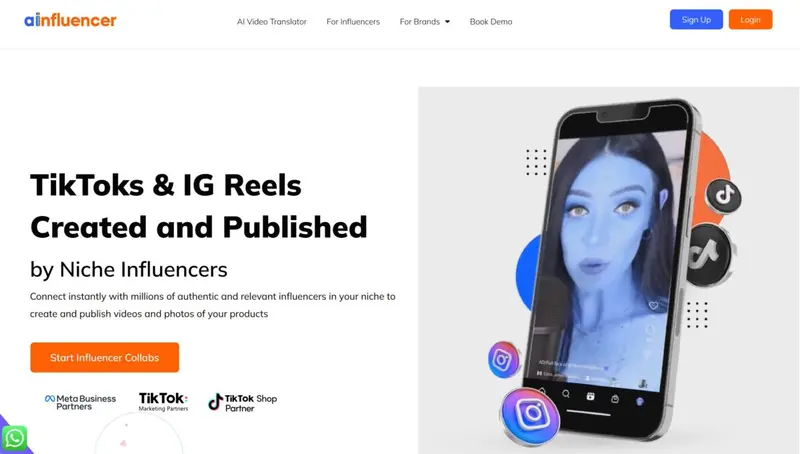
Ainfluencer is a marketplace built for high-throughput brand–creator collaborations, centered on short-form video and shoppable UGC. Brands publish a campaign to a large creator pool, invite as many profiles as needed, negotiate in an integrated inbox, escrow the budget, and release funds once deliverables are approved. The workflow condenses outreach, contracting, asset delivery, and basic performance tracking into one interface, which keeps teams out of DMs and spreadsheets and accelerates the path from brief to post.
Discovery and vetting are practical for day-to-day execution. AI-assisted matching narrows creators by niche and audience attributes, while each profile surfaces public reviews, star ratings, and a history of collaborations to establish reliability. Unlimited invites and proposals enable volume testing across multiple hooks, concepts, and formats without worrying about seat limits or profile caps. Open calls typically generate healthy applicant flow; one recent marketplace campaign (~$40k budget) drew 1,200+ requests and closed about 80 deals, a useful planning anchor when estimating shortlist sizes and coordinator bandwidth.
Ecommerce capacity is a standout. Native Shopify integration automates product seeding with order creation, fulfillment, and tracking for gifted packages, and it supports affiliate codes/links for clear attribution. An Amazon-ready setup supports pay-per-sale or hybrid fee-plus-commission structures, which helps teams align compensation with revenue outcomes. Multi-language support—including English, Portuguese, Russian, and Hindi—expands sourcing across regions, and AI video translation enables creative reuse across markets without rebuilding assets from scratch.
Payments and risk control are handled inside the platform. Brands fund collaborations by card, PayPal, or crypto, with wire and bank transfer available on request. Funds sit in escrow until the work is delivered and approved, then payouts run automatically to creators. Milestone design is flexible; many teams stage releases across concept/draft approval, proof of post with 24-hour insights, and raw asset handoff with usage rights so media teams can whitelist and boost with confidence. Product shipping protection reduces exposure on seeded items, helpful for larger sampling programs.
The marketplace model aligns well with micro- and nano-creator economics. Free access for brands and a creator-side service fee mean budgets stretch across more partners, which suits testing many variants of hooks and formats to find winners before amplification. Teams that specify geo, age, and content requirements in the brief see faster matching and more predictable close rates. Once strong creatives emerge, performance marketers can push spend via whitelisting or Spark-style ads and track outcomes alongside affiliate returns.
For organizations that prefer outcomes over self-serve operations, a managed service handles sourcing, outreach, negotiation, compliance, and reporting, mapped to monthly content calendars. This option fits brands that need dozens of Reels or TikToks per month and want consistent asset delivery without adding headcount.
Notable Campaign Dynamics:
A recent two-month U.S. program for retail-distributed appliances engaged roughly 300 creators across fitness, healthy eating, and lifestyle niches to drive awareness and store traffic. The format focused on short-form demonstrations with creative flexibility, resulting in a large UGC library for organic and paid use and stronger product visibility at key retailers.
Key Findings of Our Review
Ainfluencer functions as a collaboration engine rather than a heavyweight analytics suite. The strengths are scale, speed, escrow-backed safety, and ecommerce-native workflows that fit UGC and affiliate programs. The platform rewards disciplined briefs and milestone-based approvals and is especially effective for teams that value cost per usable asset and repeatable production. For brands seeking to bolster campaigns with a dependable marketplace, the combination of a 5M+ creator pool, unlimited invites, automated gifting/affiliate rails, and clear asset handoff gives growth, social, and partnership teams a predictable way to source on-brand short-form content and expand programs without additional software overhead.
Influencer Pool Size: 1,000K+ active community members
Social Networks: Facebook, Instagram, YouTube, Twitter (X), TikTok
Best for: Small and Midmarket Businesses
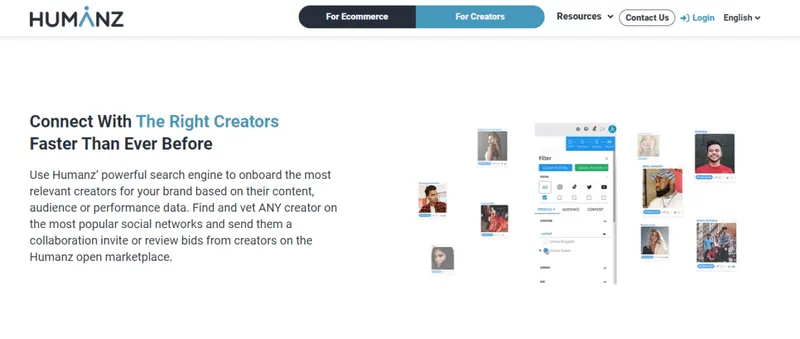
Humanz aims to remind brands that influencers and their audiences are people – not just numbers in AI-generated algorithms. Becoming too data-obsessed and focused on numbers can come at the detriment of your campaigns. Ironically, Humanz uses AI to crawl the social web and perform an in-depth analysis of all public profiles (with >1k followers). As a result, the platform can generate influencer profiles to tell you about the person behind each account.
In addition to all the data captured by Humanz’s AI, the platform also has thousands of registered influencers. For these people, Humanz has centralized and streamlined things like communications, content approval, and scheduling. In addition, the company has a mobile app for influencers, which allows them to swipe through each other to find like-minded creators with whom to collaborate.
Creating campaigns is an in-depth process. You can select whether you want the campaign to accept bids from interested influencers or just move forward with your own influencers and use Humanz as a campaign management tool.
Searchable influencer database across agency-represented talent
Casting calls with tailored submissions from talent managers
Shareable media kits for agencies
Audience demographic data on higher-tier plans
Dashboard insights on agency rosters, creator categories, and average pricing
Multi-user access for team collaboration
Manual vetting of talent agencies before entry to the platform
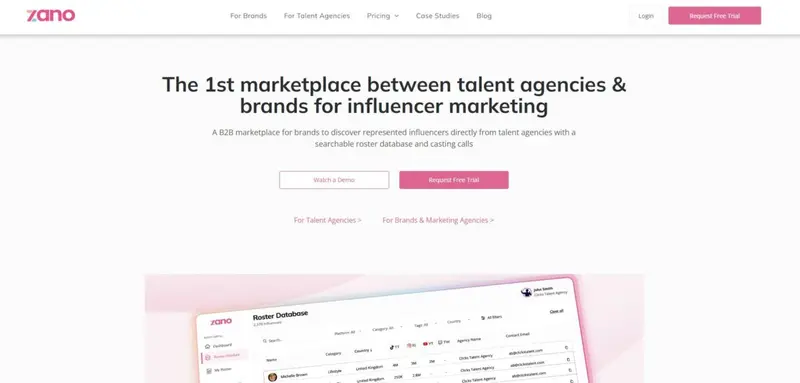
Zano is a talent agency marketplace built to make influencer discovery faster, more structured, and more reliable for brands that want access to vetted, agency-represented creators. Instead of operating like a traditional creator marketplace where brands sift through individual profiles and unsolicited applications, Zano connects marketing teams directly with curated talent rosters from agencies across the US, UK, Europe, and Canada.
That positioning gives Zano a clear edge. By building direct relationships with talent agencies, the platform offers brands access to organized influencer rosters, manager-led communication, and a more streamlined path to partnership. This is particularly useful for teams that want higher-quality creator options, clearer pricing visibility, and fewer operational headaches during sourcing.
For brands and marketing agencies, the workflow is built around speed and control. Users can search and filter roster databases, evaluate agency-represented talent, post casting calls with campaign requirements, and receive tailored submissions from talent managers. These submissions can include pricing and live influencer profile data, helping brands compare options without chasing down creators one by one.
For talent agencies, Zano acts as a centralized showcase and distribution layer. Agencies can create searchable media kits, present their rosters in a more structured way, and receive inbound opportunities from brands actively looking for talent. The platform is designed so agencies retain ownership and control of their roster while benefiting from added visibility and easier deal flow.
A notable strength of Zano is the market intelligence built into the platform. Users can access dashboard-level insights such as top agencies by roster size across TikTok, Instagram, YouTube, and Twitch, top influencers by niche or category, and average pricing by deliverable. That makes the platform useful not only for discovery, but also for benchmarking and planning campaigns more strategically.
Key Findings of Our Review
Zano takes a different route from most influencer marketplaces by focusing on talent agencies rather than individual creator self-enrollment. That makes it especially valuable for brands that want a more curated, manager-led discovery process and prefer working with professionally represented talent.
The platform’s structure helps reduce sourcing friction. Instead of relying on cold outreach or open creator applications, brands can work through agency rosters and casting workflows that are already organized around campaign fit. This makes Zano well-suited for teams that value efficiency, creator quality, and easier coordination.
Its pricing is also relatively accessible compared to many influencer platforms, with paid plans starting at $111 per month and all plans including a 30-day free trial. For brands that want roster access, casting functionality, and pricing benchmarks without jumping into enterprise-level contracts, Zano offers a practical middle ground.
Strengths:
Direct access to 300+ talent agencies and their curated rosters
Structured, agency-led discovery process
Useful pricing and category benchmarking dashboards
Casting calls simplify campaign sourcing at scale
Free trial available on all plans
Limitations:
Still in Beta
Focused on agency-represented talent rather than the broader creator market
Audience demographic data is only available on higher-tier plans
What Should You Consider When Choosing an Influencer Marketplace
With so many influencer marketplaces to choose from, it can be tricky to decide which one is the best fit for your brand. Here are some factors to consider.
1. Your Influencer Marketing Goals
Before you do anything else you need to determine what you are hoping to achieve with your influencer marketing campaign. Do you want to increase brand awareness, drive traffic to a website landing page, increase sales, or something else?
Many influencer marketplaces and platforms specialize in a particular way and are better suited to brands pursuing particular goals.
2. Your Campaign's KPIs
Having a defined set of KPIs and metrics in place for your marketing campaign ties in with your campaign goals. This way, you can measure whether your campaign was successful in achieving the goals.
When comparing different influencer marketplaces, look for the analytics and reporting features and functionalities each one offers. This will ensure that you can track your progress and determine whether the marketplace will help you achieve the desired results of your marketing strategy.
3. Who is the Target Audience for Your Campaign? Are Suitable Influencers on the Platform?
You need to work with a platform that has the “right” influencers for your campaign. And by “right” influencers, we mean that a creator’s social followers match your target audience.
Alongside this, make sure that the platform caters to influencers on the social networks where your target audience spends their time.
4. Does the Influencer Marketplace/Platform Have Sufficient Information to Analyze Influencers?
If you’re trying to find suitable influencers for your campaign you need to have enough relevant data available to help with your decision making. The various influencer marketplaces differ in what they present to you. Some marketplaces use AI-driven tools to analyze influencer content. Make sure that the platform you select can tell you everything you need to know about potential influencers.
5. What is the Size of your Budget in Relation to ROI?
When looking at influencer marketplaces, take note of the pricing model each one uses. Some platforms charge a flat fee, while others take a commission from the influencers they connect you with.
Keep in mind that in most cases, you’ll also have to pay additional fees to influencers on top of the marketplace fees. So, for example, let’s say you pay the $600 per month fee to access the Pro plan for Creator.co. You then create a recurring campaign activating 20 influencers who each charge $150 per post and you want them to create five pieces of content each month. That means your monthly expenses would amount to at least:
20 influencers x 5 content pieces = 100 pieces of content
100 pieces of content x $150 = $15,000
+ $600 marketplace fee
= $15,600
As you vet the influential people you want to work with, keep in mind how much you are willing to spend on each one. This will help narrow down your options and avoid overspending. Remember, you want to make sure that you are getting a good return on investment for your marketing spend.
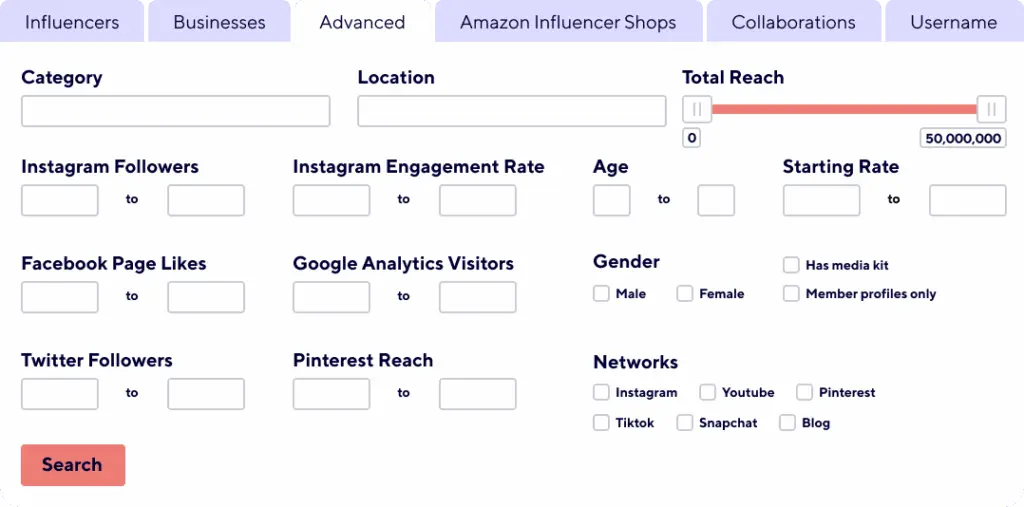
Look for a marketplace where you can find creators whose rates align with your budget. A marketplace like Influence. co comes with advanced search filters so you can do just that.
You’ll be able to set a rate range and search for influencers whose fees fall within that range. This simplifies the process of narrowing down influencers that fit your budget, allowing you to control your spending. Additionally, look for a price criterion so you can look for influencers whose rates are within your budget.
influencer discovery tool
6. Do the Marketplaces Have the Tools and Resources you Need?
The best influencer marketing platform will have all the features and resources you need to successfully launch and manage your influencer marketing campaign.
Take note of the tools each offers and the workflow they have in place, such as reporting and analytics, influencer data and statistics, and contract management. These can save you time and effort in managing your influencers and tracking your campaign's progress.
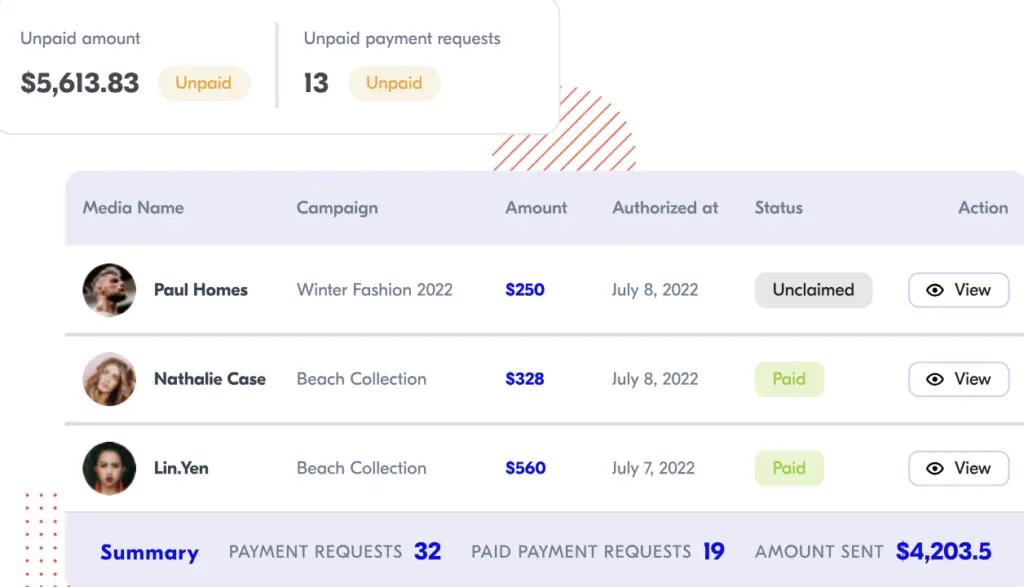
For example, if you need a marketplace that enables you to manage influencer payments in one place, an option like Upfluence could be ideal for you. This influencer marketplace comes with a payment management feature where you can keep track of payment requests, total unpaid fees, the amount due for each influencer, and more. For each influencer, you’ll be able to see the payment status, when payment was authorized, and which campaign it’s for so you can avoid issues such as forgetting to pay influencers on time or accidentally paying them twice for the same campaign.
Not only that, but the built-in payment system also makes it easier to maintain compliance by automatically collecting W9-W8 forms from each creator. This information is easily accessible in the payment dashboard for tax compliance.
Additionally, you can also find marketplaces that come with sophisticated influencer data to aid your search.
For instance,Tagger’s Affinity Engine simplifies influencer search by giving you an overview of their profile affinity in percentage. At a glance, you’ll be able to quickly tell whether an influencer’s profile is aligned with your brand.
You might also find value in Humanz’s performance forecasting tool. The marketplace uses AI to analyze the connection that each influencer has with their true followers, allowing them to accurately predict their expected influence. This allows you to forecast their performance in specific categories so you can further streamline your search.
Even if the marketplace doesn’t come with built-in capabilities to do everything you need to do, it should be able to integrate with third-party tools that offer those features.
For example, Tagger also integrates with Dropbox Sign, which allows you to leverage the tool’s contract management features as a part of your workflow. This makes it easy to formalize your collaboration agreements and keep all your campaign documents organized in one place.
Benefits Of Influencer Marketing Marketplaces
Influencer marketing marketplaces offer a streamlined solution for brands looking to collaborate with influencers. These platforms provide a centralized hub where brands can discover, connect, and manage influencer partnerships efficiently. Here are some key benefits:
1. Access to a Diverse Pool of Influencers
Influencer marketing marketplaces feature a wide variety of influencers across different niches and platforms. For example, Brandwatch Influencer Marketing Software offers access to a pool of over 30 million influencers across platforms like Instagram, TikTok, and YouTube.
This diversity allows brands to find the perfect match for their campaign needs, whether they’re targeting a broad audience or a specific demographic.
2. Streamlined Campaign Management
Marketplaces offer tools that simplify the entire campaign process, from influencer discovery to contract management and performance tracking. For instance, Upfluence integrates with Gmail and Outlook for seamless communication and offers an all-in-one dashboard to manage influencers, track progress, and analyze results. This efficiency saves time and reduces the complexity of managing multiple influencer relationships, making it easier for brands to focus on strategic planning and creative execution.
3. Data-Driven Decision Making
Many influencer marketing marketplaces provide detailed analytics and performance metrics. Brandwatch, for example, includes features like automated reporting and advanced analytics to track deliverables and measure campaign success. These insights help brands optimize their strategies and ensure they are achieving desired outcomes, such as increased engagement and higher ROI.
4. Cost-Effective Solutions
By offering access to a variety of influencers at different price points, marketplaces enable brands to find cost-effective solutions that fit their budget. For example, Creator.co offers plans starting at $460 per month and features a collaboration hub where influencers can apply to participate in campaigns, making it accessible for small to mid-sized businesses.
5. Enhanced Transparency and Trust
Marketplaces often have vetting processes and reviews, ensuring that brands work with reputable influencers. Brandwatch’s Influence platform, for example, includes reporting and communication features that help vet influencers effectively. This transparency builds trust and reduces the risk of fraudulent partnerships. Brands can also view past campaign performances and testimonials, making it easier to select influencers with proven track records.
6. Scalability
As brands grow, their influencer marketing needs can evolve. Marketplaces provide the scalability to adapt to these changes. For example, Insta360 uses Brandwatch Influence to manage over 4,000 partners and 60 campaigns a year, demonstrating the platform's capability to handle large-scale operations. Marketplaces offer the flexibility to scale up campaigns, integrate more influencers, and utilize advanced tools that support larger, more complex campaigns.
Final Thoughts
Finding the right influencer for your brand is essential to the success of any influencer marketing campaign. But finding the best one can be a challenge. You might have to wade through thousands of profiles on different platforms before you find the perfect match.
The influencer marketplaces listed in this article are some of the best ones in the business and should make it easier for you to find the right brand influencers by curating a selection of top-tier talent and making them readily available in one place. Each marketplace has its own strengths and weaknesses, so it is important to choose the right marketplace for your needs.
Ultimately, the most important thing is to find an influencer you can build a long-term relationship with and who will be a positive force for your brand.
Frequently Asked Questions
How do you pick the best influencer marketplaces?
You can pick the best influencer marketplaces by considering things like the types of influencers in their network, the social media platforms they support, and the features they offer. For example, if you’re running a nano-influencer gifting campaign on Instagram, you should look for a marketplace that primarily consists of Instagram nano-influencers and has a feature that supports influencer gifting.
What is the downside of using influencer marketplaces?
The major downside of using an influencer marketplace is that you often have to pay a fee to the platform. This may involve commissions or platform subscription fees, which could increase your overall influencer marketing costs.
What is the best influencer brand marketplace?
Brandwatch Influencer Marketing Software, Upfluence, Creator.co, LTK, and Skeepers are some of the best influencer brand marketplaces available right now. However, it’s important to note that what’s “best” for someone else may not necessarily be best for you. The best influencer brand marketplace for you is one that specifically addresses your unique needs.
Comparing Influencer Marketing Platforms
These influencer marketing platforms cater to diverse categories, including Business Services, Advertising & Marketing, Social Media, Creators, and Brands, among others. Explore the sections below for an overview of Influencer Marketing Platforms categorized by:
The Influencer Marketing Hub Team brings together a diverse group of experts with a passion for influencer marketing, digital trends, and social media strategies. Each piece of content crafted by this team is researched and written to provide valuable insights, tips, and updates for our readers. Our authors are dedicated to delivering high-quality, informative, and engaging articles that help businesses and influencers thrive in this rapidly changing digital world.