
Audio advertising has become much easier to buy than it was just a few years ago. Marketers no longer need to negotiate directly with radio stations or commit to large media buys to reach listeners.
Dedicated audio ad platforms now allow brands to launch audio campaigns with relatively small budgets while accessing millions of listeners across streaming music, podcasts, and other digital audio environments.
More options, however, create a new challenge. Not every audio ad platform is built for the same type of advertiser. Some focus on self-serve campaign management, making them attractive to smaller teams and businesses. Others are designed for agencies and enterprise brands that want to buy audio alongside display, video, connected TV, and other channels through a single platform.
Questions around inventory, targeting, pricing, and measurement also vary significantly from one platform to another. Spotify, for example, offers direct access to its own streaming ecosystem.
This guide breaks down the best audio ad platforms in 2026, including how they work, what they cost, who they're best suited for, and where each platform fits within a modern media strategy.
Whether you're planning your first audio campaign or looking to expand an existing program, the goal is simple: help you choose the right platform for the job.
- What Are Audio Ad Platforms?
- The Different Types of Audio Ad Platforms
- Best Audio Ad Platforms
- 1. Spotify
- 2. AudioGo
- 3. StackAdapt
- 4. SiriusXM Media
- 5. AdsWizz
- 6. Acast
- 7. SoundStack
- 8. iHeartMedia
- Why Are More Marketers Investing in Audio Advertising?
- Finding the Right Audio Ad Platform Starts With Your Goals
- Frequently Asked Questions
What Are Audio Ad Platforms?
Audio Ad Platforms Definition
Audio ad platforms are the tools advertisers use to buy advertising across streaming music, podcasts, internet radio, and other digital audio channels. Instead of negotiating directly with individual publishers, marketers can use these platforms to launch campaigns, manage budgets, target audiences, and track performance from a single interface.
The category is broader than many people realize. Spotify Ads Manager, for example, gives advertisers direct access to Spotify's music and podcast audience. Programmatic platforms such as StackAdapt and The Trade Desk go even further, allowing brands to buy audio alongside display, video, and connected TV campaigns.
Inventory is often the biggest difference between platforms. Some focus primarily on streaming audio. Others specialize in podcast advertising. A few are designed for advertisers who want access to as much digital audio inventory as possible through a single buying platform.
Targeting options vary as well. Most platforms support audience, geographic, and demographic targeting, but the depth of those capabilities can differ significantly depending on the platform and inventory source.
Choosing an audio ad platform is really about matching the platform to your campaign goals. A local business running its first audio campaign will likely need something very different from a national brand managing audio as part of a larger media strategy. Understanding the major platform categories makes that decision much easier.
The Different Types of Audio Ad Platforms
One reason choosing an audio ad platform can feel confusing is that not all platforms do the same thing. Some give you direct access to a specific publisher's audience, while others aggregate inventory across multiple networks.
A platform that works well for a local business testing audio advertising may not be the right fit for an agency managing multi-channel media campaigns. Understanding the major platform categories makes it much easier to narrow your options.
Self-Serve Audio Advertising Platforms
Self-serve platforms are usually the easiest place to start. Advertisers can create campaigns, upload audio creative, set targeting parameters, and manage budgets without speaking to a sales team.
These platforms are designed to simplify campaign setup and make audio advertising accessible to smaller brands and marketing teams.
Marketers often choose self-serve platforms when speed, flexibility, and lower minimum budgets are priorities.
Programmatic Audio Advertising Platforms
Programmatic platforms take a broader approach to media buying. Instead of focusing only on audio, they allow advertisers to manage audio alongside display, video, connected TV, native advertising, and other channels.
Audio is just one part of the buying strategy here. Brands already running programmatic campaigns often prefer these platforms because they can manage multiple channels from a single platform while using shared audience targeting and measurement tools.
Podcast Advertising Platforms
Podcast advertising platforms focus specifically on podcast inventory and sponsorship opportunities.
Some provide access to dynamically inserted ads across large podcast networks. Others help advertisers buy placements within individual shows.
These platforms offer podcast advertising opportunities alongside broader audio inventory. They are often a better fit for brands that want to align with specific creators, shows, or audience communities rather than simply maximizing reach.
Publisher-Specific Audio Platforms
Some platforms give advertisers direct access to a single publisher's audience.
The advantage is simplicity and direct access to first-party audience data. The tradeoff is that campaigns remain limited to that publisher's ecosystem.
For advertisers, the choice often comes down to a simple question: do you want access to one audience, multiple publishers, podcast-specific inventory, or a broader programmatic buying platform?
The answer will usually narrow the field much faster than comparing feature lists.
Best Audio Ad Platforms
|
Platform |
Best For | Inventory Type | Self-Serve |
Pricing |
| Spotify Ads Manager | Streaming audio and podcast advertising | Spotify music and podcasts | Yes | Campaigns start at approximately $250 |
| AudioGo | Multi-platform audio advertising | Spotify, Pandora, SiriusXM, iHeartRadio, SoundCloud, TuneIn, and more | Yes | Campaigns start at $250 |
| StackAdapt | Programmatic audio advertising | Streaming audio, podcasts, and omnichannel inventory | No | Custom pricing |
| SiriusXM Media | Premium audio inventory | SiriusXM, Pandora, SoundCloud, podcasts, and partner inventory | No | Custom pricing |
| AdsWizz | Audio advertising infrastructure and large-scale buying | Publisher and streaming audio network inventory | Varies | Custom pricing |
| Acast | Podcast advertising | Podcast inventory and creator networks | Varies | Custom pricing |
| SoundStack | Programmatic audio inventory | Streaming audio, podcast, and broadcaster inventory | No | Custom pricing |
| iHeartMedia | Podcast and broadcast audio advertising | Podcasts, streaming audio, and radio inventory | No | Custom pricing |
While there isn't a "best" option for every advertiser, the right option ultimately depends on what you're trying to accomplish.
- If you're completely new to audio advertising, start with Spotify Ads Manager.
- If your goal is reaching listeners across multiple streaming platforms, AudioGo is usually the better choice.
- If podcasts are your main focus, look at Acast.
- If audio is only one channel within a larger media plan, StackAdapt is worth considering.
- If you're running larger brand campaigns and need premium inventory, SiriusXM Media deserves a closer look.
- If your strategy includes podcasts, streaming audio, and radio audiences, iHeartMedia offers a unique combination of all three.
- If programmatic buying is already part of your workflow, SoundStack may fit naturally into your media strategy.
- If you're evaluating the technology powering parts of the audio advertising ecosystem, AdsWizz is one of the most important names in the category.
1. Spotify
Best for: Streaming audio and podcast advertising
Pricing: Self-serve campaigns starting at approximately $250
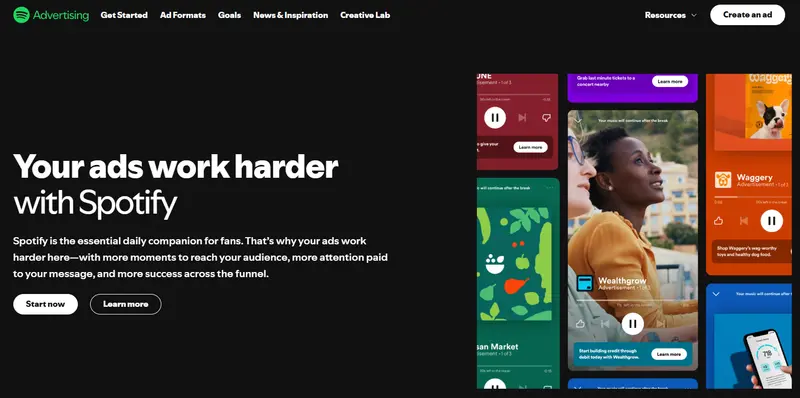
Spotify is usually the first platform marketers look at when exploring audio advertising, and for good reason. Getting started is relatively simple, the minimum spend is approachable, and campaigns can be launched without going through a sales team.
Advertisers can run both audio and video ads across Spotify’s music streaming and podcast inventory while managing everything from a single dashboard.
Read More
2. AudioGo
Best for: Multi-platform audio advertising
Pricing: Campaigns start at $250
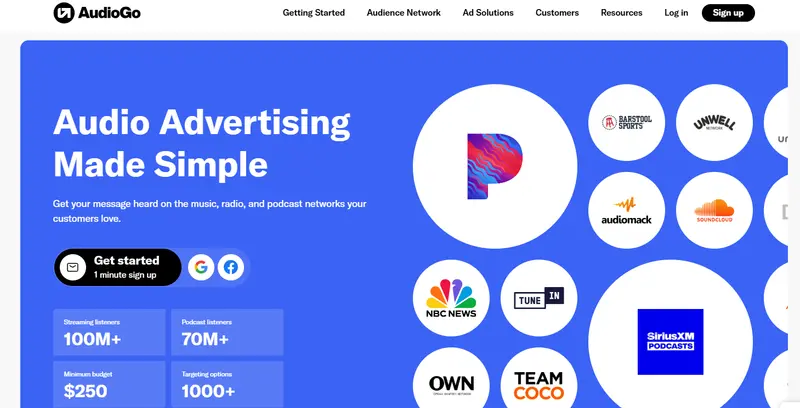
AudioGo takes a different approach from Spotify. Instead of giving advertisers access to a single platform, it brings together inventory from multiple audio publishers under one roof.
A campaign can potentially reach listeners across Spotify, Pandora, iHeartRadio, SiriusXM, SoundCloud, TuneIn, and other streaming services without requiring separate buys for each platform.
That broader reach is what makes AudioGo appealing. Marketers can manage targeting, budgets, frequency controls, and reporting from a single interface while reaching audiences across a much larger portion of the digital audio ecosystem. The platform was also built to be self-serve, so advertisers don’t need programmatic expertise to get campaigns running.
Read More3. StackAdapt
Best for: Programmatic audio advertising
Pricing: Custom pricing
StackAdapt isn’t really an audio platform in the traditional sense. Audio is one piece of a much larger programmatic advertising platform that also includes display, native, video, connected TV, and digital out-of-home advertising.
That distinction matters because most advertisers considering StackAdapt aren’t looking for audio alone.
The biggest advantage is flexibility. Audio campaigns can run alongside other channels while sharing audience targeting, measurement, and reporting. Instead of managing separate platforms for each media type, marketers can keep everything within the same workflow. That becomes particularly useful as campaigns grow more complex and budgets expand across multiple channels.
Read More4. SiriusXM Media
Best for: Premium audio inventory and large-scale brand campaigns
Pricing: Custom pricing
SiriusXM Media gives advertisers access to one of the largest collections of audio inventory available through a single company. Campaigns can reach audiences across SiriusXM, Pandora, Stitcher, SoundCloud, and other owned and partner properties, creating opportunities to combine streaming audio, podcasts, and digital radio within a single buy.
Scale is a major reason marketers consider SiriusXM Media. Instead of piecing together inventory from multiple providers, advertisers can access a broad range of premium audio environments through one sales relationship. Audience targeting and measurement capabilities have also expanded significantly as the company has continued to build out its digital advertising business.
Read More5. AdsWizz
Best for: Large-scale audio advertising infrastructure
Pricing: Custom pricing
AdsWizz operates a little differently from most of the platforms on this list. Many advertisers may not recognize the name, but there’s a good chance they’ve already bought inventory through technology powered by AdsWizz.
The company provides advertising technology used by publishers, broadcasters, streaming services, and media companies across the digital audio ecosystem.
What makes AdsWizz interesting is its role behind the scenes. Rather than acting purely as a destination for advertisers, it helps power audio advertising delivery, targeting, programmatic buying, and measurement across a large network of publishers. Its technology is also closely integrated with the broader SiriusXM Media ecosystem.
Read More6. Acast
Best for: Podcast advertising
Pricing: Custom pricing
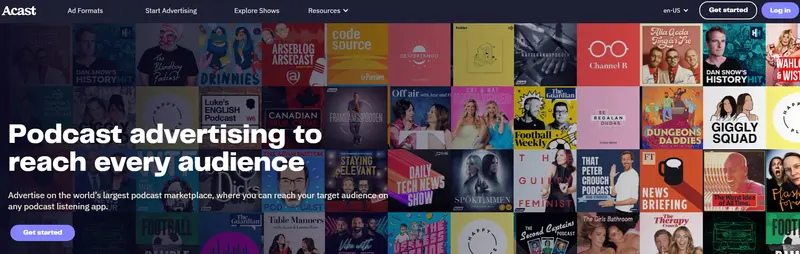
Acast is one of the largest podcast advertising marketplaces in the industry, connecting advertisers with thousands of podcast creators and shows across a wide range of categories. Rather than focusing on streaming music inventory, Acast is built specifically around podcast advertising and podcast audience engagement.
Many marketers choose Acast because of the flexibility it offers. Campaigns can run through dynamically inserted ads across podcast networks, but advertisers can also work more closely with specific shows and audiences when sponsorship alignment matters. That creates opportunities to combine scale with contextual relevance.
Acast is particularly well-suited for brands that see podcasts as a dedicated advertising channel rather than simply another audio inventory source.
7. SoundStack
Best for: Programmatic audio inventory and publisher partnerships
Pricing: Custom pricing
SoundStack focuses on the infrastructure side of digital audio advertising. The platform works with broadcasters, podcasters, streaming services, and media companies to help distribute, monetize, and measure audio content.
For advertisers, that translates into access to a large network of premium audio inventory through programmatic buying channels.
What makes SoundStack interesting is its focus on audio-first technology. While many programmatic platforms treat audio as one channel among many, SoundStack is built specifically around audio distribution, monetization, and advertising.
SoundStack tends to make the most sense for advertisers and agencies looking for scalable audio inventory through programmatic channels.
8. iHeartMedia
Best For: Podcast and broadcast audio advertising
Pricing: Custom pricing
iHeartMedia combines one of the largest podcast networks in the world with a massive portfolio of broadcast radio stations and digital audio properties. That combination gives advertisers access to audiences across podcasts, streaming audio, live radio, and connected listening environments through a single media company.
Many advertisers are drawn to iHeartMedia because of its scale and content portfolio. Campaigns can be built around nationally recognized podcasts, local radio audiences, or a mix of both, depending on campaign objectives. Few audio companies offer the same blend of digital and traditional audio reach.
Read MoreWhy Are More Marketers Investing in Audio Advertising?
Audio advertising isn't growing because it's trendy. Growth is happening because more people are spending more time listening to digital audio, and advertisers now have better tools for reaching those audiences than they did a few years ago.
A few developments stand out when looking at where the market is heading.
Digital Audio Audiences Keep Growing
Marketers go where attention goes, and digital audio continues to attract a massive audience.
According to Edison Research's Infinite Dial 2025 report, 79% of Americans aged 12+ listen to online audio every month, representing roughly 228 million people. Monthly podcast listening has also reached 55%.
Those numbers help explain why nearly every major media platform is investing in audio inventory. More listeners create more advertising opportunities, whether you're running campaigns on Spotify, AudioGo, SiriusXM Media, or Acast.
Podcast Advertising Has Become a Major Media Channel
Podcast advertising has moved well beyond its early-adopter phase.
According to sources, podcast advertising revenue reached $4.2 billion in 2026, growing 31% year over year.
Growth at that scale signals something important for marketers. Podcasts are no longer experimental media buys. Many brands now treat podcast advertising as a dedicated channel with its own budgets, measurement frameworks, and campaign strategies.
Programmatic Buying Is Becoming the Default
Many advertisers no longer want to buy audio inventory publisher by publisher.
Programmatic platforms make it possible to purchase inventory across multiple audio environments while using centralized targeting, reporting, and campaign management tools. According to digital audio advertising forecasts, programmatic buying now accounts for 30% of digital audio ad spending in the United States.
Platforms such as StackAdapt, SoundStack, and AdsWizz have benefited from that shift as advertisers look for ways to manage audio alongside display, video, and connected TV campaigns.
Listening Is Expanding Beyond Smartphones
A lot of marketers still picture audio advertising as something people hear through headphones on their phones.
Listening habits are much broader today.
The same Infinite Dial 2025 study found that 73% of Americans have listened to online audio in a car, while smart speaker ownership has reached 34% of the U.S. population.
For advertisers, that means audio campaigns increasingly reach consumers across multiple environments throughout the day, from morning commutes and workouts to smart speakers at home and connected dashboards in vehicles.
Taken together, these trends point to a simple reality: audio is becoming a more mature advertising channel. Larger audiences, growing podcast inventory, increased programmatic adoption, and expanding listening environments are giving marketers more ways to reach consumers than ever before.
Finding the Right Audio Ad Platform Starts With Your Goals
No audio ad platform is the right fit for every advertiser, and that's exactly why platform selection matters.
Some marketers simply want an easy way to get audio campaigns live. Others need access to podcast inventory, broader streaming audio reach, or programmatic buying tools that fit into a larger media strategy. A platform that works perfectly for a local business may not make much sense for an agency managing campaigns across multiple channels.
For many advertisers, Spotify Ads Manager is the easiest place to start. AudioGo is a strong option when a broader reach across multiple audio publishers is the priority. Podcast-focused brands will often gravitate toward Acast, while larger organizations may find more value in platforms such as StackAdapt, SiriusXM Media, and SoundStack.
The good news is that audio advertising has never been more accessible. The challenge isn't finding a platform. It's choosing the one that best matches your audience, budget, and campaign goals.
Frequently Asked Questions
What is the best audio ad platform for most advertisers?
Spotify Ads Manager is often the easiest starting point because it combines self-serve campaign management with access to both music streaming and podcast audiences. Advertisers looking for broader reach across multiple publishers may prefer AudioGo.
Which audio ad platform is best for podcast advertising?
Acast is one of the strongest options if podcasts are your primary focus. The platform is built around podcast inventory and gives advertisers access to a large network of creators and shows.
How much does audio advertising typically cost?
Costs vary depending on the platform, inventory, audience targeting, and campaign size. Self-serve platforms such as Spotify Ads Manager and AudioGo generally offer lower barriers to entry than enterprise-focused programmatic platforms.
What's the difference between podcast ads and streaming audio ads?
Podcast ads appear within podcast episodes, while streaming audio ads are inserted between songs or audio content on platforms such as Spotify and internet radio services.
What is programmatic audio advertising?
Programmatic audio advertising uses automated technology to buy and optimize audio inventory across multiple publishers and listening environments.
Which audio ad platform is best for small businesses?
Spotify Ads Manager and AudioGo are often the most accessible options for small businesses because both platforms offer self-serve campaign management and relatively straightforward setup processes.
Can audio ads target specific audiences?
Yes. Most modern audio ad platforms support audience, demographic, geographic, and behavioral targeting. Some platforms also offer contextual targeting based on podcast categories or listening environments.
Are audio ads worth it for ecommerce brands?
They can be. Audio advertising gives ecommerce brands another way to build awareness and stay top of mind, especially during moments when consumers are listening rather than actively scrolling or watching content.


