
- Starting August 24, YouTube will count a view as soon as a video begins playing, bringing long-form video closer to the way TikTok, Instagram, and YouTube Shorts measure views.
- YouTube will preserve its previous counting method under a separate “engaged views” metric inside Analytics.
- Creator earnings and YouTube Partner Program eligibility will continue to rely on engaged views and engaged watch hours.
- The change should make cross-platform reach easier to compare, while making raw view counts less useful as a standalone measure of creator performance.
- Brands may need to become more specific about which metrics define performance in creator contracts, particularly when deals use CPMs or guaranteed view thresholds.
YouTube is making another significant change to how creator performance is measured, just days after announcing higher monetization requirements for the YouTube Partner Program.
In that earlier update, YouTube raised the bar for new creators seeking ad and Premium revenue sharing, with 8,000 qualified watch hours or 20 million qualified Shorts views becoming the new entry requirements from February 2027.
Now the platform is changing what one of its most familiar metrics actually means.
Starting August 24, a view will count from the moment a video begins playing.
That means creators are likely to see their public view totals climb faster, bringing YouTube’s long-form measurement closer to TikTok, Instagram, and the system YouTube already introduced for Shorts.
YouTube says the goal is consistency. But for marketers, the bigger consequence is that views will increasingly describe exposure rather than meaningful attention.
That distinction matters when creator campaigns, sponsorship pricing, and performance reports are still frequently built around view counts.
YouTube is keeping its previous measurement methodology inside Analytics as engaged views, which means brands will still have access to a stronger signal of whether someone actually stayed to watch.
The result is effectively a two-layer measurement system. On one hand, views tell you who started watching your video. Engaged views, on the other hand, tell you who stayed past the first few seconds.
And for marketers evaluating creator performance, the second number may soon matter a lot more.
- YouTube Is Turning Views Into an Exposure Metric
- A Bigger View Count Says Less About How Much People Actually Watched
- Creator Revenue Still Depends on Engagement
- Brand Deals May Need a More Precise Definition of a “View”
- Cross-Platform Comparisons Get Easier. Creator Valuation Gets Harder.
- The Community’s Skepticism Comes From a Familiar Place
- What Brands Should Take From YouTube’s New View Count
YouTube Is Turning Views Into an Exposure Metric
YouTube says it has historically used different view-counting systems across formats.
Shorts already moved toward an exposure-based definition, while long-form video followed a different standard.
From August 24, those formats will become more aligned. A view will register when playback begins, regardless of whether the viewer continues watching for an extended period.
YouTube says creators asked for greater consistency so they could better understand their overall exposure and communicate their scale more confidently to sponsors and brand partners.
There is a legitimate business case for that.
Creators frequently operate across TikTok, Instagram, YouTube, and other platforms, yet “one million views” can mean very different things depending on where those views occurred.
That has made cross-platform creator comparisons messy.
One Reddit discussion captured the problem particularly well. A user pointed out that a YouTube video using a stricter view standard could appear much smaller next to a TikTok or X video using a more generous definition, even when the underlying audience attention told a different story.
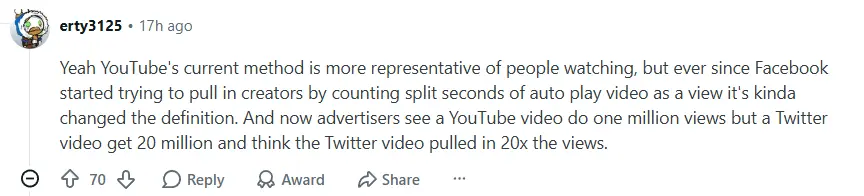
The same user argued that using a common top-line metric at least reduces some of that confusion for creators competing for advertiser budgets.

YouTube’s update supposedly helps solve that problem but it creates another one at the same time.
A Bigger View Count Says Less About How Much People Actually Watched
When playback itself becomes enough to register a view, two videos with identical public totals can represent very different audience behavior.
Imagine two sponsored videos each receiving five million views.
One keeps four million viewers watching long enough to qualify as engaged. The other keeps one million. Publicly, both have five million views.
Commercially, they may offer very different value.
That is why YouTube’s decision to retain engaged views inside Analytics is so important.
The platform will continue tracking how many viewers choose to keep watching under that separate metric.
The community quickly picked up on the distinction.
One Reddit commenter suggested that the ratio between views and engaged views could become a useful metric in its own right. Another pointed out that YouTube is changing the public-facing number while continuing to use engaged views for monetization and revenue calculations.
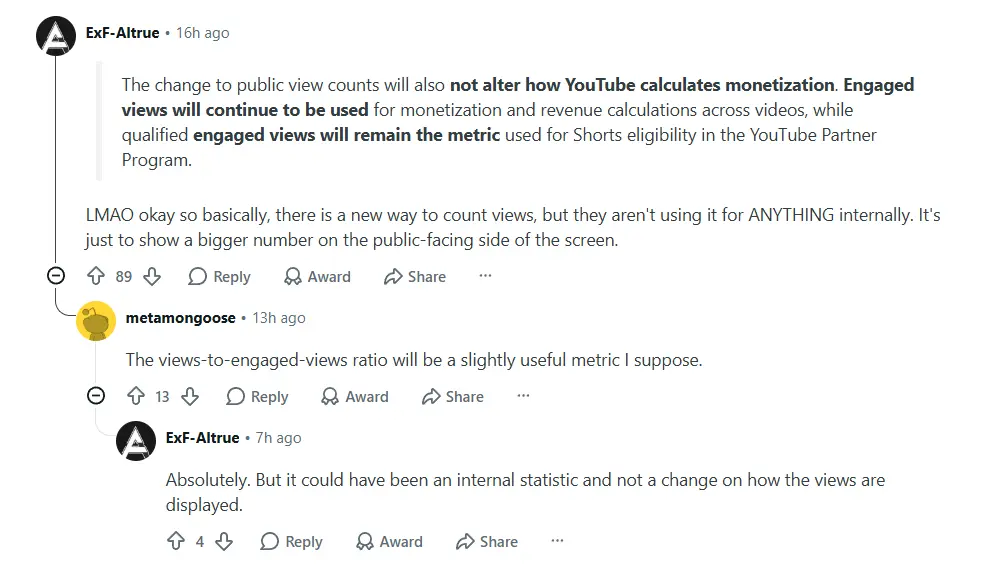
That ratio could become an interesting performance signal for brands.
A creator generating strong exposure and strong engaged-view conversion is doing something very different from one generating lots of starts followed by immediate exits.
Raw views tell marketers how often the door opened. Engaged views start telling them how many people walked inside.
Creator Revenue Still Depends on Engagement
The public number may increase, but creator earnings will continue following a different metric.
YouTube says monetization will remain based on engaged views and engaged watch hours, and the change will also leave YouTube Partner Program eligibility calculations untouched.
That creates an important separation between public scale and monetizable attention.
Creators could therefore see noticeably larger view counts after August 24 without seeing a corresponding increase in revenue.
The Reddit discussion repeatedly returned to that distinction. One commenter called views a “vanity metric,” pointing out that creators are paid based on watch behavior rather than the public view count. Another noted that while YouTube is changing the public-facing number, engaged views will continue to be used for monetization.
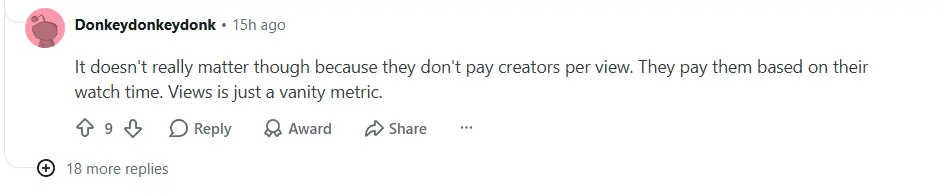
For creator businesses, that means screenshots of public view totals will tell less of the financial story.
For brands, it means campaign reporting needs to move deeper into Analytics.
Brand Deals May Need a More Precise Definition of a “View”
This is where the update becomes particularly relevant to marketers.
Creator contracts frequently use views to structure:
- Guaranteed performance
- CPM pricing
- Bonus payments
- Make-goods
- Campaign benchmarks
Once YouTube changes what a public view represents, the wording behind those agreements becomes more important.
That distinction also raised a practical question in the same Reddit thread: What happens to creator contracts built around views?
One commenter argued that brand deals may need updated wording now that YouTube is separating public views from the engaged views used for monetization, particularly for agreements tied to CPMs.
That is a practical issue brands should address before the new methodology becomes standard.
A contract promising a particular CPM based on public views could produce very different economics under the new counting system.
Brands may increasingly want creator reporting to include:
- Public views
- Engaged views
- Average view duration
- Audience retention
- Total watch time
- Completion rate
- Clicks
- Conversions
The right metric will depend on the campaign objective.
For awareness campaigns, exposure-based views still have value. For campaigns built around education, consideration, product explanation, or conversion, deeper attention signals become far more important.
Cross-Platform Comparisons Get Easier. Creator Valuation Gets Harder.
There is a strong upside to YouTube’s decision.
Creators have spent years trying to explain why their YouTube performance cannot always be compared directly with TikTok or Instagram based on the headline number alone.
YouTube says the change is designed to give creators a clearer picture of their exposure and make it easier to communicate their scale and value to brand partners and sponsors.
The new definition moves the industry closer to a common language for exposure. It still leaves marketers with the harder task of measuring quality.
Platforms continue to apply different standards, algorithms, formats, and audience behaviors. Even identical view definitions would never make a TikTok view economically identical to a YouTube view.
In the case of YouTube, audience geography matters. So does watch time. And so do context, purchase intent, and the content format.
And a creator who holds an audience for 20 minutes offers a very different advertising environment from one who captures a one-second start.
This is why one experienced commenter in the Reddit discussion said their company already focuses more heavily on minutes watched and retention rates when evaluating YouTube performance.
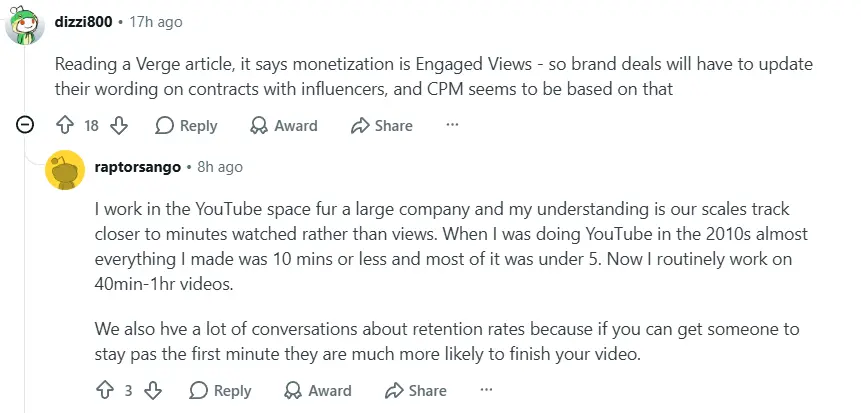
That approach becomes even more sensible after August 24.
The Community’s Skepticism Comes From a Familiar Place
A large share of the initial reaction has been skeptical.
On X, several users raised concerns about how the new definition could affect the meaning of public view counts. Some questioned whether it would make bot-driven inflation easier, while others worried that brief clicks or autoplay exposure could make videos appear more widely watched than they really were.
Bot creators rejoice.
And what the fuck does "the change will make view counts more consistent and help creators better understand how many people are actually seeing their content" even mean? It's literally the opposite.
— Stellar Wildcat (@WildStellarCat) August 17, 2026
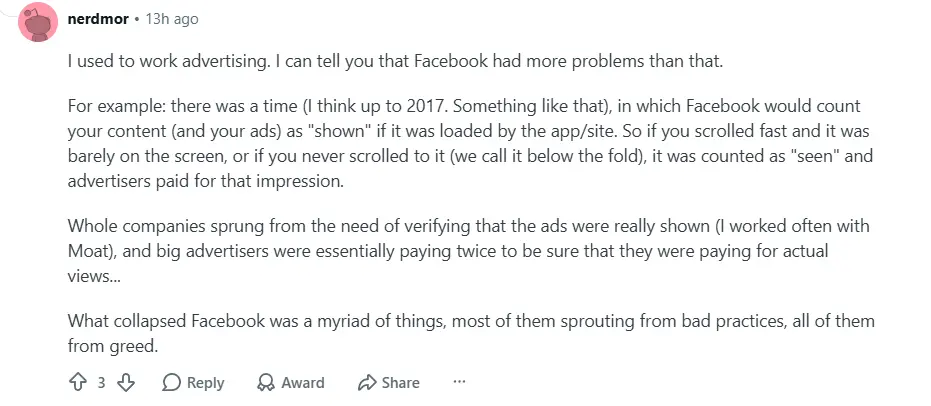
Reddit discussions repeatedly compared the update with Facebook’s historical struggles around video metrics.
YouTube is preserving engaged views separately and continuing to use them for monetization, which creates an important safeguard that distinguishes this model from a system where every commercial decision relies on the same inflated top-line figure.
Still, the history explains the concern.
Several Reddit participants recalled how weak or confusing video measurement contributed to advertisers and publishers making decisions based on metrics that failed to reflect actual audience behavior.
A former advertising professional in the discussion also described how loose impression standards once created demand for independent verification because marketers needed greater confidence that advertising inventory had genuinely been seen.
The lesson for marketers is straightforward.
A bigger metric becomes useful when everyone understands exactly what it measures.
What Brands Should Take From YouTube’s New View Count
YouTube’s new counting method gives creators a clearer top-line measure of exposure, but it also makes the public view count less useful as a standalone performance signal.
For brands, the practical takeaway is to treat views as the starting point rather than the final answer. A campaign may generate strong exposure while producing very different levels of attention, depending on how many viewers stay, how long they watch, and what they do afterward.
That puts more weight on engaged views, retention, watch time, and campaign outcomes when evaluating creator performance. It also makes clearer contract language more important, particularly in deals where compensation is tied to CPMs or guaranteed views.
The change could ultimately make cross-platform reach easier to compare. The harder task will be determining how much of that reach translated into meaningful attention.
For marketers, that is where the real value will continue to sit.


