Audio advertising has quietly become one of the few digital channels capable of reaching people when they are not staring at a screen.
Music streaming, podcasts, internet radio, and connected audio platforms now accompany workouts, commutes, household tasks, and workdays. Attention may be fragmented across social feeds and websites, but listeners often spend long stretches engaged with audio content.
Modern audio advertising looks very different from traditional radio. Advertisers can target audiences based on demographics, interests, listening behavior, location, and device usage. Campaigns can run across streaming services, podcasts, and digital radio inventory while providing reporting that was impossible in the era of broadcast-only advertising.
Growing adoption has also expanded the ways marketers can buy audio inventory. A local business can launch a campaign through Spotify Ads Manager, while larger brands can use programmatic platforms to reach listeners across multiple publishers from a single media buy.
This guide explains how audio advertising works, the different formats available, what campaigns typically cost, how audio ads are purchased, and how marketers measure results across streaming, podcast, and programmatic environments.
What Is Audio Advertising?
Audio Advertising Definition
Audio advertising places promotional messages inside listening environments such as music streaming services, podcasts, internet radio, and other digital audio platforms.
Most audio ads are delivered between pieces of content. A listener might hear an ad before a podcast episode begins, during a break in the episode, or between songs on a streaming platform. Depending on the platform, advertisers may be able to target audiences based on demographics, interests, listening behavior, location, and device type.
Modern audio advertising differs significantly from traditional radio advertising. Broadcast radio typically delivers the same message to everyone listening within a geographic area. Digital audio advertising allows marketers to reach more specific audiences and measure campaign performance through reporting tools and attribution methods.
Audio advertising generally falls into two categories:
- Traditional audio advertising, which includes terrestrial radio commercials.
- Digital audio advertising, which includes streaming music ads, podcast ads, internet radio ads, and programmatic audio campaigns.
Growth in streaming and podcast consumption has expanded the role of digital audio advertising. Marketers can now purchase inventory directly from platforms, work with podcast networks, or use programmatic buying tools to access audio inventory across multiple publishers.
Audio remains one of the few advertising channels that can reach audiences during moments when screens are not the primary focus. Commuting, exercising, cooking, working, and traveling are all situations where listeners may engage with audio content while visual channels compete for less attention.
Why Audio Advertising Matters
Most digital advertising competes for attention on a screen. Audio advertising reaches consumers during moments when visual channels often can't.
A listener may be driving to work, exercising, walking the dog, cooking dinner, or working through a playlist. Those moments create opportunities for brands to stay present without competing against crowded feeds, inboxes, and website real estate.
Audience behavior helps explain why advertisers continue investing in audio.
According to Spotify, 47% of Americans aged 12 and older listened to a podcast in the past month. Podcast consumption is no longer a niche habit. Millions of people now spend hours each week with creators, hosts, and shows they actively choose to follow.
Listening habits are also evolving beyond traditional audio experiences. Spotify reports a 39% increase in average daily streams of video podcasts, highlighting how podcast audiences increasingly engage with content across both audio and visual formats.
For advertisers, that trend expands the number of environments where audio campaigns can appear.
Context is another advantage. A fitness brand can appear inside workout playlists. A financial services company can sponsor business podcasts. A travel brand can align with content focused on vacations and destination planning.
Audio platforms increasingly allow advertisers to match campaigns to listening behaviors, interests, and content categories rather than relying solely on broad demographic targeting.
Performance data also suggests listeners are willing to act on what they hear. Spotify reports that 62% of podcast listeners have taken an action after hearing a podcast advertisement, whether that involved searching for a product, making a purchase, or discussing the brand with others.
Audio advertising will not replace channels like social media, search, or video. Most marketers use it alongside those channels. Audio's value comes from reaching audiences in different moments, reinforcing brand messages across multiple touchpoints, and creating additional opportunities to influence consideration and purchase decisions throughout the customer journey.
Types of Audio Advertising
Audio advertising is often discussed as a single channel, but marketers actually have several different ways to reach listeners. Some formats prioritize scale and automation, while others focus on audience trust, contextual relevance, or geographic reach.
Understanding the differences makes it much easier to decide where audio fits within your broader media strategy.
Streaming Audio Advertising
Streaming audio advertising places ads between songs, playlists, podcasts, and other content on platforms such as Spotify, Amazon Music, and Deezer.
Many advertisers start here because the buying process is relatively straightforward, and audience targeting capabilities are often comparable to other digital advertising channels. Campaigns can be targeted using demographics, interests, listening habits, device types, and location data.
Streaming audio works particularly well for awareness campaigns, product launches, and brands looking to reach large audiences at scale.
Podcast Advertising
Podcast advertising inserts brand messages directly into podcast content. The most common formats include host-read ads, pre-recorded spots, and dynamically inserted advertisements.
Host-read ads remain especially popular because they feel more like recommendations than traditional commercials. Listeners often develop strong relationships with podcast hosts, creating a level of trust that is difficult to replicate in many other advertising environments.
Research from SiriusXM Media found that 3 out of 4 podcast listeners prefer ads read by podcast hosts, while 70% say they value the honesty and authenticity of their favorite hosts. For advertisers, that relationship is often one of the biggest reasons to invest in podcast sponsorships.
Podcast advertising is commonly used by direct-to-consumer brands, subscription services, B2B companies, financial products, and brands targeting highly specific audiences.
Programmatic Audio Advertising
Programmatic audio advertising uses automated technology to purchase audio inventory across multiple publishers and platforms.
Instead of buying ads directly from individual streaming services or podcast networks, advertisers use demand-side platforms (DSPs) to access inventory from many sources through a single campaign.
The appeal largely comes down to efficiency and scale. Industry data shows that programmatic dynamic ad insertion accounted for 29% of podcast advertising spend in 2026, up from 22% in 2024. Growing adoption reflects a broader shift toward automated buying, centralized reporting, and audience-based targeting.
Programmatic audio is often used when advertisers want to manage campaigns across multiple streaming, podcast, and digital radio environments without negotiating with individual publishers.
Digital Radio Advertising
Digital radio advertising appears on internet-based radio services and online radio stations.
The listening experience often resembles traditional radio, but advertisers typically gain access to stronger targeting and measurement capabilities than broadcast radio provides.
Consumer behavior continues shifting toward internet-delivered audio. Edison Research's Share of Ear data found that streaming music now accounts for 23% of all daily audio listening time among Americans aged 13 and older. As listening habits move across connected devices, digital radio offers advertisers a way to combine broad reach with modern targeting capabilities.
Brands looking for audience scale while maintaining some level of targeting often include digital radio within larger audio advertising campaigns.
Traditional Radio Advertising
Finally, traditional radio advertising refers to commercials aired through terrestrial AM and FM radio stations.
Radio continues to offer strong local reach, particularly for regional businesses, retailers, automotive brands, healthcare providers, and event promoters. Audience targeting is generally based on station demographics and geographic coverage rather than individual listener data.
Despite the growth of streaming and podcasts, radio remains a significant advertising channel. Edison Research reported that AM/FM radio accounted for 61% of all ad-supported audio listening during Q4 2025, making it the largest ad-supported audio environment in the United States.
Measurement and attribution capabilities are more limited than digital audio channels, but radio still plays an important role for advertisers focused on local awareness and broad market coverage.
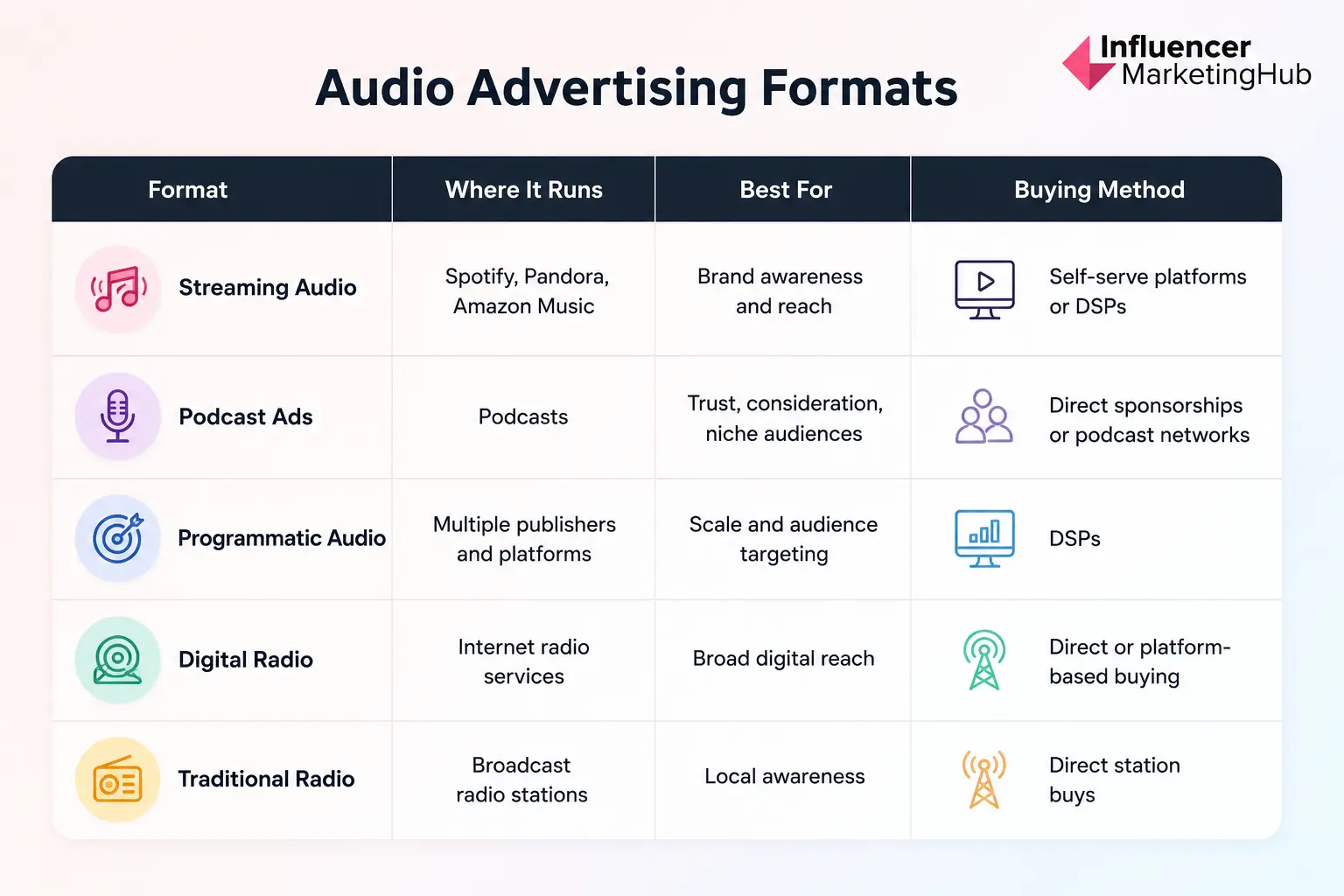
No single format is objectively better than the others. Streaming audio offers scale and targeting. Podcasts often deliver stronger audience relationships. Programmatic audio simplifies buying across multiple publishers. Digital radio balances reach with digital capabilities, while traditional radio continues to serve local and regional campaigns effectively.
Many advertisers ultimately combine several of these formats rather than relying on only one. A brand might sponsor podcasts for credibility, use streaming audio for awareness, and run programmatic audio campaigns to extend reach across additional listening environments.
How Audio Advertising Works
Audio advertising may feel complicated because listeners encounter ads across streaming apps, podcasts, digital radio services, and dozens of other listening environments. Behind the scenes, however, most campaigns follow a fairly similar process.
Advertisers define an audience, select where they want ads to appear, launch the campaign, and then use performance data to optimize results. The technology varies depending on the platform and buying method, but the overall workflow remains largely the same.
Audience Targeting
Most digital audio campaigns begin with audience selection.
Modern audio platforms can target listeners using demographic information, geographic location, interests, device type, listening habits, and content preferences. A fitness brand might target workout playlists, while a beauty brand could focus on female podcast audiences.
Targeting capabilities vary between platforms, but digital audio generally offers much greater precision than traditional broadcast radio. Instead of reaching everyone tuned into a station, advertisers can focus on specific audience segments that are more likely to be relevant to their products or services.
Ad Delivery
Once targeting criteria are defined, the platform identifies opportunities to deliver the ad.
A streaming listener might hear an advertisement between songs or playlists. Podcast listeners may hear ads at the beginning, middle, or end of an episode. Some podcast ads are permanently embedded into content, while others are inserted dynamically based on audience criteria.
The listener experiences a simple audio message. Behind the scenes, the platform determines whether that listener matches the campaign's targeting requirements before delivering the ad.
Campaign Management
Most audio advertising platforms allow advertisers to control budgets, campaign duration, audience reach, and ad frequency.
Frequency management is particularly important. Hearing the same ad once may not create much impact. Hearing it 20 times in a week can become annoying. Campaign managers often use frequency caps to balance awareness with listener experience.
Advertisers can also allocate budgets across different audiences, geographies, devices, and inventory sources depending on campaign goals.
Reporting and Optimization
Digital audio campaigns generate performance data that marketers can use to evaluate results and make adjustments.
Common metrics include impressions, reach, frequency, completion rates, and listener engagement signals. Depending on the platform, advertisers may also gain access to website traffic, conversion data, brand lift studies, or attribution reporting.
Campaign optimization often involves adjusting targeting settings, reallocating budget toward higher-performing audiences, testing new creative, or expanding inventory sources.
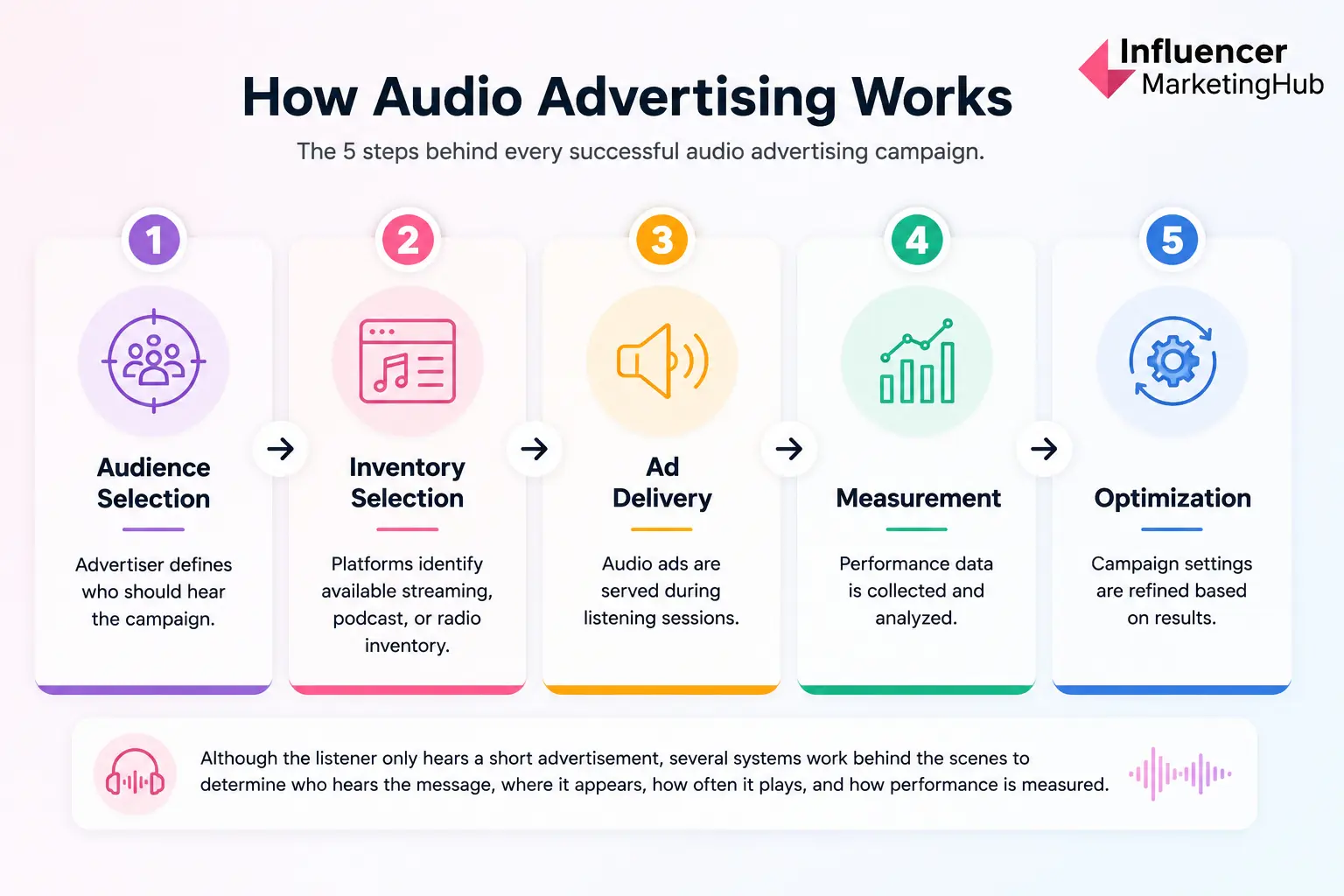
Although the listener only hears a short advertisement, several systems are working behind the scenes to determine who hears the message, where it appears, how often it plays, and how campaign performance is measured.
Understanding that process makes it easier to evaluate different audio advertising platforms, buying methods, and campaign strategies.
Programmatic Audio Advertising Explained
Programmatic Audio Advertising Definition
Programmatic audio advertising uses automated technology to buy and place audio ads across streaming services, podcasts, digital radio platforms, and other audio inventory sources.
Instead of negotiating with individual publishers or purchasing inventory from a single platform, advertisers use specialized software to access audiences across multiple listening environments from one campaign. The approach is similar to how many brands buy display, video, and connected TV advertising today.
For marketers managing larger campaigns, programmatic buying often offers a more efficient way to scale audio advertising without creating separate deals with every publisher.
How Programmatic Audio Advertising Works
Programmatic audio starts with audience targeting rather than publisher selection.
An advertiser defines the audience they want to reach based on characteristics such as demographics, interests, location, device type, or listening behavior. The platform then identifies available inventory across participating publishers and delivers ads when matching listeners become available.
The process happens automatically behind the scenes. Advertisers set campaign parameters, budgets, and targeting requirements, while the technology handles inventory selection and ad delivery.
As new inventory becomes available, campaigns can continue reaching audiences across different streaming platforms, podcast networks, and digital radio services without requiring manual intervention.
Why Advertisers Use Programmatic Audio
Scale is one of the biggest reasons marketers adopt programmatic buying.
Managing direct relationships with dozens of publishers can quickly become time-consuming. Programmatic platforms consolidate inventory access, reporting, and campaign management into a single interface.
Audience targeting is another advantage. A campaign can follow a target audience across multiple listening environments rather than limiting exposure to a single platform or podcast network.
Centralized reporting also makes campaign analysis easier. Advertisers can evaluate reach, impressions, frequency, and performance across multiple publishers without combining data from separate vendors.
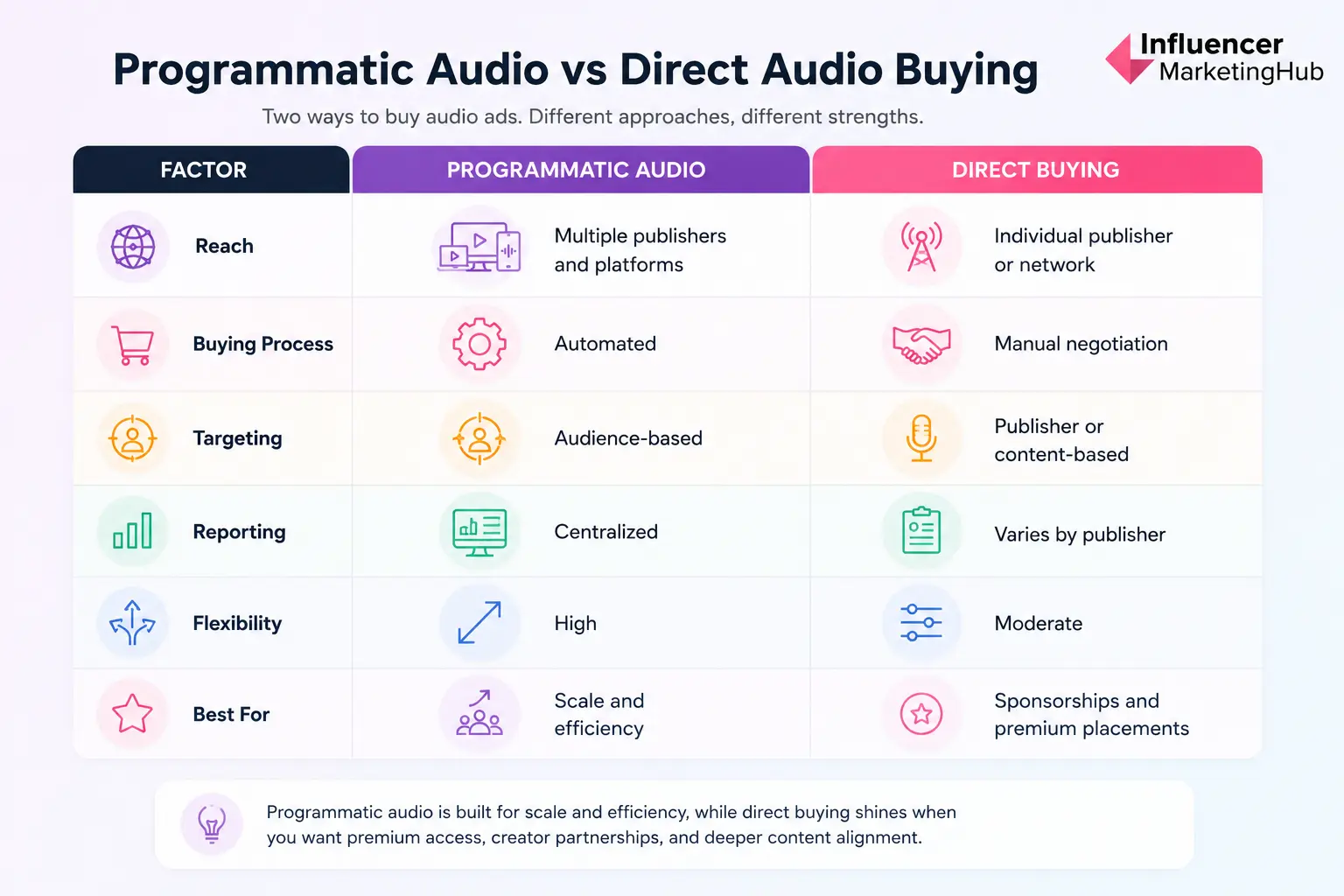
Neither approach is inherently better.
Direct buying often works well when advertisers want a close association with specific content, creators, or publishers. Podcast sponsorships are a good example. A brand may choose a particular show because of the audience relationship and host credibility.
Programmatic buying is usually more attractive when audience reach, operational efficiency, and campaign scale become higher priorities.
When Programmatic Audio Makes Sense
Programmatic audio is often a strong fit for national campaigns, multi-market campaigns, and brands targeting audiences across several listening platforms.
A retailer launching a nationwide promotion may want exposure across streaming music, podcasts, and digital radio simultaneously. Programmatic buying allows those campaigns to run through a single platform rather than requiring multiple publisher relationships.
Many performance-focused advertisers also prefer programmatic buying because audience targeting and optimization controls are often more advanced than traditional direct-buy approaches.
Tradeoffs Marketers Should Understand
Programmatic audio offers convenience, but it is not without limitations.
Podcast sponsorships purchased directly from creators or networks often provide deeper integrations and stronger host endorsements. Those opportunities may not be available through programmatic marketplaces.
Advertisers also have less visibility into individual publisher relationships compared to direct deals. While brand safety controls have improved significantly, inventory quality can vary depending on campaign settings and inventory sources.
The decision ultimately comes down to campaign goals. Brands focused on trust, creator relationships, and premium sponsorship opportunities may lean toward direct buying. Brands focused on scale, audience targeting, and operational efficiency often find programmatic audio to be the more practical option.
How Audio Advertising Is Purchased
Audio advertising isn't purchased through a single marketplace. Depending on campaign goals, budget, and available resources, advertisers typically buy audio inventory through self-serve platforms, direct publisher relationships, or programmatic technology.
Each approach gives marketers access to different types of inventory and varying levels of control. Understanding the differences can make platform selection much easier later on.
Self-Serve Audio Advertising Platforms
Self-serve platforms allow advertisers to create, launch, and manage campaigns without working directly with a sales team.
Spotify Ads Manager is one of the best-known examples in the audio advertising market. The platform gives advertisers access to Spotify's music streaming and podcast inventory through a self-serve interface where campaigns can be created, targeted, and managed directly.
For marketers familiar with platforms such as Meta Ads Manager or Google Ads, the workflow feels relatively familiar. Advertisers define audiences, upload creative assets, establish budgets, and monitor campaign performance from a centralized dashboard.
Spotify's scale also helps explain why many brands start their audio advertising journey there. The platform combines music streaming audiences with a growing podcast ecosystem, allowing advertisers to reach listeners across different types of audio content without managing separate publisher relationships.
The appeal of self-serve buying ultimately comes down to accessibility. Campaigns can often be launched faster, testing becomes easier, and advertisers maintain direct control over budgets, targeting, and optimization decisions.
Direct Publisher and Podcast Buys
Some advertisers prefer to work directly with publishers, podcast networks, or media companies.
A brand sponsoring a business podcast, for example, may negotiate directly with the publisher to secure host-read ad placements, episode sponsorships, or custom integrations. This approach gives advertisers greater control over where campaigns appear and can create stronger alignment between the brand and the content.
Many podcast sponsorships are still purchased this way because the relationship between host and audience often plays an important role in campaign performance.
Programmatic Audio Buying
Programmatic buying takes a different approach.
Instead of selecting individual publishers, advertisers define the audience they want to reach and use demand-side platforms (DSPs) to access inventory across multiple streaming services, podcasts, and digital audio publishers.
The technology automatically identifies available inventory and delivers ads to listeners who match the campaign criteria.
Large brands often use programmatic audio when scale, audience targeting, and centralized reporting become more important than securing placements with specific publishers.
How Much Does Audio Advertising Cost?
Audio advertising costs vary depending on the format, audience targeting, inventory quality, and buying method. A podcast sponsorship purchased directly from a publisher is priced very differently from a programmatic audio campaign running across hundreds of streaming properties.
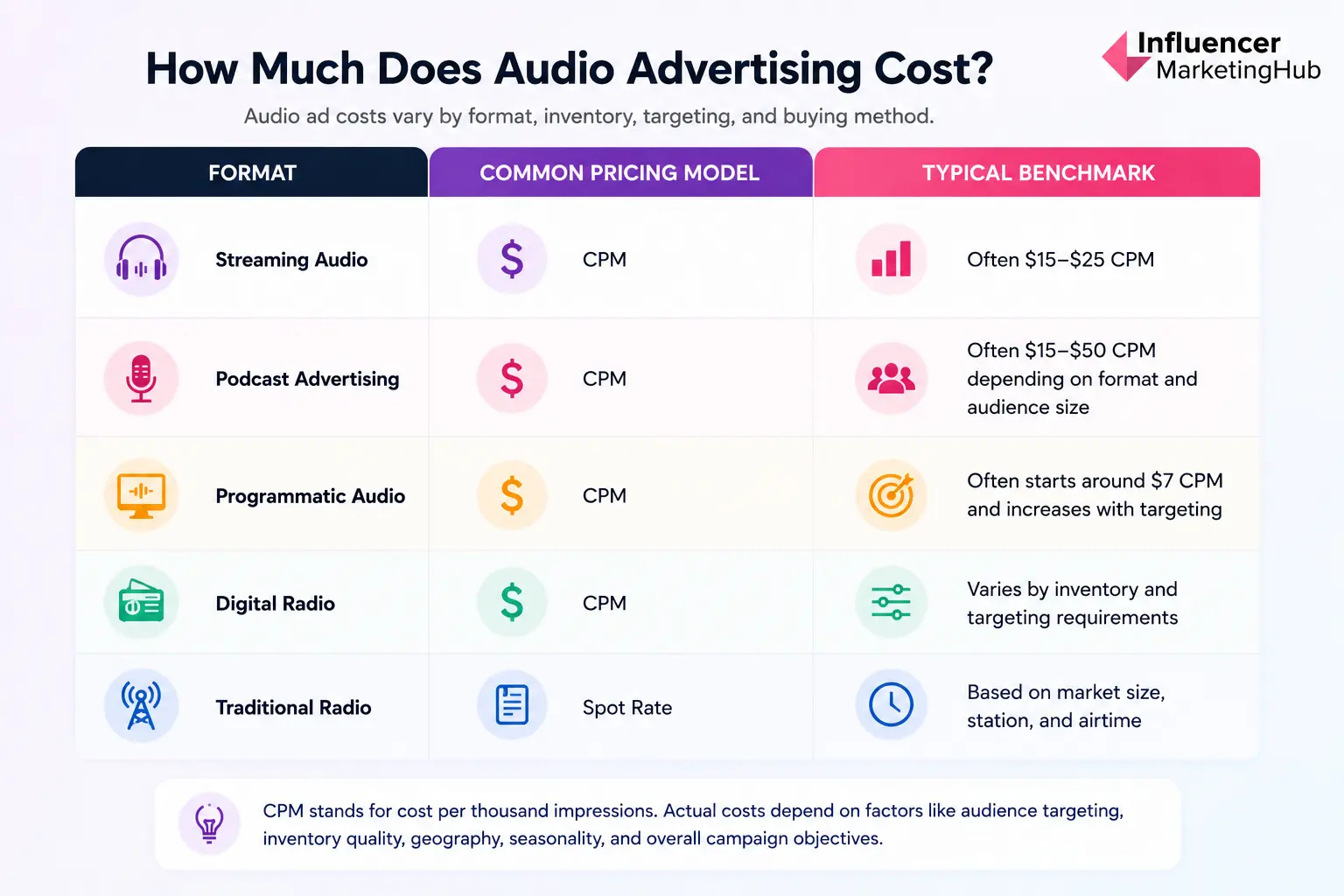
Most digital audio advertising is sold using CPM pricing, which stands for cost per thousand impressions. In simple terms, advertisers pay based on how many times an ad is delivered to listeners rather than how many people click on it.
The image below provides a general overview of how different audio advertising formats are commonly priced.
Streaming Audio Advertising Costs
Streaming audio platforms typically use CPM pricing.
Spotify Ads Manager, for example, allows advertisers to launch campaigns with a minimum spend requirement of approximately $250. Industry benchmarks place Spotify audio CPMs at $15-$25, though actual costs vary with targeting settings, competition, and campaign objectives.
Audience targeting often influences pricing. Campaigns targeting broad audiences generally cost less than campaigns focused on highly specific demographics, interests, or geographic markets.
For many brands, streaming audio remains one of the most accessible entry points into audio advertising because budgets can be scaled gradually rather than requiring large upfront commitments.
Podcast Advertising Costs
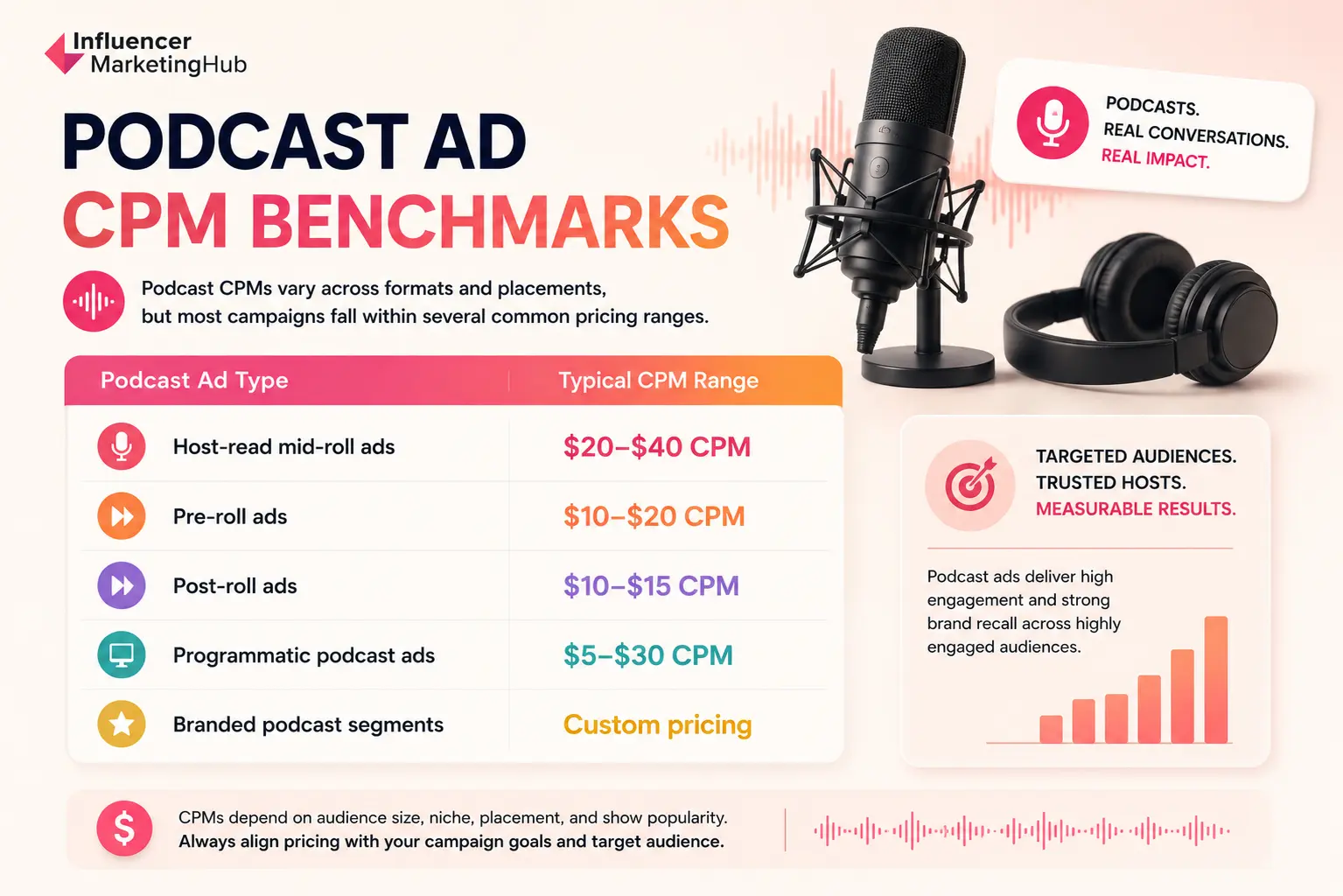
Podcast advertising is usually priced using CPMs based on downloads or audience size.
Host-read advertisements often command premium pricing because they are integrated directly into the show and delivered by the host. Those placements typically cost more than dynamically inserted audio ads because advertisers are paying for the relationship between the creator and their audience, not just the audience itself.
Podcast CPMs commonly range between $15 and $50, although premium shows, niche business audiences, and highly engaged listener communities can exceed those benchmarks.
As a result, podcast advertising often delivers a different value proposition than streaming audio. Advertisers are frequently paying for trust, credibility, and audience alignment rather than pure reach.
Want a Closer Look at Podcast Advertising Costs?
Podcast pricing works differently from most other audio formats. Host-read ads, sponsorship packages, CPM benchmarks, and audience size can all influence what brands ultimately pay.
Our guide on How to Buy Podcast Ads breaks down the buying process, pricing models, cost benchmarks, and strategies marketers use when evaluating podcast advertising opportunities.
Programmatic Audio Costs
Programmatic audio campaigns are generally purchased through demand-side platforms using CPM pricing.
Industry sources commonly cite entry-level programmatic audio CPMs beginning around $7, with costs increasing as targeting becomes more specific. Audience data, geographic restrictions, premium inventory, and brand safety requirements can all affect pricing.
Programmatic buying often becomes more cost-efficient as campaign scale increases because advertisers can access inventory across multiple publishers through a single buying platform.
What Influences Audio Advertising Costs?
Several factors have a greater impact on pricing than the platform itself.
Audience targeting is often one of the biggest drivers. Reaching a broad audience is typically less expensive than targeting listeners based on specific interests, behaviors, or demographic characteristics.
Inventory quality also matters. Premium podcast sponsorships, popular playlists, and highly sought-after audiences generally cost more than standard inventory.
Geography can influence costs as well. National campaigns targeting large metropolitan areas often face more competition than campaigns focused on smaller regions.
Seasonality plays a role, too. Advertising demand tends to increase around major shopping periods and holidays, which can push CPMs higher across multiple audio channels.
The good news for marketers is that audio advertising is no longer limited to large enterprise budgets. Self-serve platforms, programmatic marketplaces, and flexible CPM-based pricing models have made it possible for businesses of many sizes to test audio campaigns, measure results, and scale investment based on performance.
Audio Advertising Is Bigger Than Just Radio
Audio advertising has evolved far beyond traditional radio spots. Marketers can now reach audiences across streaming platforms, podcasts, digital radio services, and programmatic marketplaces while benefiting from targeting, measurement, and buying options that were once unavailable in audio.
The right format depends on the objective. Streaming audio often delivers scale, podcasts create stronger audience relationships, and programmatic buying helps advertisers reach listeners across multiple publishers through a single campaign.
Success ultimately comes down to matching the format to the goal, understanding how inventory is purchased, and measuring the metrics that matter. As listening habits continue shifting toward digital platforms, audio advertising offers brands another way to stay present during moments when screens are no longer competing for attention.
Frequently Asked Questions
What is audio advertising?
Audio advertising places promotional messages within listening environments such as music streaming services, podcasts, digital radio platforms, and traditional radio broadcasts.
What is digital audio advertising?
Digital audio advertising refers to audio ads delivered through internet-connected platforms such as Spotify, podcasts, online radio services, and streaming music apps. Unlike traditional radio, digital audio often supports audience targeting and campaign measurement.
What is programmatic audio advertising?
Programmatic audio advertising uses automated technology to buy and deliver audio ads across multiple publishers and platforms. Advertisers target audiences rather than purchasing inventory from individual publishers directly.
What is the difference between audio advertising and radio advertising?
Radio advertising is one form of audio advertising. Audio advertising is the broader category and includes streaming audio, podcasts, digital radio, and programmatic audio campaigns in addition to traditional radio.
How much does audio advertising cost?
Costs vary by format and buying method. Streaming audio campaigns are often sold on a CPM basis, while podcast advertising may use CPM pricing or sponsorship agreements. Audience targeting, inventory quality, and campaign scale all influence pricing.
What platforms offer audio advertising?
Advertisers can buy audio inventory through platforms such as Spotify Ads Manager, podcast networks, digital radio providers, and programmatic demand-side platforms that aggregate inventory from multiple publishers.
Are podcast ads considered audio advertising?
Yes. Podcast advertising is one of the most popular forms of audio advertising and includes host-read ads, sponsorships, pre-recorded spots, and dynamically inserted advertisements.
Is audio advertising effective?
Audio advertising can be effective for awareness, consideration, and brand recall campaigns. Success depends on factors such as audience targeting, creative quality, format selection, and how well the campaign aligns with listener interests and behaviors.