
Podcast advertising has become one of the fastest-growing creator-led marketing channels. U.S. podcast ad revenue is projected to surpass $3 billion by 2026 as brands increasingly invest in host-read endorsements, niche audience targeting, and long-form creator trust.
Buying podcast ads is no longer limited to direct sponsorship deals with individual shows. Brands can now purchase podcast inventory through creator marketplaces, podcast advertising networks, and programmatic audio platforms like Spotify Ads and AudioGo.
Each buying method comes with different tradeoffs around scale, targeting, attribution, pricing, and audience engagement.
Strong podcast campaigns rarely come from buying the cheapest CPMs or the largest shows. Performance usually depends on audience-host alignment, endorsement quality, smart testing, and understanding how podcast advertising actually works operationally.
This guide explains how to buy podcast ads, including the best podcast advertising platforms, CPM benchmarks, buying strategies, campaign setup, and how experienced marketers evaluate podcast inventory before spending budget.
- Why Brands Are Investing in Podcast Advertising
- How Podcast Advertising Works
- How to Buy Podcast Ads
- Where Brands Can Buy Podcast Ads
- How Much Does Podcast Advertising Cost
- How Experienced Buyers Evaluate Podcasts Before Buying Ads
- The Best Podcast Campaigns Are Built Before the Ads Launch
- Frequently Asked Questions
Why Brands Are Investing in Podcast Advertising
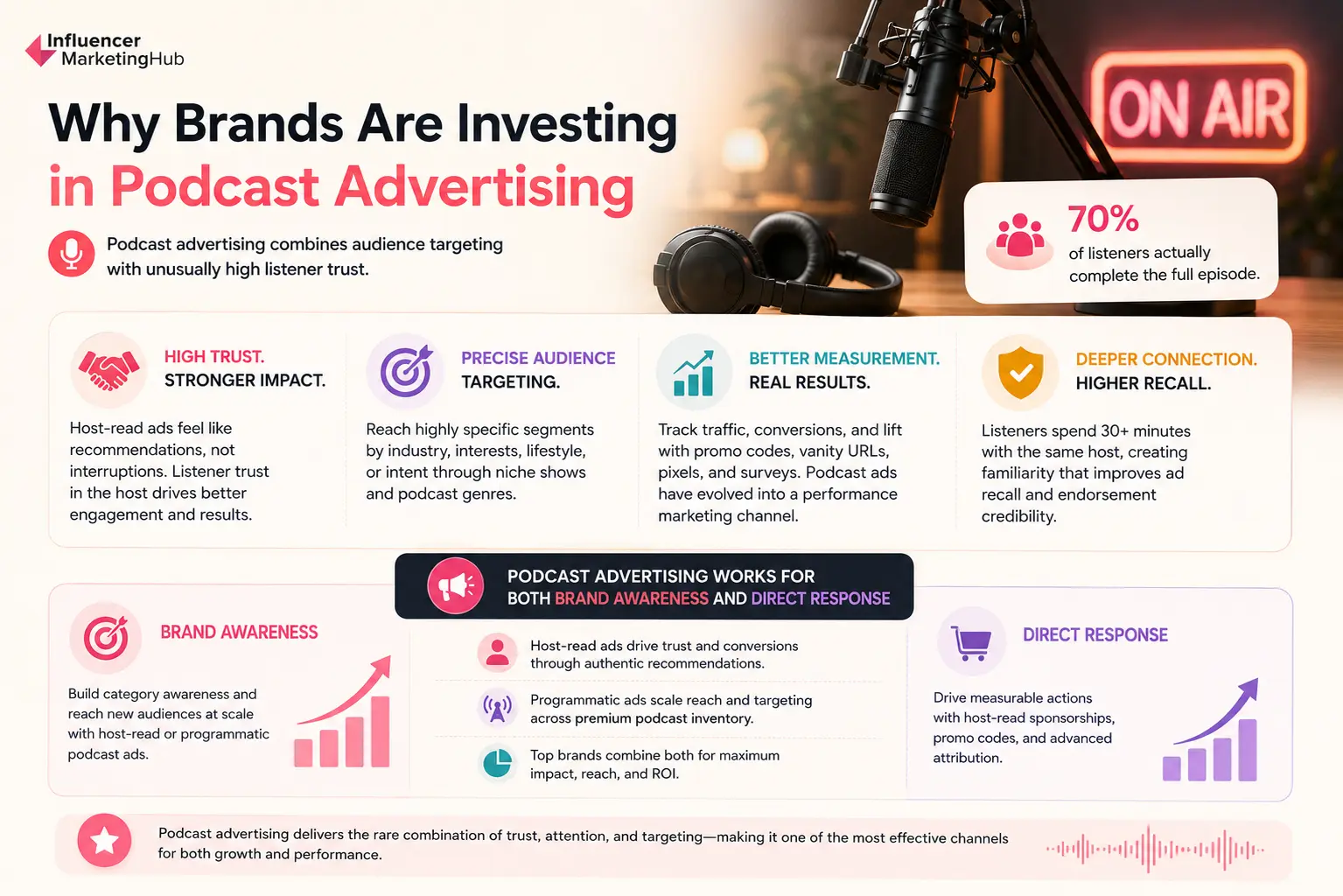
Podcast advertising attracts brands because it combines audience targeting with unusually high listener trust.
Most podcast audiences actively choose the content they consume, often spending 30 minutes or longer with the same host in a single session. Moreover, 70% of listeners actually complete the full episode. It creates an attention environment with stronger endorsement dynamics than many traditional digital ad formats.
Host-read podcast ads perform especially well because listeners already trust the creator delivering the message. Many successful podcast campaigns function more like influencer partnerships than traditional audio advertising. The host’s credibility, audience relationship, and delivery style often influence performance more than raw audience size alone.
Podcast advertising also gives marketers access to highly specific audience segments.
Brands can target listeners based on industry interests, hobbies, professional categories, lifestyle preferences, or purchase intent through individual shows and podcast genres. B2B companies frequently use podcast sponsorships to reach decision-makers through finance, technology, startup, and operations podcasts, while DTC brands often focus on lifestyle, wellness, sports, and entertainment audiences.
Growth in podcast advertising has also been driven by measurement improvements. Modern attribution tools now allow brands to track podcast-driven traffic, conversions, and lift more accurately through promo codes, vanity URLs, pixel-based attribution, and post-purchase surveys.
Better measurement has helped podcast advertising evolve from a pure awareness channel into a performance marketing environment that many brands now scale alongside paid social, influencer marketing, and YouTube sponsorships.
Podcast Ads Combine Trust With Audience Precision
Podcast audiences tend to develop stronger creator relationships than audiences on many short-form platforms because of listening time and content format. A weekly podcast listener spends more than 7 hours each week, creating familiarity that improves ad recall and endorsement credibility.
Niche podcast ecosystems also allow advertisers to target audiences with far more specificity than broad-interest media buys. A cybersecurity company, for example, can sponsor enterprise technology podcasts with highly concentrated professional audiences instead of relying entirely on broad demographic targeting.
Why Podcast Advertising Works for Both Brand Awareness and Direct Response
Podcast advertising supports both upper-funnel and performance-driven campaigns, depending on the buying strategy and creative format. Large brands often use podcast ads to improve awareness and category visibility across broad audiences, while DTC companies frequently prioritize direct-response host-read sponsorships tied to promo codes and conversion tracking.
- Host-read ads generally perform best for direct response because listeners perceive the endorsement as more authentic than pre-produced audio spots.
- Programmatic podcast ads, meanwhile, help brands scale reach and targeting more efficiently across larger inventory pools.
- Many mature podcast advertisers eventually combine both approaches, using host-read campaigns for trust and conversion while layering programmatic buying for incremental reach and retargeting.
How Podcast Advertising Works
Podcast advertising allows brands to place audio ads within podcast episodes through direct sponsorships, podcast networks, marketplaces, or programmatic platforms. Most podcast ads are sold using CPM pricing, meaning advertisers pay based on impressions or downloads per 1,000 listeners.
Campaign structure varies depending on the buying method, ad format, and targeting strategy. Some brands buy directly from creators for personalized host-read endorsements, while others use programmatic audio platforms to scale campaigns across large podcast inventories.
Types of Podcast Ads
Podcast ads are typically divided into 3 primary formats:
- Host-Read Ads
Host-read ads are delivered directly by the podcast host, usually in a conversational style that reflects the tone of the show. Many advertisers prefer host-read sponsorships because they feel more natural to listeners and often generate stronger engagement and conversion rates.
Most DTC-focused podcast campaigns prioritize host-read ads during the testing phase because endorsement quality usually matters more than raw scale early on.
- Producer-Read or Announcer-Read Ads
Producer-read ads are delivered by someone other than the host. These ads provide more creative consistency across campaigns but usually lack the personal trust dynamic that makes host-read sponsorships effective.
Many programmatic podcast campaigns use announcer-read creative because it scales more easily across large inventories.
- Dynamically Inserted Ads
Dynamic ad insertion (DAI) allows ads to be inserted programmatically at download or streaming time instead of being permanently embedded into episodes. DAI improves targeting flexibility, creative rotation, and campaign scalability.
Programmatic podcast advertising platforms like Spotify Ads and AudioGo rely heavily on dynamic insertion technology.
Podcast Ad Placements
Podcast ads are also categorized by where they appear within an episode.
- Pre-Roll Ads
Pre-roll ads appear near the beginning of an episode. These placements usually carry lower CPMs but may face weaker listener attention if audiences skip ahead early.
- Mid-Roll Ads
Mid-roll ads appear during the main portion of the episode and typically generate the strongest engagement. Many advertisers prioritize mid-roll inventory because listeners are already invested in the content when the sponsorship appears.
Host-read mid-roll ads often command the highest CPMs in podcast advertising.
- Post-Roll Ads
Post-roll ads appear near the end of episodes. These placements generally cost less but reach smaller audiences because some listeners exit before the episode finishes.
Baked-In Ads vs Dynamic Ad Insertion
Baked-in ads are permanently embedded into podcast episodes. Long-running podcasts can continue generating impressions from baked-in sponsorships months or even years after publication, creating long-tail value for advertisers.
Dynamic ad insertion, meanwhile, prioritizes flexibility. Brands can update creative, target different audiences, rotate offers, and optimize campaigns without modifying the original episode file.
Many mature podcast advertisers combine both approaches. Baked-in host-read sponsorships help preserve authenticity and long-term exposure, while dynamically inserted campaigns improve targeting, scalability, and operational efficiency.
How to Buy Podcast Ads
Buying podcast ads successfully depends less on finding the biggest shows and more on choosing the right inventory, buying method, and campaign structure for your goals.
Many first-time advertisers waste budget because they approach podcast advertising like display advertising, prioritizing cheap reach instead of creator trust and audience alignment.
Most podcast ad buying decisions come down to 4 areas:
- Campaign goals
- Audience fit
- Buying method
- Testing strategy
Strong campaigns usually solve those decisions before negotiating sponsorships or launching creative.
Define Campaign Goals Before Buying Inventory
Campaign goals heavily influence where and how brands should buy podcast ads. A company focused on broad awareness may prioritize scalable programmatic inventory, while a DTC brand looking for direct-response performance may benefit more from smaller host-read sponsorships with highly engaged audiences.
Most podcast campaigns typically fall into several categories:
|
Campaign Goal |
Recommended Buying Approach |
| Brand awareness | Programmatic podcast advertising |
| Direct-response sales | Host-read sponsorships |
| B2B lead generation | Niche industry podcasts |
| Product launches | Multi-show host-read campaigns |
| Retargeting | Programmatic audio platforms |
Goal clarity also influences podcast selection, CPM tolerance, ad format, setup, and creative strategy.
Choose the Right Podcast Buying Method
Most brands buy podcast ads through:
- Direct creator sponsorships
- Podcast advertising networks
- Programmatic audio platforms
Direct sponsorships usually deliver stronger endorsement quality because creators integrate the message naturally into their content. Networks simplify campaign management across multiple shows, while programmatic buying improves targeting scale and operational efficiency.
Many experienced buyers eventually combine all 3 approaches. They choose direct buys for performance, networks for expansion, and programmatic for scale and targeting.
Early-stage advertisers, however, often benefit from starting smaller with direct host-read campaigns before scaling into larger automated inventory pools.
Build a Smart Podcast Testing Strategy
Podcast advertising performance varies heavily between creators, audiences, genres, and endorsement styles. Testing only 1 or 2 podcasts rarely produces enough data to evaluate the channel accurately.
Many marketers, therefore, launch podcast campaigns across multiple shows simultaneously to compare:
- Audience quality
- Conversion behavior
- Host-read effectiveness
- CPA stability
- Retention quality
Smaller test campaigns usually generate more useful insights when spread across several podcasts rather than concentrated into a single large sponsorship.
Podcast advertisers also need to allow enough runtime before evaluating performance. Many successful campaigns improve after repeated exposure because podcast listeners often convert gradually over multiple episodes.
Prioritize Host-Read Endorsements Early
Host-read podcast ads remain one of the strongest formats for brands entering the channel. Listeners generally respond better to conversational creator endorsements than highly scripted audio spots.
Strong host-read sponsorships usually include natural storytelling (a defining feature of a good podcast host), personal product experiences, memorable offers, clear CTAs, and the ability to deliver the ad read conversationally.
Many advertisers damage performance by over-scripting hosts or forcing language that sounds disconnected from the show’s normal tone.
Creator trust is often the primary reason podcast ads work in the first place.
Structure Campaigns Around Audience Fit
Large podcasts do not automatically generate better results. Smaller niche podcasts often outperform broad entertainment inventory when the audience aligns closely with the product category.
Experienced buyers usually prioritize:
- Audience relevance
- Creator credibility
- Endorsement quality
- Category alignment
- Listener trust
before prioritizing raw download volume.
A finance SaaS company, for example, may perform better sponsoring a smaller operations or fintech podcast than a much larger general business show with weaker audience alignment.
Plan Attribution Before Launching Campaigns
Podcast attribution becomes difficult when campaigns launch without proper tracking infrastructure. Brands should define measurement methods before sponsorships go live rather than retrofitting attribution after campaigns start spending.
Most podcast advertisers use combinations of promo codes, vanity URLs, post-purchase surveys, and pixel attribution to track campaign success.
The most sophisticated podcast advertisers evaluate campaigns using blended attribution models instead of relying entirely on direct-response promo code redemptions.
Where Brands Can Buy Podcast Ads
Brands can buy podcast ads through 3 primary channels: direct creator sponsorships, podcast advertising networks, and programmatic audio platforms. Each approach offers different advantages around scale, targeting, pricing, campaign control, and endorsement quality.
Buying Podcast Ads Directly From Creators
Direct podcast sponsorships involve negotiating placements directly with podcast hosts or creator teams. Many marketers prefer this approach because it gives them greater control over host relationships, creative direction, and audience alignment.
Host-read podcast ads generally perform best when the creator already fits the brand naturally. Listeners are more likely to trust endorsements that sound authentic to the tone and style of the show. Direct sponsorships also make it easier to build custom integrations, extended partnerships, and creator-led storytelling campaigns.
Platforms like Spotsnow.io, Gumball, and Podcorn (now CreatorLab) help brands connect directly with podcast creators and manage sponsorship negotiations more efficiently.
The tradeoff is operational complexity. Managing outreach, contracts, creative approvals, attribution, and scheduling across multiple podcasts can become difficult as campaigns scale.
Podcast Advertising Networks
Podcast advertising networks aggregate inventory across multiple shows and publishers, allowing brands to buy campaigns through centralized sales teams. Networks simplify campaign management by handling podcast selection, inventory access, trafficking, and reporting across broader podcast portfolios.
Many brands use networks when they want:
- Multi-show campaigns
- Faster media buying workflows
- Managed campaign support
- Broader inventory access
- Easier scaling
Major podcast advertising networks include Acast and Libsyn Ads.
Networks often provide better operational efficiency than fully direct buying, but inventory quality can vary significantly between shows. Some networks also carry heavy ad loads that reduce listener attention and campaign performance.
Experienced buyers usually evaluate:
- Renewal history
- Ad density
- Host endorsement quality
- Placement positioning
- Before scaling network-based campaigns.
Programmatic Podcast Advertising Platforms
Programmatic podcast advertising platforms allow brands to buy podcast inventory using automated audience targeting and real-time campaign management tools. Most programmatic podcast ads rely on dynamically inserted audio creative rather than custom host-read endorsements.
Platforms like Spotify Ads and AudioGo give advertisers access to scalable podcast inventory with demographic, geographic, behavioral, and streaming-based targeting capabilities.
The biggest tradeoff is authenticity. Programmatic announcer-read ads rarely generate the same trust dynamics as strong host-read sponsorships. Many experienced podcast buyers, therefore, use programmatic campaigns as a scaling layer rather than the foundation of their podcast advertising strategy.
Which Podcast Buying Method Is Best?
No single buying method works for every advertiser. Campaign goals, attribution requirements, creative strategy, and budget size usually determine which approach makes the most sense.
|
Campaign Goal |
Best Buying Method |
| Direct-response performance | Direct host-read sponsorships |
| Brand awareness at scale | Programmatic podcast advertising |
| Niche B2B targeting | Direct creator partnerships |
| Faster campaign management | Podcast advertising networks |
| Early-stage testing | Smaller network or marketplace buys |
| Multi-channel scale | Hybrid direct + programmatic |
Many mature podcast advertisers eventually combine all 3 approaches.
Direct host-read campaigns help validate audience fit and messaging, networks simplify multi-show expansion, and programmatic buying supports broader reach and retargeting once performance data becomes more reliable.
Choosing the Right Podcast Advertising Platform Can Dramatically Impact Campaign Performance
Podcast advertising platforms differ heavily in inventory quality, targeting capabilities, creator relationships, attribution tools, and buying workflows. Some platforms prioritize scalable programmatic reach, while others focus on host-read sponsorships and direct creator partnerships. Understanding those differences is critical before committing budget.
Explore our breakdown of the Best Podcast Advertising Platforms to compare networks, marketplaces, self-serve tools, and creator-focused buying platforms for different campaign goals and budget sizes.
How Much Does Podcast Advertising Cost
Podcast advertising is typically sold using CPM pricing, meaning advertisers pay a fixed rate for every 1,000 impressions or downloads. Most podcast campaigns are priced based on average episode downloads within a defined listening window, usually ranging from 7 to 30 days after publication.
Host-read endorsements usually command premium pricing because audience trust and creator fit heavily influence performance.
Podcast Ad CPM Benchmarks
Podcast CPMs vary across formats and placements, but most campaigns fall within several common pricing ranges.
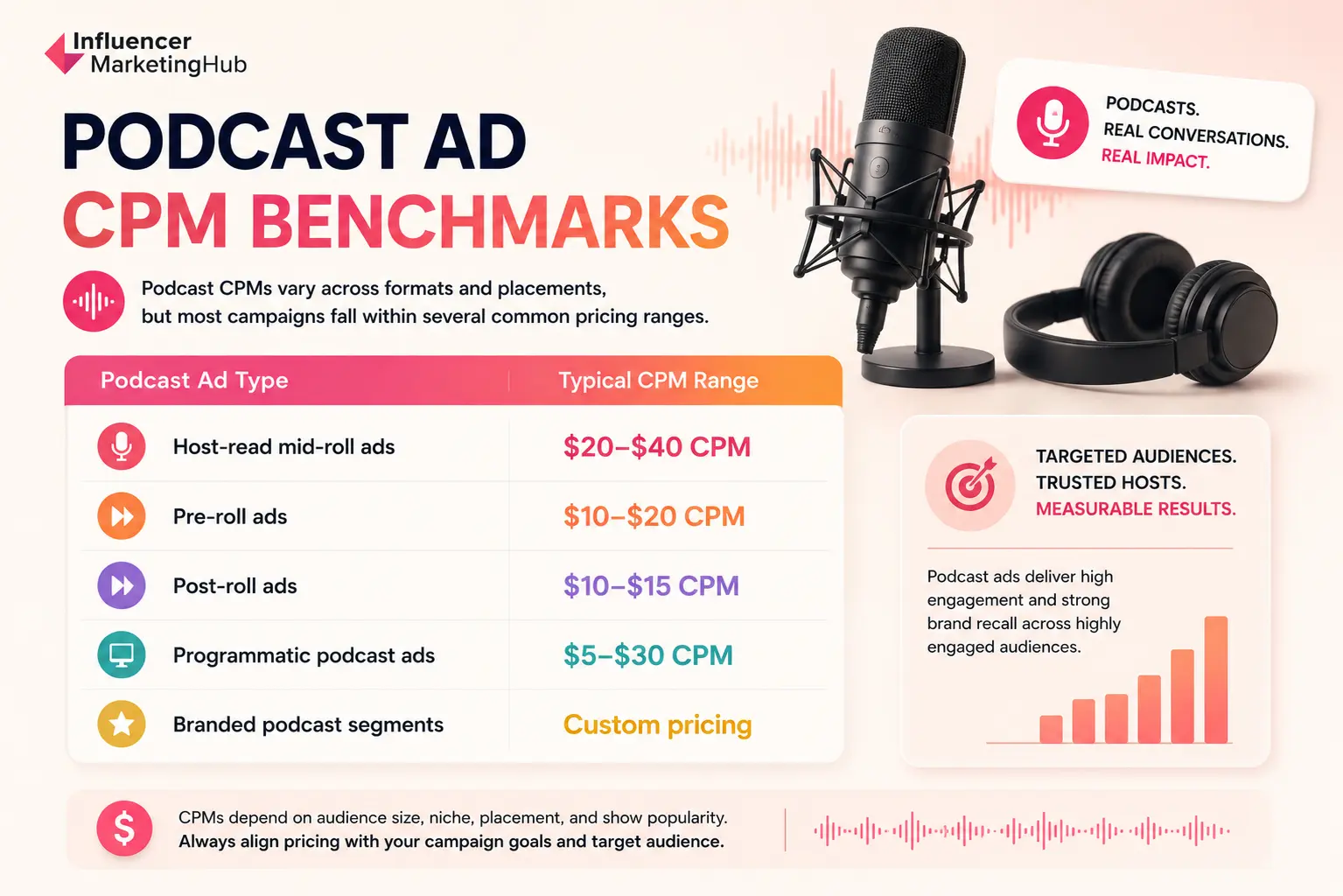
Mid-roll host-read ads generally carry the highest CPMs because they combine stronger listener attention with creator endorsement trust. Programmatic inventory tends to cost less but often sacrifices personalization and engagement quality.
Podcast campaigns are also commonly sold episodically rather than impression-by-impression. A show averaging 20,000 downloads per episode with a $25 CPM, for example, would typically cost around $500 for a single sponsorship placement.
What Impacts Podcast Advertising Costs
Audience size is only one variable influencing podcast pricing. Smaller niche podcasts sometimes command higher CPMs than large entertainment shows if their audiences convert more efficiently.
Several factors usually influence final pricing:
- Host Involvement
Host-read endorsements cost more than announcer-read or dynamically inserted ads because the creator relationship itself adds value to the sponsorship.
- Ad Placement
Mid-roll placements usually outperform pre-roll and post-roll inventory because listeners are already engaged with the episode when the sponsorship appears.
- Audience Quality
Shows with highly concentrated audiences in categories like finance, business, technology, health, or investing often command premium pricing due to advertiser demand.
- Inventory Scarcity
Popular podcasts frequently limit sponsorship availability. Long waitlists and recurring advertiser renewals can drive CPM inflation for high-performing inventory.
- Ad Load
Shows running excessive sponsorship density may offer lower CPMs, but heavy ad loads often reduce listener attention and conversion performance.
Typical Starter Budgets for Podcast Advertising
Most brands test podcast advertising with smaller multi-show campaigns before scaling aggressively. Testing across multiple podcasts usually generates more useful performance data than concentrating budget into a single sponsorship.
Typical entry points often look like:
|
Brand Type |
Typical Starting Budget |
| SMBs & startups | $2,000–$10,000 |
| DTC growth brands | $10,000–$50,000 |
| Enterprise campaigns | $50,000+ |
Many experienced buyers recommend testing across at least 5–10 podcasts initially to compare:
- Audience quality
- Conversion behavior
- Host-read performance
- Creative effectiveness
- Genre alignment
Single-show tests frequently produce misleading results because podcast performance varies heavily between creators, audiences, and endorsement styles.
How Experienced Buyers Evaluate Podcasts Before Buying Ads
Most unsuccessful podcast campaigns fail during the show selection stage, not because podcast advertising itself is ineffective. Weak audience alignment, excessive ad load, poor host fit, and low-quality inventory regularly undermine performance before campaigns have a chance to scale.
Experienced podcast buyers rarely evaluate shows based on download numbers alone. Strong podcast advertising performance usually comes from identifying creators whose audience trust, listener behavior, and endorsement style align naturally with the product being promoted.
Look at Brand Renewal History
Renewal history is often one of the strongest indicators of podcast performance. Advertisers rarely continue sponsoring podcasts repeatedly if campaigns are consistently underperforming.
Experienced buyers, therefore, pay close attention to:
- Recurring DTC sponsors
- Long-running host partnerships
- Repeat category advertisers
- Brands renewing across multiple episodes
Smaller performance-focused brands often provide stronger buying signals than enterprise advertisers running awareness campaigns. A niche ecommerce company repeatedly renewing sponsorships on the same podcast usually indicates sustainable conversion performance rather than experimental media spending.
Tools like Podscribe and Magellan are commonly used to analyze podcast sponsorship histories and advertiser renewal patterns.
Evaluate Audience Fit Beyond Basic Demographics
Audience fit extends far beyond age and gender targeting. Many podcast campaigns succeed because the audience mindset aligns naturally with the product category, creator personality, or buying behavior.
Psychographic alignment often matters more than broad demographic matching. A finance podcast with a smaller but highly engaged audience may outperform a much larger entertainment show if the audience already overlaps with the advertiser’s customer profile.
Experienced buyers typically evaluate:
- Listener interests
- Purchase intent
- Professional identity
- Audience lifestyle
- Content tone
- Creator credibility
before prioritizing raw audience size.
Assess Host Trust and Endorsement Quality
Podcast ads perform best when listeners trust the creator delivering the message. Strong host-read sponsorships sound conversational and integrated into the natural rhythm of the show rather than scripted commercial interruptions.
Buyers therefore evaluate:
- How naturally the host discusses products
- Whether endorsements feel authentic
- Storytelling ability
- Audience familiarity with sponsorships
- Creator enthusiasm
Some hosts generate strong download numbers but struggle to convert because sponsored messaging feels disconnected from their normal content style.
Analyze Ad Load and Placement Quality
Ad density heavily influences listener attention and campaign effectiveness. Podcasts running excessive sponsorship inventory often experience weaker engagement because listeners become conditioned to skip large blocks of advertising.
Many experienced buyers avoid podcasts overloaded with:
- Sstacked pre-roll ads
- Multiple mid-roll blocks
- Repetitive dynamically inserted inventory
Placement quality matters as well. Mid-roll placements usually outperform pre-roll and post-roll ads because listeners are already invested in the episode before the sponsorship appears.
Premium mid-roll positions are often worth paying higher CPMs for if the host integration and audience alignment are strong.
Vet Engagement Signals Carefully
Download counts alone rarely tell the full story about podcast quality. Some podcasts attract large passive audiences with weak engagement, while smaller creator-led communities may convert exceptionally well despite lower reach.
Buyers often evaluate:
- Audience loyalty
- Listener reviews
- Sponsorship consistency
- Creator community engagement
- Social discussion
- Audience retention signals
Engagement quality usually matters more than raw scale in performance-focused podcast advertising.
Understand Inventory Quality Before Scaling
Not all podcast inventory performs equally, even within the same network or platform. Programmatic podcast advertising can improve reach and targeting efficiency, but some inventory pools prioritize scale over audience quality.
Experienced buyers often start with smaller test campaigns before scaling aggressively. Initial testing usually focuses on:
- Endorsement performance
- Audience alignment
- Conversion quality
- Attribution consistency
- CPA stability
Scaling too quickly without validating show quality frequently leads to wasted spend, especially when campaigns prioritize cheap CPMs over creator trust and audience fit.
The Best Podcast Campaigns Are Built Before the Ads Launch
Podcast advertising works best when brands treat it as a creator-led media channel instead of a simple audio inventory buy. Strong campaigns usually come from audience alignment, host trust, smart testing, and disciplined media buying rather than chasing the cheapest CPMs or the largest shows.
Brands entering podcast advertising should focus on validating creator fit early, testing across multiple podcasts, and understanding how different buying methods influence performance, attribution, and scale. Direct host-read sponsorships often outperform broader inventory because listeners trust the creator delivering the message.
Podcast advertising has become significantly more sophisticated over the past few years. Marketers who approach the channel strategically now use podcasts as both a performance marketing engine and a long-term brand-building channel capable of reaching highly engaged audiences at scale.
Frequently Asked Questions
How do podcast ads work?
Podcast ads are audio sponsorships placed within podcast episodes through host-read endorsements, dynamically inserted ads, or prerecorded commercial spots. Brands can buy podcast ads directly from creators, through podcast networks, or via programmatic audio platforms.
How much do podcast ads cost?
Podcast advertising is usually sold on a CPM basis. Host-read mid-roll podcast ads often range from $20–$40 CPM, while programmatic podcast ads may cost between $5–$30 CPM depending on targeting and inventory quality.
What is the best way to buy podcast ads?
Most brands buy podcast ads through direct creator sponsorships, podcast advertising networks, or programmatic audio platforms. Direct host-read sponsorships usually generate stronger engagement, while programmatic buying improves scale and targeting efficiency.
Are host-read podcast ads better than programmatic ads?
Host-read podcast ads generally perform better because listeners trust the creator delivering the endorsement. Programmatic podcast ads help advertisers scale campaigns more efficiently but often sacrifice personalization and audience trust.
What are podcast advertising networks?
Podcast advertising networks aggregate inventory across multiple podcasts, allowing brands to launch campaigns through centralized buying teams instead of negotiating directly with individual creators.
How do brands track podcast advertising performance?
Brands commonly track podcast advertising using promo codes, vanity URLs, post-purchase surveys, pixel-based attribution, branded search lift, and customer acquisition metrics like CPA and ROAS.
What is dynamic ad insertion in podcast advertising?
Dynamic ad insertion (DAI) allows podcast ads to be inserted programmatically when episodes are streamed or downloaded instead of permanently embedding the sponsorship into the original audio file.
Are podcast ads effective for B2B marketing?
Podcast advertising works well for B2B brands because many industry podcasts attract highly engaged professional audiences. SaaS, fintech, cybersecurity, and operations brands frequently sponsor niche podcasts targeting decision-makers and executives.


