
Podcast sponsorship has evolved far beyond simple audio advertising. Brands now treat podcast creators similarly to influencers because endorsement quality, audience trust, and host credibility often influence performance more than raw reach alone.
U.S. podcast ad revenue is projected to surpass $3 billion by 2026, driven largely by host-read sponsorships, niche audience targeting, and stronger attribution capabilities across the channel.
Modern podcast sponsorships operate across several models. Some brands buy long-term host-read partnerships directly from creators. Others structure affiliate sponsorships, recurring mid-roll placements, or multi-show campaigns tied to specific audience segments. Smaller niche podcasts increasingly attract sponsors as advertisers prioritize audience alignment and conversion quality over download volume alone.
This guide explains how podcast sponsorship works, how sponsorship pricing is structured, how podcasters attract sponsors, and how brands evaluate sponsorship opportunities before investing budget into creator-led audio partnerships.
What Is Podcast Sponsorship?
Podcast Sponsorships Definition
Podcast sponsorship is a partnership where a brand pays a podcast creator to promote a product, service, or company within podcast episodes. Most sponsorships rely on host-read endorsements, where the creator delivers the message directly to listeners using their own tone, storytelling style, and audience relationship.
Unlike traditional radio advertising, podcast sponsorships are usually integrated into creator content rather than separated from it. Many listeners view strong host-read sponsorships as recommendations from a trusted personality instead of generic advertising interruptions.
Sponsorship structures vary depending on campaign goals, audience size, and creator relationships. Some sponsorships involve a single ad placement, while others operate as long-term partnerships across multiple episodes, social content, newsletters, or affiliate programs.
Host-Read Sponsorships
Host-read sponsorships are the dominant format in podcast advertising because they combine creator trust with audience familiarity. The host typically explains how the product fits into their routine, why they recommend it, or how listeners can benefit from it.
Strong host-read sponsorships usually sound conversational rather than scripted. Many advertisers now provide creators with talking points instead of rigid copy because endorsement authenticity often affects performance more than polished production quality.
Host-read ads also allow creators to adapt messaging naturally to their audience.
Baked-In vs Dynamic Sponsorships
Podcast sponsorships generally fall into 2 delivery models: baked-in sponsorships and dynamically inserted sponsorships.
Baked-in sponsorships are permanently embedded into the episode audio file. Older episodes can therefore continue generating impressions long after publication, giving sponsors extended exposure across podcast back catalogs.
Dynamic sponsorships use ad insertion technology to place ads at streaming or download time. Advertisers can rotate messaging, update campaigns, target regions, and manage inventory more flexibly without modifying the original episode.
Many sponsorship campaigns now combine both approaches. Baked-in host reads preserve authenticity and long-term discoverability, while dynamic insertion improves targeting and operational scalability.
Podcast Sponsorship vs Podcast Advertising
Podcast sponsorship and podcast advertising are often used interchangeably, but they are not always structured the same way.
Podcast sponsorships typically involve:
- Direct creator relationships
- Host-read endorsements
- Recurring partnerships
- Creator integration
- Audience trust dynamics
Podcast advertising often refers more broadly to:
- Programmatic audio inventory
- Announcer-read ads
- Dynamically inserted campaigns
- Scalable network buying
- Automated targeting
The distinction matters because sponsorship performance is heavily tied to creator credibility and audience alignment. Programmatic podcast advertising, meanwhile, prioritizes scale, targeting efficiency, and operational automation.
Why Podcast Sponsorship Works
Podcast sponsorships consistently outperform many traditional digital ad formats because they combine long-form attention, creator trust, and highly concentrated audience targeting.
Podcast listeners spend significantly more time with creators than audiences on most short-form social platforms, giving hosts more influence over purchase behavior and brand recall.
Research from Edison’s The Infinite Dial 2025 found that 73% of Americans age 12+ have consumed a podcast in either audio or video format, representing roughly 210 million people in the U.S. alone.
Podcast Listeners Spend More Time With Creators
Podcast consumption is built around repeat listening behavior. Many audiences return to the same creators weekly, often for episodes lasting 30 to 60 minutes or longer.
Average podcast listeners now spend roughly 7 hours per week consuming podcast content. Long listening sessions create stronger creator familiarity than interruption-driven environments like social feeds or display advertising.
Podcast listening also happens in lower-distraction environments. Research found podcasts now account for 31% of all spoken-word audio listening time in the U.S., surpassing AM/FM radio for spoken-word consumption.
That combination of recurring exposure and concentrated listening time is one of the main reasons sponsorships perform differently from standard digital audio ads.
Host Trust Drives Stronger Ad Recall
Host-read sponsorships generally outperform announcer-read ads because listeners already trust the creator delivering the message.
Acast reported that:
- Host-read ads convert 37% better than announcer-read ads
- Podcast hosts are trusted more than TV, radio, or social media influencers by 63% of listeners
- 88% of listeners have taken action after hearing a podcast ad
- 41% have made a purchase after hearing a sponsorship message
Additional Nielsen and WARC research found:
- Host-read ads generate 71% brand recall
- Host-read campaigns increase purchase intent by roughly 50% compared with non-host-read ads
Performance differences usually come from delivery style rather than production quality. Conversational sponsorship reads tend to sound more authentic because creators integrate products into their normal communication style instead of interrupting the episode with detached commercial messaging.
Niche Podcasts Often Outperform Broad Reach
Large podcasts do not automatically produce stronger sponsorship performance. Many advertisers prioritize audience concentration and creator credibility over raw download volume.
A B2B software company, for example, may perform better sponsoring a smaller operations or cybersecurity podcast than a larger entertainment show with weaker audience alignment. Niche podcasts often attract listeners with higher purchase intent, stronger professional overlap, and more relevant category interests.
Podcast advertisers increasingly evaluate:
- Audience relevance
- Creator authority
- Sponsorship fit
- Listener trust
- Renewal history
before prioritizing scale alone.
That shift explains why many smaller creator-led podcasts can still attract recurring sponsorship deals despite having significantly smaller audiences than mainstream entertainment inventory.
How Podcast Sponsorship Works
Podcast sponsorships allow brands to place promotional messaging inside podcast episodes through direct creator partnerships, recurring sponsorship agreements, affiliate relationships, or network-managed campaigns.
Most sponsorships revolve around host-read endorsements because creators themselves function as the trust layer between advertisers and listeners.
Sponsorship structure varies depending on audience size, creator influence, niche relevance, and campaign goals. Some sponsorships involve a single placement tied to a product launch, while others operate as recurring partnerships across multiple episodes or seasons.
Most podcast sponsorships are sold using CPM pricing, meaning sponsors pay based on downloads or impressions per 1,000 listeners. Industry-standard host-read mid-roll sponsorships generally fall between $20–$40 CPM, while pre-roll and post-roll placements usually cost less, depending on audience quality and creator demand.
Pre-Roll Sponsorships
Pre-roll sponsorships appear near the beginning of the episode before the main discussion starts. These placements typically cost less than mid-roll inventory because listeners are more likely to skip ahead early in the episode.
Brands often use pre-roll sponsorships for broader awareness campaigns where reach matters more than deep engagement. Shorter reads usually perform better in these placements because audiences expect creators to move quickly into the actual content.
Mid-Roll Sponsorships
Mid-roll sponsorships appear during the core portion of the episode once listeners are already engaged with the conversation. Most advertisers prioritize mid-roll inventory because listener attention is generally strongest in the middle of the episode.
Host-read mid-roll sponsorships often produce better recall and conversion rates because creators can integrate the endorsement more naturally into the discussion. Mid-roll placements also tend to sound less disruptive than opening or closing advertisements, especially when creators transition conversationally into the sponsorship.
Post-Roll Sponsorships
Post-roll sponsorships appear near the end of the episode after the primary discussion concludes. These placements usually cost less because some listeners exit the episode before reaching the closing segment.
Many podcasters use post-roll inventory for secondary sponsorships, affiliate promotions, newsletter CTAs, or lower-priority advertiser placements rather than premium sponsorship campaigns.
Long-Term Sponsorship Partnerships
Many successful podcast sponsorships operate across multiple episodes instead of isolated one-off placements. Repeated exposure helps audiences become familiar with both the product and the creator’s recommendation over time.
Long-term sponsorships often perform better because listeners hear the same endorsement repeatedly from a familiar voice. Advertisers also gain more stable attribution data, while creators can integrate products more naturally into their content after extended partnerships.
Affiliate Sponsorships
Affiliate sponsorships compensate creators based on measurable actions rather than fixed sponsorship fees. Payment structures are usually tied to purchases, subscriptions, sign-ups, or tracked conversions.
Affiliate relationships are especially common among smaller podcasts and niche creators because they reduce upfront risk for advertisers. Some creators also prefer affiliate partnerships because successful campaigns can generate significantly higher long-term revenue than flat CPM sponsorships.
Buying Podcast Ads Looks Very Different Than Traditional Media Buying
Podcast sponsorships can involve host-read ads, dynamic insertion, creator partnerships, network buys, programmatic audio campaigns, and branded podcast integrations across multiple listening platforms.
Our guide to How to Buy Podcast Ads explains how podcast ad buying works, how pricing models differ, where campaigns run, and what brands should evaluate before investing in podcast advertising.
Calculate Your Podcast Sponsorship CPA
Use inBeat’s CPA Calculator to calculate campaign cost, verified acquisitions, or cost per acquisition. Fill in any two fields to generate the third value automatically.
Advanced mode lets you compare multiple podcast partnerships based on purchases, subscriptions, sign ups, or other tracked conversions. This helps identify which sponsorship delivers customers at the lowest cost.
Podcast Sponsorship Pricing Explained
Most podcast sponsorships use CPM pricing, meaning advertisers pay based on downloads or impressions per 1,000 listeners. Sponsorship rates usually depend on ad placement, audience quality, creator trust, and niche relevance rather than download volume alone.
Mid-roll host-read sponsorships typically command the highest pricing because listeners are already engaged with the episode when the endorsement appears. Pre-roll and post-roll placements generally cost less because listener attention is lower at the beginning and end of episodes.
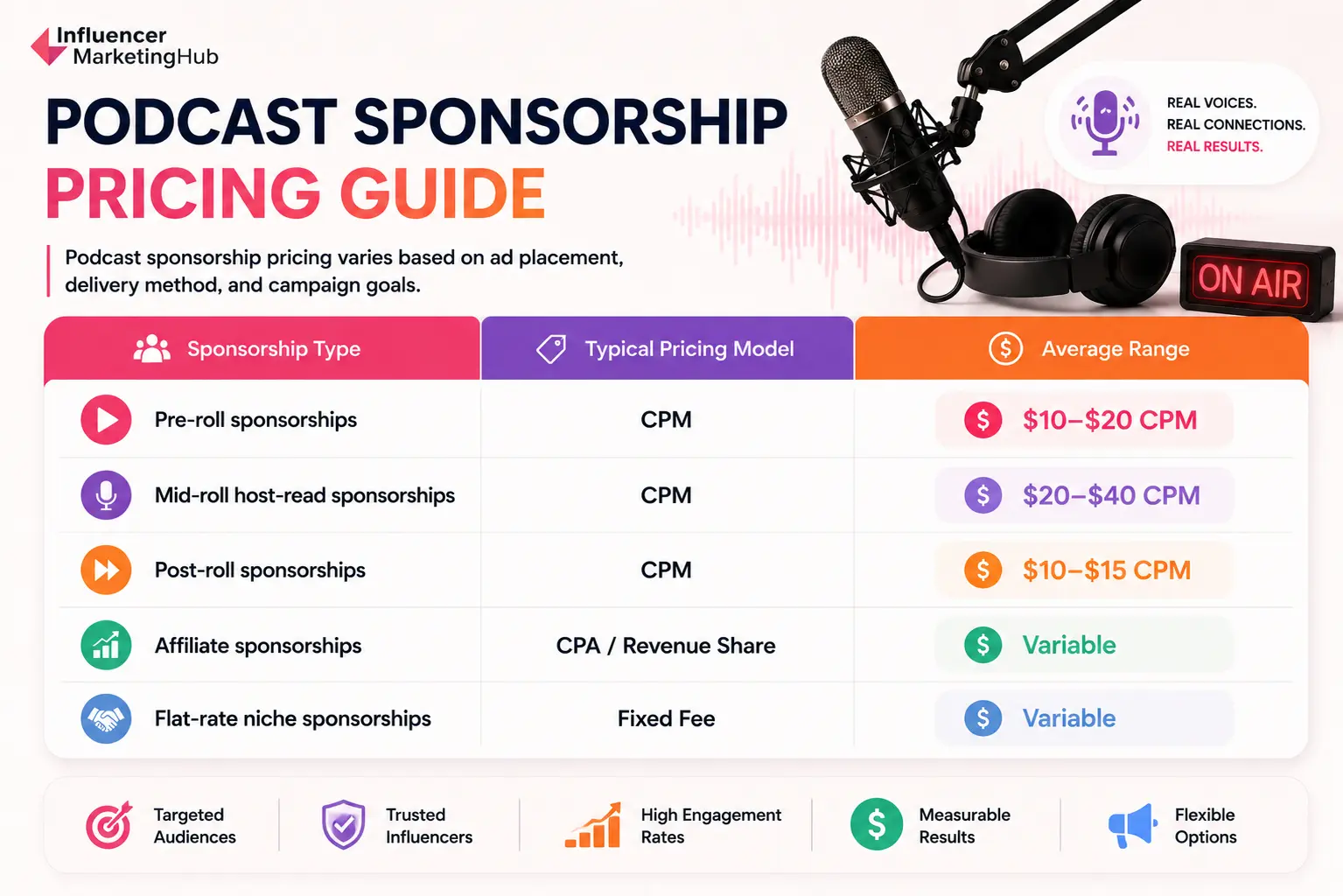
CPM pricing gives advertisers a standardized way to compare podcast inventory, but many sponsorship deals eventually move beyond strict CPM calculations. Niche podcasts with highly targeted audiences often charge premium rates because advertisers value audience relevance and conversion quality more than broad reach.
A smaller finance, SaaS, or healthcare podcast, for example, may generate stronger sponsorship performance than a larger entertainment show if listeners align more closely with the advertiser’s customer profile.
Many sponsorship agreements also expand beyond single ad placements into longer-term partnerships that include recurring episode integrations, newsletter mentions, affiliate structures, or bundled creator promotions.
Podcast Sponsorship Pricing Is Only One Part of Campaign Performance
Strong podcast campaigns depend on much more than CPM benchmarks alone. Buying method, audience fit, host-read quality, attribution setup, and inventory selection all heavily influence results.
Explore our full guide on How to Buy Podcast Ads for Brands to learn how experienced marketers evaluate podcast inventory, structure campaigns, and scale podcast advertising effectively.
Calculate and Compare Podcast Sponsorship CPM
Use inBeat’s CPM Calculator to calculate total sponsorship cost, expected downloads or impressions, or CPM. Fill in any two fields, and the calculator will automatically generate the third value.
Switch to advanced mode to compare multiple podcasts, campaigns, or ad placements and identify which option offers the most cost efficient audience reach.
How Podcasters Find Sponsors
Most podcast sponsorships come from audience alignment rather than raw scale alone. Smaller niche podcasts regularly attract advertisers when listeners match a specific professional category, interest group, or purchasing behavior.
What Sponsors Actually Look For
Sponsors usually evaluate whether the audience matches their ideal customer profile before looking at download numbers alone.
Several factors heavily influence sponsorship decisions:
- Audience relevance
- Creator credibility
- Listener trust
- Engagement consistency
- Purchase intent
- Category alignment
A strong creator-audience relationship often matters more than production quality or studio polish. Sponsors generally prefer creators whose recommendations already feel trusted within the community they have built.
Many advertisers also review how naturally creators integrate sponsorships into episodes. Over-scripted reads or excessive sponsorship density can reduce campaign performance even on larger podcasts.
Why Audience Fit Matters More Than Downloads
Large audiences do not automatically produce better sponsorship performance. Many advertisers would rather reach 5,000 highly targeted listeners than 100,000 broad, low-intent consumers.
B2B podcasts are a strong example of this dynamic. A smaller operations, cybersecurity, or finance podcast may command premium sponsorship rates because listeners often hold roles directly connected to purchasing decisions.
Niche podcasts also tend to build stronger authority within their categories. Listeners frequently view creators as trusted specialists rather than general entertainers, which can improve endorsement credibility and long-term conversion performance.
How to Create a Podcast Media Kit
A podcast media kit gives sponsors a concise overview of the show’s audience, sponsorship opportunities, and creator positioning. Most sponsorship conversations eventually require some form of media kit, especially when negotiating recurring partnerships.

- Source: Podcast Insider - Blubrry Podcasting
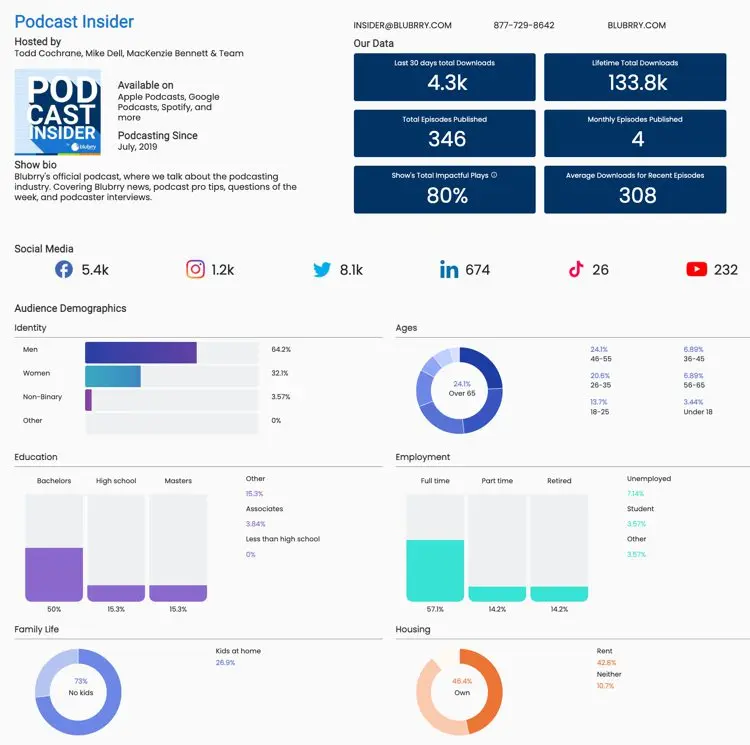
Strong media kits usually include audience demographics, listener interests, average download benchmarks, sponsorship formats, previous partnerships, and clear contact information. Some creators also include listener testimonials or audience engagement metrics when those data points strengthen the sponsorship case.
When Smaller Podcasts Can Still Attract Sponsors
Smaller podcasts can still secure sponsorships when the audience is highly targeted or professionally valuable. Local podcasts, industry-specific shows, and creator-led professional communities often attract affiliate partnerships, SaaS advertisers, ecommerce brands, and regional sponsors despite relatively modest download numbers.
Affiliate sponsorships are especially common among smaller podcasts because advertisers can test audience conversion without committing large upfront budgets. Many creators begin monetizing through smaller recurring partnerships before eventually transitioning into larger flat-fee sponsorship agreements.
How Sponsorship Proposals Usually Work
Most podcast sponsorship deals begin through direct outreach or inbound interest from advertisers already familiar with the show. Early discussions usually focus on audience fit, sponsorship structure, campaign goals, and pricing expectations.
Many creators package sponsorships across multiple episodes instead of selling isolated placements. Some agreements also include newsletter mentions, affiliate integrations, social promotion, or YouTube extensions depending on the creator’s broader audience ecosystem.
How Brands Evaluate Podcast Sponsorship Opportunities
Brands evaluate podcast sponsorships based on whether the creator can influence the right audience, not simply how many downloads the show generates.
Audience quality, creator positioning, and endorsement credibility usually determine long-term sponsorship performance more than reach alone.
Host Delivery Influences Conversion Rates
Podcast sponsorships rely heavily on the creator's communication style. Host-read endorsements generally outperform traditional announcer-style ads because listeners already trust the person delivering the recommendation.
Many advertisers, therefore, avoid rigid scripts and instead allow creators to adapt messaging naturally to the tone of the show.
Long-Term Sponsorships Usually Perform Better
Repeated exposure tends to improve podcast sponsorship performance over time. Listeners often hear the same creator recommendation across multiple episodes before taking action, especially for higher-consideration products or services.
Long-term partnerships also help endorsements feel more natural because creators become more familiar with the product and integrate messaging more organically into conversations.
Sponsorship Density Matters
Heavy ad loads can weaken listener attention and reduce endorsement effectiveness. Podcasts overloaded with stacked sponsorships or repetitive ad blocks often experience lower engagement because audiences become conditioned to skip promotional segments.
Many advertisers, therefore, evaluate how sponsorships are integrated into episodes before committing budget. Creator trust is usually the core asset being purchased in podcast sponsorships, and excessive commercialization can reduce that value quickly.
Podcast Sponsorship Is Evolving Beyond Traditional Audio Advertising
Podcast sponsorships are increasingly built around creator credibility rather than simple ad inventory. Brands now evaluate podcast hosts similarly to influencers because endorsement quality, audience trust, and recurring exposure often influence performance more than reach alone.
The strongest sponsorship campaigns usually come from long-term audience alignment instead of one-off placements focused purely on CPM efficiency. Smaller niche podcasts can therefore outperform larger shows when listeners closely match the advertiser’s customer profile.
Improved attribution tools have also made podcast sponsorships more measurable than they were several years ago. Many advertisers now treat podcasts as both a performance marketing channel and a long-term brand-building environment capable of driving conversions through trusted creator relationships.
As podcast advertising continues maturing, sponsorship value will increasingly depend on authenticity, creator fit, and the ability to maintain audience trust over time.
Frequently Asked Questions
What is podcast sponsorship?
Podcast sponsorship is a partnership where a brand pays a podcast creator to promote a product or service within podcast episodes. Most sponsorships involve host-read endorsements because listeners tend to trust recommendations delivered directly by the creator.
How much do podcast sponsors pay?
Podcast sponsorship rates usually depend on audience size, niche relevance, placement type, and creator influence. Mid-roll host-read sponsorships commonly range between $20–$40 CPM, while pre-roll and post-roll placements generally cost less.
What is the average podcast CPM?
Podcast CPMs typically range from $10–$40 depending on placement and sponsorship format. Mid-roll host-read ads usually command the highest CPMs because listener engagement tends to be strongest during the middle portion of the episode.
How many listeners do you need for podcast sponsorship?
Many smaller podcasts can attract sponsors with only a few thousand listeners if the audience is highly targeted or commercially valuable. Sponsors often prioritize audience alignment and conversion potential over raw download volume alone.
Can small podcasts get sponsors?
Small podcasts regularly secure sponsorships when they serve niche audiences with strong purchase intent or professional relevance. Affiliate sponsorships and local business partnerships are especially common among smaller creator-led shows.
What is a host-read podcast sponsorship?
A host-read sponsorship is an ad delivered directly by the podcast creator using their own tone and communication style. Host-read endorsements generally perform better than announcer-read ads because audiences already trust the creator delivering the recommendation.
What is the difference between podcast sponsorship and podcast advertising?
Podcast sponsorships usually involve direct creator relationships and host-read endorsements, while podcast advertising often refers more broadly to programmatic audio inventory, network buying, or dynamically inserted ad campaigns.
Why do host-read podcast ads perform better?
Host-read sponsorships often feel more conversational and authentic because creators integrate endorsements naturally into their content. Many listeners perceive the sponsorship as a trusted recommendation rather than a traditional advertisement.
How do podcasters find sponsors?
Podcasters typically find sponsors through direct outreach, creator referrals, podcast networks, sponsorship marketplaces, or inbound advertiser interest. Strong audience alignment and category relevance usually improve sponsorship opportunities.
What should a podcast sponsorship package include?
Podcast sponsorship packages often include episode placements, host-read integrations, pricing details, audience information, sponsorship duration, and optional extensions like newsletter mentions, affiliate links, or social promotion.


