

Podcast advertising has moved far beyond the host-read sponsorships that helped build the industry. Brands can now buy podcast ads through networks, self-serve platforms, programmatic marketplaces, and even video podcast environments.
Audience growth helps explain why. Nearly 58% of Americans aged 12+ listen to podcasts monthly, a record high representing roughly 167 million people. U.S. podcast and online audio consumption also reached all-time highs in the study.
Advertisers have followed the audience. The IAB projects U.S. podcast advertising revenue will approach $2.6 billion in 2026, driven by improvements in measurement, programmatic buying, video podcast inventory, and broader advertiser adoption.
Growth has turned podcast advertising into a legitimate consideration alongside social media, search, connected TV, and creator marketing. Understanding how the channel works is increasingly important for marketers evaluating where to invest budget.
What Is Podcast Advertising?
Podcast Advertising Definition
Podcast advertising refers to the placement of promotional messages within podcast content. Those messages can appear before, during, or after an episode and can be delivered by the podcast host, a voice actor, or dynamically inserted through an advertising platform.
Most marketers encounter podcast advertising through host-read sponsorships. A podcast host talks about a product or service during an episode, often sharing a personal experience or explaining how they use it. Many of the most recognizable podcast campaigns have used this format because it blends naturally into the listening experience.
With that said, the channel has expanded considerably over the past few years. Brands can now buy podcast inventory directly from creators, through podcast networks, via self-serve advertising platforms, or through programmatic marketplaces that distribute ads across multiple shows.
Podcast advertising also differs from other digital advertising channels in how content is consumed. Search ads appear when users actively look for information. Social ads compete for attention inside crowded feeds. Podcast ads, on the other hand, are delivered within content that listeners have intentionally chosen to spend time with, often during longer listening sessions.
From a campaign perspective, podcast advertising is commonly used for brand awareness and as a performance channel.
As buying options, targeting capabilities, and measurement tools have matured, podcast advertising has evolved from a creator sponsorship channel into a broader advertising ecosystem that supports both brand-building and performance marketing initiatives.
How Podcast Advertising Works
Podcast advertising may look different from search, social media, or display advertising, but the underlying process is fairly straightforward. Brands purchase access to a podcast audience, place advertising messages within episodes, and measure the impact those ads have on awareness, traffic, leads, or sales.
The biggest difference is where the advertisement appears. Instead of interrupting a social feed or appearing alongside search results, podcast ads are delivered inside content that listeners have already chosen to consume.
A listener might hear an ad at the beginning of an episode, during a mid-roll break, or near the end of the show.
Campaigns can be purchased in several ways. Some advertisers work directly with podcast creators and negotiate sponsorships for individual shows. Others buy inventory through podcast networks that represent multiple creators.
Larger campaigns may use advertising platforms and exchanges that provide access to podcast inventory across thousands of episodes and multiple publishers.
Once a campaign is live, the ad is inserted into podcast episodes and delivered to listeners. Depending on the buying method, advertisers may be able to select specific shows, target audiences based on interests or demographics, or distribute ads across broader podcast categories.
The process looks something like this:
Brand → Podcast Creator or Advertising Platform → Podcast Episode → Listener → Desired Action
The desired action depends on campaign goals. Brand awareness campaigns may focus on reach, ad recall, or brand familiarity. Performance-oriented campaigns often aim to generate website visits, signups, app installs, or purchases.
Podcast Ad Formats
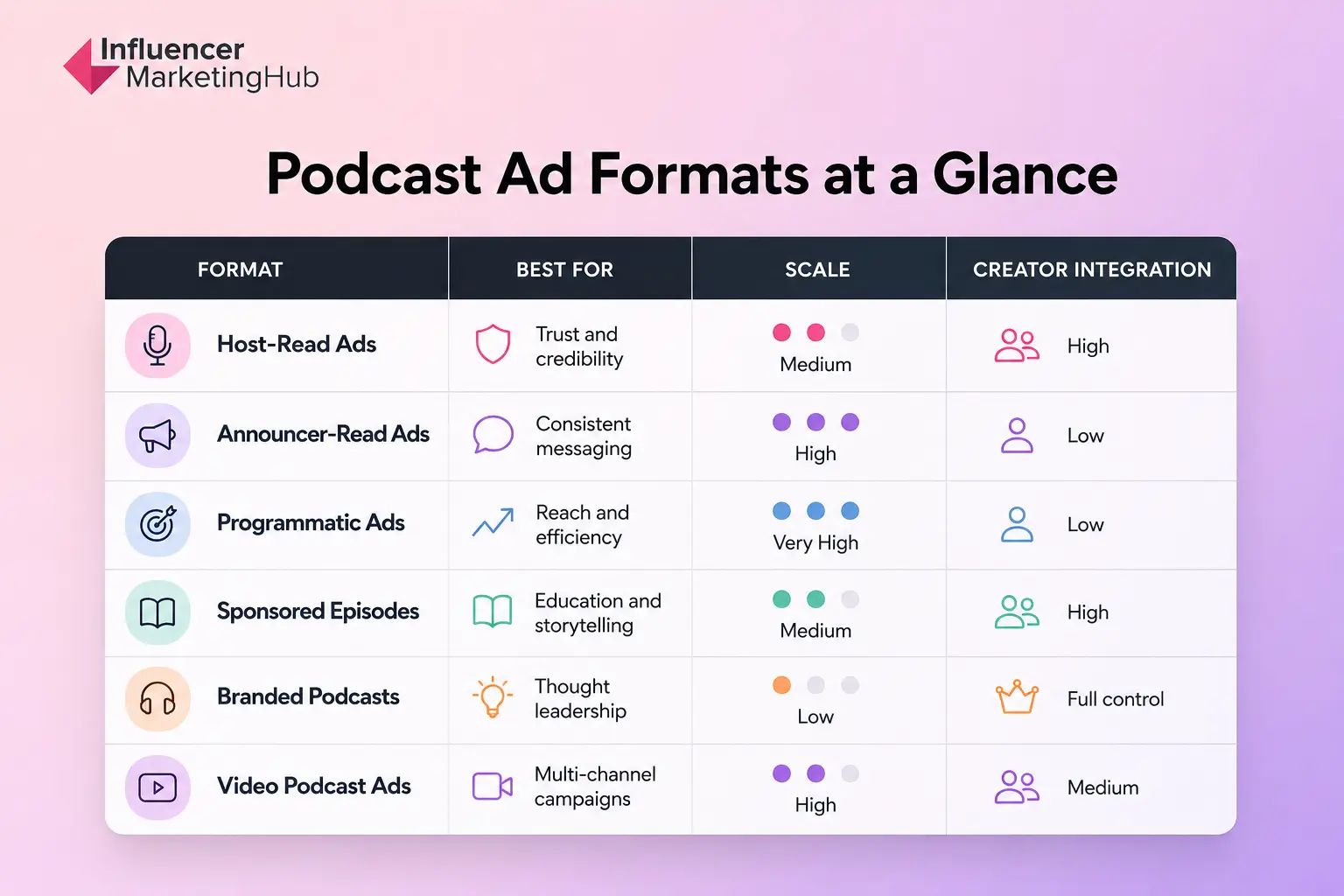
One of the first decisions advertisers face is choosing the right podcast ad format. A host-read sponsorship on a niche business podcast serves a very different purpose than a programmatic campaign running across hundreds of shows.
Format selection influences everything from audience perception and campaign scale to targeting options and measurement capabilities. Before worrying about CPMs or platforms, it's worth understanding how the major formats differ.
Host-Read Ads
Host-read ads remain the format most closely associated with podcast advertising.
Instead of playing a pre-produced commercial, the podcast host delivers the message directly to listeners. Some hosts read talking points provided by the brand. Others incorporate the product into their own stories, experiences, or recommendations.
Many marketers prefer host-read ads because they leverage something that's difficult to replicate elsewhere: trust.
It's like a recommendation from a creator that listeners spend hours with every month. And it's this type of ad that often feels more credible than a traditional advertisement. According to Acast, podcast hosts are trusted more than TV, radio, or social media influencers by 63% of listeners.
Host-read ads tend to work particularly well when audience fit matters more than pure reach.
Announcer-Read Ads
Announcer-read ads look much closer to traditional audio advertising.
The creative is recorded once and distributed across multiple podcasts, ensuring the same message is delivered every time. Brands gain more control over messaging and can scale campaigns more easily, although they lose some of the authenticity that comes with host endorsements.
Advertisers often choose this format when consistency is more important than creator integration.
Programmatic Podcast Ads
Programmatic buying brings podcast advertising much closer to channels like display, connected TV, and digital audio.
Instead of negotiating with individual creators, advertisers purchase inventory through advertising platforms and exchanges. Campaigns can then run across multiple podcasts while using audience targeting, frequency controls, and centralized reporting.
Use Spotify Ads for Mass Reach
The Spotify Ads platform is one of the largest examples of this approach. Rather than sponsoring individual podcasts one at a time, advertisers can access podcast inventory through a centralized platform and manage campaigns at scale.
The platform supports audience targeting based on factors such as demographics, interests, location, and listening behavior, helping advertisers reach listeners across multiple podcasts without relying on direct creator partnerships.
Spotify also supports dynamically inserted audio ads, allowing brands to update creative, adjust targeting, and optimize campaigns without changing the original podcast episode.
For marketers already familiar with buying paid social or connected TV advertising, the experience will feel much more familiar than traditional podcast sponsorship buying. Campaigns can be launched, managed, and measured from a single platform while reaching audiences across Spotify's podcast ecosystem.
Sponsored Episodes
Some products require more than a 30-second ad.
Sponsored episodes allow brands to become part of the content itself. The sponsorship may support an entire episode, a special series, or a deeper discussion around a specific topic.
The format is particularly useful when the goal is education rather than immediate conversion.
Branded Podcasts
Some companies skip sponsorships altogether and create their own podcasts.
Branded podcasts give organizations complete control over content, messaging, and distribution. Instead of advertising within someone else's show, the brand becomes the publisher and builds a direct relationship with listeners over time.
Luxury and beauty brands have been particularly active in this area.
Sephora launched #LIPSTORIES, a podcast series featuring conversations around beauty, entrepreneurship, and personal experiences, while Dior created Dior Talks, a series that explores topics such as art, fashion, culture, and women's empowerment through interviews with creatives and industry leaders.
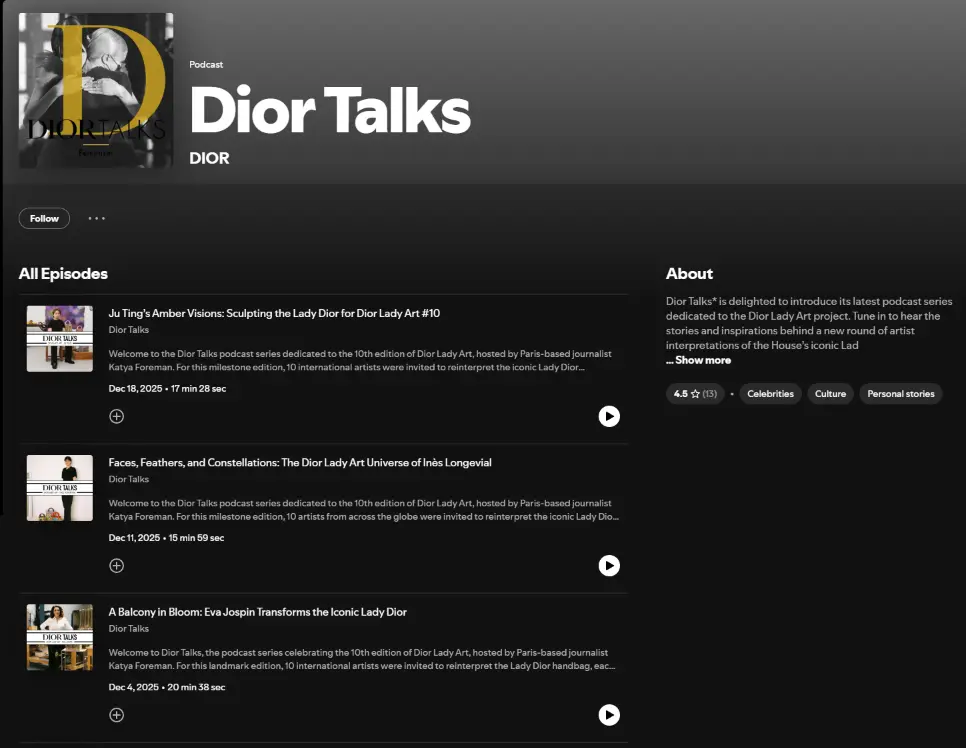
Branded podcasts can be effective thought leadership tools because they allow organizations to tell longer stories than traditional advertisements ever could. The tradeoff is that audience growth, content production, and distribution become the responsibility of the brand.
Unlike sponsorships, where advertisers gain immediate access to an existing audience, branded podcasts require a long-term commitment to building and maintaining listenership.
Video Podcast Ads
Podcasting is no longer exclusively an audio channel.
Many creators now publish episodes across both audio and video platforms, creating new inventory for advertisers. A sponsorship can appear inside a traditional podcast feed while also generating exposure through video episodes, clips, and social distribution.
For marketers already investing in creator content, video podcast advertising can provide additional opportunities to extend campaign reach beyond audio alone.
Podcast Ad Placements
Ad format is only part of the equation. Placement matters too.
A host-read ad in the middle of an episode will often perform differently from the exact same ad placed at the beginning or end.
Pre-Roll Ads
Pre-roll ads appear near the beginning of an episode. Most listeners will hear them, making them a popular option for awareness campaigns.
Mid-Roll Ads
Mid-roll ads are inserted during the main content of an episode.
Many advertisers consider mid-roll inventory the premium placement because listeners are already engaged when the ad is delivered. As a result, mid-roll placements often command higher prices.
Post-Roll Ads
Post-roll ads run near the end of an episode.
They are typically less expensive than pre-roll or mid-roll inventory, but naturally reach a smaller portion of the audience.
Learn More About Podcast Ad Formats and Placements
Host-read ads, sponsored episodes, branded podcasts, and video podcast partnerships all fall under the broader podcast sponsorship umbrella. Understanding how each format works, what it costs, and when to use it can make a significant difference in campaign performance.
Explore our complete guide to Podcast Sponsorships to learn more about pricing models, sponsorship types, creator partnerships, and how brands evaluate podcast advertising opportunities.
How Much Does Podcast Advertising Cost?
Podcast advertising is typically sold using CPM pricing, which stands for cost per thousand impressions. The amount advertisers pay depends on factors such as ad format, placement, audience quality, and whether the ad is delivered by the host or inserted dynamically.
Host-read ads generally command the highest rates because they combine creator trust with audience attention. Mid-roll placements are often the most expensive inventory since they appear during the main portion of an episode when listeners are already engaged.
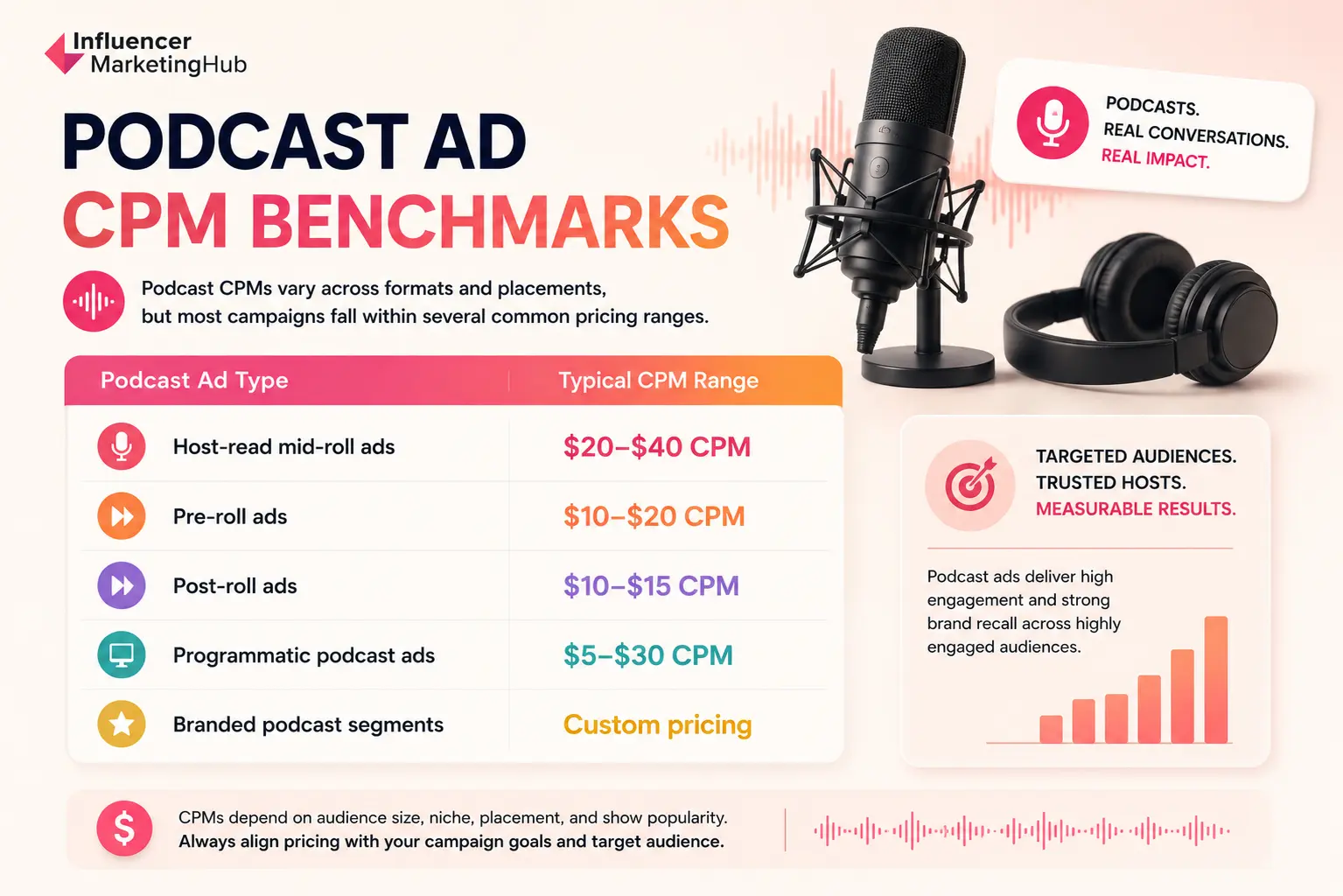
Most podcast campaigns fall within fairly predictable pricing ranges. Host-read mid-roll ads typically cost between $20 and $40 CPM, making them some of the most valuable inventory in podcast advertising. Pre-roll ads generally range from $10 to $20 CPM, while post-roll inventory often falls between $10 and $15 CPM.
Programmatic podcast advertising is usually more affordable, with CPMs commonly ranging from $5 to $30 CPM depending on targeting capabilities, audience quality, and inventory availability.
Branded podcast segments are generally priced on a custom basis because production requirements, creator involvement, and distribution strategies vary significantly from campaign to campaign.
Pricing can vary considerably from one podcast to another. A niche finance or technology podcast, for example, may command higher rates than a much larger entertainment show if advertisers consistently see stronger business outcomes from its audience. Audience quality, creator credibility, sponsorship demand, and ad placement often influence pricing more than download volume alone.
Most experienced advertisers start with smaller test campaigns before expanding the budget across multiple podcasts. Testing different shows, audiences, and ad formats usually provides far more useful insights than committing the entire budget to a single sponsorship.
Want a Deeper Breakdown of Podcast Advertising Pricing?
Podcast CPMs are only one part of the equation. Sponsorship costs can vary based on audience size, ad placement, creator involvement, exclusivity requirements, and campaign structure.
Read our complete guide on How to Buy Podcast Ads to explore current CPM benchmarks, sponsorship costs, budget planning, and how experienced advertisers evaluate podcast inventory before buying.
The guide also looks at buying methods, such as buying directly from podcast creators/hosts, through podcast advertising networks, self-service platforms, and working with podcast advertising agencies.
Podcast Advertising Best Practices
Podcast advertising has become much easier to buy, but buying podcast ads and running successful podcast campaigns are not always the same thing.
Many advertisers focus heavily on CPMs, audience size, or finding the biggest shows in a category. The brands that consistently see results tend to focus on something else: audience fit, creator trust, and smart testing.
Spotify for Creators - Start Now
Focus on Audience Fit Before Audience Size
One of the easiest mistakes to make in podcast advertising is assuming that more downloads automatically lead to better results.
In reality, a smaller podcast with the right audience can outperform a much larger show. A fitness app, for example, may see stronger performance from a niche nutrition podcast than from a general entertainment show with several times the reach.
Listeners choose podcasts based on their interests. Finding podcasts that naturally attract your target customer is usually more important than chasing the largest audience available.
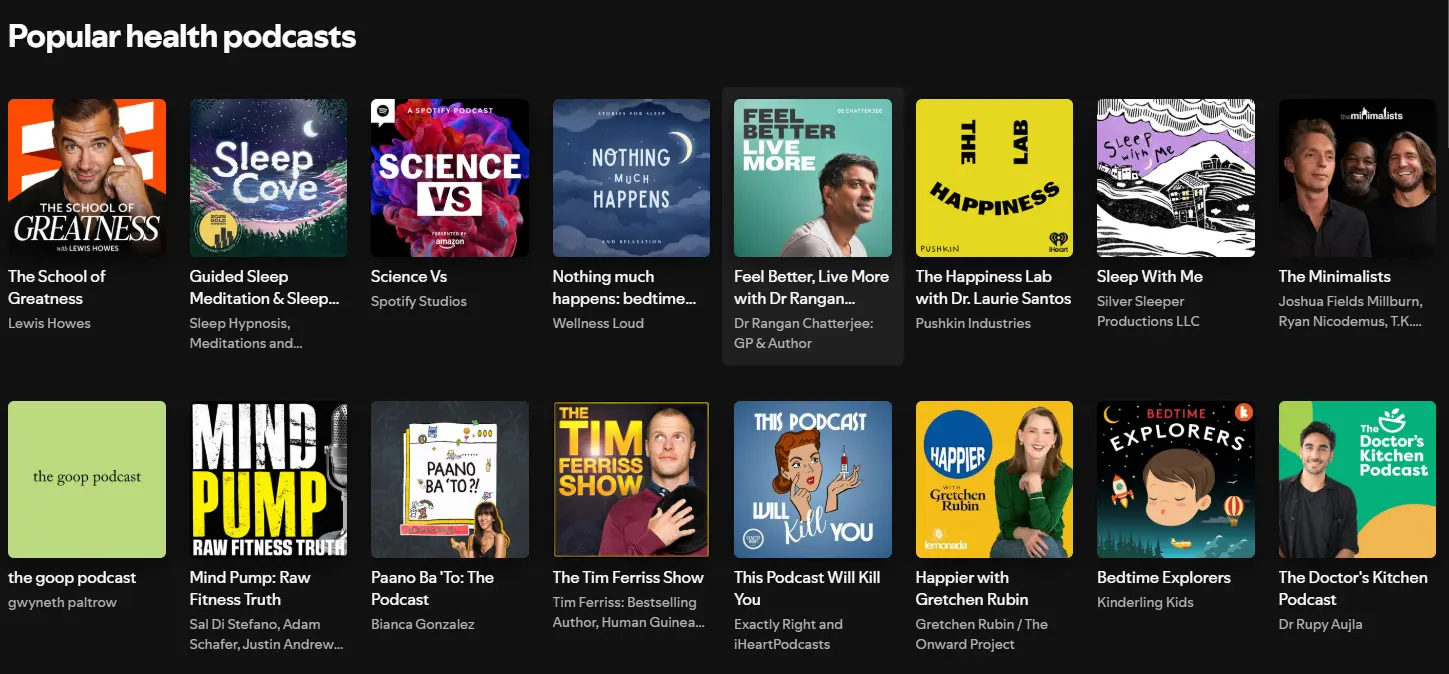
Finding niche podcasts is also quite easy. It involves researching the category on podcast platforms like Spotify. Due diligence always beats chasing raw reach.
Choose the Right Format for the Job
Every podcast ad format has strengths and weaknesses.
Host-read ads are often used when credibility and trust matter most. Programmatic campaigns can help advertisers reach larger audiences more efficiently. Sponsored episodes and branded podcasts make more sense when the goal is education or storytelling rather than driving an immediate conversion.
Many underperforming campaigns can be traced back to a simple problem: the format didn't match the objective.
Let Hosts Talk Like Hosts
Podcast listeners spend hours listening to the same creators every week. They know how those creators normally speak.
An ad that sounds overly scripted or disconnected from the show's tone can feel out of place almost immediately. The best host-read ads usually sound like recommendations rather than advertisements.
Giving creators room to explain a product in their own words often produces stronger results than forcing them to follow a rigid script line by line.
Test More Than One Podcast
A single sponsorship rarely tells the whole story.
Some podcasts will outperform expectations. Others won't. That's normal.
Running small tests across multiple shows gives advertisers a much better understanding of which audiences respond, which hosts deliver the strongest endorsements, and which formats deserve additional investment.
Many experienced podcast advertisers would rather test five podcasts with a smaller budget than spend everything on a single sponsorship.
Don't Judge Success on Conversions Alone
Podcast advertising doesn't always work like paid search.
A listener may hear an ad during their commute, visit the website later that evening, search for the brand a week later, and finally make a purchase after seeing a retargeting ad. Looking only at last-click conversions can make podcast campaigns appear less effective than they actually are.
The strongest advertisers evaluate podcast performance using a combination of traffic, branded search activity, promo code usage, post-purchase surveys, and overall business outcomes.
Podcast advertising works best when it is treated as a long-term channel rather than a one-off sponsorship. Brands that focus on audience relevance, creator authenticity, and continuous testing usually put themselves in the best position to succeed.
Podcast Advertising Is Bigger Than Sponsorships
Podcast advertising has evolved well beyond simple host-read sponsorships. Brands can now choose from a wide range of formats, buying methods, and platforms depending on their goals, budget, and target audience.
The most successful campaigns rarely come from chasing the biggest podcasts or the lowest CPMs. Strong results usually come from finding the right audience, selecting the right format, and giving creators the flexibility to deliver messages in a way that feels natural to listeners.
Whether you're testing your first sponsorship or building a larger multi-show campaign, podcast advertising offers something many channels struggle to provide: focused attention from audiences who have actively chosen the content they're consuming.
For brands willing to prioritize audience fit and long-term testing, podcast advertising can become a valuable part of a broader marketing strategy.
Frequently Asked Questions
What is podcast advertising?
Podcast advertising is the practice of placing promotional messages within podcast content. Brands can sponsor individual podcasts, buy inventory through networks, use self-serve platforms, or run programmatic campaigns across multiple shows.
How does podcast advertising work?
Podcast advertising works by inserting ads into podcast episodes. Advertisers can purchase placements directly from creators, through podcast networks, or via advertising platforms that provide access to podcast inventory at scale.
Why is podcast advertising effective?
Podcast advertising is often effective because listeners actively choose the content they consume and tend to spend extended periods of time with podcast hosts. Many campaigns also benefit from highly targeted audiences and creator trust.
How much does podcast advertising cost?
Podcast advertising is typically priced using CPM rates. Pre-roll ads often range from $10-$20 CPM, post-roll ads from $10-$15 CPM, host-read mid-roll ads from $20-$40 CPM, and programmatic podcast ads from $5-$30 CPM.
What are the different types of podcast ads?
Common podcast ad formats include host-read ads, announcer-read ads, programmatic podcast ads, sponsored episodes, branded podcasts, and video podcast ads. Each format offers different levels of scale, creator involvement, and audience engagement.
How do you buy podcast advertising?
Brands can buy podcast advertising directly from creators, through podcast advertising networks, self-serve advertising platforms, creator marketplaces, or specialist podcast advertising agencies.
What are podcast advertising networks?
Podcast advertising networks aggregate inventory from multiple podcasts and allow advertisers to run campaigns across multiple shows through a single buying relationship. Examples include Acast and other network-based platforms.
What is the best podcast advertising platform?
The best podcast advertising platform depends on campaign goals. Some advertisers prioritize creator partnerships and host-read sponsorships, while others use platforms such as Spotify Ads for scalable buying, audience targeting, and programmatic podcast advertising.

SUGGESTED

Best Podcast Advertising Platforms in 2026
Compare the best podcast advertising platforms for targeting sponsorships attribution and...

How to Buy Podcast Ads in 2026: Platforms, Pricing, and Strategies for Brands
Learn how to buy podcast ads compare pricing models and launch smarter podcast...

Podcast Sponsorship: How It Works, Pricing, and Strategies for Brands and Creators
Podcast sponsorship explained including CPMs pricing host-read ads and how brands and...