

Most content-driven businesses are built on a fragile foundation: one primary account, one dominant platform, and one revenue stream tied to algorithm performance.
When reach drops, income follows. When a platform shifts priorities, partnerships stall. What looks like momentum often turns out to be volatility.
Gigi Robinson experienced this tension firsthand. As a creator, advisor, and founder of Hosts of Influence®, she saw how easily attention-based businesses could become dependent on single-channel spikes and short-term brand deals. The issue was not creativity or demand but structure.
Instead of scaling one account harder, Robinson redesigned the architecture entirely.
Over the past 12 to 18 months, she built a coordinated three-brand content system:
- Her personal brand for authority
- A pet influencer account for emotional affinity
- And Hosts of Influence for education and conversion
Each brand served a distinct role in the funnel. Each platform served a defined function. Together, they operated less like separate social profiles and more like a portfolio designed to distribute risk and compound trust.
The result was audience growth, revenue stabilization, repeat partnerships, and consistent inbound demand.
This Brand Story explores how structuring owned media like a business ecosystem, rather than a collection of posts, can reduce platform volatility and create long-term leverage.
- Why Single-Channel Content Models Create Revenue Volatility
- Designing a Three-Brand Content Architecture
- Assigning Platform-Specific Roles Instead of Duplicating Content
- Cross-Brand Reinforcement as a Demand Multiplier
- Measuring Stability Instead of Virality
- What Agencies and Creator Businesses Can Learn
Why Single-Channel Content Models Create Revenue Volatility
Most creator-led businesses are optimized for performance within one primary channel. A spike in views leads to a spike in brand deals. Engagement drops, and revenue softens. The model becomes reactive.
The creator economy has grown into a massive industry — worth over $250 billion in 2025 and projected to reach $500 billion by 2027 — but it remains heavily dependent on platform algorithms and shifting consumption patterns, which creates instability for creators and brands alike.
That volatility shows up in earnings distribution as well. Data shows that the top 6% of creators earn more than $200,000 annually, while a whopping 56% live below the living wage, underscoring how reliant individual creator income can be on occasional spikes rather than steady performance.
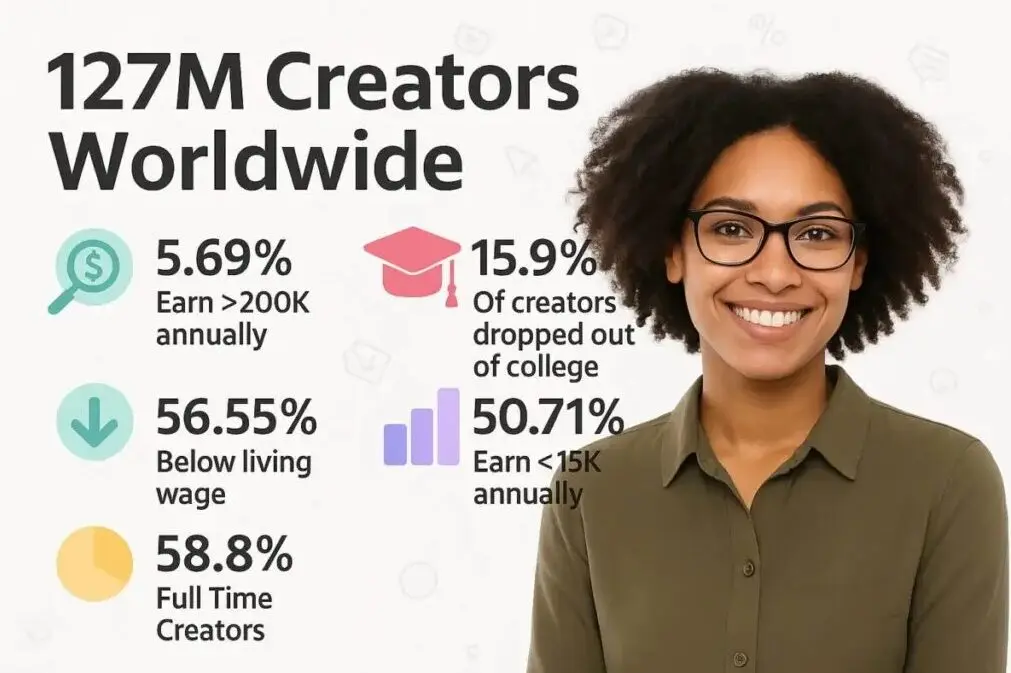
Robinson identified this dependency early. Short-term monetization models and one-off brand activations created income bursts, not stability. Platform performance dictated leverage. Narrative positioning shifted depending on what was trending.
The deeper issue was structural. When all authority, emotion, and monetization live in one account, every piece of content must perform multiple roles simultaneously. That pressure often results in diluted messaging and audience fatigue.
Rather than optimizing isolated impressions, Robinson aimed to build a system where content functioned as a full-funnel engine. The goal was not to grow one account faster. It was to reduce risk by distributing functions across multiple owned brands.
Designing a Three-Brand Content Architecture
The solution was architectural.
Instead of treating her personal brand, pet influencer account, and Hosts of Influence as parallel channels, Robinson assigned each a specific role within a unified ecosystem.
- Her personal brand served as the authority layer. This is where thought leadership, founder positioning, and industry commentary lived. It attracted creators, marketers, and partnership decision-makers interested in strategy.

- The pet influencer account, Zeke and Trixie, functioned differently. It was built around emotional affinity and relatability. Raw moments, memes, and lifestyle content created low-friction engagement. It humanized the broader ecosystem without requiring business messaging.
- Hosts of Influence operated as the education and conversion engine. Here, insights were structured, frameworks were explained, and advisory services were positioned. It translated attention into action.

The key distinction was intentional separation. Emotional storytelling did not compete with conversion content. Authority did not dilute relatability. Each account reinforced the others while maintaining clarity of purpose.
This portfolio logic turned owned media into a coordinated system rather than three independent feeds.
Assigning Platform-Specific Roles Instead of Duplicating Content
Beyond brand segmentation, Robinson differentiated by platform function.
- TikTok became the discovery engine. It rewarded experimentation, narrative hooks, and reaction-style storytelling. This is where top-of-funnel attention scaled quickly.
- Instagram supported depth and retention. Tighter edits, visually cohesive moments, and save-worthy posts strengthened relationship-building. The focus shifted from reach to resonance.
- LinkedIn played a different role altogether. It functioned as the credibility and inbound layer. Thought leadership translated into advisory inquiries and partnership conversations. Here, performance was measured less by views and more by high-intent engagement.
Content was adapted per platform rather than copied verbatim. Hooks shifted. Pacing changed. Tone adjusted. The objective was continuity without redundancy.
By assigning platforms structural roles, Robinson avoided the common mistake of cross-posting identical content and expecting identical outcomes.
Cross-Brand Reinforcement as a Demand Multiplier
The ecosystem did not operate in silos.
Narrative references between accounts created a crossover without confusion. Audiences introduced to Robinson through lifestyle content on the pet account could encounter strategic positioning through her personal brand. Followers drawn to business insights could discover the human side of the ecosystem elsewhere.
This separation reduced audience fatigue. Educational content did not overwhelm lifestyle audiences. Emotional storytelling did not dilute business credibility.
More importantly, trust flowed between accounts.
Emotional affinity strengthened authority. Authority strengthened conversion. Conversion validated the ecosystem.
Rather than splitting attention, the structure compounded it.
Measuring Stability Instead of Virality
Traditional influencer metrics prioritize reach, impressions, and engagement spikes. Robinson focused instead on revenue diversification and inbound demand.
Over the past 12 to 18 months, the ecosystem generated hundreds of thousands of dollars in brand deals and advisory revenue. More importantly, income was no longer dependent on a single channel or campaign surge.

- Source: Gigi Robinson on Beacons
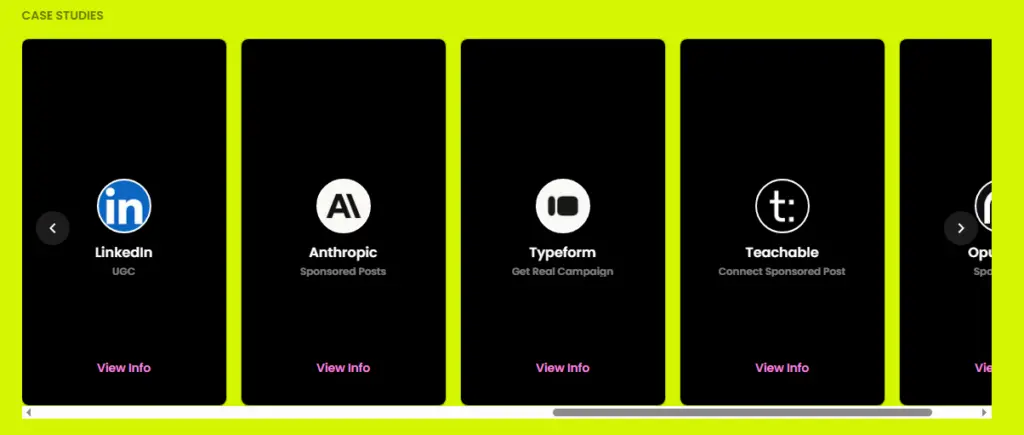
Repeat partnerships increased. Inbound inquiries became more consistent. Performance could transfer across platforms rather than reset each time an algorithm shifted.
Success was defined less by viral moments and more by structural resilience.
By treating owned accounts as business assets rather than content experiments, Robinson shifted the KPI from post performance to revenue stability.
What Agencies and Creator Businesses Can Learn
This Brand Story illustrates a shift from channel-based thinking to portfolio-based architecture.
- First, owned media accounts can be structured to serve distinct funnel functions rather than compete for the same audience attention.
- Second, emotional affinity and authority do not need to live in the same place. Separating them can strengthen both.
- Third, platforms should be assigned roles within a system, not treated as interchangeable distribution outlets.
- Finally, revenue stability is a more meaningful measure of success than isolated engagement spikes.
For agencies and creator-led businesses alike, the lesson is clear: influencer marketing scales when structured as an ecosystem. When accounts operate as coordinated assets rather than isolated profiles, volatility decreases and leverage increases.
In a landscape defined by algorithm shifts and attention fragmentation, structure becomes the competitive advantage.