
What makes a product demo actually convert today, and why are so many brands abandoning polished studio videos in favor of UGC-style walkthroughs?
As shoppers grow more skeptical of overly produced ads, a clear pattern has emerged. Product demos that feel real, unscripted, and customer-led consistently tend to outperform traditional formats across eCommerce, paid social, and landing pages.
At the same time, teams face rising pressure to ship demo content faster, test more variations, and localize for multiple platforms without increasing production costs. This is where UGC video software has stepped in.
Instead of coordinating creators, shoots, and edits, brands are now generating product demos from images, scripts, or prompts in minutes while maintaining a native, creator-style look.
The shift is not just about efficiency. UGC-style product demos align closely with how people research products today. They want to see how items are used, handled, and explained in everyday contexts.
In this guide, we break down the top UGC video software tools built specifically to create high-converting product demos at scale.
Top UGC Software for Product Demos
1. Predis.ai
Best for: Ecommerce brands creating image-led product demo videos at scale without filming or creators
Pricing:
- Core plans start at $19 per month
- Rise plans from $40 per month
- Enterprise pricing available at $212 per month
Key product demo capabilities:
- Product URL to demo video generation
- Image-based demo sequencing
- AI-generated scripts and voiceovers
- Bulk demo variations for testing
- Multi-language exports
Notable clients: Hyatt, ICICI Bank, Dentsu, Indegene
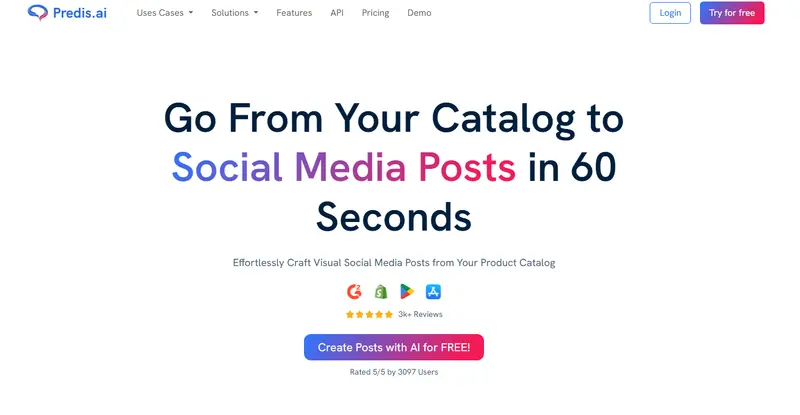
Predis.ai is best suited for brands that need to produce clear, repeatable product demo videos using existing product images and structured listings. Instead of relying on filmed walkthroughs or creator-led demonstrations, the platform converts product URLs into short, visually guided demo videos designed for ads, product pages, and marketplaces.
For product demos, Predis.ai automatically pulls images, descriptions, pricing, and key attributes directly from a product URL, then arranges them into a step-by-step visual narrative using motion effects, captions, and AI-generated voiceovers.
This makes it possible to explain how a product works, highlight core benefits, and guide viewers through features without requiring a physical shoot.
The platform works particularly well for eCommerce catalogs, seasonal product launches, and paid social campaigns where speed and consistency matter. Teams can generate multiple demo variations from a single product, testing different hooks, feature orderings, and value propositions while maintaining consistent branding across outputs.
Because demos are image-driven, Predis.ai performs best for products that can be clearly explained visually, such as apparel, beauty, accessories, packaged goods, and consumer electronics with defined features.
Products that depend heavily on real-world interaction or tactile demonstration may require supplementary filmed content.
Proof of Performance
Predis.ai reports measurable reductions in content production time and cost, with users highlighting faster product demo turnaround, easier A/B testing of demo variations, and improved consistency across paid social and product listing videos. Ecommerce teams frequently cite the ability to launch multiple demo creatives in parallel without increasing production overhead.
Pros and Cons
Pros:
- Fast product demo creation from URLs and existing images
- No filming, creators, or studios required
- Strong support for bulk demo generation and testing
- Multi-language demos suitable for global ecommerce
Cons:
- Image-based demos may feel limited for complex physical products
- Less suitable for products requiring hands-on or real-world demonstrations
2. Wavel.ai
Best for: Mid-market and enterprise teams producing multilingual product demo videos, walkthroughs, and explainers at scale
Pricing:
- Lite plans start at $18 per month (billed annually)
- Pro plans from $30 per month
- Scale and Generative plans available for high-volume teams
Key product demo capabilities:
- Prompt-to-storyboard product demos
- AI voiceovers and voice cloning
- Multi-language dubbing and subtitles
- Scene-by-scene demo editing
- Avatar-based product explainers
Notable clients: Used by global media, SaaS, and enterprise content teams across eLearning, OTT, and marketing verticals
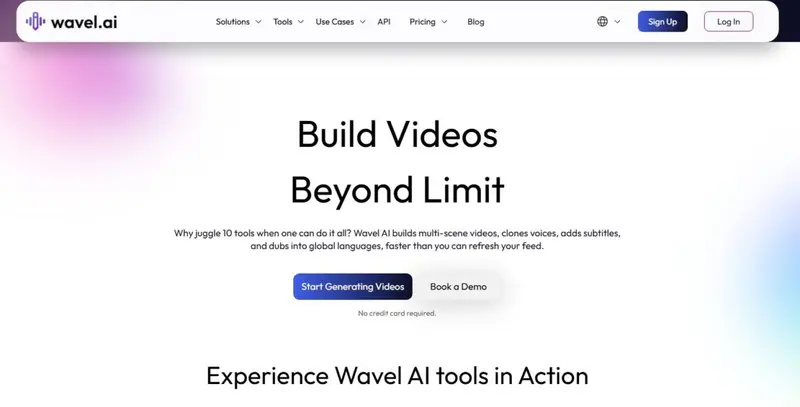
Wavel.ai is positioned as an end-to-end AI video studio rather than a lightweight ad generator, making it especially suitable for structured product demos, feature walkthroughs, and educational explainers that require consistency across scenes and markets.
For product demos, Wavel.ai excels at turning scripts or structured prompts into multi-scene storyboarded videos, allowing teams to explain product functionality step by step instead of relying on short-form ad clips. Each scene can be edited independently, which is valuable when demonstrating workflows, interfaces, or product benefits in sequence.
A major differentiator for demos is Wavel.ai’s voice cloning and multilingual dubbing stack. Brands can create a single product demo and localize it across dozens of languages while maintaining the same voice, pacing, and structure. This makes the platform particularly effective for global SaaS products, enterprise tools, and education-driven offerings.
Wavel.ai works best for teams that prioritize clarity, consistency, and localization over raw UGC realism. While it supports UGC-style outputs, its core strength lies in controlled, repeatable demos that need to scale across regions and channels without reshooting or re-recording content.
Proof of Performance
Wavel.ai highlights strong adoption among enterprise and agency teams, with users consistently citing time savings in localization, reduced dependency on external voice talent, and faster turnaround for multi-language product demos. Reviews frequently emphasize the platform’s reliability for maintaining voice and character consistency across long-form and multi-scene videos.
Pros and Cons
Pros:
- Excellent for multilingual product demos and explainers
- Strong voice cloning and dubbing quality
- Scene-level control ideal for structured walkthroughs
- Scales well for enterprise and global teams
Cons:
- Less focused on ecommerce-style image-to-video demos
- May feel heavyweight for small brands or single-product stores
3. Galaxy.ai
Best for: Ecommerce brands, dropshippers, and product marketers that need realistic product-in-hand demo videos without filming
Pricing:
- Free Hobby plan available
- Pro plan from $14.99 per month
- Lifetime plan available with one-time payment
- Team and Enterprise plans offered for scaled use
Key product demo capabilities:
- AI-generated product-in-hand visuals
- Avatar-led hands-on demonstrations
- AI script generation from product details
- Lip-synced voiceovers in 30+ languages
- Auto captions and background music
Notable clients: Used by ecommerce sellers, agencies, and creators producing marketplace-ready product demos across Shopify, Amazon, and social platforms
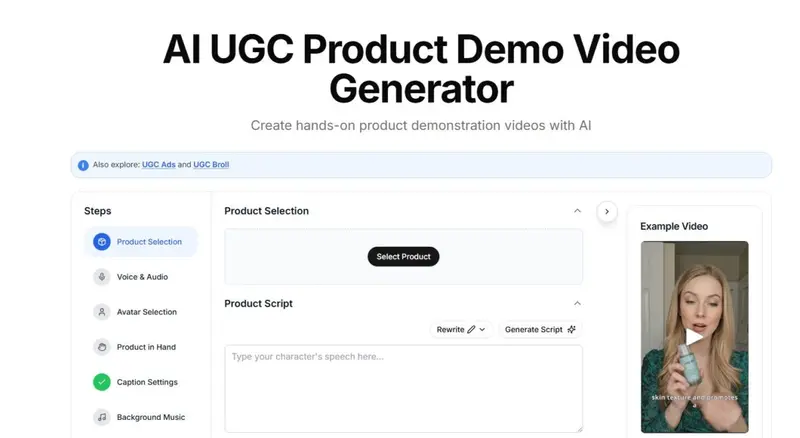
Galaxy.ai is purpose-built for hands-on UGC-style product demos, making it one of the most direct fits for brands that sell physical products and need visuals that simulate real customer handling.
Instead of relying on abstract storytelling or static animations, Galaxy.ai focuses on product-in-hand realism. Brands can generate images of hands holding their product, pair them with an AI avatar, and produce demo videos that closely resemble unboxing clips, short walkthroughs, or usage demonstrations commonly seen on Amazon listings and Shopify product pages.
The workflow is structured around product demos specifically. Users upload product images or details, generate a demo script, select a voice and avatar, and then create a realistic demonstration sequence with captions, lip-sync, and background music layered automatically. This makes Galaxy.ai especially attractive for dropshippers and ecommerce teams that do not have physical inventory on hand.
Galaxy.ai also supports full commercial usage rights across Shopify stores, Amazon listings, and social channels, which is critical for brands deploying demos directly on product detail pages or paid placements.
While the platform does support broader UGC formats, its strongest value is clearly in showing products in action, rather than long-form explainers or highly branded storyboard videos.
Proof of Performance
Galaxy.ai emphasizes speed and accessibility, with most product demo videos generated within minutes. User feedback consistently highlights the realism of the product-in-hand visuals, the quality of lip-sync, and the ability to produce marketplace-ready demos without filming, inventory, or creators.
Pros and Cons
Pros:
- Excellent for realistic product-in-hand demos
- Strong fit for ecommerce and dropshipping use cases
- Supports Amazon, Shopify, and social platforms
- Affordable entry pricing with lifetime option
Cons:
- Less suited for complex multi-scene explainers
- Brand customization depth is more limited than enterprise tools
4. AI Two
Best for: Brands and sellers that want fast, template-driven UGC product demo videos from a single product image
Pricing:
- Free plan available with limited credits
- Paid plans from $10 per month billed annually
- Higher tiers unlock more credits, tools, and export capacity
Key product demo capabilities:
- Product image to UGC demo video generation
- Talking product reviews and demo-style scripts
- Prebuilt UGC formats, including unboxing, tutorials, and before/after
- Auto-generated scripts based on product descriptions
- Vertical 9:16 output optimized for short-form platforms
Notable clients: Used by ecommerce sellers, dropshippers, and marketers producing lightweight demo and ad creatives for social platforms
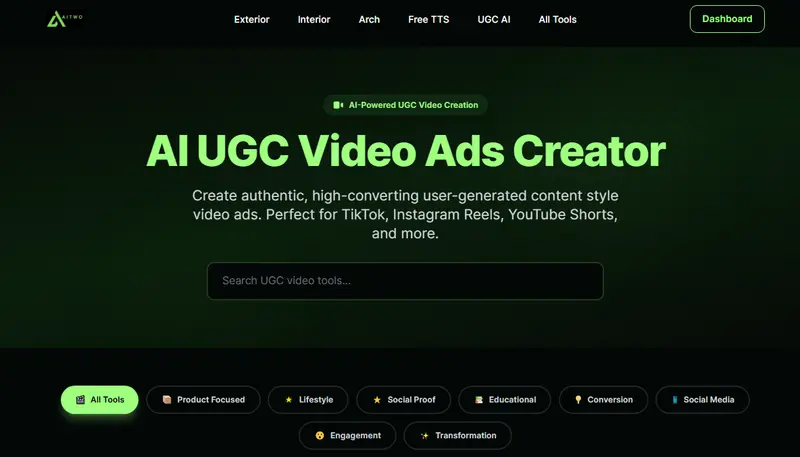
AI Two positions itself as a high-speed UGC platform designed for marketers who want to turn a single product image into a demo-style video with minimal setup.
For product demos, the platform focuses less on cinematic realism and more on repeatable UGC formats. Users upload a product image, describe the product and scene, and AI Two generates a short-form demo video styled like a talking product review, unboxing clip, or problem-solution explainer.
This makes it particularly useful for brands testing creatives at scale rather than producing long-form walkthroughs.
One of AI Two’s strengths is format variety. Product demos can be framed as tutorials, testimonials, reactions, or lifestyle moments, allowing teams to experiment with different angles using the same product asset. This flexibility is useful for A/B testing hooks and messaging across TikTok, Instagram Reels, and YouTube Shorts.
However, AI Two’s demos are intentionally lightweight. The tool does not emphasize deep product-in-hand realism or multi-scene storytelling. Instead, it prioritizes speed, automation, and volume for marketers who need many variations quickly.
Proof of Performance
AI Two highlights faster turnaround times and cost efficiency compared to traditional creator-led production. The platform reports strong adoption among eCommerce and dropshipping users who value rapid iteration and template-driven demo creation without filming or influencer coordination.
Pros and Cons
Pros:
- Fast product image to demo video workflow
- Wide range of UGC demo formats
- Designed for short-form social platforms
- Affordable entry pricing
Cons:
- Limited realism compared to product-in-hand tools
- Less control over advanced scene sequencing and branding
5. UlazAI
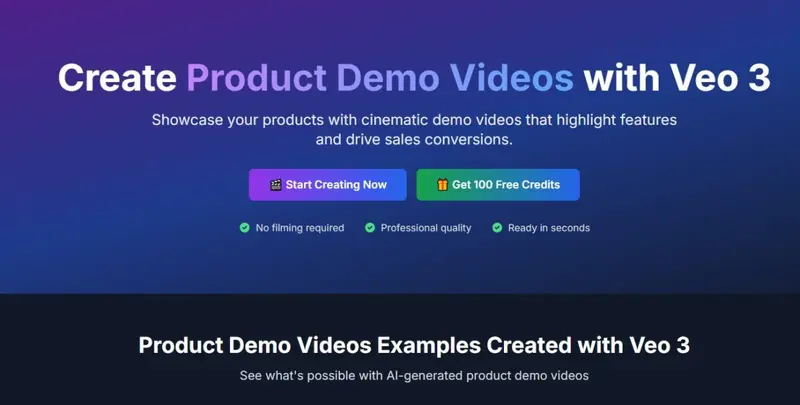
Best for: Brands and marketers that want cinematic, prompt-driven product demo videos without filming or creators
Pricing:
- Free trial with 100 credits
- Pay-as-you-go credit packages from €10
- UGC videos start from approximately €1.40 per video depending on model and quality tier
Key product demo capabilities:
- AI-generated cinematic product demo videos using Google Veo 3
- Prompt-based demo creation with full creative control
- Hyper-realistic visuals, including slow motion, macro, and cinematic scenes
- AI UGC creator with realistic actors and product placements
- Fast and premium generation modes for testing or hero creatives
UlazAI sits at the high-fidelity end of AI product demo creation. Unlike template-first UGC tools, it relies on advanced prompt engineering and Google Veo 3 to generate product demos that feel closer to studio-shot commercials than casual creator content.
For product demos, this means brands can describe a scene in detail, camera angles, lighting, motion, and emotional intent, and receive a fully rendered video that visually communicates product value. This is especially effective for hero visuals, premium eCommerce listings, or top-of-funnel ads where visual quality matters more than raw UGC authenticity.
UlazAI also offers a dedicated AI UGC Creator, which blends cinematic visuals with realistic AI actors and natural dialogue. This makes it possible to simulate testimonial-style or hands-on demos without relying on real creators, while still maintaining strong perceived realism.
However, UlazAI is less plug-and-play than tools like Predis.ai or AI Two. It rewards teams that are comfortable writing prompts and iterating creatively, rather than those seeking quick, template-based demos at scale.
Proof of Performance
UlazAI reports over 1,000,000 videos generated and a 4.9/5 user rating. The platform emphasizes dramatic cost savings compared to traditional UGC creators, with cited reductions of over 90% versus creator-led production, particularly for demo and testimonial-style videos.
Pros and Cons
Pros:
- Cinematic-quality product demo output
- Strong creative control via prompts
- Affordable per-video pricing at scale
- Suitable for premium and hero creatives
Cons:
- Requires prompt-writing skill
- Less optimized for rapid bulk template production
Which UGC Product Demo Software Fits Your Brand Needs?
Not all UGC product demo tools solve the same problem. Some are built for speed and scale, others for cinematic polish, and some for hands-on realism that mimics real customer demos. Here’s how the leading tools map to real-world product demo use cases, so brands can quickly self-select without re-reading every review.
- UGC product demos at scale from a single product URL → Predis.ai
Best suited for eCommerce brands that want fast, repeatable product demos generated directly from Shopify or product URLs, with minimal creative input and strong bulk output.
- Hands-on product-in-use demos with realistic visuals → AI Two
Ideal for brands that need product-in-hand demonstrations that visually show usage, texture, and scale, especially for physical consumer products.
- AI-generated demos with avatars and scripted explanations → Galaxy.ai
A strong fit for brands that want talking-head style product demos, guided walkthroughs, or explainer-led demos without relying on real presenters.
- Cinematic, prompt-driven product demos for hero creatives → UlazAI
Best for teams that prioritize visual impact and creative control, producing premium product demos that feel closer to studio commercials than casual UGC.
- Multi-language, voice-led product demos and walkthroughs → Wavel.ai
Well-suited for brands selling internationally that need product demos localized across languages, formats, and voice styles from one platform.
|
Tool |
Best for | Pricing | Key UGC product demo offering |
Use for |
| Predis.ai | Ecommerce brands producing demos at scale | Free plan available, paid plans from $19/month | Product URL to UGC-style demo videos with avatars | Rapid demo creation for ads and product pages |
| AI Two | Hands-on, product-in-use demonstrations | Credit-based pricing from $10/month | Product image to realistic UGC demo videos | Showing how physical products are actually used |
| Galaxy.ai | Avatar-led product demos and explainers | Free tier, Pro plans from $14.99/month | AI avatars, lip-sync, scripted demo videos | Guided walkthroughs and talking demos |
| UlazAI | Cinematic, premium product demos | Free credits, pay-as-you-go from €10 | Prompt-based Veo 3 product demo videos | High-impact hero demos and flagship ads |
| Wavel.ai | Voice-driven and multilingual demos | Free tier, paid plans from $18/month | AI voice, dubbing, subtitles, video demos | Localized demos across global markets |
Turning Product Demos Into Conversion Assets
UGC-style product demos have moved beyond simple social content. They now sit at the intersection of education, trust, and performance marketing, helping brands show how products work while still feeling native to modern feeds.
The tools reviewed in this guide reflect that shift. Some focus on speed and volume for ecommerce catalogs, others specialize in hands-on realism, cinematic presentation, or multilingual delivery at scale.
The right choice depends less on features and more on how your audience evaluates products. If buyers need to see usage, realism matters. If clarity and explanation drive conversion, scripted demos win. If differentiation is visual, creative control becomes critical.
What matters most is alignment. When your demo format matches buyer intent, UGC stops being content and starts becoming a revenue driver.
Frequently Asked Questions
What role do UGC video agencies play alongside software-based product demos?
Brands often combine in-house tools with outside support when scaling campaigns, especially when creative strategy or creator sourcing is needed, which is where UGC video agencies can complement software-led production workflows.
Why do UGC-style product demos tend to outperform polished brand videos?
They feel more relatable and credible, aligning with the core benefits of UGC marketing such as authenticity, social proof, and stronger viewer trust during the purchase decision.
How does UGC software differ from traditional user-generated content programs?
UGC software automates creation and editing, while broader user-generated content strategies usually rely on customers or creators submitting real-world media over time.
Can AI-generated UGC product demos work for ecommerce brands at scale?
Yes, many teams now rely on AI-powered UGC ads to produce consistent demo variations quickly without coordinating creators, shoots, or revisions.
What market trends are driving adoption of UGC product demo software?
Short-form video consumption and buyer skepticism toward ads have accelerated the rise of UGC across ecommerce, paid social, and product pages.
Do brands still need legal permissions when using UGC-style demos?
When real creators or gifted products are involved, brands must handle rights carefully using proper UGC legal release forms to avoid compliance risks.
Are UGC product demos effective outside of eCommerce?
Yes, many SaaS and service brands apply UGC formats successfully by adapting them for B2B UGC strategies that focus on education and credibility.
How should UGC product demos be adapted for seasonal campaigns?
Teams often refresh visuals, hooks, and messaging to match timely UGC holiday ad creatives while keeping the same underlying demo structure.

