

A polished UGC creator portfolio has become one of the biggest differentiators in landing paid brand deals, especially as brands shift budget toward creator-made content that feels authentic, relatable, and performance-ready.
But what actually makes a portfolio stand out? And how do top creators present their work in a way that convinces brands to trust them with product launches, ad campaigns, or TikTok Shop content?
As UGC demand continues to rise across beauty, lifestyle, home, wellness, and tech, brands now expect creators to showcase their skills with the same clarity and professionalism as any creative partner.
Trends across leading portfolios reveal consistent patterns — clean layouts, strong niche identity, versatile video examples, and simple navigation that makes reviewing content effortless for hiring teams.
This guide walks you through how to build a UGC creator portfolio that gets noticed, gets saved, and gets you booked, plus five real examples that show what winning portfolios look like in practice.
- What Is a UGC Creator Portfolio and Why It's Important
- What to Include in a High-Converting UGC Creator Portfolio
- How to Create Your UGC Creator Portfolio
- Popular UGC Portfolio Examples to Inspire Your Own
- What Brands Actually Look For in a UGC Portfolio
- Build a Portfolio That Opens Doors to Paid UGC Work
- Frequently Asked Questions
What Is a UGC Creator Portfolio and Why It's Important
A UGC creator portfolio is a curated, branded collection of your strongest user-generated content pieces, presented in one place so brands can quickly understand how you think, create, and perform.
Instead of sending random links or individual files, you provide decision-makers with a single link that allows them to scan your best videos, photos, case studies, and testimonials in just a few minutes.
@realcreatives Replying to @apandawatts Your perfect portfolio will take you a long time. Concentrate on perfecting your content #ugc #ugcportfolio #whatisugc #ugcforbeginners #ugccreator #ugctips #ugccontentcreator
This matters because UGC itself has shifted from a nice-to-have to a core content engine for brands. Our State of Marketing Report found that 56% of brands are focusing on UGC in their marketing efforts, reflecting how central creator-made content has become. The report also highlights UGC as a primary objective when running influencer campaigns, not just an add-on.
In parallel, market analysts estimate that the global UGC platforms market was worth around $7.8 billion in 2024 and could reach more than $100 billion by 2034, growing at a roughly 30% CAGR. Brands are clearly investing in systems and tools to capture and scale UGC at volume.
On the consumer side, UGC is no longer a niche trust signal. Research shows that 80% of people are influenced by UGC, with the majority of their purchase decisions being influenced when brands use UGC in their marketing.
This means brands are responding to that demand by sourcing more creator content and by scrutinizing who they partner with.
All of this has a direct effect on you as a UGC creator. As budgets and volumes grow, more creators are entering the space, which means brands receive dozens of pitches for every brief. Instead of judging you purely on follower count, many marketing teams now shortlist creators based on the quality, structure, and clarity of their portfolio.
Portfolios are used to decide who gets low-risk test packages, who progresses to monthly retainers, and who is trusted with performance-focused deliverables for TikTok Shop, Meta Reels, or paid social.
What to Include in a High-Converting UGC Creator Portfolio
A strong UGC creator portfolio isn’t just a collection of random content but a carefully curated, brand-ready package that helps decision-makers instantly understand who you are, what you deliver, and why working with you is low risk (and high reward).
@justemscontent Updated UGC Portfolio 🤍✨ Took me ages to upgrade the design but is much more high end than my last one 🤗 If you want to use it as a template as well it’s available in my bio 🙌🏼 #ugc #ugcportfolio #portfolio #mediakit #ukugc #ugccreator #ugccontentcreator #ugccommunity #ugctips
Below are the essential components that every high-converting portfolio should include, and the reasoning behind each.
1. A Clean Intro Section: “Who You Are & What You Do.”
Start your portfolio with a concise bio summarizing your niche, content style, and core strengths (e.g., product demos, unboxings, lifestyle shots, voiceover work). Brands increasingly prioritize creators with niche alignment over sheer follower count: many agencies now prefer working with smaller, niche creators because of higher engagement and authenticity.
By clearly stating your specialization and what kinds of content you create (for example: lifestyle, beauty, tech, travel), you help brands quickly assess relevance — often before scrolling further.
2. A Showcase of High-Quality UGC Work
This is the heart of your portfolio. Include a selection of your best content pieces: video UGC (demos, product reviews, unboxings), photo content (lifestyle, before/after, product-in-use), and — if available — testimonial-style videos or clips.
Real user-generated content resonates more than overly polished ads: research shows consumers tend to view UGC as significantly more authentic than brand-created content, making them more likely to trust and engage.
Favor quality over quantity:
Showcase 6–12 of your strongest examples that highlight variety (different formats, different angles) rather than overfilling with average content.
3. Performance Metrics or Context (When Possible)
Whenever you have access to performance data like engagement rates, watch time, click-through rates, conversion uplifts, or even anecdotal results, include this. Brands increasingly treat UGC as performance-driven content, not just creative. In 2025, “generate UGC” became the main goal of more influencer campaigns than awareness or sales alone.
This transparency distinguishes you from hobbyists — it shows you understand ROI, and can deliver measurable value.
4. A Clear Services/Deliverables Section
Make it obvious what you offer: video editing, scripted product demos, unboxings, lifestyle photography, hook + caption ideation, usage rights, etc. Given 56% of brands now report UGC as a core part of their marketing strategy, demand for flexible deliverables is high.
Providing a clear “menu” of services lowers friction for brands: they know up front what they can commission from you.
5. Contact Info + Social / Platform Links
Include professional contact information (email, perhaps a business message handle), plus links to your active channels (e.g., TikTok, Instagram, YouTube). Many brand managers will open your portfolio on mobile or in Slack/email so ensure it’s easy to contact you directly and that links are clickable.
Why These Elements Matter (From a Brand Perspective)
- Authenticity & Trust: UGC continues to outperform traditional branded content when it comes to consumer trust and conversion.
- Efficiency for Brands: Clear intros, service menus, and curated examples help brands quickly vet creators — crucial when they receive dozens (or hundreds) of pitches per brief.
- Performance Orientation: Including metrics or clear deliverables signals professionalism and ROI awareness, moving the portfolio beyond a “creative gallery” into a “sales tool.”
- Flexibility & Clarity: A simple, navigable structure (intro → works → services → contact) reduces friction and makes decisions easier for hiring managers.
A high-converting UGC portfolio is not just about showing what you’ve done, but it’s about packaging it in a way that aligns with what brands care about most: relevance, authenticity, clarity, and results.
How to Create Your UGC Creator Portfolio
Creating a UGC creator portfolio is a structured process, and following the right sequence makes the final product clearer, more persuasive, and more brand-friendly.
Below is a practical, step-by-step workflow used by working creators who successfully pitch and land paid collaborations across niches.
Step 1: Choose the Right Platform
Start by selecting a platform that supports clean layouts, video embedding, and easy sharing. Many creators build their portfolios on Canva because it offers ready-made UGC portfolio templates and the ability to publish a branded site with a single link.
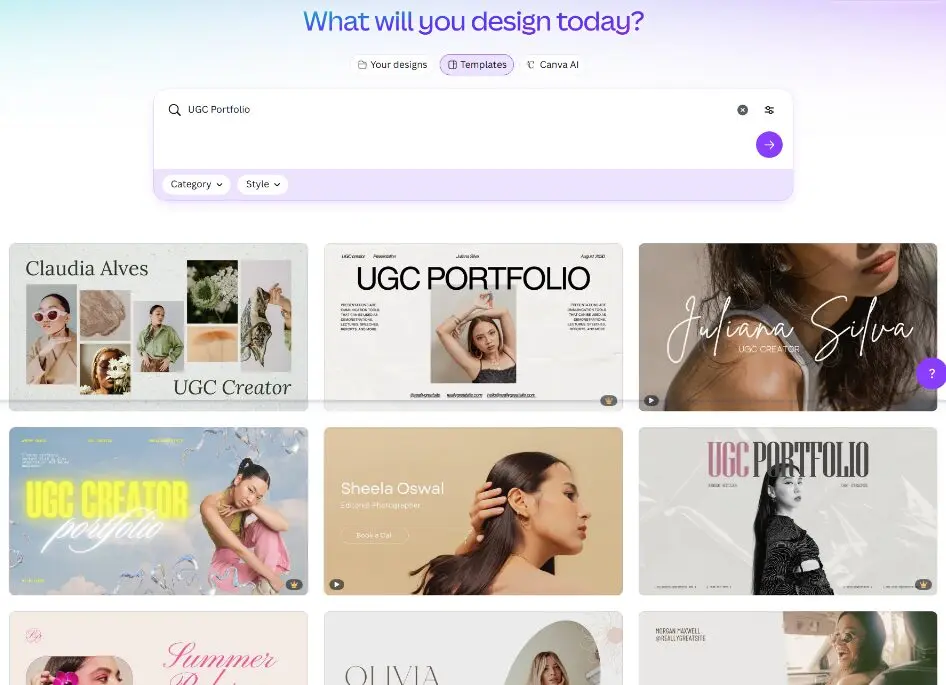
Others prefer Copyfolio for its minimalist design options or Notion for an easy, modular layout. Some long-term creators use Squarespace or Wix to host a more customizable website. The key is choosing a platform you can update frequently without needing design or technical expertise.
Pro Tip:
Your platform should load quickly, play videos smoothly, and look professional on mobile.
Step 2: Define Your Niche and Visual Identity
Before adding content, clarify the niche you want to be recognized for. Whether you focus on beauty, wellness, tech, lifestyle, or travel, your niche should be obvious within the first few seconds of viewing your portfolio.
Your visual identity should reinforce this. Use consistent fonts, colors, and layouts that reflect your style. For example, many beauty creators use clean, soft palettes, while travel creators lean toward vivid imagery. A cohesive identity signals to brands that you understand how to present content with intention, a skill they value when commissioning UGC.
Step 3: Curate 6-12 High-Quality UGC Examples
Select your strongest work rather than uploading everything you’ve ever created. Include a balanced mix of formats such as unboxings, testimonials, POV sequences, product demos, and lifestyle clips.
Many creators model their structure after successful public portfolios on Canva, where videos are grouped neatly and kept short. This keeps the portfolio focused, easy to navigate, and aligned with what brands expect from UGC creators today.
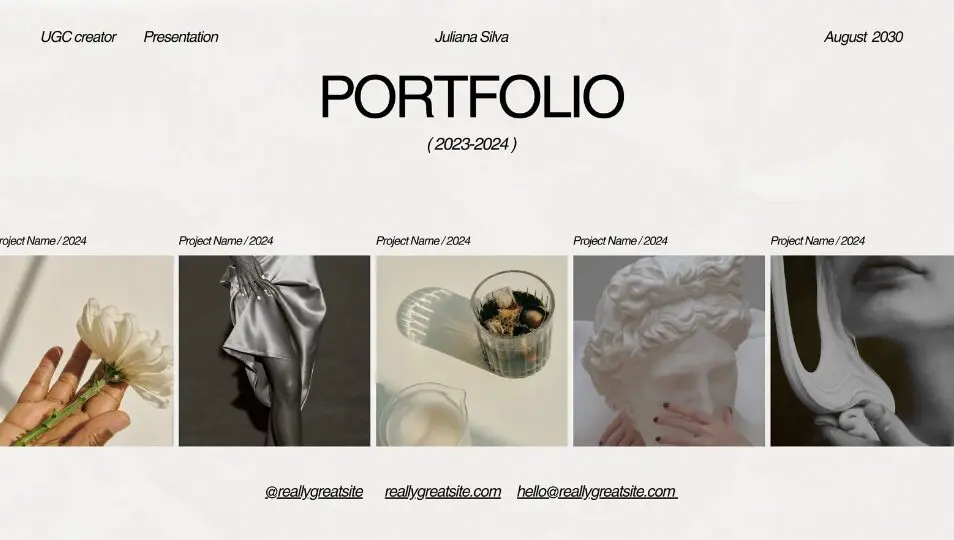
- Source: Canva UGC Template
Step 4: Add Short Context for Each Example
Beneath or beside each video, include a brief caption that explains the angle or purpose. For instance, note whether the clip is a product demo, a problem-solving narrative, or a testimonial-style video. You do not need lengthy descriptions, just enough for a brand to understand what the content was designed to communicate.
Step 5: Organize Your Portfolio for Easy Navigation
Structure your portfolio into clear sections: Featured Videos, Photo UGC, Services, Testimonials, and Contact. Brands rarely browse from top to bottom; they skim. A modular layout helps them jump directly to what they need. Ensure your videos load quickly and that all links open correctly on mobile devices.
Step 6: Update Monthly
As you create new work or refine your style, update your portfolio. Remove outdated pieces, upload new examples, adjust your service menu, and ensure your intro section still reflects your current niche and offerings. A portfolio is a living asset — its freshness often influences how brands perceive your professionalism.
Popular UGC Portfolio Examples to Inspire Your Own
Seeing how top UGC creators structure their portfolios is one of the fastest ways to understand what works, what brands expect, and how to elevate your own presentation. The following portfolios demonstrate strong layout decisions, clear niche positioning, and strategic content curation.
Each example below highlights why the portfolio succeeds, and what you can learn from it.
1. Katie Davies
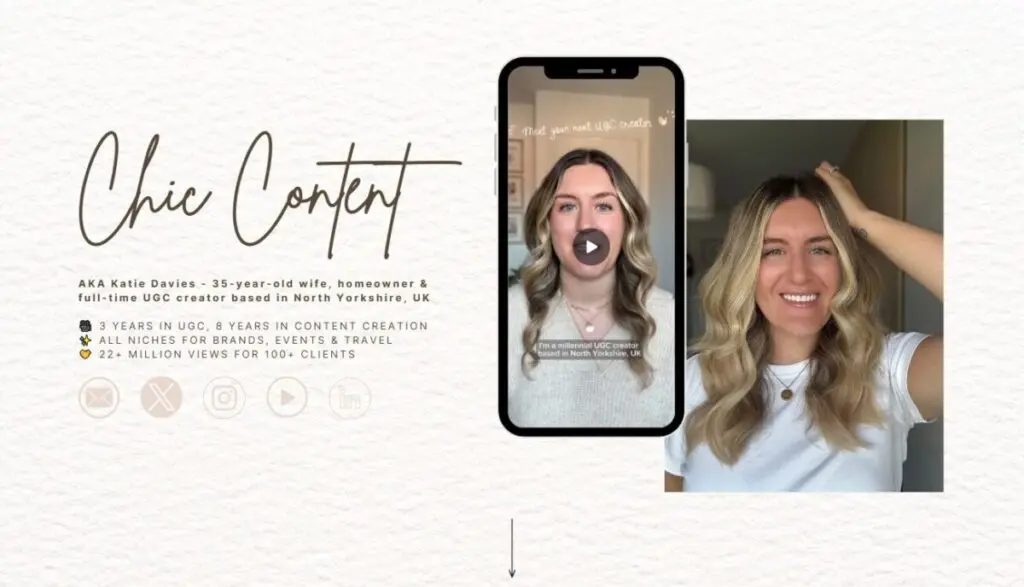
Katie’s Canva-based portfolio sets the standard for clarity and user experience. Her homepage communicates niche and experience instantly, helping brands understand her strengths without scrolling.
The layout is clean, mobile-friendly, and intentionally organized, showcasing high-quality demo and lifestyle videos in a visually cohesive grid. Her consistency in color palette and typography reinforces her personal brand, while her service offerings and contact details are placed exactly where brands expect them.
Every element feels purposeful and easy to navigate, which reduces friction for busy marketers reviewing multiple creators.
Why We Love It:
It’s a streamlined, modern UGC portfolio that communicates professionalism within seconds.
2. Heaven Heatherly
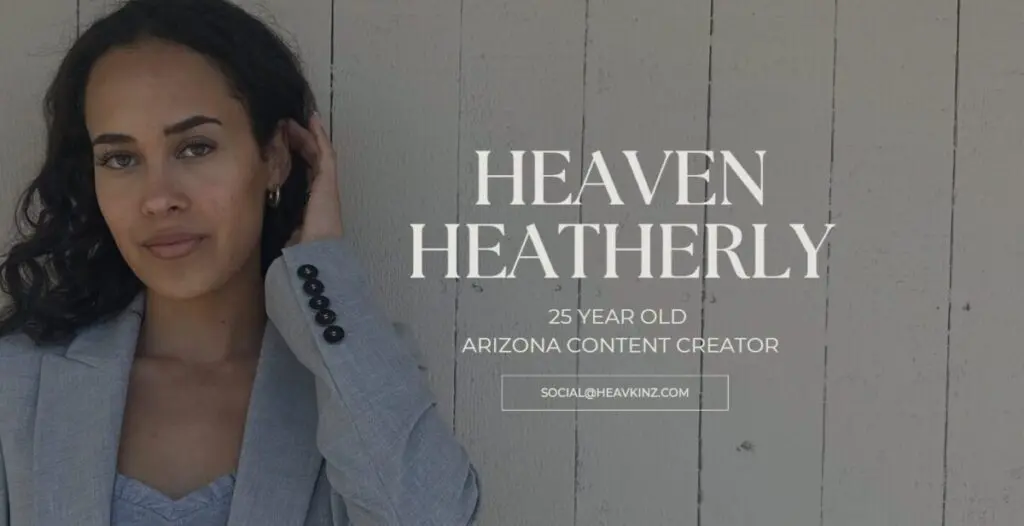
Heaven’s portfolio stands out for its elevated, editorial aesthetic that immediately conveys premium value. The homepage behaves like a boutique creative studio site rather than a typical creator portfolio, giving brands confidence in her execution.
Her visuals are curated with intention, and her video examples show strong control over lighting, storytelling, and pacing. The navigation is thoughtfully minimal, helping brands move effortlessly from examples to services to contact. Her copy is concise yet polished, signaling that she understands both messaging and creative strategy.
Why We Love It:
It shows how refined branding can position a UGC creator as a high-end partner.
3. Michelle Henderson
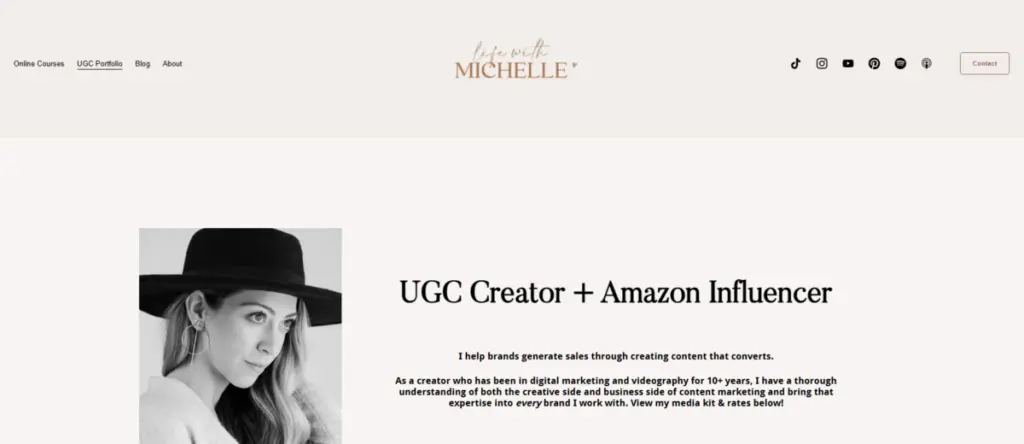
Michelle’s portfolio excels in organization, clarity, and trust-building. Her homepage provides an immediate overview of who she is, followed by neatly categorized video samples that make her creative strengths obvious.
Each content type is easy to locate, and the site’s clean layout ensures nothing feels cluttered. Her selection of UGC highlights strong camera presence, versatility across niches, and the ability to communicate product value quickly. The simplicity of her site structure helps brands evaluate her work efficiently, which is crucial for fast-moving campaigns.
Why We Love It:
It prioritizes clarity and usability, making it incredibly easy for brands to assess her capabilities.
4. Anna Schiano

Anna’s Canva site demonstrates excellent visual branding, using cohesive colors and typography to present her work with personality and polish. The layout guides the viewer naturally through her offerings, from her intro to her content examples to her contact section.
Her UGC examples show variety — product demos, lifestyle clips, and POV moments — which helps brands see her range without feeling overwhelmed. Her minimalist design choices keep the focus squarely on her content, reinforcing that she understands the importance of strong creative over heavy design.
Why We Love It:
It’s a beautifully branded yet simple portfolio that lets the work speak for itself.
5. Isla Pedley

Isla’s portfolio immediately communicates professionalism through clean design, strong branding, and a clear presentation of her niche. Her homepage introduces her value as a creator in a straightforward, friendly way, which helps brands quickly understand what she offers.
The layout is highly intuitive: her best video examples are showcased in an organized, scroll-friendly structure that highlights variety without overwhelming the viewer. Isla also demonstrates an excellent balance between lifestyle storytelling and product-focused content, making it easy for brands to imagine her style applied to their campaigns.
The site loads quickly, feels modern, and keeps navigation simple, which is essential for decision-makers reviewing multiple creators in a short time.
Why We Love It:
It’s a polished, well-structured portfolio that blends personality with clear, brand-ready presentation.
What Brands Actually Look For in a UGC Portfolio
Brands evaluate UGC creator portfolios with a structured lens, looking for indicators that the creator can produce content that is on-brand, high-quality, and capable of supporting campaign objectives.
Before diving into specific criteria, it’s important to understand that brand managers often review dozens of creators at a time. A winning portfolio makes their job easier by clearly signaling niche, expertise, content range, and professionalism in the first few seconds.
Once that foundation is set, brands begin scanning for several core elements that influence whether a creator is selected for test packages, paid deliverables, or long-term partnerships.
Niche Alignment and Audience Fit
Brands want creators who feel naturally aligned with their product category. The first thing they evaluate is whether your examples reflect their industry — beauty, lifestyle, wellness, tech, home, fitness, or parenting.
If your content already speaks to the audience they want to reach, you immediately feel like a lower-risk choice. This is why your portfolio must clearly communicate your niche through both visuals and content selection.
Content Quality and Creative Versatility
Brands review your content with a focus on technical and creative execution: lighting, audio clarity, pacing, storytelling, hook strength, and editing flow. They look for creators who can produce multiple UGC formats — unboxings, demos, testimonials, POV videos, how-to content, and lifestyle clips.
The more variety you display, the easier it is for a brand to visualize you producing a full set of deliverables.
Professional Presentation and Ease of Navigation
A well-structured portfolio signals that the creator will be easy to work with. Brands look for clean layouts, fast-loading pages, mobile optimization, and clear grouping of content types. Logical navigation communicates professionalism, while clutter or confusing organization creates friction.
Brands also expect visible contact information and a simple pathway to services or pricing if offered.
Evidence of Strategic Thinking
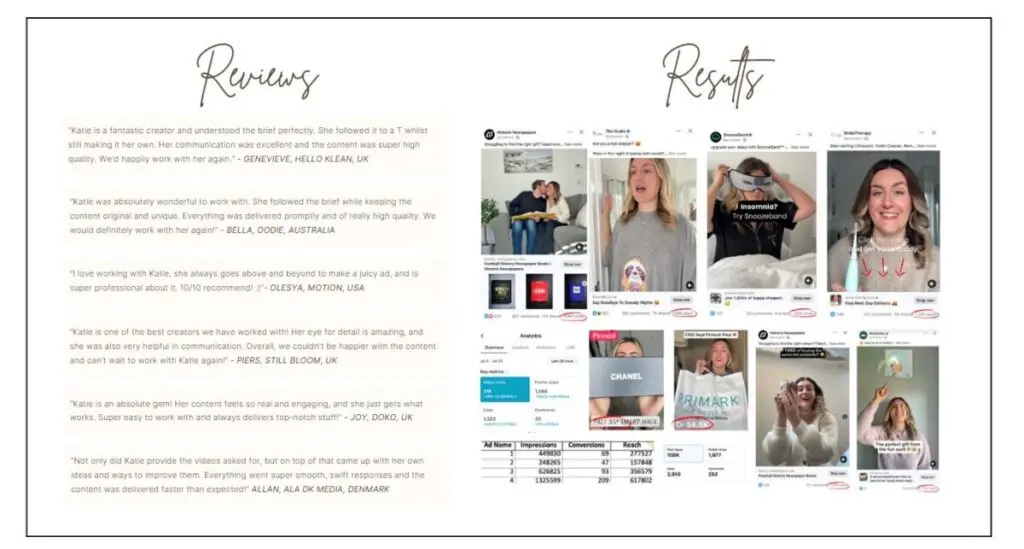
While not every creator includes performance notes, brands appreciate when portfolios briefly highlight context, such as a piece being used in an ad, strong engagement, or repeat brand partnerships. They don’t need full analytics; they simply want to see that you understand why content performs and how to support a brand’s goals.
One of the portfolios we included, Katie Davies', has mastered the art of showcasing results in a clear, clean, and quite frankly, beautiful manner.
Professional Cues and Brand Safety
Brands pay close attention to tone, spelling, clarity, confidence, and overall brand safety. A portfolio that demonstrates consistent visual branding, polished communication, and authentic on-camera presence gives hiring teams confidence in your reliability.
Together, these elements help brands quickly determine whether a creator can deliver content that meets both creative and strategic expectations.
Build a Portfolio That Opens Doors to Paid UGC Work
A strong UGC creator portfolio is the single most important asset you have when pitching brands. By clearly communicating your niche, showcasing polished examples, and presenting your work in a clean, professional format, you make it easier for brands to understand your value and envision you in their next campaign.
Whether you're just starting or refining years of content, the structure you choose and the examples you feature directly influence how brands perceive your creativity and reliability.
As the UGC landscape continues to grow, creators who package their work thoughtfully will stand out in a competitive market. Treat your portfolio as a living asset, refresh it often, and use it to demonstrate not just what you can create — but why your perspective matters.
With the right presentation, your portfolio becomes the tool that turns opportunities into paid partnerships.
Frequently Asked Questions
Do UGC creators need followers to land paid brand deals?
No, brands care far more about content quality than follower count. Many companies now source creators directly through user-generated content platforms because they prioritize performance-ready videos over audience size.
What types of brands hire UGC creators most often?
Beauty, wellness, home, lifestyle, and consumer tech brands frequently work with creators, especially those sourcing content through specialized UGC agencies that manage briefs and quality control.
What’s the difference between UGC and influencer content?
UGC is designed to feel authentic and product-focused, usually without the creator posting on their own channels, which is why many marketers study user-generated content to understand its role in high-conversion campaigns.
How do creators know what kind of UGC brands want?
Creators often follow structured processes inspired by a UGC campaign framework that maps trend research, creative angles, and post-launch analysis.
Does UGC work well for TikTok-focused brands?
Yes — TikTok’s algorithm rewards authentic, product-centered storytelling, and many brands lean on UGC live shopping and one funnel commerce trends to scale conversion-focused content.
How can new creators get products to practice with?
Many start by leveraging a product seeding strategy, where brands offer free items in exchange for optional content that can be used in a portfolio.
What’s the best way to send your portfolio to a brand?
A concise outreach message that links your portfolio and clearly states your value works extremely well.
Can UGC become a full-time income stream?
Yes, creators can diversify through brand deals, licensing, affiliate programs, and paid usage rights.

SUGGESTED

Content Marketing Portfolio Examples to Land Clients and Inspire Your Next Campaign
Ditch scattered links discover how top content marketers craft portfolios that win...


17 of the Best UGC Platforms for 2026
Discover the top UGC platforms of 2026 to scale creator content boost conversions and...