
Instagram content no longer lives only inside the app. For brands investing heavily in influencers, UGC, and social-first campaigns, the bigger challenge is what happens after that content is published. High-performing posts disappear down the feed within days, while brand websites often remain static, disconnected from the social proof already being created at scale.
Instagram walls emerged as a way to bridge that gap. When executed well, they turn influencer and customer content into persistent, high-impact website assets that support trust, discovery, and conversion across the funnel.
From this, two questions arise.
- How can you showcase Instagram content on your website in a way that actually supports business goals rather than just looking visually appealing?
- And how do you move beyond generic embeds to Instagram walls that feel intentional, on-brand, and proven to work in real marketing environments?
This guide answers those questions with practical context and real examples from live brand websites.
- What Is an Instagram Wall?
- Why Brands Use Instagram Walls on Their Websites
- Best Types of Instagram Walls for Websites
- Branded Feed Instagram Walls
- Hashtag Driven Community Walls
- Influencer and Creator UGC Walls
- Product and Shoppable Instagram Walls
- Campaign and Event Instagram Walls
- Testimonial Style Instagram Walls
- How Brands Implement Instagram Walls on Their Websites
- Turning Instagram Content Into Website Impact
- Frequently Asked Questions
What Is an Instagram Wall?
An Instagram wall is a curated, continuously updated collection of Instagram content embedded directly into a website. Unlike a single post embed or a basic profile feed, an Instagram wall is designed to showcase multiple pieces of content at once and present them as part of the brand’s broader digital experience.
For marketers and brands, the value of an Instagram wall is not aesthetic alone. It functions as a distribution layer for social, influencer, and user-generated content, allowing high-performing Instagram posts to live beyond the platform and support key website goals such as trust building, product discovery, and conversion.
It is also important to clarify what an Instagram wall is not. It is not a static screenshot of social content, and it is not simply a chronological feed pasted into a footer.
A well-executed Instagram wall is intentional. Content is selected, moderated, and placed on pages where social proof or inspiration directly supports the decision-making process.
Most Instagram walls pull from one or more of the following sources:
- Brand-owned Instagram accounts
- Influencer and creator posts where the brand is tagged
- Hashtag-driven campaign content
- Reels and short-form video
- Product tagged or shoppable posts
From a strategic perspective, Instagram walls help brands bridge the gap between social activity and owned media. Instead of treating Instagram as a separate channel, walls allow teams to reuse existing content investments and integrate them into landing pages, product pages, and campaign hubs where they can deliver ongoing value.
This distinction becomes critical when evaluating real examples, because the strongest Instagram walls are built around a clear purpose, not just the availability of content.
Why Brands Use Instagram Walls on Their Websites
For most brands, Instagram is one of the most active content channels, yet it is also one of the most temporary. Even high-performing influencer posts and UGC tend to lose visibility quickly as feeds refresh and campaigns move on.
At the same time, brand websites often struggle to reflect this ongoing social activity, creating a disconnect between what audiences see on Instagram and what they experience on owned channels.
Instagram walls help close that gap by turning short-lived social content into persistent website assets. Instead of letting influencer and UGC content expire inside the app, brands can surface it where purchase decisions, brand evaluation, and trust building actually happen.
One of the primary reasons brands adopt Instagram walls is to strengthen social proof. Seeing real people using, wearing, or talking about a product provides a level of credibility that traditional brand creative cannot always achieve on its own. When placed strategically on landing pages, product pages, or campaign hubs, Instagram walls reinforce authenticity at moments where confidence matters most.
Instagram walls also support product discovery. Visual, user-generated content allows visitors to explore products in real-world contexts, often answering questions that polished studio imagery cannot. For eCommerce and DTC brands in particular, this can reduce hesitation and support conversion without requiring additional content production.
From an operational perspective, Instagram walls help brands maximize the return on existing social and influencer investments. Content created for Instagram can be reused across multiple touchpoints, keeping websites fresh without constant reshoots or redesigns.
This makes walls especially valuable for teams running frequent campaigns or working with creators at scale.
Ultimately, brands use Instagram walls not as decorative elements, but as a way to connect social activity with owned media performance. When executed intentionally, they become an extension of influencer marketing, UGC, and social commerce strategies rather than a standalone feature.
Best Types of Instagram Walls for Websites
Not all Instagram walls serve the same purpose. The most effective implementations are built around a specific marketing objective and placed where they support decision-making, not just visual interest. Below are the Instagram wall types brands use most successfully, based on real-world execution.
Branded Feed Instagram Walls
These walls pull content directly from a brand’s own Instagram account and are often used to reinforce brand identity and visual consistency. They work well on homepages and campaign hubs, where the goal is to showcase ongoing activity and maintain alignment between social channels and owned media.
This approach is best suited for brands with a strong, consistent content strategy and frequent posting cadence.
Example: Dave Blunden Staircases
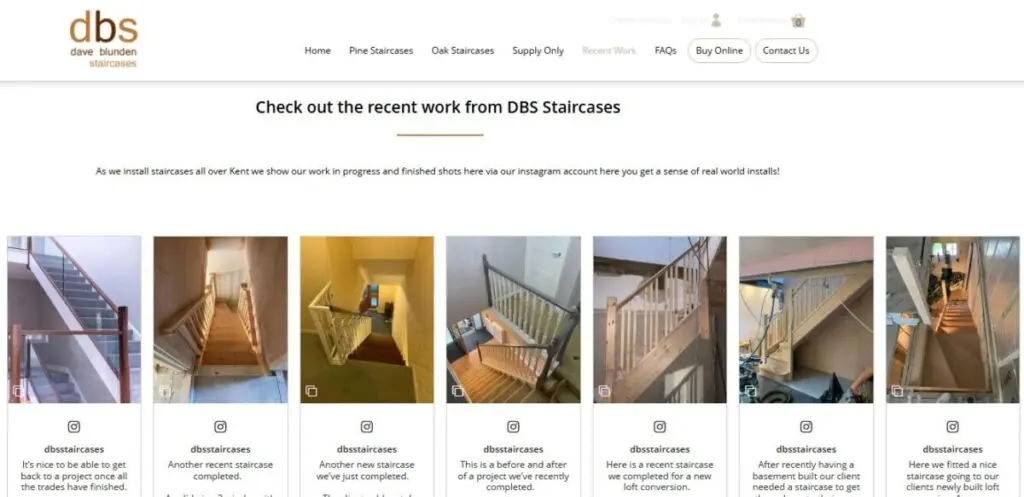
Dave Blunden Staircases uses a branded feed Instagram wall directly on its product pages to showcase recently completed staircase projects pulled from its Instagram account. Instead of relying solely on static product imagery, the wall highlights real installations in customer homes, reflecting current work and craftsmanship.
This execution is particularly effective for a high-consideration, bespoke product. By embedding recent Instagram content at the point of evaluation, the brand reinforces credibility, demonstrates ongoing activity, and shows variation in finishes, layouts, and environments that staged photography alone cannot capture.
From a marketing perspective, the wall helps turn Instagram into a proof-of-work portfolio. It keeps product pages visually fresh while allowing social content to support trust and decision making without requiring constant manual updates.
Hashtag Driven Community Walls
Hashtag-based walls aggregate content from customers and creators who post using a branded hashtag. This type of wall emphasizes participation and community rather than polished brand messaging.
Example: SimplyWorkout

SimplyWORKOUT takes a community-first approach by building its Instagram wall entirely around its branded hashtag, #SIMPLYWORKOUT. Instead of relying only on brand or influencer posts, the wall aggregates content created by customers who actively tag their workouts and progress using the hashtag.
This approach turns the wall into a living showcase of real people wearing and using the brand’s products in authentic fitness environments. For site visitors, this creates immediate social proof and reinforces the idea that SimplyWORKOUT is worn by an active, engaged community rather than curated models alone.
From a marketing standpoint, the hashtag-driven wall encourages participation while continuously refreshing the site with new content. It also helps SimplyWORKOUT convert organic community engagement on Instagram into a visible trust signal on its website, without additional content production.
Influencer and Creator UGC Walls
These walls surface posts from influencers and creators who tag the brand, allowing influencer content to live beyond the original campaign window. Instead of disappearing into the feed, creator content becomes an evergreen asset that supports trust and product credibility.
This wall type works best when brands have clear creator agreements and consistent influencer partnerships.
Example: R.E.M Beauty
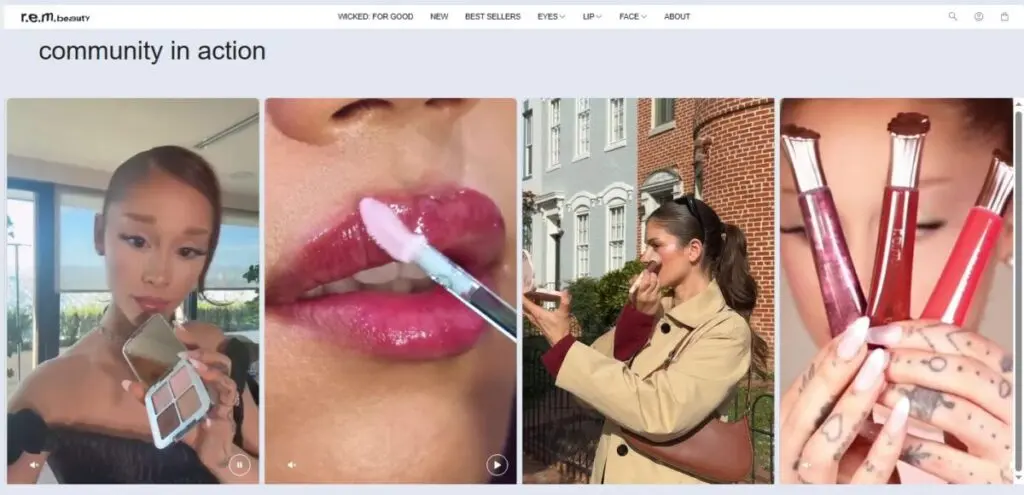
R.E.M. Beauty uses an Instagram wall to extend its creator and community content directly into the shopping experience. The wall surfaces a mix of influencer posts and customer-generated content that shows products in real-world use rather than polished campaign imagery alone.
The placement is intentional. Instead of isolating Instagram content in a footer, R.E.M. Beauty integrates it near product discovery moments, where visitors are actively evaluating shades, textures, and looks. This allows social proof to support decision-making without interrupting the browsing flow.
From a marketing perspective, the wall helps the brand reuse influencer content beyond Instagram while reinforcing authenticity. It also reflects how the brand is worn and styled by real people, aligning closely with the expectations of beauty shoppers who rely heavily on peer validation before purchasing.
Product and Shoppable Instagram Walls
Product-focused walls are embedded near product detail pages or collections and showcase how items look and perform in real-world contexts. They are especially effective for beauty, fashion, and DTC brands where visual proof influences conversion.
Rather than replacing product imagery, these walls complement it by answering unspoken shopper questions through social content.
Example: SoHome

SoHome uses a product-focused Instagram wall through a dedicated Shop the Look section on its website. Rather than acting as a general community feed, this wall is intentionally tied to product discovery, showing how furniture and home accessories appear in real living spaces.
The content featured comes from past customers whose images have been shared on SoHome’s social channels. While hashtags play a role in sourcing this content, the execution differs from a traditional hashtag wall. Content is selectively curated and framed around purchasable looks, not open-ended community participation.
For shoppers, this approach reduces uncertainty by answering practical questions about scale, styling, and placement. From a brand perspective, it turns customer content into a shoppable asset that supports conversion while extending the value of social content beyond Instagram feeds.
Campaign and Event Instagram Walls
Campaign-specific walls are built around launches, contests, or events and often live on dedicated landing pages. These walls work best when tied to a clear participation mechanic or content submission flow.
In practice, this approach allows brands to turn campaign participation into a continuous content stream rather than a one-off promotion. When executed well, campaign and event walls also reinforce brand identity by showcasing outcomes and experiences created by the community, not just the campaign messaging itself.
Example: GoPro
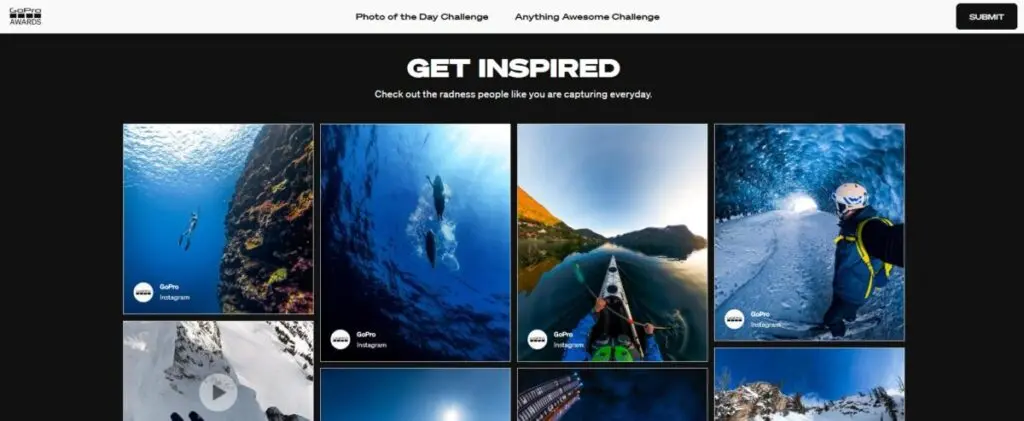
On its GoPro Awards page, GoPro uses an Instagram wall as a central hub for community and creator content. The wall aggregates posts from creators around the world who submit photos and videos for GoPro’s ongoing awards program, turning social content into a permanent, brand-owned showcase.
Rather than supporting a single product page, this wall reinforces GoPro’s broader brand narrative. It highlights real footage captured by users in extreme, creative, and everyday scenarios, positioning the product through outcomes rather than specifications. The experience feels participatory, inviting visitors to explore, submit, and engage with the brand ecosystem.
From a marketing perspective, this approach turns Instagram into a content acquisition channel. The wall continuously refreshes with high-quality UGC, supports community building at scale, and demonstrates how influencer and customer content can anchor a long-term brand platform rather than a short-lived campaign.
Testimonial Style Instagram Walls
In this format, Instagram posts are curated and presented primarily as social proof rather than inspiration. Content selection is more controlled, focusing on reviews, reactions, and outcome-driven posts.
This approach is effective on high-consideration pages where reassurance and credibility are more important than volume.
Example: StoryPrompt
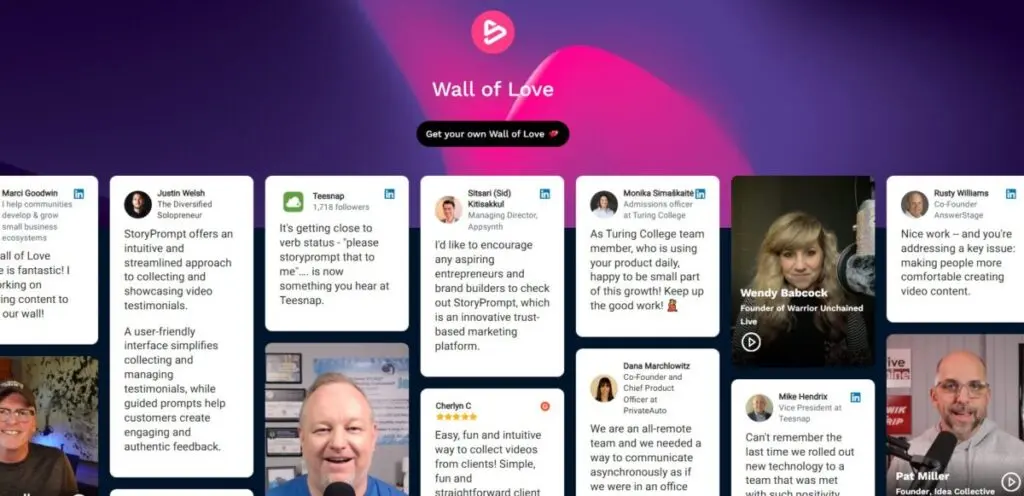
StoryPrompt uses a testimonial-style Instagram wall specifically to showcase customer feedback and reactions rather than inspiration or lifestyle content. The wall curates posts that highlight real experiences, results, and opinions from users who have shared their stories on Instagram.
This execution is intentionally controlled. Instead of displaying a high volume of posts, StoryPrompt focuses on outcome-driven testimonials that reinforce credibility and product value. Placed in a trust-building context on the website, the wall functions as a social proof layer, helping prospective customers validate the product through peer experiences before committing.
Key Takeaways for Brands
The best Instagram wall is not defined by its layout or technology, but by how clearly it supports a business goal. Before choosing a format, brands should decide whether the wall is meant to drive trust, discovery, community, or conversion, then build around that objective.
How Brands Implement Instagram Walls on Their Websites
While Instagram walls may appear similar on the surface, the way brands implement them varies significantly depending on team structure, scale, and control requirements. In practice, most brands fall into one of three execution paths.
Native Instagram Embeds
Native Instagram embeds are the fastest way for brands to surface content on a website. They are typically used for lightweight needs or temporary placements, but offer limited control over layout, moderation, and long-term scalability.
This approach is most common for small teams or one-off campaign pages, using Instagram’s native embed functionality or simple developer embeds. While quick to deploy, native embeds offer little flexibility once content volume grows.
CMS Plugins and Widgets
CMS plugins and widgets are often used by brands running on platforms like WordPress or Shopify. These solutions provide more flexibility around layout and placement while remaining relatively easy to manage.
Examples include tools like Smash Balloon and Elfsight, which allow brands to embed Instagram feeds without custom development. This route works well for in-house teams managing ongoing website content, though moderation and filtering options can still be limited at scale.
Third-Party Social Wall Platforms
Third-party social wall platforms are typically chosen by brands and agencies operating at scale. These tools offer greater control over content sources, moderation, layout, and rights management, making them better suited for influencer-heavy strategies, UGC programs, and high-visibility placements.
Platforms such as Taggbox, EmbedSocial, and Walls.io are commonly used when brands need to curate content from hashtags, mentions, and creators while maintaining brand safety.
The right implementation path depends less on budget and more on how much control, governance, and scalability a brand requires over time.
Turning Instagram Content Into Website Impact
Instagram walls are no longer a nice-to-have design element. For brands investing in influencers, UGC, and social-first campaigns, they have become a practical way to extend the value of social content beyond the feed and into owned digital experiences.
As the real examples in this guide show, the most effective Instagram walls are built with intent. They support trust during high-consideration moments, improve product discovery, surface community participation, or anchor long-term campaigns.
What separates strong implementations from forgettable ones is not the layout or tool, but clarity of purpose and placement.
For brands and marketers, the opportunity lies in treating Instagram walls as a distribution infrastructure. When aligned with clear goals, moderated carefully, and embedded where decisions are made, they allow social and influencer content to keep working long after it is published on Instagram itself.
Frequently Asked Questions
Do Instagram walls work better with short or long captions?
Instagram walls tend to perform best when captions are easy to scan on desktop and mobile, since website visitors engage differently than in-feed users. Research comparing short captions vs long-form shows that brevity often improves clarity and visual focus when content is repurposed outside Instagram, making walls easier to consume at a glance.
How do brands keep hashtag-based Instagram walls relevant over time?
Hashtag-driven walls require ongoing monitoring to ensure content quality and relevance. Many teams rely on tools that help track performance and usage trends, which is why free hashtag tracking tools are often used to identify which hashtags continue to generate valuable, brand-safe content.
Can Instagram walls fit into a broader social content workflow?
Yes. Brands that treat Instagram walls as part of a structured content system tend to see more consistency across channels. Integrating walls into a broader social content system helps teams plan, repurpose, and manage assets without treating the website as an afterthought.
Are Instagram walls compatible with affiliate or creator monetization strategies?
Instagram walls can complement monetization strategies when paired with product discovery and creator attribution. For brands working with creators, walls can support traffic flowing to affiliate link storefronts, allowing social content to reinforce both trust and commerce on owned channels.
Should caption style change when Instagram content is used on websites?
Website visitors often skim faster than social users, which makes caption structure important. Insights into short captions on Instagram highlight why concise, context-rich captions translate better when Instagram posts are embedded into web experiences rather than viewed natively in the app.