
Influencer database software has become a core part of how brands identify and evaluate creators at scale. As influencer marketing budgets continue to grow, discovery is no longer a manual process.
According to our 2026 Influencer Marketing Benchmark Report, 59.4% of marketers planned to increase their influencer marketing budgets, reinforcing the need for systems that can support larger and more complex creator programs.
As investment increases, the challenge shifts from whether to work with influencers to how to find the right ones efficiently. Manually searching across platforms, reviewing profiles, and tracking performance metrics quickly becomes difficult to sustain as campaigns expand.
This is where influencer databases play a critical role. These platforms allow brands to access structured datasets of creators, filter them based on performance and audience attributes, and streamline the discovery process into a single workflow.
However, not all influencer databases operate the same way. Differences in data sourcing, accuracy, and outreach capabilities can significantly affect results. Choosing the right platform requires understanding how these tools function and how they align with your campaign objectives.
In this guide, we break down the best influencer database software in 2026 and the key factors to consider when selecting a platform for creator discovery.
- What Is an Influencer Database?
- Best Influencer Database Software in 2026
- 1. InfluencerMarketing.AI (IMAI)
- 2. Influencer Hero
- 3. HypeAuditor
- 4. Companion
- 5. Favikon
- How to Choose the Right Influencer Database
- Best Influencer Database Software by Use Case
- Can You Build Your Own Influencer Database?
- Choosing the Right Influencer Database for Your Workflow
- Frequently Asked Questions
What Is an Influencer Database?
An influencer database is a searchable collection of creator profiles used by brands to identify, evaluate, and connect with influencers. These platforms aggregate data from social media accounts and organize it into structured profiles that can be filtered based on specific campaign needs.
At a minimum, most influencer databases include:
- Audience demographics such as age, gender, and location
- Engagement metrics, including likes, comments, and estimated reach
- Platform data across channels like Instagram, TikTok, and YouTube
This allows marketers to move beyond manual research and quickly identify creators who align with their target audience and campaign goals.
It’s also important to distinguish an influencer database from related tools.
A database focuses on discovery and filtering. A marketplace typically involves opt-in creators who can be contacted and hired directly within the platform. A CRM-based system goes a step further by helping brands manage ongoing relationships, track communication, and measure performance over time.
Understanding these differences is key, as the type of platform you choose will directly affect how you discover and work with creators.
Best Influencer Database Software in 2026
The platforms below represent the most widely used influencer database tools for discovering, evaluating, and working with creators. While all of them provide access to creator data, they differ significantly in how that data is sourced, how outreach is handled, and how campaigns are executed.
1. InfluencerMarketing.AI (IMAI)
Best For: Enterprise brands, ecommerce companies, performance marketers, and global agencies seeking AI-powered influencer discovery and campaign management
Key Influencer Database Value: Combines large-scale influencer search with AI-driven insights and workflow automation
Pricing: From $799 per month
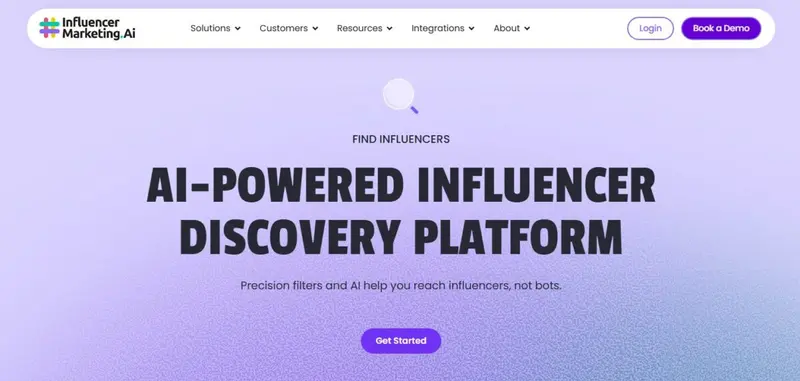
InfluencerMarketing.ai is designed for teams that want more than just a database. Its discovery engine uses AI to analyze posts, bios, and hashtags, helping surface relevant creators quickly.
The Audience Score (0–100) is particularly useful for evaluating credibility, audience quality, and location fit without needing to manually validate profiles.
We like how the platform connects discovery with execution. Outreach, campaign management, and performance tracking are all handled in one system, including the ability to track clicks, orders, revenue, and average order value through unique links or codes.
Where it could improve is transparency. Database size and coverage are not clearly defined, which can make it harder to benchmark against more data-heavy platforms.
Key Features: Influencer Marketplace, Search/Discovery, Influencer Relationship Management, Team Collaboration Tools, Content Review, Campaign Management, Campaign Reporting, Influencer Analysis, Audience Analysis, White Label Reporting, Fake Follower/Fraud Detection, Payment Processing, Social Listening, Client Relationship Management,
Channels: Instagram, YouTube, TikTok, Twitch, Twitter
2. Influencer Hero
Best For: DTC brands and agencies focused on scalable outreach and CRM-driven workflows
Key Influencer Database Value: Combines influencer discovery with outreach automation and first-party data integrations
Pricing: From $454 per month
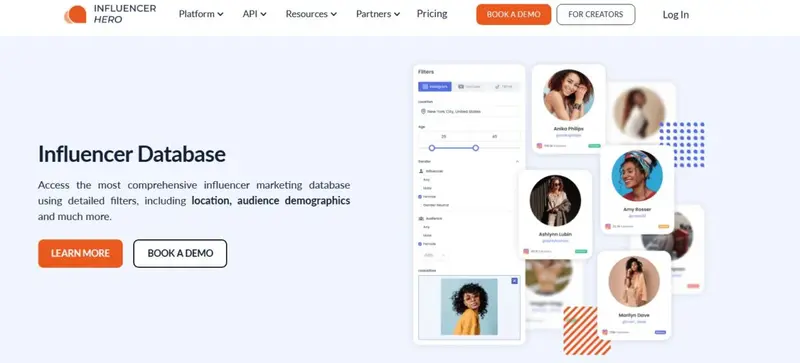
Influencer Hero is built for teams that want to connect discovery with execution. Its influencer database includes detailed filtering across audience demographics, engagement metrics, and location, along with features like lookalike search and fake follower analysis.
We like how it integrates first-party data into discovery. The ability to identify influencers from your own customers, newsletter subscribers, or followers adds a practical layer that most databases do not offer. Outreach is also tightly integrated, with access to contact details and automated email sequences.
Where it could improve is transparency around database size and coverage, which makes it harder to compare directly with larger discovery-first platforms.

Key Features: Influencer Search & Discovery, Relationship Management, Campaign Management, Influencer Outreach and Engagement, Performance Tracking with Audience Demographics and Conversion Attribution, Global Influencer Payment, Fraud Detection and Audience Health, Team Collaboration Tools, Content Library, E-commerce Tools, Product/Gifting Tools, Forms and Compliance, Competitor Research, Exportable reports, Affiliate Management,
Channels: Instagram, TikTok, and YouTube
3. HypeAuditor
Best For: Brands and agencies prioritizing influencer vetting and audience quality analysis
Key Influencer Database Value: Large-scale influencer database with advanced fraud detection and audience quality scoring
Pricing: Upon request
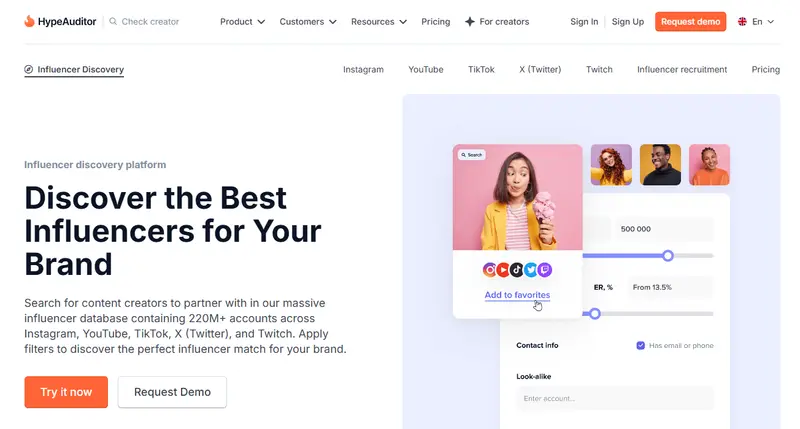
HypeAuditor is built with a clear focus on helping brands avoid poor influencer choices. Its database includes 220M+ creator profiles across major social media platforms, but the real value comes from how it evaluates those creators.
The Audience Quality Score and fraud detection tools make it easier to identify inflated followings and low-quality audiences, which is critical when campaign budgets are involved.
We also like the depth of filtering, particularly for audience demographics and niche discovery. The lookalike feature is useful for expanding campaigns based on creators who already perform well.
Where it needs improvement is on the execution side. Outreach and relationship management are less integrated, so teams often need additional tools to manage campaigns from start to finish.
4. Companion
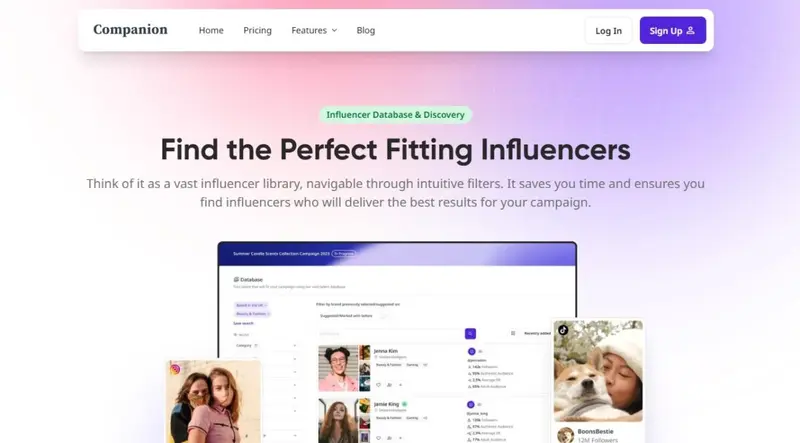
Best For: Teams managing influencer campaigns with a strong focus on tracking and reporting
Key Influencer Database Value: Large-scale creator discovery combined with automated content tracking and real-time analytics
Pricing: From $205 per month
Companion combines influencer discovery with campaign execution, giving teams access to a database of 130M+ creators across major platforms. The filtering is solid, with options to refine by audience, location, and performance, and the lookalike feature helps expand creator lists based on proven profiles.
What we like most is the tracking layer. Companion automatically captures influencer content, including untagged posts, and turns it into real-time performance data. This removes a large part of the manual work typically involved in campaign reporting.
Where it could improve is outreach. While discovery and tracking are well integrated, influencer communication and relationship management are less central compared to more CRM-focused platforms.
5. Favikon
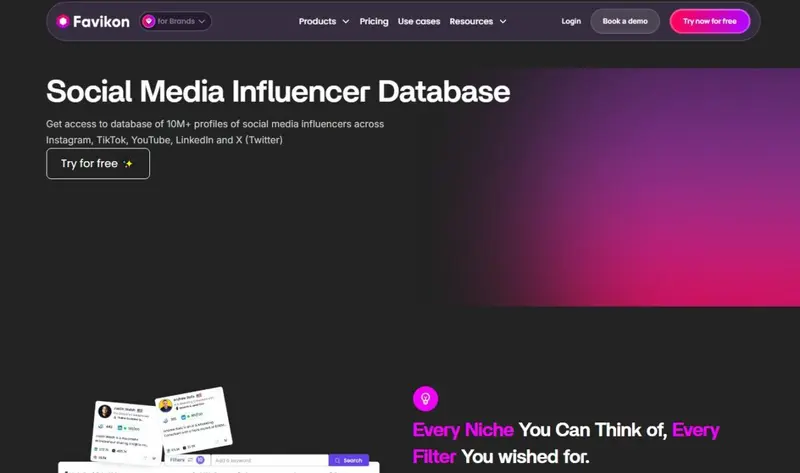
Best For: Brands running multi-platform campaigns, including B2B influencer marketing
Key Influencer Database Value: AI-powered discovery with rankings and authenticity scoring across multiple social platforms
Pricing: From $79 per month
Favikon is built around discovery, with a database of 10M+ creator profiles across platforms, including Instagram, TikTok, YouTube, LinkedIn, and X.
What we like is how it simplifies the selection process. Instead of relying only on raw metrics, the platform uses rankings, badges, and an authenticity score to help surface relevant creators quickly.
The AI search and lookalike features are also useful for scaling campaigns, especially when moving beyond a single platform or niche. Support for LinkedIn adds an extra layer for teams exploring B2B influencer strategies.
Where it could improve is depth. While discovery is strong, the database size is smaller than that of some competitors, and advanced workflow features are less mature than more execution-focused platforms.
How to Choose the Right Influencer Database
Not all influencer database tools are built for the same purpose. Some are designed for large-scale discovery, others for outreach and CRM, and some for content production.
Choosing the right platform depends on how you plan to run your campaigns and what outcomes you care about.
Factors to Consider When Choosing an Influencer Database
Pricing and Contract Structure
Pricing is obviously a factor and oftentimes, the most important factor. If a particular influencer database doesn't fall within your budget, you're obviously going for the next best thing.
Unfortunately, not every database is transparent regarding pricing, as some require you to get in contact with their sales representatives for a quota - case in point, HypeAuditor. On the other hand, some platforms offer transparent monthly pricing, while others require demos and long-term contracts.
Before committing, check what is included at each tier and whether key features like contact access or exports are limited. If pricing is unclear, it often signals a higher-cost enterprise model.
Data Quality and Sourcing
A social media influencer database is only as useful as the data behind it. Look at how the platform collects its data. Tools that rely on direct integrations or opt-in creators tend to offer more accurate metrics than those built purely on public data.
This directly affects how reliable engagement rates, audience demographics, and growth trends are.
Filtering and Discovery Capabilities
At a minimum, an influencer search tool should allow filtering by niche, location, audience demographics, and engagement rate.
More advanced platforms support keyword search, lookalike discovery, and AI-assisted recommendations. IMAI, like many others, supports advanced filters.
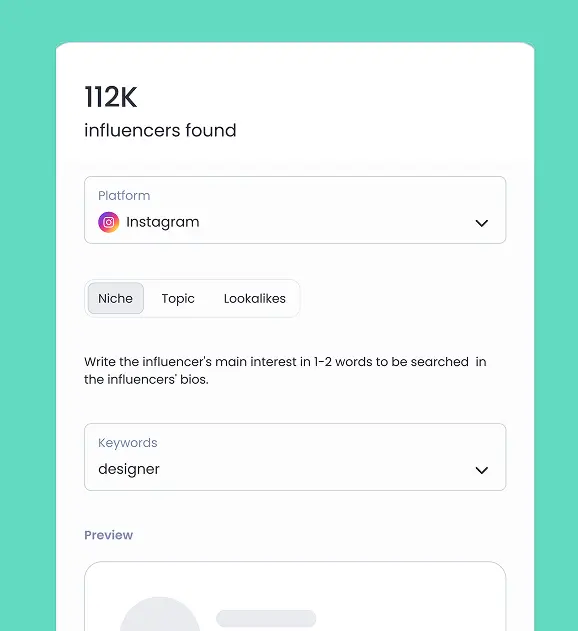
This becomes especially important when searching specifically for a TikTok influencer database or a YouTube influencer database, where content formats and audiences differ.
Influencer Profiles and Insights
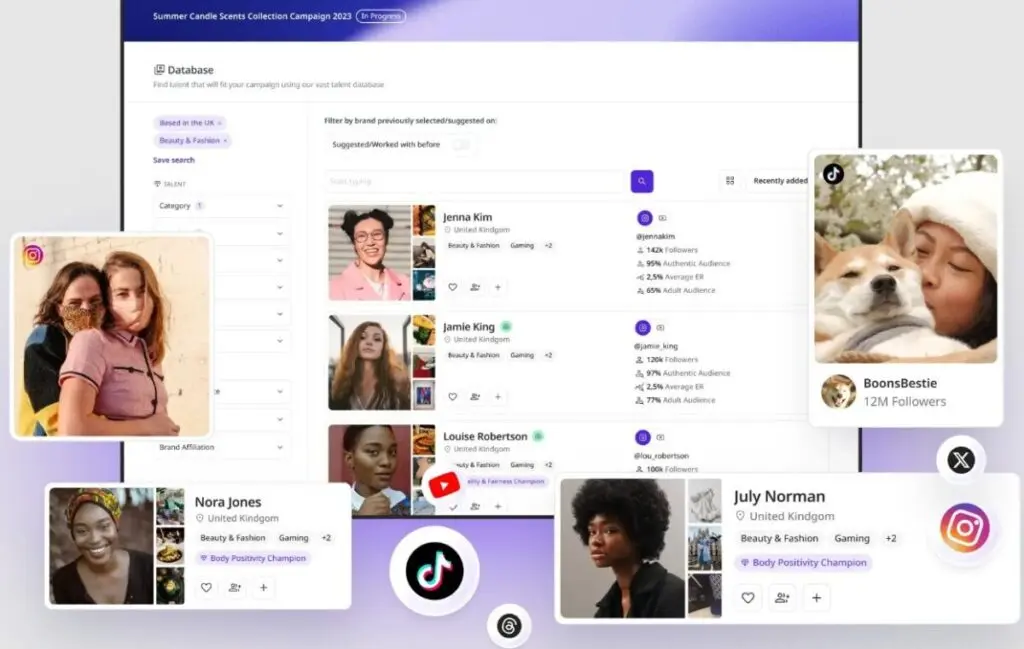
Before reaching out, you need a clear view of each creator. Strong platforms provide detailed profiles that include audience breakdowns, past content, performance metrics, and sometimes estimated pricing.
A detailed influencer profile functionality, like the one Companion offers, is a must-have to ensure campaign fit.
Outreach and Collaboration Features
Some influencer marketing database platforms focus only on discovery, while others include built-in messaging, email automation, or CRM tools. HypeAuditor, for instance, offers built-in collaboration and outreach features.
If you plan to run campaigns at scale, having outreach integrated into the platform can reduce manual work and improve response rates.
Database Type: Opt-in vs Aggregated
There are two main approaches to how an influencer database is built, and this has a direct impact on how you discover and work with creators.
- Opt-in platforms include creators who have actively joined the network. This typically makes outreach easier, since messaging and collaboration happen inside the platform, and data tends to be more reliable. Tools like InfluencerMarketing.ai and Influencer Hero fall closer to this model, combining discovery with built-in outreach and CRM workflows.
- Aggregated databases, on the other hand, pull creator profiles from public social media data. This allows for a much larger scale, but usually requires external outreach and comes with some limitations around data accuracy. Platforms like HypeAuditor and Companion lean more in this direction, offering broad discovery with strong filtering and analytics.
Understanding this distinction helps set expectations. Opt-in platforms prioritize efficiency and collaboration, while aggregated databases prioritize scale and reach.
Use Case and Campaign Goals
The right influencer database also depends on what you are trying to achieve. If your focus is UGC production, you may need platforms with strong creator portfolios and collaboration tools. For brand awareness, discovery, and reach metrics matter more. For sales-driven campaigns, prioritize tools that provide audience insights and conversion tracking.
More on that next.
Ultimately, the best influencer database is the one that aligns with your workflow. Some teams need a pure discovery engine, while others require a full influencer marketing database that supports outreach, tracking, and reporting in one place.
Best Influencer Database Software by Use Case
Not every influencer database is built for the same type of campaign. Some platforms are better suited for discovery at scale, while others are designed for outreach, UGC production, or performance tracking. The best choice depends on your goals and workflow.
Best Influencer Database for TikTok Discovery
For brands focused on short-form video, HypeAuditor and InfluencerMarketing.ai are strong options. Both allow filtering by audience demographics, engagement, and content signals, which are essential when evaluating TikTok creators.
HypeAuditor is better suited for identifying high-quality audiences and avoiding fraudulent accounts, while InfluencerMarketing.ai offers more flexibility for outreach and campaign tracking. The choice depends on whether the priority is vetting or execution.
Best Influencer Database for Ecommerce Brands
Ecommerce teams benefit from platforms that connect discovery with revenue tracking. Influencer Hero is particularly useful here, as it integrates with tools like Shopify and email platforms to identify creators already interacting with your brand.
InfluencerMarketing.ai is another strong option, with built-in tracking for clicks, orders, and revenue. These features make it easier to tie influencer activity directly to sales performance.
Best Influencer Database for UGC Content
When the goal is content production rather than reach, platforms that simplify collaboration are more effective. InfluencerMarketing.ai works well here due to its campaign workflows and creator management tools.
Unlike pure discovery platforms, it allows teams to manage briefs, track deliverables, and evaluate content performance in one place. This is especially useful for brands producing large volumes of ad creatives or social content.
Best Influencer Database for Agencies
Agencies typically need a balance of discovery, filtering, and reporting. Companion is a strong fit, particularly for teams managing multiple campaigns at once. Its ability to track influencer content automatically, including untagged posts, reduces manual reporting work.
HypeAuditor is also widely used for research and vetting, giving agencies confidence in the creators they recommend to clients.
Best Influencer Database for Enterprise Teams
Larger organizations often require deeper analytics and cross-channel insights. Favikon is well-suited for this, with multi-platform coverage that includes LinkedIn alongside traditional social channels.
Its ranking system and authenticity scoring help teams quickly evaluate large numbers of creators, while its broader dataset supports campaigns across both B2C and B2B environments.
Can You Build Your Own Influencer Database?
Yes, but it comes with trade-offs.
Many brands start by building a simple influencer database in a spreadsheet or CRM. This typically includes core details such as names, email addresses, social handles, follower counts, content niches, and location.
As campaigns grow, teams often add fields for outreach status, past collaborations, and performance metrics to keep everything organized in one place.
This approach works well at a smaller scale. It gives you full control over your data, avoids subscription costs, and helps centralize creator relationships instead of relying on scattered emails or DMs. Over time, it can evolve into a valuable internal influencer marketing database built on real campaign experience.
However, maintaining it requires ongoing effort. Data quickly becomes outdated, manual entry is time-consuming, and scaling beyond a few dozen creators can become difficult. Discovery is also limited compared to using a dedicated influencer search tool.
In practice, most teams use a hybrid approach. External platforms are used to discover new creators, while internal systems are used to manage relationships, track outreach, and build a long-term database of proven partners.
Choosing the Right Influencer Database for Your Workflow
Selecting an influencer database is less about finding the most features and more about choosing a tool that fits how your team operates. Some platforms are built for large-scale discovery, while others focus on outreach, CRM, or performance tracking.
The right choice depends on your priorities. If you need reach, prioritize database size and filtering. If you care about efficiency, look for integrated workflows. If performance matters most, focus on analytics and attribution.
For most teams, the best approach is not relying on a single solution. Combining an external influencer database with internal tracking systems allows you to scale discovery while building long-term creator relationships that improve over time.
Frequently Asked Questions
What is an influencer database?
An influencer database is a searchable platform that allows brands to find, evaluate, and connect with creators. It typically includes data such as audience demographics, engagement metrics, content categories, and platform activity to support influencer discovery and campaign planning.
What is the best influencer database?
The best influencer database depends on your needs. Some platforms focus on large-scale discovery, while others prioritize outreach, CRM, or analytics. Brands should evaluate tools based on data accuracy, filtering capabilities, and how well they support campaign execution.
How do you create an influencer database?
You can create an influencer database using a spreadsheet or CRM by storing creator details such as contact information, social profiles, audience data, and campaign history. While this works for smaller programs, most teams combine this with external tools for discovery.
Do influencer databases include email addresses?
Some influencer databases provide email addresses or contact details, while others focus only on discovery. Contact information may come from public sources or opt-in creators, so accuracy can vary depending on the platform.
Are there free influencer databases?
There are free influencer database options, but they are usually limited in scale or functionality. Free tools may restrict access to data, filters, or contact details, making them more suitable for small campaigns or initial research.
What is a TikTok influencer database?
A TikTok influencer database is a platform that focuses on discovering creators specifically on TikTok. It allows brands to filter influencers based on audience demographics, engagement, content style, and performance within the TikTok ecosystem.
What is the difference between an influencer database and an influencer marketplace?
An influencer database is primarily used for discovery and analysis, while an influencer marketplace includes opt-in creators who can be contacted and hired directly within the platform. Marketplaces typically simplify collaboration, while databases offer broader discovery.

