
Influencer marketing budgets continue to climb as brands shift more advertising spend toward creator-led campaigns.
Our 2026 Influencer Marketing Benchmark Report backs up these claims. We found that as 87% of marketers expect influencer marketing budgets to increase in 2026, while 72% anticipate budget increases of more than 50%.
Enterprise investment levels continue to rise alongside that growth. CreatorIQ’s State of Creator Marketing Report found that enterprise brands now spend between $5.6 million and $8.1 million annually on creator marketing programs, reinforcing how influencer partnerships have evolved into a core media channel rather than an experimental tactic.
Macro influencers sit at the center of that shift.
Creators with audiences between 100,000 and 1 million followers offer a balance between large-scale reach and stronger audience trust than celebrity endorsements.
A fashion creator with 250K Instagram followers can generate millions of Reel views during a product launch, while a 700K-subscriber YouTube tech creator may drive high-intent purchase traffic through long-form reviews and integrations.
But how much do macro influencers typically charge? Macro influencer rates typically range from $5,000 to more than $50,000 per campaign, depending on the platform, deliverables, audience demographics, exclusivity requirements, usage rights, and engagement quality.
A single Instagram Reel from a 150K-follower beauty creator may cost $4,000 to $8,000, while a cross-platform package from a 900K-follower finance creator that includes YouTube integrations, TikTok videos, and paid usage rights can exceed $40,000.
However, follower count alone no longer gives brands enough information to evaluate creator pricing accurately. Usage rights, exclusivity clauses, production quality, platform, and campaign scope now play a major role in pricing decisions.
In this guide, we’ll break down how macro influencer rates work across major platforms, what brands are actually paying for, and how marketers can evaluate whether a creator partnership justifies the cost.
What Is a Macro Influencer?
Macro influencers are creators with audiences between 100,000 and 1 million followers. Most marketers split the category into smaller sub-tiers because pricing, engagement, and campaign expectations change significantly across that range.
|
Macro Influencer Segment |
Typical Follower Range |
Common Characteristics |
| Lower Macro | 100K–250K | Higher engagement rates, more affordable partnerships, often still creator-managed |
| Mid Macro | 250K–500K | Strong reach-to-engagement balance, polished production quality, recurring brand deals |
| Upper Macro | 500K–1M | Large-scale reach, premium pricing, agency or manager representation, cross-platform campaigns |
Platform dynamics also influence how macro influencers monetize their audiences.
A 300K-follower Instagram fashion creator may command premium pricing through high-performing Reels and branded content aesthetics, while a YouTube tech creator with a similar audience size may justify higher sponsorship fees through long-form product education and stronger watch-time metrics.
TikTok creators increasingly combine flat-fee partnerships with affiliate structures, TikTok Shop commissions, and Spark Ads licensing agreements.
Reach remains one of the biggest advantages macro influencers offer to brands. With average engagement rates of around 2.05% for macro influencers, a creator with 700K followers generates roughly 143,500 interactions per post, giving brands rapid exposure during product launches, seasonal campaigns, and major awareness pushes.
Large brands typically partner with macro influencers when campaign goals prioritize:
- Broad audience reach
- Faster awareness growth
- Cross-platform visibility
- Premium brand positioning
- Large-scale product launches
Smaller creators often deliver stronger engagement efficiency, but macro influencers provide the scale and visibility many enterprise campaigns require.
A single macro creator can generate millions of impressions across Instagram, TikTok, and YouTube within days, reducing the need to coordinate dozens of smaller partnerships simultaneously.
How Much Do Macro Influencers Charge?
Macro influencer rates vary heavily depending on the platform, content format, audience demographics, engagement quality, and licensing requirements attached to the campaign.
A creator producing a single Instagram feed post will usually charge far less than a creator delivering a cross-platform package with Reels, TikTok videos, paid usage rights, and exclusivity clauses.
Industry also matters. Finance, technology, and luxury creators often command premium pricing because their audiences carry higher purchasing power and stronger conversion potential.
Let's look at how much macro influencers charge, taking all of these factors into account.
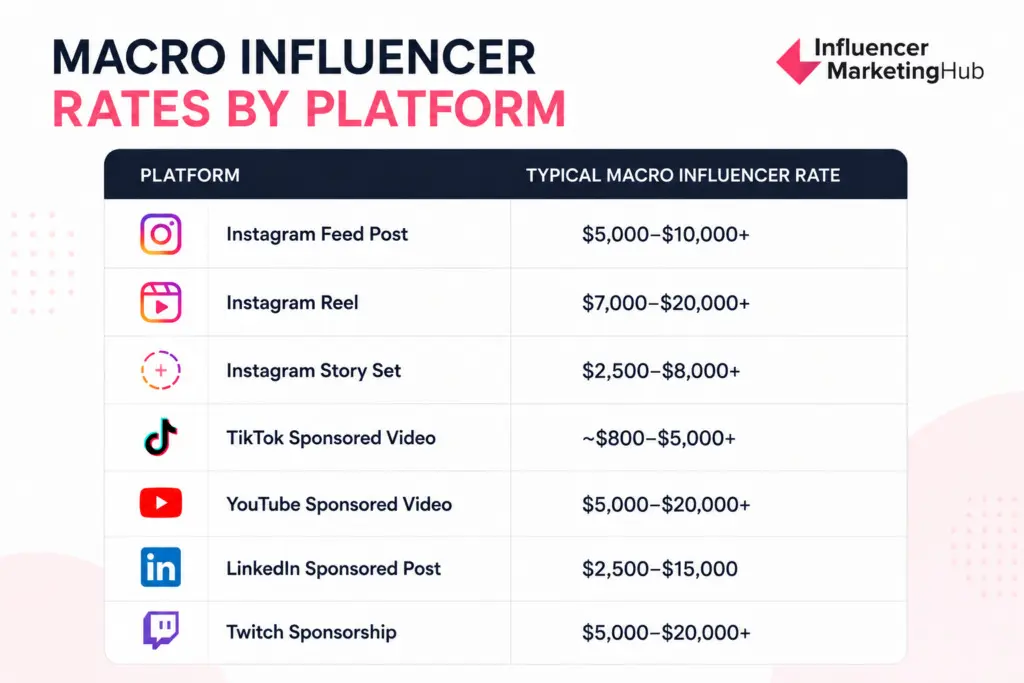
Instagram Macro Influencer Rates
Instagram remains one of the most active platforms for macro influencer partnerships, especially across beauty, fashion, fitness, travel, and lifestyle categories.
Feed posts from macro influencers generally range between $5,000 and $10,000+, while Reels often command significantly higher pricing because short-form video continues to receive stronger algorithmic distribution and higher advertiser demand.
Story campaigns usually fall between $2,500 and $8,000, depending on frame count, link integrations, and campaign complexity.
A macro beauty creator with 300K followers may charge $8,000 for a branded Reel package that includes Story frames and limited usage rights. Upper macro creators approaching 1 million followers can exceed $20,000 per Reel once paid amplification rights, exclusivity terms, and cross-platform distribution are added to the campaign.
Want More Accurate Instagram Pricing Benchmarks?
Instagram pricing changes quickly across Reels, Stories, carousel posts, usage rights, and long-term creator partnerships.
Our full guide to Instagram Influencer Rates breaks down platform-specific pricing benchmarks, engagement expectations, and real campaign cost ranges across every influencer tier.
TikTok Macro Influencer Rates
TikTok pricing remains more volatile than Instagram because performance expectations vary heavily across niches and campaign types. Sponsored TikTok videos from macro creators generally range from roughly $800 to $5,000 per post, though rates climb significantly once brands add Spark Ads licensing, exclusivity, affiliate structures, or TikTok Shop integrations.
Conversion-focused TikTok creators often command premium pricing regardless of follower count because brands increasingly prioritize measurable sales performance alongside reach. A creator consistently driving strong TikTok Shop conversions may outperform much larger creators with weaker purchase intent audiences.
Trying to Budget for TikTok Campaigns More Accurately?
TikTok creator pricing changes rapidly across sponsored videos, TikTok Shop campaigns, affiliate partnerships, and Spark Ads licensing deals.
Our full TikTok Influencer Rates guide breaks down current pricing benchmarks, platform-specific trends, and the factors driving creator costs across every audience tier.
YouTube Macro Influencer Rates
YouTube remains one of the most expensive creator platforms because long-form content requires significantly more production work and audience attention than short-form social content.
Macro YouTube creators generally charge between $5,000 and $20,000+ per sponsored video, depending on subscriber count, average views, audience retention, and integration complexity.
Subscriber count alone rarely determines YouTube pricing. Brands closely evaluate:
- Average video views
- Watch time
- Audience retention
- Click-through performance
- Niche authority
A finance creator with 250K subscribers and strong audience retention may command higher sponsorship rates than a general entertainment creator with double the audience size. Evergreen YouTube content also creates long-tail value because sponsored integrations can continue generating traffic and conversions months after publication.
Planning a YouTube Sponsorship Campaign?
YouTube influencer pricing operates very differently from short-form platforms because production effort, watch time, audience retention, and evergreen traffic all influence sponsorship value.
Our full YouTube Influencer Rates guide breaks down current pricing benchmarks, integration costs, and platform-specific factors that shape creator pricing across every subscriber tier.
LinkedIn Macro Influencer Rates
LinkedIn creator partnerships operate differently from consumer-focused influencer campaigns. B2B audiences often carry higher contract values, which allows professional creators to command premium pricing even with smaller audiences.
Macro LinkedIn creators typically charge between $2,500 and $15,000 per sponsored post, depending on industry specialization, audience seniority, and campaign complexity.
SaaS, fintech, consulting, and AI creators frequently sit at the higher end of that range because enterprise software deals and B2B lead generation campaigns carry substantially higher customer lifetime values.
Twitch and Livestream Sponsorship Rates
Gaming, sports, and entertainment brands frequently partner with macro livestream creators through Twitch sponsorships and branded streaming integrations. Pricing usually ranges from $5,000 to more than $20,000, depending on concurrent viewership, stream length, and sponsorship placement.
Livestream campaigns often include:
- Branded overlays
- Product integrations
- Sponsored gameplay
- Live shoutouts
- Giveaway activations
- Affiliate promotions
Viewer engagement plays a major role in livestream pricing because active chat participation and audience interaction directly influence campaign visibility and conversion potential.
The Biggest Factors Driving Macro Influencer Pricing
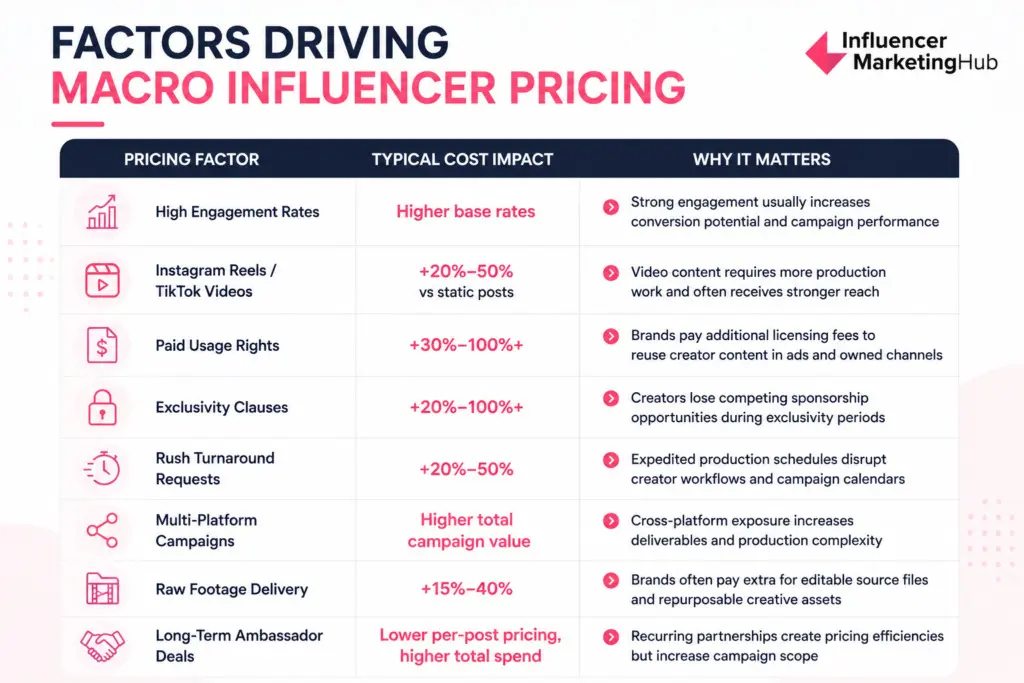
Follower count still influences influencer pricing, but modern creator campaigns involve far more variables than audience size alone. Two macro creators with similar follower counts can charge dramatically different rates depending on engagement quality, production standards, licensing requirements, audience demographics, and campaign complexity.
For example, a 200K-follower creator consistently driving strong product conversions may command higher pricing than a 600K-follower creator with weaker audience interaction and lower campaign performance.
Engagement Quality and Audience Performance
Engagement quality often matters more than raw follower count, especially for performance-focused campaigns. Brands increasingly evaluate metrics such as saves, shares, comments, watch time, click-through rates, and conversion history before approving creator budgets.
A macro creator with a highly active audience can generate stronger campaign performance than a significantly larger creator with passive followers.
Finance, beauty, fitness, and technology creators with strong purchase-intent audiences frequently command premium pricing because their recommendations directly influence buying behavior.
Production Complexity and Video Content
Video-first campaigns usually increase pricing by roughly 20% to 50% compared to standard static posts because creators spend additional time scripting, filming, editing, lighting, and revising content. Instagram Reels, TikTok videos, and YouTube integrations often require multiple production stages before publication.
A travel creator producing cinematic destination footage with drone shots and professional editing will naturally charge more than a creator posting a simple lifestyle image. Brands requesting multiple filming locations, custom graphics, voiceovers, or revision rounds can push campaign pricing even higher.
Usage Rights and Whitelisting
Paid usage rights represent one of the highest hidden costs in influencer marketing campaigns. Brands frequently increase campaign budgets by 30% to more than 100% once creator content is repurposed for paid advertising campaigns, landing pages, email marketing, retail media placements, and owned social channels.
A creator charging $8,000 for an Instagram Reel may increase the total campaign value to $15,000 or more once paid social licensing or whitelisting rights are added. TikTok Spark Ads and Meta whitelisting agreements have become especially valuable because creator-led ads often outperform traditional branded creative in performance campaigns.
Exclusivity Clauses and Campaign Restrictions
Exclusivity clauses commonly increase influencer pricing by 20% to more than 100%, depending on the category restriction and campaign duration. A skincare creator signing a 90-day exclusivity agreement with one cosmetics company may lose several competing sponsorship opportunities during that period, which significantly increases the value of the deal.
Beauty, fintech, gaming, SaaS, fitness supplements, and consumer electronics campaigns frequently involve stricter exclusivity terms because those industries compete aggressively for creator attention and audience share.
Rush Turnarounds and Raw Footage Requests
Expedited production timelines often increase pricing by 20% to 50% because creators must rearrange production schedules and prioritize campaign delivery over other brand partnerships. Rush campaigns become especially expensive during peak advertising periods such as Black Friday, holiday launches, and seasonal product drops.
Raw footage delivery also adds meaningful costs to creator agreements. Brands requesting editable source files, unused clips, or repurposable creative assets typically pay 15% to 40% more because creators give up additional control over how their content is edited and distributed after delivery.
Multi-Platform Campaigns and Ambassador Partnerships
Multi-platform campaigns naturally increase total deal value because creators produce and adapt content across Instagram, TikTok, YouTube, and livestream platforms simultaneously. A creator producing a Reel, TikTok video, Story sequence, and YouTube integration for the same campaign will usually command significantly higher pricing than a single-platform partnership.
Long-term ambassador deals work differently. Quarterly and annual creator partnerships often reduce per-post pricing while increasing overall campaign spend through larger recurring retainers.
Enterprise brands frequently favor ambassador structures because repeated creator exposure tends to improve audience trust, brand recall, and long-term conversion performance compared to isolated sponsored posts.
Are Macro Influencers Worth the Cost?
Macro influencer campaigns usually require larger budgets, but higher pricing does not automatically mean weaker ROI.
Campaign objectives play a major role in determining whether macro creators justify the investment. A creator charging $20,000 for a cross-platform launch campaign may outperform dozens of smaller partnerships when the goal is rapid awareness, broad reach, and large-scale visibility within a short timeframe.
|
Campaign Goal |
Macro Influencers |
Micro Influencers |
| Brand Awareness | Stronger reach at scale | Slower cumulative reach |
| Engagement Rate | Usually lower | Usually higher |
| Campaign Management | Easier to manage | More operational complexity |
| Speed of Audience Reach | Faster | Slower |
| Prestige Positioning | Stronger social proof | More community-driven trust |
| Cost Efficiency | Lower CPE efficiency | Higher engagement efficiency |
| Cross-Platform Visibility | More common | Less common |
Awareness vs Performance Campaigns
Macro influencers often perform best during awareness-focused campaigns where brands need large-scale exposure quickly.
Product launches, seasonal campaigns, retail expansions, and major brand announcements frequently benefit from macro creators because a single sponsored campaign can generate millions of impressions across Instagram, TikTok, and YouTube within days.
Engagement efficiency, however, tends to decline as follower counts increase. Our data shows Instagram micro influencers averaging roughly 3.86% engagement, while larger macro and mega creators often fall closer to the 1%–2% range.
Smaller creators usually maintain tighter audience relationships, which can improve comment quality, saves, shares, and conversion efficiency during performance-focused campaigns.
Cost Per Engagement and Reach Efficiency
Macro influencers typically generate higher total interaction volume even when engagement percentages appear lower. Campaign economics become more nuanced when comparing engagement efficiency directly. Consider a simplified example:
|
Campaign Structure |
Estimated Spend | Total Engagements |
Estimated Cost Per Engagement |
| 1 Macro Creator | $15,000 | 8,400 | ~$1.79 |
| 10 Micro Creators | $15,000 | 24,500 | ~$0.61 |
Micro creators often produce lower cost-per-engagement metrics, but macro creators offer operational simplicity, stronger visibility concentration, and broader social reach. Enterprise brands frequently accept higher CPE costs when awareness speed and large-scale exposure matter more than pure engagement efficiency.
Operational Complexity and Campaign Management
Managing a single macro creator partnership is often operationally easier than coordinating dozens of smaller creator relationships simultaneously. Large multi-creator campaigns require:
- Contract management
- Briefing coordination
- Approval workflows
- Payment processing
- Revision handling
- Content tracking
- Reporting consolidation
A single macro creator partnership may cost more upfront, but the reduced administrative workload can offset part of the premium for lean marketing teams and enterprise campaigns operating on aggressive launch timelines.
Prestige Positioning and Social Proof
Luxury, beauty, fashion, travel, and technology brands frequently partner with macro influencers because creator status itself influences consumer perception. A recognizable creator associated with a premium product launch can strengthen brand positioning beyond direct conversion metrics alone.
@charlesgross Follow My Bag Through Fashion Week: Episode 2, Meet My Bag 💙 What should we name it! 💙 @Fashionphile #fashionphilepartner #ad
High-visibility creator partnerships also generate secondary value through reposts, earned media, retailer interest, and broader social discussion. A macro creator campaign may therefore contribute to brand awareness and market positioning in ways that extend beyond immediate clicks or tracked sales attribution.
When Macro Influencers Make the Most Sense
Macro influencer campaigns generally deliver the strongest value when brands prioritize:
- Rapid awareness growth
- National product launches
- Cross-platform visibility
- Prestige positioning
- Large-scale retail campaigns
- Seasonal promotional pushes
- Broad demographic reach
Smaller creators often remain the better choice for community engagement and highly targeted conversion campaigns, but macro influencers continue to play a major role in modern media planning because they combine creator trust with large-scale audience exposure.
How Brands Should Evaluate Macro Influencers Before Paying
Not every macro influencer justifies premium pricing.
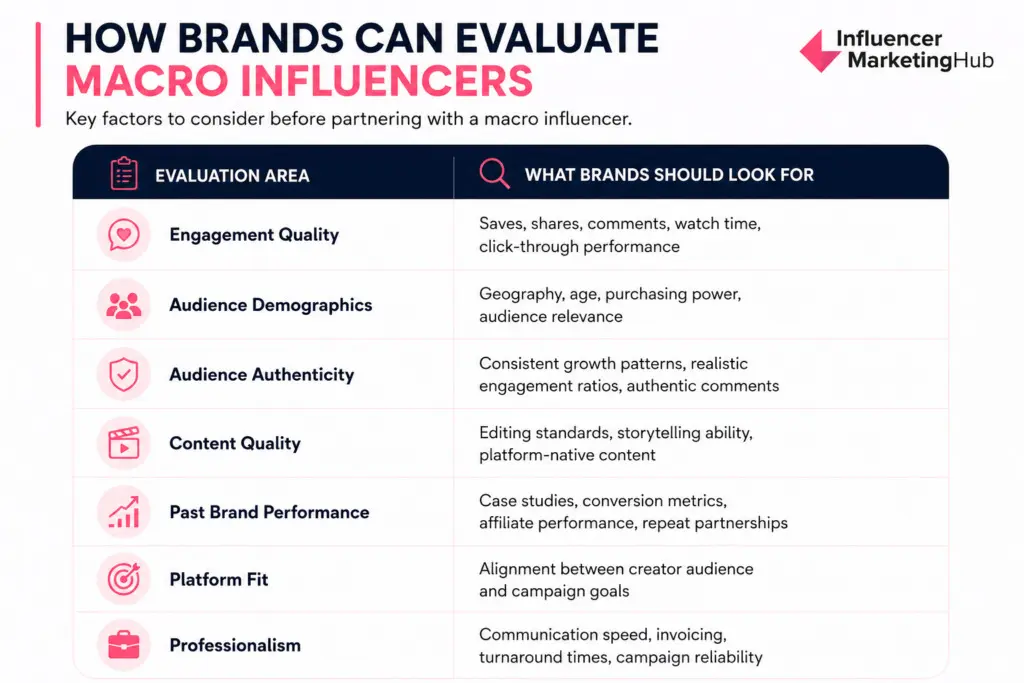
Large follower counts can create impressive top-line reach numbers, but audience quality, engagement consistency, and campaign performance matter far more when evaluating whether a creator partnership will actually deliver results.
Engagement Quality Matters More Than Likes
Surface-level engagement metrics rarely tell the full story. Brands increasingly evaluate saves, shares, comments, average watch time, click-through rates, and conversion activity because those metrics provide stronger signals of audience attention and purchase intent.
Comment quality also matters. Generic comments filled with emojis or repetitive phrases often signal weak audience interaction or automated engagement activity. Strong creator communities usually generate meaningful discussions, product questions, and active audience participation around sponsored content.
Audience Demographics Can Change Campaign Value Completely
Audience composition often determines whether a creator partnership aligns with campaign goals.
Geography plays a major role in pricing because audiences located in the United States, the United Kingdom, Canada, and Western Europe generally carry higher purchasing power than lower-value international traffic.
A SaaS company targeting U.S.-based marketing executives will evaluate creator audiences very differently from a beauty brand targeting Gen Z consumers globally. Age distribution, gender mix, income level, and audience interests all influence whether a creator’s audience matches the intended customer profile.
Fake Followers and Inflated Metrics Remain a Major Risk
Follower inflation remains a problem across influencer marketing, especially among larger creator accounts. Sudden follower spikes, unusually low engagement ratios, and repetitive comment patterns can all indicate artificial audience growth.
Brands frequently use influencer analytics platforms to review:
- follower growth trends
- audience authenticity scores
- engagement consistency
- suspicious audience locations
- bot activity indicators
Want to Verify Influencer Audiences Before Signing a Deal?
Fake followers, inflated engagement, and weak audience quality can dramatically reduce campaign performance even when a creator appears successful on the surface.
Our full guide on How to Run an Influencer Audit breaks down the exact metrics, tools, and warning signs brands should evaluate before committing influencer marketing budgets.
Content Quality Directly Influences Campaign Performance
Production quality heavily affects how audiences respond to sponsored content. Strong macro creators understand platform-native storytelling, pacing, editing, and retention optimization across Instagram, TikTok, and YouTube.
High-performing creators typically maintain:
- Consistent visual quality
- Recognizable brand identity
- Strong on-camera delivery
- Platform-specific editing styles
- Effective call-to-action placement
A creator producing polished, audience-aligned sponsored content will usually outperform campaigns that feel overly scripted or disconnected from the creator’s normal posting style.
Past Brand Performance Often Predicts Future Results
Case studies and previous campaign performance provide some of the strongest indicators of creator value. Brands increasingly ask creators to share:
- Engagement benchmarks
- Affiliate sales results
- Conversion metrics
- Audience retention data
- Previous partnership examples
Creators with recurring sponsorships from recognizable brands often command premium pricing because repeat partnerships usually signal reliable campaign performance and strong advertiser satisfaction.
Professionalism Reduces Campaign Risk
Reliable creators frequently command higher pricing because operational consistency matters heavily during campaign execution. Delayed responses, missed deadlines, inconsistent deliverables, and poor communication can create significant problems for marketing teams working on strict launch schedules.
Brands, therefore, evaluate:
- Communication speed
- Contract management
- Invoicing reliability
- Revision handling
- Content delivery consistency
A creator with strong campaign management processes may justify higher pricing simply because the partnership reduces execution risk for the brand team.
Macro Influencer Pricing Requires More Than a Rate Card
Macro influencer campaigns can range from a few thousand dollars to six-figure ambassador partnerships, depending on the creator, platform, campaign scope, licensing terms, and audience quality involved. Follower count alone no longer provides enough context for brands evaluating creator partnerships.
Engagement quality, conversion performance, production standards, and paid media rights now play a major role in determining whether a creator partnership delivers real business value.
Strong influencer marketing strategies, therefore, focus less on finding the cheapest creator and more on finding the right creator for the campaign objective.
Modern creator partnerships increasingly function like media investments rather than one-off sponsorships. Brands that evaluate creators strategically, negotiate licensing carefully, and align campaign goals with platform strengths will usually generate far stronger long-term returns from macro influencer marketing campaigns.
Frequently Asked Questions
How much do macro influencers charge per post?
Macro influencers typically charge between $5,000 and $20,000+ per sponsored post depending on the platform, audience quality, engagement rate, deliverables, and licensing requirements. YouTube sponsorships and cross-platform campaigns often exceed those ranges.
What qualifies as a macro influencer?
Most marketers define macro influencers as creators with audiences between 100,000 and 1 million followers. Many brands further divide the category into lower macro, mid macro, and upper macro segments because pricing and campaign expectations vary significantly across that range.
Why do macro influencer rates vary so much?
Macro influencer pricing changes based on several factors including engagement quality, production complexity, paid usage rights, exclusivity clauses, audience demographics, platform, and campaign scope. Two creators with similar follower counts can charge very different rates depending on audience performance and deliverables.
Are macro influencers worth the cost?
Macro influencers can deliver strong value for awareness-focused campaigns, product launches, and large-scale brand visibility efforts. Smaller creators often generate higher engagement efficiency, but macro influencers provide faster reach, stronger social proof, and easier campaign management at scale.
How much do macro influencers charge for Instagram Reels?
Macro Instagram creators generally charge between $7,000 and $20,000+ for branded Reels depending on follower count, engagement quality, production standards, and usage rights.
How much do TikTok macro influencers charge?
Macro TikTok influencers usually charge between roughly $800 and $5,000+ per sponsored video. Pricing increases once brands add Spark Ads licensing, exclusivity, affiliate agreements, or TikTok Shop integrations.
Why do YouTube macro influencers charge more?
YouTube sponsorships require significantly more production work, scripting, editing, and audience retention optimization than short-form content. Sponsored videos also continue generating views and conversions long after publication, which increases long-term campaign value.
Do brands pay extra for usage rights?
Yes. Paid usage rights, whitelisting, and Spark Ads licensing frequently increase influencer campaign costs by 30% to more than 100% because brands reuse creator content across paid advertising and owned media channels.
How can brands verify whether a macro influencer has fake followers?
Brands typically review engagement consistency, follower growth trends, audience authenticity scores, comment quality, and suspicious traffic patterns using influencer analytics tools before approving creator partnerships.
What industries pay the highest macro influencer rates?
Finance, technology, beauty, luxury, SaaS, gaming, and fitness brands often pay premium influencer rates because those industries compete aggressively for high-converting creator audiences.


