Spotify Ads Manager is a self-serve podcast, audio, and video advertising platform for brands and creators.
Unlike traditional audio advertising, advertisers don't need to negotiate directly with a sales team to get started. Spotify Ads Manager is a self-service platform that lets businesses create campaigns, define audiences, set budgets, upload creative assets, and measure results from a single dashboard.
Spotify's scale is one reason many advertisers explore the platform. Spotify reported 678 million monthly active users and 268 million Premium subscribers globally. Their audience spans music listeners, podcast fans, commuters, fitness enthusiasts, and countless other interest groups.
Audio advertising also offers something many digital channels struggle to replicate: attention.
Listeners often engage with Spotify during activities like commuting, exercising, working, or relaxing, creating opportunities for brands to reach people in moments when they are actively consuming content rather than scrolling through a crowded feed.
Spotify Ads Manager isn't simply another version of Google Ads or Meta Ads, though. Targeting, measurement, and campaign strategy work differently in an audio-first environment. Campaign objectives, attribution expectations, and creative formats all require a slightly different approach.
Marketers evaluating Spotify as part of their media mix need to understand those differences before investing budget.
This guide explains how Spotify Ads Manager works, available ad formats, audience targeting options, campaign objectives, reporting capabilities, advertising costs, and where the platform fits within a broader digital advertising strategy.
Spotify for Creators - Start Now
- Spotify Ads Manager vs Spotify Ad Studio
- How Spotify Ads Manager Works
- Spotify Ad Formats Explained
- Audience Targeting Capabilities
- Campaign Objectives Available in Spotify Ads Manager
- Spotify Pixel and Conversion Tracking
- How Much Does Spotify Advertising Cost?
- Pros and Cons of Advertising on Spotify
- Spotify Ads Manager vs Other Advertising Platforms
- Is Spotify Ads Manager Worth It for Advertisers?
- Frequently Asked Questions
Spotify Ads Manager vs Spotify Ad Studio
Spotify Ads Manager Definition
Spotify Ads Manager is Spotify's self-service advertising platform. Brands, agencies, and businesses can use it to create, launch, and manage advertising campaigns across Spotify's music and podcast ecosystem without working directly with Spotify's sales team.
Many marketers may remember Spotify Ad Studio, which served a similar purpose. Spotify Ads Manager has since become the platform's primary self-service solution, bringing campaign creation, audience targeting, reporting, and measurement tools into a single interface.
From a practical standpoint, Spotify Ads Manager works much like other digital advertising platforms. Advertisers choose a campaign objective, define their audience, set a budget, upload creative assets, and monitor performance once campaigns go live.
The difference lies in the environment.
Google Ads reaches people who are actively searching for information. Meta Ads reaches people while they browse social feeds. Spotify reaches people while they listen to music and podcasts. The distinction influences everything from creative strategy to performance expectations.
Advertisers can use Spotify Ads Manager to run several types of campaigns, including audio ads, video ads, display ads, and podcast advertising. Audience targeting options allow brands to reach listeners based on factors such as demographics, location, interests, listening behavior, and device usage.
For many advertisers, one of the biggest advantages is accessibility. Smaller businesses can launch campaigns without committing to the large budgets that have traditionally been associated with radio and audio advertising.
Larger brands, meanwhile, can use Spotify Ads Manager as part of a broader media strategy that includes channels like Google, Meta, YouTube, and TikTok.
Quick Overview of Spotify Ads Manager
| Feature | Spotify Ads Manager |
| Self-service advertising platform | Yes |
| Audio advertising | Yes |
| Video advertising | Yes |
| Podcast advertising | Yes |
| Display advertising | Yes |
| Audience targeting | Yes |
| Conversion tracking | Yes |
| Campaign reporting | Yes |
At its core, Spotify Ads Manager gives advertisers direct access to Spotify's advertising inventory while providing the targeting, measurement, and campaign management tools needed to run campaigns at scale.
How Spotify Ads Manager Works
Getting started with Spotify Ads Manager follows a process that will feel familiar to anyone who has used platforms like Google Ads or Meta Ads.
Advertisers create an account, select a campaign objective, define an audience, set a budget, upload creative assets, and launch their campaign. Spotify then delivers ads to eligible listeners based on the targeting criteria and campaign settings selected during setup.
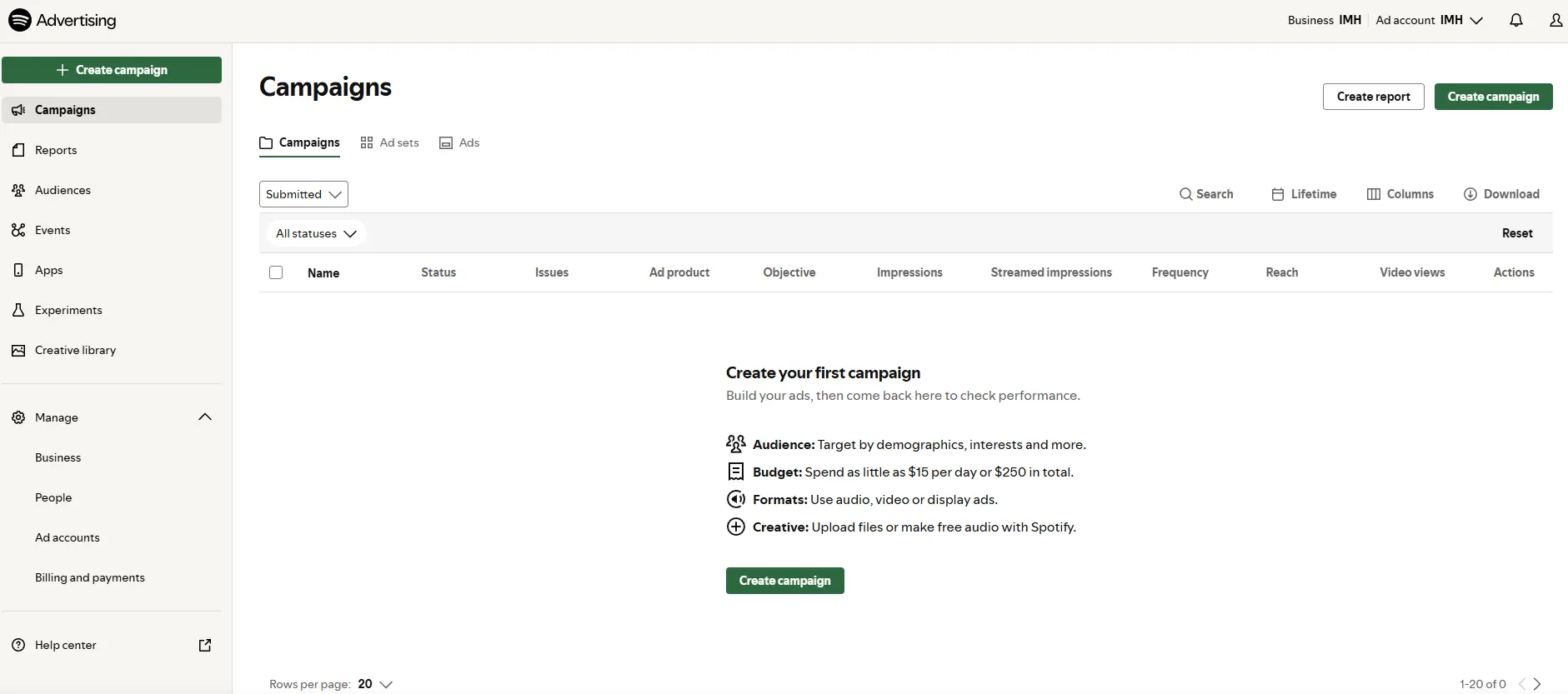
The overall workflow is straightforward, but the decisions made during setup can have a significant impact on campaign performance.
How the Process Works
1. Create an Ads Manager account
2. Choose a campaign objective
3. Define your target audience
4. Set your budget and schedule
5. Upload creative assets
6. Launch the campaign
7. Monitor and optimize performance
Campaign Setup
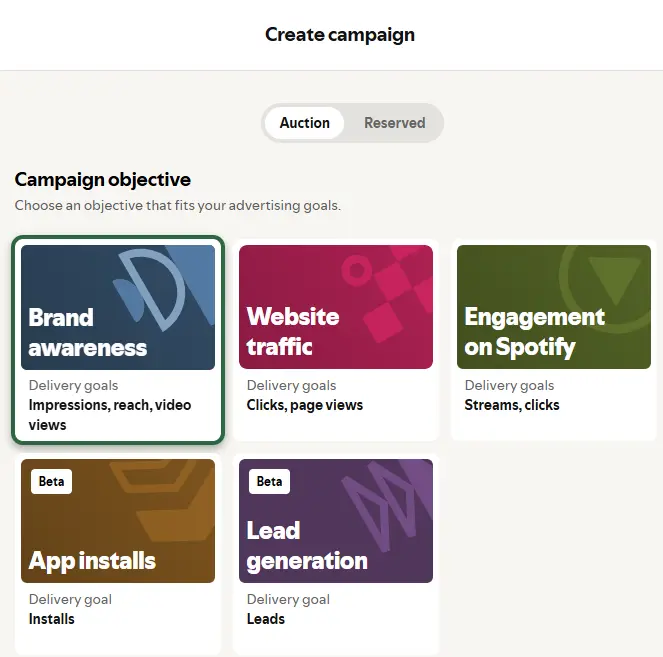
Every campaign begins with an objective.
Spotify Ads Manager allows advertisers to align campaigns with specific outcomes, whether the goal is increasing reach, driving website traffic, generating app installs, or encouraging conversions.
Objective selection matters because it influences how campaigns are optimized and which metrics become most important during reporting.
A brand introducing a new product may prioritize reach and awareness. An ecommerce company promoting a seasonal offer may focus on traffic or conversions instead.
Audience Selection
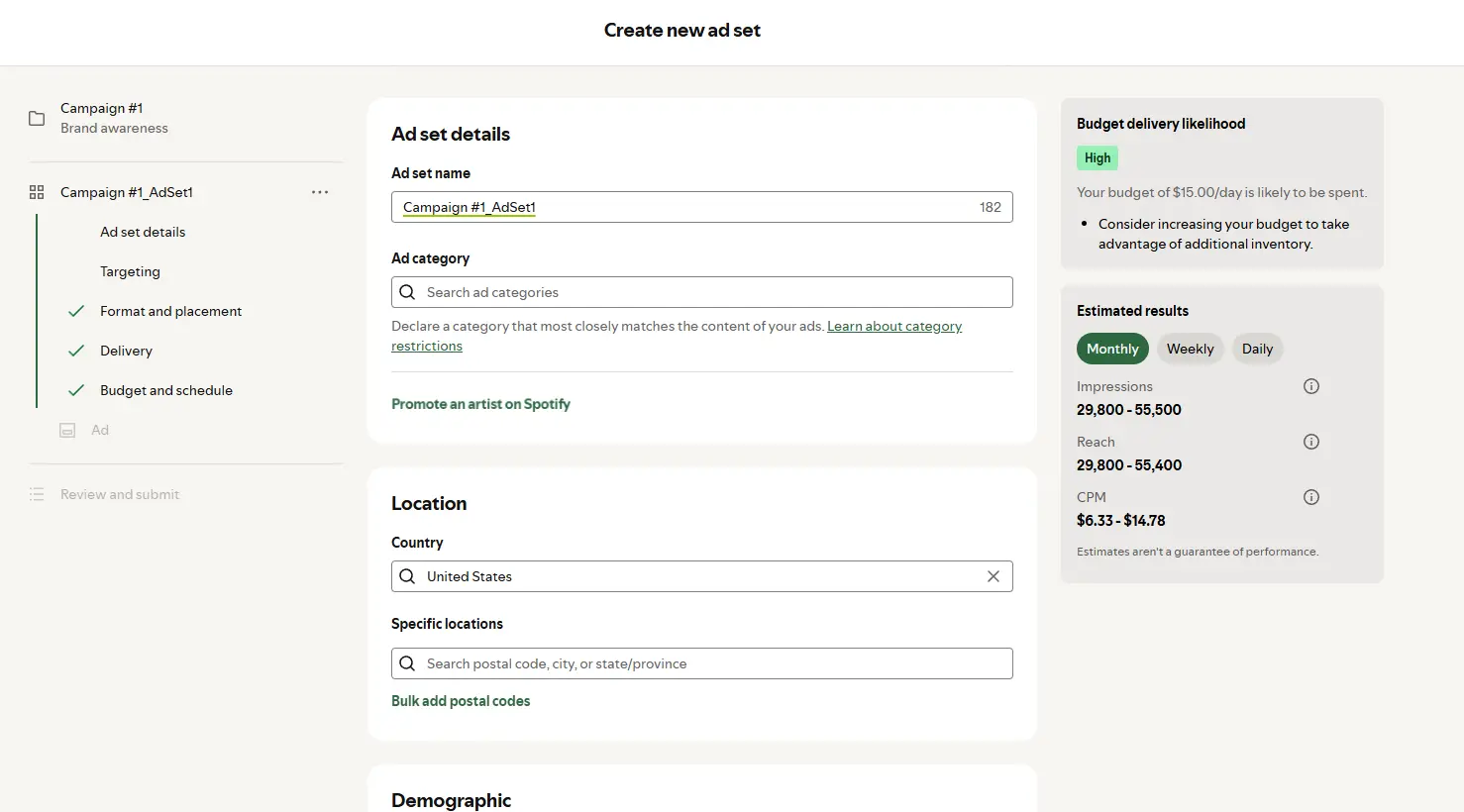
Once an objective is selected, advertisers define who they want to reach.
Spotify offers several audience targeting options, including demographics, geography, interests, listening behaviors, and device usage. Campaigns can target broad audiences for awareness initiatives or narrower segments designed around specific customer profiles.
Many marketers view audience targeting as one of Spotify's strongest capabilities. Listening behavior can reveal interests and habits that may not be obvious through traditional demographic targeting alone.
Budget and Scheduling
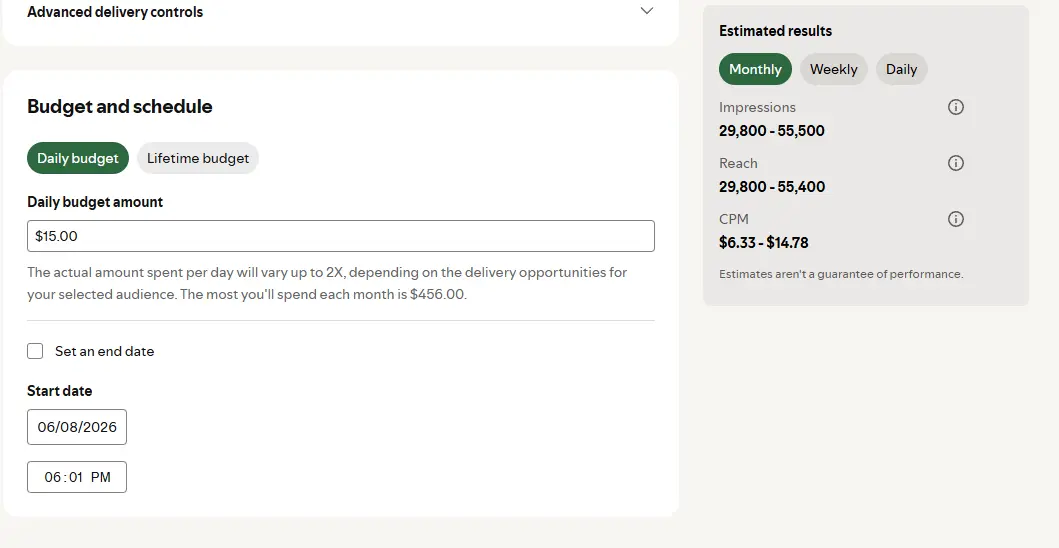
Spotify Ads Manager allows advertisers to control campaign budgets directly within the platform.
Budgets can be set at the campaign level, while schedules determine when ads begin and end. Advertisers can test smaller budgets before scaling campaigns, making the platform accessible to both local businesses and larger brands.
Budget decisions should align with campaign goals. Awareness campaigns often require broader reach, while conversion-focused campaigns may benefit from more targeted audience segments.
Creative Uploads
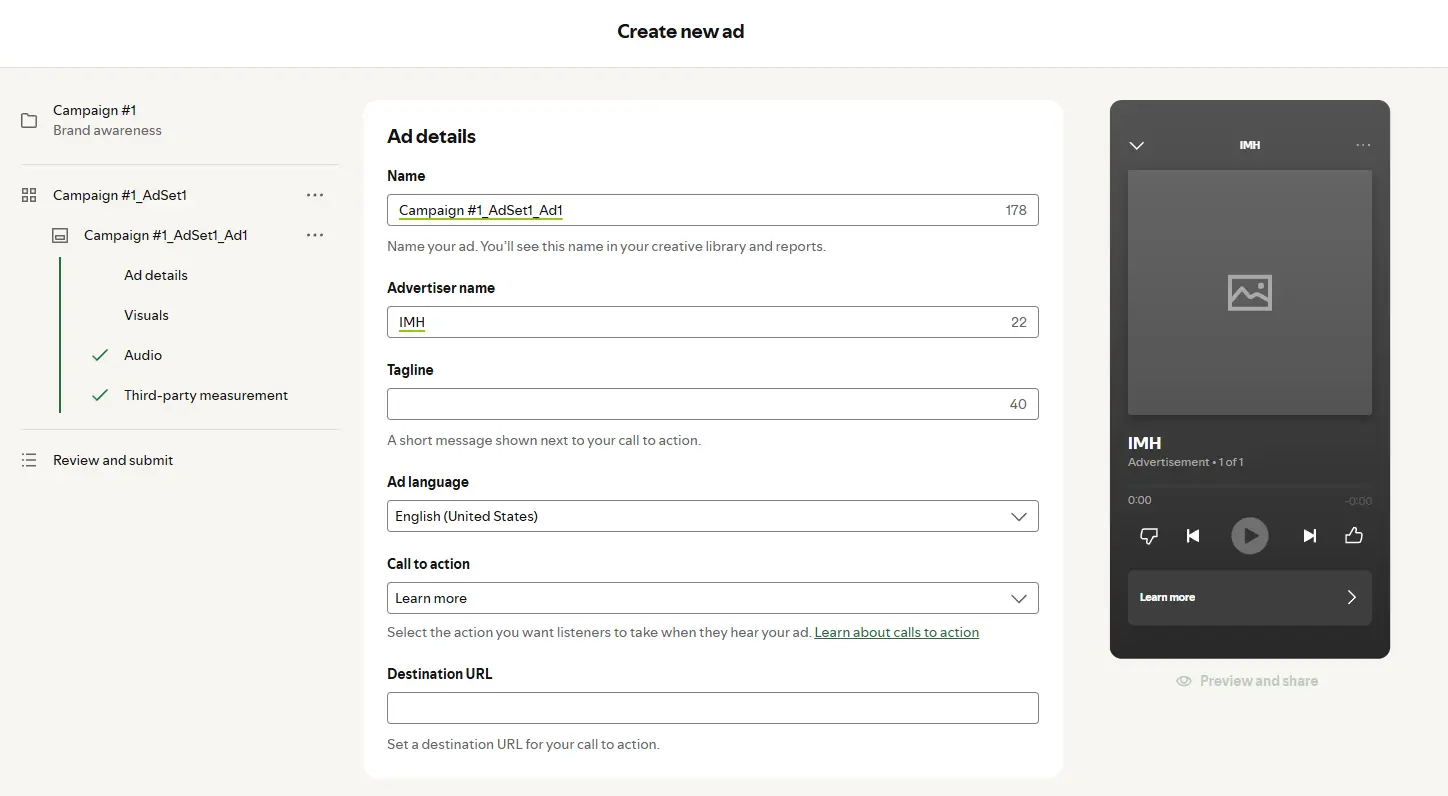
Creative requirements depend on the ad format selected.
Audio campaigns require audio assets and supporting visuals. Video campaigns require video creative. Display formats rely on visual assets designed to complement the advertising experience.
Strong creative remains one of the biggest performance drivers on Spotify. Audience targeting determines who sees an ad, but creative quality often determines whether the message resonates.
Performance Monitoring
Once a campaign launches, Spotify Ads Manager provides reporting tools that help advertisers monitor delivery and performance.
Metrics such as impressions, reach, clicks, video engagement, and conversions allow marketers to evaluate whether campaigns are achieving their objectives. Performance data can then be used to adjust budgets, audiences, creative assets, or campaign settings over time.
The process itself is relatively simple. Success typically comes from making informed decisions around audience targeting, creative strategy, objective selection, and measurement rather than from navigating the platform itself.
Spotify Ad Formats Explained
Spotify Ads Manager gives advertisers access to several ad formats, each designed for different campaign goals and audience experiences.
Choosing the right format matters just as much as selecting the right audience.
A campaign focused on brand awareness may benefit from audio inventory, while a product launch could benefit from video placements that combine sound and visuals. Podcast advertising introduces another layer, allowing brands to reach listeners through long-form content environments.
Understanding how each format works can help advertisers align creative strategy with campaign objectives before launching.
Spotify Audio Ads
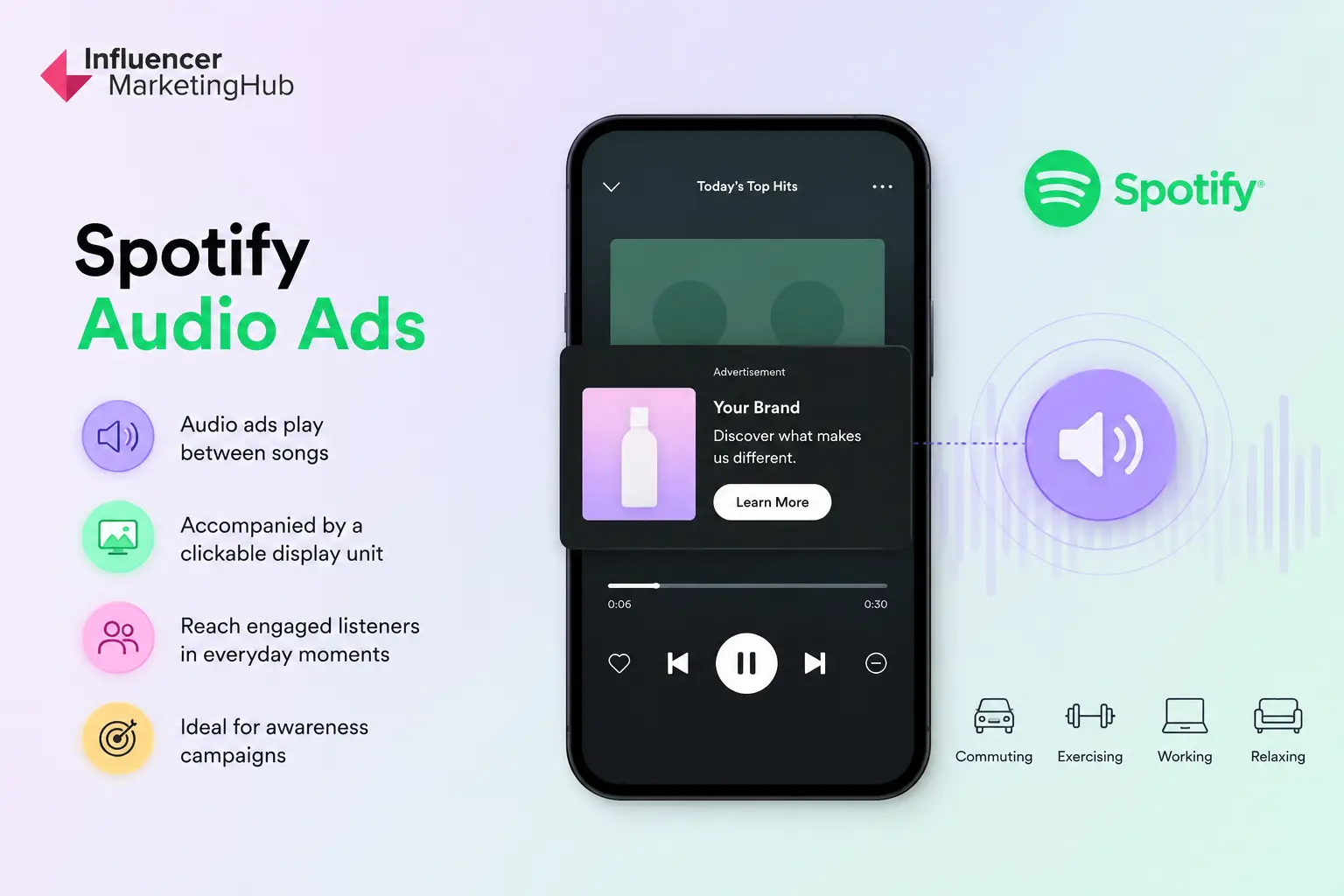
Audio Ads are the format most marketers associate with Spotify advertising.
These ads play between songs during listening sessions and are typically accompanied by a clickable display unit on mobile and desktop devices. Listeners hear the audio message while also seeing a supporting visual element, creating an opportunity to reinforce the message beyond audio alone.
Audio Ads are often used for awareness campaigns because they allow brands to reach listeners during moments when they are actively consuming content. Commuting, exercising, working, and relaxing are common listening environments where audio messages can reach audiences without competing against a crowded social feed.
For advertisers entering Spotify for the first time, Audio Ads are often the most natural starting point.
Spotify Video Ads
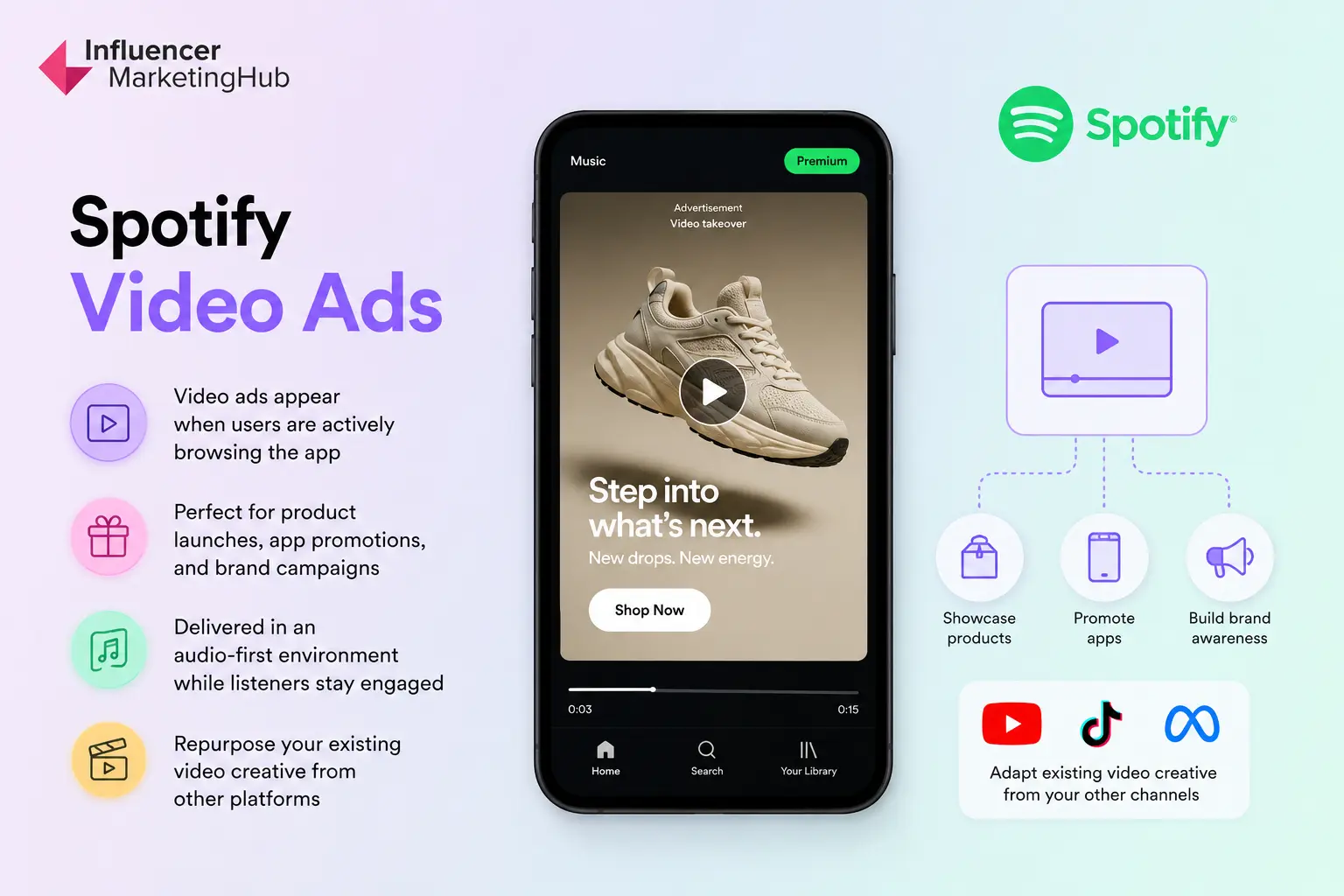
Spotify also supports video advertising through formats such as Video Takeover.
Video ads appear when users are actively browsing the Spotify app, making them a useful option for campaigns that benefit from visual storytelling. Product launches, app promotions, and brand campaigns often use video formats to showcase products or demonstrate value more effectively than audio alone.
Unlike traditional video platforms, Spotify's video inventory is delivered within an audio-first environment. Advertisers gain access to visual placements while still reaching audiences engaged with music and podcast content.
Brands already investing in video creative for channels like YouTube, TikTok, or Meta may find it relatively easy to adapt existing assets for Spotify campaigns.
Spotify Display Ads
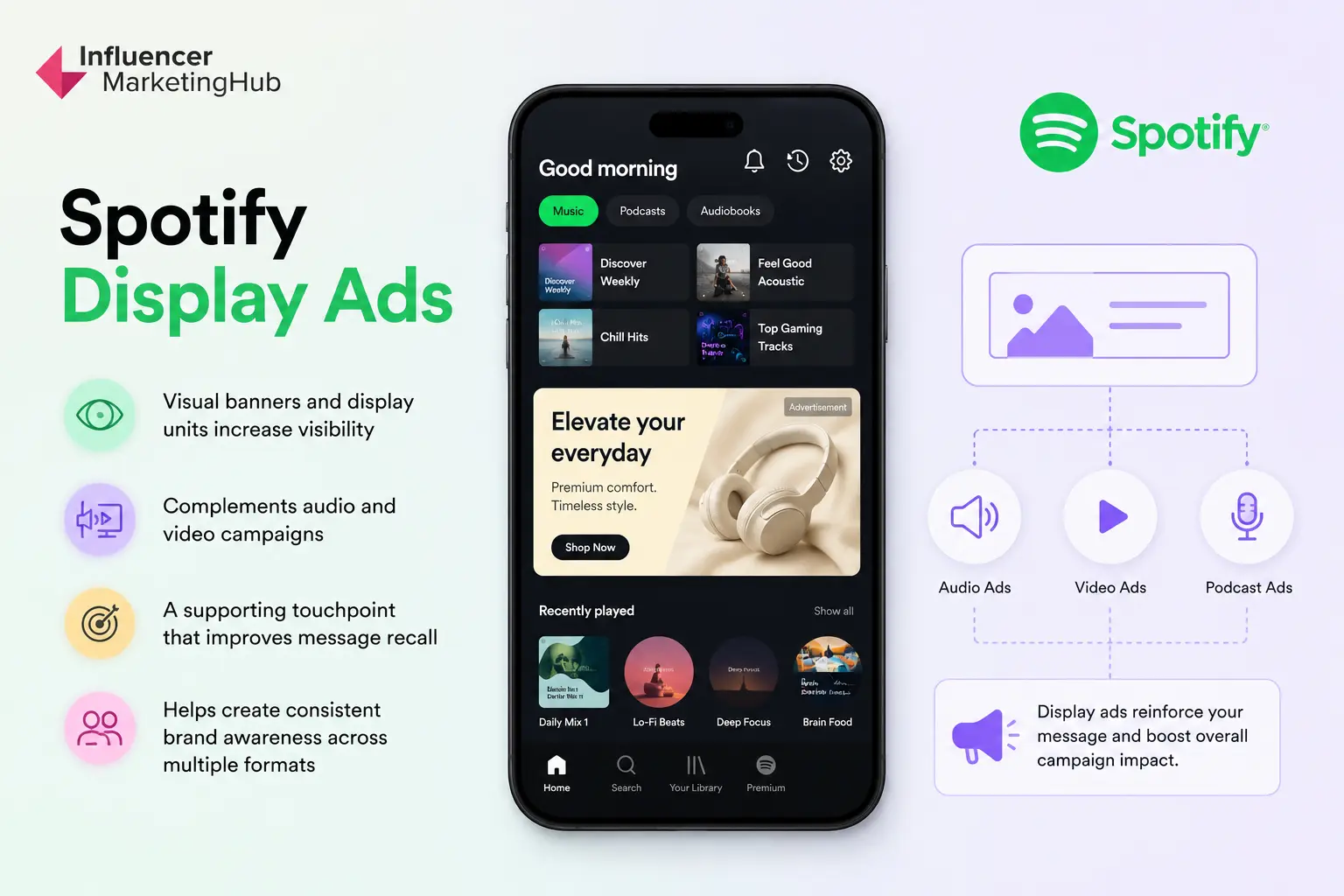
Display advertising plays a supporting role within Spotify's advertising ecosystem.
These placements include visual banners and other display units designed to increase visibility and reinforce campaign messaging. Display formats can complement audio and video campaigns by providing additional visual exposure throughout the user experience.
Display inventory is rarely the primary reason advertisers choose Spotify Ads Manager. Most campaigns are built around audio or video formats, with display placements serving as a secondary touchpoint that helps improve message recall.
For advertisers running broader awareness campaigns, display placements can help create a more consistent experience across multiple ad formats.
Spotify Podcast Ads
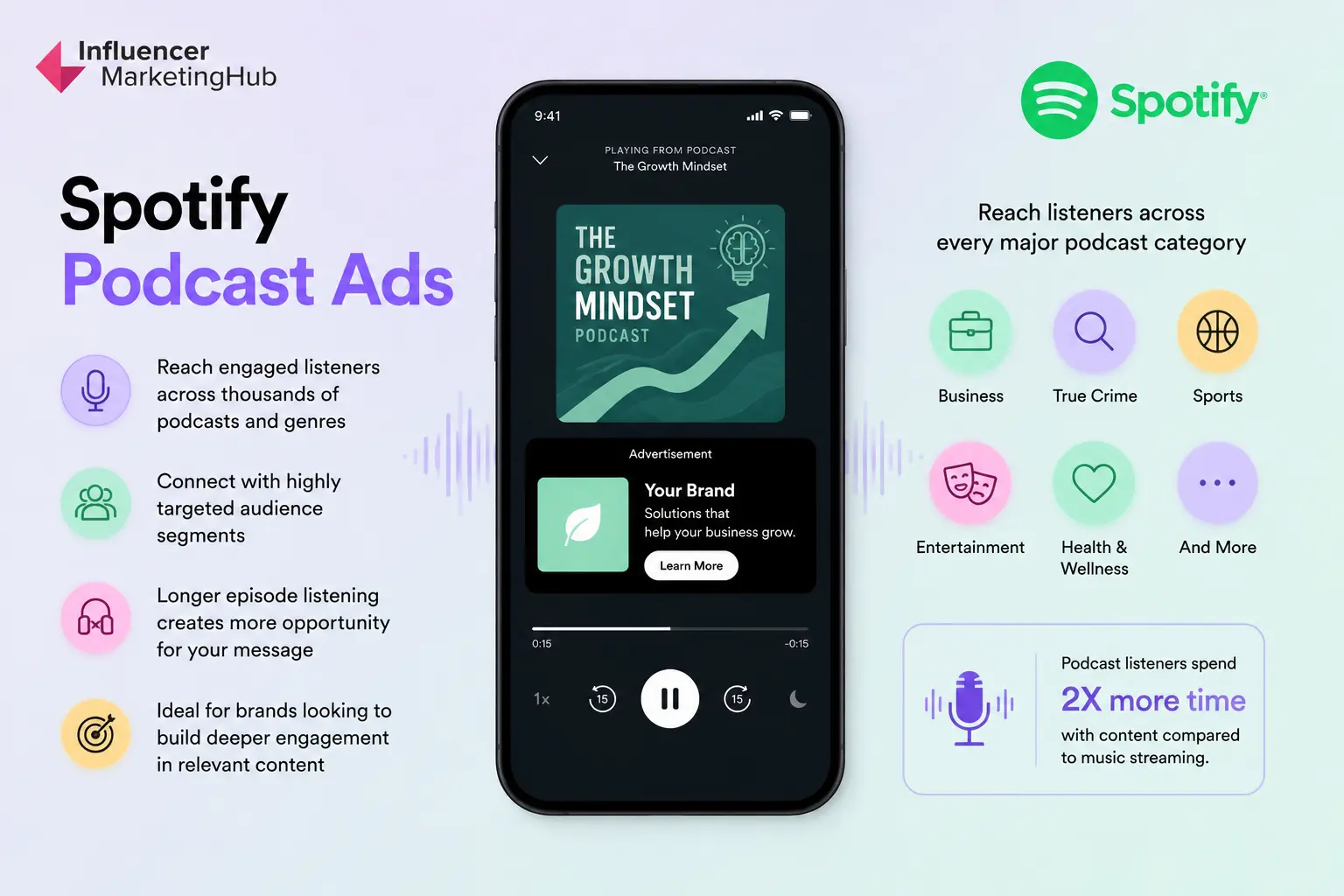
Podcast advertising has become one of Spotify's most attractive offerings for many brands.
Spotify gives advertisers access to podcast inventory across a wide range of genres and audience segments. Campaigns can reach listeners who regularly engage with business shows, true crime podcasts, sports content, entertainment programs, and many other categories.
Podcast ads differ from traditional music-streaming inventory because listeners often spend significantly more time with individual episodes. Longer listening sessions can create opportunities for brands to reach highly engaged audiences within specific content environments.
Many advertisers view podcast advertising as a way to combine Spotify's targeting capabilities with the growing popularity of podcasts. As podcast consumption continues to expand, this format has become an increasingly important part of many audio advertising strategies.
Spotify Ad Format Comparison
| Format | Best For |
| Spotify Audio Ads | Brand awareness and broad reach |
| Spotify Video Ads | Product launches and visual storytelling |
| Spotify Display Ads | Message reinforcement and visibility |
| Spotify Podcast Ads | Reaching highly engaged niche audiences |
| Sponsored Sessions | Extended listener engagement opportunities |
No single format is universally better than another. The right choice depends on campaign objectives, creative assets, audience behavior, and how Spotify fits within the broader media plan. Many advertisers ultimately combine multiple formats to create a more cohesive campaign experience across the platform.
Exploring Podcast Advertising Beyond Spotify?
Spotify gives advertisers access to podcast inventory, but it is only one part of the podcast advertising landscape. Brands can also work directly with creators through host-read sponsorships, network partnerships, and programmatic podcast buying platforms.
Understanding the differences can help advertisers choose the right approach for their audience, budget, and campaign goals.
Read our guide on Podcast Sponsorships to learn more.
Audience Targeting Capabilities
Audience targeting is one of the main reasons advertisers choose Spotify Ads Manager.
Most advertising platforms allow marketers to target users based on demographics and location. Spotify goes a step further by incorporating listening behavior into the equation. The playlists people follow, the podcasts they consume, and the content they engage with can provide additional context about interests and habits.
For brands focused on reaching specific audiences, those signals can help create more relevant campaigns.
Demographic Targeting
Spotify allows advertisers to target audiences using standard demographic criteria such as age and gender.
Demographic targeting is often used as a foundation rather than a complete targeting strategy. A fitness brand, for example, may target a specific age range before layering additional audience signals related to interests and listening behavior.
Broad demographic targeting can also be useful for awareness campaigns where scale is a priority.
Geographic Targeting
Geographic targeting allows advertisers to define where campaigns are delivered.
Campaigns can be targeted at the country, region, city, or market level, depending on campaign requirements. Local businesses often use geographic targeting to focus budgets on areas where products or services are actually available.
National brands may use geographic segmentation to support regional campaigns, promotions, or events.
Interest Targeting
Interest targeting helps advertisers reach listeners based on the types of content they consume.
Spotify organizes audiences around a variety of interest categories, allowing marketers to align campaigns with relevant audience groups. Interest-based targeting can be particularly useful for awareness campaigns where the goal is to reach consumers who are likely to have an affinity for a product category.
Relevance often matters more than precision. A slightly broader audience with strong interest alignment can sometimes outperform a highly restrictive targeting setup.
Listening Behavior Targeting
Listening behavior is where Spotify begins to differentiate itself from many other advertising platforms.
Advertisers can reach listeners based on how they use Spotify, including the types of playlists, genres, and content they engage with. Someone who regularly listens to workout playlists may present a different opportunity than someone who primarily consumes business podcasts or relaxation content.
These signals do not necessarily indicate purchase intent, but they can provide useful context for audience segmentation.
Device Targeting
Spotify Ads Manager also supports device-based targeting.
Advertisers can tailor campaigns to users on mobile devices, desktop computers, tablets, connected devices, and other listening environments. Device targeting can become particularly important when campaign goals involve website visits, app installs, or other actions that are influenced by user behavior across different devices.
Building More Effective Audiences
Audience targeting works best when multiple signals are combined thoughtfully.
Rather than targeting every available attribute, many advertisers begin with a core audience definition and gradually layer additional targeting criteria as they gather performance data.
Example Audience Layering
| Layer | Example |
| Location | United States |
| Age | 25-44 |
| Interest | Fitness |
| Listening Behavior | Workout playlists |
| Device | Mobile |
Audience layering can improve relevance, but it also comes with tradeoffs. Every additional targeting filter reduces the size of the available audience. Campaigns that become too narrow may struggle to scale or deliver efficiently.
Successful Spotify campaigns often balance precision with reach. The goal is not to build the smallest audience possible. The goal is to reach the right audience at a scale that supports campaign objectives.
Campaign Objectives Available in Spotify Ads Manager
Choosing the right audience is important, but audience targeting alone does not determine campaign success. Objective selection plays an equally important role.
Campaign objectives tell Spotify what outcome the campaign is trying to achieve. The platform then uses that information to optimize delivery and reporting around the selected goal. A campaign designed to maximize reach will operate differently than one focused on website traffic or conversions.
Many advertisers make the mistake of selecting an objective based on the metrics they want to see rather than the business outcome they are trying to achieve. Starting with the end goal usually leads to better decisions.
Campaign Objectives
| Goal | Recommended Objective |
| Brand awareness | Reach |
| Product launch | Reach + Video Views |
| Website traffic | Clicks |
| App promotion | App Installs |
| Ecommerce sales | Conversions |
| Retargeting | Conversions |
Reach
Reach campaigns are designed to maximize the number of people exposed to an advertisement.
Brands often use this objective when introducing a new product, entering a new market, or building awareness among a broad audience. Reach campaigns prioritize visibility over immediate actions, making them a common choice for upper-funnel advertising initiatives.
Advertisers measuring success through audience exposure, recall, or awareness often start here.
Video Views
Video View campaigns focus on maximizing engagement with video creative.
Campaigns built around storytelling, product demonstrations, or visual brand messaging can benefit from this objective. Rather than simply delivering impressions, Spotify aims to generate more meaningful video consumption.
Video Views can work particularly well during product launches or campaigns where creative is a major part of the message.
Clicks and Website Traffic
Traffic-focused campaigns are designed to encourage users to visit a website or landing page.
Brands promoting content, products, events, or special offers often use this objective to generate visits beyond the Spotify platform. Traffic campaigns can provide a clearer path to measuring engagement compared to awareness-focused initiatives.
A strong landing page becomes especially important here. Generating clicks is only one part of the equation. The experience after the click often determines whether the campaign creates business value.
App Installs
App Install campaigns are designed for businesses looking to grow mobile application usage.
Gaming companies, subscription services, fintech brands, and consumer apps frequently use this objective to encourage downloads. Spotify's mobile-first audience can make app-focused campaigns a natural fit for advertisers with strong mobile experiences.
Success is typically measured not only by installs but also by the quality of users acquired through the campaign.
Conversions
Conversion campaigns focus on specific actions advertisers want users to complete.
Those actions may include purchases, sign-ups, lead submissions, subscriptions, or other business outcomes tracked through Spotify Pixel and measurement tools. Conversion campaigns generally require a stronger measurement setup because performance depends on accurate tracking and attribution.
Many ecommerce brands and performance marketers eventually move toward conversion-focused campaigns once they have established baseline audience and creative performance data.
Matching Objectives to Business Goals
Different objectives serve different purposes, and no single option is universally better than another.
A new brand launching its first Spotify campaign may prioritize reach and awareness. A retailer promoting a seasonal offer may focus on conversions. An app developer may care primarily about installs. The right objective depends on what success looks like for the business.
Campaign performance should always be evaluated against the objective selected at launch. A reach campaign should not be judged solely on conversions, just as a conversion campaign should not be judged solely on impressions. Aligning objectives, expectations, and reporting metrics creates a much clearer picture of campaign effectiveness.
Spotify Pixel and Conversion Tracking
Running a campaign is only half the job. Measuring what happens after someone sees or interacts with an ad is what helps advertisers determine whether a campaign is actually creating business value.
Spotify Ads Manager includes measurement tools that allow advertisers to track activity beyond impressions and clicks. The foundation of that measurement system is Spotify Pixel.
For brands focused on website traffic, lead generation, app growth, or ecommerce sales, understanding how Spotify Pixel works is an important part of evaluating campaign performance.
What Is Spotify Pixel?
Spotify Pixel is a piece of code that advertisers place on their website to track user actions after someone interacts with a Spotify ad.
The pixel collects information about activity that occurs on a website, helping advertisers understand whether campaigns are driving meaningful outcomes rather than simply generating exposure.
Without conversion tracking, advertisers can see delivery metrics such as impressions and clicks. Spotify Pixel adds another layer by connecting advertising activity to business actions.
How Spotify Pixel Works
Once installed, Spotify Pixel can track specific events that occur on a website.
Those events might include:
- Page views
- Product views
- Add-to-cart actions
- Sign-ups
- Purchases
- Lead submissions
When someone visits a website after interacting with a Spotify ad, the pixel helps attribute those actions back to the campaign where appropriate.
The process is similar to conversion tracking systems used by platforms such as Google Ads, Meta Ads, and TikTok Ads.
What Spotify Can Measure
Spotify's measurement capabilities depend on campaign setup and tracking implementation, but advertisers can generally monitor a range of important actions.
| Metric | Can Be Measured |
| Website visits | Yes |
| Page views | Yes |
| Purchases | Yes |
| Sign-ups | Yes |
| Leads | Yes |
| App installs | Yes |
| Video engagement | Yes |
The more accurately events are configured, the more useful campaign reporting becomes.
Attribution Is Not Always Straightforward
One of the most important things advertisers should understand about Spotify advertising is that not every successful campaign results in an immediate click.
Someone may hear an ad while driving to work, remember the brand later, and visit the website hours or even days afterward. Another listener may hear an ad multiple times before eventually converting through a search ad or direct website visit.
Audio advertising often plays a role earlier in the customer journey than channels like Google Search.
For that reason, last-click attribution can sometimes undervalue Spotify campaigns. Looking only at the final interaction before a conversion may overlook the influence that awareness and consideration channels had along the way.
Many marketers evaluate Spotify alongside broader attribution frameworks rather than relying exclusively on last-click reporting.
Retargeting Opportunities
Conversion tracking can also support retargeting strategies.
Advertisers may choose to build audiences based on website activity and re-engage visitors who previously interacted with their brand. Retargeting can help move users further through the customer journey, especially when combined with conversion-focused campaign objectives.
Not every Spotify advertiser will need advanced retargeting, but businesses running performance-oriented campaigns often benefit from having those capabilities available.
Measurement Should Match Campaign Goals
Campaign success looks different depending on the objective.
A brand awareness campaign may prioritize reach and frequency. An ecommerce campaign may focus on purchases. An app promotion may care most about installs and user acquisition costs.
Spotify Pixel helps connect advertising activity to those outcomes, giving marketers a clearer understanding of how campaigns contribute to business goals rather than simply measuring how many people were exposed to an ad.
How Much Does Spotify Advertising Cost?
Spotify Ads Manager requires a minimum campaign budget of $250 (or the equivalent in local currency), making it one of the more accessible entry points into digital audio advertising. Most campaigns use a CPM (cost per thousand impressions) pricing model, meaning advertisers pay for ad delivery rather than clicks or conversions.
Actual costs vary based on audience targeting, geography, ad format, campaign objectives, and market demand. There is no universal CPM that applies to every campaign.
For many advertisers, the ability to start with a relatively modest budget is one of Spotify Ads Manager's biggest advantages. Brands can test audiences, creative assets, and campaign strategies before committing larger amounts of spend.
Spotify Uses CPM Pricing
Most Spotify campaigns are purchased using CPM pricing.
Under this model, advertisers pay for every 1,000 impressions delivered. The exact CPM depends on several variables, including audience demand and inventory availability.
Audio advertising has traditionally been purchased using impression-based pricing because the primary objective is often awareness and audience reach. Spotify brings that model into a self-service environment, allowing advertisers to launch campaigns without the large upfront commitments that have historically been associated with radio advertising.
What Influences Spotify Advertising Costs?
Several factors influence how much a campaign ultimately costs.
- Audience Targeting
Audience selection can have a significant impact on pricing.
Broad campaigns generally have access to more inventory, while highly specific audiences may face greater competition for impressions. Narrow targeting can improve relevance, but it may also affect delivery efficiency and scale.
- Geography
Advertising costs vary across markets.
Campaigns targeting major metropolitan areas or highly competitive countries may experience different pricing dynamics than campaigns targeting smaller regions.
- Ad Format
Different ad formats can have different cost structures.
Audio Ads, Video Ads, Display Ads, and Podcast Ads all compete for different inventory pools. Premium placements and high-demand inventory may command higher CPMs than standard placements.
- Campaign Objective
Objectives influence how campaigns are optimized and delivered.
Awareness campaigns often prioritize reach and impressions, while conversion-focused campaigns may require more optimization and measurement infrastructure. Performance-oriented objectives can sometimes lead to different cost expectations than broad awareness initiatives.
- Competition and Seasonality
Advertising demand changes throughout the year.
Periods such as holiday shopping seasons, major retail events, and peak advertising windows often bring increased competition across digital advertising channels, including audio inventory.
How Much Budget Should Advertisers Start With?
The minimum campaign budget answers the question of what is required to launch a campaign. The more important question is often how much budget is needed to generate useful data.
Most advertisers treat Spotify the same way they treat any new advertising channel: start with a controlled test, evaluate results, and scale from there.
The following examples are not Spotify recommendations. They simply illustrate how different advertisers may approach initial testing.
| Advertiser Type | Example Test Budget |
| Local business | $250-$1,000 |
| Small eCommerce brand | $1,000-$5,000 |
| Mid-market company | $5,000-$20,000 |
| Enterprise advertiser | $20,000+ |
A larger budget does not automatically produce better results. Creative quality, audience fit, targeting strategy, and campaign objectives often have a greater influence on performance than spend alone.
Focus on Efficiency, Not Just Cost
Many advertisers focus heavily on CPMs when evaluating campaign performance.
Cost matters, but efficiency matters more.
A campaign with a lower CPM may generate little business value if it reaches the wrong audience. A more expensive campaign may produce stronger engagement, higher-quality traffic, or better conversion performance because the targeting and creative are more closely aligned with the audience.
The most effective way to evaluate Spotify advertising costs is within the context of campaign goals. Reach campaigns should be evaluated differently than conversion campaigns. App install campaigns should be measured differently than awareness initiatives.
Budget planning becomes much easier once advertisers define what success actually looks like. Spotify Ads Manager provides enough flexibility to test, learn, and optimize before making larger budget commitments.
Pros and Cons of Advertising on Spotify
Like every advertising platform, Spotify Ads Manager has strengths and limitations.
Spotify Ads Manager Advantages
- Access to a Large Audience
Spotify reaches 678 million users globally across music and podcast content.
That scale gives advertisers opportunities to reach audiences across a wide range of demographics, interests, and listening behaviors without relying solely on traditional radio or podcast sponsorships.
- Multiple Advertising Formats
Advertisers can choose from Audio Ads, Video Ads, Display Ads, and Podcast Ads.
The ability to combine multiple formats within a broader campaign gives marketers flexibility when building awareness, engagement, or traffic initiatives.
- Self-Service Campaign Management
Spotify Ads Manager allows advertisers to launch campaigns without working directly through a sales team.
Smaller businesses can test campaigns with relatively modest budgets, while larger brands can manage campaigns more efficiently across multiple audience segments.
- Podcast Advertising Opportunities
Podcast inventory has become one of Spotify's most attractive advertising assets.
Advertisers can reach highly engaged audiences across a wide range of content categories, helping brands align messaging with specific listener interests and content environments.
Limitations
- Lower Purchase Intent Than Search Advertising
Spotify listeners are consuming content rather than actively searching for products or services.
Campaigns can be highly effective for awareness and consideration, but they may not generate the same level of immediate purchase intent as search advertising platforms.
- Attribution Can Be More Complex
Audio advertising often influences users earlier in the customer journey.
A listener may hear an ad today and convert through another channel later. Measuring that impact requires a broader attribution strategy than simply looking at last-click conversions.
- Fewer Creative Formats Than Some Social Platforms
Spotify supports multiple ad formats, but it does not offer the same level of creative variety available on platforms such as Meta or TikTok.
Advertisers relying heavily on interactive creative experiences may find fewer options available.
- Performance Expectations Need to Match Objectives
Spotify can be a strong awareness and audience-building channel, but it is not necessarily the best fit for every campaign objective.
Brands focused exclusively on immediate lead generation or high-intent traffic may find stronger results from channels designed around active user intent.
Spotify Ads Manager performs best when advertisers align campaign expectations with the platform's strengths.
Spotify Ads Manager vs Other Advertising Platforms
Spotify is often compared to platforms like Google Ads, Meta Ads, YouTube Ads, and TikTok Ads. In reality, each platform serves a different purpose within the customer journey.
The question is usually not whether Spotify should replace another platform. The more useful question is where Spotify fits within a broader media strategy.
| Platform | Primary Strength | Potential Limitation |
| Spotify Ads Manager | Audio and podcast reach | Lower purchase intent |
| Meta Ads | Audience targeting and conversions | Competitive auction environment |
| Google Ads | High-intent traffic | Less upper-funnel reach |
| YouTube Ads | Video storytelling | Higher creative requirements |
| TikTok Ads | Discovery and engagement | Faster creative fatigue |
Spotify vs Google Ads
Google Ads reaches people who are actively searching for information, products, or services.
Spotify reaches people while they are listening to music or podcasts.
For advertisers focused on capturing existing demand, Google often plays a larger role. For advertisers focused on creating demand and increasing awareness, Spotify can provide complementary reach.
Spotify vs Meta Ads
Meta's advertising ecosystem is built around social engagement, audience targeting, and performance marketing.
Spotify's strength comes from reaching listeners in an audio-first environment where attention is often focused on content consumption rather than social interactions.
Many advertisers use Spotify and Meta together, using Spotify for awareness and Meta for retargeting and conversion-focused campaigns.
Spotify vs YouTube Ads
Both platforms can support awareness campaigns, but they do so differently.
YouTube relies heavily on video storytelling. Spotify's core strength remains audio, although video inventory is available through Ads Manager.
Brands with strong video assets may find opportunities across both platforms rather than choosing one over the other.
Spotify vs TikTok Ads
TikTok excels at content discovery and rapid audience engagement.
Spotify provides a more passive listening environment where users are consuming music and podcasts rather than actively scrolling through content.
The creative approaches that work on TikTok may not always translate directly to Spotify campaigns.
The Best Approach Is Often Multi-Channel
Most advertisers do not choose a single platform.
A brand may use Spotify to build awareness, Google to capture demand, Meta to retarget website visitors, and YouTube to tell longer-form stories. Each platform contributes something different to the customer journey.
Spotify Ads Manager works best when viewed as part of that larger ecosystem rather than as a replacement for every other advertising channel.
Is Spotify Ads Manager Worth It for Advertisers?
Spotify Ads Manager gives brands access to one of the largest audio and podcast advertising ecosystems in the world, but success depends on understanding what the platform is designed to do.
Advertisers looking to build awareness, introduce new products, promote mobile apps, or reach podcast listeners can benefit from Spotify's combination of audience targeting, self-service campaign management, and diverse advertising formats.
The platform allows businesses to reach audiences during moments when they are actively engaged with music and podcast content, creating opportunities that differ from traditional search and social advertising.
Expectations matter, though.
Spotify is generally strongest as an awareness and consideration channel rather than a pure direct-response platform. Audio advertising often influences consumers earlier in the customer journey, which means campaign impact may not always be captured through simple last-click attribution models.
The most successful advertisers treat Spotify as part of a broader media strategy. Google Ads can capture demand. Meta Ads can support retargeting and conversions. Spotify can help create awareness and keep brands top of mind before consumers are ready to take action.
For brands evaluating where to invest advertising budget, Spotify Ads Manager is worth considering when audience reach, podcast advertising, audio engagement, and brand awareness are important campaign goals.
Frequently Asked Questions
What is Spotify Ads Manager?
Spotify Ads Manager is Spotify's self-service advertising platform. It allows businesses to create, launch, manage, and measure audio, video, display, and podcast advertising campaigns without working directly with Spotify's sales team.
How much does Spotify Ads Manager cost?
Spotify Ads Manager requires a minimum campaign budget of $250 (or the equivalent in local currency). Most campaigns use CPM pricing, meaning advertisers pay for every 1,000 impressions delivered. Actual costs vary based on targeting, ad format, geography, and competition.
What ad formats are available in Spotify Ads Manager?
Spotify Ads Manager supports several ad formats, including Audio Ads, Video Ads, Display Ads, Podcast Ads, and Sponsored Sessions. The right format depends on campaign objectives, audience behavior, and creative assets.
Can small businesses advertise on Spotify?
Yes. Spotify Ads Manager is designed to be accessible to businesses of different sizes. The self-service platform allows smaller advertisers to launch campaigns without the large budget commitments traditionally associated with radio advertising.
What is Spotify Pixel?
Spotify Pixel is a conversion tracking tool that helps advertisers measure actions taken on their website after users interact with Spotify ads. It can track events such as page views, purchases, sign-ups, and lead submissions.
Are Spotify ads good for eCommerce brands?
Spotify ads can work well for eCommerce brands, particularly for awareness, product launches, and customer acquisition campaigns. Conversion-focused campaigns often perform best when combined with proper tracking, strong creative, and a broader multi-channel strategy.
How does Spotify Ads Manager compare to Google Ads?
Google Ads targets users who are actively searching for products or information, while Spotify reaches users during music and podcast listening sessions. Google often excels at capturing existing demand, while Spotify is commonly used to build awareness and reach audiences earlier in the customer journey.
Are Spotify ads worth it?
Spotify ads can be worth the investment for brands focused on awareness, audio engagement, podcast audiences, and upper-funnel marketing goals. Success depends on audience fit, campaign objectives, creative quality, and measurement strategy rather than the platform alone.