
Influencer Marketing Hub sets itself apart from conventional review platforms through the involvement of Crypto Marketing experts such as Werner Geyser, Djanan Kasumovic, Camille Kennedy, Dave Eagle, and other notable industry figures. This expert team brings a profound understanding of the Crypto Marketing landscape, assessing tools and platforms with an insider’s perspective on capabilities, experience, and industry acumen. Unlike user-generated review platforms, Influencer Marketing Hub’s evaluations are rooted in extensive firsthand experience and direct interactions with the tools and platforms in question. This ensures that the reviews are not only trustworthy but also deeply informed. High-caliber brands like Tokemonics, Coinbound, and Blockchain PR undergo rigorous monthly evaluations, highlighting the platform’s commitment to identifying and showcasing top-tier solutions in Crypto Marketing and beyond.
Influencer Marketing Hub has consistently been recognized by leading media outlets for our authoritative data, findings, and insights within the Crypto Marketing landscape. Our platform is frequently cited as a trusted source of information, demonstrating the value and impact of our work in shaping industry standards and practices.






Influencer Marketing Hub employs an expert-driven methodology to evaluate Crypto Marketing agencies, ensuring that our recommendations are both reliable and comprehensive. This approach is designed to help businesses and individuals find the best agencies to meet their specific Crypto Marketing needs. Here’s how we assess the various agencies like Tokemonics, Coinbound, and Blockchain PR:
Start with the uncomfortable math: roughly 9 out of 10 token unlocks put downward pressure on price—and it often begins weeks before the event. If your agency can’t show exactly how they’ll communicate unlocks, manage expectations, and support real liquidity (not cosmetic volume), they’re not protecting your market.
At the same time, the industry’s “growth hacks” have attracted regulators and researchers—wash trading remains widespread, influencer review farms exist, and “tier-1 listing guaranteed” pitches still circulate in founder inboxes. The best agencies counter this by hard-wiring compliance (clear FTC-compliant disclosures), rejecting vanity metrics, and anchoring campaigns to investor-grade transparency: vesting charts, unlock calendars, treasury policy, and plainly stated holder rights.
They also treat cross-chain as a messaging risk, not just a dev choice—bridges have been a giant attack surface, so chain selection and UX get proactive comms. Above all, elite partners explain token velocity, emissions, and real utility in ways that set expectations and reduce churn. If an agency can’t speak fluently about these trade-offs—and back it with auditable execution—you’re buying hype, not outcomes.
1. Tokemonics
Positioning & scope:
TokenMinds treats tokenomics as the spine of a launch, not a slide in a deck. Their public materials show a full-funnel approach: design the economic model, codify it in a whitepaper/litepaper, wire it into a compliant TGE stack, and run distribution/vesting/liquidity rules that hold post-listing. This philosophy appears consistently across their advisory, audit, and launch guides.
Design patterns they advocate:
The firm pushes discipline on the supply side—capping private allocations, using 6–12-month cliffs, and long vests for insiders. That is paired with prescriptive advice on pricing, staged rounds, and aligning listings with treasury and liquidity plans. These are the levers that decide whether a token survives after hype decays, and TokenMinds’ content is explicit on those mechanics.
Read More2. Coinbound
Why they matter for tokenomics-led launches:
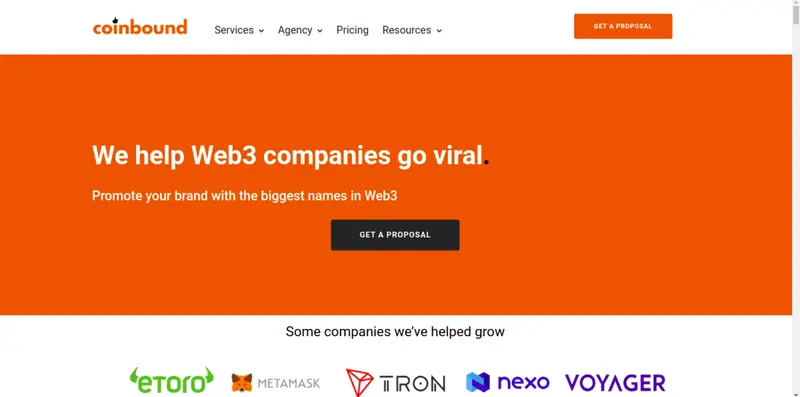
Coinbound approaches tokenomics as more than a spreadsheet of allocations—they treat it as the narrative and incentive backbone of a launch, and they’ve built the surrounding GTM machinery (PR, listings, KOLs, community) to make that design legible and investable. On the advisory side, they offer a structured path—assessment → custom strategy → implementation support—focused on designing sustainable token economies rather than one-off hype cycles. That’s the right stance in 2025, when exchanges, media, and communities reward clarity, compliance, and credible utility over raw impressions.
Where they’re strongest:
Read More
Coinbound
Coinbound is a marketing agency that specializes in the promotion of cryptocurrency and blockchain companies across the digital sphere. Coinbound leverages influencer marketing, social media management, SEO, and the like in accelerating the growth of...

10 - 50

Manhattan, NY
Best for:
Small and Medium Business
Coinbound
Coinbound is a marketing agency that specializes in the promotion of cryptocurrency and blockchain companies across the digital sphere. Coinbound leverages influencer marketing, social media management, SEO, and the like in accelerating the growth of...
3. Blockchain PR

If you need a tokenomics partner that doesn’t stop at spreadsheets, Blockchain App Factory positions itself as an end-to-end token engineering and go-to-market shop. Their tokenomics practice is framed as a closed loop: strategy and modeling up front, market validation before launch, liquidity and listing mechanics at go-live, and an optimization layer once the token trades in the wild. That lifecycle view is the right mental model for modern launches where economics, distribution, and narrative have to move together.
Read More
Blockchain PR
Blockchain PR is a marketing agency whose strategies focus on constructing the right design and message for cryptocurrency companies. With years of experience and reputation in the industry, this agency enables blockchain platforms like Trade.io and ...
10 - 50
San Francisco, CA
Best for:
Medium Size Brands
Blockchain PR
Blockchain PR is a marketing agency whose strategies focus on constructing the right design and message for cryptocurrency companies. With years of experience and reputation in the industry, this agency enables blockchain platforms like Trade.io and ...
4. Pearl Lemon

Positioning & scope:
Pearl Lemon presents tokenomics as the foundation of Web3 GTM: they don’t treat it as a static allocation chart but as a system that must connect to narrative, community, and distribution. Their public materials explicitly fold customized tokenomics into the launch plan, backing the economic design with content/PR and influencer tactics that help investors and communities understand the model and its roadmap. The pitch is lifecycle-based—design → launch → scale—with deliverables like whitepapers and technical documentation to explain the mechanics that underwrite adoption. For founder teams that need token economics tied to actual go-to-market work, the mapping is clear.
What they actually do in tokenomics marketing:
Read MoreConclusion
Brands seeking a tokenomics marketing agency must prioritize transparency, alignment with token-economics mechanics, and measurable outcomes—not just press coverage or influencer hype. Many vendors overpromise listings or quick pumps without addressing unlock risks, emission velocity, or liquidity mechanics. A top agency will integrate token design with launch narratives, community incentives and listing readiness, while providing clear documentation on vesting, governance, and market-making. Choose a partner that anchors marketing to the token model itself and validates performance with real metrics, not vanity impressions.