
Video advertising in 2026 is competing with traditional TV budgets. The shift has been happening for years, but the numbers now make it impossible to ignore.
According to the IAB, U.S. digital video ad spending is expected to surpass $80 billion in 2026, representing more than 60% of all TV and video advertising spend. At the same time, Nielsen reports that streaming now accounts for 44.8% of total TV viewing, exceeding the combined share of broadcast and cable television.
Audience attention has followed the same trend. Consumers watch video across streaming services, connected TVs, publisher websites, podcasts, and creator-led content. YouTube alone says viewers watch more than 1 billion hours of content.
More viewing environments have created more advertising options. Marketers can run campaigns through self-serve streaming platforms, programmatic buying tools, publisher networks, video ad servers, and AI-powered creative platforms.
Each serves a different purpose, which makes choosing the right platform increasingly difficult.
Some platforms specialize in connected TV inventory. Others focus on programmatic media buying, publisher monetization, or video ad creation. The best choice depends on where you want to reach audiences, how you buy media, and what kind of reporting and control your team needs.
This guide compares the best video ad platforms in 2026, including options for streaming TV, programmatic advertising, publisher monetization, and AI-generated video campaigns.
- What Is a Video Ad Platform?
- Types of Video Ad Platforms
- Best Video Ad Platforms
- 1. Spotify
- 2. StackAdapt
- 3. The Trade Desk
- 4. Vibe
- 5. Roku Ads Manager
- 6. Samsung Ads
- 7. Creatify
- How to Choose a Video Ad Platform
- Video Ad Platforms vs Video Ad Networks
- Which Video Ad Platform Is Right for You?
- Frequently Asked Questions
What Is a Video Ad Platform?
Video Ad Platform Definition
A video ad platform is software used to create, distribute, manage, optimize, or monetize video advertising campaigns.
The category is much broader than many realize. Some platforms help brands buy video inventory across websites, apps, and connected TV environments. Others help publishers sell and manage video inventory. A newer group of platforms focuses on producing video ads with AI rather than buying media.
A common mistake is treating every platform as if it solves the same problem. Spotify Ads Manager, Google Ad Manager, StackAdapt, and Creatify all sit within the video advertising ecosystem, but each serves a completely different function.
Understanding those differences is important because platform selection affects far more than campaign delivery. It influences inventory access, targeting capabilities, measurement options, creative workflows, and media costs.
The platforms in this guide are designed for different parts of the video advertising process. We will now break down those categories before comparing the leading platforms in each.
Types of Video Ad Platforms
Not all video ad platforms do the same job.
A marketer looking for streaming TV inventory needs a very different solution than a publisher trying to monetize video content or a brand producing hundreds of AI-generated ad variations.
Understanding those differences makes platform selection much easier.
Streaming TV and CTV Platforms
Connected TV (CTV) platforms give advertisers access to video inventory on smart TVs, streaming devices, and ad-supported streaming services.
Platforms such as Spotify Ads, Vibe, and Roku Ads Manager fall into this category. Their main advantage is access to audiences consuming content in a lean-back environment, often on the largest screen in the home.
Many marketers view CTV as a middle ground between traditional television and digital advertising. Campaigns benefit from television-style reach while retaining digital targeting and measurement capabilities.
Programmatic Video Platforms
Programmatic platforms automate media buying across websites, apps, streaming services, and digital video inventory.
Instead of purchasing placements directly from publishers, advertisers use demand-side platforms (DSPs) to bid on available inventory in real time.
Platforms like StackAdapt and The Trade Desk are built for this type of buying.
Programmatic video often appeals to larger teams because it centralizes campaign management, audience targeting, optimization, and reporting across multiple inventory sources.
Looking Beyond Video? Explore the Best Programmatic Ad Platforms
Video is only one part of the programmatic ecosystem. Many advertisers use the same buying infrastructure to run campaigns across display, native, audio, connected TV, and digital out-of-home inventory.
Our guide to the Top Programmatic Ad Platforms compares the leading DSPs, buying tools, and media platforms used by brands and agencies to manage omnichannel advertising campaigns.
Publisher Video Platforms
Publishers face a different challenge. Rather than buying media, they need tools to manage, serve, and monetize video inventory.
Platforms such as Google Ad Manager help publishers control ad delivery, manage demand sources, and maximize revenue from video content.
Advertisers and publishers sometimes use similar terminology, but their goals are fundamentally different. One side is buying attention. The other is monetizing it.
AI Video Advertising Platforms
AI has introduced an entirely new category of video advertising software.
Platforms such as Creatify focus on producing video ads rather than distributing them. Many can generate scripts, avatars, voiceovers, product demonstrations, and creative variations from a simple URL or product description.
Creative production has traditionally been one of the most expensive parts of video advertising. AI platforms aim to reduce that barrier, making rapid testing and iteration more accessible to smaller teams.
The platforms in this guide span multiple categories because modern video advertising rarely relies on a single channel, buying method, or creative workflow.
Best Video Ad Platforms
|
Platform |
Best For | Platform Type | Pricing Model |
Self-Serve |
| Spotify Ads | Streaming audio and video advertising | Streaming / CTV | Auction-based | Yes |
| StackAdapt | Programmatic video campaigns | DSP | Custom pricing | Yes |
| The Trade Desk | Enterprise media buying | DSP | Custom pricing | No |
| Vibe | Self-serve CTV advertising | CTV | Campaign-based | Yes |
| Roku Ads Manager | Streaming TV advertising | CTV | Campaign-based | Yes |
| Samsung Ads | Household-level targeting and audience insights | CTV | Custom Pricing | Yes |
| Creatify | AI-generated video ads | AI Creative Platform | Subscription | Yes |
1. Spotify
Best for: Video advertising across music, podcasts, and streaming audio
Pricing: Auction-based pricing through Spotify Ads Manager. Direct and programmatic buying options available.
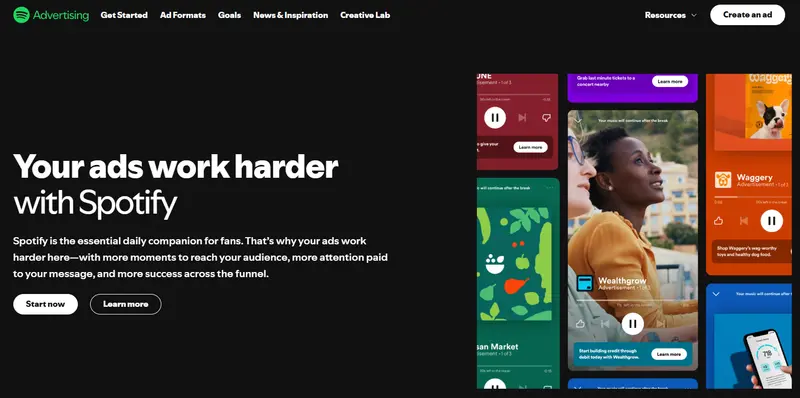
Spotify has evolved well beyond audio advertising. The platform now offers video inventory across music and podcast experiences, giving advertisers access to audiences during highly engaged listening sessions.
Video ads appear when the app is actively in view, creating a sound-on environment that is difficult to replicate across many digital channels. Advertisers can buy inventory through Spotify Ads Manager, direct deals, or Spotify Ad Exchange integrations.
Read More
2. StackAdapt

Best for: Mid-market and agency programmatic video campaigns
Pricing: Custom pricing.
StackAdapt has become one of the most accessible programmatic advertising platforms for brands that want to expand beyond channel-specific ad buying. The platform gives advertisers access to video, connected TV, native, display, audio, and in-game inventory through a single interface.
Video advertising is one of StackAdapt’s strongest areas. Advertisers can run campaigns across websites, apps, and streaming environments while managing targeting, optimization, and reporting from a centralized dashboard.
The platform also places a strong emphasis on usability, making it easier to navigate than many enterprise-focused DSPs.
Read More3. The Trade Desk

Best for: Enterprise-scale video and connected TV advertising
Pricing: Custom pricing.
The Trade Desk is one of the largest independent demand-side platforms in the advertising industry. Brands and agencies use it to purchase inventory across connected TV, online video, audio, display, retail media, mobile, and digital out-of-home channels.
Video remains a core part of the platform’s offering.
Advertisers gain access to premium publisher inventory and major streaming environments while benefiting from sophisticated audience targeting, forecasting, measurement, and attribution tools. Large organizations often choose The Trade Desk because it supports complex media strategies spanning multiple markets, channels, and campaign objectives.
Read More4. Vibe
Best for: Self-serve connected TV advertising
Pricing: Campaigns start as low as $50
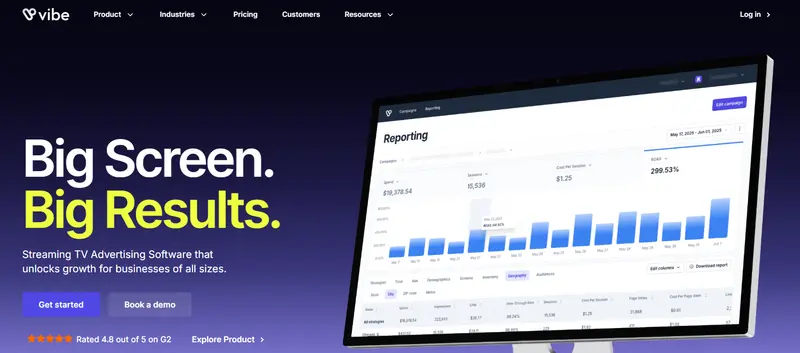
Vibe was built to make connected TV advertising accessible to businesses that may not have the budgets or resources typically associated with television campaigns. The platform provides access to premium streaming inventory across major TV manufacturers, streaming devices, and ad-supported television services through a self-serve interface.
Campaign setup focuses on simplicity. Advertisers can launch, manage, and measure CTV campaigns without navigating the complexity often found in larger programmatic platforms. That makes Vibe particularly appealing to small and mid-sized businesses entering streaming advertising for the first time.
Read More5. Roku Ads Manager
Best for: Advertising directly within the Roku streaming ecosystem
Pricing: Campaigns can start from $500.
Roku Ads Manager gives advertisers direct access to one of the largest connected TV ecosystems in North America. Campaigns can run across Roku devices, The Roku Channel, and partner streaming inventory through a self-serve buying platform.
The platform’s biggest advantage is audience access. Roku’s position within the streaming ecosystem provides advertisers with viewing and engagement signals that can help improve campaign targeting and measurement. Smaller businesses can launch campaigns without the large upfront commitments often associated with traditional television advertising.
Read More6. Samsung Ads
Best for: Smart TV advertising and household-level targeting
Pricing: Custom pricing.
Samsung Ads gives advertisers access to audiences across Samsung Smart TVs, one of the largest connected TV ecosystems in the world. The platform uses automatic content recognition (ACR) technology to understand viewing behavior and help advertisers reach audiences based on what they watch across streaming and linear television environments.
Unlike many advertising platforms that rely heavily on cookies or mobile identifiers, Samsung Ads is built around television viewing data. That creates unique opportunities for audience targeting, reach extension, and cross-screen measurement.
Read More7. Creatify
Best for: AI-generated video advertising creative
Pricing: Subscription-based plans with free trial options available.
Creatify addresses a different challenge than media buying platforms. Instead of helping advertisers purchase inventory, it focuses on producing video ads quickly using AI.
Users can generate video creatives from product URLs, scripts, images, or existing assets. The platform supports AI avatars, voiceovers, product demonstrations, and multiple creative variations designed for testing across advertising channels.
Creative production often becomes a bottleneck for performance marketing teams. Creatify aims to reduce that friction by making it possible to create and iterate on video concepts without relying on lengthy production cycles.
Read MoreHow to Choose a Video Ad Platform
The best video ad platform is the one that aligns with how your team buys media, where your audience spends time, and what you're trying to achieve.
Many advertisers make the mistake of evaluating platforms based on targeting options or reporting dashboards alone. Inventory access often matters more. A good starting point is identifying where your audience consumes content.
Start With The Viewing Environment
A campaign targeting podcast listeners, music audiences, and streaming users requires a different platform than a campaign focused on connected TV viewers.
Some platforms specialize in audio and video streaming environments. Others focus exclusively on smart TVs, streaming services, or broader digital video inventory.
Choosing the right environment first will narrow the platform selection considerably.
⭐ Recommended Platforms
Spotify Ads for music and podcast audiences, Roku Ads Manager for streaming TV inventory, and Samsung Ads for Smart TV viewers.
Decide Whether You Need Direct Access or Programmatic Buying
Some advertisers prefer direct access to a specific ecosystem. Others want the flexibility to buy inventory across multiple publishers, apps, websites, and streaming services from a single platform.
Programmatic platforms are often a better fit when campaigns need broader reach, centralized reporting, and access to multiple inventory sources. Direct-buying platforms tend to offer greater specialization within a particular environment.
⭐ Recommended Platforms
StackAdapt for accessible programmatic buying and The Trade Desk for enterprise-scale programmatic campaigns.
Consider Campaign Scale
Campaign complexity should influence platform selection.
A small business launching its first streaming TV campaign often benefits from a self-serve platform with lower entry requirements and simplified campaign management.
Enterprise advertisers usually require advanced measurement, audience modeling, attribution, and cross-channel reporting capabilities. Those requirements often point toward larger demand-side platforms.
⭐ Recommended Platforms
Vibe for smaller teams entering CTV advertising and The Trade Desk for large-scale media operations.
Evaluate Your Creative Production Process
Media buying is only one part of video advertising.
Many teams can launch campaigns quickly but struggle to produce enough creative variations to support testing and optimization. In those situations, creative production tools may have a greater impact on performance than changing media platforms.
Advertisers running high-volume testing programs should evaluate whether AI-powered creative tools can help increase production speed without increasing costs.
⭐ Recommended Platforms
Creatify for advertisers that need to produce more video creatives, test additional concepts, and shorten production timelines.
Look Beyond Targeting Features
Targeting options are often one of the first things advertisers compare. Inventory quality, measurement capabilities, and audience fit usually have a greater impact on campaign outcomes.
A platform with excellent targeting is still limited if it cannot reach the audiences that matter most to your business.
Advertisers focused on household-level targeting and television viewing data should prioritize platforms with strong audience intelligence capabilities rather than simply comparing targeting menus.
⭐ Recommended Platforms
Samsung Ads for advertisers prioritizing household-level targeting, audience intelligence, and connected TV measurement.
The best video ad platform is rarely the one with the longest feature list. It's the one that aligns with your audience, campaign goals, buying approach, and operational resources.
Video Ad Platforms vs Video Ad Networks
The terms video ad platform and video ad network are often used interchangeably, but they aren't the same thing.
A video ad network primarily focuses on aggregating advertising inventory from publishers and making that inventory available to advertisers. Its role is to connect supply and demand.
A video ad platform does much more. In addition to providing access to inventory, it often includes campaign management, audience targeting, reporting, measurement, optimization, and creative tools.
The distinction matters because advertisers aren't just buying impressions anymore. They're managing audiences, budgets, attribution, creative testing, and campaign performance across multiple channels.
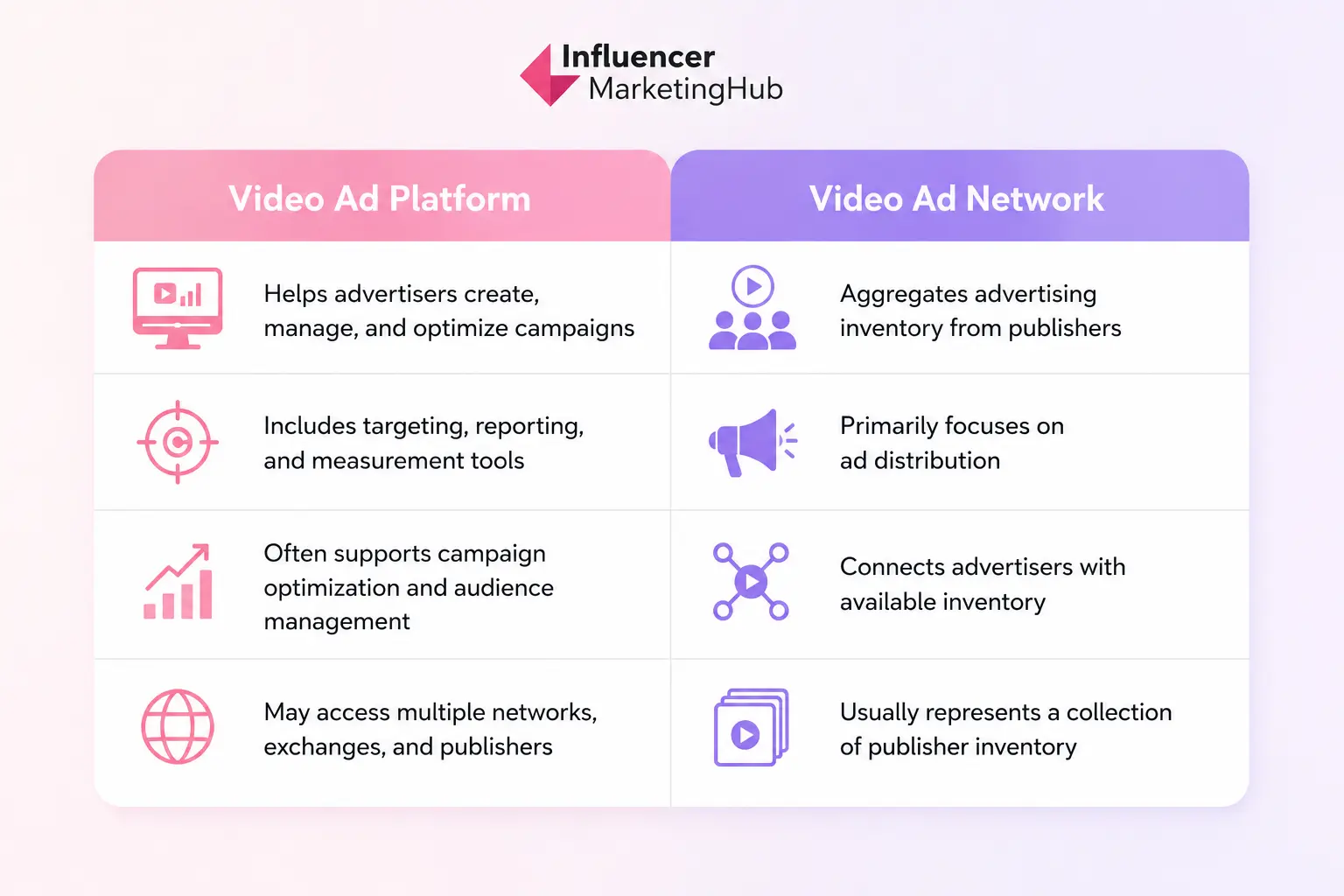
The line between the two categories has become less clear over time. Many modern platforms now provide both inventory access and campaign management capabilities, while some networks have expanded into targeting and optimization tools.
For most advertisers, the distinction is less important than the outcome. The real question is whether a platform provides access to the audiences, inventory, and measurement capabilities needed to achieve your campaign goals.
Which Video Ad Platform Is Right for You?
Video advertising has become far more fragmented than it was just a few years ago. Advertisers can now choose between streaming platforms, connected TV networks, programmatic buying tools, and AI-powered creative platforms, each serving a different purpose within the advertising ecosystem.
The best video ad platform ultimately depends on your objectives. Start with your audience, campaign goals, and buying strategy. Once those pieces are clear, choosing the right platform becomes significantly easier.
Frequently Asked Questions
What is a video ad platform?
A video ad platform is software that helps advertisers create, manage, distribute, optimize, or measure video advertising campaigns across digital channels such as streaming services, websites, apps, and connected TVs.
What is the difference between a video ad platform and a video ad network?
A video ad platform provides campaign management, targeting, reporting, and optimization tools. A video ad network primarily aggregates publisher inventory and connects advertisers with available ad placements.
What is programmatic video advertising?
Programmatic video advertising uses automated technology to buy and optimize video ad inventory in real time.
What is a video ad serving platform?
A video ad serving platform manages the delivery, tracking, and reporting of video advertisements. It helps advertisers and publishers ensure ads are displayed correctly and measured accurately.
Which video ad platform is best for small businesses?
Many small businesses start with self-serve platforms such as Spotify Ads, Vibe, or Roku Ads Manager because they offer straightforward campaign management and lower barriers to entry than enterprise advertising platforms.
Are AI video advertising platforms worth using?
AI video advertising platforms can help brands produce creative assets faster, generate multiple ad variations, and reduce production costs. They are particularly useful for advertisers running frequent creative testing programs.
How do I choose the right video ad platform?
Start by identifying where your audience consumes content, whether you need direct access or programmatic buying, the scale of your campaigns, and your creative production requirements. Those factors usually narrow the platform options quickly.


