Did you know that around 4.8 billion people are on social media? Given the consumers’ pull towards digital media and social connectivity, marketers recognize the potential of influencer marketing in boosting business revenue. In fact, due to its success in aiding business growth, the influencer marketing industry is expected to grow into an approximately $24 billion industry by the end of the year.
You may know influencer marketing as the collaborative effort between brands and influencers to promote a certain product or service to their target audience to improve engagement and profit, and it can be either B2C (business to customer) or B2B (business to business). B2C influencer marketing focuses on goals that draw out results from consumers (like sales and engagement), while B2B influencer marketing targets long-term business partnerships and building industry authority.
While B2C influencer marketing proves more effective in employing the help of (mostly) niche-specific celebrities, B2B influencer marketing may also involve celebrities, but in the form of other brand owners, industry leaders, consultants, analysts, or C-level experts in the field.
In both kinds of influencer marketing, businesses benefit from working with the agencies and their network of influencers. In this guide, we share some of the best B2B influencer marketing platforms that are renowned for their invaluable, tried-and-tested influencer marketing-related tools and integrations.
- 1. Brandwatch Influencer Marketing Software
- 2. Modash
- 3. Upfluence
- 4. Viral Nation Secure™
- 5. BuzzSumo
- 6. Creator.co
- Why Influencer Marketing is Gaining Momentum in B2B
- Key Features to Look for in a B2B Influencer Marketing Platform
- Best Practices for Running B2B Influencer Campaigns
- B2B Influencer Marketing Platforms: Your Secret to Success
1. Brandwatch Influencer Marketing Software
- Best for: Medium to large organizations and agencies
- Notable clients: Unilever, GSK, Nestle, Toyota, Carlsberg, Virgin Holidays
- Location: Brighton, United Kingdom
Brandwatch is an advanced social media suite offering tools for consumer intelligence, influencer marketing, and social media management. Through the platform, businesses can understand and engage with their target audience, improve their marketing strategies, and make informed decisions based on real data and insights.
Read More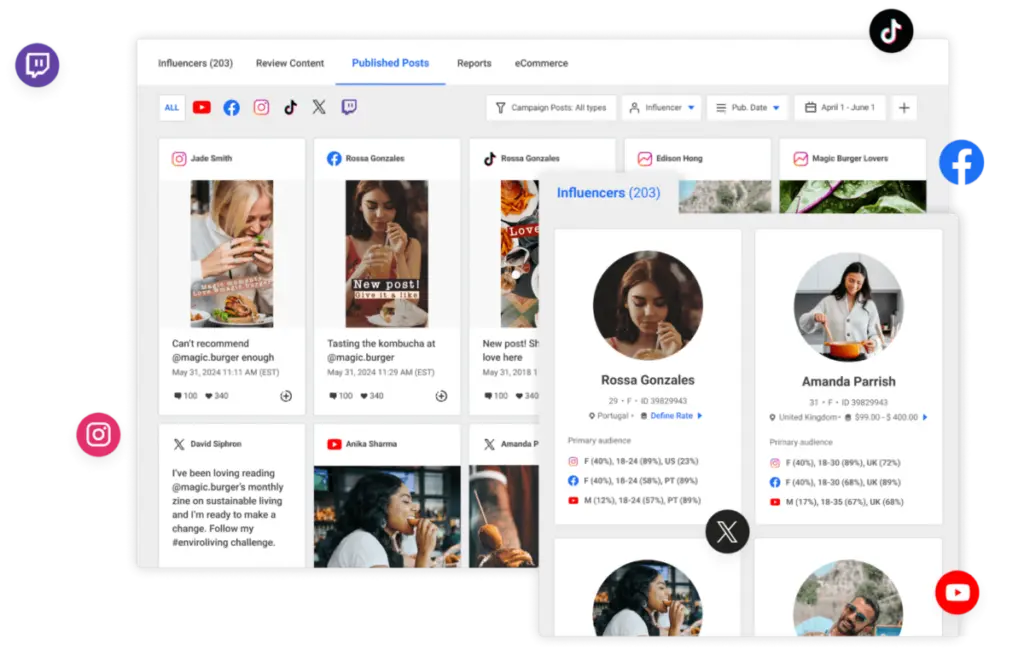
Key Features: Global Influencer Payment, Influencer Discovery, Influencer directory management, Creation of private influencer network, Campaign management and reporting, Broad platform coverage, Automated reporting,
Channels: YouTube, Facebook, Instagram, Twitter, Twitch, TikTok, Shopify
2. Modash
- Best for: Brands of all sizes
- Notable clients: Google, Mont Blanc, Victoria’s Secret, Sennheiser, Farfetch, Nord VPN, Charles & Keith
- Location: Tallinn, Estonia
Modash is one of the B2B influencer marketing platforms that specializes in influencer marketing. The platform has a network of over 250 million influencers on Instagram, TikTok, and YouTube, which makes it one of the largest databases for creators worldwide and an invaluable tool for brands delving into B2C and B2B influencer marketing.
Some of the brands that trusted Modash for their influencer marketing initiatives include the tech giant Google, Victoria’s Secret, Sennheiser, and many others.
Read More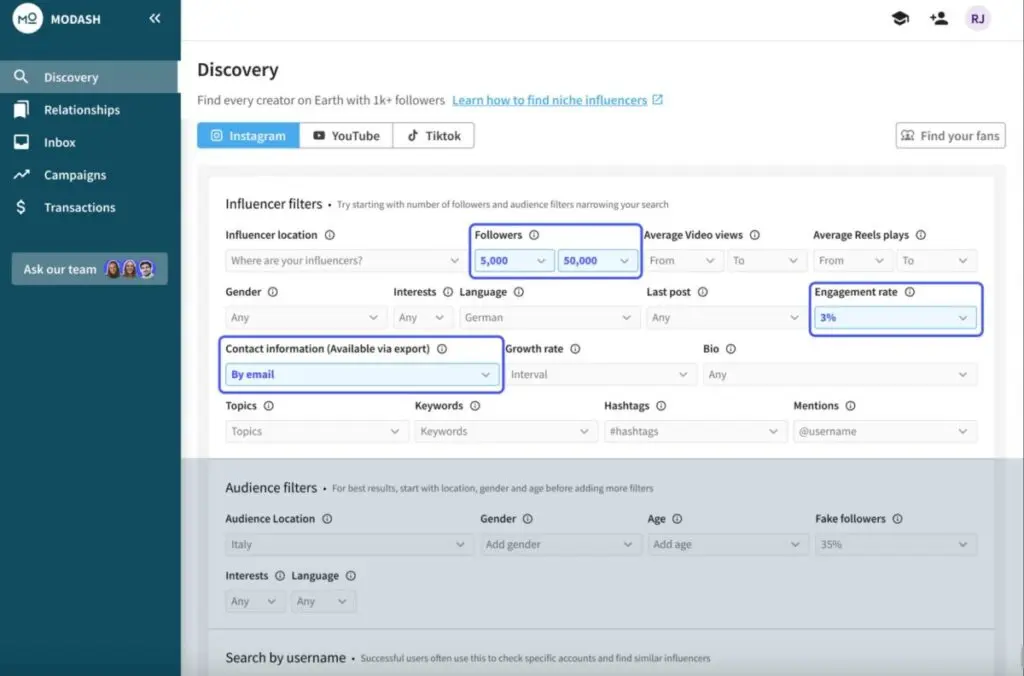

Key Features: Campaign Management, Influencer Discovery, Influencer Analytics, Influencer Campaign Monitoring, Influencer Management,
3. Upfluence
- Best for: E-commerce businesses of all sizes
- Notable clients: Amazon, Asics, Universal, Verizon, Unicef, Marriott, Farfetch
- Location: New York, United States
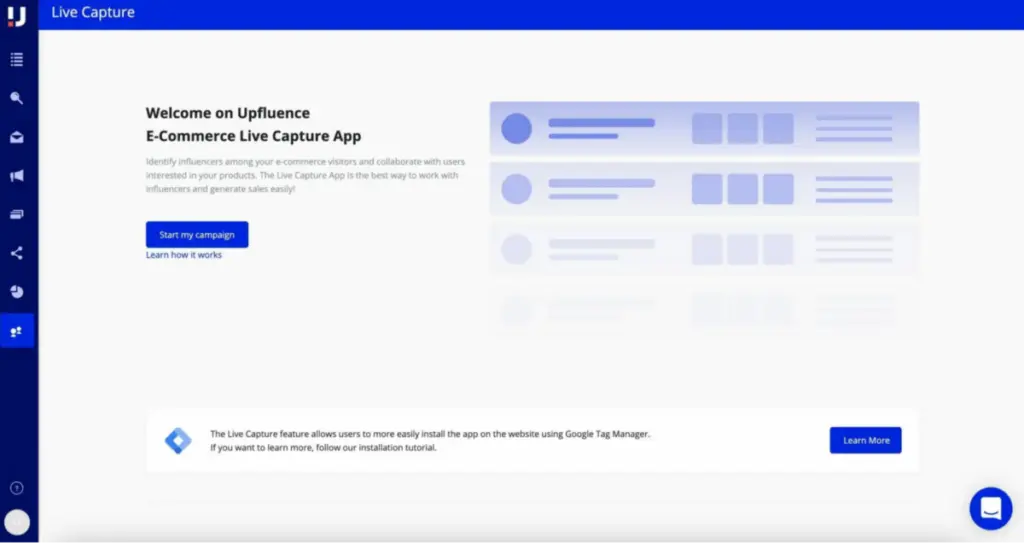
Unlike other B2B influencer marketing platforms, Upfluence is one of the few software that focuses on influencer search and outreach and managing influencer marketing campaigns. The company started in 2013, but it was in 2016 when it launched its all-in-one platform for influencer marketing campaigns.
Upfluence was created for eCommerce brands and direct-to-consumer (DTC) businesses, but its tools were also found useful by B2B brands. With Upfluence, B2B companies may also find their best-fit industry experts and possible brand partners in the platform’s 4-million large influencer network for Instagram, YouTube, X, Pinterest, and Twitch.
Read More
Key Features: Influencer Search & Discovery, Relationship Management, Campaign Management, Third Party Analytics, Automated Recruiting, Influencer Lifecycle Management, Team Collaboration Tools, Content Review, Campaign Reporting, Audience Analysis, E-commerce Tools, Product/Gifting Tools, Payment Processing, Social Listening, Affiliate Management, Affiliate Campaigns,
Channels: Instagram, Youtube, Facebook, Twitch, Tiktok, Twitter, Pinterest, Blogs
4. Viral Nation Secure™
- Best for: Medium to large businesses
- Notable clients: Uber, Walmart, Meta Quest, Logitech, Urban Outfitters
- Location: Toronto, Ontario, Canada
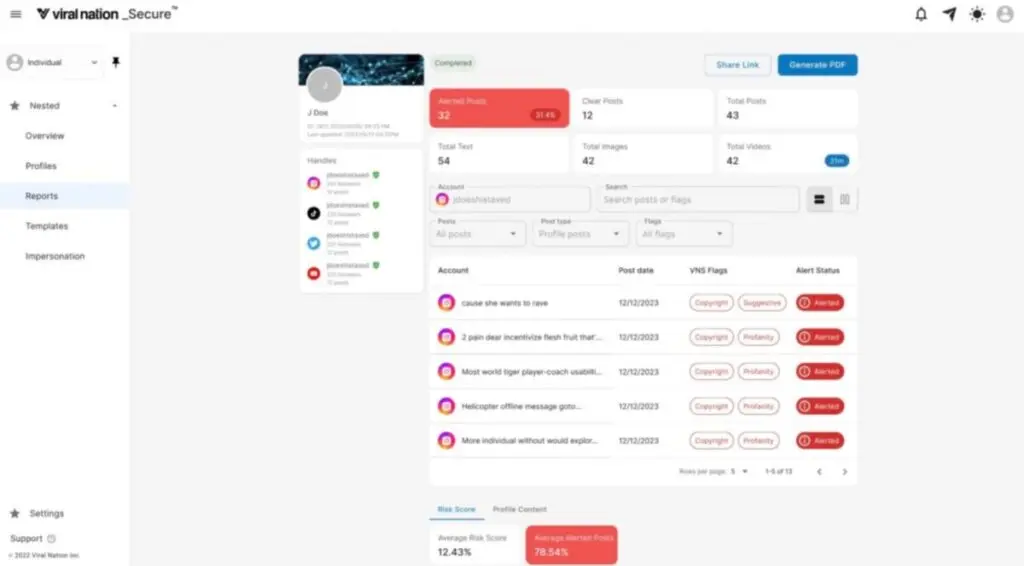
Viral Nation Secure, also known as VN Secure, is an AI-powered influencer discovery platform powered by Google Gemini. It sets itself apart from the competition through its powerful AI influencer search engine, which provides data points that other platforms otherwise overlook. VN Secure sifts through all the influencer’s data, including text, images, audio files, transcriptions, and even video to provide a thorough analysis of their profile.
Read More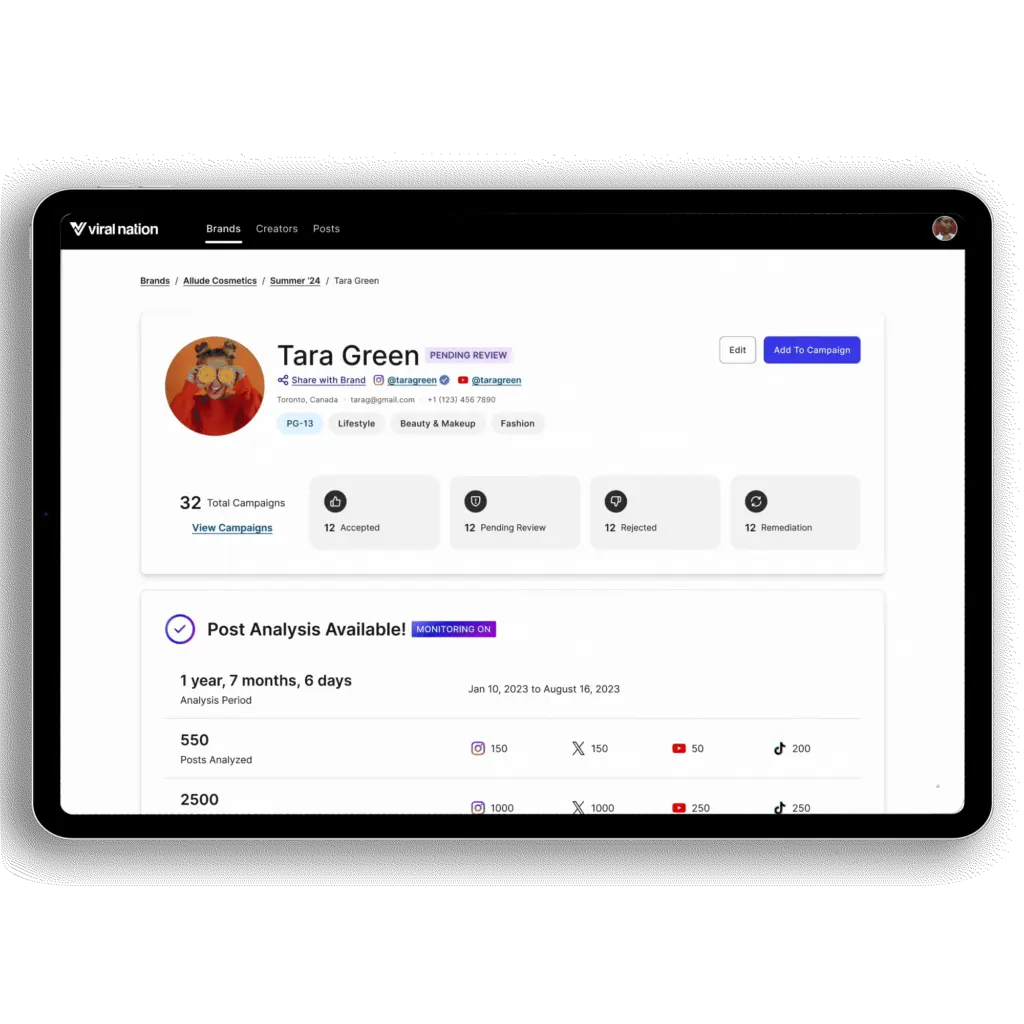
Key Features: Influencer Analysis, Moderation Tolerance Feature,
Channels: TikTok, Instagram, Facebook, X (Formerly Twitter)
5. BuzzSumo
- Best for: Publishers, brands, and agencies
- Notable clients: Buzzfeed, HubSpot, The Telegraph, Expedia
- Location: San Francisco, California
Buzzsumo is a content and social media analyzer platform that also offers an influencer search tool to find the best-fit influencers for both B2B and B2C companies. Unlike most influencer marketing tools Buzzsumo focuses more on content analysis across various platforms (Facebook, X, Pinterest, and Reddit) due to its purpose as a content research tool. Its media database is content-centric and the platform enables its users to access its network of 700k journalists, which, for B2B marketers, can be highly valuable.
Read More
6. Creator.co
- Best for: Brands and agencies of all sizes
- Notable clients: Colgate, Walmart, Vista, Hex Performance
- Location: Vancouver, British Columbia, Canada
Creator is a dedicated platform for influencer marketing that offers its service to both brands looking for influencers and creators looking for future collaborations. While most platforms target larger brands, Creator is also suitable for small to medium enterprises and startups. It is one of the first platforms that discovered the power of micro-influencers.
The platform is unique in serving both creators and brands, but what makes it stand out is its Collaboration Hub. While most platforms and software are focused on influencer search, Creator flips the switch by bringing content creators to brands instead.
Read More
Key Features: Search/Discovery, Automated Recruiting, Influencer Relationship Management, Influencer Marketplace, Content Review, Content Library, Campaign Management, Campaign Reporting, Influencer Analysis, Audience Analysis, E-commerce Tools, Product/Gifting Tools, Fake Follower/Fraud Detection, Payment Processing, Social Listening, Competitor Research, Creator Marketplace,
Channels: Instagram, YouTube, TikTok, Tiktok Shop
Why Influencer Marketing is Gaining Momentum in B2B
Influencer marketing is commonly associated with B2C brands, but due to its benefits, it is now being sought after by B2B companies. Although B2B and B2C companies have different audiences and require different kinds of influencers, the core need is the same—to have influential creators help them connect with their audience through trusted voices and expert insights.
While B2C influencer marketing focuses on using creators to sway people to purchase products or subscribe to services, B2B influencer marketing aims to create lasting business relationships. In B2B, this means working with industry experts and thought leaders who can validate brand expertise and engage professional audiences. For B2B, influencer marketing has the following benefits:
- Boosting brand awareness. Influencers, whether in B2B or B2C partnerships, can help promote your brand to a wider audience in their niche markets.
- Driving and improving lead generation. Influencers deliver your brand’s message directly to their target audience, which can help generate high-quality leads.
- Building credibility and trust through industry experts. Influencers in the B2B world are experts in their fields and have the credibility to influence and engage with decision-makers in your niche. Having them deliver your marketing message helps your brand gain more credibility and allows you to foster new connections that can eventually lead to building new business relationships in the long run.
Key Features to Look for in a B2B Influencer Marketing Platform
There are many influencer marketing platforms in the market with varying strengths and a solid history of success working with elite clients. All of them are great depending on your business needs, making it necessary to define what kind of expertise your brand requires before deciding to purchase or subscribe to a service. Here are a few things to keep in mind when searching for an influencer marketing platform:
Influencer Discovery
While most influencer marketing platforms offer an influencer discovery feature, they have subtle differences that your brand can find advantageous for your future campaigns.
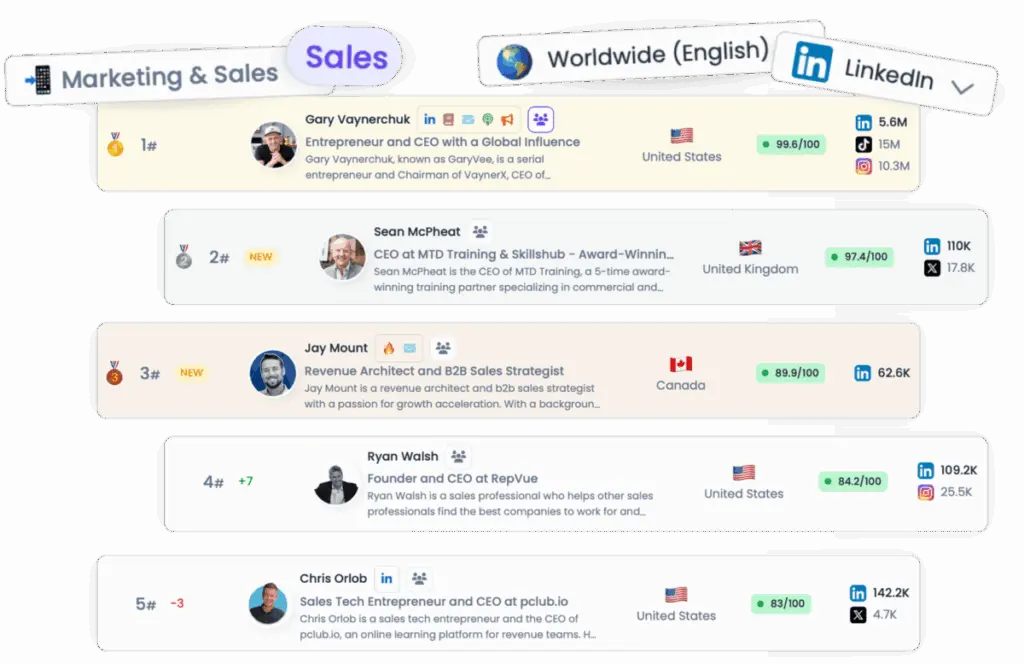
For instance, some platforms have an influencer network spanning across social media platforms, like Traackr, which covers 13 social media apps. However, some are limited to only Instagram and TikTok, like Later Influence. A few platforms also offer influencer searches on LinkedIn, like Favikon.
Another thing to check is the size of the influencer network offered by the platform. Some have a network of tens of millions, while others have a slightly smaller pool of influencers to search from.
Campaign Management
Some influencer platforms (like Creator) allow brands to create and manage campaigns on the platform. In contrast, other platforms only provide basic features, like tagging and categorizing creators in lists, limiting campaign customization. In many cases, platforms also include a payment integration function for their creators.
Advanced Analytics, Custom Reporting, and ROI Measurement
Analytics are essential on influencer marketing platforms as they provide concrete measurements of campaign success and help business owners make informed marketing decisions. Advanced analytics go beyond basic engagement metrics to track deeper insights, like lead generation, account-level outcomes, and impacts on various campaigns.
Audience Segmentation & Targeting
Most influencer marketing platforms give information on a creator’s profile, but some, like Modash, have special filters for the influencer’s audience as well. This proves handy for businesses looking for creators who have pull on a specific audience segment (ex. based on age, location, industry, or interests).
Special Functions
Each influencer marketing platform features a unique selling point that brands may find valuable in their future campaigns. For example, VN Secure integrates red flag alerts which notify brands of potential risks related to an influencer’s behavior, content, or engagement quality. On the other hand, Buzzsumo offers a content-focused approach, helping brands discover influencers through top-performing content and trending topics relevant to their niche.
Meanwhile, Creator allows creators to apply for partnerships in campaigns created by brands subscribed to the platform, while Upfluence and Later Influence integrate affiliate marketing functions into their platforms. These platforms often offer something extra that your brand might find useful depending on your marketing goals.
Best Practices for Running B2B Influencer Campaigns
For businesses planning B2B influencer campaigns, it’s essential to start with clearly defined goals. Here are a few key elements that most successful campaigns share:
Right Influencer Fit
Identifying the best-fit influencers involves carefully assessing candidates for alignment with the brand's industry, target audience, and specific goals, not merely selecting creators based on their follower count. Influencer marketing platforms have various tools and filters that brands can use to find the right fit creators for their campaigns.
Clear KPIs
Specific, measurable objectives such as lead generation, brand awareness, or engagement will help direct your B2B marketing efforts and drive results. Make use of the data available to you in measuring your campaign’s success and planning your post-campaign steps.
Leveraging LinkedIn
Due to LinkedIn’s capability to connect professionals to the biggest decision-makers in the industry, it has become one of the most effective platforms for B2B influencer marketing. Landing partnerships with influential individuals in the business space can elevate a brand’s credibility and widen its reach within target industries.

- Source: LinkedIn
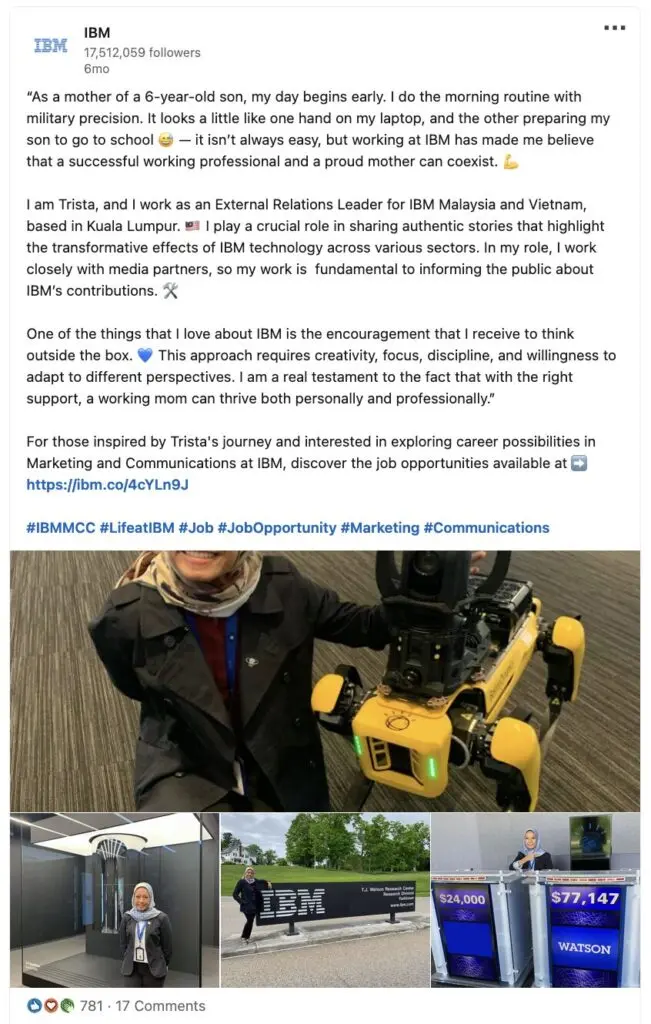
Even elite brands like IBM have found the advantage of B2B influencer marketing through LinkedIn. IBM has an employee advocacy program where its employees share their life working at IBM through the hashtag #lifeatibm, helping the brand reach a wider audience in the tech and business sectors.
Here’s more information on how businesses can use LinkedIn for B2B influencer marketing.
Content Co-Creation
B2B influencer marketing doesn’t end with finding the right influencers for your campaign. Working closely with them in the content strategy process is also crucial for the partnership to yield content that aligns with your business and the influencer’s brand.
Managing Partnerships Efficiently
While you can manage your influencer campaigns manually, using influencer marketing platforms makes it significantly easier. These platforms allow you to track communications, monitor deliverables, manage contacts, and pay the influencers seamlessly and from only one place, saving valuable time and effort that can be directed to other initiatives in your business.
B2B Influencer Marketing Platforms: Your Secret to Success
With the audience’s attention on social media, brands now recognize the success of tapping influencers for their marketing campaigns. Although it began as a B2C thing, B2B industries have also recognized the benefits of getting industry influencers to advocate for their brands.
However, while the idea of marketing through influencers seems simple, it involves a painstaking process if done manually, especially by brands without much experience collaborating with creators.
Influencer marketing platforms exist to help brands of any size simplify the process of discovering the best-fit influencers for their desired campaigns. Of course, there are a lot of platforms to choose from, we’ve only shown ten among the wide range available, and it can be overwhelming.
However, when you look closely, each platform has its unique selling point that can distinguish it from the others. Understanding these distinctive features can make it easier to find a platform that best aligns with your campaign goals, whether it’s a focus on robust analytics, specialized audience targeting, content discovery, DIY campaigns, or advanced influencer matching.
Regardless of the platform you choose, as long as its strengths are aligned with your influencer marketing needs, you can expect to drive meaningful engagement and see measurable results.


![Comparing the 8 Best Social Media Platforms in 2024 [Complete with Pros & Cons]](https://s.influencermarketinghub.com/imaginary/resize?width=400&height=200&type=webp&url=https://influencermarketinghub.com/wp-content/uploads/2024/01/image-10.png)