
UGC has become the dominant creative format for paid social, but the way brands produce it is changing fast. As ad costs rise and creative fatigue sets in, teams are asking harder questions:
- How do you scale authentic-looking video ads without burning time, budget, or creators?
- And how do you keep testing new hooks when platform algorithms reward speed more than polish?
Performance marketers are moving away from one-off creator deals and manual editing workflows toward repeatable UGC systems that can produce, test, and iterate videos at scale.
AI-generated actors, automated editing, built-in scripting, and campaign-ready exports are no longer “nice to have” features. They are becoming the backbone of modern paid social operations.
This shift has given rise to a new category of tools purpose-built for social ads, not just video creation.
In this guide, we break down the top-rated UGC video makers for social ads, focusing on how each platform supports speed, testing velocity, and real performance outcomes.
Top UGC Video Makers for Social Ads
1. Billo
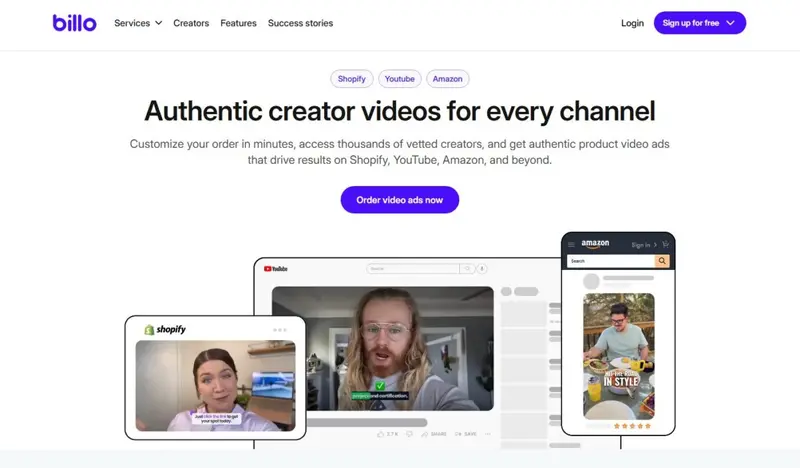
Best for: Small and Medium Brands and Agencies that want real human creators, ad-ready UGC, and measurable lift on Meta and TikTok campaigns.
Pricing: Flexible, per-video pricing based on creator selection and deliverables, with no long-term contracts required.
Billo is a UGC creator marketplace built specifically for paid social performance. Unlike AI-generated platforms, Billo connects brands with vetted, on-camera creators who follow structured briefs and deliver ad-ready videos designed to convert.
The platform emphasizes speed, format flexibility, and performance data, making it especially attractive to teams running iterative ad testing on Meta and TikTok.
Read More
Key Features: Influencer Search & Discovery, Campaign Management, Influencer Marketplace, Influencer Content Amplification, Global Influencer Payment, Insights/Analytics, Influencer Discovery, Content Amplification, Data/Analytics, Influencer whitelisting, Freelancer/Creator Marketplace, Search/Discovery, Team Collaboration Tools, Content Review, Content Library, Campaign Management, Campaign Reporting, E-commerce Tools, Product/Gifting Tools, Forms and Compliance, Payment Processing, Faceted Search / Filtering, Forms & Compliance,
Channels: Tiktok, Instagram, Facebook, Youtube
2. Vidlo.Video
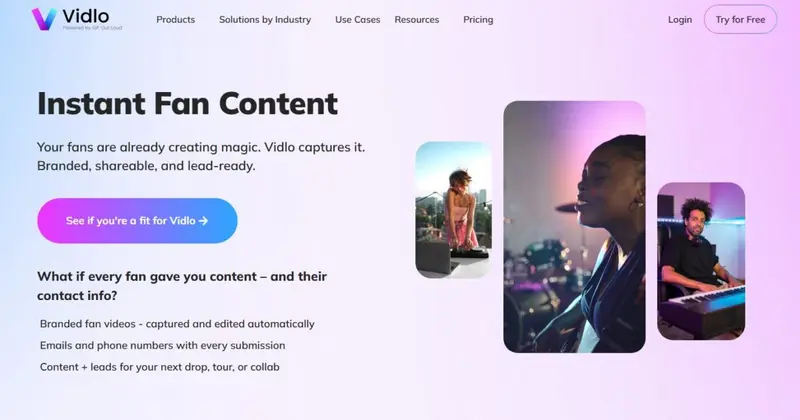
Best for: Brands that want to capture authentic, fan-created UGC videos for social ads while collecting email and SMS leads at the same time.
Pricing: Plans start from $39 per month, with higher tiers supporting more campaigns, videos, embeds, and CRM-ready lead capture.
Vidlo is a UGC video capture platform designed to turn customers and fans into on-camera advocates with minimal friction. Instead of generating synthetic UGC, Vidlo focuses on real people recording short videos using a branded prompt, music, overlays, and filters.
Videos are automatically formatted, edited, and delivered ready for paid social, email campaigns, or landing pages.
Read More3. HeyGen
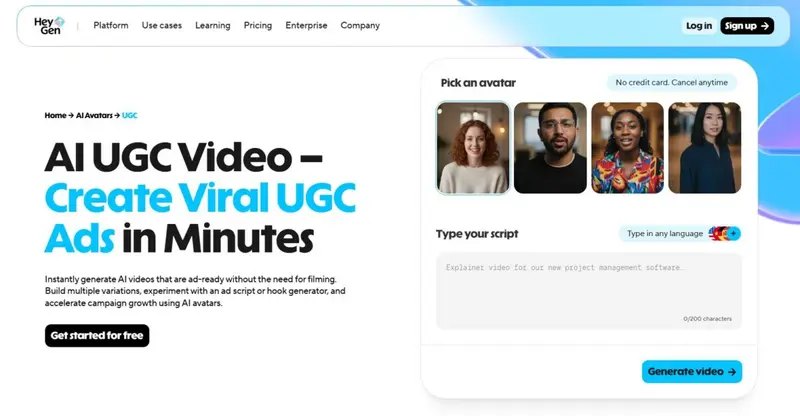
Best for: Performance marketers, agencies, and DTC brands that want to scale UGC-style video ads using ultra-realistic AI avatars instead of filming creators.
Pricing: HeyGen offers a free plan; Paid plans start at $29/month
HeyGen is an AI video creation platform built around one core promise: making AI-generated UGC ads feel human enough to perform on paid social. Instead of capturing real customers on camera, HeyGen lets teams “cast” from a large library of lifelike avatars filmed in everyday environments such as cars, cafes, and outdoor settings.
The result is creator-style footage that blends naturally into TikTok, Instagram, and Facebook feeds.
Read More4. Tagshop
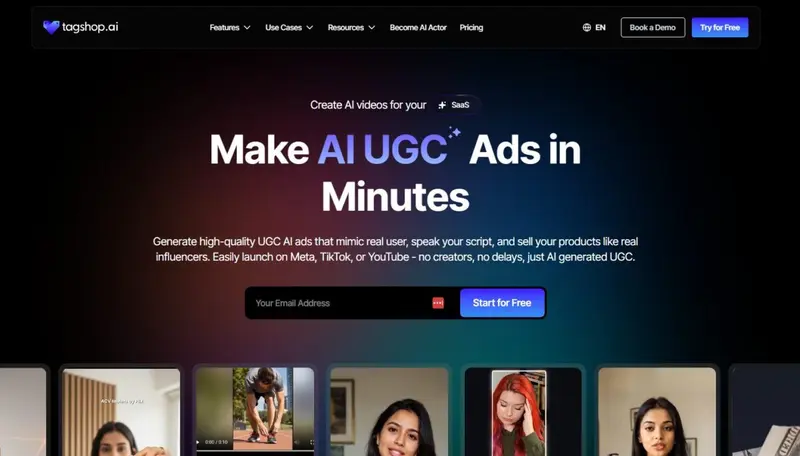
Best for: Performance marketers, DTC brands, and agencies that need to generate large volumes of UGC-style video ads for Meta, TikTok, and YouTube without relying on creators.
Pricing: Plans start at $11 per month; Free plan also available
Tagshop positions itself as a speed-first AI UGC platform built for paid social experimentation. Instead of sourcing creators or coordinating shoots, users can turn a product URL into a ready-to-run UGC video in minutes. The platform automatically pulls product details, generates scripts, pairs them with AI avatars, and outputs videos optimized for social ad placements.
Read More5. UGC Ads AI
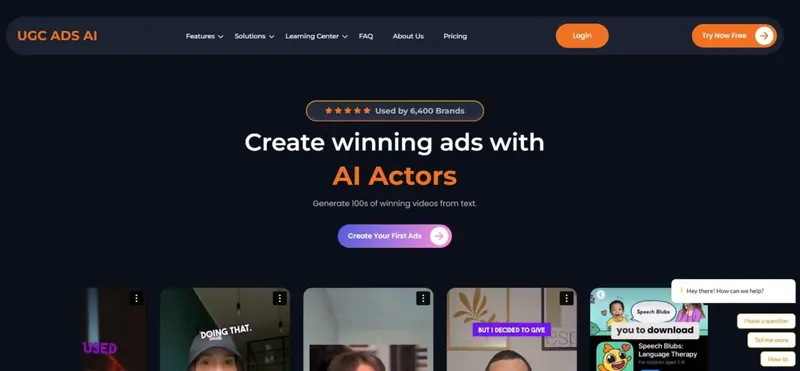
Best for: Ecommerce brands and performance marketers who want to replace creator-heavy workflows with fast, scalable AI-generated UGC ads.
Pricing: Subscription-based pricing, starting from $49.99 per month
UGCads.ai is built for one core job: helping advertisers generate large volumes of UGC-style video ads without relying on creators, contracts, or revision cycles. The platform uses AI-generated actors and scripts to produce ad-ready videos in minutes, making it especially appealing for teams that prioritize speed, testing velocity, and cost control.
Read More6. Trend.io
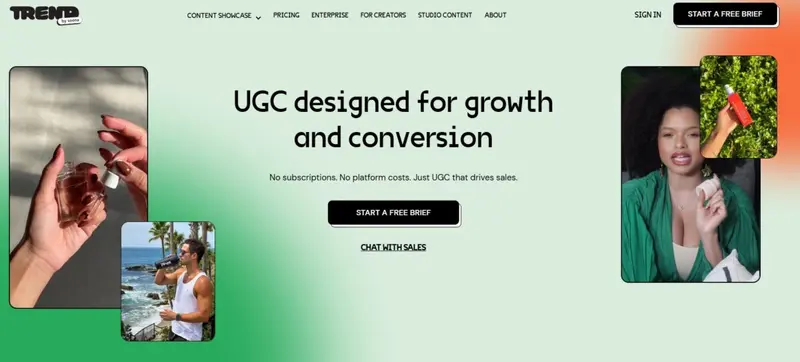
Best for: Brands and growth teams that want real human-shot UGC content sourced from vetted creators without subscription fees or creator negotiations
Pricing: Trend uses a credit-based, pay-per-project model with no platform subscription or recurring fees. Plans start with Starter at $550 for up to 6 videos or 15 photos
Trend.io is a creator marketplace focused on connecting brands with a global network of vetted photographers and videographers — not AI actors. After you post a campaign brief, creators submit applications, deliver content ranging from short video testimonials and product shots to lifestyle UGC, and you approve the assets you want to use.
Brands retain full licensing and distribution rights for all approved content.
Read More7. Videotok
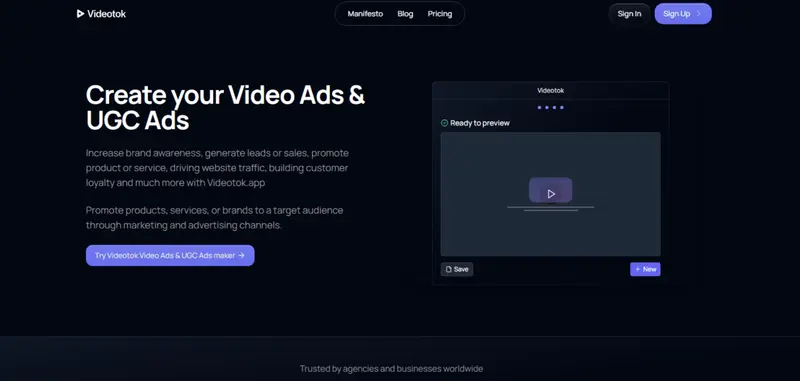
Best for: Marketers, creators, and small businesses that want AI-powered generation of scalable UGC-style video ads for TikTok, Instagram Reels, YouTube Shorts, and other platforms.
Pricing: Videotok offers flexible plans that vary by credits and feature access, with entry-level options starting around $31.2/month
Videotok is an AI video creation platform designed to automate the full production workflow — from script and hook generation to visuals and voiceovers. Users can convert text, images, audio, or URLs into short video content fit for social formats, with support for UGC-style ads, product showcases, faceless content, and avatar-driven clips.
Read More8. VEED.IO
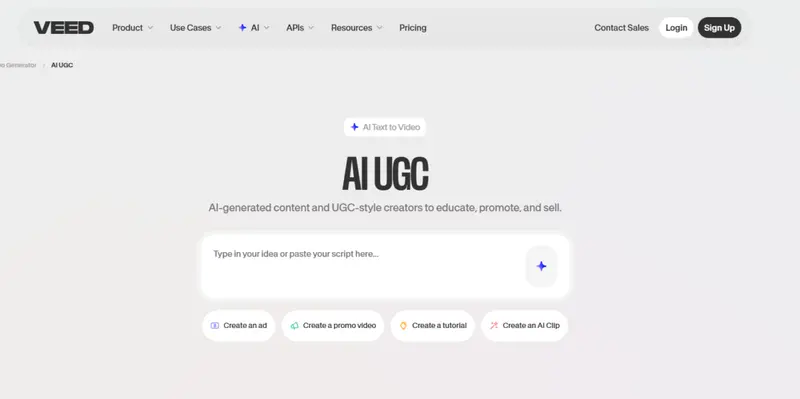
Best For: Ecommerce brands, agencies, and performance marketers who need to edit, optimize, and standardize UGC videos for paid social ads.
Pricing: Subscription-based pricing starts at approximately $9 per month, with higher tiers unlocking AI tools, brand kits, and collaboration features.
VEED.io is built for one core job: helping marketing teams turn raw UGC footage into polished, ad-ready video assets quickly. Rather than generating content from scratch, the platform focuses on post-production efficiency, making it especially valuable for brands that already source creator videos but need to clean, format, and optimize them at scale.
Read MoreWhich UGC Video Maker Fits Your Social Ad Strategy Best
Not every UGC video maker solves the same problem. Some tools focus on replacing creators entirely, others on scaling authentic testimonials, and some on optimizing existing footage for ads. The right choice depends on how fast you need to test, how much creative volume you run, and whether authenticity or speed is your top priority.
If you want to replace creators and scale ads fast
UGCads.ai and Tagshop are built for performance marketers who prioritize speed, scale, and testing velocity. These platforms generate UGC-style ads using AI actors and scripts, removing creator coordination, contracts, and revision cycles. They are best suited for TikTok and Meta advertisers running aggressive creative testing where volume and iteration speed directly impact ROAS.
If you want realistic UGC ads without filming
HeyGen is ideal for teams that want creator-style videos without managing real people. Its AI avatars, voice mirroring, and batch variant generation allow marketers to test hooks, scripts, and tones at scale while keeping the content visually believable. This works well for DTC brands and agencies that want realism without production delays.
If you want real people and ad-ready UGC content
Billo and Vidlo are better fits for brands that rely on trust, testimonials, and social proof. Billo focuses on creator-led ad production with performance data like hook rate and CTR, while Vidlo excels at capturing authentic customer videos through QR codes, post-purchase prompts, and in-store activations. These tools suit brands where real customer voices matter more than speed alone.
If you already have UGC and need to optimize it for ads
VEED.io works best when you already have footage and need to turn it into high-performing paid assets. Its strengths lie in subtitles, audio cleanup, eye-contact correction, and fast multi-format exports. This makes it valuable for teams polishing creator content before launching it across TikTok, Meta, and YouTube.
| Tool | Best for | UGC source | Primary strength | Speed to launch |
Paid ads ready |
| UGCads.ai | High-volume paid social testing | AI actors | Fast creative iteration without creators | Minutes | Yes |
| Tagshop | Scaling AI UGC ads across platforms | AI avatars | URL-to-video ad generation and bulk variants | Minutes | Yes |
| HeyGen | Realistic UGC without filming | AI avatars and voices | Believable creator-style videos at scale | Minutes | Yes |
| Billo | Performance-driven creator UGC | Real creators | Data-led creator selection and ad formats | Days | Yes |
| Vidlo | Authentic customer testimonials | Real customers | QR-based UGC capture with lead data | Minutes to days | Yes |
| VEED.io | Optimizing existing UGC for ads | Existing footage | Editing, subtitles, audio and polish | Minutes | Yes |
Final Thoughts on Choosing the Right UGC Video Maker for Social Ads
UGC video makers are no longer just creative tools. They are a performance infrastructure for modern social advertising. As platforms like TikTok and Meta reward fast iteration and fresh creative, the ability to generate, test, and optimize UGC at scale has become a competitive advantage.
The best tool depends on how you grow. AI-driven platforms excel when speed, volume, and testing velocity matter most. Creator-led solutions shine when trust, realism, and social proof drive conversions. Editing-focused tools fill the gap by turning raw footage into ad-ready assets that perform across formats.
There is no single best option for every brand. The right choice is the one that aligns with your creative workflow, budget discipline, and performance goals.
When UGC creation matches how you run ads, results compound faster, and creative fatigue becomes far easier to manage.
Frequently Asked Questions
Why do UGC video ads often outperform polished brand creatives on social platforms?
UGC videos feel native to feeds and reduce ad resistance, which is why many brands focus on the benefits of UGC marketing when optimizing for attention and trust in paid social environments.
How do UGC video makers differ from general-purpose video editing tools?
UGC tools are built around speed, authenticity, and ad testing, whereas user-generated content platforms prioritize workflows like creator-style framing, hooks, and platform-ready exports.
When should a brand choose a UGC tool instead of working with an agency?
Brands that need constant creative testing or rapid iteration often replace agencies with tools, while UGC video agencies still make sense for high-touch storytelling or campaign launches.
What makes a UGC video effective specifically for paid ads?
High-performing ads usually combine fast hooks, relatable delivery, and clear CTAs, which aligns with best practices commonly seen in UGC video ads optimized for TikTok and Meta.
How important is storytelling in short-form UGC ads?
Even in 15 to 30 second formats, structure matters, and many teams rely on storytelling UGC frameworks to guide hooks, problem statements, and resolutions.
Why has UGC become such a dominant format in social advertising?
As platforms reward authenticity and speed over production value, the rise of UGC reflects how audiences respond more to peer-like content than brand-led messaging.
Should UGC ad strategies change during seasonal or promotional periods?
Yes, creative angles often shift around urgency and relevance, which is why many brands plan around UGC ad creatives for holidays to stay timely and competitive.
How does UGC fit into a full-funnel paid social strategy?
UGC is most effective when treated as a system rather than one-off videos, following a UGC campaign framework that covers ideation, testing, scaling, and post-launch analysis.


