
Why are your Instagram posts getting views but not momentum?
The answer often hides in your DMs. As Adam Mosseri confirmed, the platform’s ranking system now weighs sends per reach—how often a post is privately shared—as one of its strongest engagement signals.
That shift mirrors a broader trend: public likes are fading while private sharing is exploding across Stories, Reels, and group chats.
This playbook unpacks how to design posts that people want to send—whether you’re a brand, creator, or casual user. From utility-driven carousels and “send-to-a-friend” prompts to caption SEO and ethical send-bait, the goal is simple: make content worth forwarding.
Because when your post sparks a DM, it doesn’t just travel—it earns trust, conversation, and algorithmic reach all at once.
Welcome to the Instagram Sends per Reach era, where shareability is the new currency of visibility.
- Why “Sends per Reach” Is the 2025 Engagement Metric That Matters
- The Hook-Body-Send Pattern: Engineering for Share Triggers
- Crafting for Algorithm Signals: Discovery and Shareability
- Post Formats That Naturally Travel Via DM
- Measuring & Optimizing Your Sends per Reach
- DMs Are the New Word of Mouth
- Frequently Asked Questions
Why “Sends per Reach” Is the 2025 Engagement Metric That Matters
Instagram (and the broader Meta stack) has long evolved beyond “likes = success.” In 2026, the shift is clearer: it’s not how many people view or save your post — it’s how many take the extra step to send it privately via DM that carries weight.
That’s why Sends per Reach (SPR) is emerging as a leading metric you can’t ignore.
1. The Algorithmic Pivot: Why Mosseri Is Emphasizing Sends
In mid-2024, Instagram’s head, Adam Mosseri, publicly stated that sends per reach is now one of the most influential ranking signals on the platform.
He went further:
“One of the most important signals we use in ranking is sends per reach … think about creating something people want to send to a friend.”
In practical terms, Mosseri says that Instagram is reprioritizing content that sparks conversation — not just passive attention. What this means: if your post compels users to DM it to someone else, Instagram treats that as a stronger endorsement than a like, comment, or save.
To reinforce this shift, Mosseri also confirmed that Instagram is experimenting with making public send/share counts visible, and that sends will be weighted more heavily in unconnected discovery contexts (versus content shown to existing followers). In short, the platform is signaling that private sharing is now public currency.
2. What “Sends per Reach” Really Measures (And Why It’s Powerful)
Definition (Straight-forward):
It’s a ratio, not a raw count. So a post with 50 DMs out of 1,000 viewers has an SPR of 0.05, or 5%.
Why is that ratio important?
- Normalized performance comparison: You can compare posts of wildly different reach sizes on the same scale.
- Signal strength: Private shares communicate intent, trust, and emotional resonance. If a user thinks, “My friend needs to see this,” they’re sending it — and that’s a stronger user vote than a like or comment.
- Predictive of long-term reach: Mosseri argues that SPR correlates more strongly with future reach than other metrics.
Because Instagram’s goal is to surface content users want to talk about or share with others, SPR becomes a key behavioral signal for the algorithm.
3. Why This Matters for Marketers, Creators & Brands
If you're a creator, influencer, brand, or just a regular user who wants more visibility, here’s the advantage: optimizing for SPR lets you earn organic reach more sustainably.
- Better reach for fewer actions: Instead of chasing mass impressions, you can focus on content that travels deeper.
- Higher quality engagement: DM-sharing is more deliberate than passive scrolls, making your audience more qualified, attentive, and invested.
- Differentiation in saturated feeds: As everyone chases Reels and short video metrics, your edge can be content engineered for shareability Instagram users actually perform.
- Long-term growth: Consistent high SPR signals to the algorithm that your content is valuable enough to amplify repeatedly (rather than burst once and fade).
But it’s not enough to merely hope that people will share. You must design and create content that wants to be sent.
The Hook-Body-Send Pattern: Engineering for Share Triggers
The most share-driving Instagram posts don’t happen by accident. They follow a repeatable storytelling rhythm that marketers call the Hook → Body → Send-Ask pattern — a creative structure designed to capture attention, deliver value, and then invite private sharing in a way that feels organic, not forced.
1. Hook: Stop the Scroll and Spark Curiosity
The hook is the first frame, caption line, or 1-second motion that earns a pause. It’s what determines whether the viewer keeps watching long enough to share.
Strong hooks often start with:
- a relatable problem (“Why your posts aren’t getting shared …”)
- a surprise stat (“80 % of Reels views come from non-followers …”)
- or a “what-no-one-tells-you” insight.
Creator Kelsey Kotzur, a fashion and lifestyle influencer known for her Outfit formulas for real life series, built a recurring Reels format designed specifically to drive DMs. Each Reel starts with a scroll-stopping hook like “Outfits for when you hate everything in your closet” and continues with labeled looks (“coffee run,” “desk day,” “first date”) that make it instantly useful to share with a friend.
Her Reels routinely spark comments like “Sending this to my sister immediately” and “Saving this for my next trip,” evidence of the utility-driven share behavior Instagram’s algorithm rewards.
This intentional “share-first” structure turns relatable pain points into actionable mini-guides, the exact kind of creative Mosseri says signals high value to the platform. By blending humor, relevance, and real styling guidance, Kotzur designs content that functions as a DM-ready reference, not just inspiration.
2. Body: Deliver Value That’s Worth Sending
Once you've grabbed attention with a compelling hook, the body must do the heavier lifting: provide enough value or resonance so that forwarding it feels natural — not forced.
High-SPR posts often share these qualities:
- They solve a problem.
- They reveal a lesser-known tip or insight.
- They serve as a handy mini-reference someone would want to keep or pass along.
A strong real example: Doing Things Media, a network behind meme and viral content brands like Overheard, Recess Therapy, etc., explicitly prioritizes shareable content rather than just view counts.
Speaking to Business Insider, Sam Graviet, Doing Things' vice president of creative, said:
“Likes are awesome. Saves are great. Comments are amazing … but if you really want that algorithm boost … you need to be able to master what a share is.”
They are designing content with the notion of “people sharing it to DMs” baked in.
This case is powerful because it shows a content strategy built around forwarding intent, not just engagement metrics. Their content is often emotionally resonant, deeply relatable, and crafted to feel like something people want to share privately.
3. Send-Ask: Prompt the Private Share
Finally, every high-performing post closes with a send-ask — a clear but context-aware prompt that nudges sharing behavior.
Phrases like “Send this to your team before your next shoot” or “DM this to a friend who always forgets captions” strike the right tone. The goal is to identify the recipient, not to pressure the sender.
Instagram influencer John-Marc van Wyk regularly uses these phrases in his videos.
Creators are encouraged to use situational prompts (“send to someone who…”) rather than numerical ones (“send to five friends”), which the platform classifies as manipulative engagement tactics.
The difference is subtle but critical: one drives genuine utility-based sharing, the other triggers spam. The most effective send-asks feel like doing someone a favor — not completing a task.
Takeaway
When the Hook-Body-Send pattern is executed with value and authenticity, posts evolve from static visuals into micro-resources that travel privately across group chats. That’s the essence of shareability on Instagram — and why optimizing this pattern directly improves your sends per reach.
Crafting for Algorithm Signals: Discovery and Shareability
Instagram has been explicit about what its ranking systems reward: watch time, likes, and sends — measured per reach. That means your copy and creative should both help people find your post (discovery) and forward it (shareability).
Below is a practical way to combine keyworded captions with ethical “send” cues without tripping engagement-bait rules.
Use Keyworded Captions That Instagram Search Can Read
Instagram Search now interprets caption text (not just hashtags or comments) as a primary ranking factor. The platform recommends placing relevant keywords—topics your audience might type—directly into the caption. As per Instagram's announcement:

To implement this:
- Begin with a 1-2 line human hook that includes a keyword (e.g., “Struggling to build a morning skincare routine you’ll stick to?”)
- Embed related keywords in your steps or tips (e.g,. “cleanser,” “hydrating serum,” “SPF”)
- Close with a recipient-based send cue (e.g., “Know someone with dry skin? Send this.”)
Here's an example Reel from Balance Me Natural Skincare and how the skincare brand implements keyworded captions to drive DM sends:
This structure serves two masters: it reads naturally to your audience while also signaling topic relevance to Instagram’s search index.
Align With Mosseri’s Signals: Optimize Per-Reach Metrics
Adam Mosseri has affirmed that sends per reach (SPR) is among Instagram’s strongest ranking signals—especially when promoting content outside your immediate follower base. In practice, posts that earn more DM shares relative to reach tend to get further amplified.
To act on this:
- Start with a visual or hook addressing a pain point users would share privately (e.g., “You’re editing captions wrong — here’s a faster method”)
- Give digestible tips or insights that people would want to pass along
- End with a send prompt naming the recipient (e.g., “Send to your content partner who’s always struggling with captions”)
This approach nudges the behavior Instagram prizes.
Use “Send Bait” Ethically — Avoid Engagement Traps
Meta’s ranking system penalizes classic engagement bait tactics such as “Tag ten friends” or “Share this with five people.” Instead, the platform encourages prompts that are contextual and avoid numeric solicitations. As per Meta:
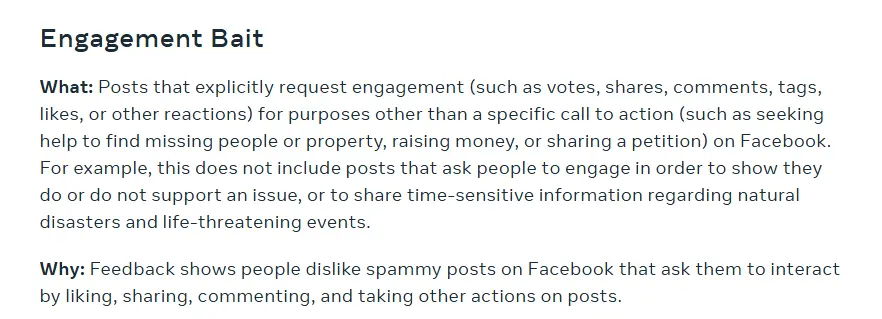
Compare these prompts:
- Poor: “Share this with 5 friends to unlock part 2.”
- Better: “If you know someone launching a podcast, send this checklist.”
The latter names a situation, not a quota. It feels helpful rather than manipulative.
Because Instagram now weighs sends per reach heavily, many forward-thinking creators write captions that are SEO-aware, then close with a recipient-based send ask. This alignment mirrors Instagram’s own advice on searchability and prioritizes share behaviors that boost reach.
You can track success via Insights (Sends ÷ Reach) and refine your hooks or CTAs based on which posts hit higher SPR.
Bottom Line: Craft captions for search clarity, deliver DM-worthy content, and push for SPR. That triad is your 2025 growth engine.
Post Formats That Naturally Travel Via DM
The type of content you publish matters just as much as the message it carries. Some post formats are inherently more DM-friendly because they fit how people share privately, quick, contextual, and personal.
In 2026, creators and brands that master these formats are driving disproportionate “sends per reach” results.
Mini-Infographics and Cheatsheets
Information-dense but visually minimal posts, think bite-sized infographics or quick-reference diagrams, perform exceptionally well in DMs. Users often forward them as “resources” rather than entertainment.
Fitness creator Dr. Layne Norton (@biolayne) frequently uses simple, evidence-based posts debunking nutrition myths (“Carbs Don’t Make You Fat — Overeating Does”). These posts circulate heavily in private messages because followers share them to “prove a point” in group chats.
They’re credible, visual, and discussion-worthy — exactly what Meta’s algorithm reads as value being transferred.
Relatable Humor and “Screenshot Culture”
Memetic, screenshot-style posts, often quotes, overheard lines, or tweet screenshots, dominate private sharing. Overheard LA, part of Doing Things Media’s network, built an entire business on this mechanic.
Each post captures a single line of dialogue (“He ghosted me but still views my Stories”), making it instantly forwardable with a single tap.
Doing Things Media measures content performance by DM shares per view, not likes, because that ratio more accurately predicts future reach.
This kind of content thrives because it compresses emotion into a single visual: empathy, irony, or inside jokes. When the viewer thinks, “This is so my friend,” they share it — triggering Instagram’s strongest relational signal.
Micro-Tutorials and Before/After Reels
Reels showing “mini transformations” or micro-how-tos often become DM favorites because they demonstrate a skill others want to replicate. Beauty influencer Katie Jane Hughes (@katiejanehughes) posts rapid Reels showing how to fix common makeup mistakes (“Don’t Do This - Here’s Why”).
These Reels rack up high share counts precisely because viewers forward them to friends with the same issue.
When Brands Get It Right
Glossier’s strategy provides a textbook example of DM-driven shareability. Its skincare Q&A stories and ingredient explainers are shared privately between friends as “what I was telling you about” proof points.
By designing content that doubles as a conversation starter — not just a sales push — Glossier builds deeper algorithmic traction and social credibility at once.
Takeaway
Whether it’s a meme, a myth-busting infographic, or a quick how-to, the most DM-forwarded formats are useful, relatable, and easy to quote or defend. Design for that private moment of “you have to see this,” and you’ll lift both shareability and sends per reach in the process.
Measuring & Optimizing Your Sends per Reach
Once you’ve engineered posts for shareability, the next step is to track how well they perform — and refine your creative accordingly. “Sends per Reach” (SPR) may sound niche, but it’s one of the few metrics that clearly connect content quality with algorithmic reach.
Accessing Sends Per Reach in Instagram Insights
Within the Instagram Professional Dashboard, every post includes a Sends count under Post Interactions. To calculate your SPR, divide the number of sends by total reach for that post:
For instance, if your post reached 10,000 people and earned 350 sends, your SPR equals to 3.5%. Meta’s internal documentation confirms that this ratio is used as a per-reach signal for recommendation ranking.
Reels Insights now surfaces “Shares → DMs” as a distinct line item. Tracking this across Reels, carousels, and stories lets you see which formats actually travel privately.
Testing Variables That Affect SPR
- Hook Variants: A/B-test the first line or thumbnail. Strong hooks that identify a relatable tension (“Your client said this again…”) often double share rates.
- CTA Language: Rotate between explicit (“Send this to your editor”) and implicit (“Your editor will thank you for this”). The latter may feel less pushy but still cues sharing.
- Format Experiments: Compare static posts, Reels, and screenshots. Track which format delivers the highest send density relative to reach.
- Timing & Distribution: Post during periods when users are active in DMs (evenings, commutes).
High-SPR content often elicits follow-up messages like “I sent this to my team” or “Needed this today.” Screenshot and tag these replies in your next post; it both validates the metric and subtly reinforces the send loop.
Takeaway
Measure SPR consistently. Optimize creative elements that raise it — hooks, CTAs, timing — and treat every DM share as a vote of intent. Over time, posts that sustain a high sends-per-reach ratio will earn outsized distribution across Explore and Reels, confirming what Mosseri keeps repeating: the content worth sending is the content worth showing.
DMs Are the New Word of Mouth
Instagram’s future favors what people send, not just what they see.
The metric Sends per Reach (SPR) distills that shift into a single, actionable number: how often your content earns a personal endorsement in someone’s inbox. In 2026, when Adam Mosseri openly names “sends per reach” among Instagram’s most important ranking signals, optimizing for DM shares becomes more than a creative choice; it’s a growth strategy.
Posts that win in this environment combine utility, relatability, and restraint. They’re not clickbait; they’re share-bait with integrity — solving real problems, sparking recognition, and inviting private dialogue. From Glossier’s skincare explainers to Overheard LA’s screenshot humor, the common thread is content people can’t resist forwarding.
The takeaway is simple: If likes are applause and saves are bookmarks, DMs are recommendations. Treat each share as proof that your content mattered enough to travel privately — because on Instagram, that’s the signal the algorithm trusts most.
Frequently Asked Questions
How can brands encourage more DM conversations after a post is shared?
Brands can boost private engagement by responding faster and using smart tools that handle replies automatically through Instagram comment automation, ensuring no message thread goes unanswered once a post gets forwarded.
What role does automation play in scaling DM interactions across multiple posts?
When content starts circulating through private shares, creators can use Instagram automation tools to manage recurring questions, track responses, and maintain conversation quality without losing the personal touch.
How can social teams manage hundreds of simultaneous DM discussions?
Large accounts rely on systems built for social media conversations at scale, allowing them to route messages efficiently between team members while preserving response tone and speed.
Can link features increase the chance that shared posts convert to clicks or sales?
Adding relevant calls-to-action, like the Instagram swipe-up link or sticker, makes it easier for recipients of shared posts to act immediately—turning private engagement into measurable conversions.
How do Reels influence the likelihood of a post being sent through DMs?
Reels designed with trending sounds or effects from Instagram’s Blend feature often see higher forward rates, since the co-watchability and remix options encourage viewers to share them privately.
Does Instagram alert someone if their Story is screenshotted before being shared?
Users forwarding content as screenshots can do so freely, as the platform does not trigger notifications, making screenshots another informal DM-sharing pathway.
What lessons can Instagram marketers take from TikTok’s private sharing trends?
The way TikTok users exchange clips in DMs shows how private distribution reinforces virality—insight marketers can adapt for Instagram’s send-based metrics.
How might Instagram’s new chat-based payment options change DM interactions?
Features like Instagram chat payments could soon turn DMs from simple share channels into transactional spaces, where users act on recommendations without leaving the conversation.