
Blockchain has disrupted the way industries work these past years. When it comes to virtual assets, around 13% of Americans own at least one cryptocurrency. This is expected to rise further to 19% by the end of the year. Regardless of age, individuals are recognizing the value of virtual assets.
The finance industry has evolved at a rapid pace thanks to blockchain. Crypto investors are no longer seeing cryptocurrency as just an investment asset; they are open to using these coins and tokens to pay for goods and services. Because there is a sizable community across industries that see crypto as not just an asset but as an investment in a structure that no longer relies on brick-and-mortar banks, there is a push to move toward decentralized finance (DeFi).
Blockchain in Finance
Blockchain is a distributed database that contains a list of ordered records, called blocks. The blocks serve as time-stamped digital records of any transaction or data exchange. The ledger of records is distributed in real-time across a network of computers. It’s a more secure form of transaction, as each block has a cryptographic hash, much like a unique ID.
Every time a new transaction is added to the record, a new block is added, with the previous block’s hash connected to the new block’s hash, and so forth. This ultimately creates a secure network validated by all the network nodes involved. Each block can’t be altered and, therefore, provide a transparent record of all transactions. Blockchain has become a differentiator in the finance industry, as it offers crucial advantages in security and transparency that may be lacking in traditional banking systems.
Why Choose Blockchain Payment Systems
Blockchain is expected to grow and complement, if not totally replace, traditional banking systems. More than 20 countries have researched creating a national cryptocurrency. And traditional banks seem to be looking into adopting crypto payments as well. Around 90% of U.S. and European banks have examined blockchain since 2018.
Blockchain payment systems enable cryptocurrency use for payments. As crypto uses blockchain technology, all transactions are facilitated, processed, and verified under a distributed ledger system. Such payment solutions give individuals and businesses a quick, verifiable, and secure avenue to make transactions.
Companies, for instance, benefit from blockchain, as it provides a highly traceable and verified record. Moreover, the forms of payment are much more efficient than traditional financial institutions, where there’s less automation in verifying accounts. With blockchain, smart contracts and crypto payments can be completed across country borders much faster and with integral security.
Best Blockchain Payment Systems
There are several blockchain payment gateways currently available. Let’s have a look at some of the top options, each with their respective pros and cons:
1. Coinbase Commerce
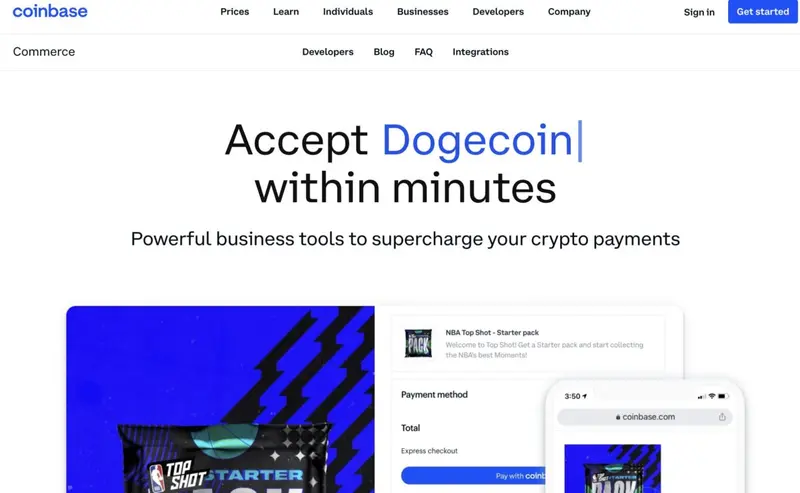
Coinbase is the biggest currency exchange available to the U.S. market. It’s a trusted system, as you can transact with crypto using your local fiat currency. In addition, Coinbase offers a gateway that merchants can integrate with Shopify and WooCommerce.
Coinbase Commerce has two types of plans: Self-Managed and Coinbase Managed. For the Self-Managed account, you can set up the account quickly using a valid email address. You’ll be able to hold the private keys for the crypto that you are paid with.
Read More2. BitPay
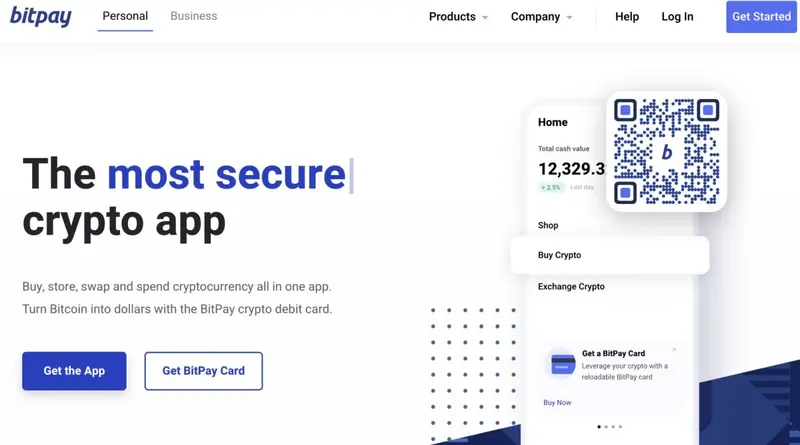
BitPay is another longstanding payment platform that has been around for a decade. It’s one of the most established blockchain payment systems that support not only retail payments but also payouts and billing for businesses.
BitPay uses a simple QR code invoicing for retail payments. There is a flat 1% fee on every transaction that takes place. BitPay allows businesses to collate all sales per day and deposit them in the form of fiat or crypto coins straight in a bank account or the BitPay wallet. The process ensures that the exchange rate is locked in at the time of the sale.
Read More3. CoinGate

CoinGate is a Lithuanian-based company that provides blockchain payment solutions for enterprises and individuals worldwide. Originally built to support BTC, the company now sets itself apart by offering a gateway that processes Chainlink, Cardano, and Stellar, among others. In short, you’re not limited to the usual stablecoins since there are more crypto options on this platform.
CoinGate integrates with sales processes via a plugin or module (e.g., WooCommerce and Magento). The platform can issue invoices through emails or links. The payouts can be in crypto form or, if the account holder wants, can be converted to fiat (such as U.S. dollars or European currency). Crypto-to-crypto exchange is also allowed.
Read More4. Veem
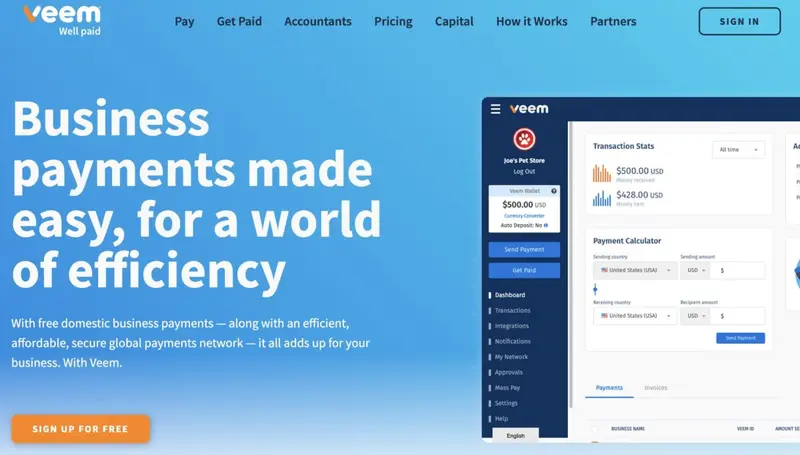
Veem is a blockchain-based platform based in San Francisco. The company works with fiat currency for both domestic and international payments. It’s much like a traditional wiring system but better because of its added features.
The platform leverages blockchain technology, and it offers businesses handy tools for sending, receiving, and reconciling business payments securely. The payment system provides a more streamlined integration and a more transparent history of all incoming and outgoing payments.
Veem offers cost-effective options for local and global payments. With Local pricing, you can sign up for free to secure your transactions within the U.S. Meanwhile, with Cross Border, users can send money, issue digital invoices, and track payments in over 100 countries worldwide.
Read More5. RippleNet
Ripple is a San Francisco-based company that uses blockchain to let customers send money and pay for goods and services worldwide. Its RippleNet system allows for quick and transparent processing of payments and facilitates lower capital amounts for cross-border transactions. RippleNet is currently used by over 175 banks and commercial enterprises.
Businesses can buy and sell, issue, and settle digital assets in real-time through the platform. RippleNet’s features include automated notifications, debit and credit card processing, data tracking, data security, and more. Your movements are easily monitored in the activity dashboard. The platform also comes with an API for easy integration with your existing sales tools.
Read MoreWhat to Look for in a Blockchain Payment System
Blockchain payment systems can go beyond peer-to-peer transactions. With the wide range of options for blockchain finance platforms, keep in mind these features to help you decide which one is the best for your business:
Integration
The main goal of a blockchain payment system is for customers and peers to have an intuitive and seamless experience. You would want a platform that is known to be user-friendly, has fast processing, and prioritizes secure and protected transactions. Pick a payment system that works well with your company’s existing tools and technologies, so you can offer it in conjunction with what already exists in your ecosystem.
Volatility Protection
Cryptocurrencies tend to be more volatile than fiat currency. It’s the nature of the technology, as it is free from the regulations that governments place on traditional financial assets. Considering this fact, the price you are working with for each transaction could change a minute later. Your business will then benefit from a payment system that guarantees a locked-in value from the time of your sale. Understandably, not every firm would want this feature. But for most, it is a way to safeguard each transaction from potential losses.
Currency Support
Blockchain payment systems should automatically work with popular cryptocurrencies like Bitcoin, Bitcoin Cash, Ethereum, and Litecoin. You should also consider payment systems with a more extensive list of supported cryptocurrencies. Gateways that are able to support more coins can give you the capability to accommodate your customers’ preferences.
Cost
As we’ve outlined in our top 5 blockchain payment systems, the standard fee for most transactions is around 1%. However, this does not apply to all platforms. Providers may charge additional fees when payout or conversion is required. There are also systems that have other network or operational costs that are separate from your transaction fees. You would want to keep in mind the features you want a blockchain payment gateway to have and decide which capabilities are the most worthwhile to spend on.
Reputation
The cryptocurrency landscape has its fair share of idealists and fraudulent actors. Many will still take advantage of the lack of regulation, which means your assets and your very business operation may be vulnerable when there are phishing or hacking attacks. Therefore, it’s important to conduct due diligence when selecting which blockchain payment system has the security and authentication features that can provide a high level of protection for your transactions.
Final Thoughts
Blockchain payment systems have paved the way for faster and easier crypto payments and transactions. As businesses leverage blockchain-based payment systems, they can experience quicker cross-border transactions as well as more transparency. There are still adjustments and improvements that can be made, especially as the technology matures, but we have outlined five solid options you can use for your business operations. Now it’s just a matter of selecting the provider that can offer you the features and amount of exposure to crypto that your business can benefit from.
Frequently Asked Questions
What payment methods does blockchain accept?
Most blockchain payment systems allow you to select your payment method: debit card, card card or bank transfer. U.S. users can also do instant ACH transfer.
Which banks use blockchain?
HSBC is using R3 blockchain platform to enable their Digital Vault. The Digital Vault is a custody blockchain platform that stores digital assets. The blockchain technology helps lower the cost of their custodial services.
What is an example of a blockchain transaction?
An example of a blockchain transaction includes cryptocurrencies. The financial transactions are based on blockchain technology. It is used in currency and payments.
How do I make a payment on blockchain?
Most blockchain payment systems allow you to select your payment method to make a payment: debit card, card card or bank transfer. You can also use cryptocurrency or develop a cryptocurrency.


