
Online shopping has turned into a comparison game. Before making a purchase, most consumers are no longer relying on a single retailer or product page to make a decision.
In fact, 83% of shoppers compare prices across multiple websites before buying, highlighting just how standard price-checking behavior has become in today’s digital economy.
At the same time, the volume of available products continues to grow, making it harder for consumers to confidently choose the best deal.
That’s where price comparison sites step in. Instead of manually opening multiple tabs, these platforms aggregate listings, pricing, reviews, and retailer data into a single view, helping users make faster and more informed decisions.
For US shoppers, the landscape includes everything from general comparison engines to niche platforms focused on categories like electronics, travel, or finance.
In this guide, we break down the best price comparison sites in the USA, helping you find the right platform to save time, compare smarter, and get the best value on your next purchase.
What Is a Price Comparison Site?
A price comparison site is a platform that aggregates product listings from multiple retailers and displays them side by side, allowing users to quickly compare prices, features, and sellers before making a purchase.
Instead of manually checking individual stores, these platforms pull data from eCommerce sites, marketplaces, and brand catalogs into a single interface. Users can search for a product and instantly see where it’s available, how much it costs, and which retailer offers the best value.
Most price comparison sites go beyond simple pricing. They often include product specifications, user reviews, historical price trends, and filters that help narrow down options based on budget, brand, or features. Some platforms also highlight discounts, coupons, or limited-time deals to surface the lowest available price.
In practice, price comparison sites serve as a decision-making layer between shoppers and retailers. Rather than driving loyalty to a single store, they prioritize transparency and efficiency, helping consumers make faster, more informed purchasing decisions across an increasingly fragmented online marketplace.
What Benefits Can It Offer?
If you have an online store, one of the challenges that you have is to identify at which price point you should sell your products. If you price it too low, you risk attracting the wrong type of target audience, and pricing your product too low can negatively impact your margin making it more difficult for you to remain profitable. If you price it too high, you risk losing sales to your competitors that are more reasonably priced.
With a price comparison website, you can see which businesses are selling similar products and at which price. This can help you to ensure that your pricing remains competitive which can help you to increase sales. As a matter of fact, if you search for a product that you stock on a price comparison website and your store or brand does not pop up on the price comparison website, it could be an indication that your pricing model is wrong.
It's not just store owners who use these types of sites. When consumers have a specific product in mind, they often turn to these sites to find the best price. As these consumers know what they want, they are more likely to convert making them a great target audience to whom you can market your products.
How to Get Your Products Listed
Many of these sites charge a fee in exchange for listing your products in relevant searches and in this way you can get your products in front of consumers who are hungry and ready to buy. Often this fee uses the pay-per-click or pay-per-action model. With the pay-per-click model, you will have to pay a set fee each time a visitor clicks on your link. With the pay-per-action model, you will have to pay a percentage of the sale.
For the majority of these sites, you will need to send a formatted product feed according to their specifications. For example, if your online store is powered by Shopify, you will have a number of apps that you can use to make this submission process easier.
Top 12 Price Comparison Websites
1. Google Shopping

Google Shopping is most likely the biggest and most well-known price comparison site. With the help of Google’s beta benchmarking tool, you can use specific metrics such as average product price, benchmark product price, and benchmark product price difference to find out how you are performing.
It also has a section where you can find recent price drops and products trending on Google. If you are searching to expand your product range, this information can come in handy.
All in all, there is a reason why Google is one of the best price comparison websites. It offers more filters than most of the other sites in this list which really helps you to refine your searches.
2. Yahoo Shopping
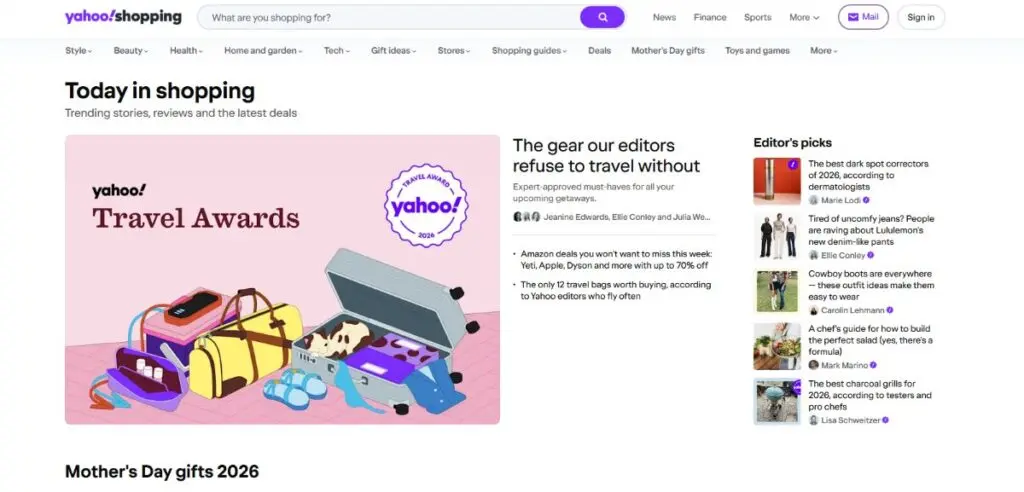
Yahoo Shopping is one of the top and most intuitive price comparison websites. You can just enter the product that you are searching for in its search bar, and it will display the results, which you can further sort by relevance, popularity, discount, and price.
Alternatively, if you are not entirely sure what you are searching for, you can instead browse by category, allowing you to search and compare the prices of products within this category. It has a great selection of product categories that even include categories like religion, hardware, and subscriptions, which you do not always see.
It also offers a very useful Price Tracker feature that deserves an honorable mention. With the help of this price alert feature, you can save a specific item, and the platform will then inform you when the product becomes available for cheaper.
It also has a dedicated section for shopping inspiration. Here you can find the day’s overall top deals and best deals in categories like tech, clothing, and furniture.
3. Become
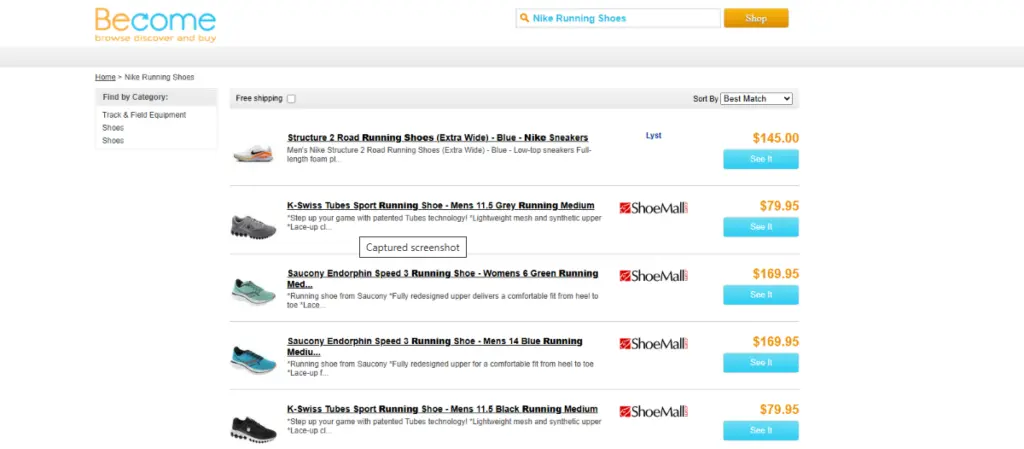
While Become is one of the main price comparison websites, it is not as user-friendly as many of the others. You can use it to search and compare product prices for different products. In short, it will just crawl various platforms to locate products that relate to your search.
Unlike a tool like PriceGrabber, the results are mostly ads related to your search instead of links to product pages of retailers.
4. BuyVia
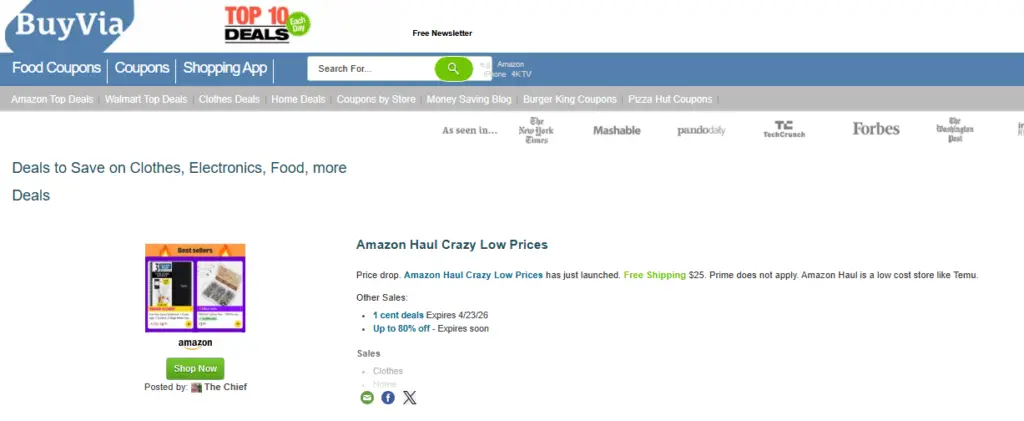
BuyVia helps you to save money online on popular products from well-known stores. It offers a few features, including price comparison. You can either search for products by part number, name, or scan barcodes to find the lowest price. In addition to its website, you can also use its mobile app, which is compatible with both Android and Apple devices.
5. camelcamelcamel
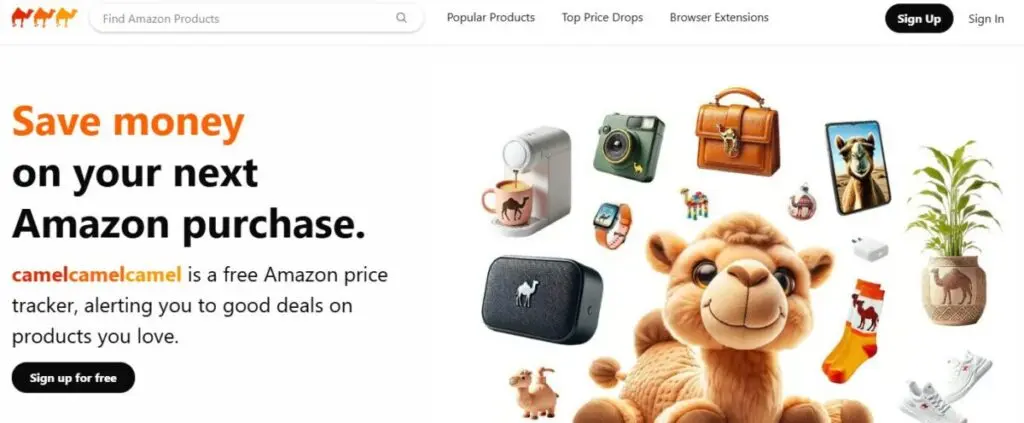
Founded in 2008, camelcamelcamel is an Amazon price tracker that offers email notifications about price decreases. All you have to do is identify a price threshold and you will be emailed when the price hits that threshold.
A second major feature of camelcamelcamel is price history charts for items sold via Amazon. All the product pages have graphs of how the prices have fluctuated over time for each of the price types and the average prices.
In addition to the United States, it also supports Canada, the United Kingdom, France, Spain, Germany, Italy, and Japan.
6. PriceGrabber
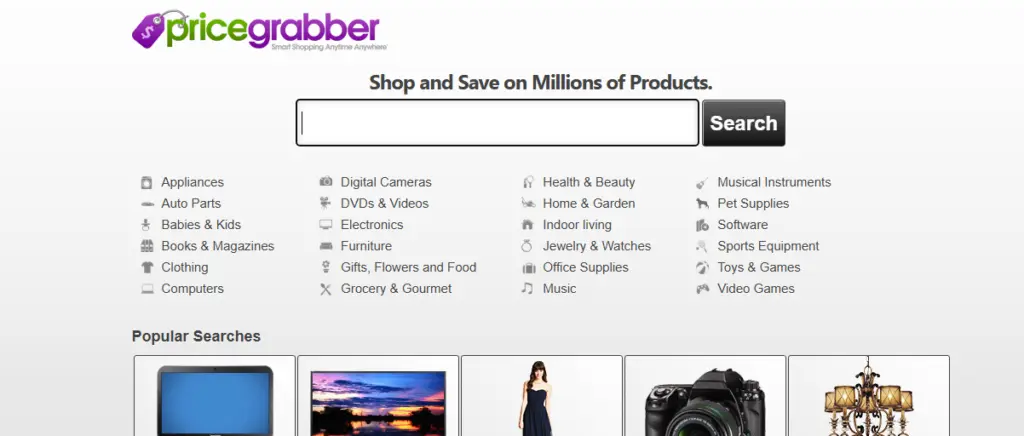
PriceGrabber has millions of products on its platform making the process of buying and selling much easier. From auto parts to video games, it also offers a list of different product categories. This means that you can either search for a specific product or browse a category for product ideas.
It will then display the products from different international retailers and sellers along with a product image and price. If you want to narrow down your search, it also offers filters that you can apply.
Once you see something that you like, all you have to do is click on the thumbnail. You will then be redirected to that specific product page on the website of the seller. All the prices are displayed in dollars, making it convenient if you are located in the United States.
7. Shopzilla

In addition to the US, Shopzilla is also available in France, Germany, Italy and the United Kingdom. Founded more than 20 years ago in 1996, it is one of the biggest comparison shopping engines boasting millions of products.
8. Shopping.com
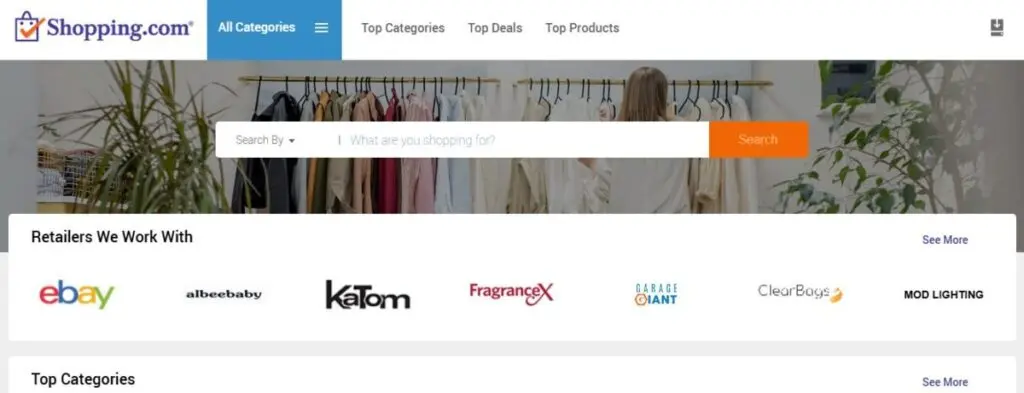
Just like Shopzilla, Shopping.com has shopping sites for France, Germany, the United Kingdom, Italy, and the USA. It is part of the eBay family and one of the major price comparison sites that helps you to find the top deals and best prices.
Empowered with this information, shoppers can find, compare, and purchase products more easily online. It also includes product reviews to make the decision-making less daunting.
Shopping.com also gives you the option to limit your results to only stores that include free shipping. Another feature that deserves an honorable mention is the ability to select up to four products, which you can then compare side by side.
9. PricePirates USA
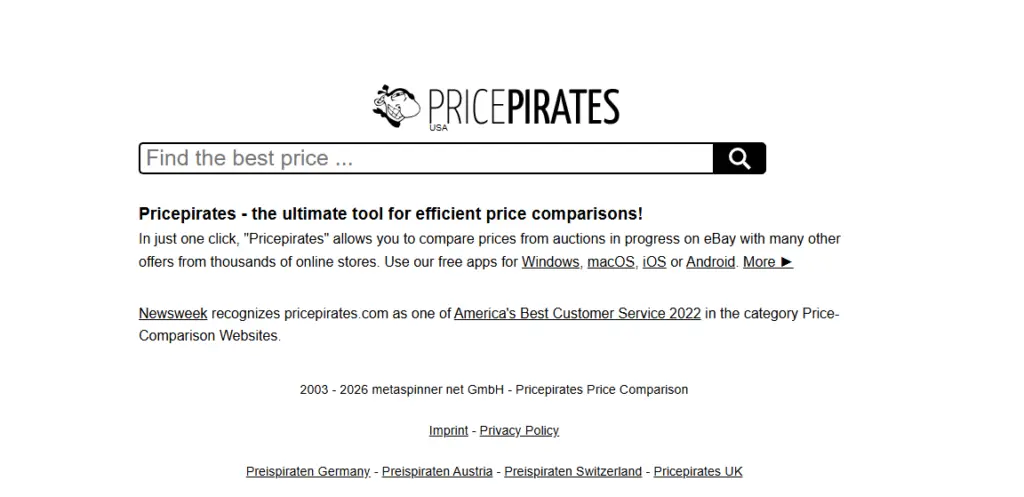
One feature that sets Pricepirates apart from many of the other websites is that it lets you compare prices from auctions that are still in progress on eBay. In addition to its website, it also has an app that you can use. Though, just look past its dated design as it is not a true reflection of its functionality.
10. ShopSavvy
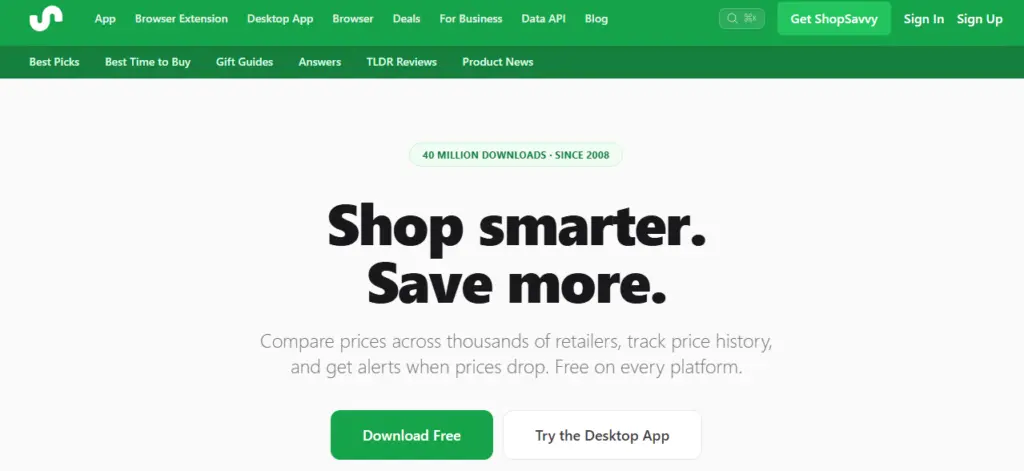
Unlike the others, ShopSavvy is an app instead of a website. Compatible with both iOS and Android, you can use it to check prices of online and brick-and-mortar stores. In addition to price comparisons, it also includes product reviews and deals.
When searching for products, you can either type in a keyword or scan the barcode of the product. The app will then display product prices for that specific item or similar products.
A Guide to Using Price Comparison Sites Effectively
Price comparison sites are invaluable tools for consumers aiming to save both money and time while shopping. To get the most out of these platforms, consider the following strategies:
- Define Your Needs: Clearly identify the product or service you want before using a price comparison site. This focused approach helps narrow down your search, ensuring you find the most relevant options quickly.
- Utilize Filters and Sorting Options: Take advantage of filters and sorting options based on criteria like price, brand, ratings, and features. These tools streamline your search, helping you find the best options that align with your specific requirements.
- Check Multiple Sites: Not all price comparison sites feature the same retailers or products. To ensure you're getting the best deal, visit multiple sites to compare prices and offers across different sources.
- Read Reviews and Ratings: Many comparison sites include user-generated reviews and ratings. Reading these can provide valuable insights into product quality and performance, aiding in more informed decision-making.
- Look for Promotions and Discounts: Keep an eye out for special promotions, discounts, or coupon codes highlighted on these sites. They can significantly lower the cost of your desired product.
- Be Aware of Additional Costs: While these sites can help you identify the lowest prices, they might not include shipping costs, taxes, or other fees. Always check the final price before purchasing to avoid unexpected expenses.
- Use Mobile Apps: Many price comparison platforms offer mobile apps, enabling you to compare prices on the go. This is especially handy when shopping in-store, allowing you to quickly verify you're getting the best deal.
Note
By incorporating these strategies, you can effectively leverage price comparison sites to maximize savings and make smarter purchasing decisions.
Wrapping Things Up
Many of these price comparison websites offer more than merely pricing information and, depending on the site that you use, it can also be a good source for product reviews. If you are an online business owner it can help you to ensure that you remain competitive, while at the same time it can help consumers to find the best deal and discover new online stores worth supporting.


