
In a feed where attention lasts seconds, tiny taps now tip the scales. Polls, quizzes, emoji sliders, and other reels stickers aren’t gimmicks—they’re micro-interactions that tell ranking systems who cares, about what, and how much.
For brands, this is algorithm fuel you can aim for: Instagram polls for fast research, quizzes for recall, sliders for sentiment, and YouTube polls for pre-launch validation across Home and Shorts. Add TikTok’s TikTok voting sticker as a paid layer, and every touch becomes a measurable signal.
Two questions frame the playbook: Are you generating high-intent interactions—or just views? And are you converting those taps into DMs, content decisions, and revenue?
Across platforms, the same patterns repeat: participation beats passivity, engagement density beats raw reach, and “you picked this” narratives outperform generic messaging.
This article shows how to map each sticker to a business objective, turn micro-signals into algorithmic lift, and scale both reach and revenue with proof your audience already provided.
Mapping Stickers by Objective
In the world of social platforms, not all interactive stickers are created equal. To maximize ROI (both algorithmic reach and audience insight), it helps to think of each sticker type as having a distinct objective, whether that’s research, recall/education, or sentiment measurement.
Below is a breakdown of sticker types by objective, with real-use examples and best practices.
Polls for Research
Use case/objective: Quick market validation, consumer choice testing, content topic selection, product feature preference.
Poll stickers are ideal for binary or limited-choice questions. Because they require minimal effort (just a tap), they tend to earn higher response rates. On Instagram, for example, brands often use polls in Stories to test interest in new features or designs before fully committing.
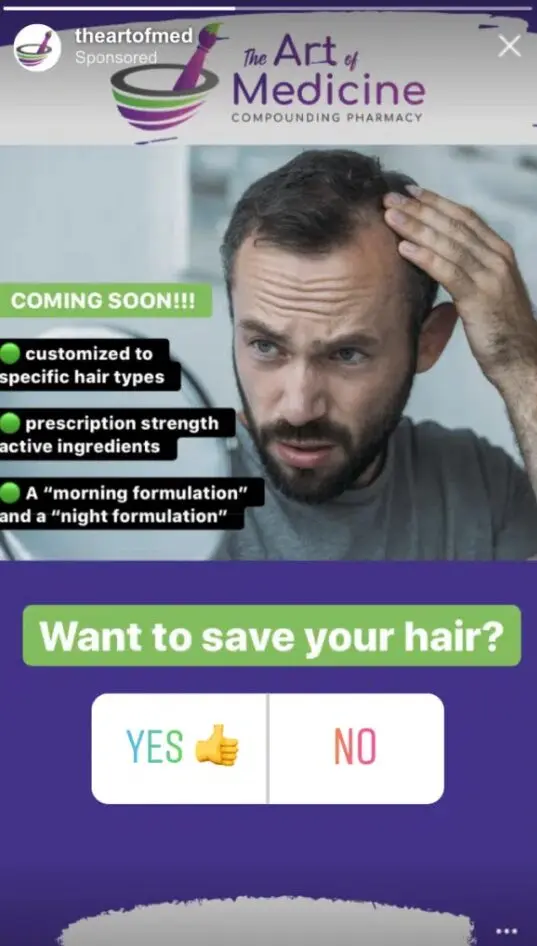
In a case study by Bad Rhino, Art of Medicine used Instagram Story polls as a lead-in to a product launch. They used poll responses to construct retargeting audiences — those who responded to the poll would later be targeted in the official launch phase.
Similarly, in ad use, Dunkin’ Donuts reportedly used polling stickers in Instagram ads and saw a 20% lower cost per view compared to similar ads without a sticker.
Best practices for research polls:
- Keep questions simple, focused, and relevant to your audience (e.g., “Do you prefer A or B?”)
- Use visuals (product mockups, swatches) to enhance clarity
- Limit to two options (so response is binary and decision friction is low)
- Test timing (e.g,. closer to content drop or in off-peak times)
- After the poll closes, archive results and act on them (i.e., use them to steer product or content direction)
Quizzes for Recall/Education
Use case/objective: Reinforce brand messaging, teach features, drive retention.
Quiz-style stickers (often with multiple-choice answers) are useful when you want the audience to actively recall or reflect. On YouTube channels, creators sometimes use poll/quiz-style questions in the Community tab to check what their audience already knows and plan follow-up content accordingly.
In one video, YouTube educator K.M. Robinson shows her audience how quizzes work on YouTube and how to use them effectively.
This kind of sticker helps cement the connection between your content and what your audience remembers.
Best practices for quizzes:
- Use distractor (wrong) answers to make the quiz meaningful
- Reveal the correct answer and explanation (either as a sticker result or a follow-up post)
- Use them in series or episodic format (e.g., “Quiz Monday, deep dive Thursday”)
- Segment your audience by performance (those who answer incorrectly may get remedial content)
Emoji Sliders & Similar Sentiment Stickers
Use case/objective: Gauge emotional tone, creative resonance, and implied preference intensity.
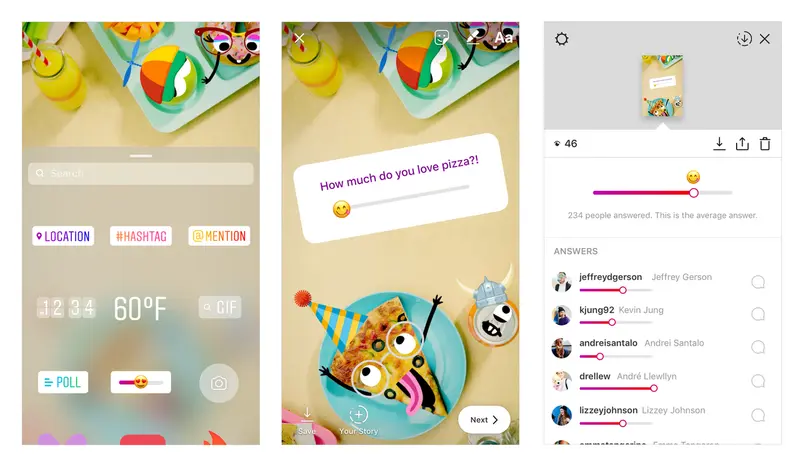
The emoji slider (or similar “how do you feel?” stickers) allows a continuum of sentiment, giving richer nuance than binary polls. This is especially useful when you want to test tone, mood, or creative vibe without forcing a yes/no decision.
For instance, before launching creative visuals or ad formats, marketers might show a teaser and ask followers to slide to indicate “how excited are you?” or “how bold is too bold?” The distribution of slider responses gives insight into how extremes or midpoints resonate.
Best practices for sentiment stickers:
- Provide context so the slider has meaning (e.g., “slide to show how much you like this look”)
- Combine sentiment data with demographic or poll results (cross-segment)
- Don’t overuse—reserving them for key decision points keeps responses fresh
- Use the resulting sentiment distribution to choose which creative direction to double down on
The Algorithm Layer: How Micro-Engagements Drive Reach
Every platform’s recommendation system rewards not just what people watch, but how they interact. In 2026, algorithmic distribution hinges on “micro-engagements”: lightweight actions such as tapping a poll, sliding an emoji, or answering a quiz.
These tiny signals tell TikTok, Instagram, and YouTube that a viewer isn’t just passively consuming but actively participating—and that’s gold for reach.
Why Micro-Engagements Matter
Algorithms aim to surface content that will prompt further interaction. When someone taps a poll, answers a quiz, or drags an emoji slider, that tells the system they paused, considered, and engaged—not just scrolled. That extra cognitive step differentiates this from a simple view or like, making it a richer signal.
On Instagram, for example, Buffer notes that “interactive stickers on your Instagram Stories — polls, questions, sliding scale rankings — are a simple way to get your followers to engage with you,” which helps with algorithmic favor because engagement is a key ranking input.
Thus, by embedding these micro-engagements, you enable the algorithm to count more interactions per viewer, which boosts engagement density (interactions ÷ views).
Engagement Density: Quality over Quantity
Rather than chasing views, algorithms reward density of engagement: how many reactions, replies, or interactive taps you generate relative to total reach. A video with moderate reach but high interaction ratio can outperform a broadly viewed piece with little engagement.
While solid benchmarks are rare, SocialInsider reports that in 2025, interactions per post rose significantly across platforms—with Instagram seeing 162 interactions per post (including poll interactions) as part of its composite engagement tally. On TikTok, the number is even higher, with 300 interactions per post. In fact, interactions on TikTok have seen a 42% YoY increase.
The logic, therefore, is: More interaction types (polls, replies, shares) per viewer tells the algorithm your content is meaningful.
Chain Effects: Dwell, Replay, Share
Micro-interactions often trigger secondary behaviors that further strengthen algorithmic weight:
- Replays: A user votes, then watches again to catch context or see sticker results
- Shares/forwards: They send to a friend to compare opinions
- Replies/DMs: Discussion starts in direct messages
- Comments: They may also comment based on poll outcome or opinion
Each of these signals is indexed by recommendation engines. For instance, Meta’s Reels ranking guidelines note that reshare likelihood and interactions are among the listed predictors of content propagation through personalized feeds (e.g., what’s shown to whom). (Meta’s transparency site discusses engagement predictors broadly)
In effect, one sticker tap can cascade into several algorithmic multipliers: replay > share > comment.
Platform-Specific Notes & Verified Features
TikTok Voting Sticker (Ads)
In July 2025, TikTok released a Voting Sticker interactive add-on for video ads. This sticker stays active throughout the ad, letting viewers vote on two options. TikTok claims this boosts engagement and allows advertisers to “collect relevant information.”
@johnyblueyes Reply to @combogaming637 How do you create a poll on TikTok #tiktoktutorial #tiktoktips #tiktokcoach
Because the sticker is overlaid on ads, its interaction contributes to ad-level metrics. More interactions can improve ad performance (e.g. by lowering CPM or improving creative scores), offering a bridge between organic micro-signals and paid signals.
Instagram Stories/Reels Stickers
Interactive stickers (polls, quizzes, sliders) in Instagram Stories have long been part of the engagement toolkit. Instagram's algorithm guide emphasizes that engagement—especially via interactive behavior—helps content perform better.
Social media speaker and expert, Zoe Cairns, has a highly informative video on how to use one of these interactive stickers on your IG stories. More precisely, she talks about the notification sticker and how anyone, from brands to influencers, can use this particular sticker in their marketing.
@zoecairns Want more people to actually see and engage with your posts? Here’s a quick trick you can add to your Stories, the Notify sticker. This simple feature lets your followers choose to get a notification next time you upload a post, Reel or Story. Here’s how to use it: → Create a Story as usual → Tap the sticker icon → Select "Notify" → Post it to your Story and let your audience know what they’ll get notified about (new tips, product launches, behind-the-scenes etc.) It’s a great way to remind your followers to stay connected, especially if your engagement’s been a little quiet lately. Tip: Use it when you’re about to post something valuable or time-sensitive, like a new product, freebie or live. Save this for later and follow @zcairns for more practical Instagram tips that actually help. #InstagramTips #NotifySticker #StoryEngagement #SmallBusinessSupport #SocialMediaHelp #GrowYourBusiness #InstagramForBusiness #ReelTips #IncreaseEngagement #InstagramHack
YouTube Community Polls/Quizzes
YouTube’s Community posts support polls and quizzes. These can surface in Home and Shorts feeds when they get traction, allowing creators to test concepts or get feedback. The inherent engagement (votes) contributes to content visibility across YouTube’s surfaces.
Here's an explanation from the TikTok account Engage Mastery.
@engagemastery Get ready to elevate your engagement game with YouTube's latest community feed feature! 🎉 Quiz posts are rolling out for iOS and desktop users, allowing creators to interact with their audience like never before. Whether you’re sharing educational content or just looking to have some fun, these quizzes are a fantastic way to keep your viewers actively involved and thinking about your content. Plus, for live streamers using StreamYard, exciting new features like color-coded super chats and pinned messages make it easier to connect with your supporters during live sessions. This update is a game changer for creators under 500 subscribers and beyond, opening new doors for connection and interaction. Dive into these amazing tools and keep your community engaged and thriving! #YouTubeUpdates #QuizPosts #CommunityEngagement #LiveStreaming #StreamYard #ContentCreation #AudienceInteraction #CreatorsCommunity #DigitalEngagement
Refined Takeaway
- Algorithms prioritize interaction, not just passive attention. Micro-actions are more than surface-level—they are literal ranking signals.
- Focus on engagement density rather than raw reach.
- Micro-interactions can cascade into replay, share, and comment behavior, further amplifying algorithmic weight.
- Use platform-native stickers (on Reels, Stories, Ads, Community) as micro-engagement anchors that funnel into broader algorithmic favor.
Question → DM Reply → Nurture Ladders
Micro-interactions become high-value relationships when you move people from a public prompt to a private thread. On Instagram in particular, question, poll, and DM-me stickers can open or deepen Direct Message conversations, which Instagram publicly treats as a strong signal about relationship relevance.
From Public Prompt To Private Thread
Instagram’s official announcement of the Questions sticker confirms how replies work: Followers tap the sticker to respond, and you can review responses and reply from there.
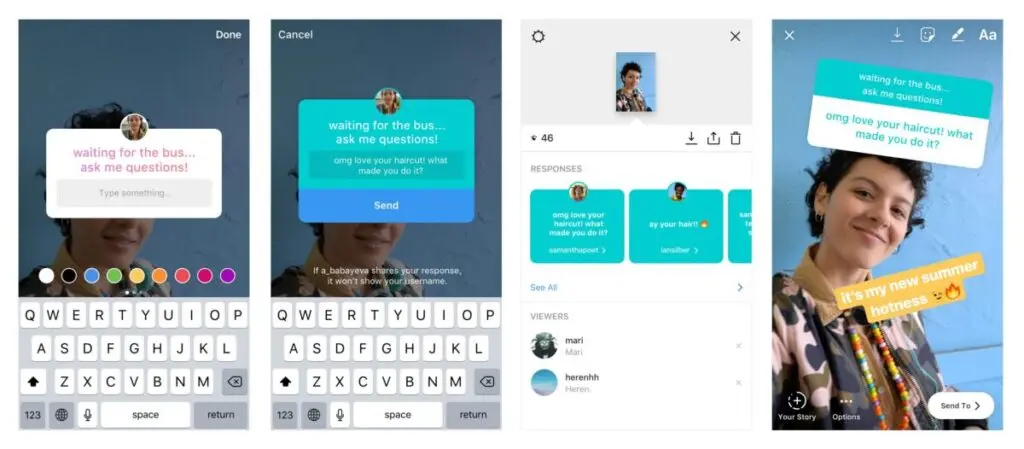
Instagram also documents that you can add stickers to Stories and Reels, which is the substrate for starting these conversations across formats.
Once someone replies to a Story or mentions you, that interaction lands in Direct, Instagram’s native messaging feature; Instagram explains Direct’s role for private exchanges of posts and Reels.
Why DMs Matter For Distribution
Instagram’s official Ranking Explained post outlines the major signals—interest, recency, relationship, usage—that determine what shows up in Feed and Stories. Messaging and sharing behavior contribute to that relationship signal, which is why building DM exchanges increases the likelihood that your future content will appear for that person.
Designing The Ladder: Prompt → DM → Nurture
A ladder is a deliberate path from public action to private conversation. Before listing the steps, note the goal: segment intent in public, then deliver tailored value in private so the platform registers a deeper tie.
- Prompt With Intent: Use Questions or Polls to gather specific input (“Which shade should launch first?”).
- Move Qualified Respondents Into DMs: When a reply shows clear intent, continue 1:1 in Direct with a short, relevant follow-up (saved replies help teams keep tone consistent).
- Nurture With Relevance: Treat the thread like a micro-CRM: send a tip, early access, or a post-launch check-in.
Cross-Platform Extensions
- YouTube Community Posts (Polls/Quizzes): Posts—including polls and quizzes—can surface on Home, Subscriptions, or Shorts feeds, making them ideal for pre-launch testing before deeper nurture elsewhere.
- TikTok Voting Sticker (Ads): TikTok’s Interactive Add-On: Voting Sticker lets viewers vote inside video ads; TikTok explains setup/specs, positioning it as an engagement booster you can retarget from.
What To Measure (With Context)
Before tracking, define how sticker prompts advance your funnel. Then focus on three ratios that reflect intent and relationship strength:
- Reply Rate: Story/Reel sticker replies ÷ views (gauges prompt resonance)
- DM Start Rate: New Direct threads originating from the prompt ÷ views (shows ladder uptake)
- Follow-Up Action Rate: Link taps, saves, or purchases from those threads (ties nurture to outcomes)
These ladders convert lightweight taps into durable relationship signals that Instagram and other platforms use to decide who sees you next—turning micro-interactions into sustained distribution.
Win the Algorithm With Micro-Interactions
Micro-taps now move mountains. Polls, quizzes, emoji sliders, and other Reels stickers convert passive scrollers into participants—signals algorithms prize far above simple views. Map each tool to its job (research with Instagram polls, recall with quizzes, sentiment with sliders), then turn those touches into relationship depth via “Question → DM reply → nurture” ladders.
Republish what the audience picks, and keep the loop tight: test, act, show the proof.
The 2025 toolkit makes this even easier: interactive stickers on Reels, YouTube polls, and quizzes that surface in Home/Shorts, and the TikTok voting sticker for paid validation. Focus on engagement density (interactions per view) and downstream actions from DMs to prove impact.
Bottom line: participation is the new reach. Treat micro-interactions as data, not decoration—and you’ll earn more distribution today while stockpiling insights for tomorrow’s creative and media buys.
Frequently Asked Questions
How do micro-interactions strengthen Instagram distribution?
Micro-taps like polls and sliders contribute to broader Instagram engagement signals, which help the system infer relevance beyond passive views.
What sticker-friendly mechanics keep Story viewers participating?
Rotate simple story game formats—this-or-that, guess-the-hook, or emoji scales—to sustain taps without creative fatigue.
How should brands turn poll results into planned content?
Group top-voted themes into content pillar planning so your calendar reflects what audiences explicitly requested.
Which sticker types work best on Reels vs. Stories?
Match creative to overlay sticker options—polls for binary choices, quizzes for recall, sliders for sentiment—then test placement by format.
Where does TikTok’s Voting Sticker fit inside a performance funnel?
Use it for fast preference capture, then retarget segments within a broader TikTok funnel strategy that moves from discovery to conversion.
Are there underused TikTok features that boost micro-interactions?
Pair voting with lesser-known tools like Q&A prompts, favorites, and saves to deepen participation across touchpoints.
Any guidance for turning interactive Stories into paid performance?
Apply Stories ad creative principles—tight hooks, visual clarity, and a single interaction—to lift completion and tap-through rates.
How can we repurpose poll insights without repeating ourselves?
Translate winning options into evergreen post ideas—how-tos, comparisons, and reveal clips—so one poll fuels multiple assets.