
Instagram is not a passive platform. On average, businesses publish roughly 1 to 2 main feed posts per day, and video content consistently outperforms other formats, generating significantly higher engagement, often averaging over 1,000 likes and more than 25 comments per post.
That volume and engagement level create both opportunity and confusion.
When content output is constant, and video dominates interaction, simply posting is not a strategy. For influencer campaigns, the question is not how often to post, but which format serves which objective.
Understanding the 4 types of Instagram posts is no longer a platform tutorial. It is a performance decision. Each format — Feed, Stories, Reels, and Live — influences discovery, engagement depth, and conversion behavior differently. Choosing the right one shapes not only creative output, but campaign accountability.
In influencer marketing, format is not decoration but a distribution strategy.
- 1. Instagram Feed Posts: The Authority Layer
- 2. Instagram Stories: The Conversion Accelerator
- 3. Instagram Reels: The Discovery Engine
- 4. Instagram Lives: The Real-Time Engagement Layer
- Measuring Performance Across the 4 Types of Instagram Posts
- How Brands Should Approach Format Strategy
- Turning Instagram Formats into Campaign Strategy
1. Instagram Feed Posts: The Authority Layer
Feed posts are the original Instagram format. They include single images, carousels, and short-form video placed directly in a creator’s profile grid. Unlike Stories, which disappear, Feed posts contribute to long-term brand presence and ongoing discoverability.
For influencer campaigns, Feed content functions as the credibility anchor. It is where product narratives live, where launch announcements are documented, and where audiences return to validate a creator’s endorsement. Because Feed posts remain permanently accessible, they shape both brand perception and creator authority over time.
Performance data reinforces the importance of format selection within the Feed itself. Benchmarks show that video content significantly outperforms static images on Instagram, with Reels averaging approximately 5.5% engagement compared to around 0.70% for photo posts.
That gap matters. It signals that even within the Feed environment, not all content types generate equal interaction.
For brands, this means Feed strategy should not default to static visuals. Carousel posts and in-feed video can extend engagement depth, increase saves, and encourage sharing behavior that strengthens algorithmic visibility.
From a campaign standpoint, Feed posts are best suited for:
- Product storytelling that requires context
- Educational or explainer content
- Launch moments that benefit from permanence
- Credibility-building collaborations
Feed posts also generate stable engagement indicators such as likes, comments, saves, and shares. Reels also generate the highest number of views for small brands (1k - 5k followers) with an average view rate of 15%.
These metrics are valuable for evaluating audience resonance and content depth. However, Feed performance is often less immediate in driving conversion compared to Stories.
As a result, Feed posts should typically be evaluated in the context of awareness, engagement quality, and brand positioning rather than short-term revenue alone. When layered into broader influencer campaigns, Feed serves as the authority layer, establishing presence and trust that other formats can then activate.
2. Instagram Stories: The Conversion Accelerator
Stories sit at the top of the Instagram interface and disappear after 24 hours unless saved to Highlights. That impermanence turns Stories into a conversion mechanism.
Stories are built for immediacy. They occupy full-screen real estate, reduce distraction, and create a direct pathway to action through link stickers and call-to-action buttons. Unlike Feed posts, which emphasize permanence and authority, Stories prioritize behavioral response.
For influencer campaigns, this makes Stories particularly effective for:
- Time-sensitive promotions
- Product drops
- Affiliate activations
- Limited inventory or seasonal events
For example, in a campaign for Ulta Beauty’s three-week Gorgeous Hair Event, the brand used Instagram Stories as the primary distribution format for promotional messaging. By shifting from static Story images to a two-card carousel video format within Stories, the campaign delivered measurable performance gains.
Ulta reported:
- A 63% higher return on ad spend
- 1.8x higher click-through rate compared to single video Story ads
- 2.6x higher click-through rate compared to single photo Story ads
These results reinforce a broader point: Stories are not just awareness placements. When structured correctly, they function as high-intent conversion environments.
For influencer campaigns, this has direct implications. When creators use Stories to demonstrate products, add promotional overlays, and link directly to landing pages, the format reduces friction between content and transaction.
Measurement Considerations
Stories require disciplined tracking because their performance window is compressed. Engagement and conversion signals concentrate within a short timeframe, which increases the importance of real-time monitoring.
Key performance indicators typically include reach, link clicks, completion rate, and click-through rate. Because Stories disappear quickly, fragmented reporting can lead to incomplete data capture and misaligned ROI calculations.
This is particularly important when Stories are layered with affiliate links or paid amplification. Without centralized reporting, it becomes difficult to reconcile spend with outcome.
Stories accelerate action. Reporting infrastructure ensures that acceleration translates into accountable performance.
3. Instagram Reels: The Discovery Engine
Reels are Instagram’s short-form vertical video format and have become central to the platform’s distribution model. Meta has publicly stated that more than 50% of time spent on Instagram is now driven by video content, with Reels playing a dominant role in that shift.
This matters for influencer campaigns.
Reels are designed for reach beyond the follower base. Unlike Feed posts, which primarily circulate within a creator’s existing audience, Reels are distributed heavily through the Explore tab and algorithmic recommendations. In practical terms, Reels are more likely to surface to non-followers.
For influencer campaigns, that makes Reels the primary tool for:
- Audience expansion
- Trend participation
- Cultural relevance
- Top-of-funnel awareness
Fitness brand Gymshark has repeatedly used influencer-led Reels as the dominant format for product launches and challenge-based campaigns. Rather than relying on static promotional posts, Gymshark collaborates with fitness creators to produce short-form Reels demonstrating workouts, styling apparel, and participating in branded challenges.
These campaigns prioritize discoverability. Creators publish Reels optimized for trending audio, high retention, and shareability — positioning the brand within organic cultural conversations rather than static promotion.
The strategy leverages Reels’ algorithmic preference for short-form video to extend reach beyond the creator’s immediate audience. Instead of maximizing engagement within an existing base, the campaign objective shifts toward maximizing exposure among new users.
This illustrates the strategic distinction: Reels are not primarily about depth. They are about scale.
Measurement Considerations
Because Reels emphasize reach and impressions, evaluating them purely on engagement rate can be misleading.
A Reel may generate fewer comments than a Feed post, but significantly higher non-follower exposure. If the campaign objective is awareness or audience acquisition, reach efficiency becomes more important than visible engagement.
Key metrics to evaluate include:
- Plays
- Total reach
- Percentage of non-follower reach
- Shares
- Follower growth
When Reels are layered with paid amplification, separating organic distribution from paid reach becomes critical for accountability. Without centralized reporting, brands risk overstating organic performance or misattributing paid efficiency.
For influencer campaigns, Reels should be measured against discovery and awareness objectives. When evaluated correctly, they function as the expansion layer of Instagram strategy — building the top of the funnel that other formats can convert.
4. Instagram Lives: The Real-Time Engagement Layer
Instagram Live enables creators to interact with audiences in real time. Unlike Feed posts or Reels, which are consumed asynchronously, Live sessions create simultaneous participation, and that structural difference changes engagement dynamics.
IG Lives are built for interaction intensity.
Industry data shows that live video can generate up to 10× more engagement than standard posts, reinforcing its position as one of the most interaction-heavy formats on the platform. In addition, more than 100 million users reportedly watch or engage with Instagram Live daily, underscoring the scale of real-time participation across the app.
Engagement depth is not just about volume. It is also about retention. Research indicates that 57% of viewers watch at least three-quarters of a Live stream, suggesting that once audiences enter a session, they tend to stay engaged for a meaningful portion of its duration.
Live streams also generate significantly more real-time reactions and comments compared to traditional video posts, with some estimates suggesting up to 6× higher interaction levels during broadcast sessions.
For influencer campaigns, this positions Live as a depth format rather than a reach format.
Live works best for:
- Product launches
- Q&A sessions
- Limited drops
- Community-driven activations
Because followers receive notifications when a creator goes live, the format creates urgency and signals importance. That urgency, combined with two-way interaction, allows creators to answer questions, demonstrate products, and address objections in real time — strengthening trust and purchase intent.
Measurement Considerations
Live performance should not be evaluated the same way as Reels or Feed posts.
Key indicators include:
- Peak concurrent viewers
- Average watch time
- Comment velocity
- Interaction rate
Unlike Reels, which prioritize reach and discoverability, Live should be interpreted through engagement quality and retention depth. A smaller but highly interactive audience may signal stronger persuasion than a large passive view count.
Because engagement happens in a compressed time window, capturing accurate session data is essential. Without centralized reporting, real-time interaction can be difficult to reconcile with downstream conversion or affiliate activity.
For influencer campaigns, it functions as the trust-building layer — turning attention into conviction through direct interaction.
Measuring Performance Across the 4 Types of Instagram Posts
The challenge for brands is not simply understanding the four formats. It is measuring them coherently.
Each format produces different signals:
- Feed = engagement depth
- Stories = click-through behavior
- Reels = reach and discovery
- Lives = real-time interaction
Without centralized reporting, comparing these formats becomes inconsistent. Teams may overvalue visible engagement and undervalue discovery or conversion.
For example, a Reel may generate high reach but modest comments, while Stories may drive fewer impressions but stronger revenue signals.
Evaluating campaign performance requires normalizing these differences.
Platforms like Stellar support this by consolidating performance data across Instagram formats into unified reporting dashboards. Instead of evaluating Feed, Stories, and Reels in isolation, teams can analyze performance in relation to campaign objectives. This enables clearer attribution and prevents format bias in reporting.
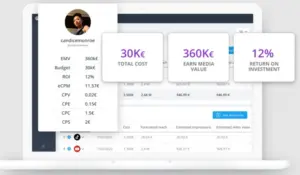
When reporting infrastructure accounts for format differences, accountability improves. Format strategy becomes evidence-based rather than assumption-driven.
How Brands Should Approach Format Strategy
Instead of asking “Which Instagram format performs best?” brands should ask:
- What is the campaign objective?
- What type of audience behavior is required?
- Which format aligns with that behavior?
For example:
- A discovery-focused campaign may prioritize Reels.
- A conversion-focused activation may lean on Stories.
- A credibility-building initiative may emphasize Feed content.
- A community activation may incorporate Live.
The most effective influencer campaigns do not rely on a single format. They orchestrate multiple formats around defined objectives.
Turning Instagram Formats into Campaign Strategy
Understanding the 4 types of Instagram posts is foundational. Using them strategically within influencer campaigns is what drives results.
Each format serves a different role in the marketing funnel. Feed builds authority. Stories accelerate conversion. Reels expand reach. Live deepens engagement.
For brands managing influencer programs at scale, format choice must be tied to measurement clarity. Without structured reporting, performance interpretation becomes inconsistent.
The most effective teams pair creative format strategy with centralized reporting infrastructure so that engagement, reach, and revenue signals can be evaluated coherently.
Instagram formats shape visibility. Reporting platforms shape accountability. Together, they determine whether influencer campaigns remain creative experiments or evolve into measurable growth drivers.