
Digital advertising has become far more complex than placing banners on a handful of websites or negotiating media deals directly with publishers.
Marketers today can reach audiences across display ads, streaming video, connected TV, audio platforms, mobile apps, retail media networks, and digital billboards. Managing that volume of inventory manually would be almost impossible.
Programmatic advertising emerged to solve that problem.
Instead of buying ad placements one by one, advertisers use technology to purchase digital inventory automatically based on audience data, campaign goals, and bidding strategies. Many of the ads people see online every day are delivered through programmatic systems that evaluate available impressions and make buying decisions in milliseconds.
Programmatic advertising now plays a major role across digital media. Display advertising, connected TV, streaming audio, retail media, and many video campaigns rely on automated buying technology to reach specific audiences at scale.
Understanding how programmatic advertising works is becoming increasingly important for marketers. Budget allocation, audience targeting, measurement, attribution, and channel selection are all influenced by the platforms and technologies that power programmatic buying.
This guide explains what programmatic advertising is, how it works, the technologies behind it, the channels it supports, and the strategies marketers use to run effective campaigns.
Calculate and Compare Programmatic CPM
Use inBeat’s CPM Calculator to calculate campaign cost, impressions, or cost per thousand impressions. Fill in any two fields, and the calculator will automatically generate the third value.
Switch to advanced mode to compare multiple programmatic campaigns across inventory types.
- What Is Programmatic Advertising?
- How Does Programmatic Advertising Work?
- The Technology Behind Programmatic Advertising
- Programmatic Advertising Platforms Marketers Should Know
- 1. Spotify
- 2. Google Display & Video 360
- 3. The Trade Desk
- 4. Amazon DSP
- 5. StackAdapt
- 6. Yahoo DSP
- Types of Programmatic Advertising
- Where Programmatic Advertising Appears Today
- How Much Does Programmatic Advertising Cost?
- Programmatic Advertising Is Reshaping Modern Media Buying
- Frequently Asked Questions
What Is Programmatic Advertising?
Programmatic Advertising Definition
Programmatic advertising is the automated buying and selling of digital advertising inventory. Instead of negotiating placements directly with publishers, advertisers use software to purchase ad impressions across websites, apps, streaming services, and other digital channels.
The process happens remarkably fast. When someone visits a webpage, opens an app, or starts streaming content, programmatic systems can evaluate available ad inventory, identify whether that user matches an advertiser's targeting criteria, submit bids, and serve an ad in a fraction of a second.
Programmatic buying has become the dominant way digital advertising is transacted. Industry forecasts show that programmatic accounts for nearly 9 in 10 digital display ad dollars worldwide in 2026, while PwC reported that programmatic advertising revenue reached $162.4 billion in 2025, growing 20.5% year over year.
In practical terms, most digital display advertising is now bought and sold through automated systems rather than manual negotiations.
Automation is often the first thing people associate with programmatic advertising, but audience targeting is equally important. Modern programmatic platforms allow advertisers to reach users based on factors such as demographics, interests, browsing behavior, location, device type, and first-party customer data.
Programmatic advertising has also expanded far beyond traditional display banners. Marketers now use programmatic buying across display advertising, video advertising, connected TV (CTV), streaming audio, retail media networks, native advertising, and digital out-of-home (DOOH) inventory.
The term is sometimes used interchangeably with programmatic media buying or programmatic marketing. In practice, all three refer to the use of technology and data to automate advertising transactions and optimize campaign delivery.
Traditional media buying and programmatic advertising ultimately pursue the same goal: placing ads in front of the right audience.
The difference lies in how those placements are purchased. Traditional buying often relies on manual negotiations, fixed placements, and direct publisher relationships. Programmatic advertising uses software and real-time decision-making to purchase inventory dynamically as opportunities become available.
For marketers, the biggest advantage is efficiency. A single platform can provide access to thousands of publishers, multiple advertising channels, advanced audience targeting, and real-time campaign optimization without requiring separate buying agreements for every inventory source.
How Does Programmatic Advertising Work?
Programmatic advertising often sounds more complicated than it really is. At its core, the process connects advertisers who want to reach specific audiences with publishers who want to sell advertising space.
The difference is that software handles most of the decision-making.
Every time a user visits a website, opens an app, or launches a streaming service, an opportunity to display an advertisement becomes available. Programmatic platforms evaluate that opportunity and determine which advertiser is willing to pay the most to show an ad to that particular user.
The entire process typically happens in milliseconds.
A simplified version looks like this:
- A user visits a website or app.
- The publisher makes an ad impression available.
- Information about the user and available inventory enters the programmatic ecosystem.
- Advertisers evaluate whether the impression matches their targeting criteria.
- Eligible advertisers submit bids.
- The winning advertiser serves an ad.
- The user sees the ad almost instantly.
Several technologies work together behind the scenes to make that happen.
Why Real-Time Bidding Matters
Many programmatic transactions rely on a process known as real-time bidding (RTB).
Real-time bidding allows advertisers to evaluate each impression individually rather than purchasing inventory in bulk without knowing who will ultimately see the ad. Advertisers can adjust bids based on audience quality, location, browsing behavior, device type, purchase intent, and dozens of other signals.
A user who recently visited a product page may be worth significantly more to an advertiser than someone encountering the brand for the first time. Programmatic systems can recognize that difference and adjust bids accordingly.
Not every programmatic transaction uses real-time bidding. Private marketplaces, preferred deals, and guaranteed agreements also exist. Automation remains at the center of each model, even when inventory is reserved or pricing is negotiated in advance.
Scale is one of the biggest reasons programmatic buying became the industry standard. Managing millions of advertising opportunities across websites, apps, streaming services, connected TVs, and retail media networks would be nearly impossible through manual buying processes alone.
Programmatic technology allows advertisers and publishers to operate at that scale while maintaining control over targeting, bidding, and budget allocation.
The Technology Behind Programmatic Advertising
Programmatic advertising relies on a network of technologies that help advertisers buy inventory and publishers sell it. Terms like DSP, SSP, ad exchange, and CDP often make the ecosystem seem more complicated than it really is.
Each technology performs a specific job. Some help advertisers find and purchase impressions. Others help publishers maximize revenue from available inventory. Together, they create the infrastructure that allows programmatic transactions to happen in milliseconds.
Marketers don't necessarily need to operate every part of this ecosystem directly. Understanding how the pieces fit together can make it much easier to evaluate platforms, understand campaign performance, and troubleshoot delivery issues when they arise.
Demand-Side Platforms (DSPs)
A demand-side platform, or DSP, is the technology advertisers use to buy digital advertising inventory.
DSPs allow marketers to manage campaigns across multiple publishers and channels from a single platform. Instead of purchasing placements individually, advertisers can use a DSP to define audiences, set budgets, establish bidding rules, and optimize performance across large amounts of inventory.
Modern DSPs support a wide range of channels, including display advertising, video advertising, connected TV, audio advertising, native advertising, and retail media inventory.
Audio advertising provides a useful example. A marketer may buy Spotify inventory directly through Spotify Ads Manager or access available audio inventory through a DSP alongside inventory from other publishers. Similar buying workflows exist across video, connected TV, and native advertising environments.
Popular examples of DSPs include Google Display & Video 360, The Trade Desk, Amazon DSP, and StackAdapt.
For many advertisers, the DSP serves as the primary control center for programmatic advertising campaigns.
Supply-Side Platforms (SSPs)
Supply-side platforms serve the opposite side of the transaction.
Publishers use SSPs to make their advertising inventory available to potential buyers. Websites, mobile apps, streaming services, and digital media companies rely on SSPs to connect with advertisers and maximize the value of their available impressions.
When a user visits a website, the SSP evaluates the available inventory and sends it into the programmatic marketplace. Advertisers can then compete for the opportunity to show an ad.
Without SSPs, publishers would need to negotiate directly with individual advertisers or agencies for every advertising placement.
Ad Exchanges
Ad exchanges act as marketplaces where advertisers and publishers connect.
When an impression becomes available, the exchange facilitates the auction process between buyers using DSPs and publishers using SSPs. Advertisers submit bids, the exchange determines the winning offer, and the selected advertisement is delivered to the user.
The process happens so quickly that users rarely notice any delay.
Many marketers think of ad exchanges as the bridge that connects demand-side platforms and supply-side platforms.
Data Platforms (DMPs and CDPs)
Audience data plays a major role in programmatic advertising.
Data management platforms (DMPs) were traditionally used to organize audience segments based on third-party and behavioral data. Many advertisers used DMPs to identify potential customers and build targeting strategies across campaigns.
Customer data platforms (CDPs) focus more heavily on first-party data. Information collected through websites, apps, CRM systems, email programs, and customer interactions can be unified into a single customer profile.
Growing privacy regulations and browser restrictions have increased the importance of first-party data strategies. As a result, many advertisers are investing more heavily in CDPs and customer-owned audience data.
How These Technologies Work Together
The easiest way to understand the ecosystem is to look at the role each platform plays.
| Technology | Primary User | Purpose |
| DSP | Advertisers | Buy advertising inventory |
| SSP | Publishers | Sell advertising inventory |
| Ad Exchange | Advertisers and Publishers | Facilitate auctions |
| DMP | Advertisers | Manage audience data |
| CDP | Advertisers | Organize first-party customer data |
| Ad Server | Advertisers and Publishers | Deliver and measure ads |
Most marketers won't need to interact directly with every technology listed above. Many modern advertising platforms combine multiple capabilities into a single product.
A working understanding of the ecosystem still matters. Campaign delivery, targeting, measurement, audience activation, and inventory access are all influenced by the technologies operating behind the scenes.
Knowing which platform performs which function makes it easier to evaluate vendors and understand how programmatic advertising actually works.
Programmatic Advertising Platforms Marketers Should Know
1. Spotify
Best for: Audio advertising and podcast advertising campaigns
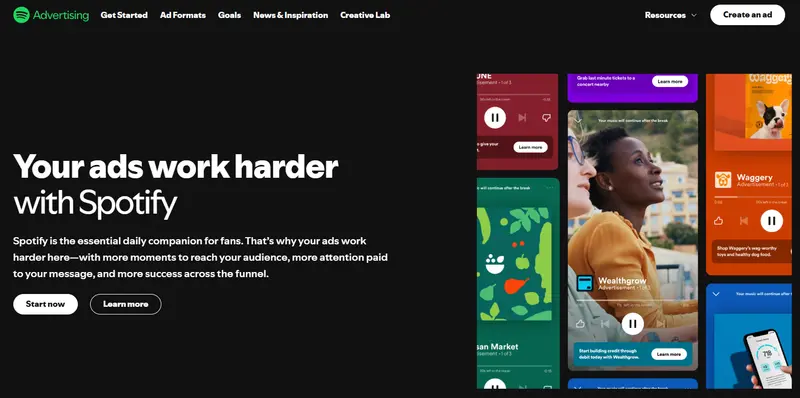
Spotify Ads Manager gives advertisers direct access to Spotify’s advertising inventory across music streaming, podcasts, and video podcasts. The platform allows marketers to create campaigns, define audiences, set budgets, and measure performance within Spotify’s ecosystem.
Unlike traditional DSPs, Spotify Ads Manager focuses exclusively on Spotify-owned inventory rather than inventory across thousands of publishers. Advertisers can target listeners using demographic, interest, and contextual signals available through the platform.
For marketers interested in programmatic audio advertising, Spotify often serves as a practical starting point because campaign management, targeting, creative delivery, and reporting are handled within a single environment.
Looking to Reach Listeners on Spotify?

2. Google Display & Video 360

Best for: Enterprise programmatic advertising across multiple channels
Google Display & Video 360 (DV360) is Google’s enterprise demand-side platform. Advertisers use it to plan, buy, manage, and optimize campaigns across display, video, connected TV, audio, and other digital channels.
DV360 provides access to inventory through Google’s marketplace integrations and supports advanced audience targeting, frequency management, measurement, and reporting capabilities. Organizations already using other Google advertising products often benefit from tighter integration across their marketing stack.
Large brands and agencies frequently use DV360 when managing campaigns across multiple channels and large advertising budgets.
3. The Trade Desk

Best for: Omnichannel programmatic advertising
The Trade Desk is one of the most widely used independent demand-side platforms in the programmatic advertising industry. Advertisers can access inventory across display, video, connected TV, audio, native advertising, and digital out-of-home channels from a single platform.
The company is particularly well known for its connected TV capabilities and relationships with premium media owners. Audience targeting, measurement tools, identity solutions, and cross-channel campaign management are central parts of the platform.
Many agencies and enterprise advertisers use The Trade Desk when they want broad inventory access outside of walled-garden advertising ecosystems.
4. Amazon DSP
Best for: Retail media and commerce-driven advertising
Amazon DSP allows advertisers to buy display, video, and audio inventory while leveraging Amazon’s shopping and audience signals. Campaigns can run on Amazon-owned properties as well as third-party websites and apps where inventory is available.
The platform is often used by brands that want to connect advertising activity with shopping behavior. Audience segments can be built around browsing, product interest, and purchase-related signals available within Amazon’s ecosystem.
Retail, consumer goods, and ecommerce advertisers frequently evaluate Amazon DSP because of its connection to commerce data and retail media opportunities.
5. StackAdapt

Best for: Mid-market brands and growing programmatic teams
StackAdapt is a programmatic advertising platform that provides access to channels including native advertising, display, video, connected TV, audio, and digital out-of-home inventory. The platform is known for combining campaign management, audience targeting, and reporting within a relatively accessible interface.
Many advertisers view StackAdapt as a platform that balances functionality with usability. Agencies and marketing teams often use it to manage campaigns across multiple channels without the complexity associated with some larger enterprise platforms.
The platform has also expanded beyond native advertising, making it a broader option for omnichannel programmatic campaigns.
6. Yahoo DSP
Best for: Cross-channel audience targeting
Yahoo DSP provides advertisers with access to display, video, connected TV, native advertising, and digital audio inventory. Audience targeting capabilities are supported through Yahoo’s data assets and media relationships.
The platform focuses on helping advertisers reach audiences across devices and channels while managing campaigns from a centralized environment. Reporting, audience segmentation, and measurement tools are built into the platform.
Advertisers evaluating multiple DSP options often include Yahoo DSP because of its broad inventory access and established position within the programmatic advertising landscape.
Types of Programmatic Advertising
Programmatic advertising is often associated with real-time bidding, but not every programmatic transaction works the same way. Advertisers can buy inventory through several different models depending on their goals, budget, and the type of inventory they want to access.
Some buying methods prioritize scale and flexibility. Others focus on premium placements, predictable pricing, or guaranteed inventory. Understanding the differences can help marketers choose the right approach for a particular campaign.
Open Auction
Open auctions are the most common form of programmatic advertising.
Inventory is made available to any eligible advertiser participating in the auction. When an impression becomes available, advertisers submit bids in real time and the winning bid earns the placement.
Open auctions provide access to large amounts of inventory across websites, apps, and other digital environments. Many advertisers use this model for audience targeting, prospecting campaigns, retargeting efforts, and broad reach initiatives.
The main advantage is scale. Advertisers can reach large audiences without negotiating directly with publishers.
Private Marketplace (PMP)
Private marketplaces operate similarly to open auctions, but participation is restricted to selected advertisers.
Publishers often reserve premium inventory for private marketplace deals, giving invited advertisers access to placements that may not be available through public auctions. The auction process still takes place, but the pool of competing buyers is much smaller.
Many larger brands use PMPs when they want greater control over where ads appear while maintaining the flexibility of programmatic buying.
Preferred Deals
Preferred deals sit somewhere between auction-based buying and direct media buying.
In a preferred deal, a publisher offers inventory to a specific advertiser at a negotiated rate before the inventory enters an auction. The advertiser has the opportunity to purchase impressions at the agreed price but is not required to buy them.
The arrangement gives advertisers priority access to inventory without the competition typically found in auction environments.
Preferred deals are often used when advertisers want access to premium publishers while maintaining some flexibility in how inventory is purchased.
Programmatic Guaranteed
Programmatic guaranteed combines automation with the predictability of a traditional direct buy.
The advertiser and publisher agree in advance on pricing, inventory volume, and campaign details. Once the agreement is finalized, the transaction is executed programmatically rather than through manual insertion orders and back-and-forth negotiations.
Many advertisers use programmatic guaranteed deals when campaign delivery must be predictable. Premium homepage placements, large brand awareness campaigns, and sponsorship-style advertising frequently use this model.
Each buying model serves a different purpose. The table below outlines it.
| Buying Type | Inventory Access | Pricing Model | Best For |
| Open Auction | Public inventory | Auction-based | Scale and audience reach |
| Private Marketplace | Invite-only inventory | Auction-based | Premium inventory access |
| Preferred Deal | Selected inventory | Negotiated pricing | Priority access without commitment |
| Programmatic Guaranteed | Reserved inventory | Fixed pricing | Predictable delivery and premium placements |
No single buying model is inherently better than another. Many advertisers use multiple approaches within the same campaign strategy. Open auctions may provide efficient reach, while private marketplaces and guaranteed deals can secure premium inventory from specific publishers.
The right choice depends on campaign objectives, inventory requirements, brand safety considerations, and the level of control an advertiser wants over where ads appear.
Where Programmatic Advertising Appears Today
Many people still associate programmatic advertising with display banners appearing on websites. Display advertising remains an important part of the ecosystem, but modern programmatic buying extends far beyond traditional web inventory.
Advertisers can now use programmatic technology to purchase inventory across video platforms, streaming audio services, connected TV environments, retail media networks, and even digital billboards. The same principles of automation, audience targeting, and real-time decision-making apply across all of these channels.
Programmatic Display Advertising
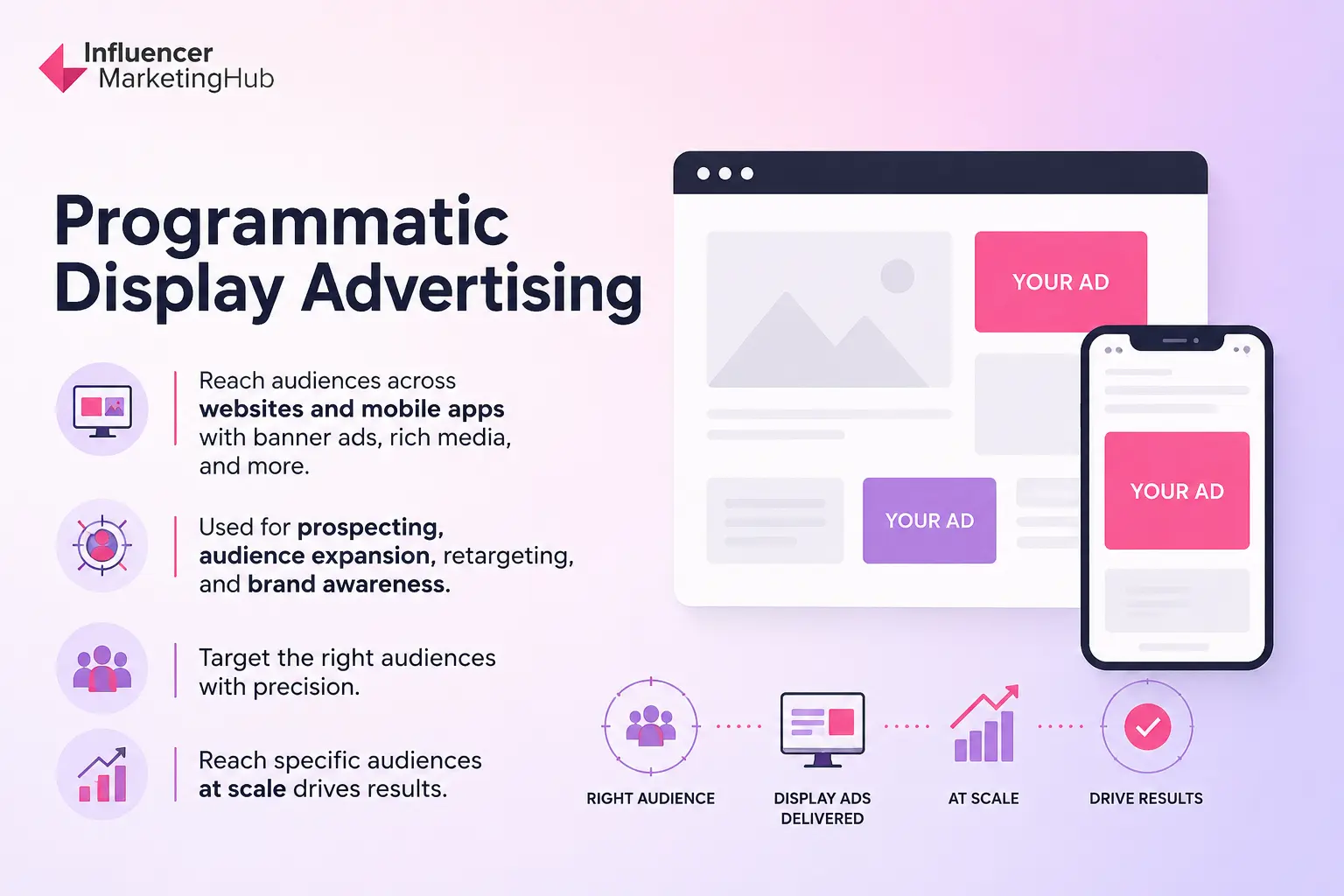
Display advertising remains one of the most widely used forms of programmatic buying.
Advertisers use programmatic display campaigns to reach audiences across websites and mobile apps through banner ads, rich media placements, and other visual formats. Display inventory is commonly used for prospecting campaigns, audience expansion, retargeting, and brand awareness initiatives.
The ability to reach specific audiences at scale is one of the reasons display advertising became an early success story for programmatic buying.
Programmatic Video Advertising
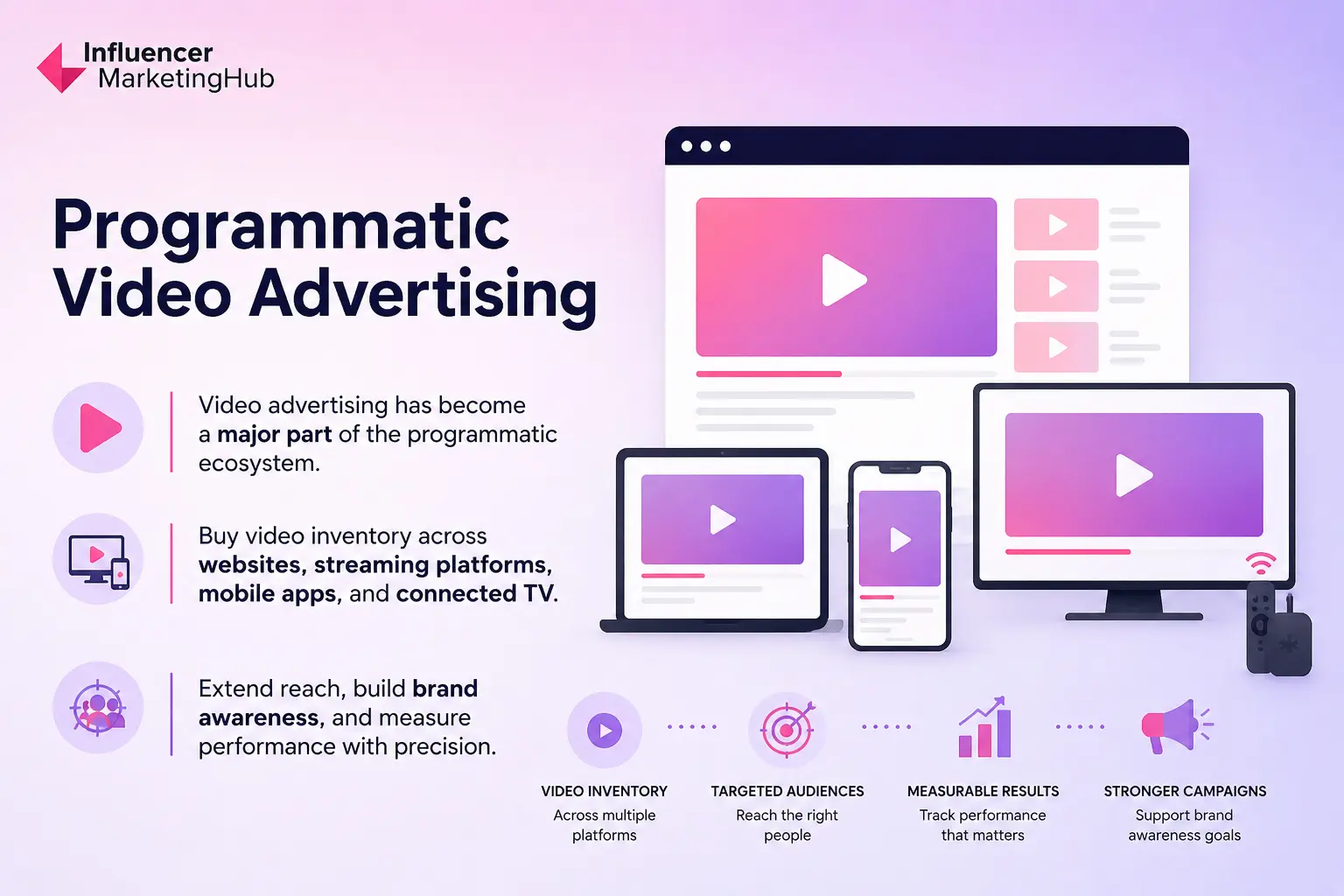
Video advertising has become a major part of the programmatic ecosystem.
Advertisers can purchase video inventory across publisher websites, streaming platforms, mobile applications, and connected TV environments. Programmatic video campaigns often support brand awareness objectives because video can communicate more information than static display ads in a relatively short period of time.
Many marketers use programmatic video to extend the reach of broader brand campaigns while maintaining audience targeting and measurement capabilities.
Programmatic Audio Advertising
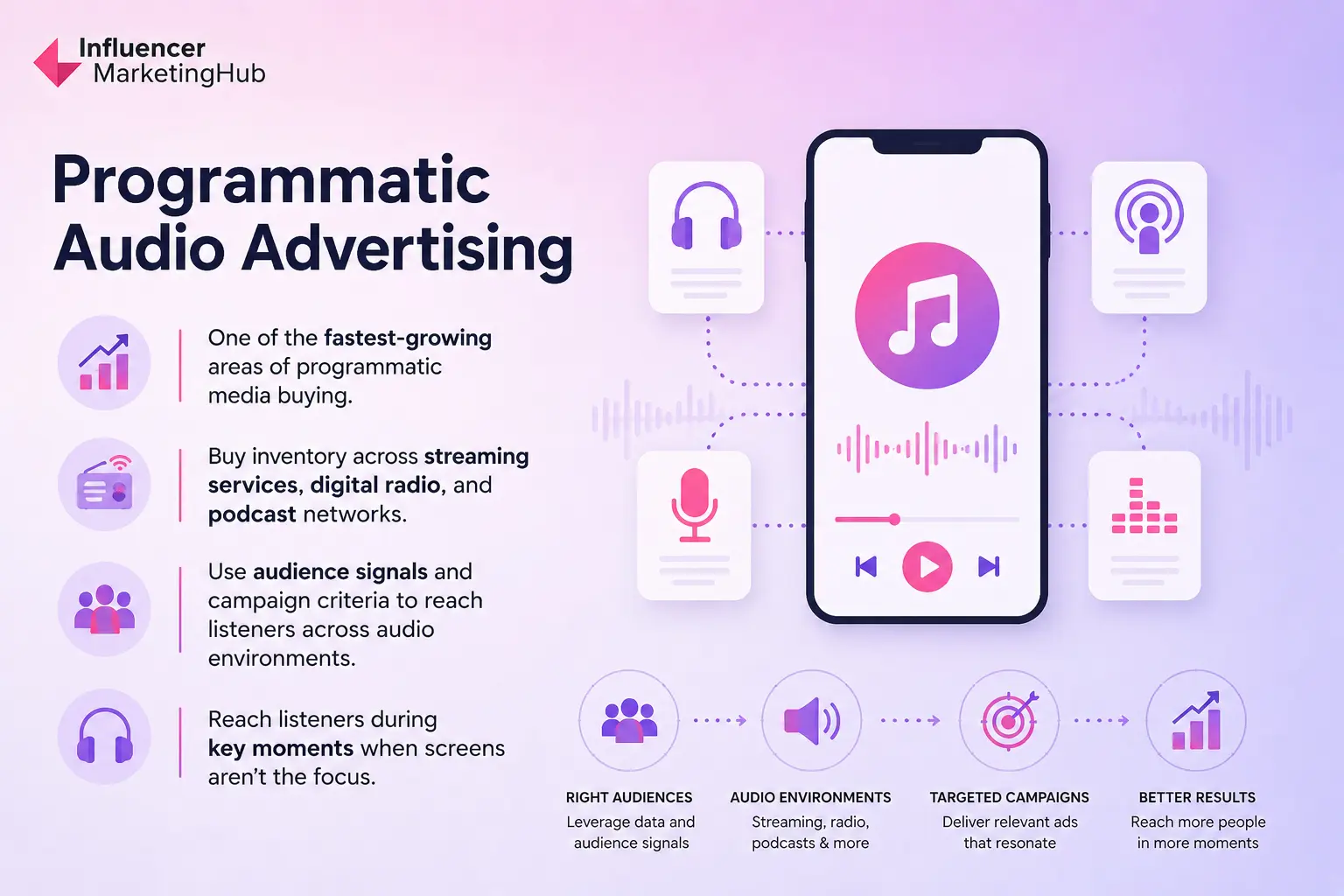
Audio advertising has emerged as one of the fastest-growing areas of programmatic media buying.
Streaming services, digital radio platforms, and podcast networks now offer inventory that can be purchased programmatically. Instead of buying placements directly from individual publishers, advertisers can use audience signals and campaign criteria to reach listeners across multiple audio environments.
Spotify is one of the most recognizable examples. Advertisers can access Spotify's inventory through Spotify Ads Manager, allowing them to target listeners across music streaming, podcasts, and video podcasts. Similar opportunities exist across other streaming audio platforms and podcast networks.
Programmatic audio gives marketers access to audiences during moments when screens may not have their full attention, such as commuting, exercising, or multitasking throughout the day.
Consumer context can help brands decide how to approach each of these moments. Our contextual advertising guide covers the signals marketers can use to align the placement and creative with the listener’s current activity.
Programmatic Connected TV (CTV) Advertising
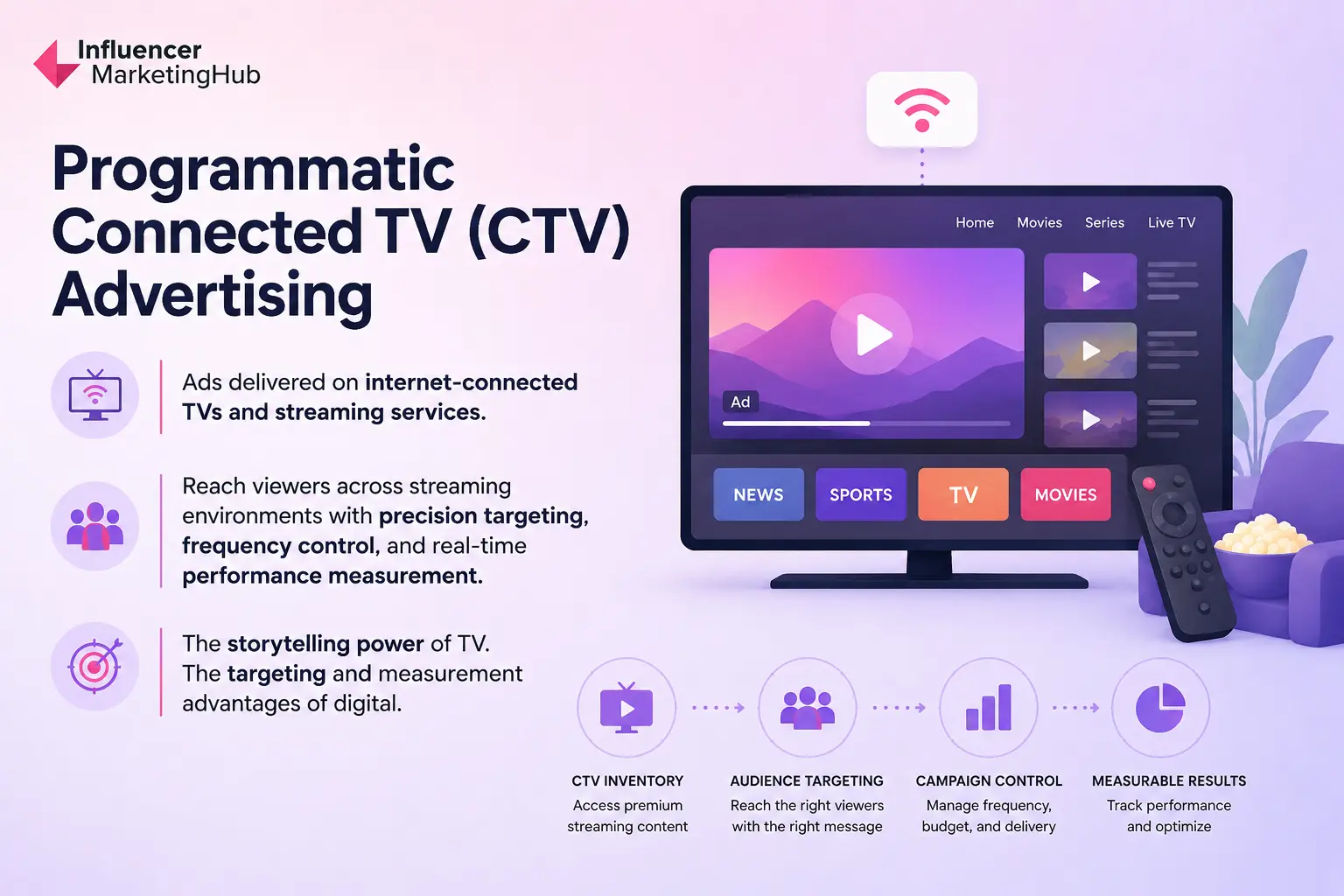
Connected TV advertising refers to ads served through internet-connected television devices and streaming services.
As audiences continue shifting away from traditional television viewing, advertisers have increasingly turned to CTV to reach viewers through streaming environments. Programmatic technology helps advertisers purchase inventory, manage audience targeting, control frequency, and measure campaign performance across connected TV placements.
For many brands, connected TV combines the storytelling capabilities of television advertising with the targeting and measurement advantages of digital media.
Programmatic Retail Media Advertising
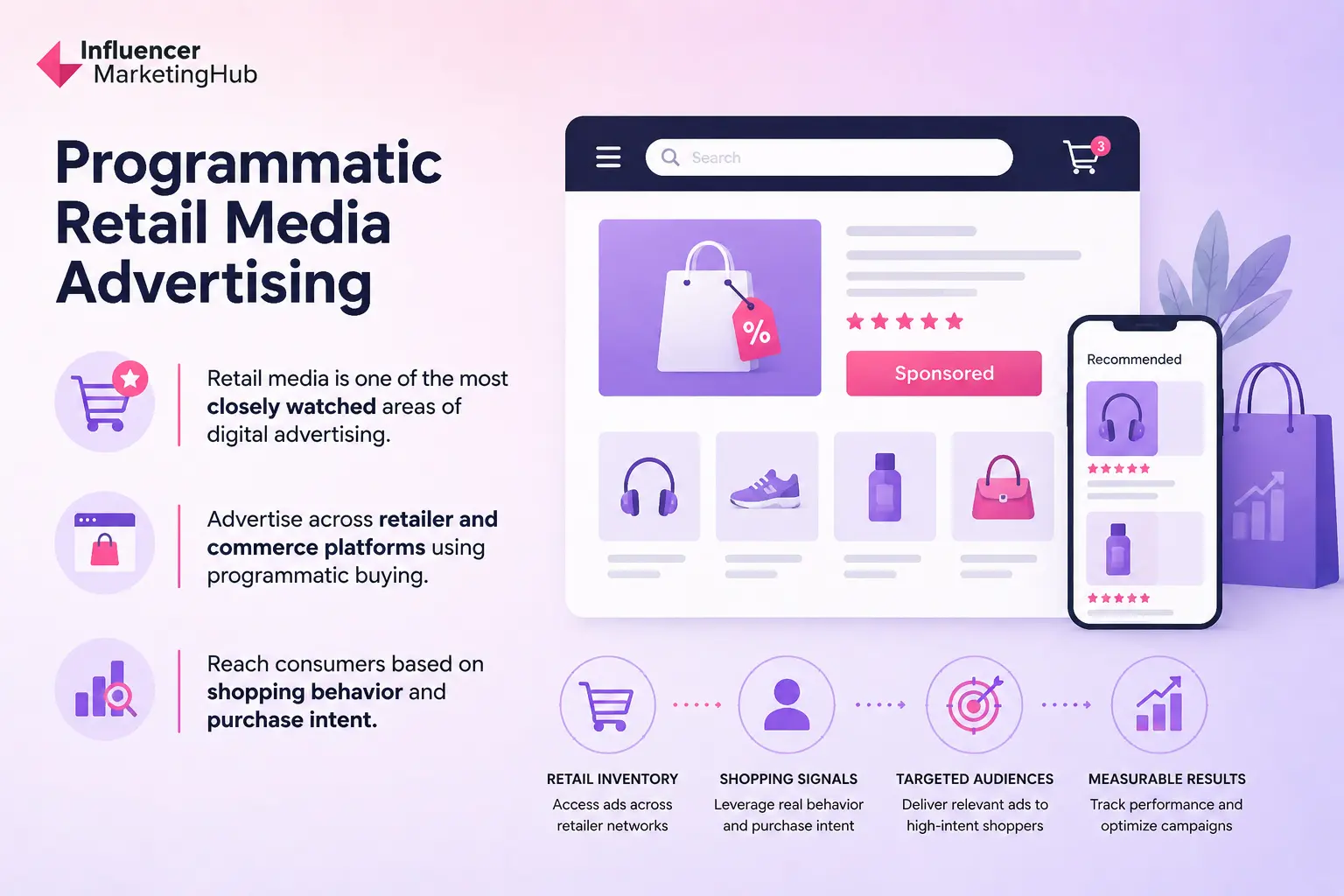
Retail media has become one of the most closely watched areas of digital advertising.
Retailers such as Amazon and other commerce platforms have built advertising networks that allow brands to reach consumers based on shopping behavior and purchase intent. Programmatic buying plays an important role in helping advertisers access and manage this inventory.
Marketers often view retail media as valuable because advertising can be informed by signals that are closely tied to product research and purchasing activity.
Programmatic Digital Out-of-Home (DOOH) Advertising
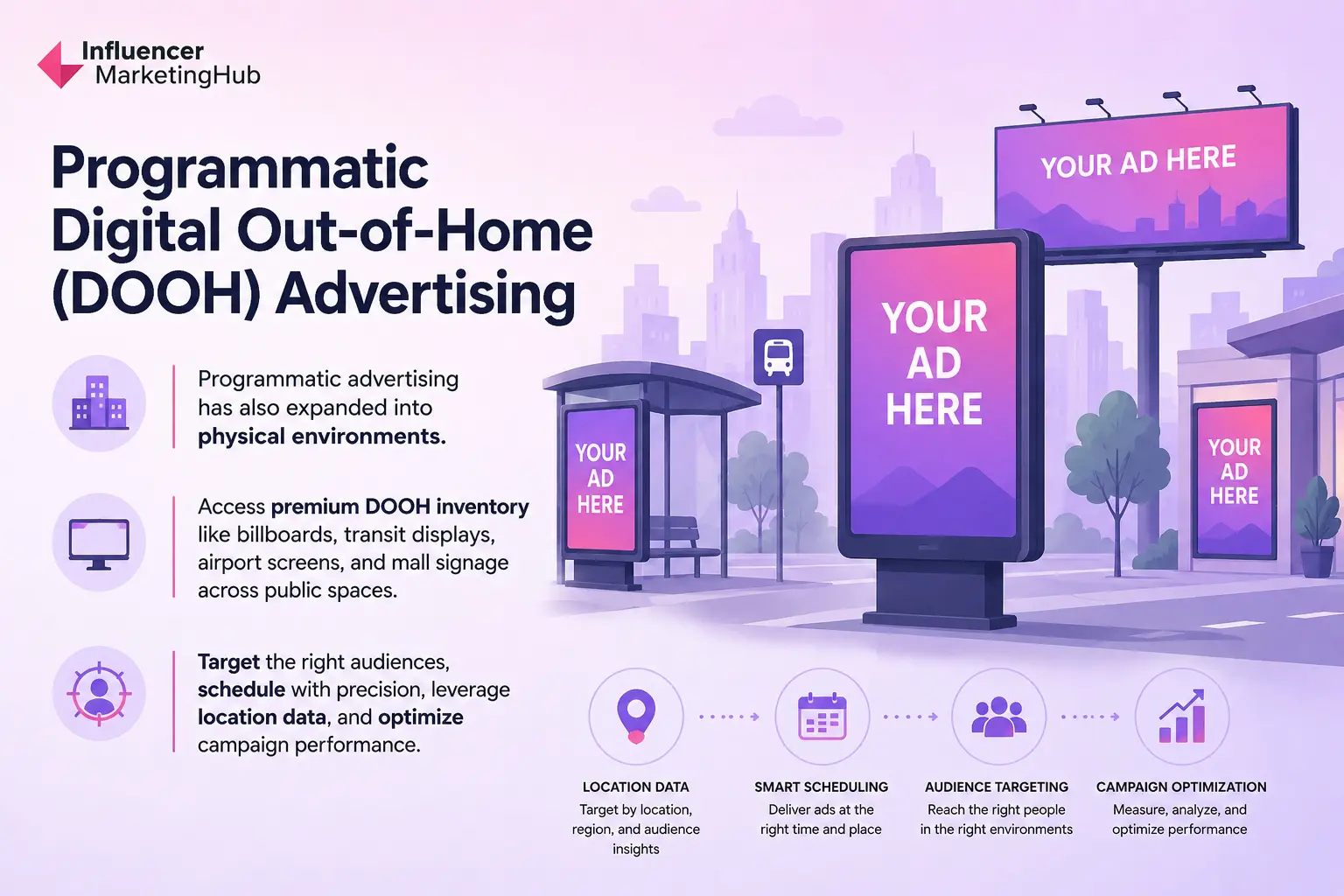
Programmatic advertising has also expanded into physical environments.
Digital out-of-home advertising includes inventory such as digital billboards, transit displays, airport screens, shopping mall signage, and other digital displays located in public spaces. Programmatic technology allows advertisers to purchase this inventory more efficiently than traditional out-of-home buying methods.
Audience targeting, scheduling, location data, and campaign optimization can all influence how DOOH campaigns are delivered.
The growing range of available channels highlights an important point: programmatic advertising is no longer a single advertising format. It has evolved into a buying method that helps advertisers access inventory across multiple environments while maintaining consistent audience targeting, campaign management, and measurement capabilities.
How Much Does Programmatic Advertising Cost?
Programmatic advertising costs vary widely because advertisers are not buying one standard product. A display banner on open web inventory, a connected TV placement, a retail media impression, and a podcast ad can all be bought programmatically, but they do not carry the same price.
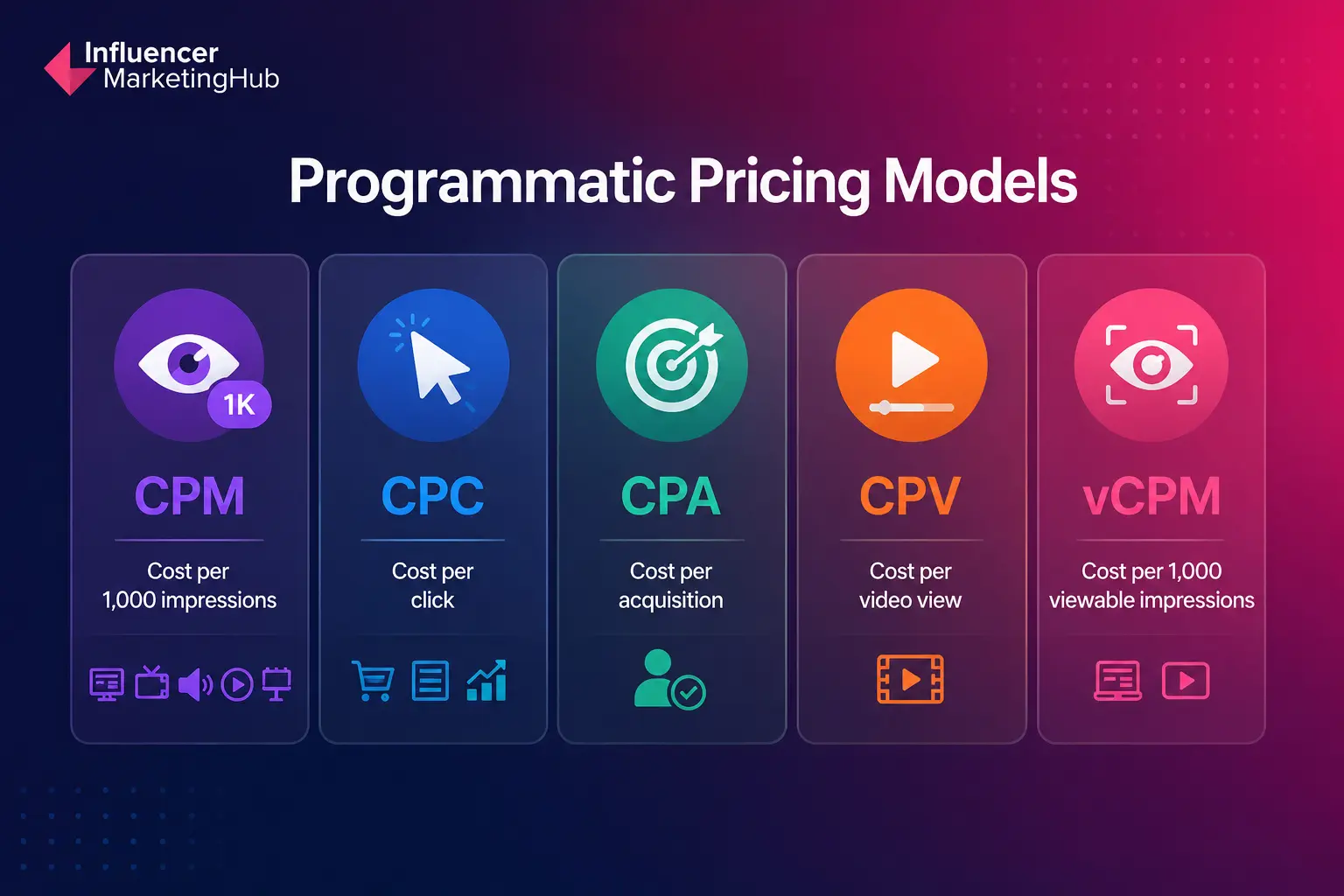
Most programmatic campaigns are priced on a CPM basis, meaning advertisers pay for every 1,000 impressions served. Some campaigns may use CPC, CPA, CPV, or fixed pricing, depending on the platform, channel, and buying model.
Programmatic CPM Benchmarks
Programmatic CPMs depend on inventory quality, audience targeting, geography, seasonality, and whether the buy runs through an open auction, private marketplace, or direct agreement.
For planning purposes, recent benchmark data places standard programmatic display banners around $1.50 to $4.00 CPM, while in-stream video often sits around $12 to $25 CPM.
Programmatic audio is commonly benchmarked at around $8 to $18 CPM, and digital out-of-home often falls around $10 to $22 CPM. Connected TV typically costs more, with benchmark ranges around $20 to $40 CPM for many CTV campaigns and higher ranges for premium streaming inventory.
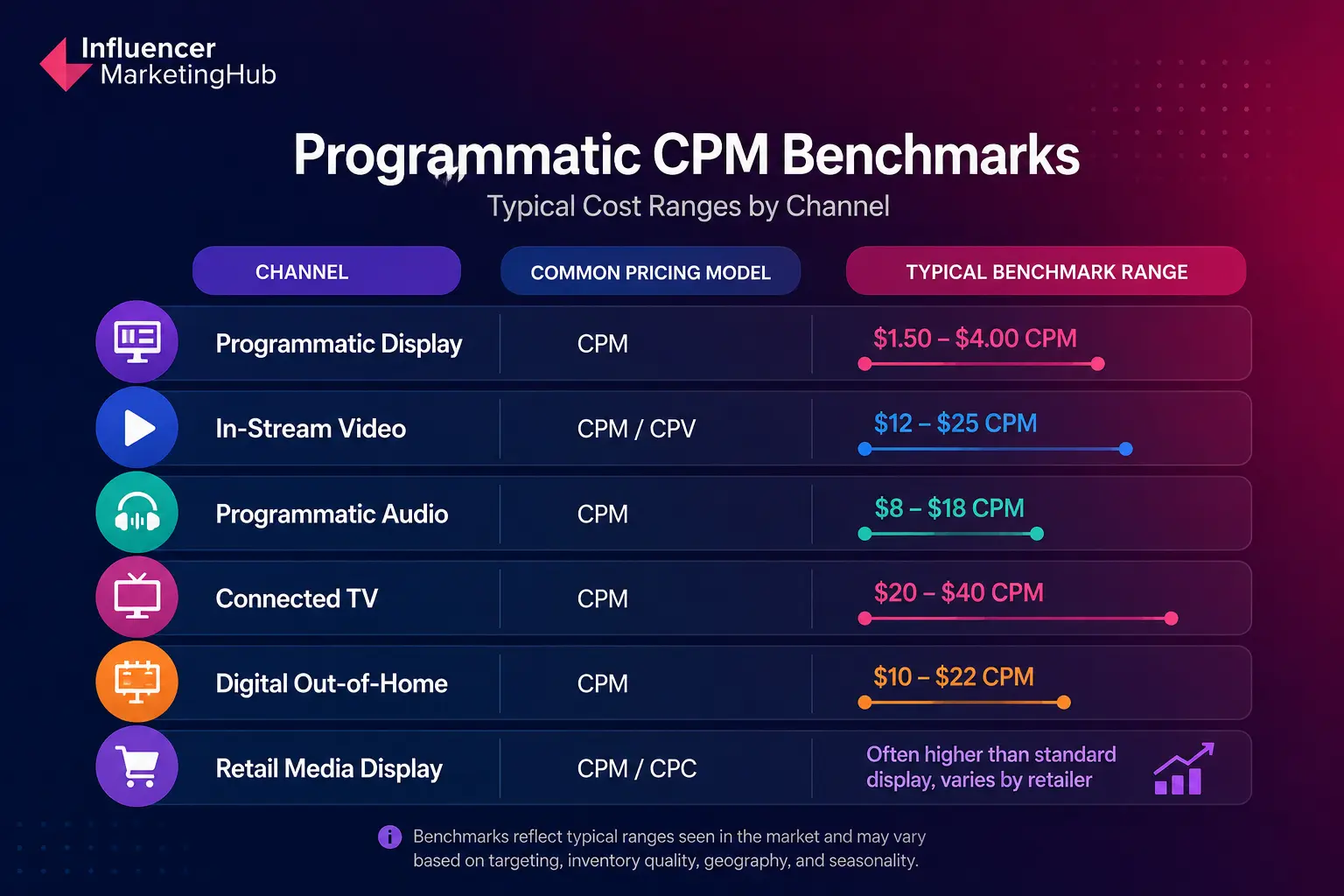
*Disclaimer: Benchmark ranges are based on publicly available 2026 industry reports and market studies. Actual CPMs may vary based on targeting, inventory, geography, seasonality, and campaign goals.
Retail media is harder to benchmark with a single number because pricing depends heavily on the retailer, format, auction competition, and proximity to purchase.
Amazon, Walmart, Target, Kroger, and other retail media networks often command higher CPMs than standard open-web display because advertisers are buying closer to shopping behavior and purchase intent.
Amazon also notes that Amazon DSP can use cost-plus-fees pricing and fixed CPM campaigns, with CPMs influenced by supply and demand factors, targeting, measurement, managed services, and whether inventory runs on Amazon-owned properties or third-party supply.
What Influences Programmatic Advertising Costs?
A low CPM is not always efficient, and a high CPM is not always wasteful. Price depends on what kind of audience, inventory, and outcome the advertiser is buying.
|
Cost Driver |
How It Usually Affects Pricing |
| Premium inventory | Raises CPMs |
| Narrow audience targeting | Raises CPMs |
| Competitive industries | Raises CPMs |
| CTV and premium video | Raises CPMs |
| Retail media purchase-intent data | Raises CPMs |
| Broad open-exchange display | Often lowers CPMs |
| Private marketplace deals | Often cost more than open auctions |
| Seasonal demand | Raises CPMs during peak periods |
A campaign targeting a broad audience across open-web display inventory may have a much lower CPM than a CTV campaign targeting high-income households in a specific market. The second campaign costs more, but it may still be the better choice if the objective is brand lift, household reach, or premium video exposure.
Why CPM Alone Can Be Misleading
CPM is useful for planning, but it should not be the only metric used to judge programmatic performance.
A $4 display CPM may look efficient, but poor viewability, weak creative, or low conversion quality can make the campaign expensive in practice. A $30 CTV CPM may look expensive, but it can be reasonable if the campaign reaches valuable households, controls frequency, and supports brand awareness or downstream search activity.
Marketers should evaluate programmatic costs alongside metrics such as reach, frequency, viewability, video completion rate, cost per acquisition, return on ad spend, and incremental lift.
Podcast and programmatic audio make the same point. Programmatic audio spots may run lower than premium host-read podcast ads, but the tradeoff is different. Programmatic audio can support scale and targeting, while host-read podcast placements often command higher CPMs because the format includes creator trust and endorsement value.
Our podcast pricing benchmarks place programmatic audio around $15 to $25 CPM, while host-read mid-roll placements often fall around $35 to $50 CPM.
The practical takeaway is simple: programmatic advertising costs should be judged against campaign objectives, not against a universal CPM average. The best-priced campaign is the one that reaches the right audience, in the right environment, with enough measurement clarity to prove whether the spend is working.
Calculate and Compare Programmatic CPA
Use inBeat’s CPA Calculator to calculate campaign spend, verified acquisitions, or cost per acquisition. Enter any two values to generate the third automatically.
Advanced mode lets you compare multiple campaigns and identify which audience, channel, or inventory source generates customers at the lowest cost.
Programmatic Advertising Is Reshaping Modern Media Buying
Programmatic advertising has evolved far beyond display banners and automated bidding. Today, advertisers can use programmatic technology to access inventory across video, audio, connected TV, retail media, and digital out-of-home channels while maintaining greater control over targeting, measurement, and campaign optimization.
The technology behind programmatic advertising may seem complex at first, but the underlying goal is straightforward: help advertisers reach the right audiences more efficiently. As digital advertising continues to expand across new channels and devices, programmatic buying has become one of the primary ways marketers manage media investments at scale.
Success ultimately comes down to strategy. Understanding how the ecosystem works, choosing the right platforms, and aligning campaign goals with the appropriate channels can help advertisers make better decisions and maximize the value of their advertising spend.
Frequently Asked Questions
What is programmatic advertising?
Programmatic advertising is the automated buying and selling of digital advertising inventory using software and real-time data. Advertisers use programmatic platforms to reach targeted audiences across channels such as display, video, audio, connected TV, and digital out-of-home advertising.
How does programmatic advertising work?
When an ad impression becomes available, programmatic platforms evaluate the opportunity, match it against advertiser targeting criteria, and conduct an automated auction. The winning advertiser serves an ad, often within milliseconds.
What is the difference between programmatic advertising and display advertising?
Display advertising refers to a specific ad format, while programmatic advertising is a method of buying advertising inventory. Programmatic technology can be used to purchase display, video, audio, connected TV, retail media, and DOOH inventory.
What is a DSP in programmatic advertising?
A demand-side platform (DSP) is software that allows advertisers to purchase digital advertising inventory across multiple publishers and channels. Popular examples include Google Display & Video 360, The Trade Desk, Amazon DSP, and StackAdapt.
What are the main types of programmatic advertising?
The most common buying models include Open Auctions, Private Marketplaces (PMPs), Preferred Deals, and Programmatic Guaranteed. Each offers different levels of inventory access, pricing control, and predictability.
How much does programmatic advertising cost?
Programmatic advertising costs vary by channel, audience, inventory quality, and competition. Display advertising often has lower CPMs, while connected TV, premium video, and retail media inventory generally command higher rates.
Is programmatic advertising effective?
Programmatic advertising can be highly effective when audience targeting, creative assets, campaign objectives, and measurement strategies are aligned. Many advertisers use programmatic buying because it offers scalability, automation, and detailed performance reporting.
What are the biggest benefits of programmatic advertising?
Key benefits include audience targeting at scale, automated media buying, real-time optimization, access to multiple advertising channels, and detailed campaign measurement capabilities.


