
Music is no longer a finishing touch in UGC ads. It is a performance lever. As paid social becomes more saturated, brands are asking sharper questions.
Are your UGC videos stopping the scroll because of the hook, or because the sound instantly sets the mood? And how much time is your team wasting hunting for tracks that are safe, licensed, and optimized for short-form ads?
The data support this shift. Namely, 35% of TikTok users actively search for new music on the platform, which explains why ads that feel sonically native often outperform visually polished but tone-deaf creatives.
Sound is not background noise anymore. It is part of discovery.
A clear pattern is emerging across Meta, TikTok, and YouTube Shorts. High-performing UGC ads combine authentic visuals with music that mirrors platform trends, pacing, and emotional cues.
This is pushing brands away from fragmented workflows and toward UGC video editing tools with built-in music libraries designed specifically for ad performance.
In this guide, we spotlight tools that treat music as a first-class feature, helping teams move faster while producing UGC ads that actually resonate.
Top UGC Editing Tools With Music Library
1. Vidlo
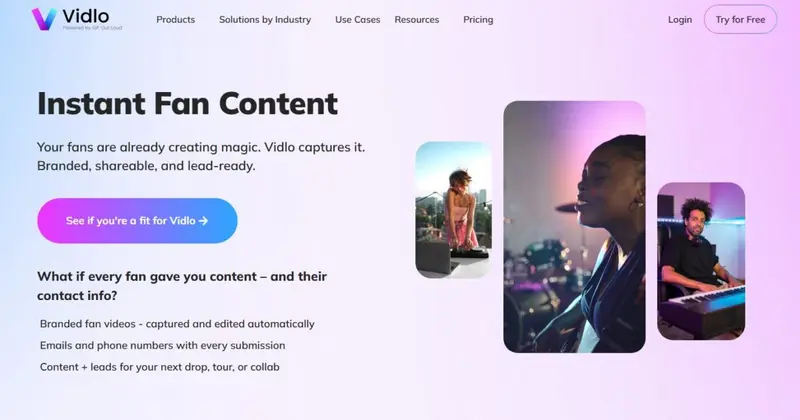
Best for: Music brands, artists, entertainment companies, and consumer brands that want to turn fans into UGC creators using branded music, while capturing emails, phone numbers, and first-party data alongside the video content.
Pricing: Plans start at $39/month, with higher tiers scaling campaign volume, video limits, lead capture, analytics, and CTA functionality. A 7-day free trial is available.
Vidlo approaches UGC video creation from a fundamentally different angle than traditional editors. Instead of brands creating content themselves, Vidlo is built to activate fans and audiences as creators, using music as the central creative anchor.
Brands upload their own tracks or select from Vidlo’s music library, then invite fans to record videos directly through branded campaign pages.
Music & Audio Library
Music is not an afterthought in Vidlo. Campaigns are designed around music-first participation, allowing fans to record videos synced to a specific track, sound, or prompt. Vidlo automatically applies the brand’s selected music, overlays, and visual filters, ensuring every submission stays on-brand and rights-safe.
This makes Vidlo especially effective for launches, drops, tours, collaborations, and community-driven campaigns where sound identity matters.
Key UGC Editing & Campaign Features
- Music upload and music library support
- Fan-facing recording flows with prompts
- Automatic branding, overlays, and filters
- Built-in lead capture, including email and SMS
- Video galleries for reuse across channels
- CRM integrations and campaign analytics on higher tiers
Proof of Performance
Vidlo is positioned primarily in music marketing, creator-led launches, and fan-driven campaigns, with adoption across brands that prioritize owned audience growth alongside UGC creation.
Pros
- Music-native UGC workflows
- Fans create content directly with your audio
- Automatic branding and formatting
- Built-in lead and data capture
Cons
- Not designed for manual timeline editing
- Limited control over post-production details
- Less suitable for polished ad-style UGC
2. Tagshop
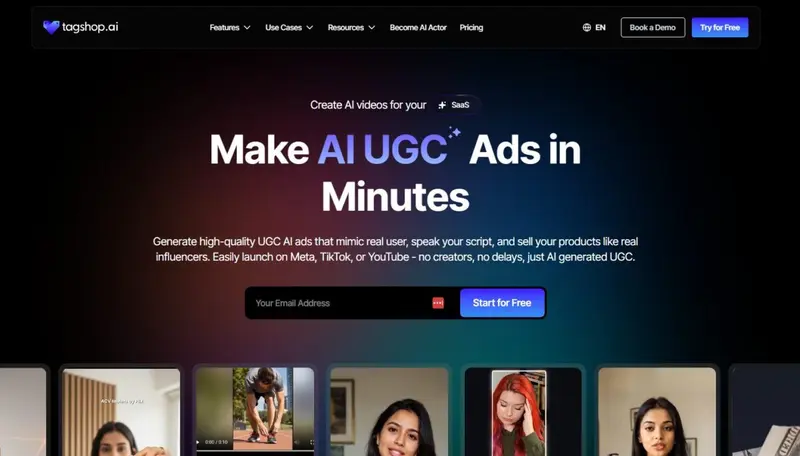
Best for: Performance-driven eCommerce brands, DTC marketers, and agencies that want to generate UGC-style ads at scale with built-in royalty-free music, AI avatars, and fast creative iteration for Meta, TikTok, and YouTube.
Pricing: Plans start at $11/month, with higher tiers unlocking more videos, longer runtimes, faster rendering, 4K exports, AI Twins, and campaign publishing. A free plan is available for testing.
Tagshop positions itself as a full-stack AI UGC platform, designed for speed, volume, and ad performance rather than manual editing. It is especially strong for teams that want to create dozens or hundreds of UGC-style videos without coordinating creators, shoots, or post-production workflows.
Music & Audio Library
Tagshop includes royalty-free background music across all paid plans, allowing brands to quickly pair UGC videos with safe, platform-ready audio. Music selection is embedded directly into the creation flow, alongside voiceovers and captions, which makes it easy to produce ad-ready assets without external licensing tools.
In addition, Tagshop supports AI voice cloning and multilingual voiceovers, making audio a core part of its scaling strategy rather than a final edit step.
Key UGC Editing & Creation Features
- Built-in royalty-free music
- AI avatars and expressive gestures
- URL-to-video product demos
- AI voice cloning and localization
- Built-in video editor with captions
- One-click ad variations and publishing
- Campaign-level asset management
Proof of Performance
Tagshop highlights strong adoption among eCommerce and growth teams, with emphasis on cost reduction, rapid iteration, and ROAS-focused creative testing, rather than cinematic polish.
Pros
- Built-in royalty-free music
- Strong ad-focused UGC workflows
- Fast creative iteration at scale
- Multilingual audio and voice cloning
Cons
- Less suited for organic, fan-recorded UGC
- AI avatars may not fit all brand aesthetics
- Limited fine-grain audio mixing control
3. Creatify
Best for: Performance marketers, eCommerce brands, and agencies that want to rapidly generate, test, and optimize UGC-style video ads with access to a commercial music library, stock footage, and built-in creative testing workflows.
Pricing: Plans start at $19/month, with a free plan available for testing. Higher tiers unlock premium avatars, longer videos, batch creation, competitor tracking, ad platform publishing, and expanded music and B-roll libraries.
Creatify is positioned less as a traditional video editor and more as an AI-driven ad performance engine. Its core strength lies in taking a product URL and instantly producing multiple UGC-style video ads that are ready to test across Meta, TikTok, and other paid channels.
Music & Audio Library
Creatify includes a commercial music library alongside stock footage and B-roll, allowing users to pair UGC videos with platform-safe background tracks without sourcing audio externally. Music selection is integrated directly into the ad creation flow, alongside voiceovers, avatars, and captions, making it easy to produce compliant, ad-ready creatives quickly.
In addition to music, Creatify supports 100+ realistic voices, multiple accents, and 29 languages, which makes audio variation a key lever for creative testing.
Key UGC Editing & Creation Features
- Built-in commercial music library
- AI avatars and talking-head UGC ads
- URL-to-video ad generation
- Stock B-roll and product video styles
- Batch creative generation and testing
- Ad platform publishing for Meta and TikTok
- Performance analytics and competitor insights
Proof of Performance
Creatify highlights extensive usage by brands and agencies, with benchmarks focused on lower production costs, faster testing velocity, and improved ROI compared to static ads and manual creative workflows.
Pros
- Integrated music and B-roll library
- Strong ad testing and optimization focus
- Fast URL-to-ad workflow
- Scales well for paid media teams
Cons
- Less suited for organic or fan-generated UGC
- Editing control is secondary to automation
- Music customization is functional, not granular
4. InVideo
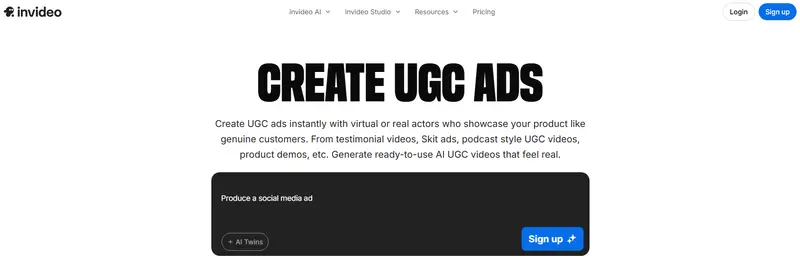
Best for: Creators, small businesses, brands, marketers, and agencies that want UGC-style videos with strong music support, combining licensed audio, stock footage, and AI-powered editing in one flexible editor.
Pricing: InVideo offers a free plan with watermark exports. Paid plans start at $15/month, with higher tiers unlocking watermark removal, HD exports, premium stock media, expanded music access, and team collaboration.
InVideo stands out as one of the most music-forward UGC video editing platforms on the market. Unlike tools focused purely on automation, InVideo blends AI-assisted content creation with a traditional editor, giving users fine control over music timing, mood, and pacing, which is critical for UGC ads and short-form social videos.
Music & Audio Library
InVideo includes a large licensed music library alongside sound effects and voiceover tools. Users can upload their own tracks or select from platform-safe audio, trim tracks, apply fade-ins and fade-outs, and even layer multiple audio files across scenes. Music can be adjusted scene-by-scene, making it easier to match beats with hooks, product moments, or CTA timing.
This depth makes InVideo particularly strong for Reels, TikToks, Shorts, and ad creatives where music drives retention.
Key UGC Editing & Creation Features
- Built-in licensed music and audio library
- AI avatars and UGC-style actors
- Access to millions of stock videos and images
- Script-to-video and text-to-speech tools
- Prompt-based and manual timeline editing
- Templates for UGC ads, testimonials, and product demos
- Multi-language voiceovers and captions
Proof of Performance
InVideo is widely adopted across creators and marketing teams globally, with strong user ratings highlighting ease of use, speed, and audio flexibility for social-first video production.
Pros
- Strong music and audio controls
- Large licensed media library
- Flexible editing for UGC-style videos
- Suitable for both AI-assisted and manual workflows
Cons
- Less automation than performance-focused ad engines
- AI avatars are optional, not core-first
- Scaling large ad testing requires more manual setup
5. Affogato
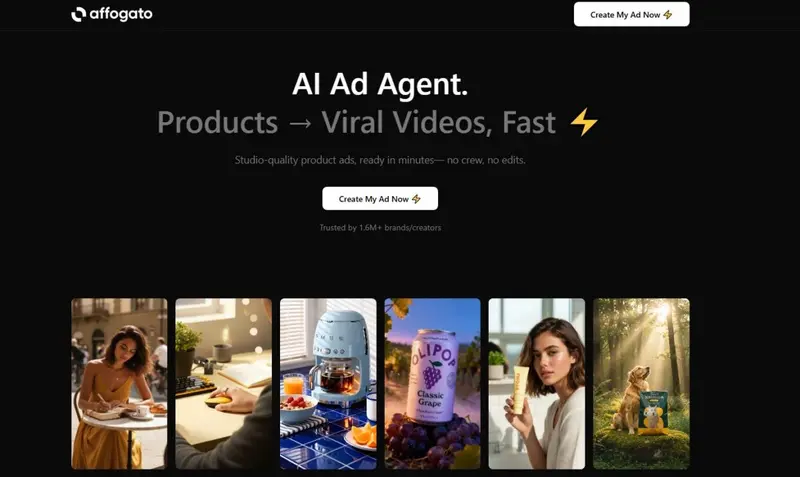
Best for: Brands, agencies, and creators producing short-form UGC ads where background music is central to hook strength, pacing, and emotional delivery, especially for TikTok, Instagram Reels, and Facebook Ads.
Pricing: Plans start at $24/month, scaling up for teams and agencies that need higher video generation limits, extended lip-sync time, and priority processing. All paid tiers include commercial usage rights.
Affogato is an AI-first UGC video editing platform designed to eliminate the friction of traditional production. Instead of stitching clips, sourcing music, and syncing audio manually, you can generate complete, multi-scene ads through chat-based prompts.
Affogato stands out because music is generated natively inside the video workflow, not bolted on afterward.
Music & Audio Library
Rather than offering a static stock music catalog, Affogato uses AI-generated background music that adapts automatically to the video’s structure, pacing, and creative style. Music is generated contextually based on the prompt and scene flow, ensuring copyright-safe audio without licensing concerns.
This makes it especially effective for paid UGC ads, where music timing and rhythm directly affect watch time and hook retention.
Key UGC Editing Features
- Chat-based video creation and editing
- Multi-scene timeline control
- AI avatars and talking-head formats
- Voiceovers and lip-sync in 25+ languages
- Auto-captions optimized for short-form ads
- Native product integration for demos and promos
Proof of Performance
Affogato is backed by Y Combinator and reports adoption across 1.6M+ creators and brands, with more than 25M assets generated, indicating strong traction for fast-turn UGC ad production.
Pros
- Built-in AI music generation with no licensing risk
- Music auto-syncs to scene transitions and pacing
- Fast multi-scene UGC ad creation
- Commercial use included
Cons
- No traditional music library browsing
- Limited manual control over individual audio layers
- Primarily optimized for short-form paid ads
Which UGC Video Editing Tool With a Music Library Best Fits Your Needs?
Choosing a UGC video editing tool is no longer just about avatars or automation. For many brands, music selection, licensing safety, and beat-level control now play a decisive role in whether a video actually performs.
The right music can set pacing, signal authenticity, and drive retention in the first 3 seconds. Below, we map clear, music-first use cases to the tools reviewed, so you can quickly identify which platform best matches how you create, edit, and scale UGC content.
- High-volume UGC ads with auto-generated, style-matched background tracks → Affogato
- Fan-driven campaigns where users record content using your own songs or branded audio → Vidlo
- Performance-focused AI UGC ads with royalty-free music baked into fast iteration workflows → Tagshop
- URL-to-video UGC ads with commercial-safe music and scalable ad testing → Creatify
- Hands-on UGC video editing with deep control over licensed music, timing, fades, and layering → InVideo
|
Tool |
Best for | Pricing | Music Library Strength |
Use for |
| Affogato | Automated UGC ads with instant music matching | From $24/month | AI-generated, style-matched tracks | Fast ad creative without music licensing overhead |
| Vidlo | Fan-submitted UGC tied to brand or artist music | From $39/month | Upload and reuse your own music | Turning fans into on-brand creators |
| Tagshop | Scalable AI UGC ads for Meta and TikTok | From $11/month | Royalty-free commercial music | High-volume ad variations with safe audio |
| Creatify | Performance marketers testing multiple ad creatives | From $19/month | Commercial-safe music + stock audio | Rapid creative testing tied to ROAS |
| InVideo | Editors who need full audio and music control | From $15/month | Large licensed music and SFX library | Fine-tuned UGC videos with precise pacing |
Sound On: Choosing the Right UGC Video Tool That Actually Converts
Music is no longer a background detail in UGC. It sets pacing, signals authenticity, and often determines whether a viewer keeps watching or scrolls past. The best UGC video editing tools do more than generate content quickly.
They remove music licensing risk, simplify audio selection, and help brands match sound to intent across ads, product demos, and social campaigns.
Some tools excel at automated, style-matched tracks for speed. Others shine when fan-created videos or branded audio are central to the campaign. And for teams that need precise timing, fades, and creative control, a deeper music library becomes a competitive advantage rather than a nice-to-have.
The right choice comes down to how central music is to your workflow. Pick the platform that treats audio as a performance lever, not an afterthought, and your UGC will feel more natural, more credible, and far more effective.
Frequently Asked Questions
Why do brands rely on UGC instead of traditional ad creatives?
Brands favor UGC because it mirrors how people actually talk, shop, and recommend products online, which is why the benefits of UGC marketing extend beyond engagement into trust and conversion.
How does music influence how audiences perceive UGC ads?
Music shapes emotional context and pacing, which is critical when user-generated content needs to feel native to the platform rather than produced like a traditional commercial.
Can AI-generated UGC ads still feel authentic to viewers?
When paired with natural editing and sound choices, AI-driven UGC workflows can preserve authenticity, especially in scalable formats like AI UGC ads for eCommerce.
Does UGC video content contribute to SEO performance?
UGC videos can improve dwell time and engagement signals, and when embedded strategically, they support discoverability as part of a broader UGC SEO strategy.
Why are music-driven UGC ads growing faster than other formats?
The rise of short-form platforms has accelerated the rise of UGC, where sound-led storytelling plays a central role in discovery and memorability.
When should brands involve agencies instead of in-house UGC tools?
Brands often turn to external support when scaling music-heavy campaigns, particularly when working with specialized TikTok ads agencies that understand sound trends.
How does UGC intersect with music marketing strategies?
UGC has become a core distribution layer for artists and labels, reinforcing how influencer marketing campaigns in the music industry now depend on creator-style video formats.
What role do trending songs play in UGC ad performance?
Using culturally relevant audio helps UGC blend into feeds naturally, which is why monitoring popular TikTok songs is essential for timely creative decisions.

