

Overview
Hootsuite is no longer best described as a social media scheduling dashboard. With the launch of Hootsuite Social OS, the company has rebuilt its platform around a connected suite of AI-assisted social tools for publishing, customer care, listening, analytics, advocacy, and governance. The new positioning matters because it changes how buyers should evaluate the product. Hootsuite is still useful for planning and scheduling posts, but its current value sits in how it connects social intelligence to the work teams need to take next.

Hootsuite Social OS is organized into modular apps. Perch covers content creation, planning, and publishing. Nest handles social inbox and customer care. Lumen brings together listening, insights, and intelligence, including the former Talkwalker capabilities. Parliament focuses on employee advocacy and amplification. Wisdom sits across the suite as Hootsuite’s conversational AI layer.
Hootsuite’s original reason for existing still explains why the platform became so widely adopted. The company grew out of Invoke, an agency that needed a safer and more organized way to manage multiple client social accounts without jumping between endless browser tabs. That need led to BrightKit in 2008, which was later renamed Hootsuite and spun out as its own company in 2009.
Today, Hootsuite’s story is less about being one of the first tools to make social media management workable and more about how it is rebuilding that workflow for the AI era. The company now frames Hootsuite Social OS as a system that helps teams detect what is happening across social, understand what it means, and act before the moment passes.
Summary:
Pricing
Hootsuite’s pricing now follows a four-plan structure: Standard, Professional, Advanced, and Enterprise. The self-serve plans start at $99 per user/month and scale up to $399 per user/month, while Enterprise is priced on a custom basis. Hootsuite also offers a 14-day free trial.
Standard, from $99 per user/month — Built for users who need the core Social OS experience. It supports up to 10 social media accounts and includes unlimited post scheduling, AI-generated posts and images, one inbox for messages, brand and competitor monitoring, and access to core Social OS apps such as Perch, Nest, Lumen, and Wisdom.
Professional, from $199 per user/month — Adds more scale and automation for users who need deeper self-serve functionality. It includes unlimited social accounts, inbox reply and workflow automation, trend forecasting up to 90 days ahead, and custom performance reports.
Advanced, from $399 per user/month — Designed for coordinated team workflows. It adds content review and approval, message assignment and auto-routing, stronger collaboration between content and customer care teams, and team performance measurement.
Enterprise, custom pricing — Built for organizations that need governance, advanced analytics, advanced listening, SSO, compliance support, integrations, services, and broader organizational control.
The Details
The biggest change in Hootsuite is not cosmetic. Hootsuite Social OS reorganizes the platform around the way social teams actually work: detecting what is happening, planning content, publishing, responding, measuring, and coordinating action across the business. The platform still covers the core social media management jobs Hootsuite has always been known for, but the new structure makes those jobs feel less like separate tools and more like one connected operating system.
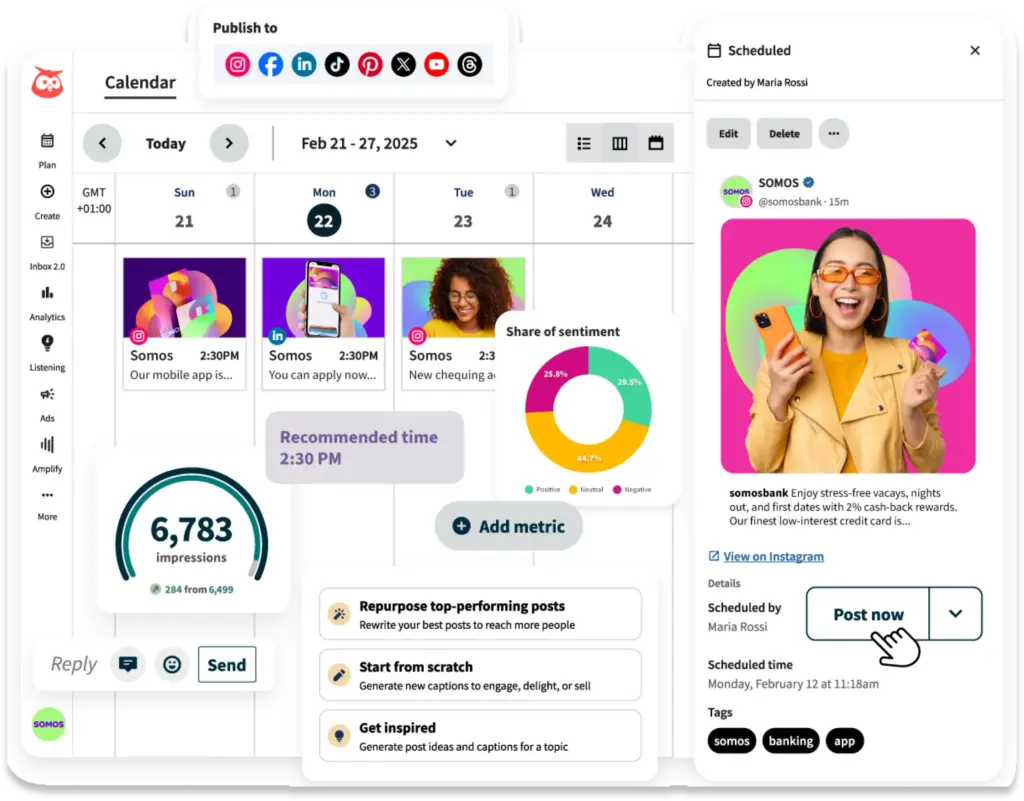
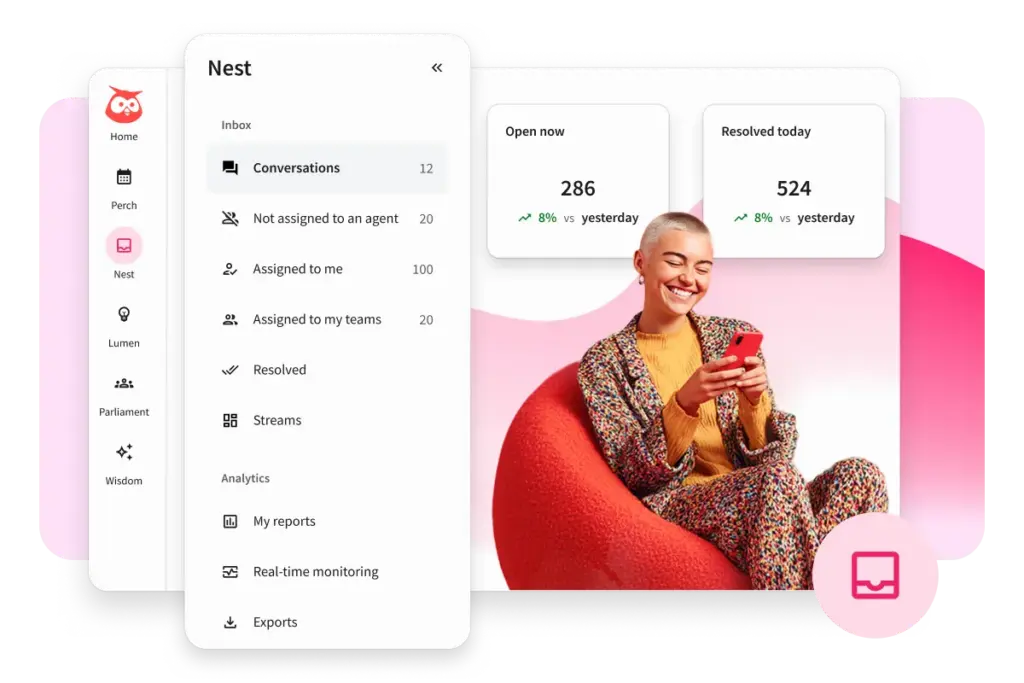
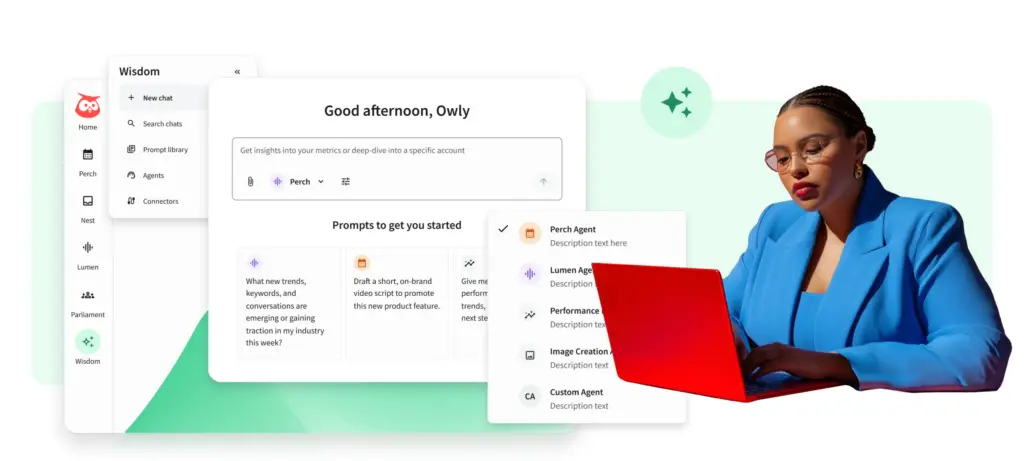
That structure is built around five main apps. Perch handles content creation, planning, and publishing. Nest brings together social inbox and customer care workflows. Lumen powers social listening, insights, and learning. Parliament supports employee advocacy and amplification. Wisdom sits across the suite as Hootsuite’s conversational AI layer, helping teams ask questions, generate ideas, analyze social signals, and move from insight to action without constantly switching between screens.
This also changes how teams should think about setup. The old version of Hootsuite was often organized around boards, streams, and connected social profiles. Those still matter, especially for teams that need to monitor multiple accounts, topics, competitors, or branded conversations. But with Social OS, setup starts with the workflow. A content team may begin in Perch, building a shared calendar and approval flow. A customer care team may prioritize Nest, routing comments, DMs, and mentions to the right people. A brand or communications team may start in Lumen, using listening data to track market shifts, reputation issues, competitors, and audience sentiment.
Wisdom is the most important new layer because it changes Hootsuite’s AI from a writing helper into something closer to a social command center. Instead of only asking AI to draft a caption, users can ask questions in plain language and get answers grounded in social data, performance history, and brand context. For example, a team can use Wisdom to summarize a conversation spike, identify themes behind a campaign’s performance, generate post ideas from a trend, or turn listening insight into a draft post. This is where the rebrand becomes more meaningful than a naming update. Hootsuite is trying to connect intelligence and execution in the same workflow.
For content teams, Perch is where much of the day-to-day work happens. It brings together content planning, AI-assisted creation, scheduling, publishing, collaboration, and performance review. Users can create posts for multiple channels from one place, customize the copy by platform, preview how the post will appear, and schedule it into a shared calendar. The Composer still solves one of the most common social media management problems: creating one campaign message that needs to become several platform-specific posts without turning the process into repetitive copy and paste.
Perch also strengthens the planning side of Hootsuite. The social calendar gives teams a central view of what is scheduled, where content gaps exist, and how campaigns are distributed across channels. Posts can be moved around in the calendar, reviewed before publishing, and coordinated with teammates through comments, draft feedback, and approval workflows. For brands that publish at high volume, Hootsuite’s bulk scheduling remains useful, with Bulk Composer supporting up to 350 scheduled posts at once. That makes the tool a fit for teams managing recurring campaigns, multi-location content, or large batches of evergreen social posts.
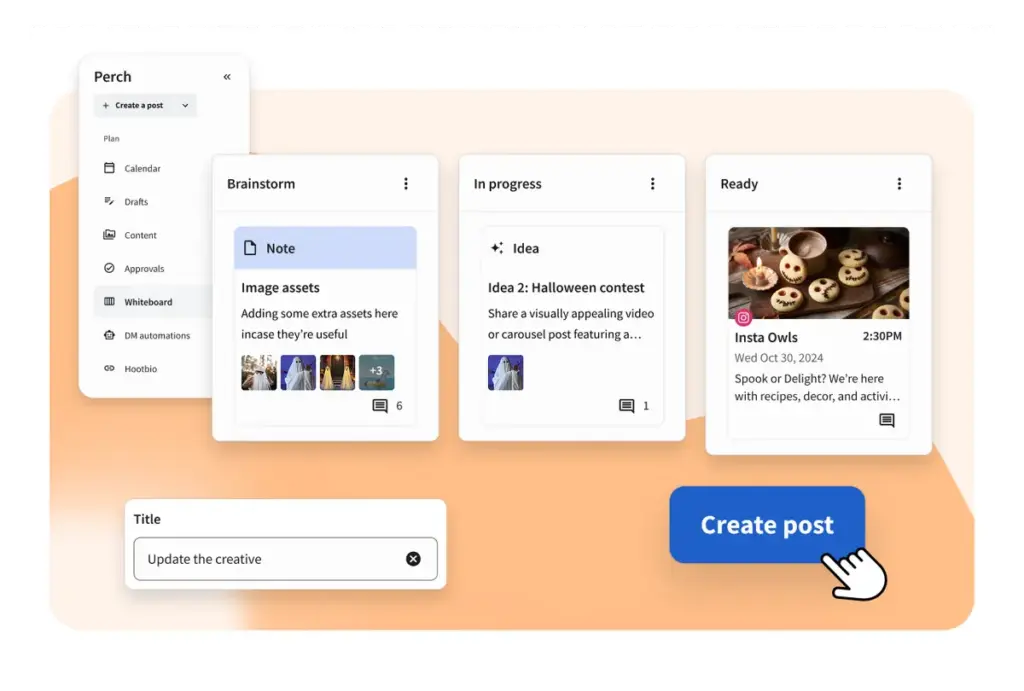
The AI features inside the content workflow are now more tightly tied to Wisdom. Hootsuite can help generate post ideas, captions, hashtags, and images, while also adapting content by tone, length, and channel. This is stronger than the older OwlyWriter framing because the AI is no longer treated as a separate caption generator. It now sits inside the broader Social OS, where content creation can be informed by listening insights, performance data, and brand context. The practical value is speed, but the strategic value is consistency: teams can create faster without losing sight of what is already working.
The Best Time to Post feature also remains one of Hootsuite’s more practical planning tools. Rather than relying on generic posting advice, Hootsuite uses the account’s own audience and historical performance data to recommend stronger publishing windows. The calendar can surface these recommendations as heat maps or suggested times, helping teams schedule posts around likely engagement, reach, or visibility goals. For teams publishing across several social channels, this removes some of the guesswork from timing and makes scheduling more performance-led.
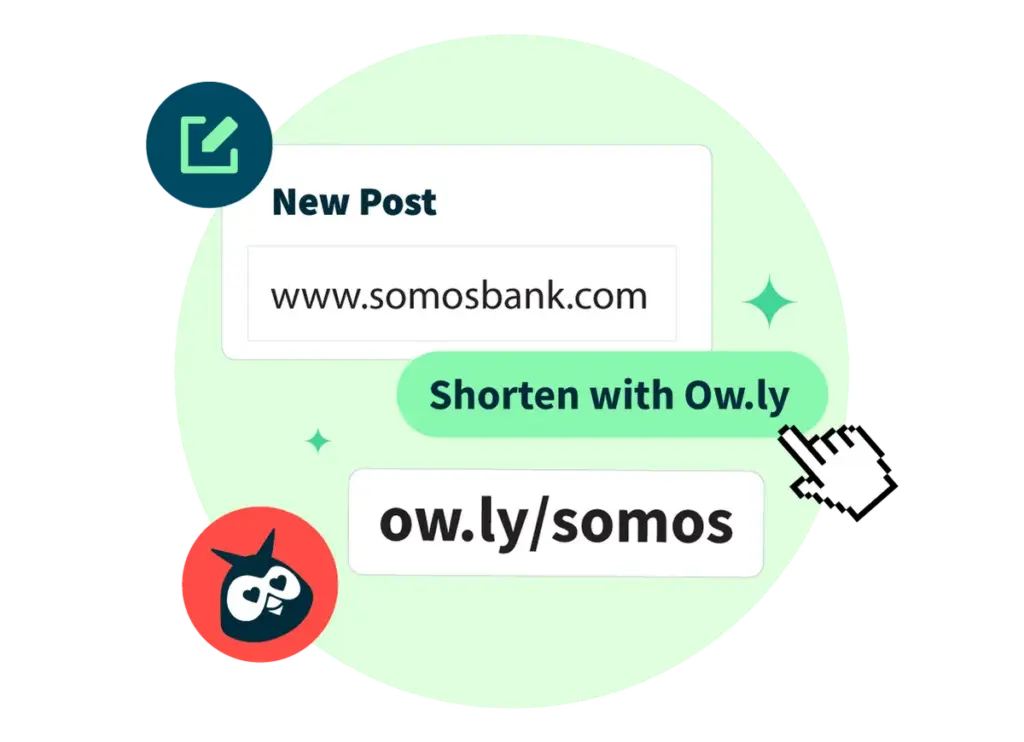
Hootsuite also keeps its built-in Ow.ly link shortener, which is useful for teams that want cleaner links and better tracking inside the publishing workflow. When a user adds a URL in Composer, Hootsuite can shorten it with Ow.ly and apply tracking parameters. That matters most for marketers who need to understand which posts, networks, or campaigns are driving traffic, rather than treating social engagement as the only performance signal.
Lumen is the listening and intelligence side of Hootsuite Social OS. This is where the Talkwalker acquisition becomes clearer in the product. Instead of positioning listening as a separate dashboard, Hootsuite now places Lumen inside the broader Social OS as the app for monitoring conversations, tracking sentiment, analyzing competitors, identifying trends, and understanding audience behavior. The internal rebrand makes an important naming distinction here: Talkwalker is now part of the Lumen architecture, with Lumen by Talkwalker used for the standalone product and Lumen Lite used for lighter listening inside Hootsuite.
For brands that need more than publishing, Lumen is one of the most important reasons to consider Hootsuite. It can monitor conversations across social, digital, and wider web sources, then help teams understand what people are saying, how sentiment is moving, and which topics are gaining momentum. The system is built for reputation monitoring, competitive intelligence, trend discovery, campaign analysis, and audience research. This makes Hootsuite more useful for social teams that are expected to inform strategy, not only execute a posting calendar.
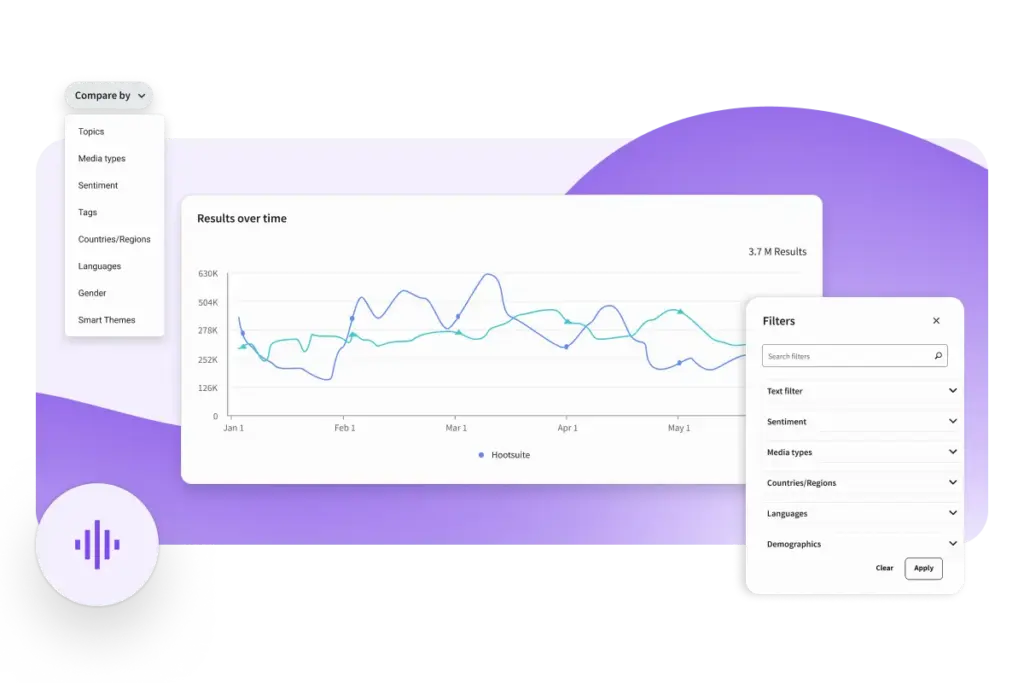
The listening workflow is also tied to action. A spike in negative sentiment can move from Lumen into a response workflow in Nest. A trend discovered through listening can become a content idea in Perch. A competitor insight can become a reporting point for leadership. This is the part of the Social OS positioning that matters most: Hootsuite is not only collecting social signals; it is trying to make those signals usable across publishing, care, reporting, and advocacy.
Nest is the customer care side of the platform. It brings comments, DMs, mentions, and other social conversations into one place, giving teams a shared inbox for public and private engagement. This is especially valuable for brands where social media is no longer only a marketing channel. When customers use Instagram, Facebook, LinkedIn, TikTok, X, or other social channels to ask questions, complain, praise, or escalate issues, teams need a way to prioritize and respond without losing context.
The inbox can support saved replies, suggested replies, assignments, internal collaboration, and message routing. That makes it easier to separate urgent customer issues from lower-priority conversations and to send messages to the person or team best suited to respond. For larger teams, this is where Hootsuite becomes more operational. Social managers are not only replying to comments; they are coordinating with support, PR, brand, and customer experience teams.
Nest also strengthens the connection between social engagement and customer care. Hootsuite supports workflows that connect social conversations with Salesforce, helping teams create cases from inbox conversations and continue managing customer communication across systems. For enterprise teams, this is an important difference from lighter social media tools. The value is not only that messages are centralized, but that social conversations can become part of a broader customer service workflow.
Analytics are embedded throughout the Hootsuite experience rather than sitting at the end of the workflow. In Perch, teams can review post and campaign performance. In Lumen, they can monitor brand health, share of voice, sentiment, and market shifts. In Nest, they can look at response workflows and team performance. Higher-tier plans add more advanced reporting, export options, team productivity visibility, and enterprise measurement. This makes Hootsuite a better fit for teams that need to prove what social is contributing, not simply show that posts were published.
Parliament adds a different layer to the platform: employee advocacy. It gives companies a way to turn employees, executives, sales teams, subject matter experts, and other internal advocates into a more structured distribution channel. Instead of asking employees to manually find and rewrite company posts, teams can give them approved, on-brand content to share with their own networks. This is useful for expanding reach, supporting employer branding, building trust, and helping sales teams share relevant content without creating messaging risk.
This advocacy layer also fits Hootsuite’s broader Social OS argument. Social performance is no longer limited to what happens on brand-owned accounts. Employees, leaders, partners, and advocates can all influence reach and perception. Parliament gives organizations a more controlled way to activate those voices, while keeping content approved and aligned with the brand.
The MCP connector strategy is another important part of the rebrand. Hootsuite is positioning Social OS as a system that can work inside the AI tools teams already use, including tools like ChatGPT, Claude, Gemini, and Microsoft Copilot. The idea is that teams should be able to draft posts, triage inbox items, summarize listening insights, or pull social intelligence from conversational interfaces rather than always working directly inside a traditional dashboard. For technical marketing teams and AI-forward organizations, this is one of the more forward-looking parts of the platform.
Hootsuite’s enterprise value is also clearer under the new structure. Larger organizations need more than scheduling and inbox management. They need approvals, permissions, governance, compliance, SSO, auditability, advanced analytics, integrations, and support for multiple teams, markets, and brands. Social OS gives Hootsuite a stronger way to explain that enterprise use case because it connects social intelligence, publishing, care, advocacy, and governance under one architecture.
The Upgrade: Hootsuite still does the things longtime users expect...
Scheduling posts, managing social accounts, monitoring conversations, shortening links, tracking performance, and centralizing engagement. The difference is that these features now sit inside a broader AI-first structure. Perch handles publishing, Nest handles care, Lumen handles intelligence, Parliament handles advocacy, and Wisdom connects the system through plain-language AI. For small teams, that means fewer tools to jump between. For mid-market and enterprise teams, it means a more coordinated way to turn social data into content, customer response, reporting, and business action.
Conclusion
Hootsuite’s rebrand makes sense because the social media software market is moving away from simple scheduling and toward connected decision-making. Social teams are under pressure to react faster, prove impact, and turn audience signals into campaigns, service responses, and reporting. A tool that only publishes posts feels incomplete for brands managing channels, customer conversations, creators, employees, and reputation risk.
That is where Hootsuite’s Social OS positioning is strongest. It gives the platform a clearer role in the stack: social intelligence feeds planning, planning feeds publishing, publishing feeds engagement, and engagement feeds measurement. The AI layer matters because it reduces the distance between seeing a market signal and acting on it. The risk is that smaller teams may not use the full system if they only need scheduling. For mature social teams, Hootsuite fits the direction the market is heading: faster workflows, fewer silos, and social data tied directly to business action.
Frequently Asked Questions
What can Hootsuite do?
Hootsuite is a market-leading social media management app with robust capabilities. It can connect with Facebook, Twitter, YouTube, LinkedIn, Instagram, and Pinterest. You can use it for a wide range of services such as analytics, automated publishing, contact management, content management, conversion tracking, customer targeting, keyword filtering, multi-account management, post scheduling, brand tracking, customer engagement, multi-user collaboration, reporting, and social media monitoring. The platform also introduces new features like OwlyWriter AI for content creation and Social Listening powered by Talkwalker for audience insights.
Is Hootsuite expensive?
While Hootsuite's pricing is competitive for individual users and small teams, it can become more costly for larger businesses requiring advanced features and additional users. Notably, Hootsuite no longer offers a free plan; however, they provide a 30-day free trial for their paid plans, allowing users to explore the platform's capabilities before committing.
How does Hootsuite’s pricing work?
Hootsuite offers several pricing plans to accommodate different user needs:
- Professional Plan: $99 per month (billed annually) for 1 user managing up to 10 social media accounts.
- Team Plan: $249 per month (billed annually) for 3 users managing up to 20 social media accounts.
- Enterprise Plan: Custom pricing tailored to the organization's specific requirements, supporting 5 or more users and 50 or more social media accounts.
The paid plans can also be paid per month, but then it is more expensive.
Can only small businesses use Hootsuite?
Yes, Hootsuite caters to businesses of all sizes, from small enterprises to large corporations. Their Professional Plan is ideal for small to medium-sized businesses, offering essential features for managing up to 10 social media accounts. For larger organizations, the Enterprise Plan provides advanced functionalities tailored to complex needs, including support for 5 or more users and 50 or more social media accounts.
While Hootsuite excels in social publishing, features like social listening are available through add-ons such as Hootsuite Listening, powered by Talkwalker.
Is Hootsuite easy to use?
Hootsuite is highly user-friendly, earning top marks for ease of use. Its interface is intuitive and designed to simplify social media management for users of all experience levels. If you encounter any challenges, Hootsuite provides extensive educational resources, including:
- Hootsuite Academy: Comprehensive training and certification programs.
- Webinars and Video Tutorials: Step-by-step guides on using the platform effectively.
- Guides and White Papers: In-depth resources on social media strategies and best practices.
- Customer Support: Responsive support options to address specific issues.
These resources ensure that even beginners can navigate and master the platform with ease.
Rating
- Features
- Ease of Use
- Reporting
Hootsuite
Hootsuite is an AI-first social operating system that connects publishing, listening, customer care, analytics, advocacy, and governance across one unified social workflow.