
Recruiting the right creators has become one of the most operationally demanding parts of influencer marketing. As brands increase their investment in creator partnerships, the process of identifying, evaluating, and onboarding creators is no longer a small task handled through manual outreach or direct messages.
It has become a structured workflow that requires dedicated tools and systems.
Industry data shows that recruitment and sourcing are among the most resource-intensive parts of influencer programs. According to Influencer Marketing Hub's 2026 Influencer Marketing Benchmark Report, creator discovery and vetting is the most commonly outsourced influencer marketing function, selected by 19.44% of marketers.
This reflects how difficult it can be for teams to consistently find and evaluate creators as programs grow.
At the same time, creator campaigns increasingly rely on larger pools of talent rather than a few high-profile influencers. The same report shows over 50% of marketers plan to expand their use of nano and micro creators, which means campaigns often involve recruiting dozens or even hundreds of creators.
As a result, brands are turning to creator recruitment platforms to organize this process.
These platforms help marketing teams discover creators, evaluate audience data, manage outreach, and onboard partners in a centralized system. As influencer marketing matures, recruitment platforms are becoming a key part of the infrastructure that supports scalable creator programs.
- What Are Creator Recruitment Platforms?
- Why Brands Need Creator Recruitment Platforms
- How Creator Recruitment Platforms Work
- The 2 Types of Creator Recruitment Platforms
- Notable Creator Recruitment Platforms
- 1. Creator.co
- 2. Aspire (formerly AspireIQ)
- 3. Collabstr
- When Brands Should Use Creator Recruitment Platforms
- Creator Recruitment Is Becoming a Core Marketing Workflow
What Are Creator Recruitment Platforms?
Creator recruitment platforms are software tools designed to help brands identify, evaluate, and recruit creators for marketing campaigns. Instead of relying on manual searches across social platforms, these systems centralize creator discovery and outreach inside a structured environment.
At their core, creator recruitment platforms function as databases of creators combined with campaign management tools. Brands can search for creators based on specific criteria such as:
- Content niche
- Audience demographics
- Engagement metrics
- Platform presence
This allows marketing teams to narrow large creator ecosystems into a shortlist of potential partners.
Beyond discovery, these platforms also support the next stages of recruitment. Marketing teams can review creator profiles, assess audience authenticity, initiate outreach, and manage creator applications directly inside the platform.
In many cases, the same system can also handle campaign briefs, deliverables, and communication with creators once a partnership is confirmed.
Another defining characteristic of recruitment platforms is scale. Modern influencer campaigns often involve working with dozens or even hundreds of creators, especially when brands focus on micro or nano influencers. Recruitment platforms make it possible to manage this volume without relying on fragmented spreadsheets, direct messages, or email threads.
While many influencer marketing platforms include recruitment capabilities, creator recruitment platforms specifically focus on the early stages of the creator partnership process. Their primary role is to help brands efficiently move from identifying potential creators to activating them in campaigns.
Why Brands Need Creator Recruitment Platforms
As influencer marketing programs expand, recruiting creators becomes a logistical challenge rather than a simple outreach task. Many brands now run multiple campaigns simultaneously, often across several social platforms and markets.
Without a structured system, identifying and onboarding creators can quickly become time-consuming and difficult to manage.
The Need for Creator Recruitment Platforms
1. The creator economy is too large for manual discovery
The scale of the creator economy alone makes manual recruitment increasingly difficult. More than 50 million people worldwide consider themselves to be creators, producing content across platforms such as Instagram, YouTube, TikTok, and others.
While this massive pool of creators gives brands more partnership opportunities than ever before, it also makes discovery significantly more complex. Marketing teams must evaluate multiple factors before recruiting a creator, including:
- Content niche and brand alignment
- Audience demographics
- Engagement patterns
- Audience authenticity
Manually reviewing creator profiles across several platforms quickly becomes inefficient, especially when campaigns require large creator pools.
2. Campaigns increasingly rely on micro and nano creators
Another major shift is the industry's move toward smaller creator tiers. Rather than focusing primarily on large influencers with massive audiences, many brands are prioritizing partnerships with micro and nano creators who often maintain more niche communities and higher engagement levels.
Industry data reflects this shift; 43% of marketers now prefer working with micro and nano influencers, while 24.9% report shifting their budgets away from macro and mega influencers.
This change is reshaping how influencer campaigns are structured. Instead of activating one or two high-profile creators, brands often collaborate with larger groups of smaller creators simultaneously. This strategy can help brands:
- Reach more specialized audience segments
- Generate more authentic creator content
- Produce larger volumes of UGC that can be repurposed across marketing channels
However, recruiting and coordinating a higher number of creators also introduces new operational challenges. Managing dozens of creator relationships at once requires a more structured recruitment process than manual outreach can typically support.
3. Manual outreach creates fragmented workflows
When recruitment happens manually, the process often becomes scattered across multiple tools and channels.
Typical workflows include:
- Searching creators on social platforms
- Tracking prospects in spreadsheets
- Sending outreach through email or direct messages
- Manually tracking responses and negotiations
Over time, this can create fragmented campaign management, where creator information, communication history, and campaign status are stored in different places.
4. Platforms centralize the recruitment process
Creator recruitment platforms address these issues by organizing the entire sourcing process within one system.
Most platforms allow marketing teams to:
- Search large creator databases
- Analyze audience data and engagement metrics
- Send outreach messages
- Manage creator applications
- Track recruitment progress across campaigns
By centralizing these steps, brands can recruit creators more efficiently while maintaining visibility into their influencer partnerships as programs scale.
How Creator Recruitment Platforms Work
Creator recruitment platforms organize the process of finding and activating creators into a structured workflow. Instead of managing discovery, outreach, and onboarding through scattered tools, brands can handle these steps within a single system.
While specific features vary across platforms, the recruitment process typically follows a similar sequence.
1. Creator Discovery
The process usually begins with creator discovery. Recruitment platforms provide access to large creator databases that brands can search using filters such as content niche, audience demographics, engagement rate, follower count, and social platform.
This filtering helps marketing teams narrow millions of potential creators into a shortlist that aligns with a campaign’s audience and brand positioning. Rather than manually browsing social platforms, teams can identify relevant creators much faster using structured search tools.
2. Creator Evaluation
Once potential creators are identified, the next step is evaluation. Recruitment platforms typically provide analytics that allow brands to assess whether a creator is a good fit for a campaign.
These insights often include audience demographics, engagement patterns, historical content performance, and signals related to audience authenticity. This information helps marketers determine whether a creator’s audience aligns with the campaign’s goals before initiating a partnership.
3. Outreach or Creator Applications
Recruitment platforms usually support two recruitment approaches. In some cases, brands actively search for creators and send collaboration invitations directly through the platform. In other cases, creators browse open campaigns and apply to participate.
Many platforms support both models, giving marketing teams the flexibility to either recruit specific creators or attract applicants who are already interested in the campaign.
4. Creator Onboarding
Once creators accept an invitation or are selected from an application pool, the onboarding stage begins. Recruitment platforms often include tools that help brands share campaign briefs, define deliverables, communicate expectations, and manage deadlines.
This step ensures that creators understand the scope of the collaboration before producing content.
5. Campaign Execution and Tracking
After creators are onboarded, the platform may also support campaign execution. Some recruitment platforms allow brands to track content submissions, manage communication with creators, and monitor campaign timelines.
By managing recruitment and execution within the same system, marketing teams maintain better visibility into creator partnerships from discovery through campaign completion.
The 2 Types of Creator Recruitment Platforms
Creator recruitment platforms generally operate using one of two recruitment models. While many modern platforms combine elements of both, understanding these models helps explain how brands connect with creators during the early stages of a campaign.
Types of Creator Recruitment Platforms
- Creator marketplace platforms
Creator marketplaces operate on an application-based model. In this setup, brands publish campaigns on the platform and creators apply to participate.
Creators typically review campaign details such as the product, deliverables, compensation, and timeline before submitting an application. Brands can then evaluate applicants and select the creators that best fit the campaign.
This approach is commonly used for campaigns that require larger groups of creators, such as product seeding programs or UGC campaigns. Because interested creators apply directly, recruitment can happen more quickly and with less manual outreach.
- Creator discovery platforms
Discovery-focused platforms follow a more outbound recruitment model. Instead of waiting for creators to apply, brands actively search creator databases and identify potential partners themselves.
These platforms provide search filters and analytics that help marketers evaluate creators based on audience demographics, engagement metrics, and content themes. After identifying suitable creators, brands can initiate outreach directly through the platform.
This model gives brands greater control over creator selection, which can be useful for campaigns that require specific audience targeting or brand alignment.
In practice, many influencer marketing platforms combine both models. Brands may recruit specific creators through discovery tools while also allowing creators to apply to open campaigns, creating a more flexible recruitment process.
Notable Creator Recruitment Platforms
Several platforms now help brands organize creator discovery, outreach, and campaign management in one place. Below are a few examples that illustrate how recruitment platforms support the process of identifying and activating creators.
1. Creator.co
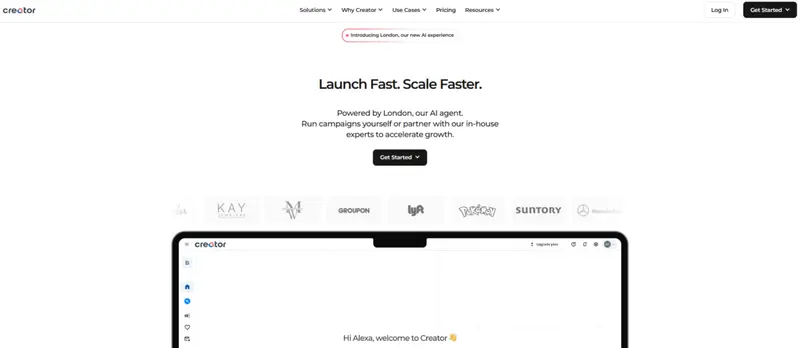
Creator.co is a creator recruitment platform that helps brands discover, recruit, and manage creators through a centralized system. It combines influencer discovery tools with campaign management features to support the full creator partnership workflow.
The platform provides access to a database of more than 400 million influencers across major social platforms, allowing brands to search for creators by niche, audience demographics, engagement patterns, and other campaign criteria. Creator.co also uses an AI system called London to recommend suitable creators and assist with outreach.
Read More
Key Features: Search/Discovery, Automated Recruiting, Influencer Relationship Management, Influencer Marketplace, Content Review, Content Library, Campaign Management, Campaign Reporting, Influencer Analysis, Audience Analysis, E-commerce Tools, Product/Gifting Tools, Fake Follower/Fraud Detection, Payment Processing, Social Listening, Competitor Research, Creator Marketplace,
Channels: Instagram, YouTube, TikTok
2. Aspire (formerly AspireIQ)
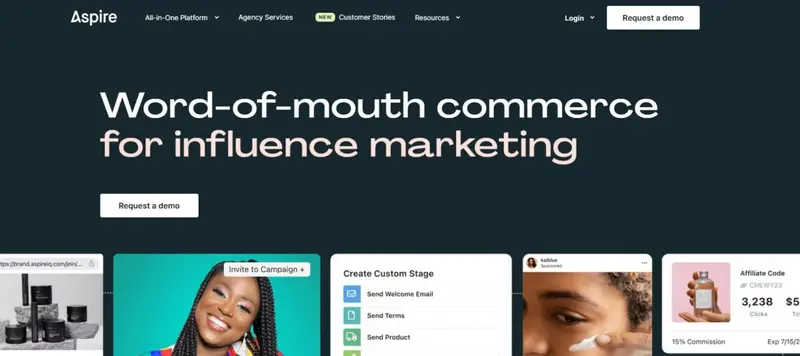
Aspire is another creator recruitment platform that helps brands recruit influential voices through a combination of influencer discovery tools and campaign management workflows. The platform allows marketing teams to search for creators across major social platforms using advanced filters such as location, keywords, hashtags, and audience demographics.
To support creator evaluation, Aspire provides analytics on audience composition, engagement patterns, and creator performance across platforms. These insights help brands assess whether a creator aligns with a campaign’s target audience before initiating outreach.
Aspire also streamlines communication with creators by allowing brands to contact influencers directly through Instagram direct messages or bulk email outreach from within the platform.
Read More
Key Features: Search/Discovery, Influencer Relationship Management, Influencer Marketplace, Team Collaboration Tools, Content Review, Content Library, Campaign Management, Campaign Reporting, E-commerce Tools, Product/Gifting Tools, Forms and Compliance, Payment Processing, Social Listening, Competitor Research, Visual Discovery, Influencer Content Amplification,
Channels: Instagram, YouTube, Facebook, Twitter, Pinterest, Blogs
3. Collabstr
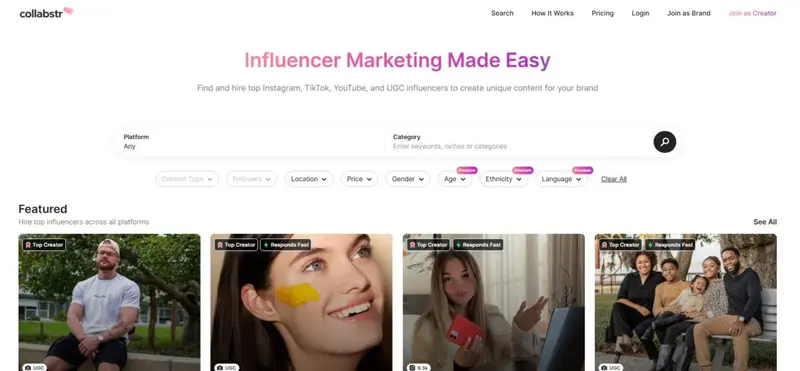
Collabstr is a pure influencer marketplace designed to help brands recruit creators directly through a searchable platform. Instead of relying primarily on outbound outreach, brands can browse creator profiles, review pricing, and hire influencers through the marketplace interface.
The platform allows brands to search thousands of creators across major channels such as Instagram, TikTok, and YouTube using filters for platform, niche, location, and audience size. Creator profiles typically include portfolio examples, pricing, and ratings, which help brands evaluate potential collaborators before initiating a partnership.
Collabstr also supports campaign management after recruitment. Brands can communicate with creators through built-in messaging, post campaign briefs, and track content performance through a centralized dashboard.
Read MoreWhen Brands Should Use Creator Recruitment Platforms
Creator recruitment platforms become most valuable when influencer marketing programs reach a level of scale where manual sourcing and outreach are no longer practical. While small campaigns can sometimes be managed through direct messages or spreadsheets, larger creator initiatives require more structured workflows.
Situations Where Recruitment Platforms Become Essential
- Scaling campaigns across many creators
When brands activate dozens of creators in a single campaign, managing outreach, responses, and deliverables can quickly become fragmented.
Recruitment platforms help centralize this process by allowing teams to:
- Search and shortlist creators
- Track outreach and responses
- Organize campaign participation
This makes it easier to maintain visibility as the number of creator partnerships grows.
- Running micro and nano creator programs
Campaigns focused on smaller creator tiers often involve larger creator volumes. Instead of working with one or two large influencers, brands may recruit dozens of creators to produce content simultaneously.
Recruitment platforms simplify this process by allowing marketers to filter creators based on factors such as niche, audience demographics, engagement patterns, and platform presence.
- Managing creator recruitment and campaigns in one system
Some brands adopt recruitment platforms to streamline the full creator partnership workflow.
Platforms such as Creator.co combine creator discovery with campaign management tools, allowing marketing teams to recruit creators, share campaign briefs, manage approvals, and track communication within a single dashboard. This reduces the need for separate tools and helps keep creator relationships organized.
Explore Creator.co's Free Trial Today!
- Building repeatable creator programs
Recruitment platforms become especially useful when influencer marketing evolves from occasional collaborations into a repeatable program that requires consistent creator sourcing.
By organizing discovery, recruitment, and campaign management in one place, these platforms help marketing teams maintain efficiency as creator programs continue to expand.
Creator Recruitment Is Becoming a Core Marketing Workflow
As influencer marketing continues to scale, recruiting creators is becoming less of an ad hoc task and more of a structured operational process. Brands are working with larger creator pools, launching campaigns more frequently, and producing higher volumes of creator content across multiple platforms.
Managing these partnerships manually can quickly create inefficiencies. Searching for creators, tracking outreach, reviewing content, and coordinating deliverables across dozens of collaborators requires systems that keep the process organized.
Creator recruitment platforms help bring structure to this workflow. By combining discovery tools, communication features, and campaign management capabilities, these platforms make it easier for marketing teams to identify relevant creators and coordinate collaborations at scale.


