Can musicians really make more from a single NFT drop than from years of streaming? And which marketplaces actually help artists turn music NFTs into sustainable income rather than one-off experiments?
As streaming payouts remain thin and platform-controlled, more artists are turning to music NFTs to regain pricing power, ownership, and direct fan relationships.
High-profile releases helped accelerate this shift. Kings of Leon became one of the first major bands to release an album as an NFT, pairing music with exclusive fan perks. Steve Aoki later publicly stated that a single NFT drop generated more revenue for him than a decade of streaming royalties.
By 2026, the music NFT ecosystem has matured. Dedicated marketplaces now support audio-first releases, royalty sharing, limited editions, and fan access models that go far beyond digital collectibles.
This guide explores the top 15 Music NFT Marketplaces where artists can mint, sell, and monetize music NFTs, and how to choose the right platform based on creative goals, audience, and revenue strategy.
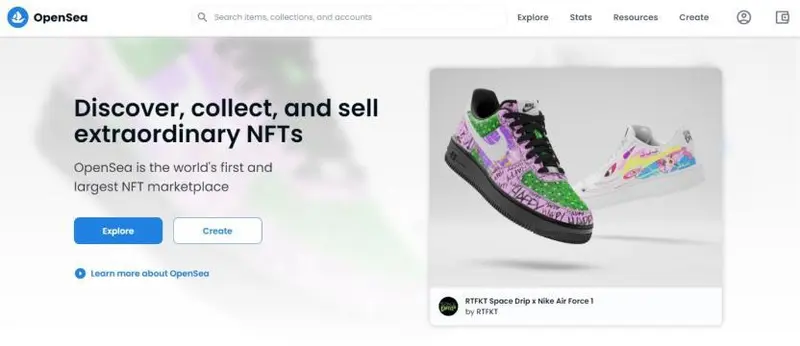
Best For: Musicians and artists who want maximum exposure and flexibility when selling music NFTs on a large, general NFT marketplace.
Primary Focus: A multi-category NFT marketplace that supports music NFTs alongside art, collectibles, and other digital assets.
Fee Structure: Charges a marketplace fee on secondary sales, with creators able to set royalties, while blockchain gas fees apply depending on the network used.
Minting Options: Supports self-service NFT creation with fixed price and auction listings across multiple blockchains.
OpenSea is often the first stop for musicians entering the NFT space due to its scale, brand recognition, and relatively low barrier to entry. From a creator standpoint, the platform allows artists to mint and list music NFTs without needing approval, making it suitable for experimentation or one-off releases.
The minting workflow is straightforward, with support for Ethereum, Polygon, and Solana, giving artists flexibility in managing transaction costs and audience reach. Creators can define royalties at the collection level, which helps maintain ongoing revenue from secondary sales.
That said, OpenSea is not designed specifically for music discovery. Audio playback, fan engagement, and artist storytelling tools are limited compared to music native NFT platforms, which can make it harder for musicians to stand out without external promotion.
Pros
Massive existing collector audience
Multi-blockchain support with flexible minting
Simple onboarding for first-time NFT creators
Cons
Limited music-specific discovery and playback tools
High competition reduces visibility for new artists
For musicians prioritizing reach and flexibility over music-focused features, OpenSea remains a practical entry point into music NFTs.
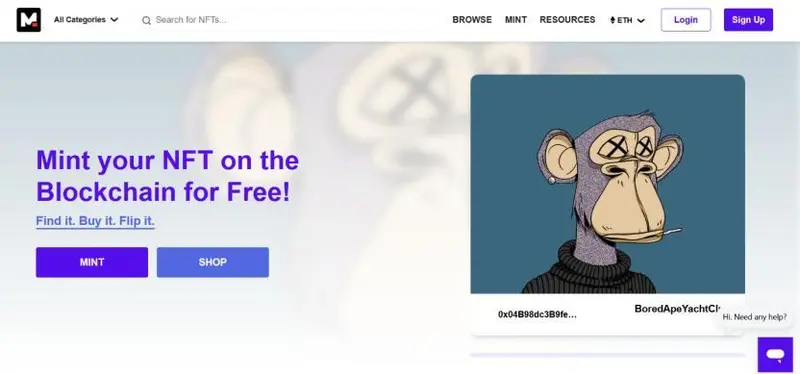
Best For: Musicians and artists who want a low barrier way to mint and sell music NFTs without upfront blockchain costs.
Primary Focus: A general NFT marketplace that supports direct minting and sales of music NFTs alongside other digital asset categories.
Fee Structure: Uses a marketplace fee on sales, with creators able to choose between gasless minting or traditional minting, where blockchain fees apply.
Minting Options: Supports gasless music NFT minting, traditional minting, batch creation, and creator-managed storefronts.
Mintable appeals to musicians who want to experiment with music NFTs without committing to high upfront costs or complex technical workflows. The platform allows artists to upload audio files, categorize them explicitly as music NFTs, and list them for sale using a simplified creation process.
One of Mintable’s main advantages for musicians is its gasless minting option, which lets artists create music NFTs without paying blockchain fees at the time of minting. This makes it easier to test demand, release small editions, or onboard fans who are new to NFTs. Artists can also create their own storefronts, set royalties, and manage multiple releases under a single brand.
However, Mintable is not built as a music native platform. Discovery tools, audio playback experiences, and fan engagement features are limited, meaning most musicians will need to drive their own traffic to their listings.
Pros
Gasless minting lowers entry barriers for music NFT creators
Simple minting workflow suitable for first-time artists
Flexible listing and storefront options
Cons
Limited music-specific discovery and playback features
Reliant on external promotion for visibility
For musicians seeking an accessible entry point into music NFTs, Mintable offers practical tools with minimal friction, especially for early experimentation.
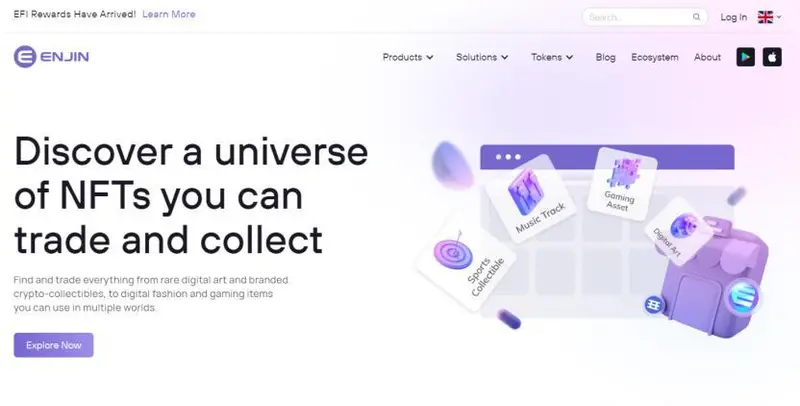
Best For: Musicians and artists who want to tokenize and sell music NFTs on a blockchain designed for low-cost transactions and backed token value.
Primary Focus: A blockchain ecosystem and NFT marketplace that supports creation and trading of NFTs (including music) with the Enjin blockchain and wallet.
Fee Structure: A network fee of around 2.5% on sales, with creators able to set royalties; blockchain transaction fees depend on network activity.
Minting Options: Enables minting of NFTs backed by Enjin Coin (ENJ) that can represent music, audio collections, and exclusive fan assets.
Enjin provides musicians with a way to turn audio files and music-related digital collectibles into NFTs that carry intrinsic token backing, offering a different economic model than many marketplaces. The Enjin ecosystem includes an integrated wallet, tools for minting, and a native marketplace where creators can list and trade their tokens.
From a creator workflow standpoint, artists upload their music content, mint it on the Enjin blockchain, set royalties, and list it for sale in the marketplace. NFTs created here include built-in ENJ value, which can help maintain minimum asset value and enable “melting” the token back into ENJ if needed.
However, Enjin’s marketplace is not as music-native as platforms built specifically for audio discovery or streaming. While music NFTs can be created and traded, tools focused on fan engagement, audio playback, or music-specific discovery features are limited compared to dedicated music NFT ecosystems.
Pros
Low transaction costs and an efficient blockchain designed for NFT use
Built-in token backing adds intrinsic value to minted music NFTs
Integrated wallet and ecosystem tools for creation and management
Cons
Not optimized for music-first discovery or listening experiences
Marketplace activity and collector audience can be smaller than larger general NFT platforms
For musicians seeking blockchain efficiency and token value mechanics for music NFTs, Enjin offers robust infrastructure, but artists should plan additional promotion to attract listeners and buyers within this ecosystem.
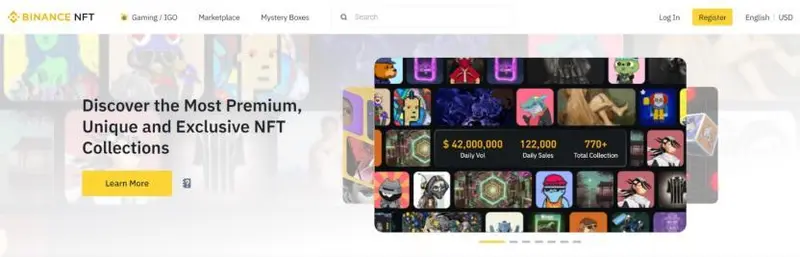
Best For: Musicians and artists who already use Binance and want to mint and sell music NFTs at low cost with access to a large global audience.
Primary Focus: A broad NFT marketplace for digital assets including art, music, collectibles, and special drops, backed by one of the largest crypto exchanges in the world.
Fee Structure: Low platform fee (around 1 %) on sales, with creators receiving royalties on secondary sales; minting and listing require blockchain transaction (gas) costs depending on network.
Minting Options: Allows verified users to mint NFTs (including audio/music files) on BNB Chain and Ethereum, with fixed price or auction listings after identity verification and minimum follower criteria.
For musicians, Binance NFT offers a high-visibility marketplace where audio files can be tokenized and sold to a broad, crypto-native audience with relatively low fees and familiar payment options (BNB, ETH, BUSD).
The platform supports both fixed price and auction formats, letting artists experiment with different selling strategies, and your music NFTs gain exposure within Binance’s ecosystem of users.
The minting workflow is straightforward once you complete identity verification and profile setup, though you must meet requirements like having a minimum number of followers on the marketplace before creating NFTs. This adds a deterrent for some newer musicians but helps maintain platform quality.
However, Binance NFT is not music-native: it does not offer specialized audio playback, music-centric discovery tools, or fan engagement experiences that are present on platforms designed primarily for music tokens. Instead, music NFTs sit alongside broader categories, meaning artists must drive external promotion to stand out.
Pros
Low platform fees compared with many marketplaces
Large global user base and extensive collector reach
Support for minting on multiple blockchains
Cons
No dedicated music discovery or listening tools
Verified creator requirements can delay launch
Music NFTs often compete with general NFT content
For musicians looking for wide exposure, low fees, and integration with a major crypto ecosystem, Binance NFT is a practical option to launch music NFTs, but artists should complement it with music-centric promotion strategies.
Best For: Musicians and artists who want a flexible, community-oriented marketplace with multi-chain support and royalty control for music NFT releases.
Primary Focus: A decentralized, multi-blockchain NFT marketplace that supports creation and trading of music NFTs alongside other digital assets.
Fee Structure: Flexible fee setup with protocol and origin fees; creators can specify royalties and use lazy minting to reduce upfront gas costs.
Minting Options: Supports standard minting and lazy minting, which lets musicians list music NFTs without paying gas until the first sale.
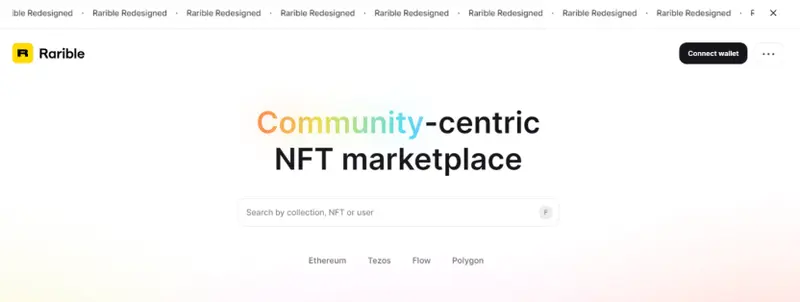
Rarible gives musicians a fairly open stage to create and sell music NFTs with control over royalties and choice of blockchains including Ethereum, Polygon, Tezos, Base, and Immutable X, helping manage transaction costs and audience reach. The platform’s lazy minting option lets artists list audio tokens without immediate blockchain fees, passing gas costs to the buyer once a purchase occurs, lowering upfront barriers for creators new to Web3.
From a creator workflow, musicians upload their audio, choose metadata and royalty percentages, and publish for sale or auction. Rarible’s community governance model and multi-chain support give artists flexibility not found on single-chain marketplaces.
However, Rarible is still a general NFT marketplace and lacks music-centric discovery features or built-in audio playback tools, so musicians need to drive external traffic and fan engagement to boost visibility.
Pros
Multi-chain minting and marketplace support expands creator flexibility
Lazy minting reduces upfront gas costs for music NFT creators
Flexible royalty settings help musicians earn on secondary sales
Cons
Limited music-focused discovery and playback features
Marketplace traffic and collectors for music can be less concentrated than on larger general platforms
For musicians seeking flexibility and community-oriented tools with gas cost options, Rarible remains a viable music NFT launchpad alongside promotion strategies.
Best For: Musicians and artists who want a decentralized, creator-centric platform to tokenize and sell music NFTs directly on-chain with community-driven economics.
Primary Focus: A permissionless NFT marketplace and open protocol that lets creators mint and trade digital content including music with no built-in marketplace fees.
Fee Structure: Protocol-level minting and sales incur no platform fees; creators pay blockchain transaction costs, with royalties and trading value flowing back to them.
Minting Options: Supports on-chain minting of music NFTs via its creator toolkit with customizable drops and editions on Ethereum Layer-2 networks.
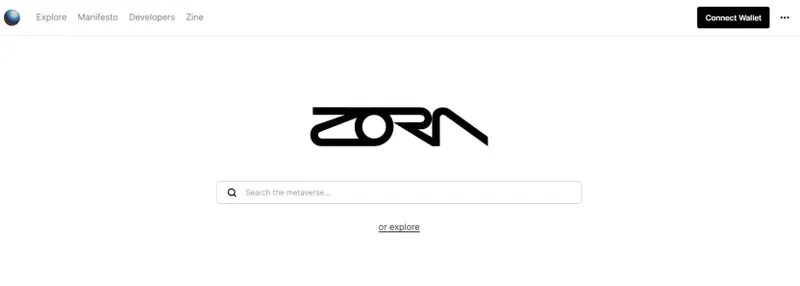
Zora gives musicians a creator-first launchpad for music NFTs that emphasizes true ownership, open ownership, and decentralized trade. Unlike traditional marketplaces, Zora’s decentralized protocol allows artists to mint audio tokens with customizable editions and drop mechanics, and trade them without intermediary marketplace fees. Creators retain control over metadata and royalties, and music NFTs are fully on-chain with transparent provenance.
The platform’s integration with scalable Layer-2 solutions reduces transaction costs and supports fast interactions, making it feasible to mint and trade music NFTs without prohibitive fees. Its model also includes creator coins and tokenized engagement, allowing fans to support artists through tradable content-linked tokens.
However, Zora’s interface and discovery tools are generally minimalist, and its broader social-economic features can feel complex for musicians used to traditional marketplaces. Audio-centric browsing and dedicated music-focused discovery are not as mature as on platforms built specifically for audio first.
Pros
No platform fees on minting or sales, creators keep more value
True on-chain minting and decentralized protocol ownership
Flexible minting toolkit with editions and content tokenization
Cons
Limited music-centric discovery and playback features
User experience and tooling can feel abstract for first-time artists
Zora stands out for musicians seeking decentralized ownership and low-fee on-chain minting, but artists may need external promotion and tools to drive fan engagement.
Best For: Musicians and artists who want an eco-friendly, low-barrier music NFT marketplace with flexible payment options for fans.
Primary Focus: A music-centric NFT platform built specifically to serve artists and fans with environmentally conscious minting and collectible music tokens.
Fee Structure: Zero minting fees for creators and typically a marketplace fee on sales; artists also earn royalties on secondary transactions.
Minting Options: Music NFT minting on energy-efficient blockchains (Tezos, and often Polygon) with no upfront gas cost and support for multiple payment methods.
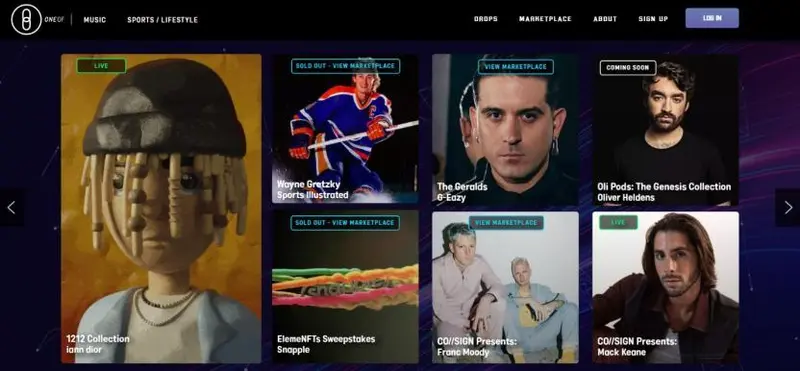
OneOf is designed with musicians in mind, positioning itself as a music-first NFT marketplace that makes it easier for artists to create and sell audio collectibles without high blockchain fees. The platform’s user-friendly interface supports minting that doesn’t require creators to pay gas upfront, and fans can buy music NFTs with debit cards, credit cards, or crypto, lowering barriers for both artists and collectors.
OneOf also emphasizes sustainability by operating on eco-friendly blockchains, which reduces energy impact compared with traditional proof-of-work networks and aligns with many artists’ values.
Despite its music-centric positioning, discovery tools and native audio playback experiences are more limited compared with some platforms built specifically for audio streaming or deep fan interaction.
Pros
Zero upfront minting fees lower the barrier for music NFT creation
Fan-friendly purchase options including debit and credit cards
Built on energy-efficient blockchains suited to environmentally conscious creators
Cons
Limited built-in music discovery or audio playback features
Marketplace audience and traffic for independent artists can be more niche
For musicians who want a music NFT marketplace that’s accessible, eco-friendly, and artist-focused, OneOf offers a compelling platform to launch and sell digital music collectibles.
Pros
Zero upfront minting fees lower the barrier for music NFT creation
Fan-friendly purchase options including debit and credit cards
Built on energy-efficient blockchains suited to environmentally conscious creators
Cons
Limited built-in music discovery or audio playback features
Marketplace audience and traffic for independent artists can be more niche
For musicians who want a music NFT marketplace that’s accessible, eco-friendly, and artist-focused, OneOf offers a compelling platform to launch and sell digital music collectibles.
Best For: Musicians and artists who want an integrated music business platform with direct music NFT creation and fan investment options.
Primary Focus: A music industry-oriented ecosystem combining distribution, rights management, and a dedicated NFT marketplace for music and related assets.
Fee Structure: Marketplace and distribution fees apply; artists retain control over pricing and royalty terms when minting and selling music NFTs.
Minting Options: Enables music NFT creation tied to your catalog and rights, with flexible edition and licensing configurations on its built-in marketplace “The Playgrounds.”
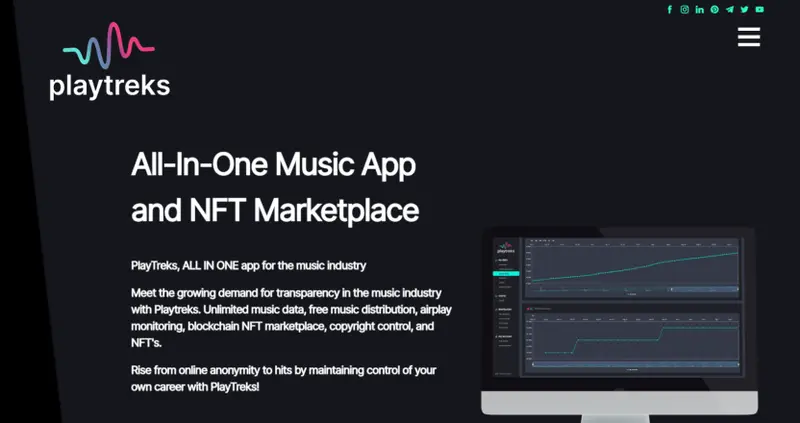
PlayTreks positions itself as an all-in-one music business hub where artists can not only distribute music to streaming platforms but also mint and sell music NFTs tied to songs, albums, limited editions, experiences, and other creative assets. This makes it appealing for musicians who want one place to manage distribution, analytics, and Web3 monetization together.
The platform’s NFT marketplace, often referred to as “The Playgrounds,” lets rights holders turn works they own into NFTs and sell them directly to fans, collectors, or investors. PlayTreks emphasizes giving artists entrepreneurial control, enabling them to set the number of copies, pricing, and usage or licensing conditions attached to each NFT.
While PlayTreks is music-centric and positioned around real music rights and catalog assets, its discovery and collector ecosystem is smaller and less established than larger general marketplaces. Artists should plan additional marketing and fan outreach to drive engagement and sales.
Pros
Integrated platform combining distribution and music NFT creation
Flexible controls for editions, pricing, and licensing terms
Aims to empower fan investment and rights monetization
Cons
Smaller marketplace audience compared to larger NFT ecosystems
Discovery and audio playback features are less mature
PlayTreks is attractive for musicians who want a single platform to manage both music distribution and NFT-based monetization, especially if owning rights and engaging fans as investors is a priority.
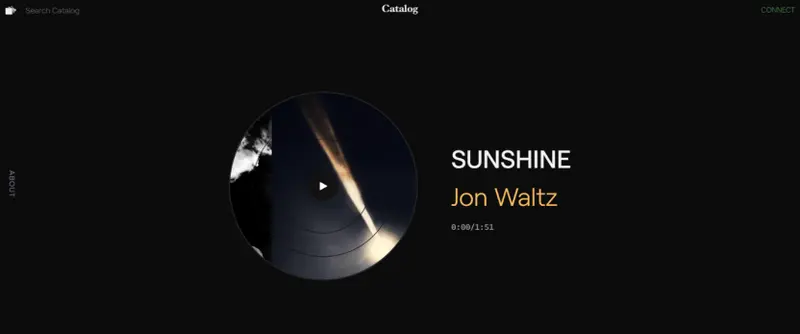
Best For: Independent musicians who want to mint truly unique, one-of-one music NFTs that emphasize scarcity, ownership, and direct artist-to-fan support.
Primary Focus: A dedicated music NFT marketplace built explicitly for audio NFTs representing original tracks or records as one-of-one digital collectibles.
Fee Structure: Artists retain most of the revenue from primary sales, set royalties for resales, and Catalog focuses on enabling direct payouts without heavy intermediary cuts (blockchain fees still apply).
Minting Options: On-chain minting of unique music records with customizable metadata, smart contract-enabled royalty splits, and direct listings in the Catalog marketplace.
Catalog stands out by offering musicians a platform focused only on music NFTs, where your audio tracks become one-of-one on-chain records that live forever on Ethereum and can be bought or auctioned to collectors. The emphasis on scarcity (every NFT is a unique record) helps artists position releases as rare digital collectibles rather than unlimited editions.
From a creator perspective, Catalog emphasizes ownership, provenance, and community, letting you set royalties for future resale and even split earnings automatically among collaborators.
However, minting and listing music NFTs on Catalog often require navigating Ethereum blockchain fees and potential curation steps, which may be a barrier for newer artists.
Pros
Dedicated music NFT marketplace designed for one-of-one audio tokens
Strong focus on ownership, royalties, and direct artist revenue
Smart contract-enabled revenue splits for collaborators
Cons
One-of-one scarcity means higher pricing expectations and minting costs
Discovery and mainstream fan traffic can be limited compared with bigger platforms
For musicians who want to position their work as rare, on-chain digital records with true ownership tracking, Catalog remains one of the most music-focused NFT marketplaces available.
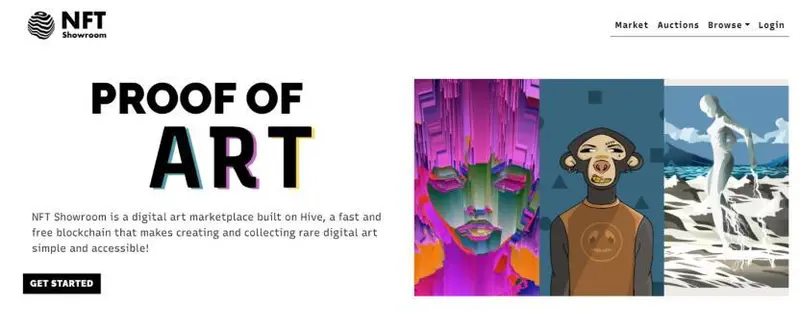
Best For: Artists and creators on Hive who want a low-fee, feeless-blockchain marketplace to tokenize and sell NFTs, including music audio NFTs where supported by community practice.
Primary Focus: A decentralized NFT marketplace built on the Hive blockchain focused primarily on digital art and tokenized content with low transaction costs.
Fee Structure: Typically marketplace takes a commission (often around 10% on sales) while Hive blockchain itself has no gas fees, keeping creator costs low.
Minting Options: NFT Showroom lets creators mint tokens on the Hive blockchain using Hive Keychain, benefitting from fast and feeless transactions.
NFT Showroom operates on the Hive blockchain, which means creators can mint, list, and trade NFTs without traditional Ethereum gas fees, making it appealing for creators exploring lower-cost minting.
However, the platform is predominantly digital art-oriented, and while it can host music NFTs if artists upload audio assets or link them, it does not offer music-centric tools, audio playback, or dedicated discovery for music tokens in the way platforms built for audio distribution do.
From a creator workflow perspective, artists connect via Hive Keychain, upload their digital file (which could be audio), mint an NFT, and list it for sale. The community and collector base tends to be smaller and more niche compared with larger general marketplaces, and the experience centers around Hive ecosystem art culture rather than music discovery.
Pros
Very low minting and transaction costs thanks to Hive’s feeless blockchain
Simple minting and trading process for creators familiar with Hive
Can support music NFTs via general NFT upload
Cons
Not designed for music-first discovery or built-in audio playback
Smaller, art-centric audience may limit music buyer reach
For musicians who want low-cost NFT experimentation on a feeless blockchain and are comfortable navigating a platform oriented around Hive art culture, NFT Showroom can work for music NFTs, but artists seeking music-focused fan engagement and playback tools will likely find a better fit elsewhere.
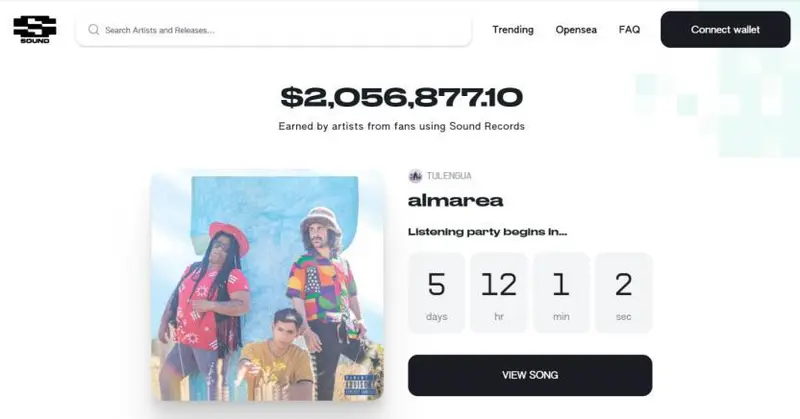
Best For: Musicians and artists who want a music-first NFT platform built to release limited-edition audio collectibles directly to fans.
Primary Focus: A dedicated music NFT launchpad and marketplace that empowers artists with direct-to-fan minting, community engagement, and ownership-centric economics.
Fee Structure: Artists receive 100% of primary sale revenue and royalties, with minting fees covered by collectors and no platform listing fees during beta phases.
Minting Options: Supports on-chain minting of limited edition music NFTs on Ethereum and Layer-2 networks like Base and Optimism, with unique drop mechanics and rewards.
Sound.xyz was built specifically for music creators and their communities, letting artists release songs as collectible NFT editions that fans can mint, collect, and trade. The platform’s music-centric tools include commentable NFTs, social features, and a direct support model where backers show support by minting music drops.
For musicians, Sound.xyz’s biggest advantage is its creator revenue model: artists keep all primary and secondary income, with collectors paying small mint fees that partly support creators and the protocol. Its music discovery and community focus helps fans interact with releases more deeply than on general marketplaces.
However, Sound.xyz’s audience and secondary market liquidity are smaller and more niche compared with massive general-purpose marketplaces, so artists may need to drive external promotion to grow sales.
Pros
Music-first platform tailored to audio releases and fan engagement
Artists receive full primary sales and ongoing royalties
Integrated community features like comments and curated drops
Cons
Smaller collector base than general NFT marketplaces
Discovery tools still evolving compared with larger ecosystems
Sound.xyz is an excellent choice for musicians prioritizing direct fan support, ownership-centric economics, and music-focused NFTs over broad marketplace traffic.
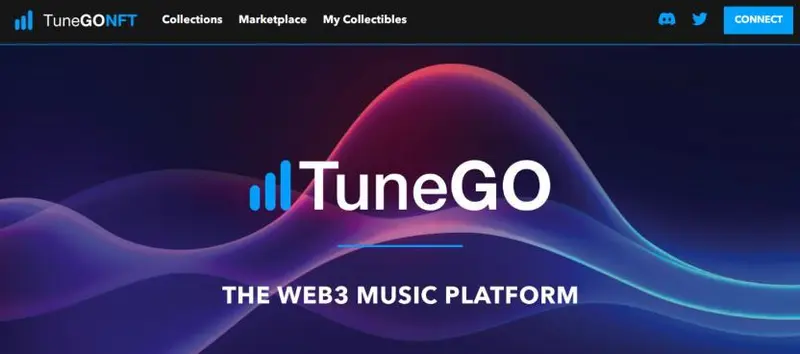
Best For: Musicians and artists who want a music NFT marketplace built around creative rights protection, transparent royalty splits, and integration with music distribution workflows.
Primary Focus: A dedicated music-centric NFT platform powered by a creator rights ecosystem that ties music NFTs to on-chain provenance and collaboration revenue splits.
Fee Structure: Artists retain control over pricing and royalties, with blockchain transaction costs; marketplace fees vary by sale mechanics and smart contract conditions.
Minting Options: On-chain minting of music NFTs via TuneGO’s Flow-based marketplace with tools for collaborative splits and creative metadata anchoring.
TuneGONFT (hosted via TuneGO’s ecosystem) aims to give musicians a music-first NFT marketplace where releasing audio tokens comes with enhanced creative rights transparency and built-in mechanisms to manage royalties and ownership splits between collaborators.
Its integration with the patented TuneGO Vault means that digital assets and creative metadata are recorded and secured, offering a transparent provenance layer tied to each music NFT.
From a creator perspective, the platform appeals to artists who want to ensure that songwriters, producers, and other rights holders are included in revenue flows through contract-level revenue splitting rather than after-the-fact settlements. This can simplify complicated rights situations common in music creation.
However, TuneGONFT’s marketplace and community are less mature and have smaller collective liquidity than major general NFT ecosystems. Artists may need to support their drops with external marketing to drive fan engagement and collector interest.
Pros
Strong focus on creative rights protection and revenue splits
Built-in provenance and metadata tracking tied to music assets
Designed specifically to serve music creators’ needs
Cons
Relatively limited marketplace traffic and buyer base
Discovery and audio playback tools are not as advanced as some competitors
For musicians seeking a platform that anchors music NFTs to rights and revenue transparency with artist-focused economic tooling, TuneGONFT offers a compelling, rights-centric launchpad, though external promotion remains important.
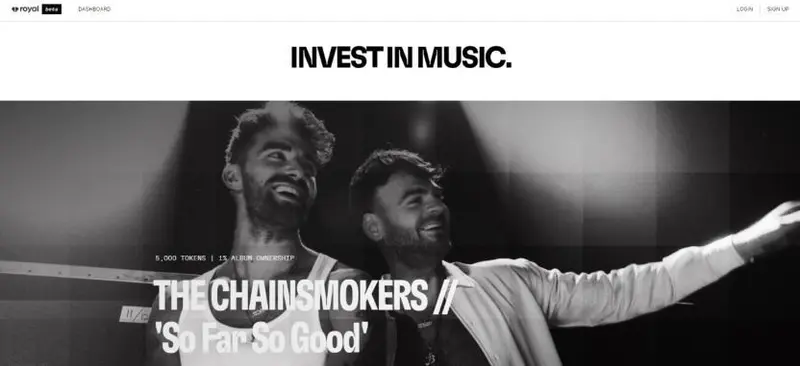
Best For: Musicians and rights holders who want to sell music NFTs tied to real streaming royalties and fan investment.
Primary Focus: A music NFT marketplace centered on tokenized music rights that allow fans to earn a share of streaming revenue.
Fee Structure: Royal applies platform and transaction fees, while artists retain control over royalty percentages and revenue splits tied to each release.
Minting Options: Supports curated music NFT drops where artists tokenize a portion of streaming rights and sell them as limited edition NFTs.
Royal approaches music NFTs differently from most marketplaces by focusing on royalty sharing rather than collectible audio ownership alone. Instead of selling music as purely digital artifacts, artists use Royal to mint NFTs that represent a claim on future streaming revenue from specific tracks.
From a musician’s perspective, this model is best suited to artists with existing or anticipated streaming traction. Each drop is curated, meaning artists must apply and be approved before launching, which adds a layer of quality control but limits open access. Once approved, creators can define how much royalty income is shared, set edition sizes, and distribute NFTs to fans who become financially aligned supporters.
Royal’s marketplace experience is streamlined and accessible, especially for fans unfamiliar with crypto, but it is not designed for experimental or high-volume NFT releases. Audio playback and fan engagement exist mainly to support investment decisions rather than creative discovery.
Pros
Music NFTs are backed by real streaming royalty participation
Strong alignment between artists and fans as stakeholders
Fan-friendly onboarding compared to many Web3 platforms
Cons
Curated access limits availability for emerging artists
Not suitable for artists seeking purely collectible music NFTs
Royal is best for musicians looking to monetize music rights and build long term fan investors, rather than creators experimenting with traditional music NFT drops.
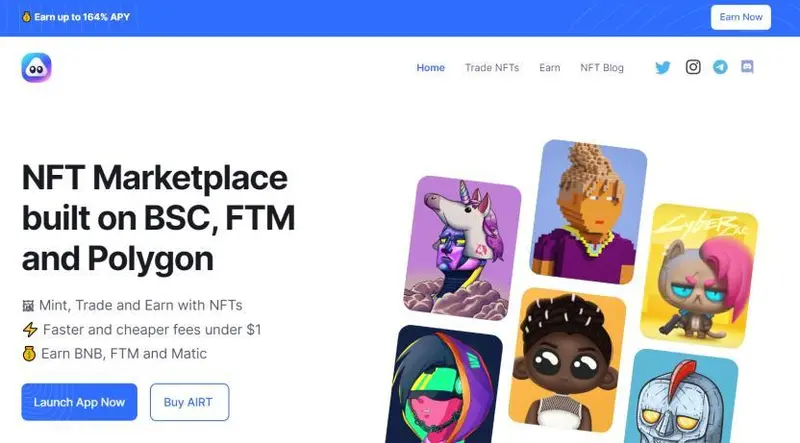
Best For: Musicians and artists who want an easy, low-cost way to mint and sell music NFTs with multi-chain support and simple marketplace exposure.
Primary Focus: A general Web3 NFT marketplace that includes a dedicated music NFT category where audio creators can tokenize tracks and sell directly to fans.
Fee Structure: Marketplace charges a service fee on sales and creators set royalty percentages; network fees depend on the chosen blockchain (e.g., Binance Smart Chain or other supported chains).
Minting Options: Enables minting of music NFTs by uploading audio files into the music category with options for fixed price sales, timed auctions, and customizable metadata.
AirNFTs provides musicians with a straightforward, intuitive minting process where uploading a track and creating a music NFT can be done without deep Web3 expertise. The platform supports multiple blockchains, which helps control transaction costs and gives artists flexibility to choose more cost-effective networks for minting and trading their audio NFTs.
For creators, the marketplace interface is clean and accessible, making it simple to publish music NFTs, set royalties, and share links with fans for direct sales. AirNFTs’ music category helps collectors filter for audio assets, though the discovery tools are still more basic compared with larger, more specialized music NFT platforms.
However, while AirNFTs supports music NFT creation, trading, and royalties, it does not offer deep music-centric features like built-in audio streaming previews, dedicated playlists, or fan engagement mechanics designed around listening experiences.
Pros
Easy and affordable setup for music NFT minting
Multi-chain support to reduce transaction fees
Simple interface suitable for first time creators
Cons
Limited native music discovery and playback features
Smaller collector base focused on general NFTs
For musicians who want a low-friction entry point into music NFTs with flexible blockchain options and basic marketplace exposure, AirNFTs offers a practical platform to launch and sell audio tokens.
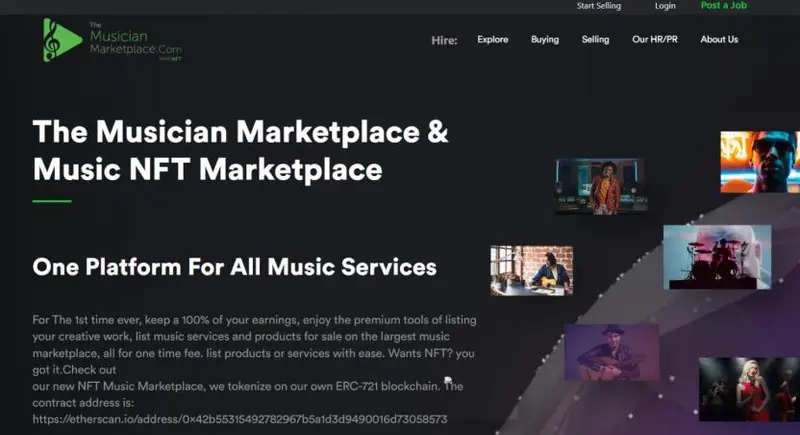
Best For: Independent musicians who want a music-first NFT marketplace built around ownership, licensing clarity, and direct fan support.
Primary Focus: A dedicated music NFT marketplace designed to help artists mint, sell, and manage NFTs tied specifically to songs, albums, and music rights.
Fee Structure: Applies marketplace fees on sales while allowing artists to set royalties and retain control over pricing and ownership terms.
Minting Options: Supports direct minting of music NFTs with options for limited editions, pricing control, and rights related metadata.
The Musician Marketplace is built with a clear focus on music NFTs rather than general digital collectibles, positioning itself as a space where audio assets and music rights take priority. For musicians, the platform emphasizes turning songs and recordings into NFTs that can be sold directly to fans while preserving ownership and attribution.
From a workflow perspective, artists upload their music, define NFT parameters such as edition size and pricing, and list them within a marketplace environment designed specifically for music consumption and collecting.
The platform’s emphasis on music-related metadata and licensing context helps reduce confusion around what buyers are purchasing, which is a common concern in music NFT sales.
However, The Musician Marketplace operates at a smaller scale than major NFT platforms, and its collector base is more niche. Artists should expect to rely heavily on their existing fan communities and external promotion to generate traction.
Pros
Purpose-built marketplace for music NFTs
Strong focus on artist ownership and rights clarity
For musicians seeking a focused environment to sell music NFTs without competing against unrelated digital assets, The Musician Marketplace offers a clear, artist-aligned option.
Music NFTs are blockchain-based digital assets that represent ownership, access, or rights connected directly to a piece of music. Unlike traditional digital files such as MP3s or streaming links, a music NFT is recorded on a blockchain, making its ownership verifiable, transferable, and programmable.
For musicians, this means a song, album, or audio experience can be minted as a unique or limited digital asset and sold directly to fans without relying on streaming platforms or intermediaries. A music NFT can represent many things depending on how it is designed, including a one-of-one recording, a limited edition release, access to exclusive content, or even a share of future royalties.
What makes music NFTs distinct from general NFTs is that the audio itself is the core asset, not a visual placeholder or marketing tie-in. Buyers are not just collecting artwork associated with music, but the music itself or rights tied to it. This allows artists to experiment with new monetization models while maintaining creative control and clearer ownership structures.
Music NFTs also enable programmable features through smart contracts, such as automatic royalty payments on resales, revenue splits between collaborators, and access-based perks for fans. For artists, this opens new ways to release music, reward supporters, and build direct relationships with audiences beyond traditional distribution systems.
How Do Music NFTs Benefit Creators?
Music NFTs change how musicians earn money by shifting value away from volume-based streaming payouts toward direct ownership sales and fan-supported economics. Instead of relying on millions of plays to generate modest income, artists can monetize music through scarcity, access, and programmable rights.
On traditional streaming platforms like Spotify, Apple Music, or YouTube Music, artists are paid per stream. Revenue is pooled, platform-controlled, and distributed based on total listening share. This means independent musicians often need hundreds of thousands or millions of streams to earn meaningful income, while platforms retain significant control over discovery, data, and payout structure.
Music NFT marketplaces operate differently. Artists sell music directly to fans as digital assets, often as limited editions or one-of-one releases. Income is generated at the moment of sale, not over time through plays. Creators set prices, edition sizes, and royalty rules, allowing a single release to generate revenue equivalent to months or years of streaming income.
Another major difference is ownership and resale economics. With NFTs, artists can earn automatic royalties every time a music NFT is resold on secondary markets. Streaming platforms do not provide resale income or long-term participation in downstream value.
Music NFTs also unlock alternative revenue models. Artists can sell access to unreleased tracks, exclusive editions, fan memberships, or even streaming royalty participation, depending on the platform. This gives musicians more flexibility to design releases around their audience rather than algorithmic incentives.
In practice, music NFTs favor fewer but more committed fans, while streaming favors scale. Many artists now use NFTs alongside streaming, treating NFTs as a premium layer rather than a replacement.
Music NFTs vs Streaming Platforms Comparison
Category
Music NFTs
Streaming Platforms
Revenue Timing
Paid upfront at time of sale
Paid over time per stream
Income Predictability
High per sale, creator-controlled
Low, volume-dependent
Pricing Control
Fully set by artist
Set by platform
Fan Relationship
Direct artist to fan
Platform mediated
Royalties on Resales
Yes, automatic via smart contracts
No
Ownership Transparency
On-chain and verifiable
Platform controlled
Best Suited For
Engaged fanbases and limited releases
Mass audience discovery
Streaming Payout Comparison Explained
To put the difference in earning potential into context, the table below shows approximate payouts per 1,000 streams on some of the most widely used music streaming platforms. These figures illustrate why many independent artists struggle to generate meaningful income from streaming alone, especially without massive scale or playlist placement.
Payouts vary based on geography, listener subscription type, label agreements, and distribution deals, but the ranges below reflect commonly cited industry averages used by artists and distributors for planning purposes.
Streaming Platform
Estimated Payout per 1,000 Streams
Spotify
$2.00 to $4.00
Apple Music
$6.00 to $8.00
Amazon Music
$4.00 to $5.00
YouTube Music
$0.60 to $1.20
TIDAL
$12.00 to $15.00
Why This Matters for Music NFT Creators?
At these rates, an independent artist may need hundreds of thousands or millions of streams to match the revenue from a single successful music NFT sale. This is why many musicians view music NFTs not as a replacement for streaming, but as a high-value monetization layer that rewards dedicated fans directly, without relying on algorithmic distribution or scale-based payouts.
If you want, the next logical section could cover when music NFTs outperform streaming financially, or how artists combine streaming reach with NFT monetization strategies.
Music NFTs Give Artists Control Where Streaming Falls Short
Music NFTs have introduced a fundamentally different way for musicians to release, sell, and monetize their work. Instead of relying solely on streaming volume and platform-controlled payouts, artists can use music NFT marketplaces to sell directly to fans, set their own pricing, and retain greater ownership over both their music and revenue.
As this guide shows, there is no single best music NFT marketplace. Some platforms focus on collectible releases, others emphasize royalty sharing or fan engagement, and several prioritize accessibility and low-cost minting.
The right choice depends on your goals, audience, and how you want to package your music.
For many artists, music NFTs are not a replacement for streaming, but a powerful complement to it. When used strategically, they allow musicians to turn creativity, scarcity, and fan loyalty into sustainable income while maintaining long term control over their work.
Frequently Asked Questions
Do musicians need to code to launch a music NFT collection?
No. Many artists now rely on automated tooling to generate editions, metadata, and drops without technical skills, especially when using workflows similar to an NFT collection generator that simplify large or limited releases.
Are successful music NFT artists usually established musicians?
Not necessarily. While well-known names draw attention, many independent creators follow patterns seen among top NFT creators by building small but highly engaged communities before scaling releases.
Can music NFTs coexist with other NFT verticals like sports or gaming?
Yes. Cross category collectors are common, and marketplaces increasingly attract users familiar with adjacent ecosystems, such as a sports NFT marketplace, which helps broaden demand beyond music only audiences.
How do brands and marketers support large music NFT drops?
Many campaigns now rely on modular launch stacks inspired by no-code NFT drop workflows, allowing teams to coordinate creators, timing, and distribution without custom development.
Where do collectors usually discover new music NFT releases?
Outside marketplaces, discovery often happens in real time communities, particularly through curated NFT Telegram groups where drops, whitelist access, and secondary listings are shared.
Are music NFTs promoted at in person or virtual events?
Yes. Many launches align with conferences, showcases, and online summits connected to major NFT events, where artists can introduce drops alongside panels or live performances.
Do influencers play a role in music NFT adoption?
They do. Collectors often follow tastemakers who curate and promote drops, similar to how NFT influencers shape visibility and early momentum for new releases.
How do artists build long term communities around music NFTs?
Sustained engagement usually happens in gated spaces, with many creators using NFT Discord servers to offer holders previews, discussions, and early access to future releases.
Nadica Naceva writes, edits, and wrangles content at Influencer Marketing Hub, where she keeps the wheels turning behind the scenes. She’s reviewed more articles than she can count, making sure they don’t go out sounding like AI wrote them in a hurry. When she’s not knee-deep in drafts, she’s training others to spot fluff from miles away (so she doesn’t have to).