
The healthcare industry has experienced a transformative shift with the integration of artificial intelligence (AI). These advancements are not just incremental improvements but revolutionary changes that redefine patient care, operational efficiency, and medical research. As we move into 2025, the adoption of AI healthcare tools has accelerated, offering unprecedented benefits and applications. From enhancing diagnostic accuracy to personalizing treatment plans, AI is reshaping the healthcare landscape.
This article delves into the top 5 AI healthcare tools of 2025, exploring their diverse uses, real-world examples, and the substantial benefits they bring to the table.
What Is AI In Healthcare?
AI technology allows computers to learn and make decisions for themselves. AI has revolutionized healthcare by helping doctors diagnose and treat patients more accurately. For example, medical imaging or radiology can be analyzed using AI, which can help doctors detect abnormalities in a patient's body more quickly and with less human input. This also helps hospitals and clinics manage their resources more efficiently, avoiding duplicate tests or scans.
Additionally, AI is being used to assist physicians during routine tasks like reading a patient's health history or writing a prescription. Together with a customer data platform, this technology is also helping to improve the way patients communicate with their physicians.
With artificial intelligence, patients no longer rely solely on their doctor’s opinion of a diagnosis or treatment plan, as the machine can offer a third-party perspective on the situation. This can lead to a better understanding between the patient and doctor and ultimately a better outcome for both parties.
5 AI Healthcare Tools
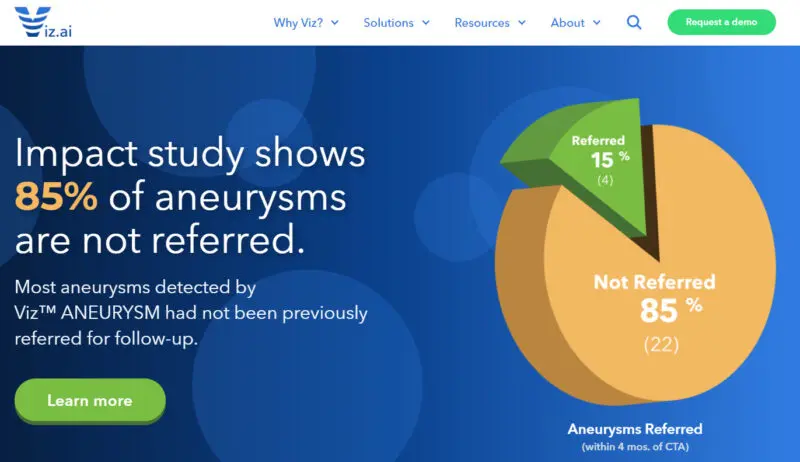
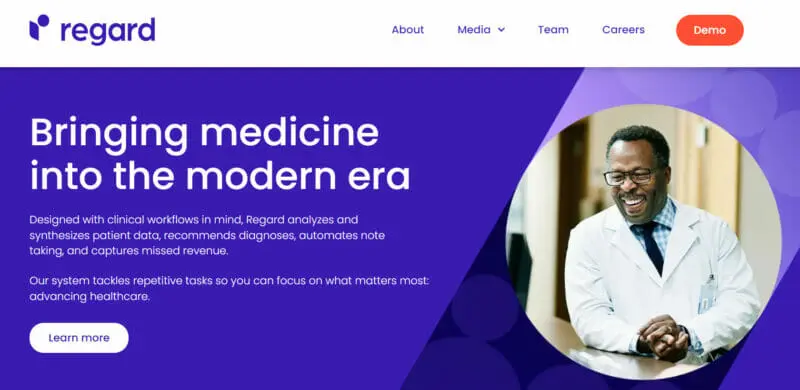
Merative, formerly known as IBM Watson Health, can help medical professionals make better decisions, automate daily tasks and empower them to do their most productive work. It is a platform that uses AI in the cloud to store, manage, and analyze medical data in real-time. With the help of this technology, doctors can access patient records more quickly and accurately diagnose patients with a significantly higher level of accuracy. With the help of AI, Viz.AI is able to replace outdated, conventional care practices with the use of one convenient platform. This cloud-based patient record management system allows healthcare professionals and patients alike to access and share information more quickly and effectively. When care teams are connected earlier in the workflow with real-time analytics and insights, faster treatment decisions can be made, which leads to better outcomes for the patient. Enlitic is a healthcare intelligence platform that uses AI to improve the accuracy of health data. Its solutions include Enlitic Curie™, an AI-powered platform designed to enhance patient care through precision diagnosis and clinical decision support. This system can help identify early signs of health conditions, improve treatment decisions, and provide a more accurate view of a patient’s overall health. Enlitic Curie™ also aims to make data-driven care more accessible by providing patients with access to their entire medical record in a secure online environment. The platform has already been used in conjunction with radiology scans and AI technology is being developed for use with other types of medical data as well. Providers are now able to provide the finest care possible with Regard—a comprehensive intelligent platform that automates tedious clinical tasks, allowing providers more time for their patients. Unlike manual methods of analyzing and synthesizing patient data, this system provides near-instantaneous insights into complete patient pictures without missing any critical information. As a tool, Regard is a machine learning algorithm that uses natural language processing to automatically analyze patient data in medical records and clinical notes. It provides insights into patient diagnoses, treatments, care plans, and outcomes with AI algorithms. Twill is revolutionizing healthcare by intertwining mental and physical health with digital-first care. Therapeutic, well-being and community-based apps and tools are solutions that help bridge the gap between need and treatment. With carefully constructed strategies and programs that exceed in empowering individuals to take control of their health and well-being, it is redefining how healthcare is delivered. Through machine learning and natural language processing or NLP, Twill can identify and recognize patterns in mental health conversations. This use of AI helps clinicians and other medical professionals understand their patients’ needs faster, allowing for better treatment plans. 1. Merative (Formerly IBM Watson Health)
2. Viz.ai
3. Enlitic
4. Regard
5. Twill
The Different Solutions of AI in Healthcare
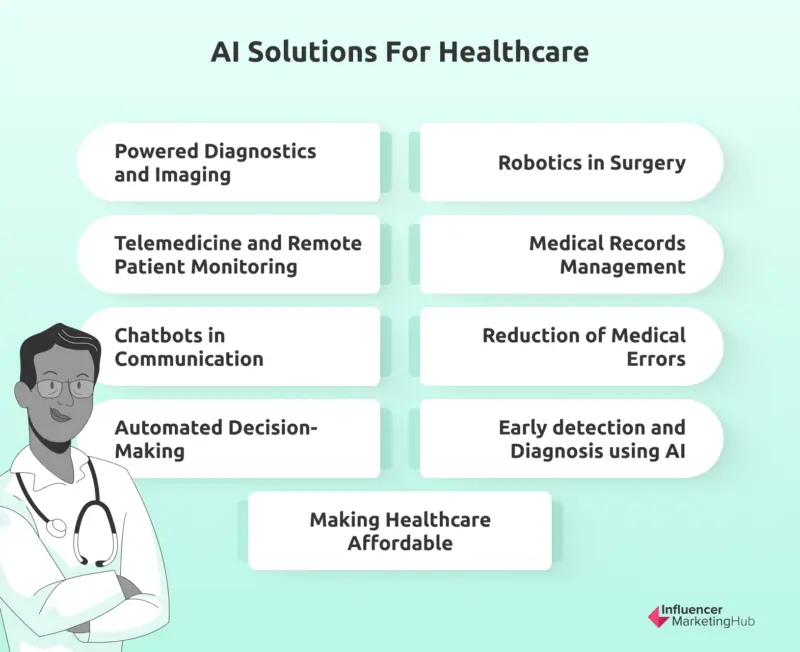
Technology is changing how healthcare is delivered and managed. From telemedicine to machine learning, AI technology is powering the next generation of healthcare solutions. Here are the different solutions and ways AI is being used in healthcare:
Powered Diagnostics and Imaging
AI algorithms can quickly detect abnormalities in images that may have previously remained unnoticed, drastically improving accuracy. AI-powered diagnostics are being used to assist radiologists with interpreting scans such as mammograms, X-rays, and CT scans. With deep learning and AI, these scans can be more quickly and accurately diagnosed. Physicians can also use AI to sift through radiology reports for potential health risks, all while a patient is in the waiting room.
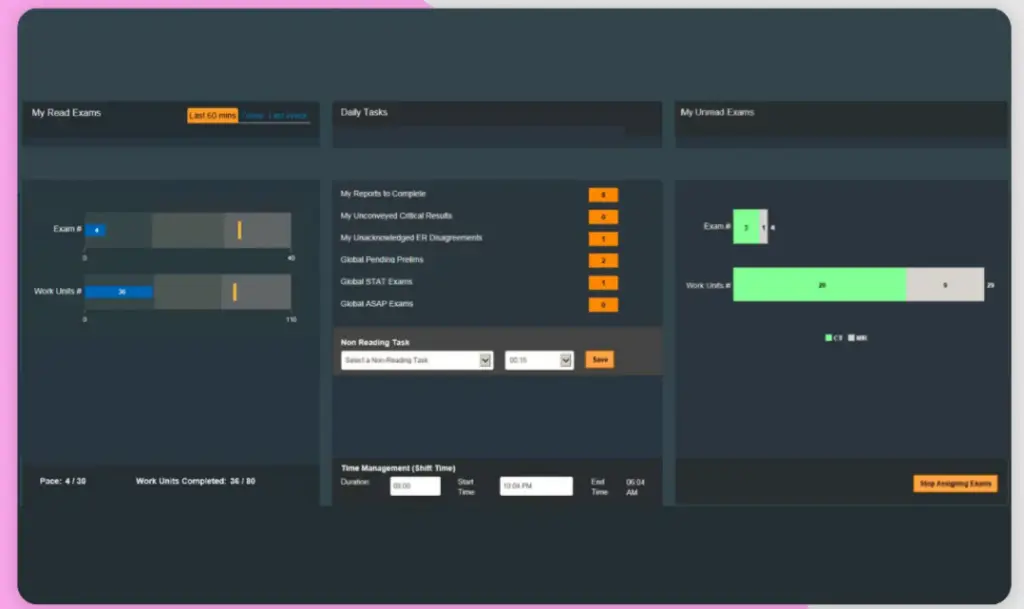
For example, Merative uses AI to analyze radiology scans in real-time, enhancing diagnostic accuracy and enabling more timely interventions. Physicians can also use AI to sift through radiology reports for potential health risks, all while a patient is in the waiting room.
Source: Merative
Robotics in Surgery
In recent years, robots have been increasingly used in surgeries due to their rapid yet precise movements. As clinical trials continue to demonstrate the safety and efficacy of utilizing robots in surgery and other medical procedures, AI is being applied to further enhance their capabilities.
For example, a machine learning algorithm can be employed to identify surgical landmarks as a surgeon performs an operation. This assists in improving patient outcomes by reducing errors and providing more accurate diagnoses during operations.
Telemedicine and Remote Patient Monitoring
Remote patient monitoring through AI is a growing trend in healthcare. By using AI to monitor patients remotely, healthcare providers can provide care for patients from their own homes or offices.
Consider virtual meetings that can reduce clinic visits, shorten wait times, and improve access to care. This allows them to spend more time with patients and reduces transportation costs for medical appointments.
Medical Records Management
AI streamlines the management of medical records, which can be time-consuming when done manually. Platforms like Merative use AI in the cloud to store, manage, and analyze medical data in real time, allowing for quicker access to patient records and more accurate diagnoses. This automation helps providers track patient care more effectively and reduces the time needed for record-keeping tasks.
Chatbots in Communication
Chatbots are a type of AI software that can engage users through chat rooms or other messaging services. They are used to provide customer service, information, and entertainment, or to help people connect with businesses.
In healthcare, chatbot applications of AI can be applied for a variety of purposes such as patient care coordination and data entry. As natural language processing algorithms are used, they are able to understand complex questions and respond quickly. This allows providers to keep patients more informed while they wait for appointments or receive medical treatment.
Twill offers one such chatbot, called Taylor. This chatbot is a clinician-trailed assistant that learns, interprets, and understands each of your customers' needs and pain points. Moreover, its biggest selling point is that it can provide personalized care.
Reduction of Medical Errors
Automated AI systems can automatically detect and correct errors in patient records. This technology can help to reduce medical errors, such as misdiagnosis or treatment that is ineffective or harmful. In addition to identifying and correcting data entry errors, AI systems can also assist doctors in making more informed decisions about treatment options. By using a machine learning algorithm, AI can analyze a patient's medical records and suggest a treatment plan based on a deep understanding of the patient's health history.
Automated Decision-Making
AI can help healthcare providers identify potential problems early and recommend the most appropriate course of action. For example, AI can be used to recommend a treatment or medication that is most likely to work best for a patient at a more accurate and faster pace. By using this in healthcare, hospitals and clinics can improve patient care while reducing costs.
With AI-powered health records, patients can track their progress and communicate with their healthcare providers more effectively. Viz.AI uses AI-powered care coordination to provide real-time insights, accelerating diagnosis and treatment.
Early detection and Diagnosis using AI
AI can help hospitals and clinics to identify and diagnose diseases earlier, which allows for more effective treatment. By using AI to analyze patient data and make accurate diagnoses, healthcare providers are able to provide patients with the most effective care possible. AI can also help improve patient care by providing information on the appropriate treatments for each individual.
Predictive analytics, such as those used by Enlitic Curie™, help tailor treatment plans to each patient’s unique medical needs, improving care outcomes. Merative uses real-time evidence-based insights to assist in early detection and diagnosis.
Making Healthcare Affordable
AI helps healthcare providers save money on treatments and medications by identifying which patients are likely to respond well to specific interventions. This allows for cost-effective treatment recommendations.
AI-powered health records, like those provided by Viz.AI, give patients quick access to their health information, enabling them to track their progress and communicate effectively with healthcare providers. Twill's unified care platform accelerates the delivery of digital-led care, making healthcare more accessible and affordable.
AI Penetrating the Healthcare Industry
The healthcare system is one of the most complex and data-rich environments in which artificial intelligence can be used. By using machine learning algorithms, AI can help healthcare providers to identify patterns and trends in patient data that may not be evident using traditional methods.
This deep understanding of patients' health histories allows healthcare professionals to make more informed decisions for more accurate treatment options. In addition, AI can improve patient care by helping providers to holistically understand a patient's preferences and habits. Finally, AI technology provides a new level of transparency for patients by providing an automated record of their medical history.
Frequently Asked Questions
How is AI used in healthcare?
Artificial intelligence tools in healthcare can help fix links between genetic codes, power surgical robots and maximize hospital efficiency. Other uses include personalized car, scheduling and reminders, and digital communication support.
Who is leading AI in healthcare?
The 5 top AI healthcare companies include:
- Merative (Formerly IBM Watson Health)
- Viz.ai
- Enlitic
- Regard
- Twill
How does AI help in healthcare?
AI can help in healthcare by better automating administrative tasks like pre-authorizing insurance, following up with unpaid bills and better maintaining records. AI in healthcare can help ease the workload of healthcare professionals and save money in the long term.
What are the four uses of AI in healthcare?
AI algorithms ensure systems are more precise and help people better understand training data, which further helps workers get unprecedented insights into treatment options, care processes, diagnostics and patient results.
What challenges exist in implementing AI in healthcare?
Implementing AI in healthcare involves several challenges. First, data privacy and security are critical, as healthcare data is highly sensitive and must comply with regulations like HIPAA. Integrating AI with existing legacy systems is another hurdle, as many are not compatible with modern technologies. Additionally, ensuring high-quality, standardized data is essential for AI to function effectively.
What is the best medical AI tool?
The best medical AI tool depends on specific needs, but Merative, Viz.ai, Enlitic, Regard, and Twill are highly regarded for their innovative solutions in diagnostics, patient care, and workflow optimization. Each excels in different aspects of healthcare, from imaging to clinical decision support.


