
Effective corporate communication is vital for fostering a productive and engaged workforce. With the rise of remote work and the increasing need for seamless collaboration, businesses are turning to innovative tools to enhance internal and external communication.
These tools are designed not only to streamline project management and document sharing but also to keep employees connected, informed, and motivated. From video conferencing to social media integration, corporate communication platforms have become essential in driving employee engagement and improving overall productivity.
In this article, we explore some of the best corporate communication tools that can help boost employee engagement, enhance collaboration, and promote a culture of open communication within organizations.
Whether you're looking to improve internal workflows or enhance your customer interactions, these tools offer a range of features that cater to businesses of all sizes. Let’s dive into the top solutions available to help you create a more connected and engaged workforce.
Best Corporate Communication Tools to Boost Employee Engagement:
1. Sociabble
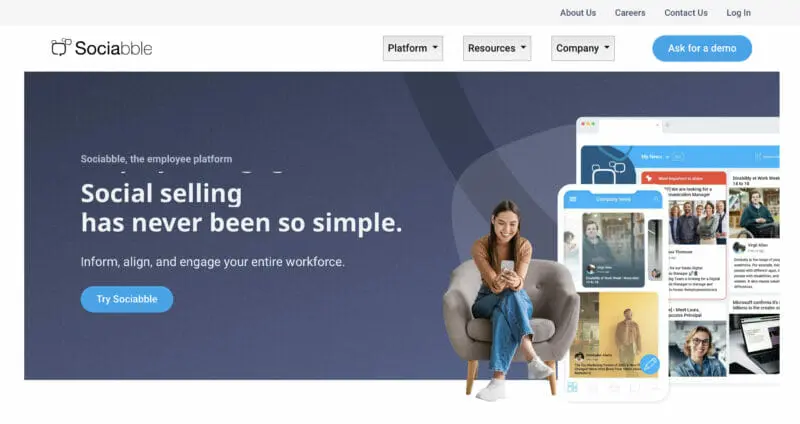
Sociabble connects your employees across devices and increases your reach and traffic on social media. Ranked by users as a leader in employee communications, advocacy, and engagement, the platform has a 90% satisfaction rate from audiences. Its goal is to engage employees by keeping them better informed on company updates. This software tool launched in 2014 currently has users in 180 countries.
Read More
2. Asana
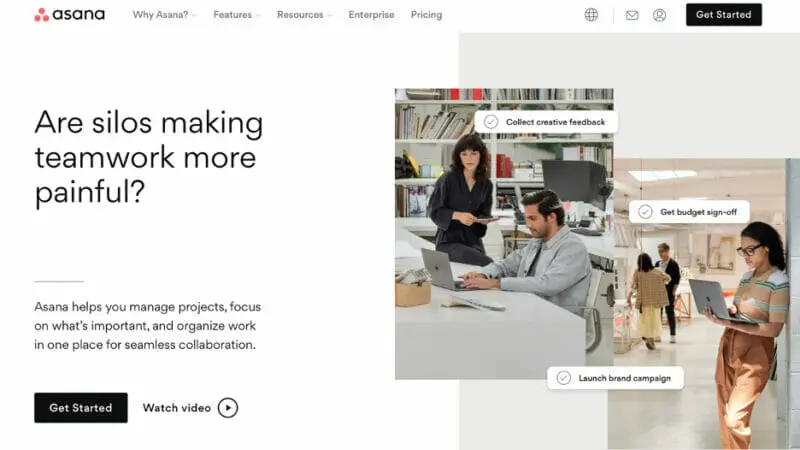
Asana is a leading collaborative project management software. International Data Corporation reports that it has improved employee satisfaction by 72% and on-time completion by 34%. One of the best internal communication tools, Asana drives cross-team efficiency, automates workflows, and monitors progress in a single view.
Asana supports any team and workflow. Plan and execute your marketing campaigns in a single platform. You can also track your team’s performance against your company objectives and align them. Moreover, the platform’s 200 integrations let you easily sync changes to your product roadmap and planning. You can even monitor and track your initiatives’ performance on the platform.
Read More3. Slack
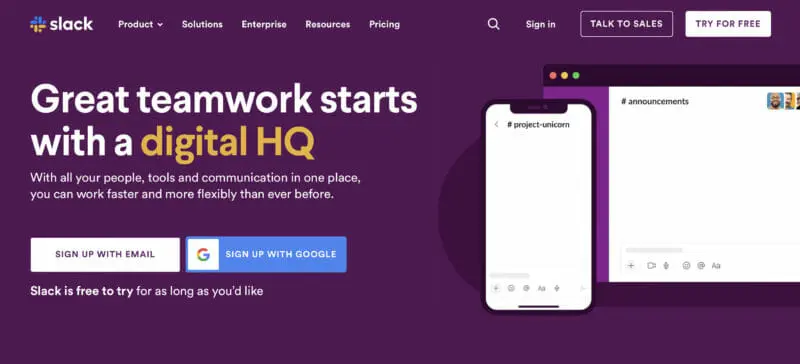
Slack is a digital-first work ecosystem that caters to businesses of different shapes and sizes. A survey shows that 85% of weekly Slack users have improved communication, while 88% feel more connected to their teams. Currently, the platform has over 200,000 paid customers in 150 countries. Almost 80% of the Fortune 100 choose Slack as their digital headquarters.
Read More4. Teamwork
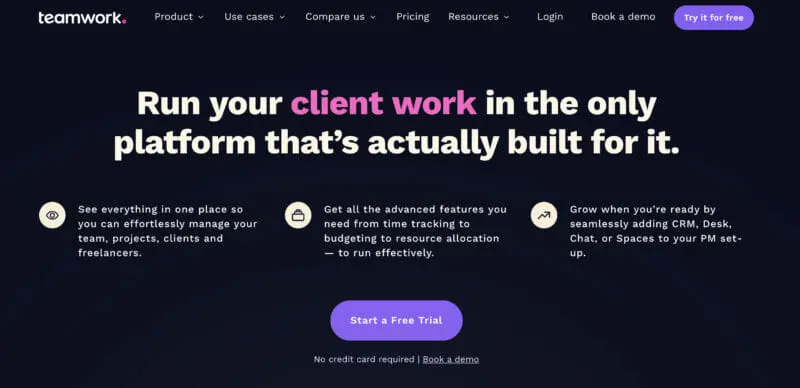
Teamwork is a work and project management platform that offers seamless communication, improved collaboration, and quick project turnaround for in-house and remote teams. It mainly offers solutions for remote work, marketing agencies and teams, product teams, work management, and product development. It’s trusted by over 20,000 companies around the world.
The platform’s workspace lets you focus on project management, while its desk solution helps you manage your client requests and customer communications. At the same time, you can close deals and grow your revenue with the platform’s sales CRM. Teamwork Spaces, on the other hand, lets you integrate seamlessly with any planning software.
What is a Corporate Communication Tool?
A corporate communication tool is a software or app that drives interaction between a company and its stakeholders (i.e., employees and customers). This platform allows employees to collaborate, share documents, initiate and manage projects, and provide feedback. At the same time, it automates updates and messaging for customers. There are two types of corporate communication tools.
-
Internal communication tools
Internal communication tools cover interactions within the organization. They help business leaders manage their relationships with stakeholders, which include the organization’s employees, contractors, and freelancers.
Some of the most common interactions for these stakeholders are all-hands meetings, company memos, and organizational updates. As such, the main channels for internal communication are video conferencing platforms, project management or intranet software, collaboration tools, and team chat or email and messaging apps.
-
External communication tools
On the other hand, platforms for external communication are for stakeholders outside the organization, such as customers, partners, and subscribers. These stakeholders usually interact with businesses for information and inquiry, as well as browse and explore products and services.
As such, the usual communication channels are customer relationship management (CRM) platforms, media, and press relations software, email marketing tools, and live chat or help desk software.
The Importance of Corporate Communication Tools?
-
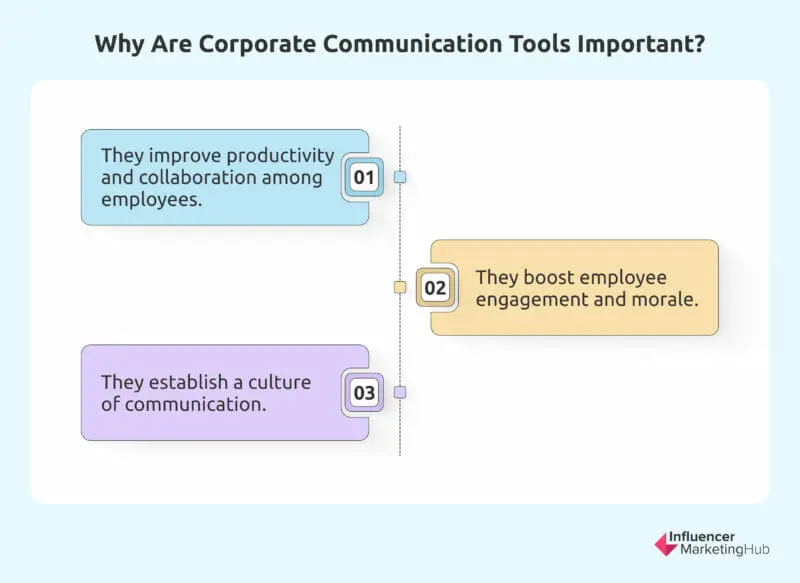
They improve productivity and collaboration among employees
A survey by Expert Market shows that improved communication technology and skills can increase employee productivity by 30%. Communication software not only drives collaboration but also promotes innovation. Most collaboration platforms, for example, allow stakeholders to brainstorm ideas and offer comments and feedback. They also allow employees to work on documents synchronously, lessening response waiting time.
-
They boost employee engagement and morale
A 2022 Buffer report cites feelings of loneliness as one of the challenges that remote workers face. This can lead to workplace disengagement, which can negatively affect employee morale. Employees are kept informed and connected via internal communication tools within minutes. Video conferencing platforms also have features to engage remote workers, such as a collaborative whiteboard, filters, and a chat box.
-
They establish a culture of communication
In a traditional workplace, teams work in bubbles and seldom interact with other departments. Corporate communication tools, on the other hand, encourage organization-wide collaboration. This keeps internal stakeholders on the same page, breaking down team silos. Employees can also effectively communicate with external stakeholders since they can openly interact with one another. They increase employee and customer retention.
Employees in well-connected organizations are 4.5 times more likely to stay in their company. That’s because effective communication makes employees feel welcomed and supported. Likewise, external communication tools make organizations more accessible to stakeholders. This ultimately makes customers feel valued, establishing trust that eventually leads to customer loyalty.
Corporate communication tools improve productivity and collaboration among employees, boost employee engagement and morale, establish a culture of communication, and increase employee and customer retention. These tools help streamline communication, promote innovation, and keep stakeholders connected. Some of the top corporate communication tools include Sprout Social, Brevo (formerly Sendinblue), Haiilo, Monday.com, EveryoneSocial, Sociabble, Asana, Slack, and Teamwork. Each tool offers unique features to enhance internal and external communication, collaboration, and engagement. Internal communication tools are designed for interactions within an organization, helping manage relationships with employees, contractors, and freelancers. Common tools include video conferencing platforms, project management software, and team chat apps. External communication tools are for interactions with stakeholders outside the organization, such as customers and partners, using CRM platforms, email marketing tools, and help desk software. Corporate communication tools increase productivity by enabling real-time collaboration, reducing response waiting times, and allowing synchronous work on documents. They provide platforms for brainstorming, feedback, and efficient project management, which streamline workflows and enhance overall team performance. Yes, corporate communication tools can address remote work challenges such as feelings of isolation by keeping employees connected and engaged. Features like video conferencing, collaborative whiteboards, and chat boxes help maintain a sense of community and ensure that remote workers remain informed and involved in company activities.Frequently Asked Questions
Why are corporate communication tools important for businesses?
What are some of the best corporate communication tools for boosting employee engagement?
What is the difference between internal and external communication tools?
How do corporate communication tools improve productivity?
Can these tools help with remote work challenges?