
X (formerly Twitter) image sizes can directly impact how your content appears in users’ feeds. Uploading the wrong dimensions may lead to awkward cropping, blurry visuals, compressed graphics, or text getting cut off on mobile devices. Even small formatting issues can reduce visibility and engagement.
This updated Twitter image size guide covers all the latest X image dimensions for 2026, including profile pictures, header images, post images, Twitter Cards, and image ad sizes. You’ll also find recommended aspect ratios, file size limits, mobile-safe design tips, and best practices for keeping your visuals sharp across desktop and mobile.
Whether you’re publishing organic posts, running paid campaigns, or optimizing branded assets, using the correct Twitter image size helps ensure your content looks professional and performs as intended.
In this guide, we’ll break down the recommended dimensions, aspect ratios, and optimization tips for every major image format on X/Twitter.
✅ Check Every X (Twitter) Image Before You Publish
Download the X Image Optimization Checklist for the latest dimensions, safe-zone guidance, export settings, mobile checks, Card requirements, and ad creative QA.
Use the fillable PDF to review profile images, headers, posts, Cards, and ads before they go live.
- X (Twitter) Image Sizes Cheat Sheet for 2026
- X (Twitter) Profile Image Size
- X (Twitter) Header Image Size and Banner Dimensions
- X (Twitter) Post Image Sizes
- X (Twitter) Image Ad Sizes for 2026
- X (Twitter) Card Image Sizes
- Best Practices for Optimizing Images on X/Twitter
- Keep Your X (Twitter) Images Sharp and Optimized
- Frequently Asked Questions
Try Our Free Social Media Image Resizer Tool
Need to quickly resize a banner, profile image, or post graphic for X/Twitter? Use our free Social Media Image Resizer Tool to instantly format your visuals to the recommended dimensions without losing quality.
X (Twitter) Image Sizes Cheat Sheet for 2026
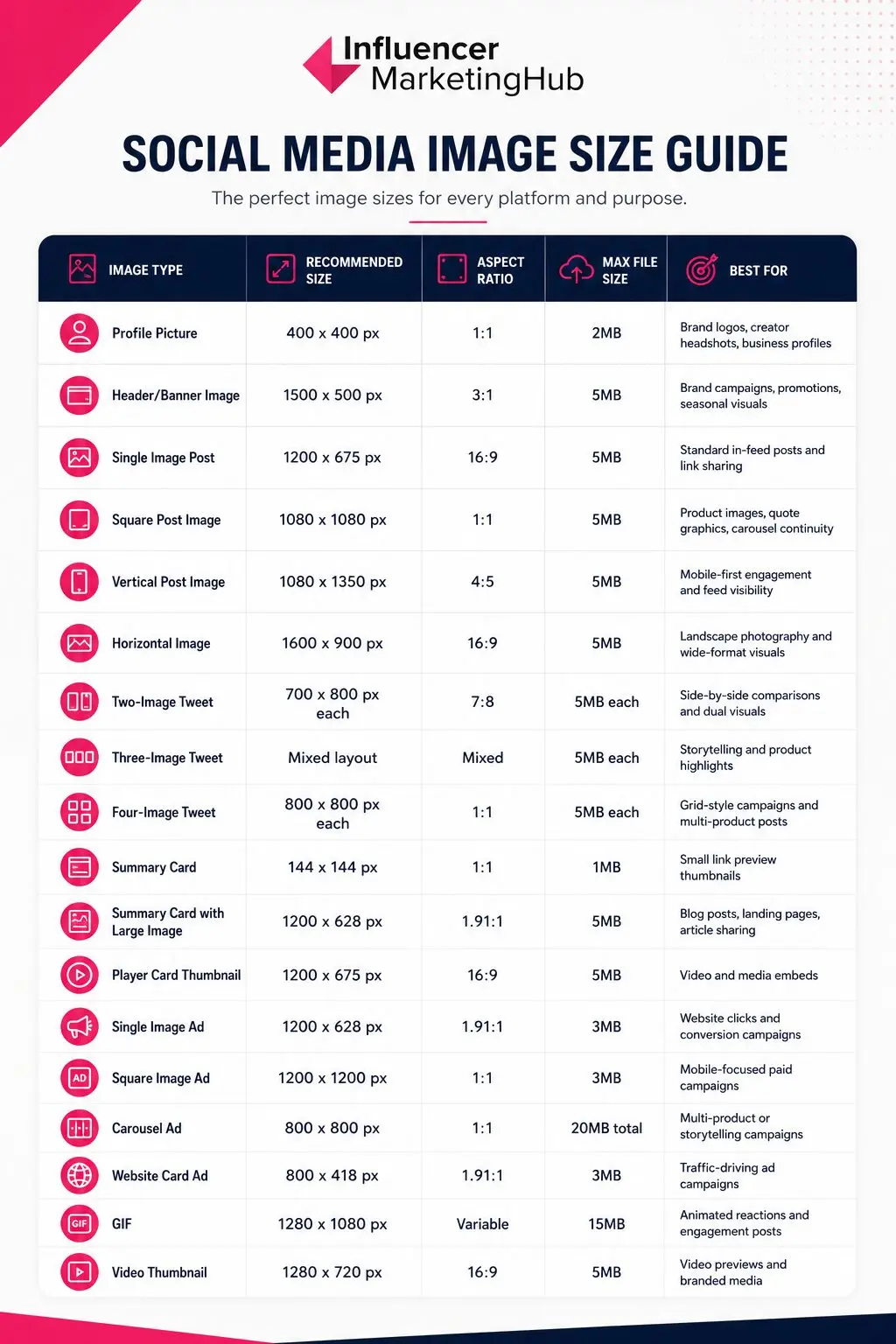
X supports a wide range of image formats across profile photos, banners, in-feed posts, Twitter Cards, and ads. Using the correct Twitter image size helps prevent cropping, blurry uploads, and formatting issues across desktop and mobile feeds.
Use the image below as a quick reference for the latest recommended X/Twitter image dimensions for 2026.
Note:
While these dimensions are optimized for X/Twitter in 2026, image performance can still vary slightly across desktop and mobile devices. Vertical 4:5 images and high-contrast visuals generally perform best in mobile feeds because they occupy more screen space and attract more attention while users scroll.
X (Twitter) Profile Image Size
Your X/Twitter profile picture is one of the most visible brand assets on the platform. It appears in feeds, replies, notifications, direct messages, search results, and follower lists, which means even small formatting issues can affect brand recognition and professionalism.
Using the correct Twitter profile image size helps ensure your logo or headshot remains clear and recognizable across all devices.
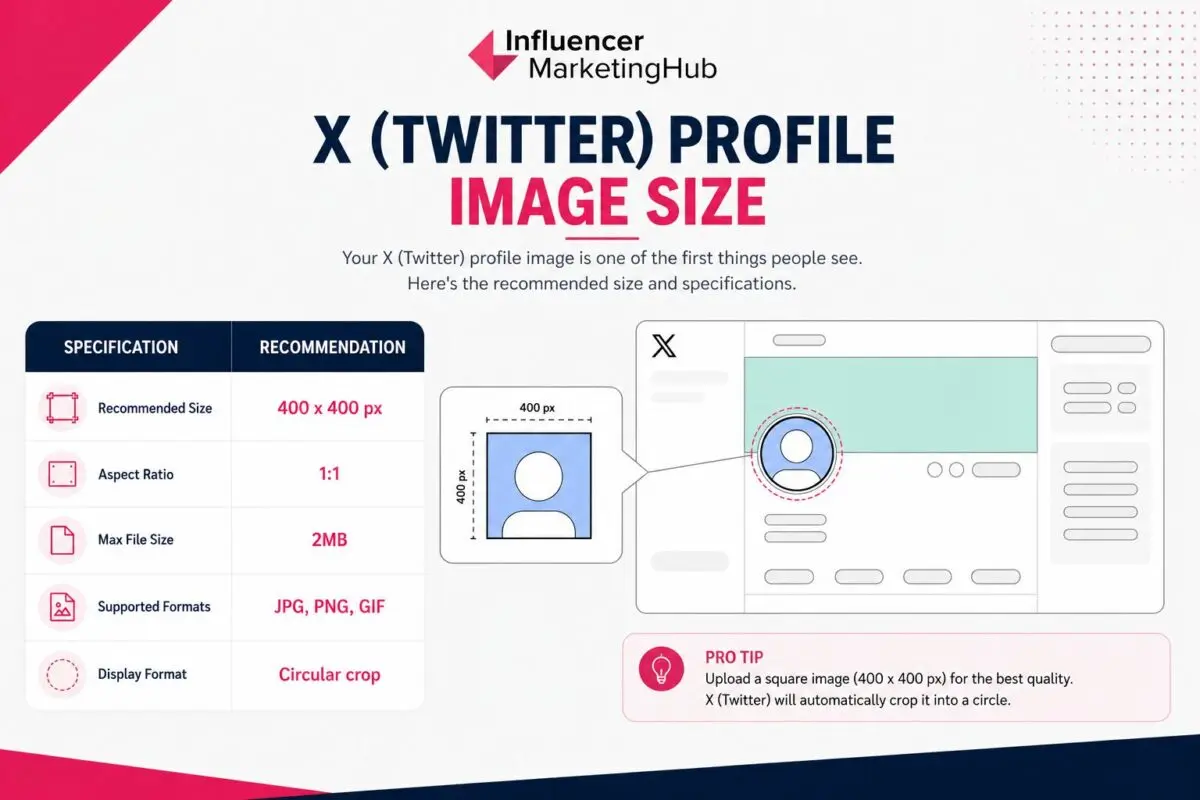
The correct size is using a 400 x 400 pixels with a 1:1 aspect ratio. The image can be JPG, PNG, or GIF, but it must not exceed 2 MBs.
One of the most common mistakes brands make is designing profile images without accounting for Twitter’s circular crop. While images are uploaded as squares, they display as circles across the platform.
Logos, text, or visual elements placed too close to the edges may get cut off, especially on smaller mobile screens. To avoid this, keep important design elements centered and leave enough padding around the edges.
For business accounts, PNG files are usually the best option because they preserve sharp edges and text better than JPGs after compression. This is especially important for logos, icons, and typography-heavy designs. JPG files generally work better for photography-based profile images, such as personal brands, creators, executives, or influencers using headshots.
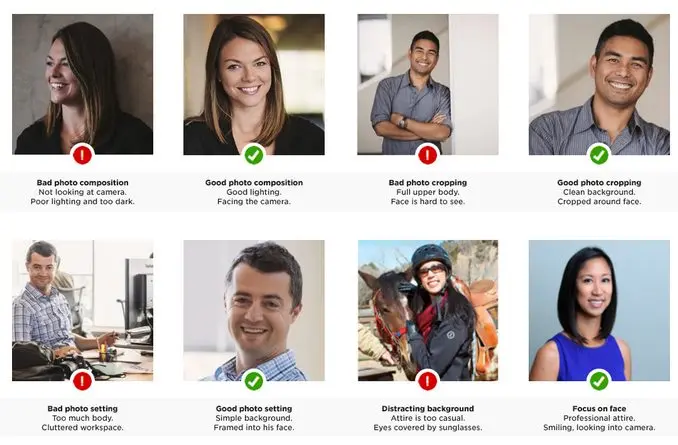
Profile images also appear much smaller in-feed than they do on profile pages. In many cases, users will only see your avatar at around 40 to 50 pixels wide while scrolling on mobile devices. High-contrast visuals, clean backgrounds, and simple compositions tend to perform best because they remain recognizable even at reduced sizes.
For marketers and brands managing multiple social channels, maintaining a consistent profile image across platforms can also improve brand recall. Using the same logo, color palette, or creator headshot across X, Instagram, LinkedIn, and TikTok makes it easier for audiences to instantly recognize your content while scrolling.
X (Twitter) Header Image Size and Banner Dimensions
The recommended Twitter header image size is 1500 x 500 pixels with a 3:1 aspect ratio. Your header image, also called a Twitter banner or Twitter cover image, appears at the top of your profile page and stretches across the full width of the screen on desktop and mobile devices.
Using the correct Twitter banner size helps prevent blurry uploads, awkward cropping, and hidden text elements.
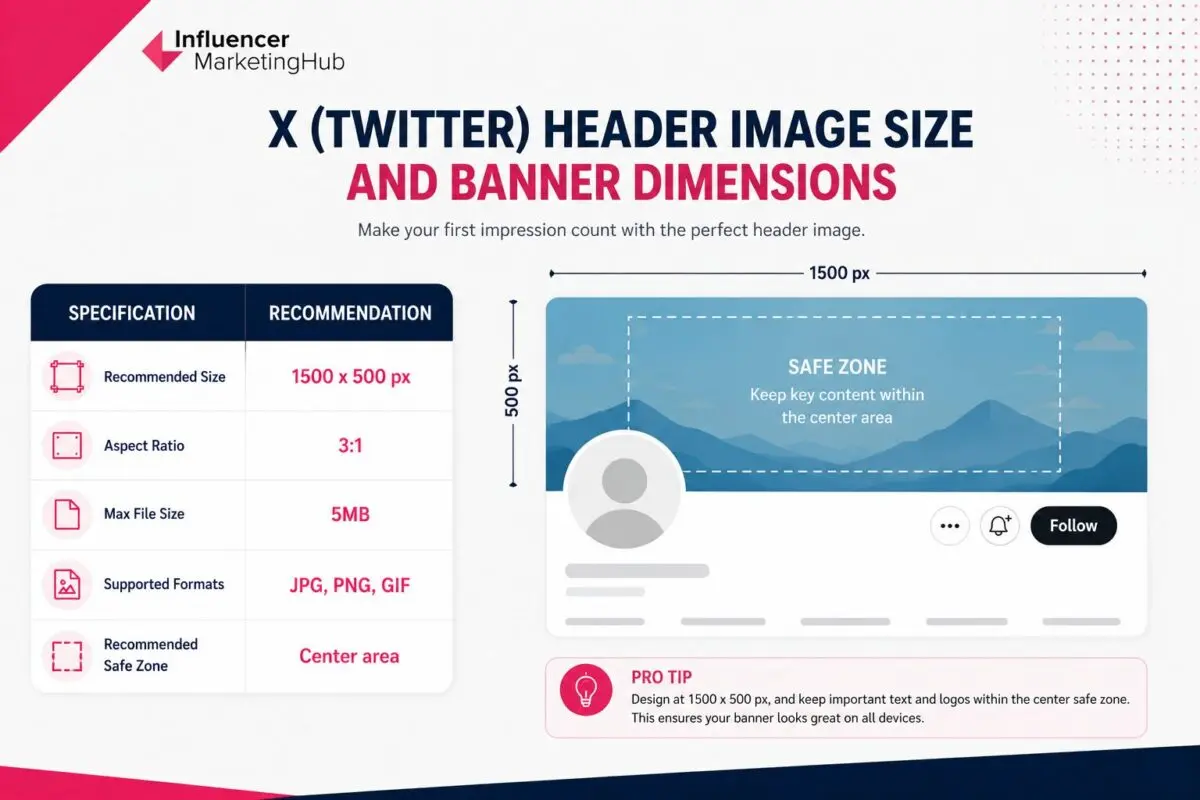
Twitter supports JPG, PNG, and GIF formats for banner images. PNG files generally work best for graphics, logos, and text-heavy banners because they preserve sharp edges and clarity better after compression. JPG files are often better for photography-based headers because they maintain smaller file sizes while still delivering good visual quality.
Although the recommended Twitter header image size remains consistent, the way banners display can vary slightly between desktop browsers and mobile devices. In some cases, portions of the top, bottom, or outer edges may crop differently depending on screen size.
Because of this, it’s best to keep important visual elements centered inside the banner’s safe zone.
Another important factor to consider is the profile image overlap. Twitter places your profile picture partially over the lower-left section of the banner image.
Text, logos, or graphics positioned in this area may become blocked or difficult to read. Keeping critical content toward the middle and upper sections of the banner helps maintain visibility across devices.
For brands and marketers using Twitter headers to reinforce branding, readability is especially important. Large text, simple layouts, and high-contrast visuals tend to display more clearly on mobile feeds and profile views. Smaller text or cluttered banner designs can quickly become difficult to read on smartphones.
Before publishing a new Twitter cover image, previewing it on both desktop and mobile is highly recommended. A banner that looks properly aligned on a desktop monitor may crop differently inside the mobile app, especially near the edges of the image.
Explore the Best Twitter Marketing Tools
Looking to go beyond image optimization? These Twitter Marketing Tools can help you schedule content, track engagement, manage campaigns, and grow your audience more effectively on X/Twitter.
X (Twitter) Post Image Sizes
The correct Twitter post image size can make a major difference in how your content appears inside the X feed.
Images that use the wrong aspect ratio may become cropped, compressed, or reduced in visibility on mobile devices. Because most users access X from smartphones, choosing the right image dimensions is especially important for brands and marketers trying to maximize engagement and screen space.
X/Twitter supports landscape, square, and vertical images across single-image posts and multi-image tweets. Each format displays differently depending on the aspect ratio and number of images included in the post.
Single Image X (Tweet) Size
Single-image tweets remain the most common image format on X. The recommended Twitter post image size for a standard landscape image is 1200 x 675 pixels with a 16:9 aspect ratio.
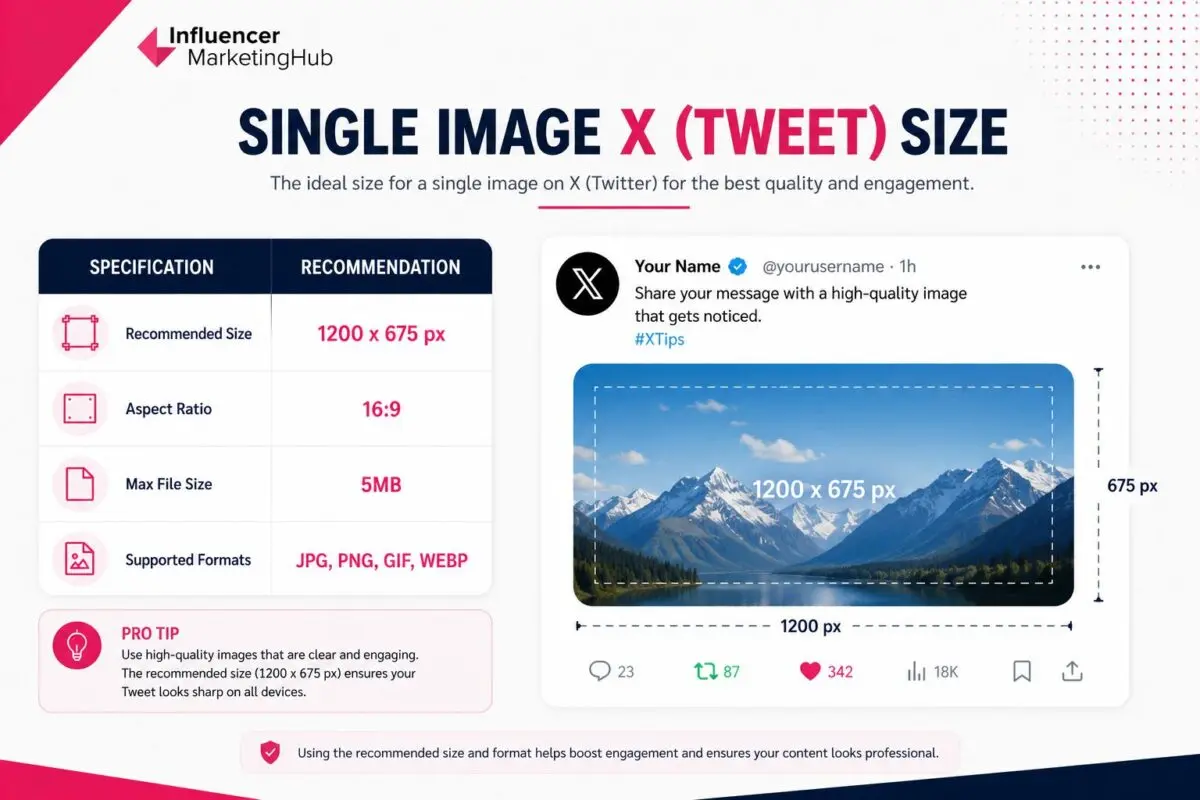
This format displays cleanly across desktop and mobile feeds while minimizing unexpected cropping. Landscape images are commonly used for link sharing, branded graphics, screenshots, and campaign visuals.
Twitter supports image aspect ratios between 2:1 and 1:1 before aggressive cropping begins. Images uploaded outside these ranges may appear cropped inside the feed preview. Although users can still expand the image manually, properly formatted uploads generally perform better because the full visual is immediately visible while scrolling.
PNG files tend to work best for graphics, infographics, or screenshots with text overlays because they maintain sharper details after compression. JPGs are usually better for photography and image-heavy creative work where smaller file sizes matter.
Square Image Size for X/Twitter
Square images use a 1:1 aspect ratio and are commonly uploaded at 1080 x 1080 pixels.
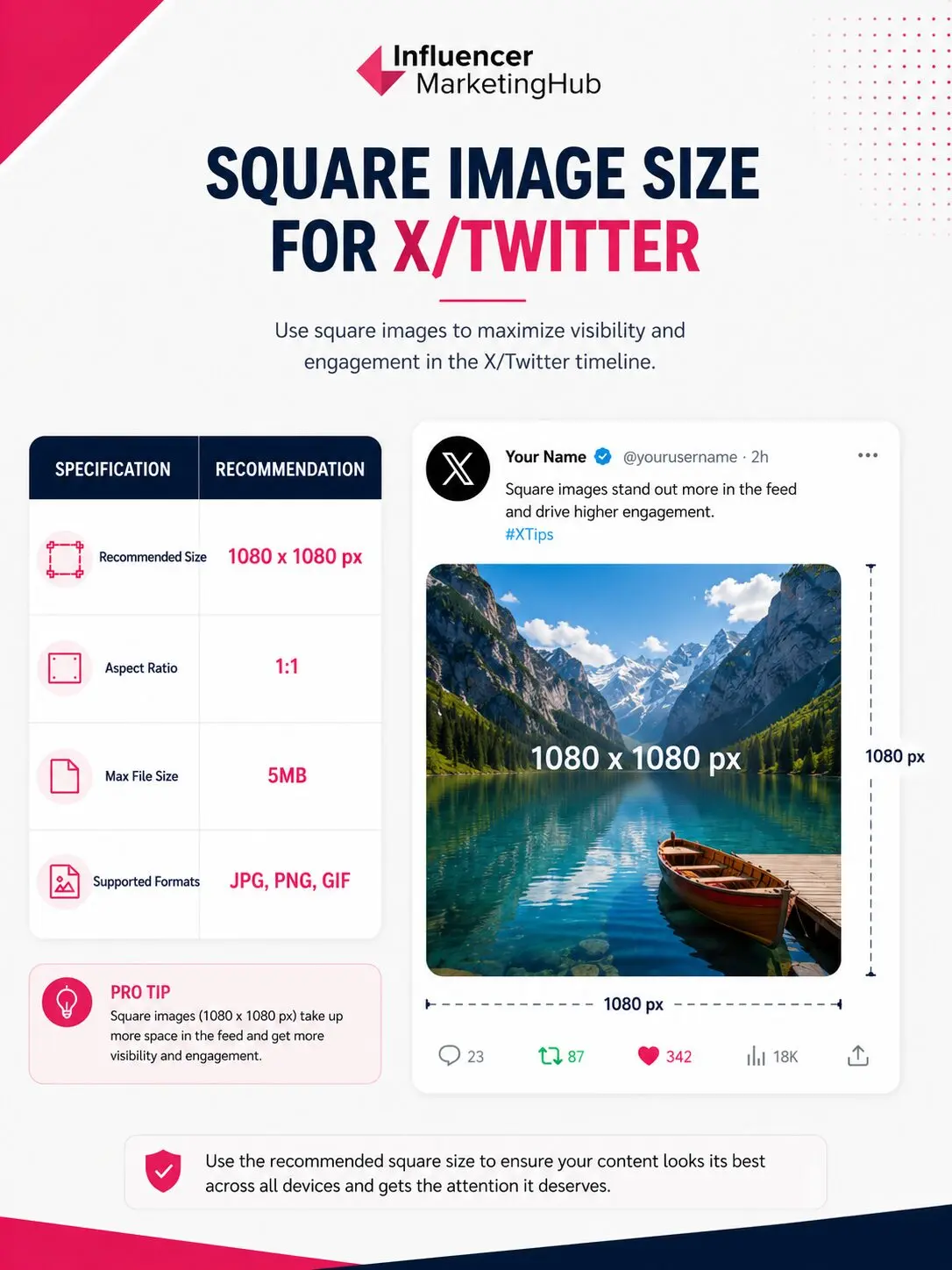
Square images offer a balanced layout across desktop and mobile feeds and are often easier to repurpose across multiple social platforms. Many brands use square formats for quote graphics, product photography, promotional content, and carousel-style campaigns.
Because square images take up less vertical screen space than portrait formats, they may not dominate the mobile feed as strongly as vertical visuals. However, they remain one of the safest and most consistent image formats for cross-platform social campaigns.
Vertical Image Size for X/Twitter
Vertical images have become increasingly important as X continues shifting toward mobile-first content consumption. The recommended Twitter vertical image size is 1080 x 1350 pixels using a 4:5 aspect ratio.
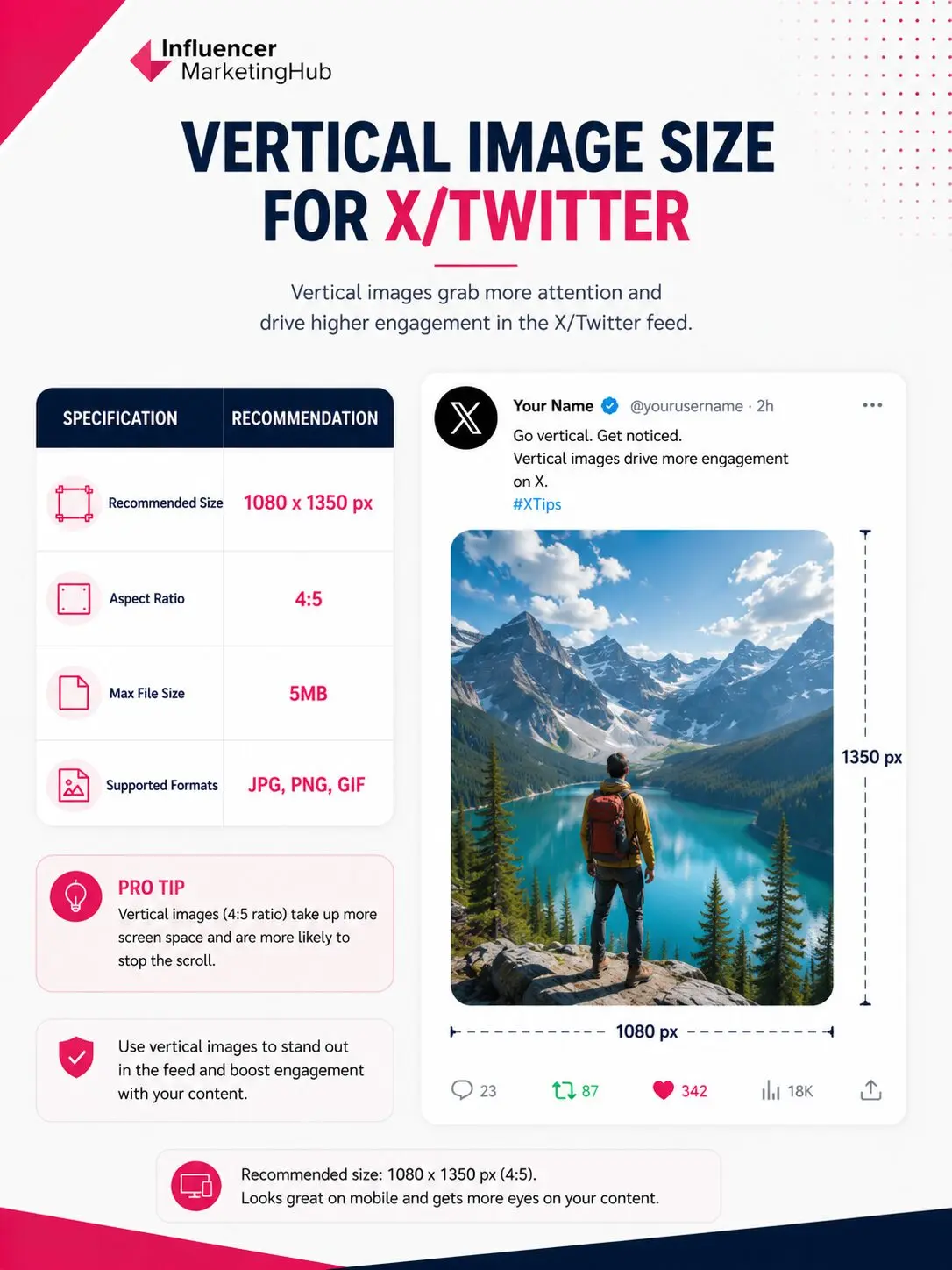
Vertical images occupy significantly more screen space on mobile devices, making them more visually prominent while users scroll through their feeds. This increased visibility can improve engagement rates, especially for product launches, promotional graphics, creator content, and storytelling-focused posts.
Portrait-oriented visuals also allow marketers to include larger text, more detailed graphics, and stronger visual hierarchy without reducing readability on smartphones. However, keeping important text and logos away from the outer edges is still recommended because slight cropping can occur depending on device size and feed layout.
Horizontal Image Size for X/Twitter
Horizontal or landscape images remain a standard format for photography, blog previews, event graphics, and website-sharing posts. The recommended Twitter horizontal image size is typically 1600 x 900 pixels or 1200 x 675 pixels using a 16:9 aspect ratio.
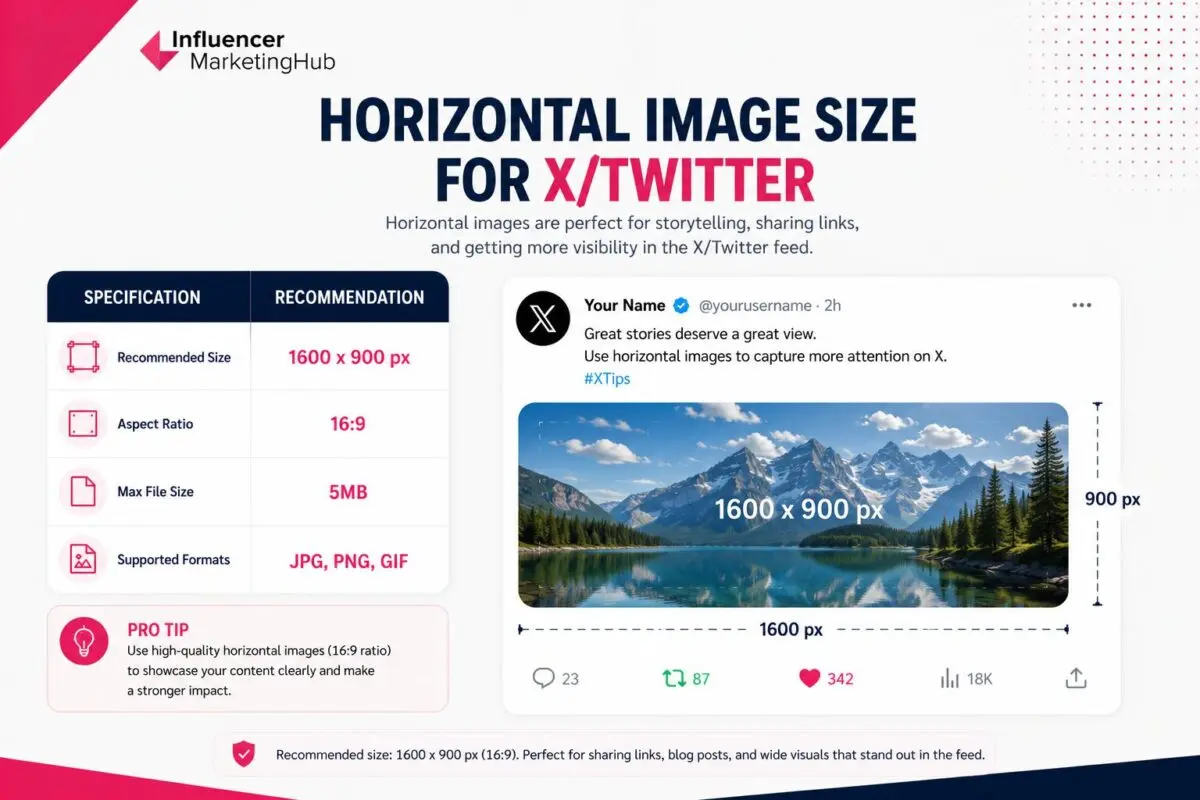
Horizontal images generally work best when the goal is to showcase wider visuals or maintain compatibility with external content formats like YouTube thumbnails, blog graphics, and presentation screenshots.
While landscape images remain highly versatile, they typically occupy less vertical feed space on mobile compared to portrait-oriented content. For this reason, many marketers now prioritize vertical formats for engagement-focused campaigns while still using landscape layouts for link-sharing and broader visual compositions.
Create Better Thumbnails and Social Graphics
Need sharper visuals for X/Twitter, YouTube, and other social platforms? These online YouTube Thumbnail Makers can help you design high-quality graphics, thumbnails, and promotional images without advanced design experience.
Multi-Image X (Tweet) Layouts
X/Twitter allows users to upload up to four images in a single tweet, but the platform automatically crops and rearranges images into preset layouts regardless of their original orientation.
Understanding how these multi-image layouts work is important because text, logos, and important visual elements can easily become cropped inside the feed preview.
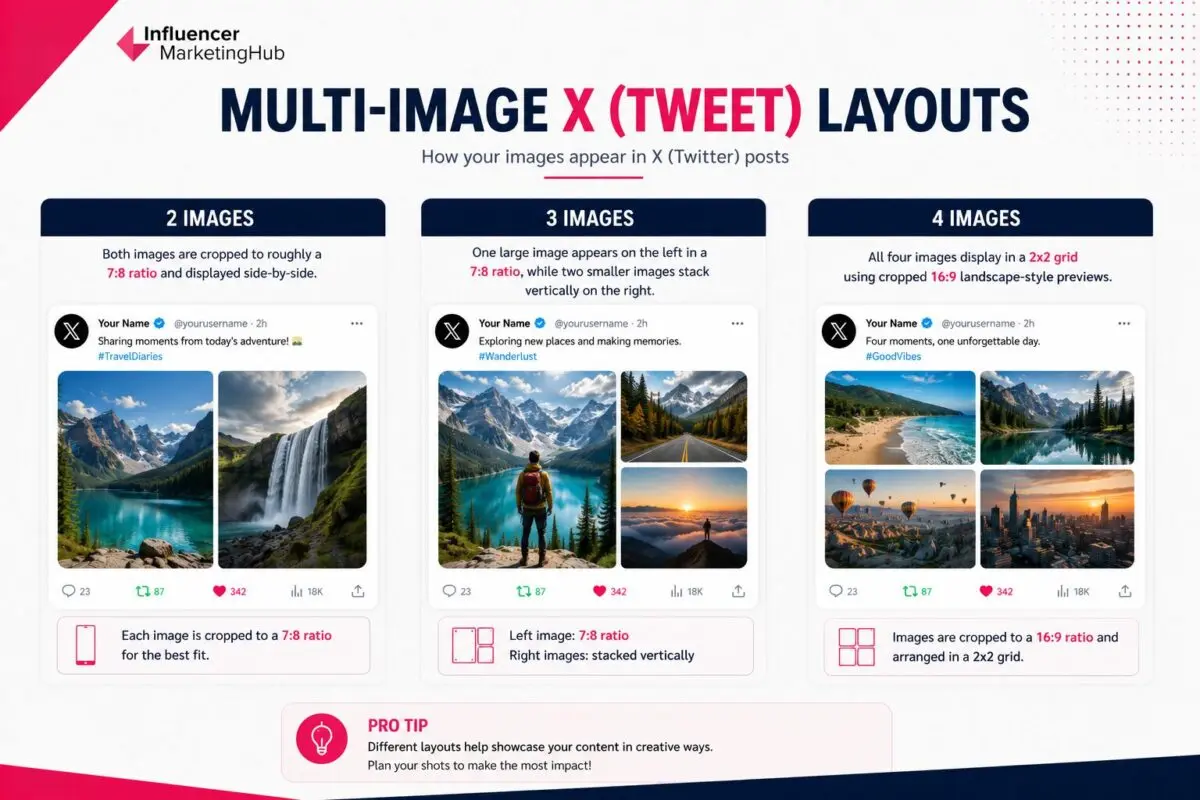
Because X forces images into these predefined windows, using centered compositions becomes especially important. Text placed near the outer edges of an image may become partially hidden once the platform applies its automatic crop.
For two-image tweets, portrait-oriented visuals generally work best because each image receives a taller 7:8 crop. Three-image layouts place stronger visual emphasis on the larger image positioned on the left, making it ideal for featuring a primary graphic or product image alongside supporting visuals.
Four-image tweets use a uniform 2x2 grid layout, which works best when all images follow a similar visual style, color palette, and aspect ratio. Many brands use this layout for product collections, tutorials, event highlights, or step-by-step storytelling.
When creating multi-image posts for X/Twitter, it’s always worth previewing how the final layout appears on mobile devices. Cropping behavior can vary slightly depending on screen size, and images that look balanced individually may appear misaligned once combined into Twitter’s grid layouts.
Discover the Best Twitter Automation Tools
Looking to streamline scheduling, engagement, and campaign management on X/Twitter? These Twitter Automation Tools can help brands and marketers scale content workflows, monitor conversations, and manage accounts more efficiently.
X (Twitter) Image Ad Sizes for 2026
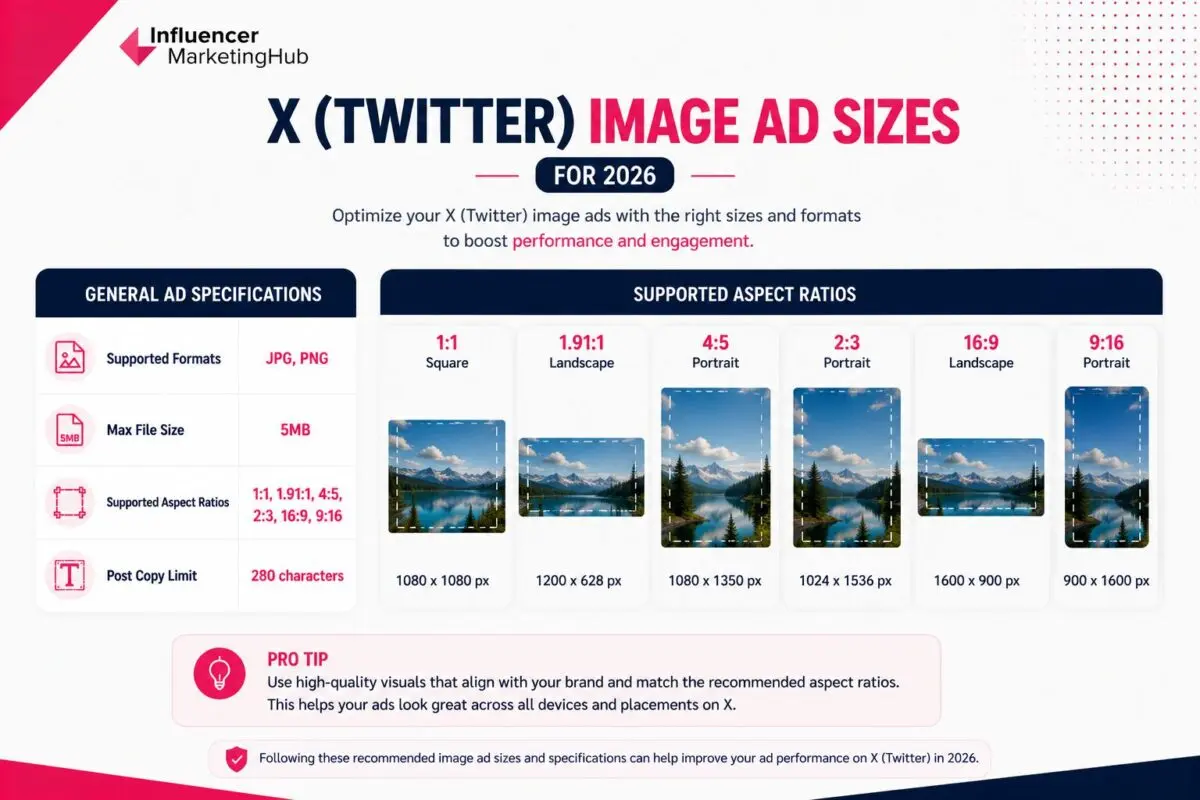
X (Twitter) supports multiple image ad formats across standalone ads, website cards, carousel ads, and app promotion campaigns.
While older Twitter ad formats focused primarily on landscape creatives, X now supports a much wider range of aspect ratios, including square, portrait, and full vertical images optimized for mobile-first experiences.
Using the correct Twitter image ad size helps improve visibility, reduce cropping issues, and create cleaner ad experiences across desktop and mobile feeds. Different aspect ratios can also influence how much screen space an ad occupies while users scroll through the platform.
Standalone X (Twitter) Image Ad Sizes
Standalone image ads are the standard single-image ad format used across X campaigns. These ads can support website traffic, engagement, conversions, app installs, and brand awareness objectives.
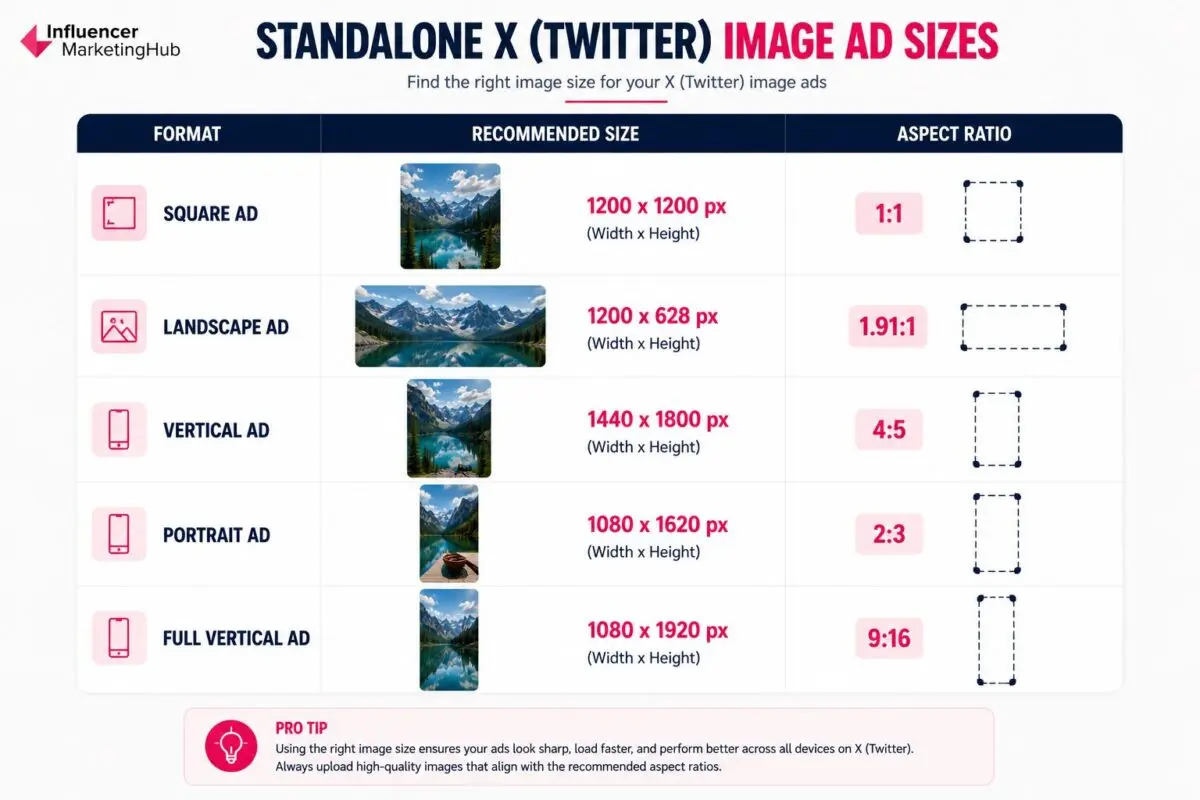
Square ads remain one of the safest formats for cross-device consistency because they display cleanly on both desktop and mobile feeds. Landscape ads using a 1.91:1 ratio are still commonly used for website traffic campaigns and link-focused creatives.
Vertical and portrait formats have become increasingly important as X continues prioritizing immersive mobile experiences. A 4:5 or 9:16 ad occupies significantly more screen space on smartphones, making the creative more visually dominant while users scroll.
For brands running engagement-focused campaigns, vertical formats can help increase visibility without requiring users to expand the image manually.
X (Twitter) Image Ads with Website Cards
Website card ads combine an image with a clickable destination link and headline. X recommends using either an 800 x 418 pixel landscape image or an 800 x 800 pixel square image for website card campaigns.
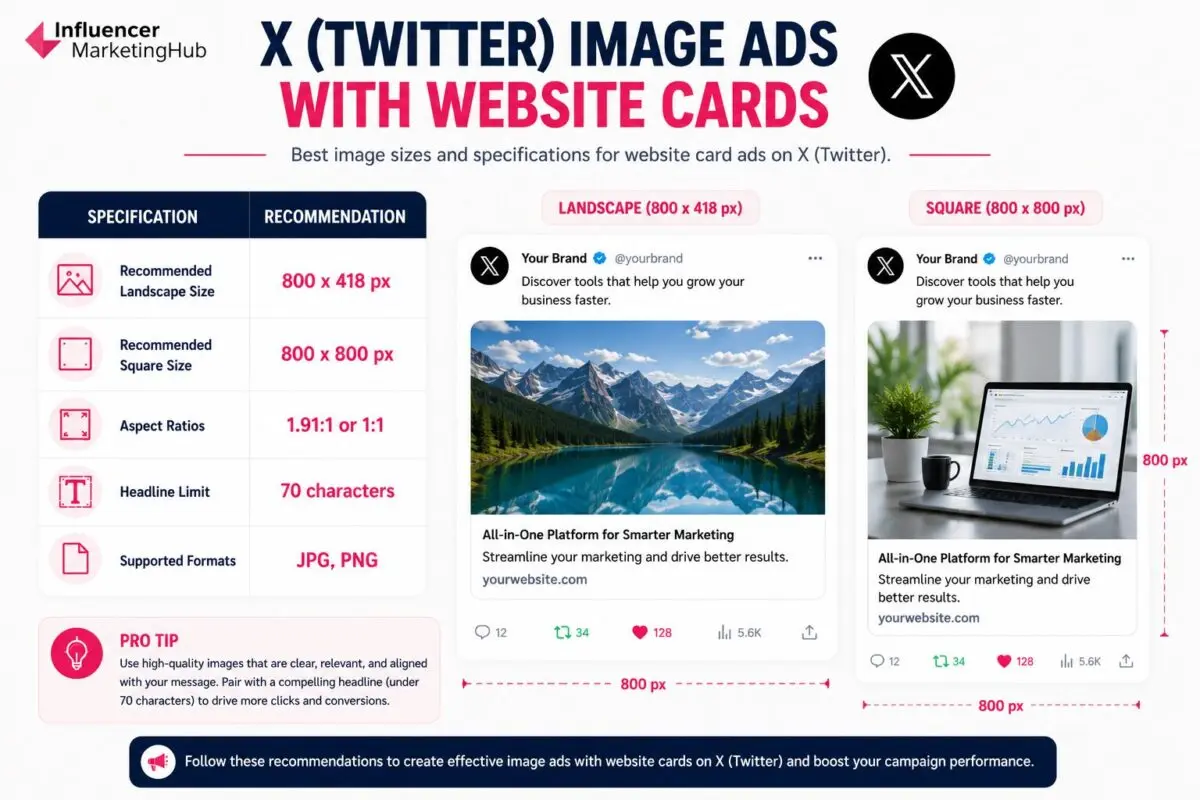
Website card headlines can truncate depending on device size and app settings. While X allows headlines up to 70 characters, shorter headlines generally display more consistently across mobile devices.
Text overlays inside website card images should also remain centered and easy to read. Important branding or CTA elements placed too close to the edges may become cropped or partially hidden on smaller screens.
X (Twitter) Carousel Ad Image Sizes
Carousel ads allow advertisers to display between 2 and 6 swipeable images or videos inside a single campaign. These formats are commonly used for product showcases, storytelling sequences, eCommerce collections, and multi-step campaigns.
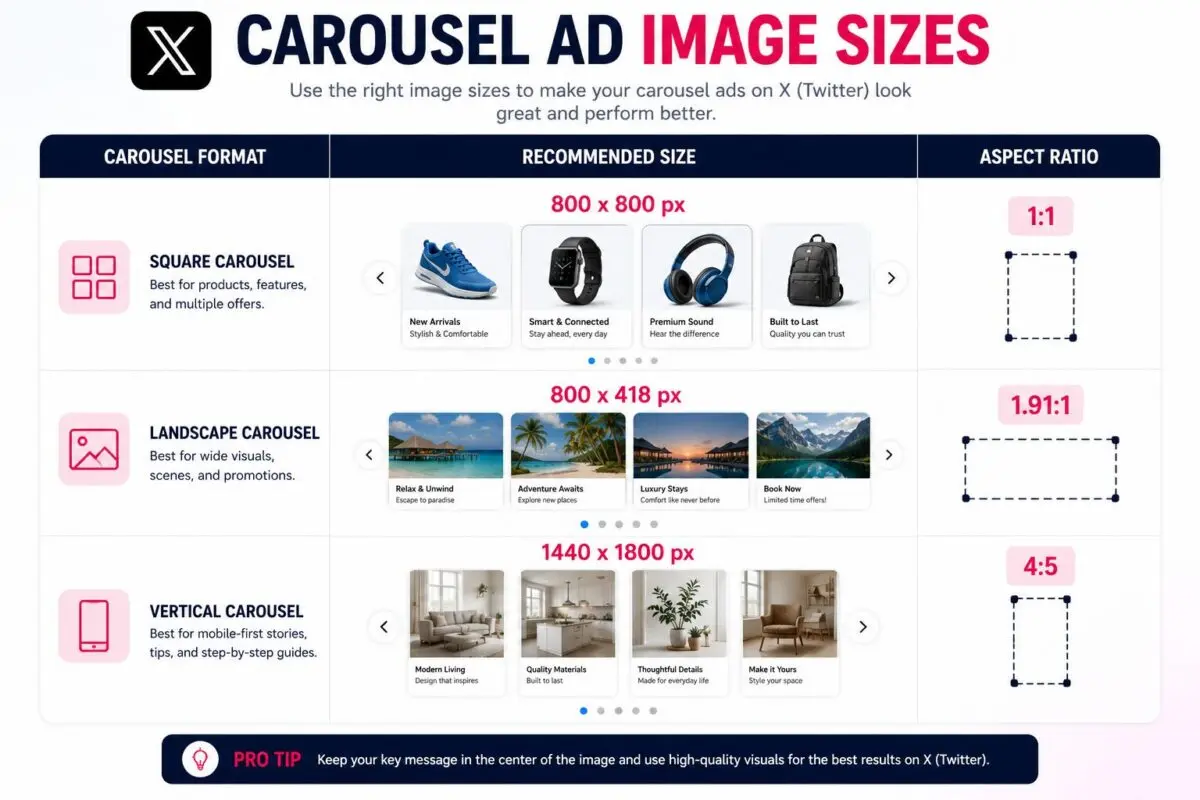
One of the most important carousel ad requirements on X is maintaining consistent aspect ratios across all slides. Mixing portrait, square, and landscape images within the same carousel can create awkward transitions and inconsistent cropping behavior while users swipe between frames.
Carousel ads also perform best when typography, branding, and visual hierarchy remain consistent across all slides. Using similar spacing, colors, and compositions helps create a smoother viewing experience and makes the campaign feel more cohesive.
Recommended X (Twitter) Ad Aspect Ratios by Campaign Goal
Different Twitter image sizes work better depending on the type of campaign being promoted.
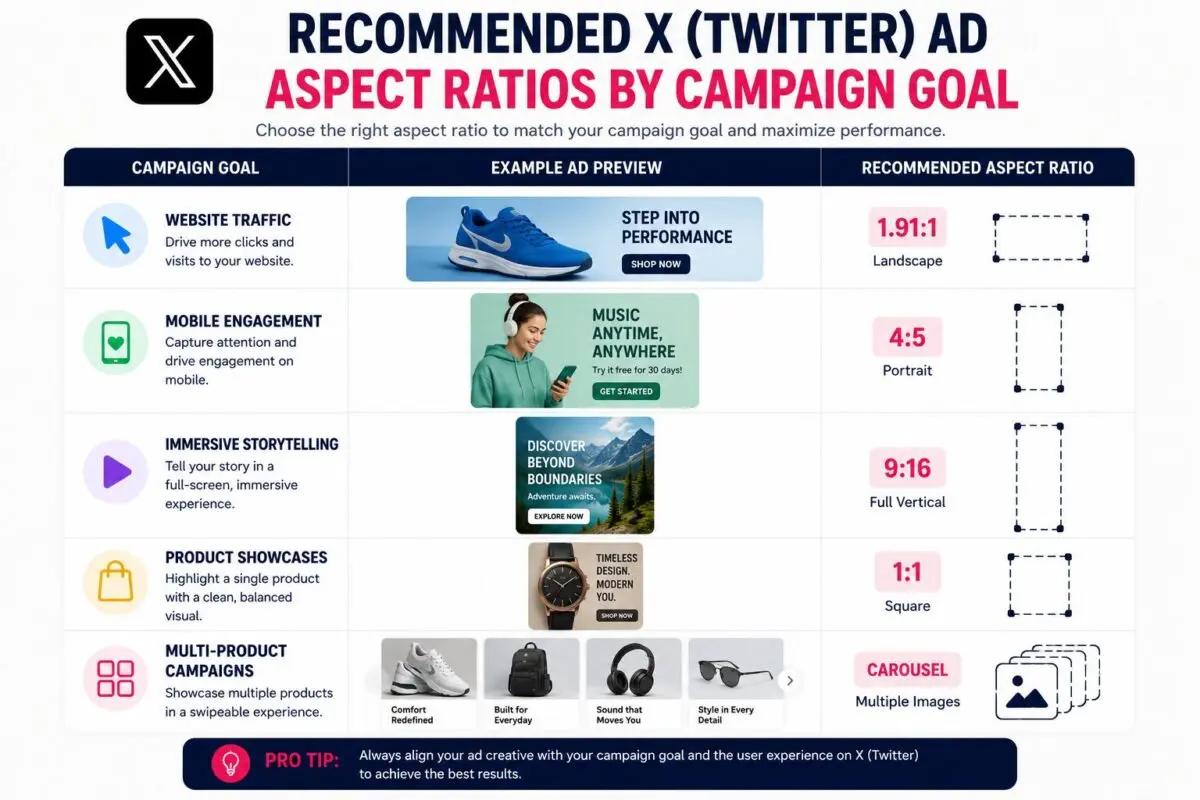
Landscape creatives still work well for traffic-focused campaigns where external links are the primary objective. However, many brands now prioritize square and vertical formats because they occupy more space in mobile feeds and naturally draw more attention while users scroll.
Best Practices for X (Twitter) Image Ads
Regardless of the format used, image ads on X generally perform best when visuals are designed with mobile viewing in mind. High-contrast imagery, readable typography, and centered focal points help reduce cropping issues and improve visibility on smaller screens.
Large text overlays are often more effective than dense paragraphs because users typically scroll through feeds quickly. Keeping logos, headlines, and calls-to-action away from the outer edges of the image also helps prevent important elements from being cut off across different placements and devices.
PNG files are usually recommended for ads containing text, logos, or graphics because they preserve sharpness better after compression. JPG files work well for photography-heavy creatives where smaller file sizes are preferred.
X (Twitter) Card Image Sizes
Twitter Cards allow websites to generate rich previews when links are shared on X. Instead of displaying a plain URL, Twitter Cards can include images, headlines, descriptions, and media previews that help posts stand out inside the feed.
For marketers, publishers, and brands, properly optimized Twitter Card images can improve visibility, increase click-through rates, and create more engaging link previews across desktop and mobile devices.
X (Twitter) Summary Cards
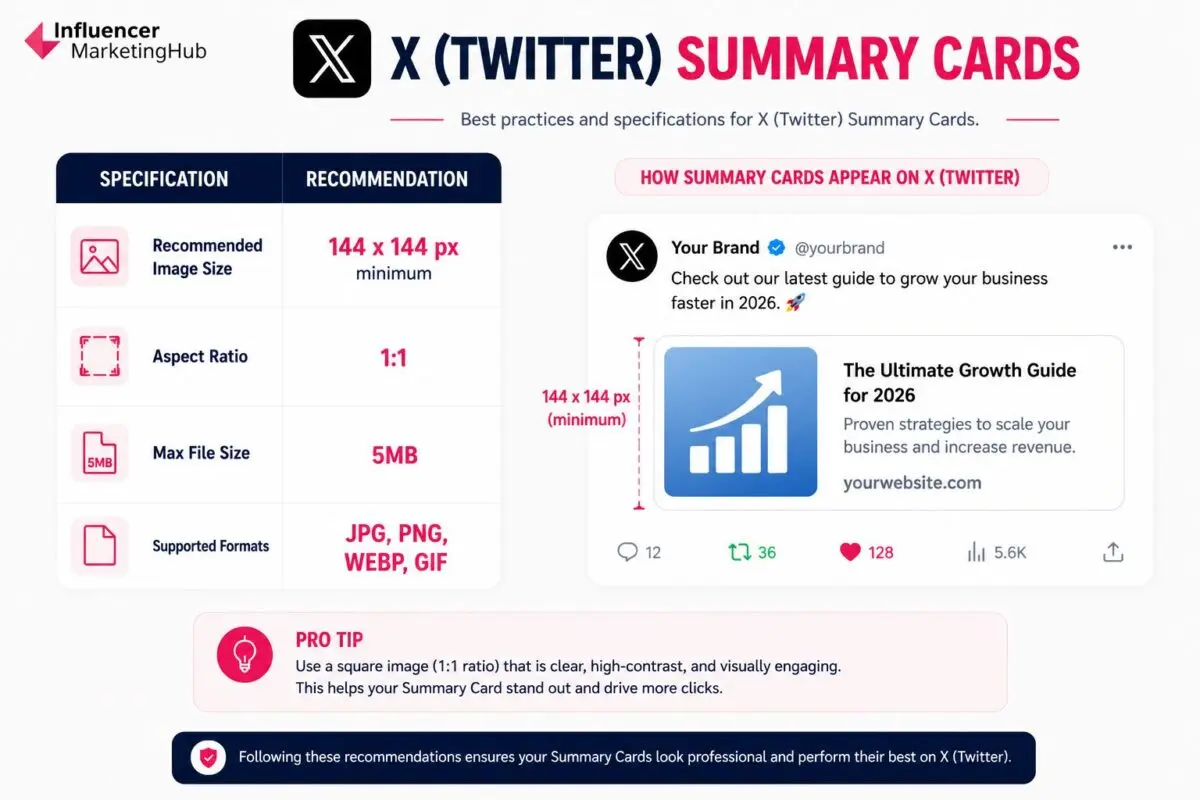
Twitter Summary Cards use a small square thumbnail next to the page title and description. The recommended Twitter Card image size for a Summary Card is at least 144 x 144 pixels, using a 1:1 aspect ratio. X supports JPG, PNG, WEBP, and GIF files for this format, with a maximum file size of 5MB.
This Twitter Money Estimator allows you to calculate estimated earnings from your Twitter account if you believe you are an influencer, based on your engagement and number of followers. - https://t.co/38V1InkGbp
— Influencer Marketing (@influencerMH) May 31, 2022
Because Summary Cards use smaller thumbnails, overly detailed graphics or text-heavy visuals may become difficult to read. Clean images with strong focal points generally display best at smaller sizes.
X (Twitter) Summary Cards with Large Images
Summary Cards with Large Images use a much larger preview image than standard Summary Cards. The recommended image size is 1200 x 628 pixels, using a 1.91:1 aspect ratio. X supports JPG, PNG, and WEBP files for this format, with a maximum file size of 5MB.
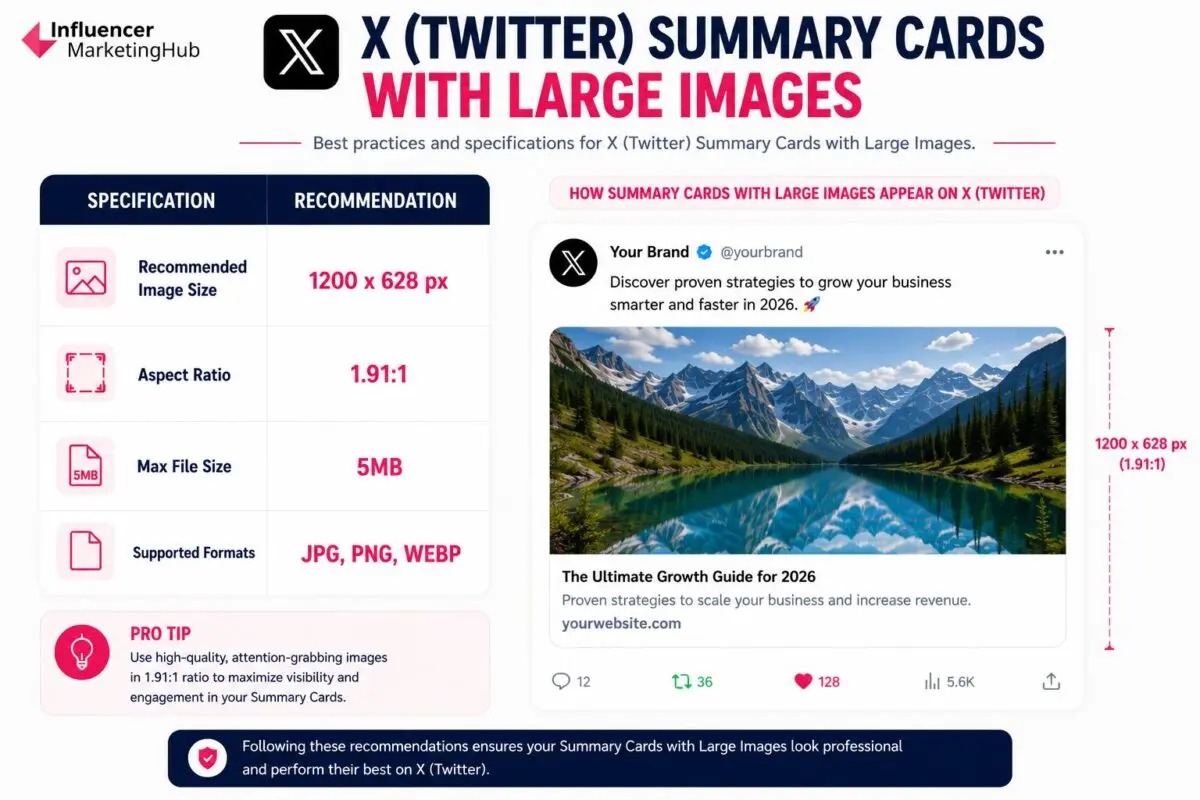
Large-image cards occupy more horizontal feed space and typically attract more attention while users scroll through X. For marketers and publishers sharing blog posts, landing pages, product pages, or campaigns, this format generally provides a stronger visual impact than smaller Summary Cards.
Using high-resolution images is especially important because Twitter compresses shared media previews automatically. Images uploaded below the recommended dimensions may appear blurry or stretched once rendered in-feed.
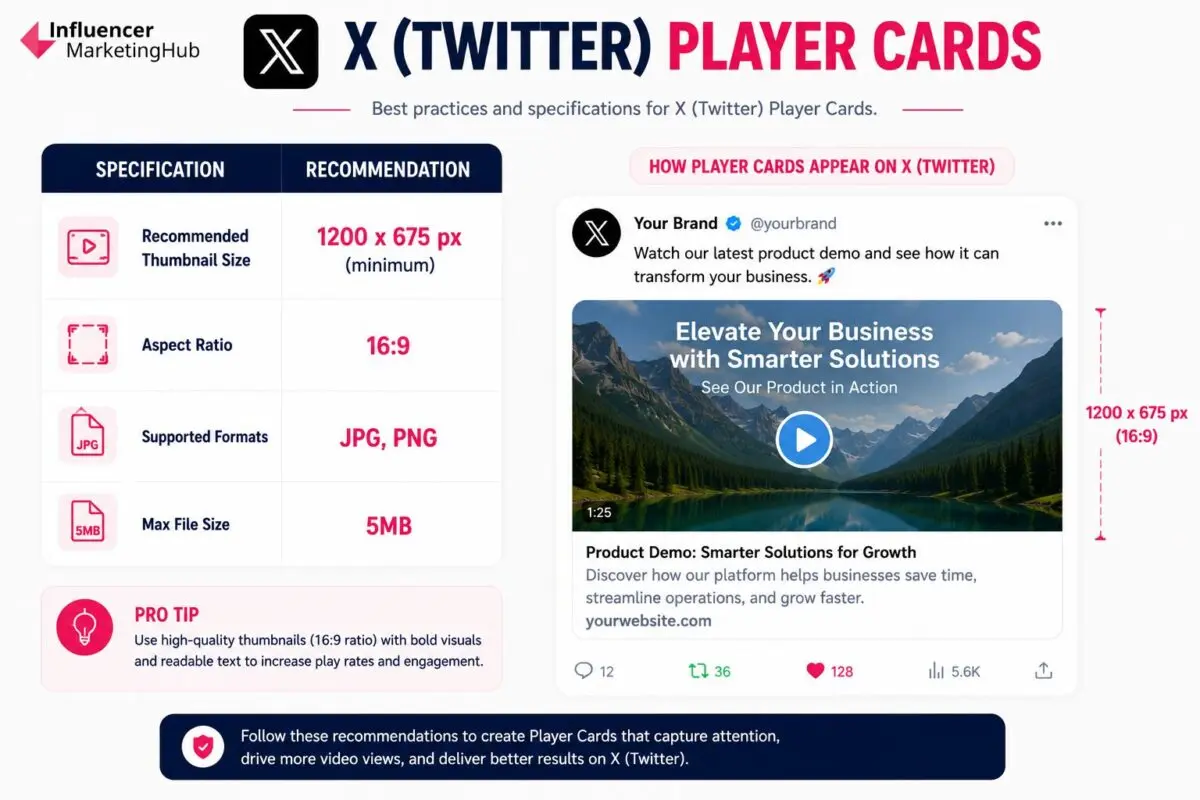
X (Twitter) Player Cards
Player Cards are used for video and audio content that can be played directly inside X. The recommended thumbnail size for a Player Card is 1200 x 675 pixels, using a 16:9 aspect ratio. Supported thumbnail formats include JPG and PNG, with a maximum file size of 5MB.
LIVE Now: Koji Fireside Chats: How @tastyshreds makes $40K per Month on Insta/TikTokhttps://t.co/kLwErYVuvr
— Koji (@madewithkoji) August 24, 2022
How X (Twitter) Cards Work
Twitter Cards are generated from metadata added to a webpage’s HTML. When someone shares a link on X, the platform pulls information such as the title, description, featured image, and media type from Twitter Card tags or Open Graph metadata.
The image format you choose should match the type of preview you want X to display. A standard Summary Card needs a square 1:1 thumbnail, while a Summary Card with Large Image needs a wider 1.91:1 image. Player Cards need a 16:9 thumbnail that clearly represents the media being shared.
If the wrong Twitter Card image size is used, the preview may appear cropped, blurry, or visually unbalanced. For marketers and publishers, this can reduce click-through potential because the link preview may fail to communicate the value of the page. Using the correct Twitter image card size helps keep shared links professional, consistent, and easier to recognize in the feed.
Explore Social Media Image Sizes Across Every Platform
Need dimensions beyond X/Twitter? This Complete Social Media Image Size Guide covers the latest recommended sizes for Instagram, Facebook, LinkedIn, TikTok, YouTube, Pinterest, and more.
Best Practices for Optimizing Images on X/Twitter
Using the correct Twitter image size is only part of the optimization process. Image quality, file format, compression settings, and mobile-friendly design choices can all affect how visuals appear once uploaded to X.
Even properly sized images may look blurry, cropped, or difficult to read if they are not optimized correctly before publishing.
PNG vs JPG for X (Twitter)
Choosing the right file format can significantly impact image quality on X/Twitter. PNG files generally work best for graphics, logos, screenshots, infographics, and images containing text because they preserve sharp edges and finer details more effectively after compression.
JPG files are usually better suited for photography-heavy visuals because they maintain smaller file sizes while still delivering good image quality. This can help reduce upload times and prevent unnecessary compression on larger images.
For marketers and brands using text overlays, logos, or promotional graphics, PNG files are typically the safest choice because text remains cleaner and easier to read inside the feed.
How X (Twitter) Compression Works
X automatically compresses uploaded media to improve loading speed and feed performance across devices. This means image quality can change after upload, especially if the original file is too small, over-compressed, or exported at low quality settings.
Images uploaded below the recommended Twitter image dimensions may appear blurry or stretched once expanded inside the feed. Similarly, screenshots that have already been compressed multiple times often lose clarity after X applies additional compression during upload.
Large images can also become compressed if the file size exceeds platform recommendations. While X supports uploads up to several megabytes, depending on the format, oversized files may still lose quality after processing.
Uploading high-resolution images that already match the recommended aspect ratio is usually the best way to preserve image clarity.
Design for Mobile First
Most X users browse the platform on mobile devices, which means images should be optimized primarily for smartphone viewing rather than large desktop monitors.
Vertical images using a 4:5 aspect ratio generally occupy more screen space on mobile feeds, making them more visually prominent while users scroll. Larger visuals often attract more attention because they dominate a greater portion of the feed viewport.
Typography should also remain large and readable on smaller screens. Thin fonts, small captions, and dense layouts can quickly become difficult to read once compressed into the mobile feed preview.
Centered compositions tend to perform best because they reduce the risk of important elements being cropped differently across devices and feed layouts.
Use Safe Zones for Text and Logos
Safe zones are the areas within an image where important visual elements are less likely to become cropped or hidden.
Text, logos, product shots, and calls-to-action placed too close to the outer edges of an image may become partially cut off depending on:
- Device size
- Feed layout
- Multi-image tweet formatting
- Preview rendering
This is especially important for Twitter headers, vertical images, and multi-image posts where cropping behavior changes dynamically.
Keeping important content toward the center of the image helps maintain visibility across desktop and mobile displays.
How to Prevent Blurry X (Twitter) Images
Blurry Twitter images are usually caused by low-resolution uploads, incorrect aspect ratios, or excessive compression before publishing.
To preserve image quality:
- Upload images at the recommended dimensions
- Avoid resizing small images upward
- Export graphics in high quality
- Use PNG files for text-heavy visuals
- Maintain the correct aspect ratio before uploading
Screenshots can also become blurry if they are repeatedly compressed or re-saved multiple times before posting. Whenever possible, export original graphics directly from the design software instead of capturing screenshots of existing images.
Previewing uploads on both desktop and mobile devices before publishing can also help identify unexpected compression or cropping issues early.
Accessibility and Alt Text Best Practices
Accessibility is an important part of creating effective visuals on X/Twitter. High-contrast colors, readable typography, and clear visual hierarchy help ensure images remain easy to understand across different screen sizes and viewing conditions.
X also allows users to add alt text descriptions to images. Alt text helps screen readers describe visuals for users with visual impairments and provides additional context about the image content.
For marketers and brands, descriptive alt text can improve content accessibility while making posts more inclusive for broader audiences. Simple, direct descriptions that explain the image clearly usually work best.
📥 Keep the X Image Checklist With Your Design Workflow
Run every new X visual through the dimensions, cropping, quality, mobile, and accessibility checks before publishing.
Keep Your X (Twitter) Images Sharp and Optimized
Using the correct Twitter image size helps ensure your content looks professional, readable, and properly formatted across desktop and mobile devices. From profile pictures and banners to post images, Twitter Cards, and ad creatives, choosing the right dimensions can improve visibility while reducing cropping and compression issues.
As X continues evolving toward more immersive and mobile-first experiences, vertical formats and optimized visuals are becoming increasingly important for brands and marketers. Keeping up with the latest Twitter image dimensions and best practices can help your content stand out more effectively in the feed.
Frequently Asked Questions
What is the best image size for Twitter posts?
The best Twitter post image size depends on the format you’re using. For standard landscape posts, X recommends 1200 x 675 pixels with a 16:9 aspect ratio. For mobile-first engagement, many marketers now use vertical images sized at 1080 x 1350 pixels with a 4:5 aspect ratio because they occupy more screen space in mobile feeds.
What is the Twitter header image size for 2026?
The recommended Twitter header image size for 2026 is 1500 x 500 pixels using a 3:1 aspect ratio. Header images should remain under 5MB and are best uploaded as PNG or JPG files. Keeping important text and branding elements centered helps prevent cropping across desktop and mobile devices.
What is the ideal Twitter profile image size?
The ideal Twitter profile image size is 400 x 400 pixels with a 1:1 aspect ratio. Because profile pictures display as circles across the platform, important logos or visual elements should stay centered to avoid getting cut off around the edges.
What size should Twitter images be to avoid cropping?
Twitter images should match the platform’s recommended aspect ratios to minimize cropping. Standard feed images usually perform best at 16:9, square images at 1:1, and vertical images at 4:5. Keeping text and logos away from the outer edges also helps reduce cropping issues on mobile devices.
What are Carousel Ads?
Carousel Ads are a combination of two to six images and videos in a single ad. The slides transition seamlessly to showcase a collection of products, highlight product features, or narrate a story. Advertisers on Twitter can use this feature through the API or the Ads Manager.
What is the best vertical image size for Twitter?
The best vertical Twitter image size is 1080 x 1350 pixels using a 4:5 aspect ratio. Vertical images are especially effective for mobile engagement because they occupy more screen space while users scroll through the feed.
What is the Twitter Card image size?
Twitter Card image sizes vary depending on the card type. Summary Cards with Large Images typically use 1200 x 628 pixels with a 1.91:1 aspect ratio, while standard Summary Cards use smaller square thumbnails. Player Cards usually use 1200 x 675 pixel thumbnails with a 16:9 aspect ratio.
Why do Twitter images look blurry?
Twitter images often look blurry because of compression, incorrect aspect ratios, or low-resolution uploads. Uploading images at the recommended dimensions and using PNG files for graphics and text-heavy visuals can help preserve clarity after compression.
Does Twitter compress uploaded images?
Yes. X/Twitter automatically compresses uploaded images to improve feed loading performance across devices. Large files, low-resolution uploads, or repeatedly compressed screenshots may lose visual quality after processing.
What image format works best on X/Twitter?
PNG files generally work best for graphics, logos, screenshots, and images containing text because they preserve sharpness better after compression. JPG files are typically better for photography-based visuals because they maintain smaller file sizes while still delivering good image quality.
What is the maximum image file size on Twitter?
Most standard Twitter image uploads support files up to 5MB. Some ad formats and GIF uploads may have different limits depending on the campaign type and media format.


![X [Twitter] Banner Sizes Guide [Header Dimensions & Best Practices]](https://s.influencermarketinghub.com/imaginary/resize?width=400&height=200&type=webp&url=https://influencermarketinghub.com/wp-content/uploads/2021/01/Twitter-Banner-Sizes-The-Complete-Guide-for-2022.png)