
Social media generates an enormous amount of data every day. Marketers can track engagement, audience growth, content performance, competitor activity, brand mentions, sentiment, and even emerging consumer trends.
The challenge is turning all that information into insights that help teams make better decisions.
Social media data platforms solve that problem by collecting data from multiple sources and organizing it into reports, dashboards, benchmarks, and actionable recommendations. Some platforms focus on analytics and reporting. Others specialize in social listening, consumer intelligence, or competitive research.
The right choice depends on the type of data your team needs and how you plan to use it.
In this guide, we'll compare the best social media data platforms available. We'll look at their pricing, data sources, core capabilities, and ideal use cases to help you find the right platform for your organization.
- What Are Social Media Data Platforms?
- Social Media Data Platforms vs Analytics Tools vs Social Listening Tools
- Social Media Analytics Platforms
- Best Social Media Data Platforms
- 1. Hootsuite
- 2. Brandwatch Consumer Intelligence
- 3. Sprinklr
- 4. Buffer
- 5. Rival IQ
- 6. Meltwater
- How to Choose the Right Social Media Data Platform
- What Data Should a Social Media Data Platform Track?
- Turning Social Data Into Better Decisions
- Frequently Asked Questions
What Are Social Media Data Platforms?
Social Media Data Platforms Definition
Social media data platforms are software solutions that collect, organize, analyze, and visualize data from social networks and other digital sources. Their purpose is to help businesses understand how audiences interact with content, brands, products, and conversations across social media.
Most platforms gather data from networks such as Facebook, Instagram, LinkedIn, TikTok, X, YouTube, and Pinterest through official integrations and APIs. Many also incorporate information from blogs, forums, news sites, review platforms, and other online sources to provide a broader view of consumer behavior and market trends.
The value of these platforms extends far beyond engagement metrics.
Marketing teams use them to measure campaign performance, identify high-performing content, benchmark competitors, monitor brand sentiment, track industry conversations, and uncover audience interests.
Social listening and consumer intelligence platforms can also help organizations identify emerging trends and shifts in consumer perception.
Several categories fall under the broader social media data platform umbrella.
- Social media analytics platforms focus on measuring performance.
- Social media reporting platforms help teams visualize and share results.
- Social listening platforms monitor conversations and sentiment across the web.
- Consumer intelligence platforms connect multiple data sources to provide deeper insights into audiences, competitors, and markets.
Social media's influence on purchasing decisions continues to grow, making reliable data increasingly valuable for marketers and brands. Research shows that 27% of fashion and beauty shoppers who follow influencers have purchased luxury products directly through platforms such as TikTok and Instagram.
When social platforms play a direct role in product discovery and conversion, understanding audience behavior, content performance, and consumer sentiment becomes a business priority rather than a reporting exercise.
Organizations that can collect and interpret social media insights effectively are often better positioned to optimize campaigns, understand customers, and respond to market changes.
Social Media Data Platforms vs Analytics Tools vs Social Listening Tools
Not all social media data platforms serve the same purpose. Some focus on measuring the performance of your own social media accounts. Others help monitor conversations happening across the internet.
Several combine both functions to provide a broader view of audience behavior and market trends. Understanding these differences makes it easier to choose a platform that matches your goals.
| Platform Type | Primary Purpose | Typical Data Sources |
| Analytics Platforms | Measure content and campaign performance | Owned social media accounts |
| Reporting Platforms | Visualize and share results | Analytics tools, ad platforms, web analytics |
| Social Listening Platforms | Monitor public conversations and sentiment | Social networks, forums, blogs, news sites |
| Consumer Intelligence Platforms | Identify trends, audiences, and market insights | Social, web, news, reviews, and other digital sources |
Social Media Analytics Platforms
Analytics platforms focus on the performance of your owned social media channels. They help teams track engagement, reach, impressions, follower growth, clicks, and conversions across networks such as Instagram, Facebook, LinkedIn, TikTok, and X.
Platforms such as Hootsuite and Sprout Social fall into this category. Their primary value comes from helping marketers understand what content performs best and how social media contributes to broader business goals.
Social Media Reporting Platforms
Reporting platforms help organize and visualize data from multiple sources. Agencies and marketing teams often use them to create dashboards, automate client reports, and share performance updates with stakeholders.
Many reporting tools connect social media data with information from advertising platforms, CRM systems, and web analytics tools to provide a more complete performance picture.
Social Media Social Listening Platforms
Social listening platforms focus on conversations rather than content performance. They monitor public mentions, keywords, hashtags, competitors, and industry topics across social networks and other online sources.
Brandwatch and Talkwalker are well-known examples. These platforms help organizations understand brand sentiment, identify emerging trends, monitor competitors, and detect shifts in consumer behavior before they appear in performance reports.
Consumer Intelligence Platforms
Consumer intelligence platforms build on social listening by combining data from multiple digital sources to uncover deeper audience and market insights.
Organizations use these platforms to understand customer interests, track industry trends, measure brand perception, and support strategic decision-making. Enterprise platforms such as Brandwatch, again, and Sprinklr often combine analytics, listening, and consumer intelligence capabilities within a single environment.
Many of today's leading social media data platforms overlap across multiple categories.
For example, Hootsuite combines analytics, reporting, and social listening, while Brandwatch combines listening and consumer intelligence. Sprinklr, on the other hand, spans analytics, listening, customer experience, and enterprise intelligence.
Understanding where each platform fits helps narrow the selection process and focus on the capabilities your team actually needs.
Comparing Enterprise Social Media Management Platforms
Enterprise social media teams often require advanced analytics, governance, reporting, and social listening capabilities. Explore how leading enterprise platforms compare across features, scalability, and operational requirements.
Best Social Media Data Platforms
| Platform | Best For | Platform Type | Pricing | Free Trial |
| Hootsuite | Overall social media analytics | Analytics & Management | Starts at $99/user/month | Yes |
| Brandwatch | Consumer intelligence | Social Listening & Intelligence | Custom pricing | Demo |
| Sprout Social | Analytics and reporting | Analytics & Reporting | Starts at $199/seat/month | Yes |
| Sprinklr | Enterprise organizations | Enterprise Intelligence | Custom pricing | Demo |
| Buffer | Small businesses | Analytics & Management | Free plan available | Yes |
| Rival IQ | Competitive benchmarking | Competitive Analytics | Starts at $239/month | Yes |
| Meltwater | Media intelligence | Social & Media Intelligence | Custom pricing | Demo |
1. Hootsuite
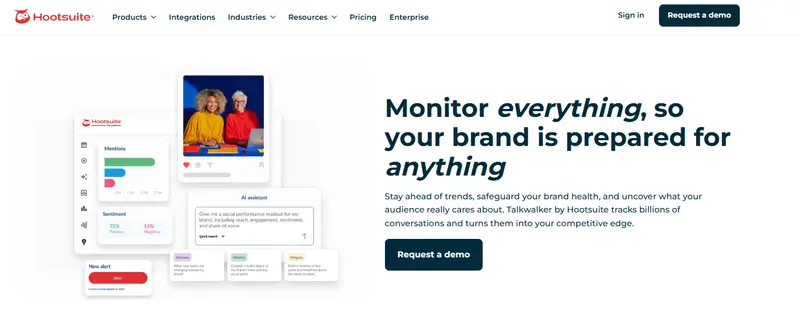
Best For: Small, Medium, and Large Businesses looking for an all-in-one platform for social media management, analytics, reporting, and social listening.
Pricing: Starts at $99 per user/month. Enterprise pricing available.
Data Sources: Facebook, Instagram, LinkedIn, TikTok, X, YouTube, Pinterest, Threads, websites, and social listening data sources through Hootsuite Listening.
Hootsuite combines social media publishing, engagement, analytics, reporting, and listening within a single platform. Teams can manage multiple social accounts, track performance across channels, monitor audience growth, and create custom reports from one dashboard.
The platform’s analytics capabilities cover both organic and paid social performance, gathered from years of historical data. Users can track engagement, reach, clicks, conversions, and ROI while comparing results across campaigns and networks.
Read More
2. Brandwatch Consumer Intelligence
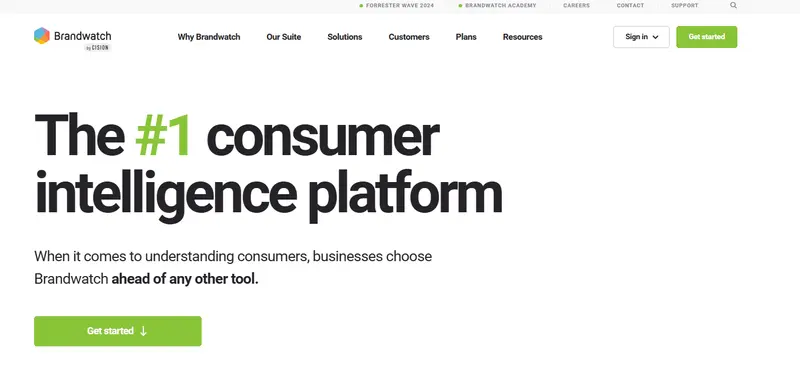
Best For: Medium and Enterprise Companies focused on consumer intelligence, audience research, and social listening.
Pricing: Custom pricing.
Data Sources: Social networks, blogs, forums, news sites, review platforms, and other publicly available online conversations.
Brandwatch focuses on helping organizations understand what people are saying, feeling, and discussing across the wider web. Rather than concentrating primarily on owned social media performance, the platform specializes in consumer intelligence and social listening.
Users can monitor brand mentions, competitor activity, industry conversations, audience interests, and sentiment trends at scale. The platform’s research capabilities make it particularly useful for market research, brand tracking, product launches, and reputation management initiatives.
Read More
3. Sprinklr
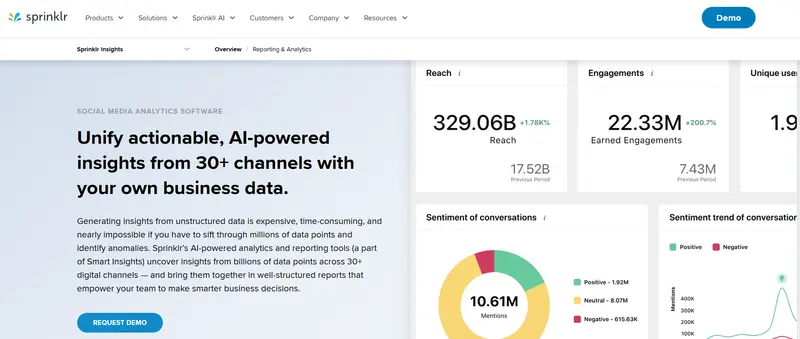
Best For: Large enterprises managing social media across multiple teams, regions, and business functions.
Pricing: Custom pricing.
Data Sources: Social networks, messaging channels, review sites, web sources, customer interactions, and enterprise data integrations.
Sprinklr is one of the most comprehensive enterprise social media platforms on the market. The platform combines social media management, analytics, listening, customer service, marketing operations, and AI-powered insights within a single environment.
Large organizations use Sprinklr to manage complex workflows involving multiple teams, brands, markets, and approval structures. Its reporting and analytics capabilities support both day-to-day performance measurement and executive-level decision-making.
Enterprise governance is a major focus. Organizations can manage permissions, workflows, compliance requirements, and cross-functional collaboration from a centralized platform.
Read More4. Buffer
Best For: Small businesses, creators, and growing marketing teams.
Pricing: Free plan available. Paid plans start at $5 per channel/month.
Data Sources: Facebook, Instagram, LinkedIn, TikTok, X, Pinterest, YouTube, and Threads.
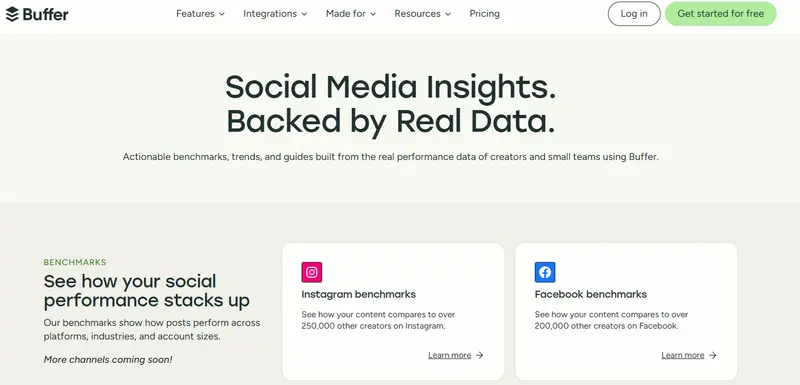
Buffer focuses on simplicity. The platform provides publishing, engagement, analytics, and reporting tools without the complexity often associated with enterprise software.
Analytics features help users track engagement, reach, audience growth, and content performance across supported social networks. Reporting is straightforward, making it easy for smaller teams to understand what is working and where improvements are needed.
The platform’s clean interface and affordable pricing make it particularly appealing to organizations that want practical analytics and social media management capabilities without investing in a larger enterprise solution.
Read More
5. Rival IQ
Best For: Competitive benchmarking and social media competitor analysis.
Pricing: Starts at $239/month.
Data Sources: Facebook, Instagram, LinkedIn, TikTok, X, YouTube, and publicly available competitor data.
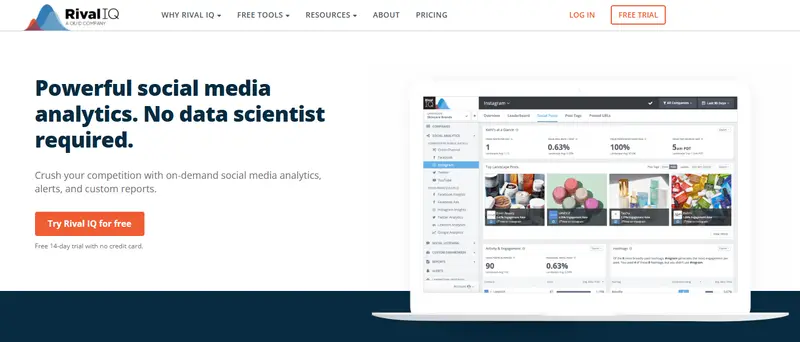
Rival IQ helps marketers understand how their social media performance compares to competitors. The platform specializes in benchmarking, competitive analysis, social audits, and industry reporting.
Users can track competitor content, engagement rates, audience growth, posting frequency, hashtag performance, and emerging trends across multiple social networks. Automated alerts highlight significant changes in competitor activity, making it easier to spot opportunities and threats.
Many analytics platforms include basic competitor tracking. Rival IQ’s focus on benchmarking and market comparison makes it particularly useful for organizations that want deeper competitive insights.
Read More6. Meltwater
Best For: Media intelligence, brand monitoring, and reputation management.
Pricing: Custom pricing.
Data Sources: Social networks, online news publications, blogs, forums, podcasts, review sites, broadcast media, and other publicly available digital sources.
Meltwater helps organizations monitor and analyze conversations across both social media and the broader media world. The platform combines social listening with media intelligence, allowing teams to track brand mentions, industry trends, competitor activity, and media coverage from a single interface.
Read MoreHow to Choose the Right Social Media Data Platform
The best social media data platform depends less on features and more on the type of questions your organization needs to answer. Analytics, listening, reporting, and intelligence platforms often overlap, but each category serves a different purpose.
Choose an Analytics Platform if Performance Measurement Is Your Priority
Marketing teams focused on content performance, engagement, audience growth, and campaign reporting typically benefit most from analytics-focused platforms.
Hootsuite, Sprout Social, and Buffer all fall into this category. These platforms help teams understand which content drives results and how social media contributes to broader marketing objectives.
Choose a Consumer Intelligence Platform if You Need Audience Insights
Audience behavior extends beyond your own social media accounts. Consumer intelligence platforms help organizations understand what customers are discussing, how they feel about brands, and which trends are gaining momentum.
Brandwatch is particularly useful for organizations that rely on market research, audience analysis, trend identification, and brand perception monitoring.
Choose an Enterprise Platform if Multiple Teams Need Access
Large organizations often require approval workflows, governance controls, permissions, compliance tools, and advanced reporting capabilities.
Sprinklr is designed for these environments. Enterprise teams managing multiple brands, markets, and departments often need operational capabilities that go beyond standard analytics and reporting tools.
Choose a Competitive Intelligence Platform if Benchmarking Matters
Performance metrics become more valuable when viewed alongside competitor data.
Rival IQ helps organizations understand how their content, engagement rates, audience growth, and publishing strategies compare to competitors. Agencies and in-house marketing teams often use benchmarking data to identify opportunities and justify strategic decisions.
Choose a Media Intelligence Platform if Reputation Management Is Important
Brand perception is influenced by far more than social media posts.
Organizations with active public relations programs often need visibility into news coverage, media mentions, industry publications, and broader online conversations. Meltwater helps connect social listening data with earned media monitoring, creating a more complete view of brand visibility and reputation.
Consider Budget, Team Size, and Operational Complexity
Smaller organizations often prioritize ease of use and affordability. Larger organizations may place greater value on governance, workflow management, integrations, and advanced reporting.
The most expensive platform is not always the best option. Teams often achieve better results by selecting a platform that aligns closely with their reporting requirements, decision-making processes, and internal workflows.
What Data Should a Social Media Data Platform Track?
Social media data platforms vary widely in their capabilities, but the most valuable solutions help organizations move beyond basic engagement metrics. The goal is not simply to collect data. The goal is to gather information that supports better marketing decisions, stronger customer understanding, and measurable business outcomes.
Audience Data
Audience data helps marketers understand who engages with their brand and content. Most platforms provide information on demographics, locations, interests, languages, and audience growth over time.
These insights can help identify whether campaigns are reaching the intended audience and reveal opportunities to refine targeting, messaging, and content strategies.
Content Performance Data
Content performance remains one of the most commonly tracked categories.
Metrics such as reach, impressions, engagement, clicks, video views, saves, and shares help marketers understand which content resonates with audiences and which formats drive results. Tracking performance across multiple social networks also makes it easier to identify channel-specific trends and optimize future campaigns.
Competitive Intelligence Data
Understanding your own performance is only part of the picture.
Competitive intelligence data provides context by showing how competitors perform across social channels. Organizations can compare engagement rates, audience growth, posting frequency, content strategies, and share of voice to identify opportunities and benchmark performance against industry peers.
Social Listening Data
Social listening platforms collect information from public conversations happening across social networks, forums, blogs, review sites, and online communities.
Organizations use this data to monitor brand mentions, analyze sentiment, track campaign impact, identify emerging trends, and understand how audiences discuss products, services, and competitors outside owned social channels.
Business Impact Data
The most valuable social media insights often connect directly to business outcomes.
Leading platforms help organizations measure website traffic, conversions, leads, customer acquisition, and revenue generated through social media efforts. Connecting social performance to business metrics makes it easier to demonstrate ROI and justify future investments.
Organizations evaluating social media data platforms should focus less on the number of available metrics and more on whether the platform provides the specific data needed to support business objectives, campaign measurement, audience research, and strategic decision-making.
Turning Social Data Into Better Decisions
Social media data platforms have evolved far beyond engagement tracking and reporting. Today's leading platforms help organizations understand audiences, monitor competitors, identify trends, measure business impact, and make more informed marketing decisions.
The right platform depends on your goals. Also, organizations that align platform capabilities with business objectives are more likely to turn social data into meaningful action.
Frequently Asked Questions
What is a social media data platform?
A social media data platform collects, organizes, analyzes, and visualizes information from social networks and other digital sources. Organizations use these platforms to measure performance, understand audiences, monitor conversations, and support marketing decisions.
How is a social media data platform different from a social media analytics tool?
Social media analytics tools primarily focus on measuring performance across owned social channels. Social media data platforms often provide broader capabilities, including social listening, audience intelligence, competitive benchmarking, reporting, and consumer insights.
What data can social media data platforms track?
Most platforms track engagement, reach, impressions, clicks, audience growth, demographics, competitor activity, brand mentions, sentiment, website traffic, conversions, and campaign performance. Available data varies by platform and use case.
Which social media data platform is best for enterprise organizations?
Enterprise organizations often require advanced governance, workflow management, permissions, reporting, and listening capabilities. Sprinklr is one of the most widely used enterprise platforms, while Hootsuite and Brandwatch also offer enterprise solutions.
What is the best social media analytics platform for small businesses?
Buffer is a popular option for small businesses because it combines social media management and analytics with a simple interface and affordable pricing. Hootsuite may also be a good fit for growing teams that need broader functionality.
Are free social media analytics tools worth using?
Free tools can provide useful insights for smaller organizations and individual creators. Larger teams often require more advanced reporting, historical data, benchmarking, integrations, and collaboration features that are typically available through paid platforms.
How do social media data platforms collect information?
Most platforms collect information through official APIs and integrations with social networks. Some also gather publicly available data from blogs, forums, news sites, review platforms, and other online sources to support listening and intelligence capabilities.
Why is social media data important for marketers?
Social media data helps marketers understand audience behavior, evaluate campaign performance, identify trends, measure ROI, and make informed decisions. Reliable data can improve content strategies, optimize spending, and strengthen overall marketing performance.


