
What happens when influencer marketing meets performance marketing? In 2026, that collision defines Instagram affiliate marketing.
As Meta doubles down on shoppable posts, affiliate tags, and in-app checkout, the line between creator content and commerce has all but disappeared. But with new monetization tools come new complexities: tougher disclosure rules, fluctuating commission tiers, and attribution systems that still don’t talk to each other.
Brands and creators are asking the same questions: Which affiliate formats still drive real revenue? How do you track conversions when audiences jump between Reels, Stories, and external checkouts?
Emerging patterns show a shift toward hybrid compensation models, native tagging workflows, and transparent reporting that blends Meta's data with affiliate dashboards.
Success on Instagram is about smarter integration, compliance, and the ability to prove what actually converts.
The New Affiliate Tagging Flow
Instagram’s commerce and affiliate tools have matured to allow creators and brands to tag products more fluidly. However, the tools are still tightly coupled with Instagram Shopping, product catalogs, and Meta’s creator/affiliate infrastructure.
Here's what works today on Instagram and how to structure your tagging flow.
Instagram’s Affiliate Content Definition & Prerequisites
Before jumping into tagging flows, it’s crucial to understand Instagram’s definitions and requirements:
- Instagram (via Meta) defines affiliate content as “any content shared by an affiliate creator which includes a link, tag, or mention of eligible products.”
- To use product tags (and thus tag via affiliate), a creator or brand must have shopping enabled: a connected product catalog, approval via Meta’s commerce eligibility checks, and compliance with commerce policies.
- Not every region or account has access. Product tagging, shops, and checkout behaviors vary by country and by whether Instagram Checkout is enabled.
- Creators also need to respect branded content rules, even if the creator is tagging a product rather than tagging a business directly; use of the Paid Partnership label is required.
Thus, tagging affiliate content must ride on top of Instagram’s commerce infrastructure.
Tagging Products in Posts, Carousels & Reels
Once shopping is enabled and the catalog is connected, creators can tag products in various formats:
- Feed posts/carousels: In the post composer, there’s a “Tag Products” option. The creator can tap specific items in the image or video and map them to products in the connected catalog.
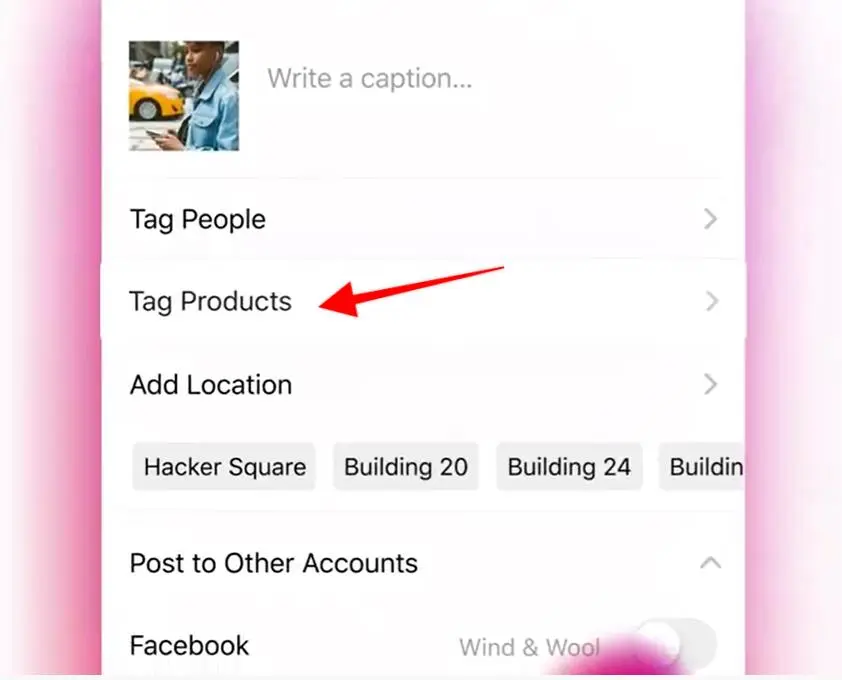
- Limits: up to 20 product tags per post. For carousels, there is a limit of up to 5 tags per individual slide (but up to 20 overall).
- Reels: Similar tagging is allowed in Reels content via the “Tag Products” option during composition.
- Stories: Creators can use Product Link Stickers or product stickers to tag items in Stories. The tapping behavior moves viewers to a product detail page within Instagram.
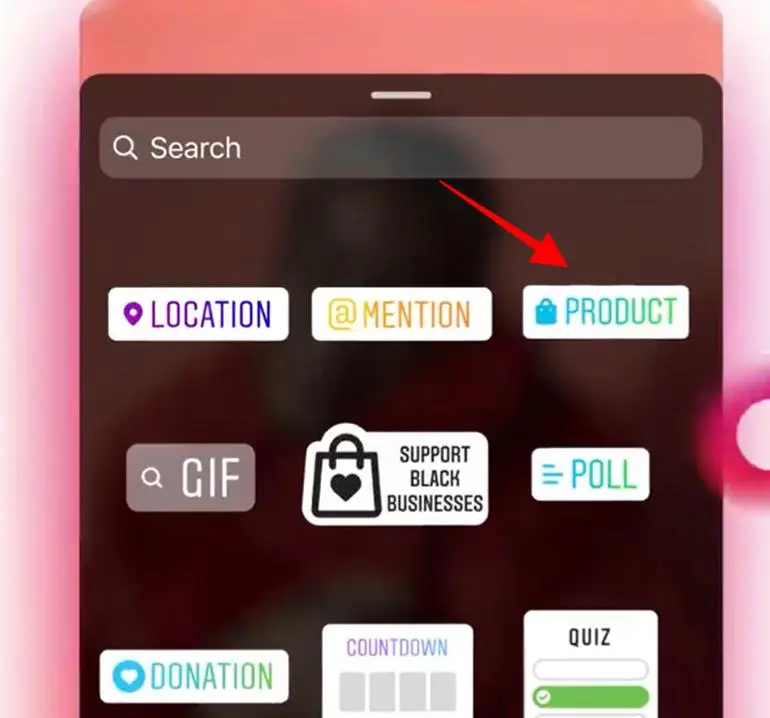
These tags let users tap and view the product detail (sourced from the catalog) without leaving the app. The smoother experience helps reduce drop-off in the conversion journey.
Boosting Affiliate-Tagged Content via Affiliate Boosting Program
One of Instagram’s newer features is the Affiliate Boosting Program: Brands can boost affiliate (tagged) content created by creators while preserving the affiliate tracking path.
- When a creator shares affiliate content on Instagram, that content becomes eligible to be used in ads under that program.
- The boosting is implemented via “partner codes” or tags that maintain the revenue share structure even as the content is promoted.
So you can treat creator affiliate content as an ad asset and amplify it, without breaking the affiliate link or tagging logic.
Tagging Flow Best Practices & Edge Cases
- Consistency: Use the same tag/catalog mapping across formats (posts, Reels, Stories) to ensure attribution coherency.
- Fallback logic: If a product is delisted or stock is unavailable, ensure the link gracefully handles it (e.g., “out of stock” notice).
- Tag persistence: If content is remixed, reposted, or reused (e.g. via Reels remix), check whether the product tag metadata survives — sometimes it doesn’t, depending on how Instagram treats derivative content.
- Daily/rate limits: There are limitations on how many product-tagged posts you can publish in a rolling 24-hour period (Instagram imposes caps).
- Catalog sync: Keep your product catalog up to date (price changes, variant updates, inventory) so tags always resolve correctly.
Commission Bands by Category: What’s Paying in 2026
Affiliate marketing on Instagram has matured into a structured, category-based reward system. In 2026, commission bands vary significantly by vertical, campaign type, and whether creators use affiliate tags tied to Instagram’s commerce ecosystem or traditional affiliate links tracked externally (like LTK, Amazon, or Shopify Collabs).
Understanding where payouts sit and what affects them helps marketers design incentive structures that balance reach, relevance, and ROI.
Evolving Commission Models on Instagram
When Meta first introduced affiliate features in 2021, rates were fixed and funded by Meta itself. That pilot ended in 2023, but the model that replaced it — brand-defined commission bands — has become standard.
Brands now set their own percentages inside Commerce Manager or through third-party affiliate integrations such as Impact, Rakuten, or Shopify Collabs.
In this setup, creators earn a percentage of every sale driven via their Instagram affiliate marketing content. The payout is tracked through in-app affiliate tags or synced tracking links, depending on the integration. The most common structure uses tiered incentives:
- A base commission (5–10%) for all sales.
- A performance bonus (up to +5%) for hitting volume thresholds or conversions from Reels/Stories.
- Category multipliers for high-margin verticals like beauty and wellness.
Average Commission Bands by Category
| Category/Vertical | Typical Commission Range (Based on Public Affiliate Data) | Notes & Examples |
|---|---|---|
| Beauty & Cosmetics | ~ Up to 10% | Sephora’s affiliate program reports “up to 10%” commission. |
| Fashion/Apparel | ~ 10% to 15% | Several fashion affiliate programs list 10–15% ranges. |
| Technology/Electronics | ~ 2 % to 4% | Physical product commissions often range from 2–12%, but electronics tend to fall at the low end (2–4%) in affiliate benchmarks. |
| Digital Products/SaaS/ Subscriptions | ~ 20% to 70% | Digital goods often carry much higher commission rates; for SaaS, 20–70% is commonly cited in affiliate market overviews. |
| Home/Kitchen/Lifestyle Goods | ~ 3% to 5% | Home & kitchen products on Amazon affiliate programs often land in 3.5% to 4.5% range. |
| Health/Wellness/Supplements | ~ 10% to 20% | Some benchmarks for health and wellness suggest 10–20% or more. |
Key Caveats & Interpretive Notes:
- These ranges come from affiliate networks and brand affiliate program listings (not Instagram-specific).
- Instagram’s commission structure is not standardized by Meta; brands and affiliate setups determine the actual percentage.
Dynamic Bonuses & Hybrid Offers
Brands running Instagram affiliate programs increasingly pair percentage commissions with dynamic bonuses and hybrid pay to reward performance without overcommitting fixed fees. Two widely used affiliate infrastructures make this possible:
Dynamic/Rule-Based Commissioning
Networks like Rakuten Advertising let advertisers set dynamic commissioning rules. For example, higher rates on certain product categories, SKUs, or audience segments, and even tiered month-end step-ups once sales thresholds are hit.
This includes Tiered Offers (standard/progressive), Coupon Commissioning (exclusive or non-commissionable codes), and audience-based payouts via Audience Engine. These tools formalize “bonus” logic on top of baseline commissions and are commonly used alongside creator content on Instagram.
Dynamic Payouts & Hybrid Models
Impact.com supports Dynamic Payouts (tiered incentives and customized rates) and encourages hybrid compensation—a guaranteed flat fee plus commission and/or performance bonuses—which many brands adopt for creator collaborations they amplify on Instagram.
On the marketplace side, LTK (RewardStyle) publishes platform benchmarks indicating that retailers set their own commission rates, with averages commonly cited between 10–25% (brand average 16%).
LTK also provides Product Commission Comparison so creators can choose higher-paying retailers—effectively a market-driven “bonus” dynamic without changing content format on Instagram.
Finally, category economics still shape baseline rates: for example, Amazon Associates publicly lists lower percentages for electronics than for many lifestyle categories, illustrating why brands often reserve bonus tiers for higher-margin lines or peak promo windows when selling via Instagram content.
Approvals, Disclosures & FTC Alignment
When brands and creators run affiliate promotions on Instagram, they must navigate two overlapping compliance regimes: Instagram’s Branded Content/Paid Partnership tools and the FTC’s (or equivalent jurisdictional) endorsement/disclosure rules.
Missteps can lead to content takedowns, penalties, or reputational harm.
Instagram’s Branded Content/Paid Partnership Approval Flow
Instagram’s native branded content system is the primary mechanism for labeling commercial content on the platform:
- To tag a post as a Paid Partnership, creators use Instagram’s Branded Content tools. In the post composer, under Advanced Settings → Branded Content, the creator toggles “Add Paid Partnership label,” then “Add brand partner,” and tags the relevant business account.
- The partnering brand must be approved as a “business partner” before being taggable; many times creators need to request or be granted branded content permissions.
- Once tagged, the brand can access insights on that post (reach, engagement, etc.), and if the creator enables “Allow business partner to promote,” the brand may boost/run Ads on that post.
- If a post or story is boosted or turned into an ad, it retains the “Paid Partnership” label, ensuring transparency.
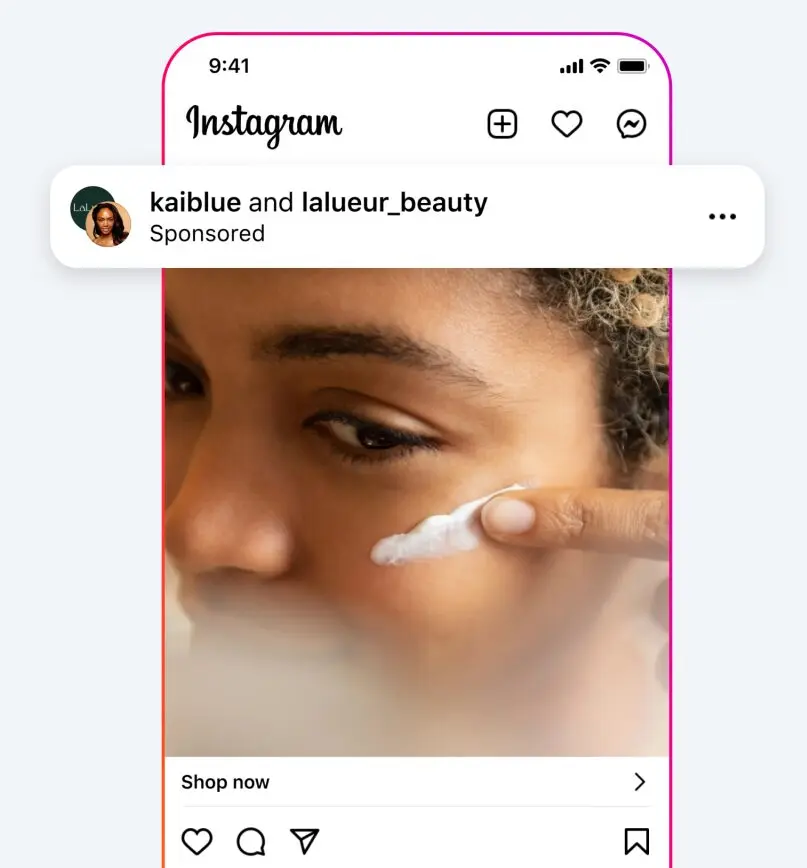
- Instagram defines Branded Content as content “that features or is influenced by a business partner for an exchange of value.”
Thus, any creator posting affiliate content on Instagram (if it meets the “exchange of value” definition) should ideally use the paid partnership tag — or face a mismatch with Instagram’s platform rules.
FTC/U.S. Regulatory Requirements & Best Practices
Even when working purely on Instagram, creators and brands targeting U.S. audiences (or subject to U.S. law) must comply with the FTC’s Endorsement Guides/Disclosures 101:
- Whenever there is a “material connection” (e.g., monetary payment, free products, commissions) between the endorser and the brand, you must clearly and conspicuously disclose it.
- Disclosures must be clear, conspicuous, and unavoidable. They should not be buried at the end of a caption or after a “read more” cut.
- For Instagram posts/Reels, the disclosure should appear early in the caption (before or adjacent to any affiliate link or brand mention).
- For Instagram Stories or video content, the disclosure should be overlayed in the visual (text overlay) or spoken aloud (if audio) so viewers have a chance to see it.
- You must not conceal, camouflage, or obfuscate the disclosure. It must not use small fonts, vague language (just “#sp” or “#ad”) without context, or be hidden in a string of hashtags.
- Even if affiliate programs are international, when content reaches U.S. audiences, the FTC rules may apply; local disclosure rules (EU, UK, etc.) may impose similar or stricter obligations.
Because Instagram affiliate marketing inherently involves a commission arrangement, the content qualifies as an endorsement under FTC rules.
Pitfalls, Takedowns & Enforcement
- Content may be rejected or penalized by Instagram if it violates the branded content policy (e.g., no paid partnership tag when required).
- If you attempt to run a branded content ad without proper partner approval or without the paid partnership label, the ad may be disallowed.
- Non-compliance with FTC rules has led to enforcement actions in other sectors; brands and creators risk fines, demands to refund earnings, or forced disclosures.
- One common mistake: burying the disclosure after a “see more” or in the caption beyond the cut. That fails the FTC’s “conspicuous” standard.
Reporting & Attribution Gotchas
For marketers, the biggest blind spot in Instagram affiliate marketing is attribution. While Meta’s ecosystem now supports in-platform affiliate tagging, its analytics are optimized for discovery and engagement—not necessarily for post-click conversions.
Understanding where tracking works, where it breaks, and how to validate performance data is crucial for accurate ROI measurement.
The Limits of Instagram’s Native Attribution
Instagram’s internal affiliate system provides a streamlined tagging and reporting flow, but still struggles to follow sales across the full funnel.
According to Meta’s Affiliate Tool Terms for Creators, affiliate links and product tags are designed to “attribute purchases of Affiliate Products” to the creator’s post. In practice, this attribution is robust when a user completes their purchase within Instagram’s ecosystem—most notably through Instagram Checkout, which processes payments without redirecting to an external site.
When the sale occurs outside the app, however, Instagram’s visibility narrows. Meta’s help center notes that brands can connect their websites via the Meta Pixel or Conversions API to track off-platform conversions, but such integration is optional, not automatic.
This means that an affiliate tag can record engagement—such as taps and product views—without capturing the resulting sale if the transaction happens elsewhere.
Instagram’s native metrics offer precision within Meta’s walls but fall short once a follower exits to a merchant’s site. The result is often an incomplete attribution trail where engagement data looks strong, yet affiliate revenue appears underreported.
How External Networks Fill the Gaps
Because of those limitations, most performance-driven brands still rely on established affiliate networks to capture conversions beyond Instagram. These include platforms such as Impact.com, Rakuten, and Shopify Collabs, which offer cookie-based and UTM-based tracking independent of Meta’s systems.
Brands should issue each creator a unique referral link or code. These identifiers persist beyond Instagram’s analytics and allow brands to verify sales even if users complete purchases days later or on another device.
Here's an example from a creator promoting a product, sharing their unique code, and disclosing the partnership all in one.
The trade-off is fragmentation: brands end up with two distinct reporting environments. Meta’s dashboard measures reach, engagement, and clicks; the affiliate network measures orders and commissions. Reconciling the two is now part of standard operating procedure for serious affiliate programs.
Where Tracking Still Breaks
Attribution failures on Instagram often come down to how content behaves over time. Stories remain ephemeral; once they expire after 24 hours, any link activity tied to them disappears from Meta’s insights unless saved to Highlights.
Similarly, when creators reuse or remix Reels, affiliate tags may strip out during upload, breaking the connection between view and conversion. These gaps can distort performance metrics and cause brands to underestimate the real sales value of their campaigns.
Cross-device shopping adds another blind spot. Meta’s attribution relies on logged-in session continuity—so if a follower watches a Reel on mobile and later purchases on desktop without being logged in, the event chain breaks. Even when UTMs are used, link-shortening services or third-party scheduling tools sometimes strip parameters, fragmenting the trail in Google Analytics or Shopify dashboards.
These issues don’t necessarily indicate poor campaign performance; they reflect the limitations of how different systems assign credit. Without deliberate setup, a brand might see “zero conversions” in Instagram’s metrics while its affiliate platform registers multiple confirmed sales.
The New Rules of Instagram Affiliate Marketing
Affiliate marketing on Instagram has shifted from quick link drops to a data-driven, compliance-heavy ecosystem where creators act as both storytellers and salespeople. Success now depends on mastering Meta’s built-in affiliate infrastructure—product tagging, checkout integration, and paid-partnership disclosures—while still maintaining accuracy across third-party tracking tools.
The brands thriving in 2026 are the ones treating affiliate partnerships like full-funnel collaborations, not one-off posts. They’re aligning commission tiers with product margins, integrating attribution APIs, and insisting on transparent, FTC-compliant disclosures. The payoff is measurable: when creators tag products consistently, disclose clearly, and route traffic through optimized links, affiliate content can rival paid media for ROI.
In short, Instagram affiliate marketing is no longer about who can share the most links—it’s about who can connect the dots between visibility, trust, and verified conversions.
Frequently Asked Questions
How do affiliate marketing strategies differ for short-form platforms like Instagram and TikTok?
Short-form platforms rely more on high-frequency, low-cost conversions than on long-form persuasion. That’s why successful creators emphasize bite-sized credibility cues—consistent product usage, quick demos, and pinned comments—to trigger impulse buys.
These tactics echo many of the conversion-focused affiliate marketing strategies brands have refined for video-first environments.
What’s the best way to estimate potential affiliate earnings on Instagram?
Before negotiating commission tiers, creators and brands can use data tools like Instagram’s own analytics or a reliable Instagram money calculator to model realistic reach, engagement, and CPM benchmarks based on current follower activity rather than inflated averages.
Are influencer affiliate networks still relevant in 2026?
Yes, especially as brands seek guaranteed tracking compliance. Joining vetted influencer affiliate marketing networks provides fraud detection, automated payouts, and integration with Meta Pixel data—making them essential for programs that manage multiple creators at scale.
How is affiliate marketing different from influencer marketing today?
Affiliate marketing now complements influencer marketing rather than competing with it. While influencer deals still trade on reach, affiliate marketing vs. influencer marketing comparisons show that brands increasingly tie creator compensation to attributed conversions, not vanity metrics.
Which niches perform best for affiliate conversions on Instagram?
Categories with visual immediacy—beauty, fashion, home décor—continue to outperform others. Research into emerging affiliate marketing niches shows that lifestyle micro-influencers convert especially well when promoting mid-priced essentials with repeat-purchase potential.
What macro-trends are shaping affiliate marketing in 2026?
Two defining shifts stand out: AI-driven performance optimization and stricter disclosure enforcement. Both are highlighted among broader affiliate marketing trends that show automation, dynamic commissions, and regulatory oversight driving industry change.
What are current best practices for running compliant affiliate programs?
Strong affiliate governance starts with transparency, creative freedom, and real-time reporting. Many of today’s affiliate marketing best practices emphasize explicit disclosure (#ad or “commission link”), creative diversification, and quarterly auditing of conversion data for consistency.
How can brands protect themselves against fraudulent affiliate activity?
Fraud still accounts for a significant share of wasted spend in digital programs. Implementing device-fingerprinting, multi-factor verification, and periodic audits—combined with dedicated monitoring software focused on fraud prevention in affiliate programs—helps maintain data integrity and safeguard commissions.