
Pick creators the way you hire people, not the way you buy ad space. An ad disappears the moment it scrolls past. A creator partnership leaves two things behind that outlast the campaign:
- A search footprint. Rankings, backlinks, brand mentions, and AI citations that keep working after the campaign ends.
- A public association. The creator's reputation and the brand's reputation, tied together in front of their audience.
Most brands only sort a list by follower count, pick the biggest name the budget covers, and wonder six months later why the traffic faded, and the brand feels a little off.
Follower Count Is the Vanity Metric of Creator Selection
A million followers who never buy is a distraction metric. Emulent has made the same argument about search: ranking #1 is nothing more than a vanity metric when the ranking never converts. The behavior worth paying for shows up in a different column. Sprout Social's 2025 Influencer Marketing Report found that nearly half of surveyed consumers make regular purchases because of creator posts.
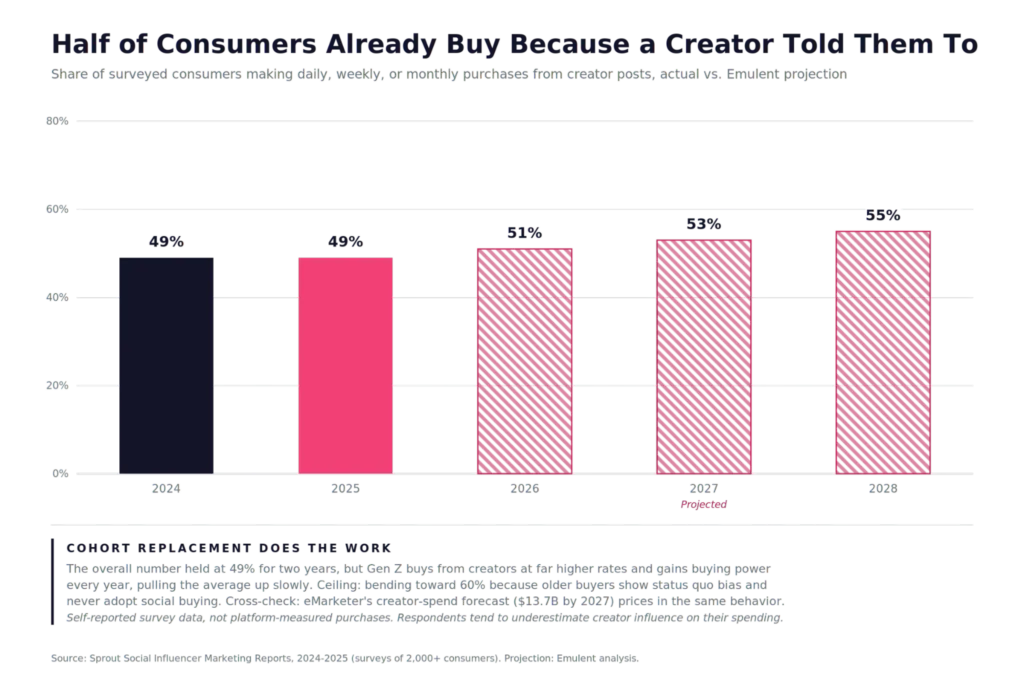
So the first cut in the selection process should never be reach. It should be proof the audience acts. Look for:
- Comment threads where audience members report buying what the creator recommended
- Affiliate results from the creator's past programs
- Repeat deals with the same sponsor. A creator a brand hires twice converted the first time.
Those signals cost nothing to check and beat every follower tier chart ever published.
The Search Footprint: What a Creator Leaves Behind
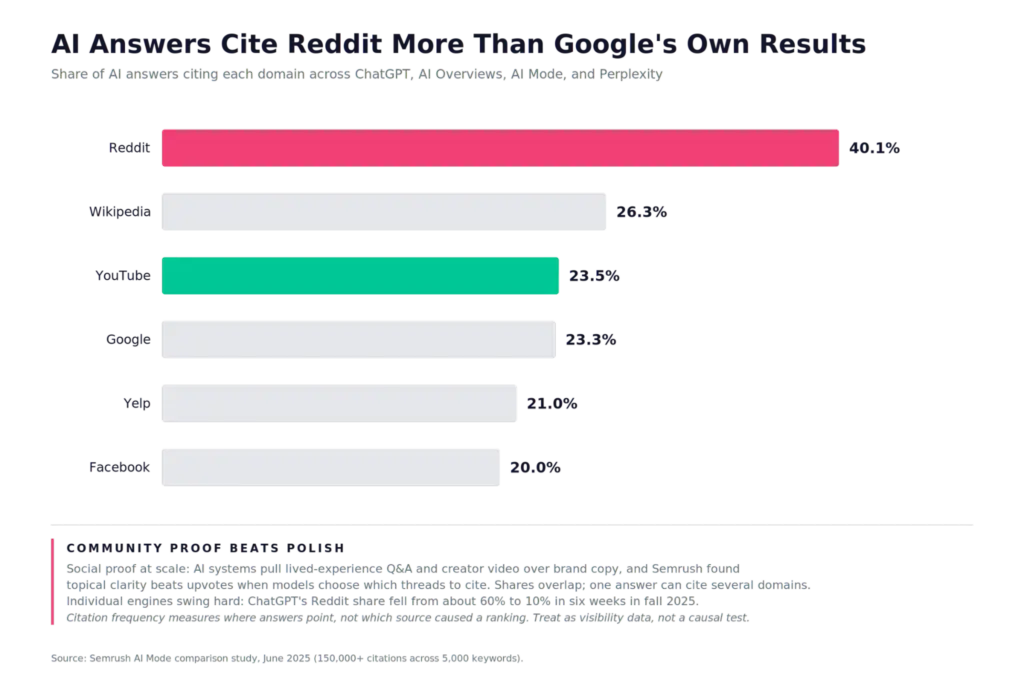
The right creator is a search asset, because the platforms where creators publish their content are now the sources search engines and AI tools use for their answers. Semrush's June 2025 study of 150,000+ AI citations across 5,000 keywords found community and creator platforms, led by Reddit and YouTube, were cited ahead of Google's own results.
A creator who publishes content search engines can index keeps selling for the brand long after the invoice clears. A creator whose work lives only in disappearing Stories does not.
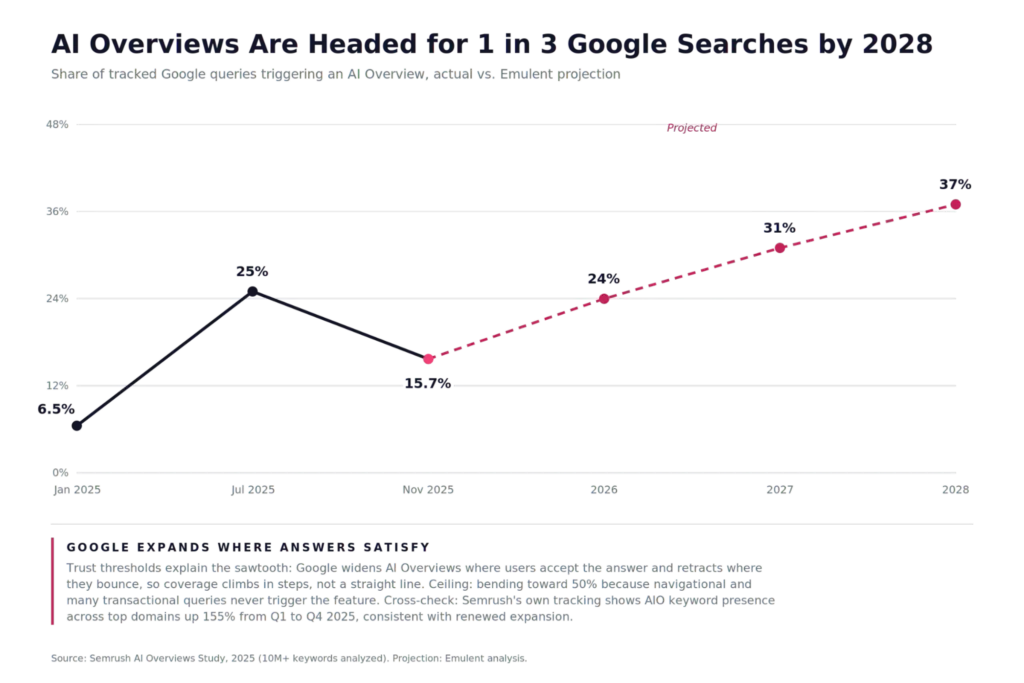
The page those citations feed keeps growing. Semrush's AI Overviews study of 10M+ keywords tracked the share of Google searches triggering an AI Overview through a year of sharp growth and pullback, charted below with the projection through 2028. The sawtooth reads as growth in steps. If that page is where buyers stop reading, the creators a brand picks will decide whether it shows up in the answer.
Before signing any influencer, make sure you are screening for their search footprint. This can be done by:
- Searching the category's buying queries. See if the creator's videos, posts, or threads show up in results, video carousels, or AI answers.
- Checking for crawlable channels. A YouTube channel with keyword-rich descriptions, a podcast with show notes, or an in-depth blog produce pages search engines can index and link to.
- Ask the AI tools directly. Ask ChatGPT and Google's AI Mode who to trust in the niche. A creator the machines already quote transfers that visibility to the brand.
The Influencer and Profound partnership shows how brands may begin analyzing that visibility when selecting creators and planning campaigns.
Why Selection Standards Lag Behind
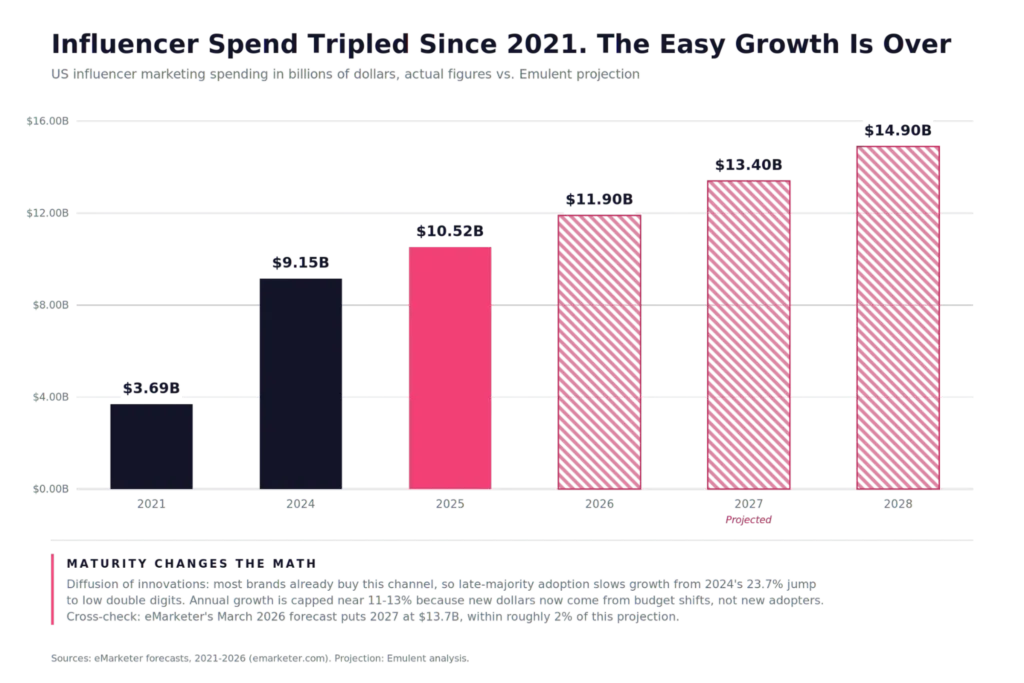
US influencer marketing spending roughly tripled between 2021 and 2025, and eMarketer's March 2026 forecast expects steady growth through 2027.
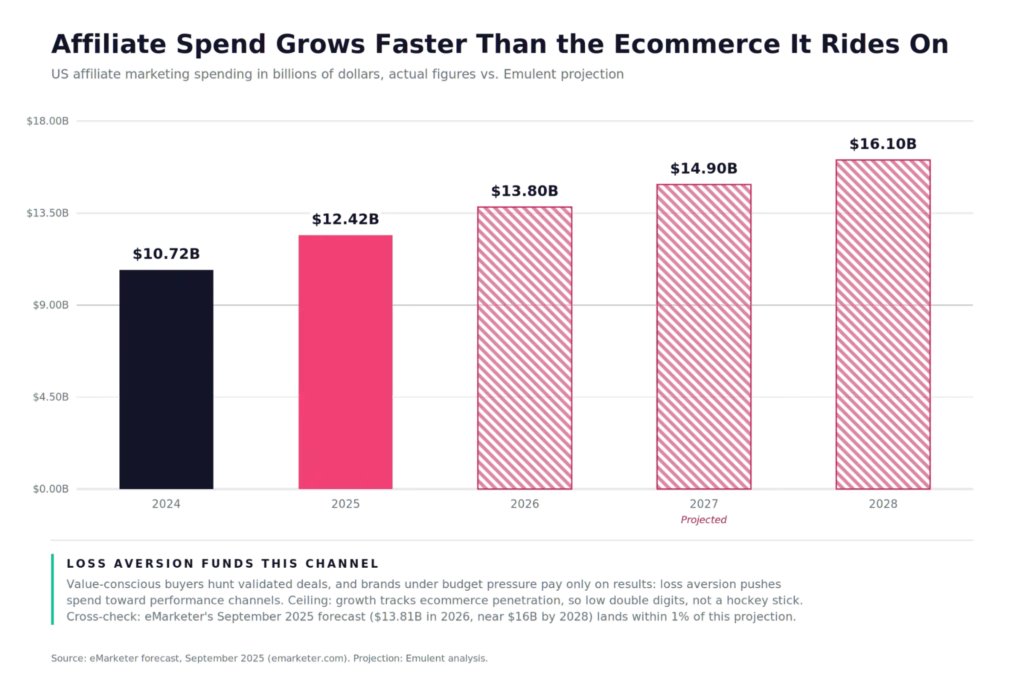
The affiliate side is growing even faster relative to. eMarketer's September 2025 forecast expects the channel to drive billions of dollars in US ecommerce sales in 2026, after crossing $10 billion in spend for the first time in 2024.
Even with these projections of massive growth, brands still rely on outdated methods for choosing their influencer or affiliate creator.
The brands winning in these channels treat the choice as partnership marketing, a lasting relationship with compounding search value, not a media buy with a face.
Culture Fit Is a Screening Process, Not a Vibe
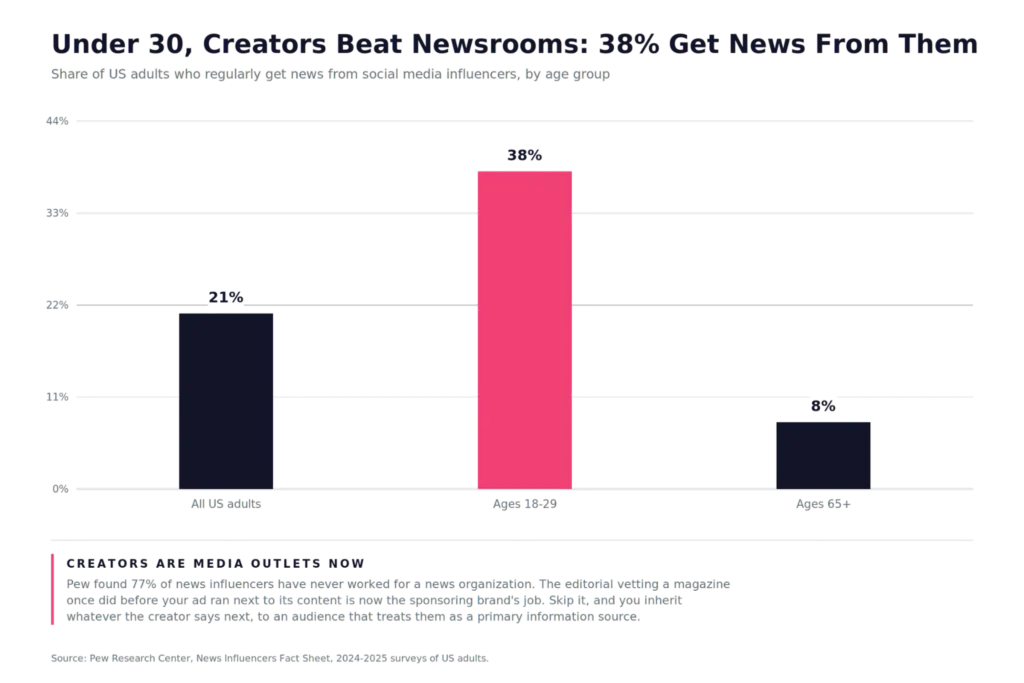
The Pew Research Center's News Influencers Fact Sheet shows how much weight creators now carry as an information source.
The editorial standards a magazine used to enforce before an ad ran beside its content are not used in modern affiliate and creator vetting. Whatever screening happens is the screening the brand does, but it usually does not have a governance plan leading the way.
A good fit should start with the brand's purpose and brand vision. The challenge is that if a company cannot state what it stands for and refuses to do so, it cannot screen anyone against it. From there, culture screening is document review, not intuition:
- Read six months of content, including replies to commenters. The replies are where the real voice lives.
- Pull past sponsorships. Check for competitors, category conflicts, and products the brand's customers would find embarrassing.
- Search the influencer's name plus "controversy," "lawsuit," and "apology."
- Check disclosure habits against the FTC's Endorsement Guides update. The rules require clear, up-front disclosure, and a platform's built-in "paid partnership" label might not be enough on its own. A creator who buries #ad after fourteen hashtags is showing how they treat rules, and the FTC's warning letters name the brand along with the creator.
The strongest culture filter is the one that rejects a high-performing creator whose voice the brand would never allow from an employee.
A creator who has used the product for a month and can describe it in their own words beats a bigger creator reading talking points, every time, on both conversion and risk.
The Vetting Audit Any Brand Can Run This Week
Run every candidate through this before deciding to use them.
- Purchase evidence. Find three unprompted comments or posts where audience members report buying something the creator recommended. None found means the budget is buying reach, not influence.
- Engagement. Divide average likes plus comments on the last 20 posts by follower count. Under 1% on a mid-size account demands an explanation.
- Audience authenticity. Scan their follower quality with a third-party tool. Walk away above roughly 25% suspicious accounts.
- Audience geography. For a brand selling in the US, an audience under 60% US-based makes the reach number fiction.
- Indexable surface. Confirm they publish on at least one crawlable channel: YouTube, a blog, a podcast with show notes, a public newsletter archive.
- Existing search presence. Google the category's top five buying queries. A creator already in results, video carousels, or AI answers brings visibility.
- Link behavior. Check whether past sponsored work included working links to sponsor sites and whether any earned pickup from bloggers or press. Creators whose content gets quoted produce backlinks without being asked.
- AI answer check. Ask ChatGPT and Google's AI Mode for trusted voices in the niche.
- Sponsor history. List every brand deal from the past 18 months. Flag competitors, conflicts.
- Disclosure habits. Verify visible, up-front disclosure on past sponsored posts.
- Voice review. Read six months of content and replies. If a line would get an employee a talking-to, the creator fails, whatever their numbers.
- Repeat-sponsor signal. Look for at least one brand that hired them twice. Renewals are the only public proof a partnership paid.
Fold the brand partners who pass these criteria into your overall brand everywhere optimization plan, so their content, the website, the reviews, and the social presence tell one cohesive story.
The brands that do are the ones still collecting rankings, links, and AI citations from campaigns that ended a year ago.