
TikTok influencer marketing has become one of the most effective ways for brands to reach audiences through creator-led content. Instead of relying on traditional ads, companies collaborate with TikTok creators whose recommendations feel more authentic to their followers.
Research shows how influential these partnerships can be. According to our TikTok influencer marketing research, 64% of TikTok users say advertising influences their purchasing decisions, compared with 46% of the general population. In the United States, 47% of TikTok users also say they trust product recommendations from influencers and celebrities on social media.
For marketers, this creates a powerful opportunity. By partnering with the right creators, brands can tap into TikTok’s discovery-driven algorithm, reach new audiences, and build campaigns that generate both engagement and measurable sales.
- What Is TikTok Influencer Marketing?
- Why Brands Use TikTok for Influencer Marketing
- Types of TikTok Influencers Brands Work With
- How to Run a TikTok Influencer Marketing Campaign
- How to Find TikTok Influencers for Your Campaign
- How Much Does TikTok Influencer Marketing Cost?
- How to Measure TikTok Influencer Marketing Campaign Performance
- Examples of Successful TikTok Influencer Marketing Campaigns
- Turning TikTok Influencer Marketing Into Long-Term Brand Growth
- Frequently Asked Questions
What Is TikTok Influencer Marketing?
TikTok influencer marketing is a strategy where brands collaborate with TikTok creators to promote products, services, or campaigns through short-form video content.
Instead of publishing promotional messages directly from a brand account, companies partner with creators who already have an engaged audience and understand how to communicate in a style that resonates on the platform.
These collaborations can take many forms. Creators may feature a product in their videos, participate in branded TikTok hashtag challenges, review or demonstrate items, or showcase products during livestreams and TikTok Shop promotions.
Because the content is produced by creators rather than brands, it often feels more authentic and aligns better with the platform’s entertainment-driven culture.
The goal of TikTok influencer marketing is not simply exposure. Brands use these partnerships to increase awareness, drive engagement, generate user-generated content, and ultimately influence purchasing decisions among highly active social media audiences.
Why Brands Use TikTok for Influencer Marketing
TikTok has become one of the most powerful platforms for influencer marketing because its design encourages discovery, creativity, and rapid trend adoption.
Unlike many social networks where reach is heavily tied to follower count, TikTok’s algorithm regularly surfaces content from smaller creators to large audiences through the For You feed. This allows influencer campaigns to gain visibility quickly and reach users who may not already follow the creator or the brand.
Several platform dynamics make TikTok particularly effective for creator partnerships.
Reasons Why Brands Use TikTok for Influencer Marketing
Algorithm-Driven Content Discovery
TikTok’s recommendation system prioritizes engaging content rather than established accounts. This means influencer collaborations can generate significant reach even when creators have relatively modest follower counts. A single well-performing video can appear in thousands or even millions of users’ feeds.
Highly Engaged Creator Communities
Many TikTok users actively follow creators for entertainment, trends, and product recommendations. Because these creators have built strong relationships with their audiences, sponsored content often feels more like a personal recommendation than a traditional advertisement.
Native Format for Product Demonstration
Short-form video makes it easy for creators to showcase products in real-world scenarios. Influencers can demonstrate how a product works, participate in trending challenges, or incorporate items into storytelling-style content that feels natural within the platform.
Trend-Driven Virality
TikTok trends spread quickly across the platform. When brands collaborate with influencers who participate in trending sounds, challenges, or formats, campaigns can gain momentum rapidly and generate large volumes of user-generated content.
Together, these factors make TikTok influencer marketing a powerful channel for brands looking to increase awareness, drive engagement, and introduce products to new audiences through authentic creator content.
Industry data further backs these claims:
- 68% of marketers now use TikTok for influencer marketing, making it one of the most widely adopted platforms for creator collaborations.
- Over 50% of brands are allocating more than half of their budgets to TikTok, highlighting its rapid rise as a key channel for creator-led marketing.
- 31% of marketers from our 2026 Influencer Marketing Benchmark Report say TikTok is the platform where they plan to invest the most in influencer marketing.
- 67% of women who use TikTok rely on creator recommendations when deciding what products to purchase, underscoring the influence creators have on buying behavior.
- Over half of Gen Z consumers use TikTok to discover new products, making influencer collaborations an important driver of product discovery on the platform.
These numbers illustrate why many brands see TikTok influencer marketing as more than a trend. For companies looking to build awareness, generate engagement, and influence purchase decisions, creator partnerships on TikTok have become a core part of modern social media strategy.
Types of TikTok Influencers Brands Work With
Not all TikTok influencers are the same. Creators vary widely in terms of audience size, niche focus, and the type of content they produce. Understanding these differences helps brands select partners who can deliver the right balance of reach, engagement, and credibility for their campaigns.
Influencers on TikTok are typically grouped into several categories based on follower count.
Nano Influencers on TikTok
Nano influencers generally have 1,000 to 10,000 followers. While their reach is smaller, they often maintain highly engaged communities and closer relationships with their audiences.
On TikTok in particular, creators in this tier tend to generate exceptionally strong engagement. Many nano influencers achieve average engagement rates slightly above 10%, significantly higher than what larger creator accounts typically produce.
Brands frequently collaborate with nano influencers for niche campaigns, product seeding initiatives, or highly authentic recommendations. Because their audiences tend to be more tightly connected and trust-driven, nano creators can be particularly effective for driving conversations, user-generated content, and early product discovery.
Micro Influencers on TikTok
Micro influencers typically have 10,000 to 100,000 followers. They strike a balance between reach and engagement, making them popular partners for brands running targeted campaigns. Many micro creators specialize in specific niches such as fitness, beauty, technology, or food.
Macro Influencers on TikTok
Macro influencers usually have 100,000 to 1 million followers. These creators can reach large audiences while still maintaining recognizable personal brands. Companies often collaborate with macro influencers when they want to scale awareness across broader audiences.
Mega Influencers on TikTok
Mega influencers have more than 1 million followers and are often well-known public figures or internet personalities. Partnering with these creators can generate massive exposure, but campaigns with mega influencers typically require larger budgets and careful planning.
When planning a TikTok influencer marketing campaign, brands often combine several creator tiers. This approach allows them to balance wide reach from larger influencers with the strong engagement that smaller creators typically deliver.
How to Run a TikTok Influencer Marketing Campaign
Successful TikTok influencer marketing campaigns require more than simply paying a creator to feature a product. Brands typically follow a structured process that ensures the collaboration aligns with their marketing objectives, resonates with the creator’s audience, and produces measurable results.
1. Define Campaign Goals
The first step in any influencer marketing campaign is establishing a clear objective. Different goals require different types of creators, content formats, and performance metrics.
For example:
- A campaign focused on brand awareness may prioritize creators with broad reach and content designed to maximize views and shares.
- A campaign aimed at product discovery might involve tutorials, reviews, or demonstrations that help audiences understand how a product works.
- Brands launching new products often collaborate with multiple creators simultaneously to generate buzz and accelerate exposure.
Clear campaign goals also determine how success will be measured. Awareness campaigns often track views, impressions, and engagement rates, while performance-driven campaigns may focus on website traffic, product page visits, or sales generated through creator links or TikTok Shop.
Establishing these objectives early helps ensure that every part of the campaign, from creator selection to content format, supports the same outcome.
2. Identify the Right Creators
Selecting the right influencers is one of the most important factors in campaign success. While follower count can influence reach, it should not be the only criterion brands consider.
Marketers typically evaluate several factors when selecting TikTok creators:
- Audience demographics such as age, location, and interests
- Engagement rate, which reflects how actively viewers interact with the creator’s content
- Content style and storytelling approach
- Past brand collaborations and campaign results
Brands also frequently use specialized tools to identify creators more efficiently. Platforms such as TikTok Creator Marketplace (TikTok One), influencer marketing platforms, and social listening tools allow marketers to filter creators by niche, audience size, engagement levels, and audience demographics.
Many companies combine multiple creator tiers within a campaign. For example, they may partner with macro influencers to generate broad awareness while working with micro or nano creators to drive higher engagement and authenticity.
3. Develop a Creative Brief
Once creators are selected, brands typically provide a campaign brief outlining the objectives and key messaging for the collaboration. The brief helps ensure that creators understand the campaign goals while still giving them creative freedom.
A well-structured TikTok influencer campaign brief usually includes:
- Campaign objectives and target audience
- Key product features or messaging points
- Content format guidelines
- Campaign timeline and posting schedule
- Disclosure requirements for sponsored content
Unlike traditional advertising, TikTok audiences respond best to content that feels organic. Overly scripted messaging often performs poorly because it disrupts the creator’s natural storytelling style.
For this reason, many brands provide creative direction rather than strict scripts, allowing creators to interpret the product or message in a way that fits their established content style.
Check Out Our Guide
Our detailed guide on How to Create an Influencer Campaign Brief explains how to structure briefs that give creators clear direction while still leaving room for authentic storytelling.
It covers key elements such as messaging frameworks, deliverables, visual direction, and creator-friendly formats that help campaigns run more efficiently from kickoff to content delivery.
4. Launch and Amplify Content
After the influencer publishes the content, brands often expand its reach through additional distribution strategies. TikTok’s algorithm already supports organic discovery, but many campaigns benefit from paid amplification.
One common approach is using Spark Ads, a format that allows brands to promote an influencer’s existing TikTok post directly through paid advertising. This method maintains the original creator post while allowing the brand to target specific audiences and increase impressions.
Brands may also extend the life of influencer content by:
- Reposting videos across other social platforms
- Embedding creator videos in product pages or landing pages
- Incorporating creator clips into paid social ads
- Encouraging audiences to participate in branded challenges or trends
This multi-channel distribution helps maximize the value of each piece of influencer-generated content.
5. Measure Campaign Performance
Evaluating campaign performance is essential for understanding which creator partnerships deliver the best results. TikTok influencer campaigns generate a wide range of data that marketers can use to assess effectiveness.
Common performance metrics include:
- Views and impressions, which measure content reach
- Engagement rate, including likes, comments, and shares
- Click-through rate, indicating how many viewers take action
- Conversions or sales, especially when creators use tracked links or TikTok Shop
Many brands also track qualitative signals, such as comment sentiment or user-generated content generated from campaigns. These insights help marketers understand how audiences perceive both the creator partnership and the promoted product.
By analyzing these metrics, companies can refine their influencer marketing strategies and identify creators who consistently deliver strong results.
How to Find TikTok Influencers for Your Campaign
Identifying the right creators is a critical step in any TikTok influencer marketing strategy. While some brands rely on manual research, many now combine multiple discovery methods to identify creators whose audiences align with their campaign goals.
Below are several common approaches marketers use to find TikTok influencers.
Use the TikTok Creator Marketplace (TikTok One)
TikTok’s Creator Marketplace is the platform’s official tool for connecting brands with creators. It allows marketers to search for influencers using filters such as audience demographics, engagement rates, content categories, and geographic location.
Brands can also review creator performance data, analyze past collaborations, and contact creators directly through the platform. This makes Creator Marketplace, or TikTok One, one of the most reliable ways to discover influencers already experienced in brand partnerships.
@tiktokforbusiness @tegaalexander shows easy it is to find the right creators for your campaigns using the TikTok Creator Marketplace! #tiktokallaccesss #canneslions2022
Search TikTok Hashtags and Trends
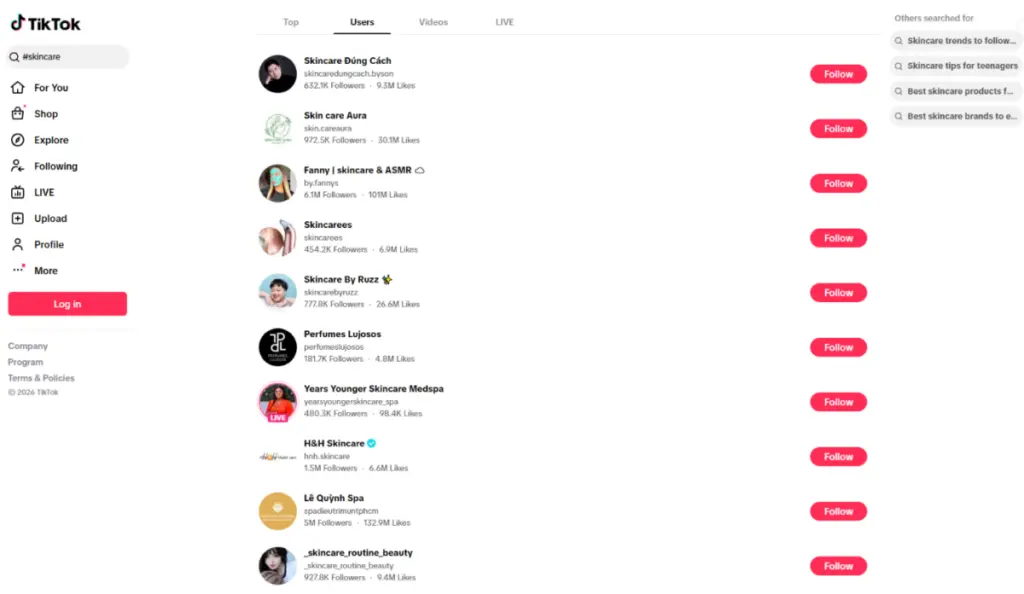
Many marketers discover creators by monitoring trending hashtags, sounds, and challenges on the platform. Searching relevant hashtags related to a brand’s niche can reveal creators who consistently produce content within that category.
For example, a beauty brand might search hashtags related to skincare routines or product reviews to identify creators who regularly produce beauty-focused content and attract engaged audiences interested in that niche.
Use Influencer Marketing Platforms
Influencer marketing platforms provide more advanced discovery tools than manual searches. These platforms maintain large creator databases and allow brands to filter influencers by niche, audience demographics, follower size, and engagement metrics.
They also often include campaign management features such as messaging tools, performance tracking, and payment management, which can simplify large influencer campaigns.
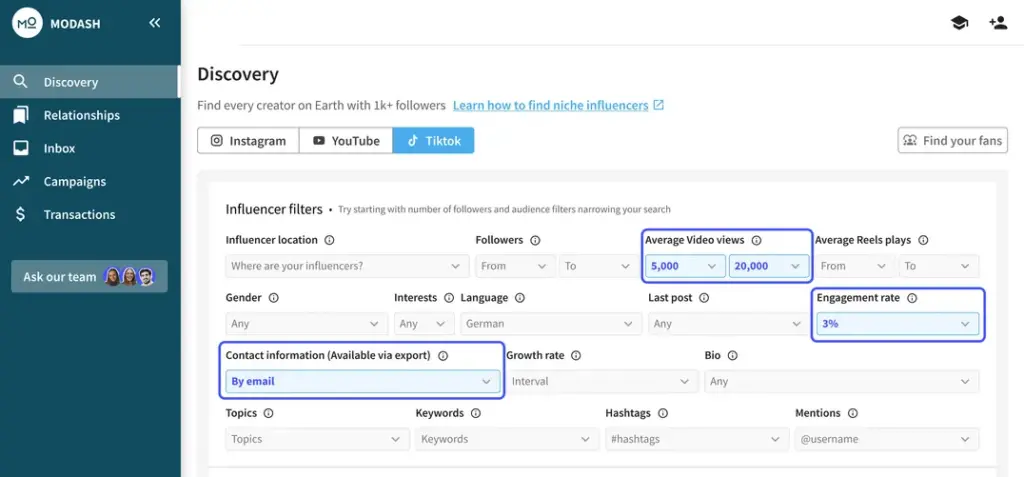
For example, Modash is a specialized platform that brands use to identify the right TikTok creators for their campaigns. The platform even comes with a free TikTok influencer search tool that lists TikTok influencers with over 1,000 followers based on audiences, views, location, and more.
Analyze Your Existing Audience
Some of the most effective creators to work with may already be customers or brand advocates. Many companies identify potential influencer partners by reviewing users who frequently mention their brand, tag products in videos, or create organic content related to their products.
Collaborating with these existing fans can lead to particularly authentic partnerships, since the creators are already familiar with the brand and its products.
Monitor Competitor Collaborations
Another useful discovery method is analyzing influencer partnerships run by competitors. Observing which creators are already producing sponsored content within a particular industry can help brands identify influencers who are experienced in promoting similar products.
This approach can reveal creators who already understand the category and whose audiences may be receptive to similar brands.
How Much Does TikTok Influencer Marketing Cost?
The cost of TikTok influencer marketing varies widely depending on the creator’s audience size, engagement levels, content format, and the scope of the collaboration. While some brands run small product seeding campaigns with nano creators, others invest heavily in partnerships with high-profile influencers capable of reaching millions of viewers.
Several factors influence how much brands pay for TikTok influencer campaigns.
Factors Impacting TikTok Influencer Marketing Costs
Influencer Tier
Follower count remains one of the most important pricing variables. Creators with larger audiences typically command higher fees because they can deliver greater reach.
Typical pricing ranges look like this:
- Nano influencers (1K–10K followers): $20 to $100 per post.
- Micro influencers (10K–100K followers): $200 to $800 per post.
- Macro influencers (100K–1M followers): $800 to $5,000 per post.
- Mega influencers (1M+ followers): $5,000 to $50,000 or more per campaign.
*Prices are considered averages. In many cases, pricing may be much higher.
However, engagement rate and niche authority can sometimes outweigh follower count when brands evaluate pricing.
Content Complexity
The type of content a brand requests plays a major role in influencer pricing because different formats require varying levels of time, production effort, and creative planning.
A simple product mention filmed on a smartphone may take only a few minutes to produce, while a detailed tutorial, scripted storyline, or multi-video campaign can require significantly more preparation, filming, and editing.
Common TikTok influencer content formats include:
- Product demonstrations: Short videos showing how a product works, often highlighting key features or real-life usage.
@taxinoodle Trying the number 1 acne and calming serum from @dear, Klairs for my irritated skin based on real Koreans’ recommendations! Now available in the US on TikTok Shop and Amazon AD #acnetreatment #kbeauty #klairs #klairsegfserum @4AM Marketing – Saebyeok Naesi
- Problem–solution storytelling: Content that starts by presenting a relatable problem before introducing the product as the solution.
@leeskincare7 AD Underrated Korean soothing serum Especially for oily to combo acne skin type this serum could be so helpful. Another holy grail serum 🔖 #skintok #skincare #kbeautyroutine #Torriden #kbeauty #koreanskincare #glowingskin #acneskin #cica
- Trend participation: Videos that integrate the product into trending sounds, challenges, or popular TikTok formats to increase discoverability.
@emmarosee66 Testing this acne serum for 7 days… here’s what happened 👀 #salicylicacid #girlythings #drleodryinglotion #koreanskincare #tiktokshopstockup
- UGC-style reviews: Authentic product reactions, unboxings, or personal reviews that resemble organic user-generated content.
@judyylinn let’s unbox my favourite serum 🍃 #bkacne #serum #watergel #skincare #unboxing
- Livestream product promotions: Real-time demonstrations or Q&A sessions where creators showcase products and interact directly with viewers.
As production complexity increases, influencers typically charge higher fees to account for the additional time, planning, and creative work required to produce the content.
Usage Rights and Paid Promotion
Another major factor that influences campaign pricing is how the brand plans to use the creator’s content beyond the initial TikTok post. Many brands request usage rights, which allow them to reuse influencer-generated content in other marketing channels.
These rights can include:
- Promoting the content through paid ads
- Republishing the video on brand-owned social accounts
- Using clips on website or eCommerce product pages
- Incorporating creator footage into broader advertising campaigns
Since this content can continue generating value for the brand long after the original post is published, influencers often charge additional fees when granting extended usage rights.
One of the most common paid promotion strategies on TikTok is Spark Ads, which allows brands to boost an influencer’s original post directly through TikTok’s advertising system.
This approach preserves the creator’s identity and engagement signals while enabling brands to target specific audiences and scale the reach of high-performing influencer content.
Because Spark Ads can significantly extend the lifespan and reach of creator videos, usage rights for this type of promotion are often negotiated as part of the campaign agreement.
Performance-Based Compensation
While many influencer partnerships involve a fixed payment for content creation, an increasing number of campaigns incorporate performance-based compensation models. These structures reward creators based on the measurable results their content generates.
Common performance-based models include:
- Affiliate commissions: Creators earn a percentage of sales generated through their unique affiliate links or discount codes.
- Sales incentives: Brands offer bonus payments when creators exceed specific performance targets such as conversions, views, or engagement levels.
- TikTok Shop revenue share: Creators receive commissions when viewers purchase products directly through their videos or livestreams via TikTok Shop.
Performance-based compensation can benefit both sides of the partnership. Brands reduce financial risk by linking payments to results, while creators have the opportunity to increase earnings when their content performs well.
How to Measure TikTok Influencer Marketing Campaign Performance
Running a TikTok influencer campaign is only the first step. To understand whether a collaboration is successful, brands need to track performance using the right metrics.
These insights help marketers evaluate creator partnerships, optimize future campaigns, and determine the return on their influencer marketing investment.
Several key metrics are commonly used to measure TikTok influencer marketing performance.
Views and Reach
- Video views: The number of times the influencer’s content was watched.
- Reach: The total number of unique users who saw the video.
These metrics help brands evaluate how widely the influencer content was distributed and how effectively it captured audience attention.
Engagement Metrics
- Likes: Indicate audience appreciation for the content.
- Comments: Provide insight into audience sentiment and conversation around the product.
- Shares: Show how often viewers pass the content to others.
High engagement often signals that the influencer’s audience finds the content authentic and relevant.
Clicks and Traffic
For campaigns designed to drive website visits, brands often track how many viewers click links in creator bios, product tags, or campaign landing pages. Tracking links, affiliate links, and unique discount codes can help attribute traffic to specific influencers.
Conversions and Sales
For eCommerce campaigns, the most important metric is often sales generated through influencer content. Brands can measure this using affiliate links, promo codes, or TikTok Shop analytics to determine how many purchases resulted from a creator collaboration.
Audience Sentiment and Brand Mentions
Beyond quantitative metrics, many brands analyze comments, mentions, and user-generated content created in response to influencer campaigns. Positive audience sentiment and organic conversations can indicate that a campaign successfully strengthened brand perception.
By combining these metrics, marketers can identify which creators deliver the strongest results and refine their TikTok influencer marketing strategies over time.
Examples of Successful TikTok Influencer Marketing Campaigns
Many brands have used TikTok influencer marketing to generate massive reach, encourage user participation, and drive product discovery. Successful campaigns typically combine creator storytelling, platform-native trends, and interactive formats that encourage viewers to engage with the brand.
Below are several notable examples of influencer-driven campaigns on TikTok.
e.l.f. Cosmetics
One of the most widely recognized TikTok influencer campaigns came from e.l.f. Cosmetics, which launched the #EyesLipsFace challenge. Instead of relying solely on traditional advertising, the brand partnered with creators to produce videos using a custom soundtrack and encouraged users to participate in the challenge.
@lexallynn Genius 🤯❤️ @e.l.f. Cosmetics #elfcosmetics #eyeslipsface #elflipstick #tiktokshopholidayhaul
The campaign quickly went viral, generating billions of views and thousands of user-generated videos. By working with creators and tapping into TikTok’s trend culture, the brand successfully turned a marketing campaign into a platform-wide movement.
Chipotle
Chipotle has consistently used TikTok influencers to drive engagement through creative challenges. One example is the #GuacDance challenge, which encouraged users to celebrate National Avocado Day by sharing dance videos inspired by guacamole.
@jayo tag someone who loves 🥑👀 #Guacdance #chipanddip #guacamole
The campaign attracted hundreds of thousands of user submissions and generated massive visibility for the brand. By collaborating with influencers and encouraging user participation, Chipotle transformed a simple promotion into a viral social media event.
Gymshark
Fitness brand Gymshark has built a strong presence on TikTok by collaborating with fitness influencers who demonstrate workouts, share training tips, and incorporate Gymshark apparel into their content.
@esther.burden Upper Body day purely for these @Gymshark new releases 😮💨✨💪🏼🫶🏼 Dip waistband flared leggings (wearing medium, I am 5’7”) Back gains bra (wearing large) launches tmo @ 2pm est 💕 ‘esther10’ saves moolah!🤭 Upper body workout: 4xamrap assisted chin ups 3x10-12 lat pull down 3x8-10 hex press to db chest fly 3x8-10 tall kneeling shoulder press 3x10/side DB chops #upperbodyworkout #backworkout #workoutsforwomen #hotelworkout #gymgirlvids
These partnerships allow the brand to showcase products in real-world fitness routines while reaching audiences interested in health and lifestyle content. Creator partnerships have helped Gymshark expand brand awareness among younger consumers on social platforms.
Turning TikTok Influencer Marketing Into Long-Term Brand Growth
TikTok influencer marketing has rapidly become one of the most effective ways for brands to reach new audiences, generate engagement, and drive product discovery. By partnering with creators who understand the platform’s trends, storytelling formats, and community dynamics, companies can deliver promotional messages that feel authentic rather than disruptive.
Successful TikTok influencer marketing campaigns typically combine several core elements: selecting creators whose audiences align with the brand, developing clear campaign briefs, allowing influencers creative flexibility, and measuring results through meaningful performance metrics.
Brands that approach influencer partnerships as a structured marketing strategy, rather than one-off promotions, tend to achieve more consistent and scalable results.
As TikTok continues to shape how consumers discover products and interact with brands, TikTok influencer marketing will remain a critical channel for digital marketing. Companies that invest in thoughtful creator collaborations today will be better positioned to build trust, expand reach, and grow alongside the evolving creator economy.
Frequently Asked Questions
What is TikTok influencer marketing?
TikTok influencer marketing is a strategy where brands collaborate with creators to promote products or services through short-form video content. Instead of relying on traditional advertisements, companies partner with influencers whose audiences trust their recommendations.
These collaborations can include product demonstrations, tutorials, sponsored posts, or livestream promotions.
How do brands find TikTok influencers?
Brands typically discover TikTok influencers using several methods, including TikTok Creator Marketplace, influencer marketing platforms, hashtag searches, and social listening tools.
Many companies also analyze their existing followers or customers to identify creators who already engage with their brand.
How much does TikTok influencer marketing cost?
The cost of TikTok influencer marketing varies depending on the creator’s follower count, engagement rate, and campaign requirements. Nano influencers may charge under $500 per post, while macro or mega influencers with large audiences can command tens of thousands of dollars for a single campaign.
What types of TikTok influencers should brands work with?
Brands often collaborate with nano, micro, macro, or mega influencers depending on their campaign goals. Nano and micro influencers tend to generate higher engagement and niche audience trust, while macro and mega influencers offer broader reach and brand visibility.
What types of content perform best in TikTok influencer campaigns?
Successful TikTok influencer campaigns often use content formats that feel authentic and entertaining. These can include product demonstrations, problem–solution storytelling, trend-based videos, UGC-style reviews, and livestream product promotions.
How do brands measure the success of TikTok influencer marketing?
Brands evaluate campaign performance using metrics such as video views, engagement rates, website clicks, conversions, and sales. Many campaigns also track audience sentiment and user-generated content to understand how viewers respond to influencer partnerships.
Can TikTok influencer marketing drive product sales?
Yes. TikTok influencer marketing can drive significant product discovery and sales, especially when creators demonstrate products in authentic ways. Features such as affiliate links, discount codes, and TikTok Shop integrations allow brands to directly track purchases generated through influencer content.
Why is TikTok popular for influencer marketing?
TikTok’s algorithm promotes content discovery, allowing creator videos to reach large audiences beyond their followers. Combined with highly engaged communities and trend-driven content formats, this makes TikTok a powerful platform for influencer-driven campaigns.

SUGGESTED

What is Influencer Marketing? The Ultimate Strategy Guide for 2026
Learn how influencer marketing drives brand awareness engagement and sales with our...

Influencer Marketing Benchmark Report 2026
Influencer marketing in 2026 is evolving fast. Learn how companies can leverage AI...

What Is an Influencer? Definition, Types, and How Influencers Work
What is an influencer? Learn how influencers build trust grow audiences work with brands...