
How much do TikTok influencers actually cost in 2025? And why do rates vary so widely from one creator to another?
For brands entering or scaling TikTok influencer marketing, pricing is often the biggest uncertainty. Unlike paid ads with fixed CPMs, influencer rates are shaped by performance, audience trust, and creative value, making them harder to benchmark without the right context.
This complexity is reflected in how brands choose creators. Our industry research shows that follower size remains the dominant factor in influencer selection, with roughly 67.3% of brands prioritizing audience scale. Engagement, while critical, ranks far lower as a deciding factor at 13.6%, despite TikTok’s algorithm heavily rewarding interaction and watch behavior.
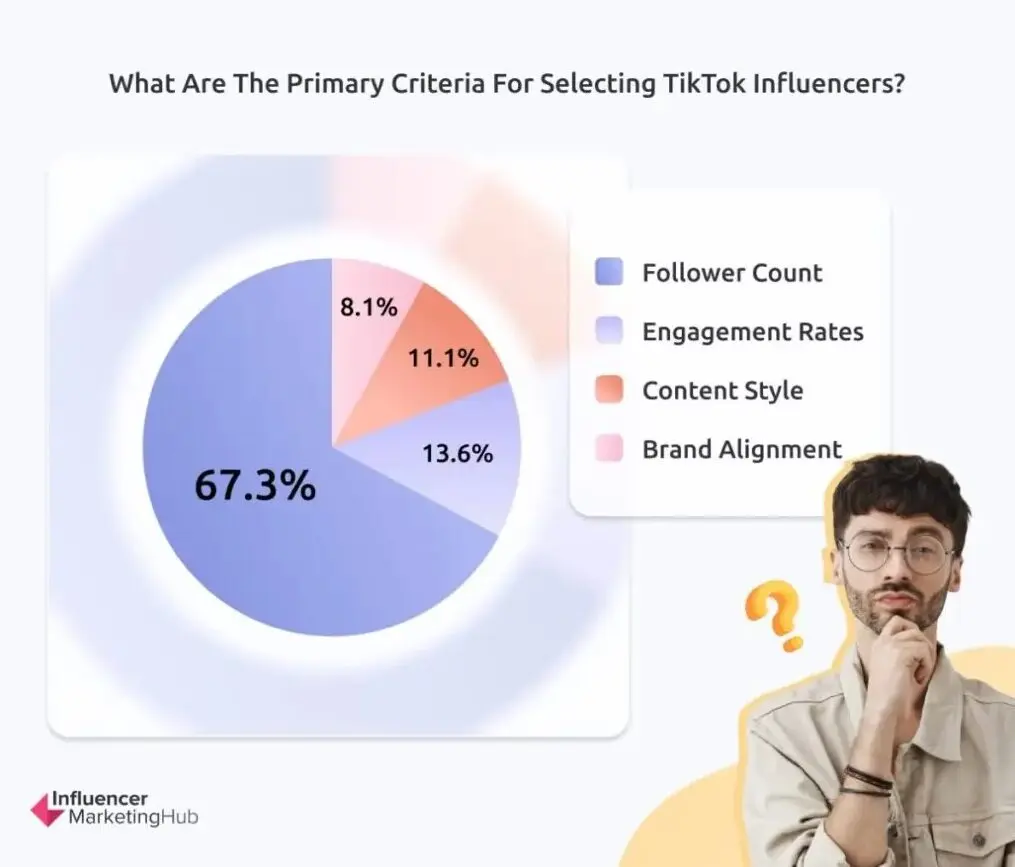
This disconnect often leads to pricing confusion and uneven results.
This guide breaks down TikTok influencer rates in 2026, explaining what brands should expect to pay, what actually drives costs, and how to evaluate pricing before committing budget.
- Why Knowing TikTok Influencer Rates Matters for Brands
- TikTok Influencer Pricing by Tier
- Other Pricing Approaches Beyond Follower Counts
- What Influences TikTok Influencer Rates?
- How Brands Can Estimate Fair TikTok Influencer Rates Before Outreach
- How Brands Should Negotiate TikTok Influencer Rates
- Common Mistakes Brands Make When Budgeting for TikTok Influencer Rates
- Understanding TikTok Influencer Rates Before You Spend a Dollar
- Frequently Asked Questions
Why Knowing TikTok Influencer Rates Matters for Brands
When a brand is planning a TikTok campaign, understanding influencer rates is essential for budgeting, measuring ROI, and selecting the right partners. Unlike fixed-price ads, influencer collaborations involve negotiated rates tied to content creation, engagement, and real business outcomes.
Getting influencer pricing wrong can lead to overspending, underperformance, or missed opportunities to connect with the right audience.
Impact on Campaign ROI and Budgeting
Influencer marketing is no longer a “nice-to-have” but a strategic channel with measurable returns. A variety of industry reports show that influencer campaigns routinely generate significantly more return on investment compared with many traditional ad formats.
For example, our research indicate brands can see up to $5.78 in value for every $1 spent on influencer marketing, and in some cases, much more, largely because influencer content drives authentic engagement and purchase behavior that traditional paid formats struggle to match.
This effect is tied directly to pricing: if you negotiate rates that are too high relative to expected outcomes, your ROI shrinks.
Conversely, smart pricing, especially with creators who deliver strong engagement, can dramatically stretch your marketing dollars. That’s why budgeting for influencer costs isn’t just about how much you spend; it’s about how much value you get back and setting expectations for what those returns look like before you launch.
Understanding TikTok influencer rates also helps brands allocate internal budgets effectively. Knowing the typical price range for TikTok creators, from nano and micro to macro and celebrity influencers, allows you to model different scenarios and forecast campaign outcomes more realistically.
It’s common for brands to test with lower-cost micro creators, prove ROI, and then scale into higher-tier partners as confidence increases.
Differences Between Influencer Marketing and Paid Ads
Influencer marketing costs differ widely from standard paid ads because they reflect human creativity, audience trust, and content value, not just impressions or clicks. Traditional paid ads on platforms like TikTok charge based on CPM (cost per thousand impressions) and other auction-style metrics, which are predictable but often less engaging.
In contrast, influencer rates are negotiated individually and reflect the creator’s unique audience, content style, and perceived impact on consumer behavior.
For brands, this means influencer marketing can feel less predictable than paid ads, but potentially far more effective. Audiences increasingly ignore banner ads and even traditional video ads in feeds; influencer content, however, appears native and trusted, which drives higher actual engagement and conversion.
This credibility often leads to stronger brand affinity and higher conversion rates than paid ads alone.
How TikTok’s Algorithm and Audience Behavior Influence Pricing
TikTok’s recommendation algorithm is a core reason influencer pricing matters so much. Unlike platforms where reach is strongly tied to follower count, TikTok heavily favors content performance, meaning videos can go viral regardless of follower size.
Smaller creators with highly engaging content can achieve huge reach, which increases their value to brands and, in turn, their rates.
This dynamic also affects pricing structures: brands are increasingly asked to pay not just for follower count but for expected reach, engagement, creative quality, and sometimes performance-based bonuses.
Since algorithmic success on TikTok often comes from engagement (likes, shares, comments) rather than pure reach, brands must appreciate that rates are reflected both in past performance and expected algorithmic success, a nuance that makes understanding influencer pricing crucial before you invest.
TikTok Influencer Pricing by Tier
When brands budget for TikTok influencer campaigns, one of the first questions is: “How much do creators actually charge?”
Unlike fixed ad rates, influencer pricing varies widely, and a big part of that variation comes from the influencer’s tier, typically based on their follower count and audience reach. Below is a clear, data-informed breakdown of TikTok influencer rates by tier, along with why these tiers matter for brand campaigns.
📊 Nano Influencers: Small but Impactful (1,000–10,000 followers)
Typical TikTok Rates: ~$50–$200 per post/video.
Nano influencers have the smallest follower counts, but they often boast very high engagement rates compared to larger creators. This makes them especially valuable for campaigns where authenticity and niche influence matter. Because their communities are tight-knit and highly responsive, brands often see strong relative engagement for lower cost.
Best use cases for brands:
- Testing creative concepts with low risk
- Reaching highly engaged niche audiences
- Collecting user-generated content (UGC) for reuse
Many nano creators are open to product gifting or hybrid compensation (a small fee plus product), which can further stretch budgets.
📈 Micro Influencers: Balance of Reach & Engagement (10,000–100,000 followers)
Typical TikTok Rates: ~$200–$800 per post/video.
Micro influencers offer a strategic sweet spot for many brands: they combine meaningful reach with strong engagement. This tier is often where brands see the best cost-per-engagement (CPE) results, especially for category-specific campaigns (e.g., beauty, tech, fitness).
Because micro creators are experienced with brand partnerships, their rates tend to be more standardized, yet still considerably more affordable than larger creators.
Best use cases for brands:
- Driving niche product interest
- Amplifying regional or category-specific campaigns
- Scaling content volume without high costs
📣 Macro Influencers: Broad Reach (100,000–1M followers)
Typical TikTok Rates: ~$800–$5,000 per post/video.
Macro influencers span a broad audience and command significantly higher rates because they can drive mass awareness quickly. While engagement percentages often drop as followers grow, total visibility rises sharply, making macro creators valuable for brand launch campaigns, broad awareness pushes, and large product releases.
Best use cases for brands:
- Mass awareness campaigns
- Trend-driven activations (challenges, hashtag campaigns)
- Broad demographic targeting
🌟 Celebrity / Mega Influencers: Maximum Visibility (1M+ followers)
Typical TikTok Rates: ~$5,000–$50,000+ per post/video.
At the top tier are celebrity or mega influencers with millions of followers and high mainstream profiles. These creators demand premium fees because they move culture, trends, and purchase behavior at scale. Their posts can generate enormous reach quickly, but they also carry a premium price tag and require strategic alignment with brand messaging.
Best use cases for brands:
- Major product launches
- Brand repositioning
- High-impact, mass-market campaigns
🧠 Key Takeaways for Brands
- Pricing is Not Set in Stone: These ranges are benchmarks, not fixed fees — individual negotiations, content requirements, and rights (e.g., usage beyond TikTok) can raise or lower rates.
- Engagement Matters: Many brands now pay attention to engagement and average video views rather than just follower count when budgeting.
- Tier Strategy Should Reflect Goals: Use nano/micro influencers for engagement and cost efficiency, macro for reach, and celebrity creators for brand authority and mass awareness.
Other Pricing Approaches Beyond Follower Counts
While follower tiers provide a useful baseline, TikTok influencer rates are increasingly shaped by factors beyond audience size.
Many brands now price collaborations based on performance expectations, content scope, and usage rights rather than relying solely on follower count. Understanding these alternative pricing approaches helps brands budget more accurately and avoid mismatched expectations.
Performance-Based and Engagement-Informed Pricing
Some TikTok creators price content based on expected views or engagement, especially when they have a track record of consistent video performance. Rather than charging a flat rate tied only to followers, creators may reference average views, engagement rate, or historical performance on branded content.
Brands also evaluate influencer cost efficiency using cost-per-engagement (CPE), a standard digital marketing metric that measures how much a brand pays for likes, comments, and shares.
While not always used as the billing method, CPE is commonly used to benchmark whether an influencer’s rate is reasonable relative to audience interaction. This approach helps brands avoid overpaying for large but disengaged audiences.
Bundled Deliverables and Ongoing Partnerships
Instead of single-post pricing, many influencers offer content bundles, such as multiple TikTok videos delivered over a campaign period. Bundles may also include reposts, follow-up videos, or cross-platform adaptations.
For brands, bundled pricing often reduces the effective cost per asset and supports more consistent messaging.
Longer-term partnerships or ambassador agreements are another common structure. These arrangements typically lower the per-post rate compared to one-off collaborations, while giving brands predictable content output and deeper creator alignment.
Content Complexity and Production Scope
Influencer rates also increase when content requirements become more demanding. Videos that require scripting, multiple edits, higher production quality, or complex creative integration typically cost more than simple product mentions.
Live content, challenge participation, or tightly scripted brand narratives also require additional creator time and effort, which is reflected in pricing.
Usage Rights and Content Licensing
One of the most important non-follower pricing factors is content usage rights. Influencers generally retain ownership of their content unless otherwise specified. If a brand wants to reuse TikTok influencer content in paid ads, on ecommerce pages, or across other marketing channels, additional licensing fees are commonly required.
Pricing depends on duration, platforms used, and exclusivity.
What This Means for Brands
- Influencer rates often reflect expected performance and deliverables, not just follower count
- Bundled and long-term partnerships can improve cost efficiency
- Usage rights and content scope should always be clarified upfront to avoid unexpected costs
What Influences TikTok Influencer Rates?
TikTok influencer rates are shaped by several measurable factors beyond follower count. For brands, understanding these drivers is critical for evaluating quotes, comparing creators fairly, and forecasting campaign performance.
Below are the most common and verifiable elements that influence how TikTok creators price their work.
Engagement Rate and Average Video Views
Engagement rate is one of the strongest predictors of influencer value on TikTok. Because the platform prioritizes watch time, shares, and comments, creators with smaller audiences but high engagement can outperform larger accounts in reach and impact.
Many brands evaluate an influencer’s average views per video over their most recent posts rather than relying on total followers.
Industry-leading influencer marketing tools platforms such as Brandwatch and Modash consistently show that engagement rates decline as follower counts rise, which explains why micro and mid-tier creators often deliver better cost efficiency.
As a result, creators with consistently strong engagement typically command higher rates, even if their follower counts are modest.
Niche and Audience Commercial Intent
Influencer pricing varies significantly by niche. Creators operating in categories such as finance, technology, software, beauty, fitness, and ecommerce often charge more than general lifestyle creators.
The reason is straightforward. These niches tend to attract audiences with higher purchase intent and clearer attribution paths, which increases their value to brands.
For example, creators who regularly influence purchasing decisions in beauty or consumer tech can demonstrate downstream impact through affiliate sales, discount codes, or platform-native shopping tools. This commercial relevance allows creators in high-intent niches to justify premium rates compared to entertainment-focused or broad lifestyle accounts.
Audience Quality and Geographic Makeup
Brands also consider who an influencer reaches, not just how many people they reach. Audience geography plays a major role in pricing. Creators with a high percentage of followers in high-spending markets such as the United States, United Kingdom, Canada, or Western Europe typically charge more than creators whose audiences are concentrated in lower-CPM regions.
Audience authenticity matters as well. Influencers with clean follower growth, low bot activity, and consistent engagement patterns are perceived as lower risk and higher value. Many brands now use third-party influencer analytics tools to assess audience quality before agreeing to rates.
Content Rights and Exclusivity Requirements
Rates increase when brands request usage rights beyond organic posting. If content is licensed for paid advertising, e-commerce pages, or long-term reuse, creators typically charge additional fees.
Exclusivity clauses also affect pricing. When a creator agrees not to work with competitors for a defined period, they are limiting future income opportunities, which is reflected in higher rates.
Campaign Timing and Deliverable Scope
Finally, pricing can rise based on campaign urgency and scope. Short deadlines, multiple revisions, tightly scripted creative, or coordinated launch schedules require more creator time and planning. Seasonal demand, such as Q4 retail campaigns or Black Friday/Cyber Monday, also increases competition for top creators, which can push rates higher.
How Brands Can Estimate Fair TikTok Influencer Rates Before Outreach
Before reaching out to creators, brands should have a clear framework for estimating fair TikTok influencer rates. This helps prevent overpaying, speeds up negotiations, and sets realistic performance expectations internally.
While there is no single formula, brands can combine benchmarks, performance data, and campaign scope to arrive at defensible budget ranges.
Start With Tier Benchmarks and Adjust for Performance
The most common starting point is tier-based benchmarks, such as typical ranges for nano, micro, macro, and mega influencers. These ranges provide context, but they should never be treated as fixed prices.
Once a baseline is identified, brands should adjust up or down based on the creator’s recent performance.
A practical method is to review an influencer’s average views across their last 10 to 20 videos, rather than relying on viral outliers. If a micro-influencer consistently generates view counts comparable to larger creators, their rate may be justified at the high end of the tier range.
Conversely, if engagement is weak or inconsistent, brands should expect lower pricing.
Estimate Cost Efficiency Using Engagement Metrics
Many brands sanity-check influencer quotes by estimating cost per engagement. While influencers rarely bill directly on this basis, CPE is a widely accepted digital marketing benchmark and is useful for internal comparisons.
Brands can estimate expected engagements by multiplying the average engagement rate by expected views, then dividing the quoted fee by that number.
This approach allows brands to compare influencer costs against other marketing channels, including paid social ads, without forcing creators into performance-only compensation models. It also helps identify creators whose rates are misaligned with their actual audience interaction.
Factor in Deliverables and Usage Rights Early
A common budgeting mistake is failing to account for what the rate actually includes. Brands should clarify upfront whether pricing covers a single video, multiple posts, revisions, raw footage, or cross-posting. Each additional deliverable increases the creator's workload and should be reflected in cost estimates.
Usage rights are especially important. If a brand plans to reuse influencer content in ads, landing pages, or other marketing assets, licensing fees are standard industry practice. Rates that appear reasonable for organic posting can become underpriced once usage rights are added, so brands should budget for this from the start.
Compare With Platform Tools and Past Campaign Data
Influencer pricing calculators and analytics platforms can provide rough estimates based on follower count and engagement data. While these tools should not replace direct negotiation, they are useful for spotting outliers and validating assumptions.
Brands with prior TikTok influencer campaigns should also rely on historical performance data. Reviewing past spend versus results is often the most accurate way to estimate fair rates for future collaborations.
How Brands Should Negotiate TikTok Influencer Rates
Negotiating TikTok influencer rates is not about pushing prices as low as possible. For brands, the goal is to reach an agreement that reflects the creator’s value, aligns with campaign goals, and supports long term performance.
Poor negotiation can damage relationships, reduce creative quality, or limit future collaboration opportunities.
Anchor the Conversation in Campaign Objectives
Effective negotiation starts with clarity. Brands should clearly communicate campaign goals, target audience, timelines, and success metrics before discussing price. Creators price their work based on scope and expected effort, so vague briefs often lead to higher quotes to compensate for uncertainty.
When brands explain whether the campaign is focused on awareness, conversions, content production, or testing, creators can propose rates that better match the actual value delivered. This also helps brands avoid paying for reach when engagement or content reuse is the real objective.
Discuss Deliverables Before Discussing Discounts
A common mistake is asking for a lower rate without adjusting deliverables. Instead, brands should negotiate by refining scope. Reducing the number of videos, limiting revision rounds, or shortening exclusivity windows are standard and acceptable ways to lower costs without devaluing the creator.
Creators are generally more open to adjusting scope than reducing fees for the same workload. This approach preserves goodwill and keeps expectations aligned on both sides.
Use Data, Not Comparisons Between Creators
Brands should avoid statements like “another influencer charges less.” This can quickly erode trust.
A more professional approach is to reference data. For example, brands can explain that a proposed rate exceeds internal benchmarks based on average views, engagement, or past campaign performance.
Using metrics such as average video views, engagement rate trends, or historical cost efficiency keeps negotiations objective and grounded in performance rather than opinion.
Be Transparent About Usage Rights and Exclusivity
Many pricing disputes arise from unclear expectations around usage rights. Brands should state upfront if content will be used in paid ads, on e-commerce pages, or across multiple channels. These uses typically justify additional fees, and creators expect to be compensated accordingly.
Exclusivity also affects pricing. Asking a creator not to work with competitors limits their future income. If exclusivity is required, brands should expect higher rates or shorter exclusivity periods as a compromise.
Build Toward Long-Term Partnerships
Creators often offer better rates to brands that demonstrate intent to collaborate beyond a single post. Even mentioning the possibility of future campaigns can influence pricing. Long term relationships reduce onboarding costs, improve creative alignment, and often result in more favorable rates over time.
Common Mistakes Brands Make When Budgeting for TikTok Influencer Rates
Even experienced marketers can misjudge TikTok influencer costs. Below are the most common budgeting mistakes brands make, with brief explanations to help avoid them.
- Relying only on follower count: Follower size alone does not reflect engagement, reach consistency, or commercial impact. Smaller creators often outperform larger ones on TikTok.
- Ignoring average video views: Brands sometimes base budgets on viral videos rather than typical performance, leading to unrealistic expectations and mispriced partnerships.
- Overlooking usage rights costs: Reusing influencer content in ads or on owned channels usually requires additional licensing fees that are often missed in initial budgets.
- Assuming influencer rates work like paid ads: Influencer pricing reflects creative labor and audience trust, not fixed CPMs or auction-based ad costs.
- Underestimating content scope and revisions: Multiple edits, scripts, or tight timelines increase workload and should be accounted for in pricing.
- Failing to budget for testing and iteration: Successful TikTok campaigns often require testing multiple creators or concepts before scaling.
- Pushing rates down at the expense of quality: Aggressive cost-cutting can reduce creative effort, limit performance, and damage long-term creator relationships.
Understanding TikTok Influencer Rates Before You Spend a Dollar
TikTok influencer rates are not arbitrary numbers. They reflect a combination of audience engagement, content performance, niche relevance, creative effort, and usage rights.
For brands, the key is recognizing that influencer pricing works differently from paid advertising. Success comes from aligning spend with business goals rather than chasing the lowest possible rate or the largest follower count.
By understanding how pricing tiers work, what truly drives influencer value, and how to evaluate rates before outreach, brands can make smarter budgeting decisions and avoid costly missteps. TikTok rewards authenticity, relevance, and performance, and influencer rates are built around those same principles.
Approached strategically, influencer partnerships can deliver scalable reach, high engagement, and reusable content that extends well beyond a single post. The brands that win on TikTok are the ones that treat influencer pricing as an investment decision, not just a line item.
Frequently Asked Questions
Do brands need software to estimate TikTok influencer rates accurately?
Many brands rely on TikTok influencer marketing platforms to compare creator performance, audience quality, and historical data before budgeting, especially when managing multiple creators at scale.
What real campaigns show about paying TikTok influencers?
Reviewing TikTok influencer marketing case studies helps brands understand how influencer fees translate into reach, engagement, and measurable brand outcomes.
When should brands work with a TikTok talent agency instead of negotiating directly?
Brands often collaborate with a TikTok talent management agency when working with high-demand creators, handling exclusivity, or structuring usage rights.
How can brands tell if an influencer’s rate is reasonable for their performance level?
Comparing creator metrics against established TikTok benchmarks helps brands assess whether quoted rates align with typical engagement and view performance.
Are TikTok influencer rates different for live shopping campaigns?
Live commerce collaborations often follow different pricing logic, since live shopping influencers are expected to drive real-time interaction and purchase behavior.
How do TikTok influencer rates compare with TikTok ad costs?
Brands frequently evaluate influencer fees alongside how much TikTok ads cost to determine which approach delivers better efficiency for their goals.
Does posting time affect the value of a TikTok influencer collaboration?
Creators who consistently publish during optimal best times to post on TikTok can deliver stronger performance, which may influence perceived value.
Can creators estimate their own pricing accurately on TikTok?
Many creators reference tools like a TikTok money calculator to estimate earning potential, which brands should treat as directional guidance rather than fixed pricing.

