
Yotpo has become a familiar name for brands looking to collect reviews, showcase UGC, and add social proof across ecommerce touchpoints. But as teams scale, many start questioning whether an all-in-one platform still fits their needs. From this, two pain points frequently surface:
- Are you paying for modules you barely use just to access the features you actually need?
- Is managing reviews and social content inside a single system creating more complexity instead of clarity?
For marketers and businesses under pressure to improve conversion rates, page speed, and content flexibility, these questions matter. Some teams want a simpler way to collect high-quality product reviews without enterprise-level pricing.
Others need flexible social embeds and UGC galleries that work across landing pages, campaigns, and CMS driven sites without being tied to a full review stack.
This guide breaks down the best Yotpo alternatives with a clear distinction between review-focused platforms and social embed tools, helping you choose the right solution based on your actual goals, not bundled features you may never use.
- Best Yotpo Alternatives for Reviews and Onsite UGC
- 1. Loox
- 2. Okendo
- 3. Judge.me
- 4. Stamped
- 5. Bazaarvoice
- 6. PowerReviews
- 7. Curator
- 8. Walls.io
- 9. Taggbox
- 10. Flocker
- Yotpo Alternatives Comparison Table
- How to Choose the Right Yotpo Alternative
- Choosing A Yopto Alternative That Actually Match How Your Brand Grows
- Frequently Asked Questions
Best Yotpo Alternatives for Reviews and Onsite UGC
1. Loox

Best for: Shopify brands that want to increase conversions using photo and video reviews.
Primary use: Collecting, managing, and displaying product reviews and onsite UGC across PDPs, cart pages, and post purchase flows.
Pricing: Starts at $12.99 per month, with higher tiers unlocking video reviews, AI features, and unlimited review requests.
Loox is a review-focused platform built to replace Yotpo reviews and onsite UGC widgets for Shopify stores. Its core strength lies in visual social proof, helping brands collect significantly more photo and video reviews than text-only review systems.
The platform automates review requests through email and other channels, with built-in incentives that encourage customers to submit photos or videos.
These visual reviews can then be showcased throughout the store using a wide range of widgets, including product page galleries, carousels, star ratings, cart page reviews, and post-purchase upsells.
Loox is designed with performance in mind. Widgets are optimized for fast loading, mobile responsiveness, and seamless theme compatibility, making it easy to deploy reviews without developer support. Integrations with tools like Klaviyo, Omnisend, and Google Shopping allow teams to extend review content into ads, email campaigns, and search results.
For marketers looking to move away from Yotpo without sacrificing review quality or conversion impact, Loox offers a focused, cost-effective alternative that prioritizes visuals, speed, and ease of use.
2. Okendo
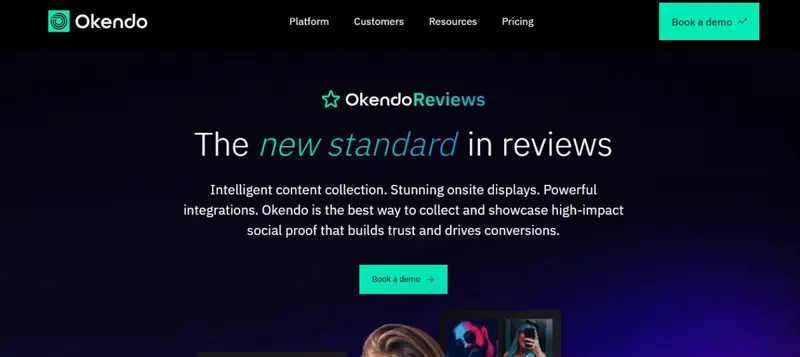
Best for: Growing and Shopify Plus brands that need highly customizable, data-rich reviews.
Primary use: Collecting advanced product reviews, visual UGC, Q and A, and structured customer feedback on PDPs.
Pricing: Plans start at $19 per month, with higher tiers and platform bundles priced based on order volume.
Okendo positions itself as a more flexible and intelligence-driven alternative to Yotpo, particularly for brands that want deeper control over how reviews are collected, displayed, and used across the customer journey.
Rather than focusing solely on volume, Okendo emphasizes review quality through customizable forms, attribute ratings, before-and-after images, and video testimonials.
Its onsite displays are fully customizable, allowing brands to match reviews to their site design while maintaining fast load times and strong accessibility standards. Reviews are crawlable by search engines, supporting SEO and rich results, and can be filtered dynamically to help shoppers find the most relevant feedback faster.
Beyond display, Okendo turns reviews into a data asset. Structured attributes, customer profiles, and integrations with email, SMS, and ad platforms enable marketers to reuse review content across campaigns and personalize messaging.
Built-in analytics help teams measure revenue impact, sentiment, and review performance over time.
For brands outgrowing basic review tools or looking for more control than Yotpo offers without jumping straight to enterprise syndication platforms, Okendo is a strong mid to upper market alternative focused on flexibility, performance, and insight.
3. Judge.me
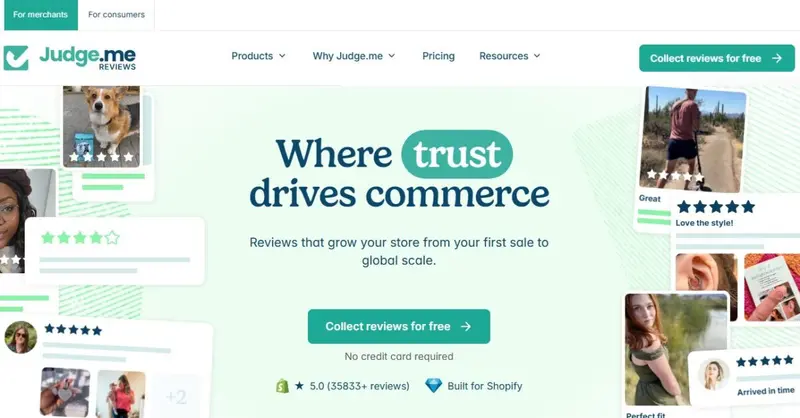
Best for: Budget-conscious Shopify brands that want unlimited reviews without usage-based pricing.
Primary use: Collecting and displaying product and store reviews, including photo and video UGC, across ecommerce pages.
Pricing: Free plan available. Paid plan capped at $15 per month with full feature access.
Judge.me is widely known as one of the most cost-effective alternatives to Yotpo, particularly for small to mid-sized eCommerce brands that want robust functionality without pricing that scales with order volume.
Unlike many review platforms, Judge.me offers unlimited product and store reviews even on its free tier, making it accessible from a brand’s very first sale.
The platform supports photo and video reviews, star ratings, rich snippets for Google, and a wide range of display widgets that can be customized to match store branding.
Reviews can be surfaced on product pages, homepages, collection pages, and shared across external channels such as Google and social platforms to extend their impact.
Automation plays a central role. Judge.me handles review requests through email and other channels, while built-in moderation, spam filtering, and AI-assisted replies help teams manage reviews efficiently. Its flat pricing model removes the risk of unexpected cost increases as a store grows.
For merchants who want a reliable, full-featured review system without enterprise complexity or escalating fees, Judge.me stands out as a practical and scalable Yotpo alternative.
4. Stamped

Best for: Mid-market Shopify brands that want reviews today with the option to layer loyalty and lifecycle programs later.
Primary use: Collecting product reviews and visual UGC, then activating that feedback across marketing, retention, and repeat purchase flows.
Pricing: Reviews start at $199 per month, with pricing based on order volume and optional bundles for loyalty and lifecycle automation.
Stamped approaches reviews as part of a broader retention strategy rather than a standalone widget. As a Yotpo alternative, it replaces Yotpo reviews and onsite UGC while giving brands a clear upgrade path into loyalty and lifecycle automation without switching platforms later.
On the reviews side, Stamped focuses on frictionless collection and amplification. Email review forms allow customers to submit text, photo, and video reviews directly from the request email, reducing drop-off and increasing submission rates.
Reviews can then be displayed across product pages using customizable widgets that support rich snippets and search visibility.
Where Stamped differentiates is how reviews connect to the rest of the customer journey. Review data feeds into analytics, segmentation, and automated flows that help brands identify repeat purchase moments, reward high-intent customers, and personalize follow-up messaging.
Integrations with platforms like Shopify, Klaviyo, Google, and Bazaarvoice extend reviews into ads, email, and retail syndication.
For brands that see reviews as a foundation for long-term retention rather than just social proof, Stamped offers a more strategic alternative to Yotpo with modular growth built in.
5. Bazaarvoice

Best for: Enterprise brands and retailers that need large-scale review collection and retail syndication.
Primary use: Collecting, moderating, and distributing ratings, reviews, Q and A, and visual UGC across brand sites and major retail partners.
Pricing: Custom enterprise pricing based on products, volume, and syndication scope.
Bazaarvoice is not a lightweight Yotpo replacement. It is an enterprise-grade platform built for brands that sell across multiple retail channels and need reviews to follow their products wherever shoppers buy. Its core value lies in scale, trust, and distribution rather than storefront widgets alone.
The platform enables brands to collect verified ratings, reviews, photos, and videos, then syndicate that content across a massive retail network that includes thousands of major eCommerce sites.
This retail syndication is critical for brands selling through partners like Walmart, Target, and other large marketplaces, where review coverage directly influences visibility and conversion.
Bazaarvoice also emphasizes authenticity and moderation, using advanced fraud detection, AI-driven sentiment analysis, and human review processes to protect trust. On owned product pages, reviews are displayed in fast, SEO friendly formats designed to support discovery and conversion at scale.
For brands outgrowing Shopify tools or needing review consistency across direct-to-consumer and retail channels, Bazaarvoice stands out as the most robust Yotpo alternative for enterprise review and UGC syndication.
6. PowerReviews
Best for: Enterprise brands and retailers that want conversion-focused reviews with deep analytics and controlled syndication.
Primary use: Collecting, displaying, analyzing, and syndicating ratings, reviews, Q and A, and visual UGC across owned sites and retail channels.
Pricing: Custom enterprise pricing. Brands must speak with PowerReviews experts and book a demo to receive a quote.
PowerReviews is an enterprise-grade alternative to Yotpo designed for brands that treat UGC as a performance and insight engine, not just a trust signal. The platform specializes in helping large catalogs and high-traffic sites maximize conversion through highly configurable review collection and display strategies.
One of its key differentiators is flexibility. PowerReviews offers thousands of display configurations, allowing teams to tailor review layouts based on what actually drives engagement and sales.
These decisions are backed by robust analytics that show how shoppers interact with reviews, images, Q and A, and individual display components across PDPs.
Beyond owned sites, PowerReviews places strong emphasis on syndication. Brands can distribute reviews to major retail partners, marketplaces, and platforms like Google Shopping, while retailers can ingest high-quality UGC from a broad brand network. Advanced matching and reporting help ensure reviews stay recent, relevant, and visible.
For organizations that need granular control, strong performance at scale, and detailed insight into how UGC impacts revenue, PowerReviews stands out as a data-driven, enterprise-focused Yotpo alternative.
7. Curator

Best for: Brands and marketing teams that need a fast, low cost way to embed social feeds on websites.
Primary use: Aggregating and displaying social media content from multiple platforms as live, moderated website embeds.
Pricing: Free plan available. Paid plans start at $23 per month, with higher tiers based on sources, refresh rates, and views.
Curator is a lightweight alternative to Yotpo’s social galleries, focused purely on collecting and embedding social content rather than managing product reviews.
It allows brands to pull posts, photos, and videos from platforms like Instagram, TikTok, YouTube, X, LinkedIn, and even sources like Google Reviews and Reddit, then display them as a unified feed on any website.
Setup is intentionally simple. After connecting social accounts, hashtags, or mentions, Curator automatically aggregates content into a single dashboard where teams can approve, filter, pin, or remove posts. Feeds are embedded using a small code snippet that works across CMS platforms without relying on iframes, and updates automatically as new content is published.
Curator’s value lies in accessibility and pricing. Even the free plan supports multiple sources and basic moderation, making it appealing for small teams or campaign-specific pages. Higher tiers unlock faster refresh rates, higher view limits, API access, and premium content sources.
For marketers who want social proof on landing pages, campaign hubs, or brand pages without investing in a full UGC commerce platform, Curator is one of the simplest and most cost-effective Yotpo social embed alternatives available.
8. Walls.io

Best for: Brands, event teams, and enterprises running campaigns, events, or digital displays that rely on live audience engagement.
Primary use: Aggregating, moderating, and displaying real-time social and user-generated content across websites, events, and screens.
Pricing: Website and ongoing use plans vary by setup. Event-specific plans start at $270 per event, with enterprise options available.
Walls.io is a dedicated social wall and UGC display platform built for high visibility, interactive use cases rather than ecommerce reviews.
Unlike Yotpo’s social galleries, which are designed primarily for product pages, Walls.io excels in live environments where engagement, participation, and visual impact matter most.
The platform aggregates content from more than 14 social networks, hashtags, profiles, and direct uploads into a single moderated feed. Teams can curate posts in real time using AI-powered moderation rules combined with manual approvals, ensuring brand safety even during high traffic events.
Content can then be displayed on websites, embedded pages, large event screens, digital signage, or internal channels.
Walls.io stands out for interactivity. Features like reactions, polls, live updates, and direct post uploads turn passive viewers into contributors, making it especially effective for conferences, launches, employer branding, and experiential marketing.
Accessibility and compliance are also strong, with WCAG 2.1 support and GDPR readiness built in.
For marketers who need more than a static social embed and want UGC to actively drive participation and attention, Walls.io is a powerful Yotpo alternative focused on engagement at scale.
9. Taggbox
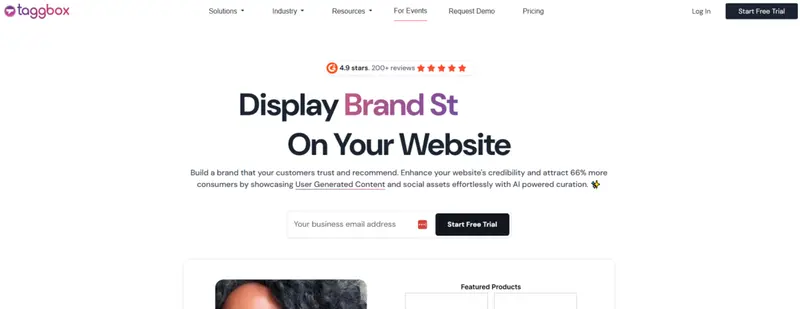
Best for: Brands and ecommerce teams that want to turn social and customer content into shoppable galleries, on-site social proof, and campaign assets across multiple channels.
Primary use: Aggregating, curating, and displaying user-generated content and social media posts across websites, product pages, email, and social commerce experiences.
Pricing: Free trial available. Pricing varies by product and use case, with event-specific social wall plans starting at $199 for 7 days and monthly passes starting at $499.
Taggbox is a UGC aggregation and display platform designed to help brands collect content from multiple sources and publish it in high-impact formats across the customer journey.
Rather than focusing on review request automation like traditional review platforms, Taggbox is built around pulling in social content and customer media, curating it, and turning it into conversion-oriented galleries.
The platform supports UGC collection from 20+ sources and offers a wide range of embed layouts and widgets, including galleries, sliders, reels-style displays, and review-focused modules. Curation combines moderation controls with AI-powered tagging and management tools, giving teams more control over what appears on-site and where it appears.
Beyond websites, Taggbox also positions itself for campaigns and events through its Social Wall product, which is designed for live displays across events, digital signage, and virtual experiences.
It includes options like SnapUp for collecting audience uploads without requiring a social account, plus studio-style content mixing and display customization.
For brands that want a flexible way to curate and repurpose UGC across web and campaign touchpoints, Taggbox is a practical alternative to Yotpo’s social galleries, especially when the priority is multi-source aggregation and shoppable UGC experiences rather than ecommerce review collection.
10. Flocker

Best for: Brands, agencies, and enterprises that need to embed curated social proof across multiple websites, clients, and digital touchpoints at scale.
Primary use: Aggregating, moderating, and displaying user-generated content and social media feeds across websites, webshops, email, and digital screens.
Pricing: Paid plans start at $110 per month, billed annually, scaling up to enterprise plans with custom feed limits and support.
Flockler is an all-in-one UGC aggregation and display platform built for teams that want full control over how social content appears across their digital ecosystem. Unlike Yotpo, which centers on eCommerce reviews and loyalty, Flockler focuses on collecting social and customer content and turning it into reusable, brand-safe embeds wherever audiences interact.
The platform supports content from 13+ sources, including Instagram, TikTok, YouTube, LinkedIn, Facebook, Google Reviews, and custom uploads. Teams can combine multiple channels into unified feeds, moderate content manually or through automated rules, and deploy layouts such as walls, grids, carousels, and slideshows without limits on views or embeds.
Flockler is especially strong for organizations managing multiple properties or clients. One subscription covers unlimited embeds across websites, apps, emails, and digital displays, making it well-suited for agencies, universities, sports organizations, and global brands.
Social commerce is supported through a commerce add-on that enables shoppable Instagram feeds without development work.
With unlimited layouts, strong moderation controls, and GDPR-ready infrastructure, Flockler is a solid Yotpo alternative for marketers who prioritize scalable social proof, cross-channel consistency, and flexible UGC campaigns over traditional review collection.
Yotpo Alternatives Comparison Table
This comparison highlights how leading alternatives differ in purpose, supported channels, pricing models, and core strengths. It is meant to help marketers and brands quickly identify which platforms align with their ecommerce, marketing, or engagement goals before diving deeper into feature-level evaluation.
|
Platform |
Best for | Primary use | Channels supported | Pricing approach |
Key differentiator |
| Loox | Shopify brands focused on visual social proof | Photo and video product reviews | PDPs, cart, post purchase, email, Google | Low-cost SaaS starting at $12.99/month | Visual-first reviews optimized for conversion |
| Okendo | Growing and Shopify Plus brands | Advanced reviews, attributes, Q and A, visual UGC | PDPs, collections, email, ads, SEO | Tiered SaaS based on order volume | Highly customizable, data-rich review experiences |
| Judge.me | Budget-conscious ecommerce brands | Unlimited product and store reviews | PDPs, collections, Google, social | Free tier and flat $15/month paid plan | Unlimited reviews with flat pricing |
| Stamped | Mid-market Shopify brands planning for retention | Reviews with optional loyalty and lifecycle activation | PDPs, email, SMS, ads, retail syndication | Modular pricing starting at $199/month | Reviews connected to retention and repeat purchase |
| Bazaarvoice | Enterprise brands selling through major retailers | Reviews and UGC collection with retail syndication | Brand sites, Walmart, Target, retail partners | Custom enterprise pricing | Largest retail review syndication network |
| PowerReviews | Large catalogs and performance driven teams | Reviews, Q and A, analytics, syndication | Owned sites, retail partners, Google | Custom enterprise pricing | Conversion focused displays with deep analytics |
| Curator | Small teams and campaign marketers | Social feed aggregation and embeds | Websites, landing pages | Freemium with low-cost paid tiers | Fast setup and lightweight social embeds |
| Walls.io | Events, employer branding, live campaigns | Live social walls and interactive UGC | Events, websites, digital screens, signage | Event based and enterprise plans | Real-time interactivity and audience participation |
| Taggbox | Brands using shoppable and campaign driven UGC | UGC aggregation, shoppable galleries, social walls | Websites, PDPs, email, ads, events | Product and event based pricing | Strong mix of UGC, social commerce, and displays |
| Flockler | Agencies and enterprises managing many properties | Scalable UGC aggregation and omnichannel display | Websites, webshops, email, digital screens | Feed based SaaS from $110/month | Unlimited embeds and views across channels |
How to Choose the Right Yotpo Alternative
Choosing the right Yotpo alternative starts with understanding what role UGC actually plays in your business. Yotpo is strongest when reviews, loyalty, and eCommerce retention are tightly connected. The platforms on this list exist because many brands need UGC to do more than collect star ratings on product pages.
The fastest way to narrow your options is to decide what type of UGC drives value for you, where it needs to appear, and how complex your internal setup really is.
Reviews vs Social Content vs Live UGC
The most important decision is whether your priority is structured reviews, curated social proof, or live audience-driven content.
If your primary goal is increasing conversion on product pages, review-first platforms are the most direct replacement for Yotpo. Tools like Loox, Okendo, Judge.me, Stamped, PowerReviews, and Bazaarvoice are built around verified feedback, review requests, moderation, and SEO-friendly displays.
They work best when trust, comparison, and validation at the point of purchase are critical.
Social content platforms serve a different purpose. Instead of asking customers to review products, they surface real-world usage through Instagram posts, videos, and customer media. Curator and Flockler fall into this category, helping brands showcase social proof across landing pages, brand hubs, and campaigns where discovery and storytelling matter more than review volume.
Live UGC platforms go a step further by making audiences part of the experience. Walls.io and Taggbox are designed for real-time feeds, direct uploads, and interactive displays across events, digital signage, and campaigns.
These platforms are not substitutes for review syndication. They exist because reviews alone cannot drive participation, buzz, or visibility in live environments.
Understanding this distinction is critical. Many teams choose the wrong alternative simply because they assume all UGC tools solve the same problem.
Ecommerce Conversion Needs vs Brand Marketing Needs
Yotpo is deeply optimized for eCommerce workflows such as post-purchase review requests, PDP optimization, and retention loops. If your success metrics are tied directly to conversion rate, average order value, and checkout confidence, review-focused platforms like Loox, Okendo, Judge.me, and Stamped align most closely with those needs.
However, not every brand uses UGC primarily to drive checkout behavior. For SaaS companies, education, nonprofits, sports organizations, and multi-brand portfolios, UGC often supports brand credibility, awareness, and community building instead.
Platforms like Flockler and Curator are designed for these broader marketing use cases. They allow teams to collect content from multiple channels, moderate centrally, and reuse it across websites, emails, and campaigns without tying everything to product SKUs or ecommerce logic.
At the enterprise level, Bazaarvoice and PowerReviews sit between these worlds. They support ecommerce conversion while also enabling large-scale distribution and consistency across retail partners, making them relevant when brand presence extends far beyond a single storefront.
Website-Only vs Omnichannel vs Events
Another deciding factor is where UGC needs to appear.
If UGC lives exclusively on product pages or collection pages, a review platform or a lightweight social embed may be enough. This is where tools like Loox, Judge.me, Okendo, and Curator perform well with minimal setup.
Once UGC needs to move across multiple channels, the requirements change. Email, paid media, campaign landing pages, and brand sites all demand reusable, centrally managed content. Stamped, Flockler, and Taggbox are better suited for this kind of omnichannel activation.
For brands running events, experiential campaigns, retail displays, or internal communications, Yotpo is rarely a fit. Walls.io and Taggbox are purpose-built for these scenarios, supporting real-time updates, moderation under high traffic, and large-format displays where visual impact and participation matter more than conversion metrics.
Budget and Internal Team Complexity
Finally, consider how much operational complexity your team can realistically support.
Yotpo and enterprise platforms like Bazaarvoice and PowerReviews are often priced for large programs with dedicated ownership, integrations, and long-term commitments. They make sense when reviews are mission-critical across multiple markets and retail partners.
At the other end of the spectrum, Judge.me and Curator are built for simplicity. Flat pricing, fast setup, and minimal management make them attractive for lean teams, early-stage brands, or campaign-specific needs.
Mid-market teams often sit in between. Loox and Okendo balance ease of use with stronger customization. Stamped offers modular growth into loyalty and lifecycle programs. Flockler supports more complex workflows for organizations managing multiple sites, regions, or clients.
Walls.io and Taggbox justify higher investment when live moderation, interactivity, and visual storytelling are central to the strategy.
The key takeaway is that none of these platforms are accidental inclusions. Each exists because Yotpo does not solve every UGC problem.
The right alternative depends on whether your priority is trust, storytelling, participation, or scale, and the best choice is the one that aligns with how and where UGC actually creates value for your brand.
Choosing A Yopto Alternative That Actually Match How Your Brand Grows
Yotpo remains a strong platform for ecommerce teams that center their strategy around reviews, loyalty, and retention. But as this comparison shows, user-generated content has expanded far beyond product pages, and no single tool covers every use case equally well.
Some brands need lightweight, conversion-focused review systems that load fast and scale affordably. Others need deeper customization, richer data, or enterprise-grade syndication across retail partners. Many modern teams rely on social content, live UGC, or omnichannel storytelling to build trust long before a shopper ever reaches a checkout page.
The best Yotpo alternative is not the one with the most features, but the one aligned with how your customers discover, evaluate, and engage with your brand. Whether your priority is trust, visibility, participation, or scale, the platforms in this guide exist because they solve real gaps that reviews alone cannot.
Choosing intentionally ensures UGC becomes a growth asset, not just another widget.
Frequently Asked Questions
Do Yotpo alternatives work across different ecommerce platforms?
Yes. Most modern Yotpo alternatives are platform-agnostic and designed to plug into a wide range of storefront technologies. Brands evaluating options alongside their broader stack often compare them in the context of leading SaaS ecommerce platforms, ensuring review and UGC tools integrate cleanly with checkout, email, analytics, and merchandising systems.
Should UGC tools influence which ecommerce platform you choose?
They can. Reviews, social proof, and shoppable UGC increasingly shape conversion performance, so brands often evaluate UGC compatibility when selecting the best ecommerce platform for their growth stage, especially if visual content and community feedback play a central role in the buying journey.
Are Yotpo alternatives suitable for non-Shopify ecommerce brands?
Absolutely. While many tools started with Shopify, most now support multiple ecommerce platforms through embed codes, APIs, or native integrations, making them viable for brands running custom builds, headless commerce, or multi-storefront setups.
How do UGC platforms fit into influencer marketing workflows?
UGC tools and influencer platforms increasingly overlap. Many brands use reviews, social galleries, and creator content together, often alongside ecommerce influencer marketing software to collect rights-approved content that can be reused across product pages, ads, and campaigns.
When should brands involve an ecommerce agency in choosing a Yotpo alternative?
Teams with complex stacks or multiple markets often rely on an ecommerce agency to audit technical requirements, data flows, and scalability before selecting a UGC platform, especially when reviews, syndication, and performance tracking need to align across channels.
How do video-first UGC tools compare to traditional review platforms?
Video-focused tools emphasize storytelling and product demonstration rather than star ratings. Brands selling visually driven products often pair Yotpo alternatives with UGC video tools for Shopify to showcase real customer experiences that reduce hesitation and increase time on page.
Can short-form video replace written reviews in ecommerce?
In some categories, yes. Short-form content performs especially well for discovery and education, which is why brands increasingly experiment with UGC video makers for YouTube Shorts to complement or even outperform text reviews in early funnel stages.
How does UGC support product education beyond reviews?
Beyond social proof, UGC can function as explainer content. Many brands now use customer-created media alongside UGC software for product demos to show real-world use cases, setup steps, and benefits that traditional reviews rarely capture.

