

- YouTube is increasing the entry requirements for new creators who want access to ad and Premium revenue sharing.
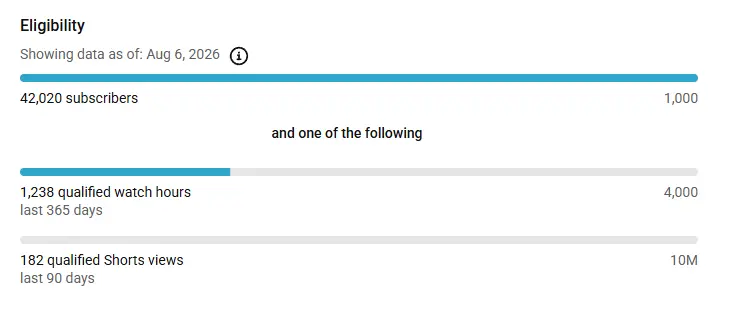
- Starting February 1, 2027, new applicants will need 8,000 qualified watch hours in 365 days or 20 million qualified Shorts views in 90 days.
- Shorts creators will also need to maintain 10 million qualified Shorts views over 90 days to keep earning from Shorts ads and subscriptions.
- At the same time, YouTube is expanding creator income beyond ads through Premium Lite, Shopping bonuses, brand deal incentives, and rewards tied to trends and growth.
YouTube is making one of its biggest changes to the Partner Program in years.
Beginning February 1, 2027, the platform will raise the bar for new creators trying to qualify for ad and Premium revenue sharing while also expanding the number of ways creators can make money once they build meaningful traction.
The new entry requirements are substantial.
New creators will need either 8,000 qualified watch hours in the previous 365 days or 20 million qualified Shorts views over the previous 90 days to qualify for ads and subscription revenue sharing.
That effectively doubles the current thresholds. The current threshold requires 4,000 qualified watch hours or 10 million qualified Shorts views over the previous 90 days.
At the same time, YouTube is introducing new income opportunities around Shopping, brand deals, trend creation, and Premium Lite.
The result is a more demanding monetization system, but also a broader one. X is tightening creator monetization from a different direction. While YouTube is raising audience thresholds, X’s new program makes originality part of the payout test, excluding copied posts, automated content, low-value reactions, and lightly edited reuploads.
YouTube Is Making YPP Harder to Enter
The clearest change is at the entry point.
Today, new creators can qualify for ads and Premium revenue sharing with 1,000 subscribers and either 4,000 watch hours or 10 million Shorts views.
Under the new rules, the watch-hour requirement rises to 8,000, while the Shorts threshold rises to 20 million views over 90 days.
YouTube says the change reflects the scale the platform has reached, with more than 200 billion daily Shorts views and more than one billion hours of watch time on TV every day.
Importantly, the new threshold applies only to new applicants.
Creators already in YPP will keep their current access.
That distinction limits disruption for established channels while making it more difficult for newer creators to reach full monetization.
Shorts Monetization Is Becoming a Consistency Game
The Shorts changes go further.
Beginning in February 2027, creators will need to maintain 10 million qualified Shorts views within a rolling 90-day period to earn from Shorts ads and subscription revenue.
Channels that fall below that level will stay in YPP and continue earning from long-form videos.
Shorts revenue sharing will automatically resume once the channel crosses the 10 million-view mark again.
That changes the nature of Shorts monetization. Crossing a threshold once is no longer enough.
Creators will need consistent audience performance to keep that revenue stream active.
For brands, that could make recent and repeatable reach more important when evaluating Shorts creators for brand partnerships.
A single viral moment may carry less weight than the ability to sustain attention over time.
YouTube Is Expanding Revenue Beyond Ads
The stricter thresholds come alongside a broader push to diversify how creators earn.
YouTube says it plans to introduce more incentive programs for creators who hit milestones across areas such as:
- YouTube Shopping
- brand deals
- audience growth
- starting and growing trends
That is a meaningful change in emphasis.
For years, the Partner Program has been closely associated with ad revenue.
YouTube now appears to be pushing creators toward a wider business model built around commerce, sponsorships, subscriptions, and platform incentives.
That gives creators more ways to monetize audience attention.
It also makes creator success less dependent on one revenue source.
Premium Lite Adds Another Subscription Revenue Stream
YouTube is also expanding Premium Lite to every country where YouTube Premium is available.
Creators will earn from those subscriptions through dedicated revenue pools.
According to YouTube, 30% of net subscription revenue from Premium and 60% from Premium Lite will be allocated into creator revenue pools.
Those pools are then distributed based on watch time and views, with creators receiving:
- 55% revenue share for long-form
- 45% for Shorts
YouTube says creators generally earn more when a user subscribes to Premium than when that same person watches ads.
That gives subscription growth an increasingly important role in the creator economy on YouTube.
The Platform Is Rewarding More Than Reach
Taken together, the updates suggest YouTube wants to reward more than raw audience scale.
The new model places greater emphasis on:
- consistent performance
- commerce
- brand partnerships
- audience growth
- trend creation
- subscription engagement
That is a broader definition of creator value.
A creator who can generate views is valuable. A creator who can also influence buying behavior, attract brand partnerships, sustain trends, and retain an active audience becomes even more valuable to the platform.
That is especially important for marketers.
As YouTube builds more incentives around Shopping and brand deals, the platform is giving creators more reason to develop commercially useful audiences rather than simply chase views.
What This Means for Creators and Brands
For newer creators, the path to full YPP monetization is getting harder.
The higher thresholds create more pressure to prove sustained audience demand before accessing ad and Premium revenue sharing.
For established creators, the opportunity is expanding.
YouTube is building more ways to earn through commerce, subscriptions, brand partnerships, and platform incentives.
For brands, that shift could make YouTube creators even more commercially sophisticated.
The strongest creators may increasingly operate across several income streams at once, blending advertising revenue with sponsorships, affiliate commerce, Shopping, and subscriptions.
That changes how creator businesses are built. It also changes how marketers should evaluate them.
The most valuable partners may be the creators who can generate attention, sustain engagement, influence commerce, and build repeatable audience behavior.
YouTube is making that direction increasingly clear.
The Partner Program is becoming harder to enter, but the creator business model around it is becoming much broader.

SUGGESTED

YouTube’s View Count Change Will Make Views Bigger. Brands Will Need Better Metrics
YouTube is changing how views are counted making reach easier to compare while pushing...

X Is Turning Creator Monetization Into an Originality Test
X replaces Revenue Sharing with Original Content Rewards tying creator payouts to...

The Ultimate Guide to YouTube Monetization in 2026
Looking for how to monetize your YouTube channel? This guide will walk you through the...