

Buying sheets online asks people to judge comfort through a screen. Brooklinen found a way to make that choice feel more familiar: explain the product plainly, show it in lived-in bedrooms, and let customers and creators describe what sleeping in it is actually like. As the company expanded beyond sheets, those everyday scenes gave it new reasons to appear in a buyer’s feed.
The approach has changed with the business. Early recommendations and blogger outreach gave way to structured creator campaigns, product collaborations, paid social testing, and celebrity-led advertising. Each format gives a different answer to the question a bedding brand faces online: why should someone trust a product they cannot touch yet?
In this Brand Story, we’ll trace Brooklinen’s growth from its Kickstarter launch to its latest product relaunch, examine the distinct roles of creators and partners, and show how its social content connects product discovery to purchase decisions and repeat buying.
- How Brooklinen Made Premium Sheets Easier to Buy
- Customer Recommendations and Early Creators Expanded Brooklinen’s Reach
- More Products and Stores Created New Ways to Discover Brooklinen
- Brooklinen’s Product Relaunch Gave Its Marketing a Fresh Claim
- How Brooklinen’s Creator Strategy Brings Bedroom Life into Its Campaigns
- Collaborations and Placements Reach Adjacent Audiences
- Public Figures Carry the Refreshed Product Story Across Media
- What Our HypeAuditor Analysis Reveals About Brooklinen’s Instagram Network
- Where Creator Discovery Meets Brooklinen’s Purchase Decision
How Brooklinen Made Premium Sheets Easier to Buy
Rich and Vicki Fulop started Brooklinen after a hotel stay prompted them to look more closely at the sheets they used every night. The couple saw an opportunity to make premium bedding easier to understand and buy. Before launching, they studied textiles and surveyed potential customers about what they wanted from sheets.
Their 2014 Kickstarter sought $50,000 and raised roughly a quarter of a million dollars. The response validated interest, but it also created a practical test: fulfilling orders while learning what new customers expected. Rich later described communicating closely with backers through those early challenges.
That feedback shaped the offer as well as the message. Brooklinen sold coordinated sheet bundles and made fabric, color, and fit choices easier to navigate. Details such as long- and short-side labels made the sheets easier to use, too. Its pitch centered on quality, accessible explanations, reviews, and a simpler purchase.
For an online category where shoppers cannot feel the material, reducing uncertainty was part of the product experience.
Customer Recommendations and Early Creators Expanded Brooklinen’s Reach
Brooklinen’s first distribution advantage came from getting real products in front of people willing to talk about them.
In the early days, the founders delivered bedding to editors and bloggers, sometimes using a Zipcar. Vicki’s public relations experience helped them pitch the story, while customers passed along recommendations. That combination brought third-party voices into a purchase that depends heavily on trust.
The company then found more playful ways to put sheets into other people’s content. A 2017 campaign used images from pet influencers and their owners in subway advertising. Pets supplied the attention; an inviting bed supplied the product context. The campaign turned an existing habit of photographing animals at home into creative the brand could distribute beyond the original accounts.
By 2018, Brooklinen had also worked with ACTIVATE on a campaign involving 12 lifestyle influencers and at least 24 pieces of content for its own social channels. Its stated goals included awareness and purchase. The case describes a content pipeline and a distribution plan. That distinction matters: creators could introduce the brand to their audiences while also giving Brooklinen imagery it could use to keep explaining the product.
The roles were distinct: editorial coverage offered an outside assessment, customers offered firsthand experience, and lifestyle creators showed where the bedding fit into everyday rooms. The evidence supports those roles more clearly than any claim about what each channel sold.
More Products and Stores Created New Ways to Discover Brooklinen
Brooklinen introduced more fabrics, colors, and patterns, then expanded into towels, robes, and other home products. Mix-and-match styling and seasonal releases gave existing customers fresh combinations to consider and creators something new to discuss.
Brooklinen opened a SoHo pop-up in 2018 and its first permanent store in 2020. There, shoppers could handle fabric and compare options. A creator’s room tour could start the search; a store could help settle the purchase.
In 2023, artist Zoe Schlacter designed a limited collection of sheets, throws, and pillows. Its distinctive look belonged naturally in design-focused conversations and gave shoppers another reason to consider the brand.
Brooklinen’s Product Relaunch Gave Its Marketing a Fresh Claim
Product development became more prominent in Brooklinen’s recent campaigns. The 2025 “Best in Bed” campaign paired its home products with bolder, more playful advertising.
By 2026, the company said it had relaunched about 80% of its product line, including a reworked Luxe Sateen sheet developed through 37 prototypes.
Those changes gave campaigns something concrete to explain. Shoppers still needed help choosing between fabrics, understanding care, and deciding whether the purchase was worth the price. The refreshed products supplied material for both awareness campaigns and practical content.
The growth marketing team described a paid social ad reading “So Long Night Sweats.” It began with a specific audience concern, then prompted the team to test versions of the message for more hot sleepers. The example shows how Brooklinen tested a product problem in paid creative.
How Brooklinen’s Creator Strategy Brings Bedroom Life into Its Campaigns
Brooklinen’s creator strategy works across several kinds of relationship. Customers and lifestyle creators show bedding in use; artists make it visually distinctive; entertainment and fragrance partners put it in different cultural settings; and public figures carry major campaign messages to larger audiences. Each group gives a tactile product a different kind of proof or context.
Lifestyle Content Makes Comfort Specific
Brooklinen sheets rarely appear as isolated product shots. They appear in bedroom resets, hotel-style bed-making routines, summer bedding changes, color refreshes, and conversations about sleeping hot.
@victoriaparis luxe sheets for the queen thanks to @Brooklinen #brooklinenpartner
Robes appear as gifts, morning rituals, and comfort purchases. Those situations give viewers a way to picture the product in their own homes and a reason to keep watching even when they are not shopping for sheets.
@sabbbbby will be living in this for the unforeseeable future @Brooklinen
Some creators identify as ambassadors or mention codes. Others say they bought the product themselves or discuss drawbacks.
@bytianamichele my favorite place to be is in bed with my @Brooklinen bedding! #brooklinenpartner
The product benefit changes with the setting. A hot sleeper wants a fabric explanation; someone decorating a small bedroom wants styling ideas; a gift buyer may care about the robe experience. Brooklinen’s paid amplification team described tailoring messages to those needs and testing variants once a concept gained traction. The evidence does not show that a specific customer video became an ad.
Collaborations and Placements Reach Adjacent Audiences
Brooklinen has also placed its products where people were already paying attention for other reasons. Schlacter’s collection spoke to a design audience. Brooklinen employees Natalie Rao and Thomas Schmitz delivered 100 robes to Saturday Night Live cast and crew for the show’s 50th anniversary in 2025, according to Rao.
Hosts and guests later appeared in the robes, and Alexander Skarsgård wore one on air in 2026. Gifting, a show partnership, and an on-air appearance are distinct events.
A 2026 partnership with scent brand DedCool took a different route, combining a Brooklinen robe with a pillow fragrance in a limited bundle. It gave shoppers a new way to imagine a bedtime routine and put both products in front of each brand’s audience.
These partnerships make sense when the partner’s normal setting can carry Brooklinen’s comfort message. They create opportunities for discovery, though their reach and sales effects require separate measurement.
Public Figures Carry the Refreshed Product Story Across Media
For the larger 2026 relaunch, Brooklinen used creator and celebrity talent at a different scale. Quenlin Blackwell appeared in the product relaunch, while an Architectural Digest partnership added publisher distribution.
Later, the in-house “Best. Sheets. Ever.” campaign cast comedian and writer Ben Marshall, comedian Robby Hoffman, basketball player Mikal Bridges, and musician and actor Alana Haim in personality-led vignettes distributed through television, connected TV, YouTube, and social channels.
The cast brings entertainment and sports audiences to the same core products. Each person gets room to be recognizable, while the product message stays consistent. Chief marketing officer Laura Jacobs credited the in-house team for the campaign, and creative content strategist Julianna Salguero said she worked on its social side. Their posts point to coordinated production, without establishing that the talent independently created the ads.
Campaign announcements establish who appeared and where the work ran. The creator case establishes a content output. Neither supplies a breakdown of customers or revenue attributable to individual partners.
What Our HypeAuditor Analysis Reveals About Brooklinen’s Instagram Network
How far does Brooklinen’s visibility extend beyond named campaigns? To examine that question, we used HypeAuditor to analyze Instagram mentions in the past six months.
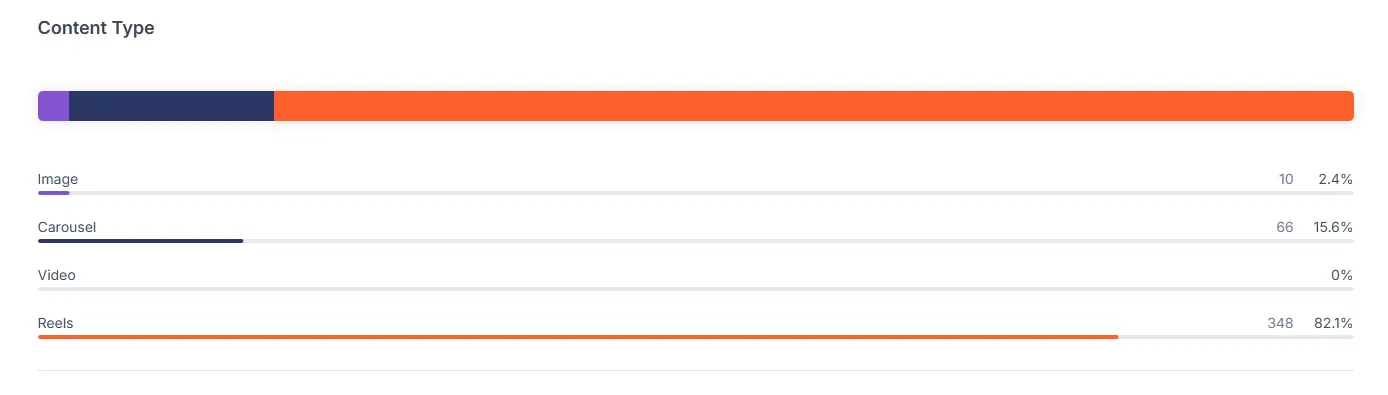
The report tracked 424 mentions from 255 accounts. Reels accounted for 348 of the posts, or about 82%. Hashtags including #wellnessroutine, #morningroutine, and #sundayreset suggest that many mentions sit within everyday routines where bedding fits naturally.
One caption from @thewhimsysoul recommends cooling sheets for a hot sleeper and invites viewers to comment “link” for a direct message. It connects a specific sleep problem to a shopping step.
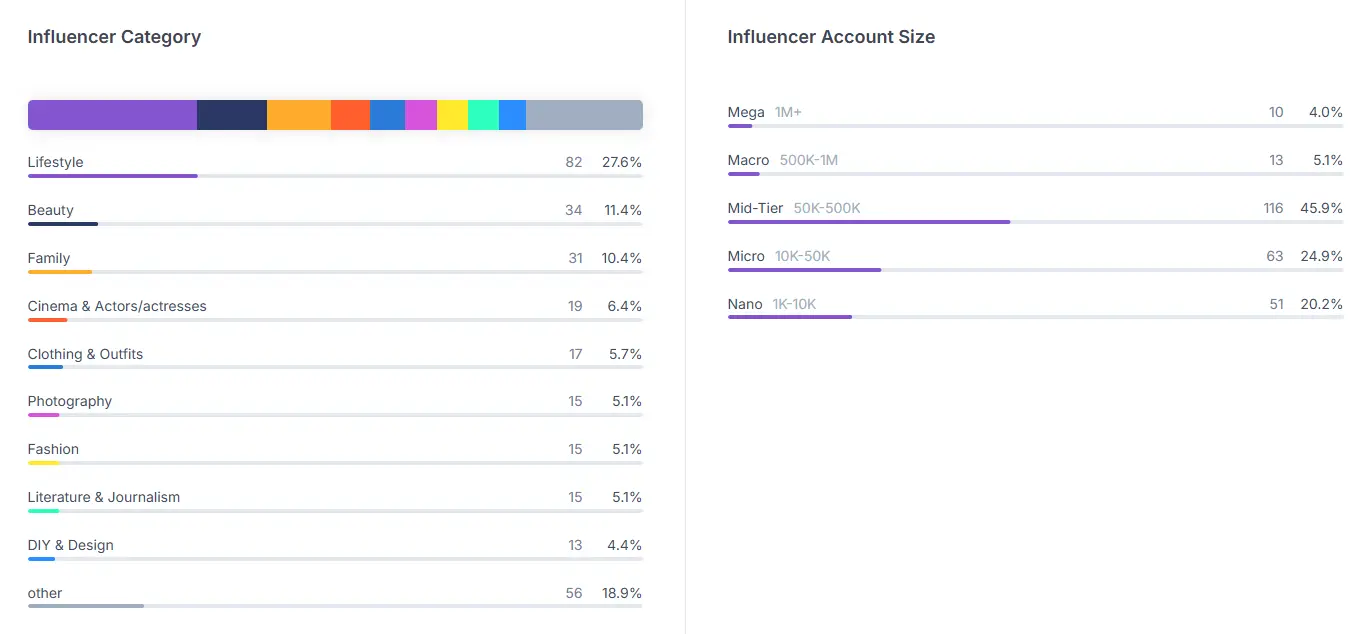
The account mix shows breadth alongside concentrated visibility. HypeAuditor counted 116 mid-tier creators, 63 micro creators, and 51 nano creators. Together, those groups made up roughly nine in ten tracked accounts.
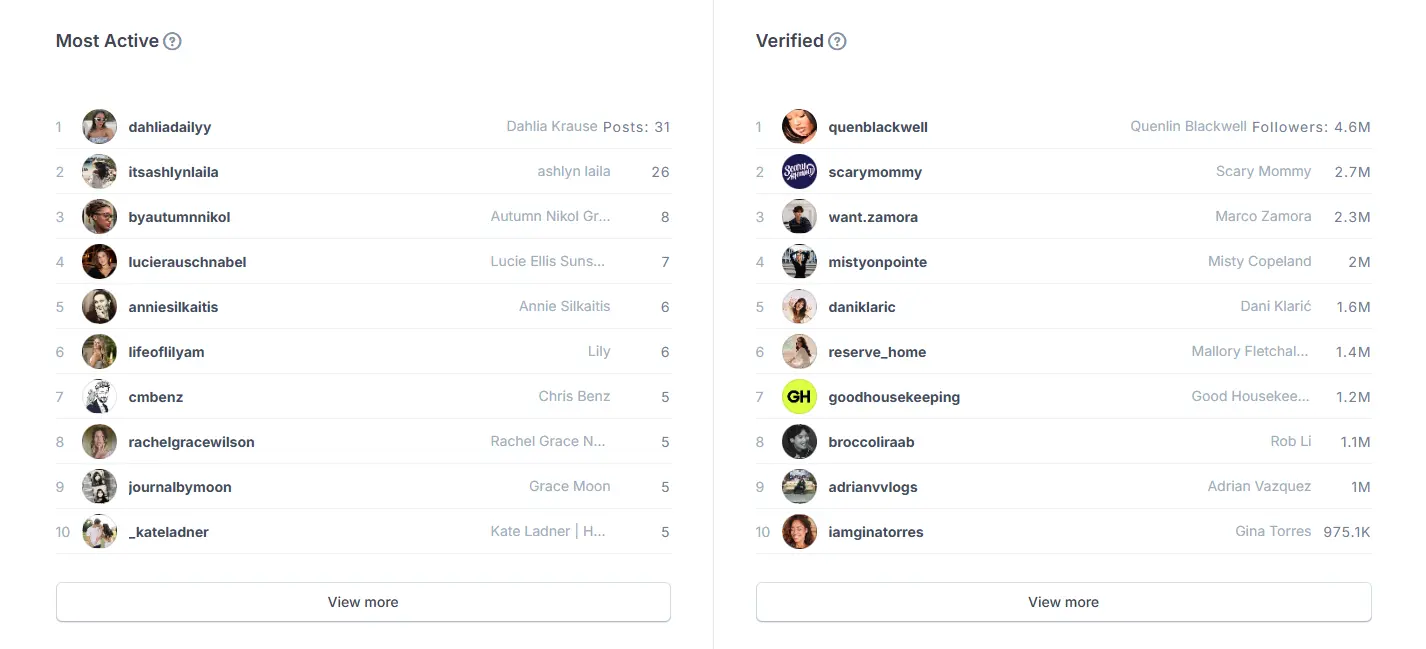
Quenlin Blackwell led modeled reach at about 1.4 million, while Dahlia Krause and Ashlyn Laila appeared in 31 and 26 mentions respectively. Publisher accounts including Scary Mommy and Good Housekeeping also appeared in the network.
HypeAuditor classified 27 mentions as sponsored, 140 as likely sponsored, and 257 as organic. These labels do not verify who was paid or rule out a commercial relationship for an “organic” post. The report’s 8.3 million estimated reach can include overlapping viewers and does not count buyers. The analysis shows a wide network built largely around Reels and routine content; it leaves open which accounts brought in customers or prompted repeat purchases.
Where Creator Discovery Meets Brooklinen’s Purchase Decision
A video can make someone want a better bed; Brooklinen still has to help them choose what to buy. Its fabric explanations, reviews, bundles, email marketing, and stores all give a shopper ways to turn interest into a specific order. The growth marketing team’s testing shows how a concrete problem such as night sweats can become a paid message, while the broader range of home products gives existing customers reasons to return.
Brooklinen says robes have become its fastest-growing category for first purchases. That makes the robe’s role in entertainment placements and collaborations commercially interesting. More broadly, the brand reports over six million customers and more than $1 billion in cumulative sales as of 2026.
Brooklinen’s method is to give customers several ways to understand a product before and after they buy it. Product choices create the stories: a cooler sheet, a changed room, a robe used every morning.
Creators and partners place those stories in settings people already follow; paid media and publisher distribution carry selected messages further; reviews, bundles, and stores help settle the purchase. New designs then give customers and creators another reason to talk about the brand. That sequence explains why life at home has remained such a productive setting for Brooklinen’s marketing.

SUGGESTED

Top 5 Real Estate Influencer Marketing Campaigns
Discover how real estate brands are using influencers to connect with buyers through...

What is Influencer Marketing? The Ultimate Strategy Guide for 2026
Learn how influencer marketing drives brand awareness engagement and sales with our...

How Murphy’s Naturals Built Its Influencer Strategy Around Outdoor Life
See how Murphy’s Naturals built an influencer strategy around outdoor life retail...