

Audience research, creator selection, and campaign operations meet in a platform whose strongest argument begins before the shortlist.
A creator shortlist is a surprisingly expensive place to discover that the audience brief was wrong. By then, someone has searched the database, compared engagement rates, and assembled a presentation explaining why these particular people deserve a share of the budget. The work can be meticulous and still answer the wrong question.
Lickly gives that problem a place in the software. Audience research comes early enough to influence which communities the campaign pursues, what the creative should address, and which creators belong in the conversation. For an influencer marketing director defending a roster to a brand team, or an agency strategist explaining a recommendation to a client, that sequence has an obvious appeal. The reasoning behind the shortlist can travel with the shortlist.
The company’s background helps explain the emphasis. Lickly is part of RAD Intel, whose AI foundation predates the current self-service product. Its published timeline traces that foundation to 2023, a private beta to 2024, and the market launch to 2026. In September 2026, Lickly introduced its broader Decision Intelligence positioning at UNBOUND, extending an audience-led influencer proposition into questions of campaign strategy and investment.
There is some substance behind that ambition. In information supplied to IMH, CMO Nita Patel describes using Lickly’s own segmentation to inform the company’s positioning, content, and sales demonstrations. That is a useful example of the research informing work beyond creator selection, although Patel explicitly says it is too early to attribute revenue or campaign results to the exercise.
The most persuasive case for Lickly remains close to that practical application. It connects audience findings to creator recommendations, then supplies the outreach, contracting, approvals, and reporting needed to put a campaign into market. The enterprise question is how well those connections fit the operating model around them, particularly when finance, legal, analytics, and several client teams also need a say.

Pricing
Lickly publishes four tiers. Campaigns and workflow are uncapped across the plans; seats and intelligence allowances vary. The price table does not specify when allowances reset, so a monthly price should not be read as proof of a monthly quota.
Growth: $1,999 per month, with three seats, 10 audience runs, discovery covering 1,000 influencers, three competitive reports, and 1,500 media for brand safety.
Performance: $3,299 per month, with five seats, 25 audience runs, 2,500 influencers, five competitive reports, and 2,500 media for brand safety.
Advanced: $5,699 per month, with eight seats, 50 audience runs, 5,000 influencers, 10 competitive reports, and 5,000 media for brand safety.
Enterprise: Custom pricing, with allowances and seats arranged through sales. The published plan describes greater scale, customization, governance, and enterprise support without itemizing those provisions.
The standard terms specify an annual subscription unless the order form says otherwise, generally prohibit mid-term cancellation, and require 30 days’ notice of non-renewal unless otherwise agreed. At the published rates, 12 months would total $23,988, $39,588, or $68,388 before taxes and extras. Those are calculated annual equivalents, not separately advertised annual offers.
A documented 14-day trial offers a way to test the workflow. The published trial allowances include 10 audience requests, 1,000 influencers, and three competitive reports. Each audience request typically produces three to five segments, so a run and a segment are different units.
The Details
Lickly’s first useful distinction appears before a campaign needs a creator. Universal Audiences lets teams conduct audience research independently, then attach selected segments to a new or existing campaign. That gives strategy teams room to explore the market before campaign setup hardens their assumptions into a brief.
Lickly Feature Ratings Compared With Competitors
- Audience Intelligence & Behavioral Segmentation
- AI Creator Discovery & Audience Matching
- Creator Vetting & Audience Analytics
- Brand Safety & Suitability Screening
- Pre-Campaign Forecasting & Planning
- Competitive Intelligence & Social Listening
- Creator CRM & Personalized Outreach
- Content Review & Approval Workflows
- Campaign Workflow & Budget Management
- Campaign Analytics & Performance Reporting
Within a campaign, Audience Discovery Studio requires only the brand category, brand name, and campaign goal. Additional context can broaden the results. The system initially generates three to five segments, which users can like or dislike; liked segments return to the campaign’s audience view. It is a manageable starting point for research, with the option to generate more rather than accept the first set as the market’s final shape.
Open a segment and the platform goes considerably further than age and location. Five sections cover the overview, core findings, recommendations, behavior, and demographics. Buying motivations and pain points sit alongside suggested messaging; recommendations extend to funnel stages and media hooks. A behavioral view relates the segment to selected anchors and lists associated interests. Teams can compare up to three segments and export selected sections as a single-page PDF.
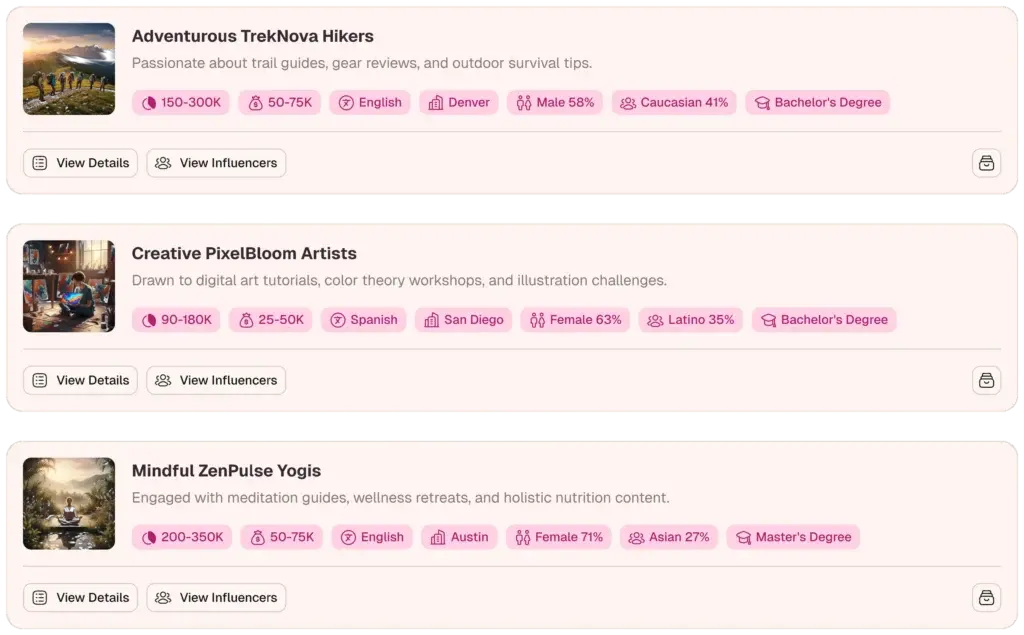
The value is in what those details allow a strategist to change. Consider a meal-prep brand planning an autumn campaign. Students leaving home and professionals rebuilding a routine might both be relevant, but the same creator brief would miss the different pressures behind their purchases. Lickly’s own back-to-school research illustrates that kind of segmentation, describing communities connected by a seasonal reset rather than a single demographic profile. Its performance figures in that example are projections, not completed campaign results.
Once a segment is worth pursuing, its influencer list supplies the next step. Creator profiles include the rationale for a recommendation, performance history, audience demographics, recent posts, common hashtags, and similar creators. Sponsored content can be isolated, and date ranges adjusted. The documentation describes lists taking roughly five to 10 minutes to generate, which makes this a research process to schedule rather than a search box to assume will respond instantly.
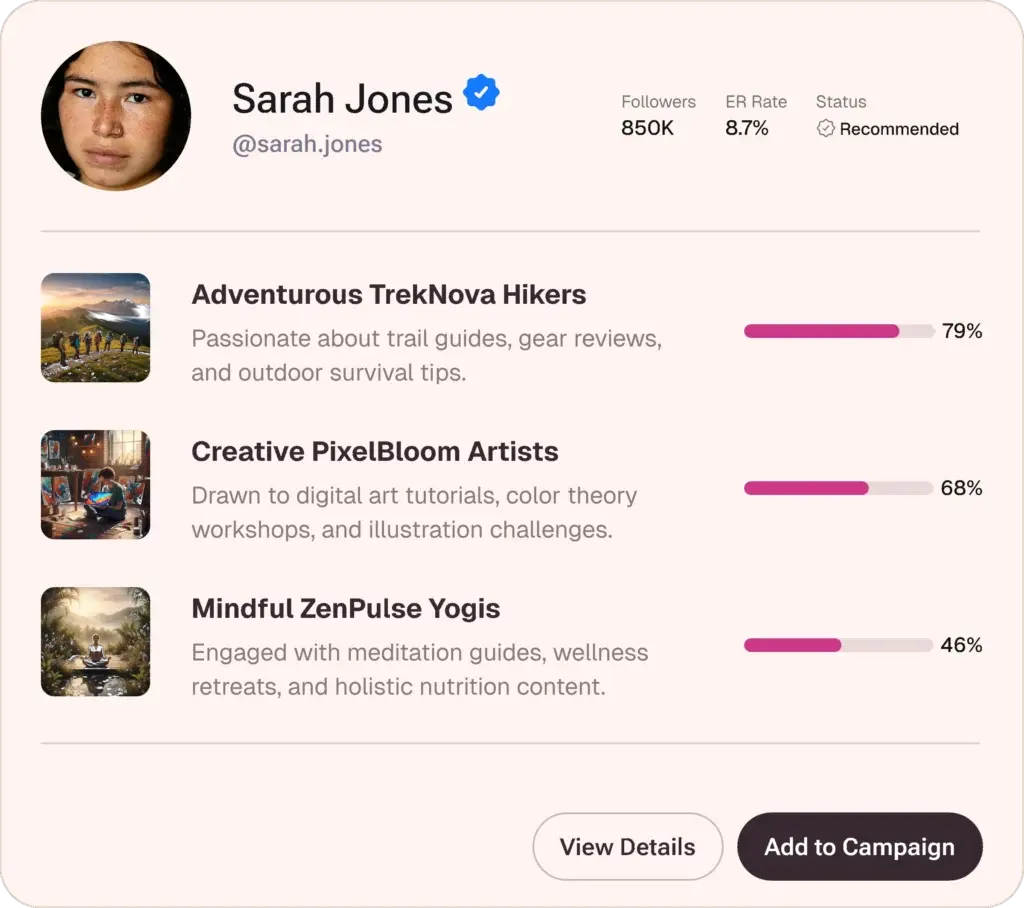
The Lickly Score adds another layer of selection. Its documented components are Topic, Performance, Demographic, and Location. Topic relates post themes to segment interests; Performance combines engagement rate with consistency across recent posts. Crucially, the demographic description concerns the influencer, and Location compares the influencer’s location with the segment’s. Neither establishes the geography or composition of everyone who follows that creator. Scores can take around an hour and are explicitly intended for forecasting.
That distinction matters for an enterprise shortlist. A creator can discuss exactly the right subject from exactly the right city while reaching a different market. Lickly’s component breakdown gives a reviewer something concrete to interrogate, but the score needs to be read alongside the audience report. Its published weights, normalization rules, and predictive validation results are unresolved, so a high score should help prioritize investigation rather than settle the investment decision.
There is also a more familiar route into discovery. Universal Discovery accepts a natural-language description and filters for audience size, creator location, language, gender, and ethnicity, with documented channel selection for Instagram, TikTok, and YouTube. Searches can be saved and revisited, and results added to a campaign segment. That flexibility matters when a client brings an existing roster or a strategist wants to test candidates the recommendation system did not initially supply.
Behind these screens, the evidence points to several data routes. The privacy policy permits collection from public online sources, authorized data providers, social platforms, and APIs. RAD’s filing describes Lickly analyzing public digital data and historical performance. This supports a mixed-source interpretation; it does not establish the supplier or collection method behind every field. Creator authorization is documented for particular TikTok workflows, but should not be assumed for every discoverable profile.
The distinction becomes especially important when a persona includes income, education, motivations, or an audience-size estimate. These fields are useful planning material, but Lickly does not publicly establish which are directly observed, inferred, or modeled, nor the sample supporting each result. Without that lineage, a polished persona cannot establish population representativeness. For an analytics team, the missing denominator may matter more than another decimal place on a score.
Lickly describes its reasoning system as M³VR, or Multi-Model, Multi-Vector Reasoning. The stated process questions the decision, grounds it in relevant data, evaluates multiple models and signals, then validates the recommendation. The signals span audience, creator, cultural, competitive, and campaign information. That is a plausible design for challenging an initial suggestion. Public documentation does not identify the models, evaluation datasets, or measured reduction in errors, however. Agreement between models cannot, by itself, repair a shared gap in the underlying data.
Brand safety is more concrete. Users can scan all available creator content or select a number of recent posts. Campaign settings determine the flag categories and severity levels, while the custom scan shows whether sufficient credits remain. A completed scan triggers an email. This gives legal and brand teams control over review scope, with an associated consumption cost. “All available” also defines the boundary of the check; it is no assurance that deleted, private, or inaccessible material has been examined.
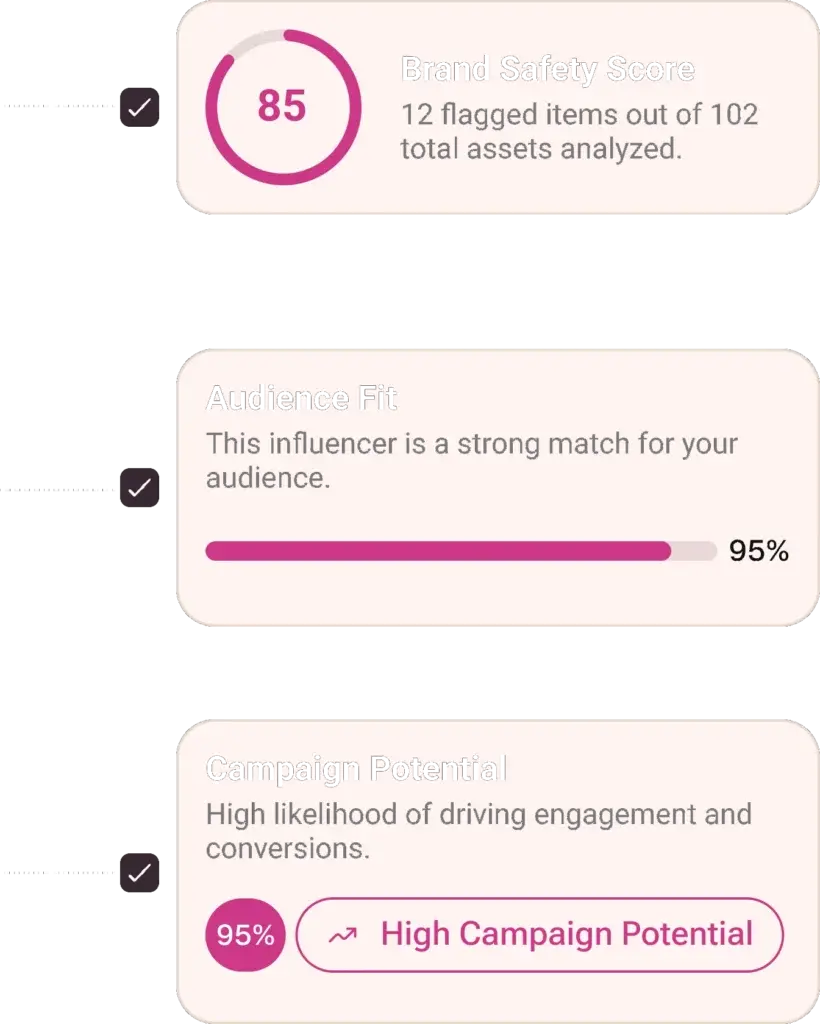
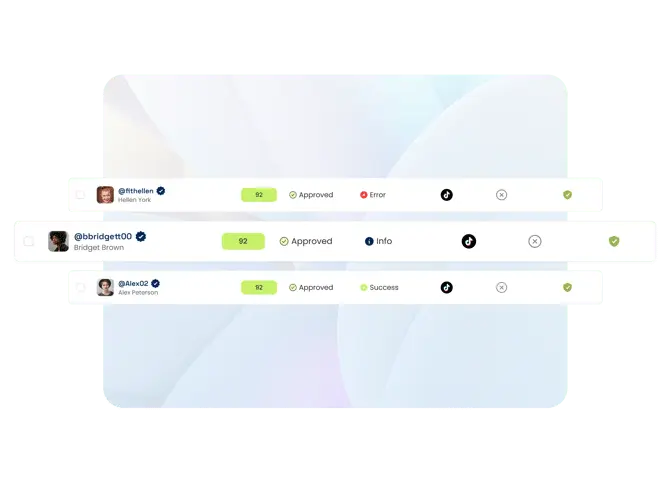
The product’s brand-safety proposition includes showing the signals behind a risk flag so reviewers can assess context. That is useful for brands whose suitability rules differ. A controversial discussion may be appropriate for one advertiser and unacceptable for another. It does not establish a dedicated follower-fraud audit, though. The public technical material does not explain bot classifiers, suspicious-audience thresholds, or false-positive rates. Those remain separate questions from whether a creator has published unsuitable content.
Getting a shortlist approved is another place where the workflow shows an understanding of agency work. A Magic Link gives external reviewers access to recommended creators, notes, score breakdowns, and social profiles, with accept-or-reject decisions returning to Lickly. Links can expire or be disabled. CSV is available, but omits Notes, Status, Brand Safety, Network, and Affiliation; the same documentation says influencer lists cannot currently be shared between parent and child accounts. Those restrictions matter when several offices expect to reuse one relationship history.
From approval, outreach moves into a Message Center. Users can send through Lickly’s built-in address or connect Gmail or Outlook so communication carries their own identity and replies also reach their inbox. Each workspace member can connect an account. That is a useful detail for relationship continuity, particularly when a creator already knows a specific agency contact.
Group outreach sends separate conversations and permits several contact addresses per creator, including managers or agents. Contact completeness is not guaranteed; Lickly says an API supplies email addresses and some will be missing. There is also a documented restriction that an influencer can participate in only one group message per campaign. This suits initial availability checks, while later communication needs a more individual approach. It should not be mistaken for a documented automated follow-up sequence.
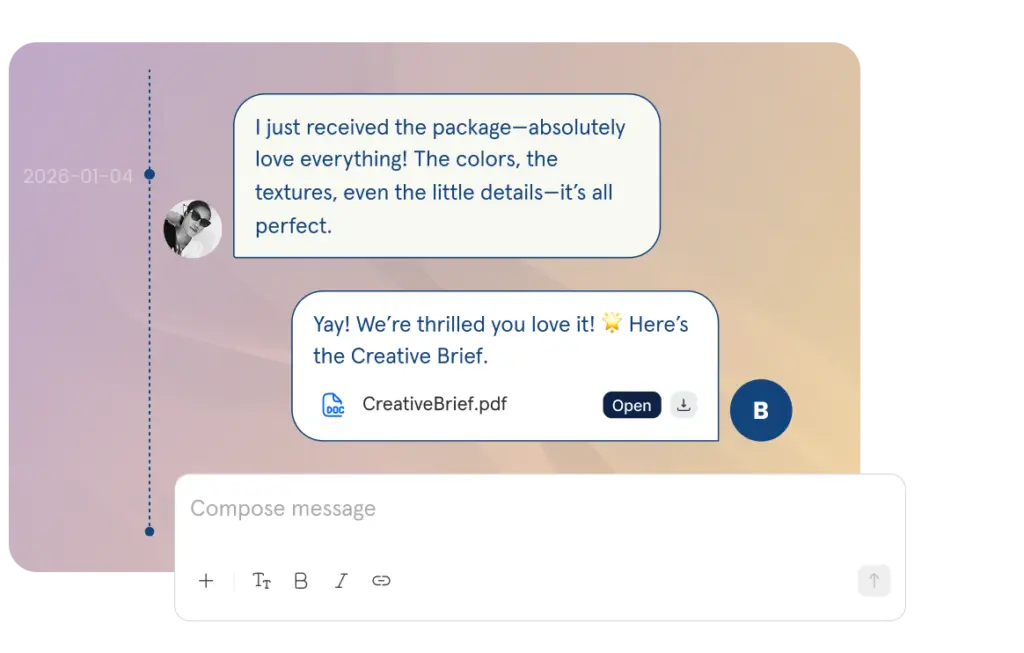
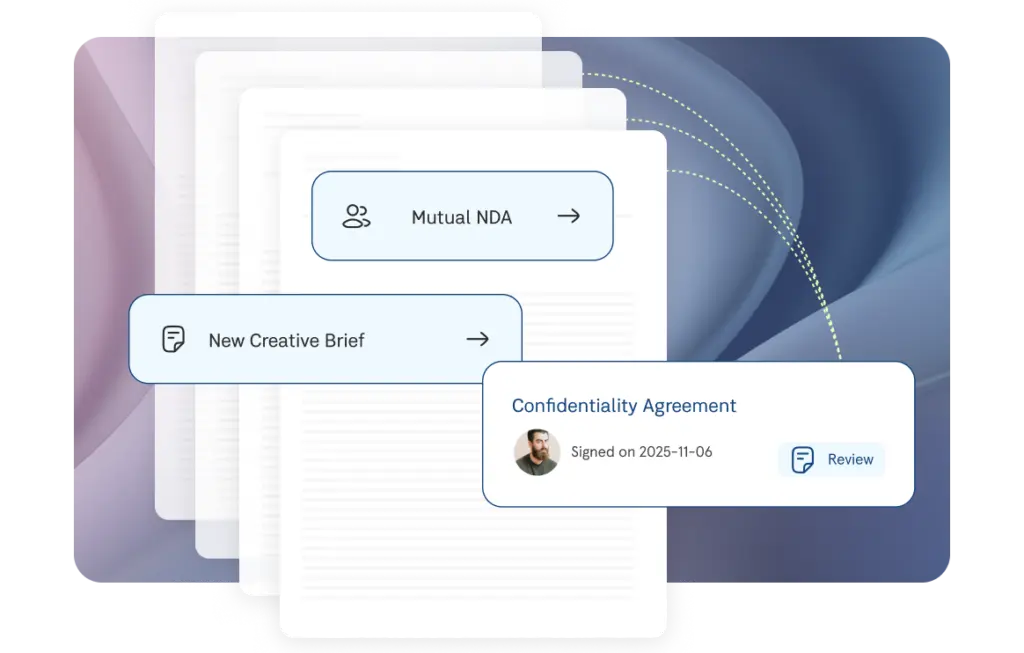
Contracting has sensible provisions for repeated work. The document editor supports agreements, creative briefs, and mutual or unilateral NDAs, with reusable templates at account level. Teams can see which creators received a template across campaigns. Google Docs and DocuSign connections are documented, although integrations are optional because the platform has its own editor. Existing subscriptions and legal-approved language still belong in the implementation calculation. Reusing a template saves effort only if the rights, deliverables, and payment terms remain appropriate to the next agreement.
Production then progresses through Pending, Reviewing, Revising, Posting, and Live states. Creators receive a deliverables link, upload assets, and receive feedback or approval. Requested formats can be adjusted during production. This provides operational structure, although the public workflow does not establish mandatory approval chains across legal, regional, and brand stakeholders. Cross-posting is also not a built-in publishing function; additional placements need to be agreed and their live assets linked separately.
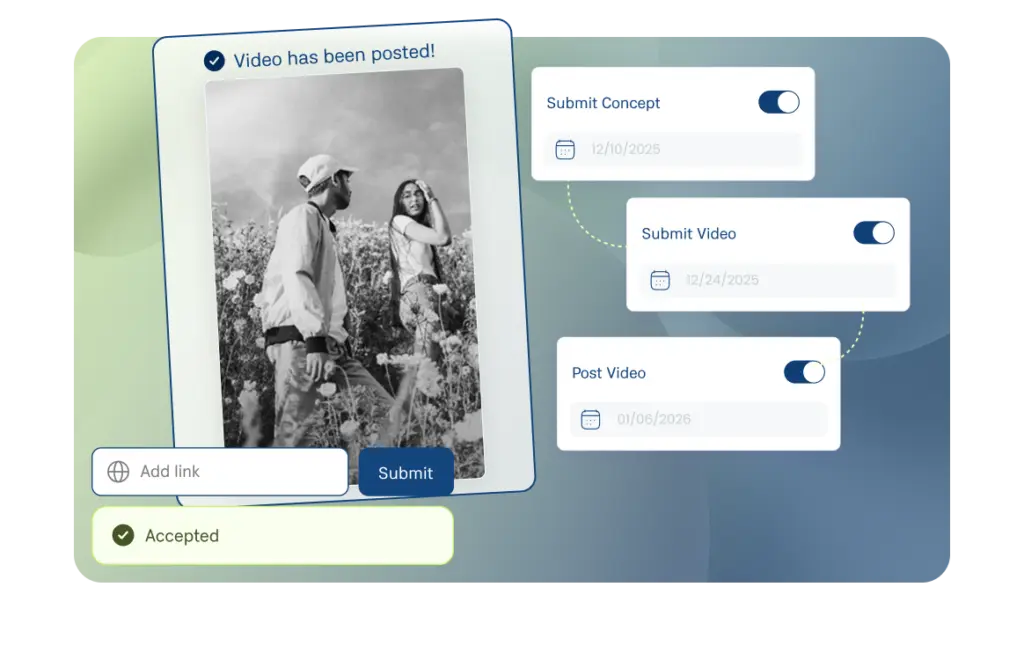
TikTok paid amplification has a more specific connection. The documented workflow requests Spark Ads authorization, supports several authorization durations, and links the video with TikTok One to generate a Spark Ads code. This helps address the familiar problem of approved content being ready before paid-use authorization is ready. Instagram authorization is handled outside Lickly in the documented process. Teams running both channels should therefore expect different handoffs rather than assume one uniform permissions workflow.
Payments are a clear boundary. Lickly’s asset-linking documentation says payment methods are still being built. Finance therefore needs a separate process for paying creators, with the resulting reconciliation work. Native affiliate-program operations are also not established by the material reviewed. An ecommerce team requiring commission rules, coupon management, return-adjusted payouts, and order-level reconciliation would need those demonstrated before treating Lickly as the program’s commercial system of record.
Reporting has an equally important dependency. Approved live assets must be linked before their results populate the dashboard. A missing URL can therefore leave a gap that no recommendation engine will correct on its own. Assigning responsibility for collecting and checking live links is part of implementing the product, especially when campaigns include several formats or cross-posted assets.

The reporting documentation specifies daily updates through a third-party API and collection through 14 days after campaign end. TikTok One supplies additional metrics, including reach, average view time, device information, demographics, and organic versus sponsored views. Instagram and YouTube have a narrower documented set; the Instagram connection does not include Facebook data. Channel coverage and metric availability therefore need to be assessed separately. The dashboard’s last-updated indicator is particularly useful when stakeholders expect a fresh result during a live campaign.
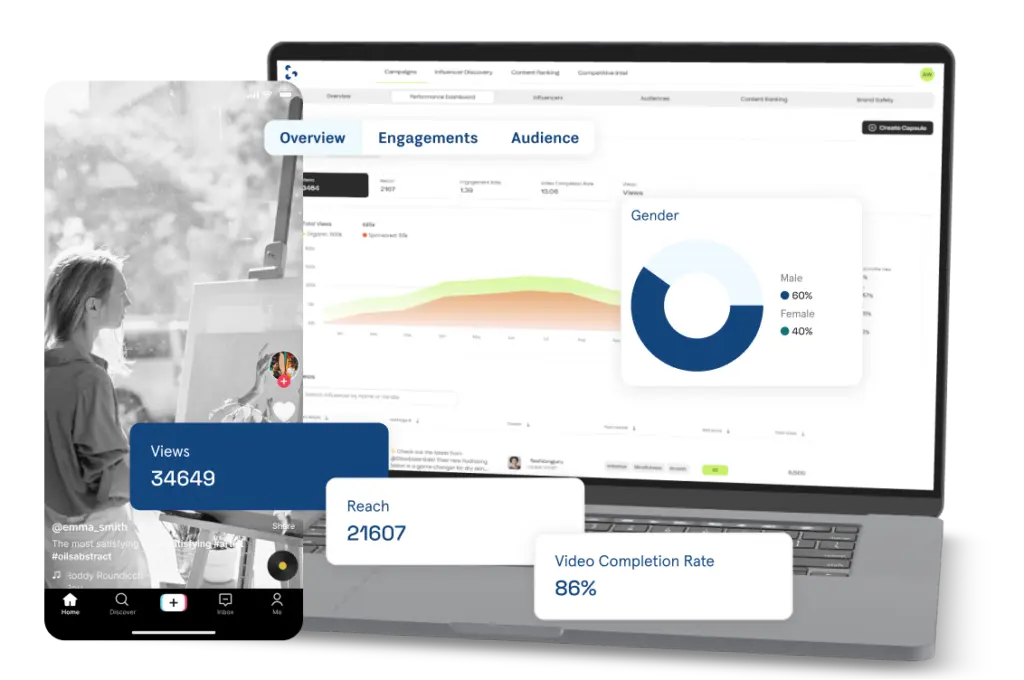
Lickly’s measurement pages also describe clicks, conversions, cost efficiency, planned and actual spend, and comparison of forecasts with outcomes. That creates an attractive learning loop, provided the underlying outcome is defined consistently. Public material does not establish the conversion event source, attribution window, identity resolution, or deduplication rules. A reported conversion is not automatically incremental revenue, and a total across creator accounts is not necessarily unduplicated reach. Revenue-focused programs need those definitions before finance can reconcile the dashboard with commerce or CRM records.
Competitive intelligence broadens the strategic use. The documented report covers share of voice, sentiment, emotion, buying motivations, and pain points. Teams supply a brand and URL, review the category and competitors, then generate the report. Generation can take one to five hours, with historical views covering one, three, six, or 12-plus months. That makes it useful preparation for a planning meeting, subject to understanding its source coverage; it is not something to assume will finish during the meeting.
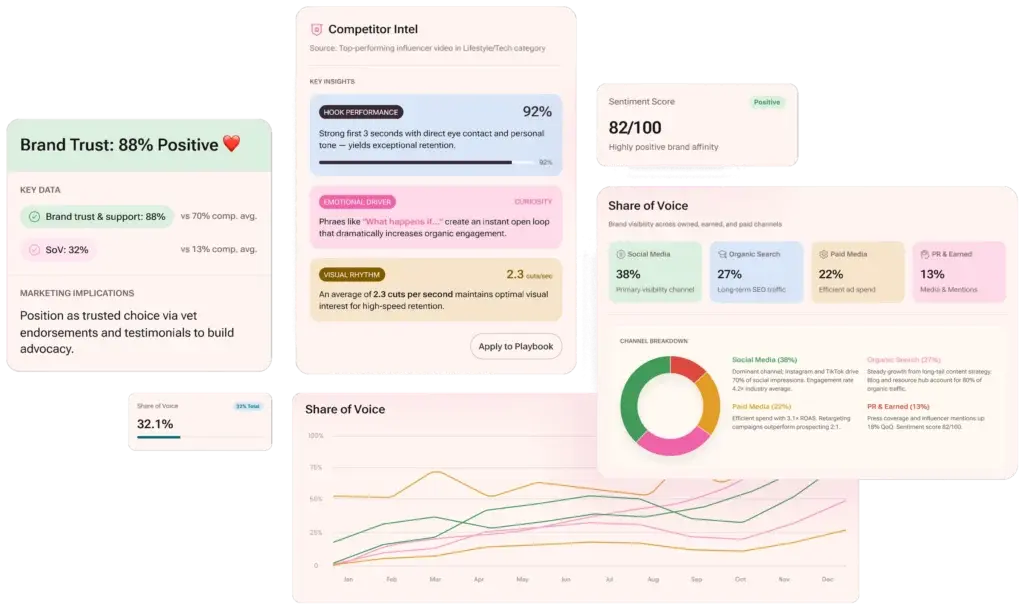
At workspace level, Owner, Admin, and General roles divide membership and billing responsibilities. All can execute the main campaign modules, while competitive reports are restricted to Owners and Admins. These controls suit a shared operating team. They do not establish granular isolation between clients, markets, or brands. Public documentation also leaves SSO, SCIM provisioning, audit-log exports, data residency, and independent security assurance unresolved. Those are procurement questions for a large deployment, not features to infer from the Enterprise plan name.
Portability deserves attention before the relationship becomes difficult to unwind. Alongside the CSV restrictions, full influencer detail pages are not documented as exportable. Customers retain User Content ownership, while the terms permit operational use and anonymized derivatives. Exports should be completed during the subscription; a post-term courtesy export is discretionary. A general assurance that data belongs to the customer does not establish that every note, approval, risk finding, and historical metric can leave in a reusable format.
Conclusion
Lickly’s strongest idea is the connection between audience research and the work that follows it. A segment can influence the message, inform the creator shortlist, and remain relevant as the campaign moves through production and measurement. That gives a director something more useful to discuss with stakeholders than a list of popular accounts.
The best fit is an established brand team or agency with recurring creator work, a clear owner for strategy and execution, and existing support for payments and commercial measurement. A focused team inside a large organization may fit that model particularly well. It can use the audience and creator intelligence without assuming the platform already satisfies every requirement of a global operating system.
Organizations centered on affiliate commerce, complex cross-brand governance, or continuous sales attribution have a different set of non-negotiables. They should establish those workflows before committing to consolidation. For Lickly’s clearest buyer, the opportunity is more specific and more interesting. The platform gives audience strategy a continuing role in the campaign, including the moments when the team has to explain why it chose this creator, this message, and this investment.